Visual kei is a Japanese rock movement in which the look matters as much as the music: dramatic make-up, sculpted hair, androgynous styling and stage costumes that turn each musician into a character. It took shape in the late 1980s around bands such as X Japan and BUCK-TICK, got its name in 1990, and still covers everything from heavy metal to radio-friendly pop.
Here is where the name came from, the bands that defined each era, the fashion and its subgenres, six official videos to start with, and where to hear visual kei live in the UK in 2026 and 2027.
Visual Kei Bands, Fashion and History
No headings found.
Visual kei: key facts
- Japanese: ヴィジュアル系 (vijuaru kei), often shortened to V-kei or vkei. Kei means style or system.
- Named: 1990, when Shoxx magazine launched to cover the scene.
- Pioneers: X Japan, BUCK-TICK, DEAD END, COLOR and D’ERLANGER.
- Best known names: X Japan, LUNA SEA, MALICE MIZER, GLAY, Dir en grey, the GazettE.
- Sound: no single genre; heavy metal, punk, goth, symphonic rock and pop all fit.
- Next big UK date: Esprit D’Air at The Garage, London, 19 February 2027.
“Psychedelic Violence Crime of Visual Shock”: Where the Name Visual Kei Came From
In the late 1980s, Japanese rock magazines grouped together a set of bands who wore heavy make-up, whatever their sound: X from the metal scene, BUCK-TICK from beat rock, COLOR from punk. The word that stuck came from X. Its album Blue Blood (1989) carried the slogan “Psychedelic Violence Crime of Visual Shock”, and Shoxx, launched in 1990 as the first magazine devoted to the scene, called the bands “visual”. Its founding editor, Seiichi Hoshiko, defined visual kei as the music together with all of its visual side.
X were formed in Chiba in 1982 by the drummer and pianist Yoshiki and the singer Toshi. They courted television when most metal bands avoided it, and their 1988 independent album Vanishing Vision sold 10,000 copies in its first week, according to the visual kei database vkgy’s history of visual kei. Yoshiki’s own label, Extasy Records, then signed many of the bands who became the next generation’s stars, and in Osaka the Free-Will label, founded by COLOR’s DYNAMITE TOMMY, did the same for the west of Japan.

X Japan, LUNA SEA and the Black-Clad Early 1990s
LUNA SEA began in Kanagawa in 1986 under the name Lunacy and settled on its classic line-up in 1989. X’s guitarist hide brought them to Extasy, and their self-titled debut album came out in 1991. Their dark, droning guitar sound helped define kurofuku kei, the black-clothes style of early visual kei, and some early shows asked the audience to come dressed entirely in black. In 1999 they became the first visual kei act to play a concert outside Japan, in Taiwan.
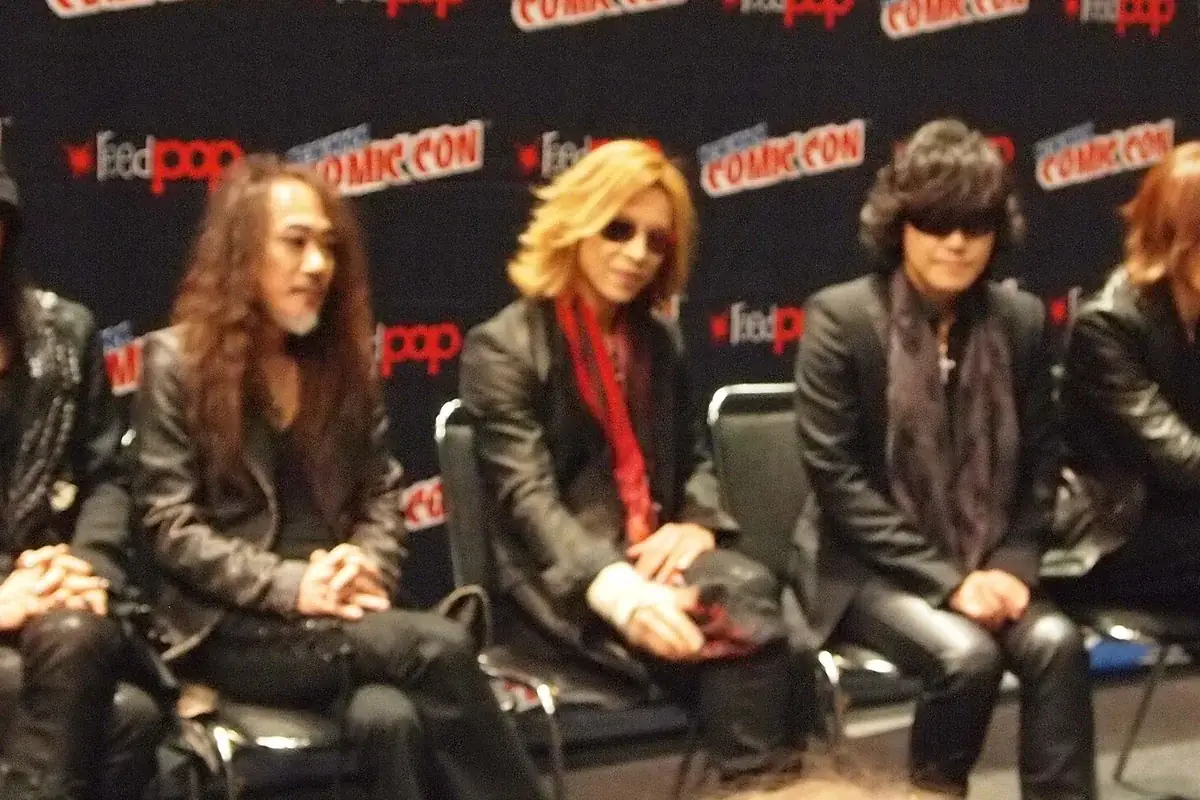
LUNA SEA are still a touring band. They held their first solo Tokyo Dome concert in 14 years in February 2025, and their drummer Shinya, a member since 1989, died in February 2026. X Japan announced their split in September 1997, played their last concert at the Tokyo Dome on 31 December 1997, and reunited in 2007 with a new single and a world tour.
1998, the Peak Year: MALICE MIZER, GLAY and the Four Heavenly Kings
The late 1990s were visual kei’s golden age. Japan’s CD sales peaked in 1998 at around 500 million discs, and visual bands filled the charts and the Budokan. Some, like GLAY, softened their sound and look for radio, and GLAY became one of the most successful visual kei bands of all time. A television show crowned SHAZNA, La’cryma Christi, FANATIC◇CRISIS and MALICE MIZER as the “four heavenly kings” of the scene.
MALICE MIZER, active from 1992 to 2001, pushed the visual side further than anyone. Their shows used lavish historical costumes, stage sets and short silent theatre pieces between songs, and their guitarist Mana performed dressed as a woman. GACKT, their singer from 1995 to 1998, went on to a hugely successful solo career.
The same year brought the scene’s biggest loss. X Japan’s guitarist hide died in May 1998. His funeral was broadcast live across Japan, and reports of the crowd that gathered differ, with figures of up to about 50,000.
Dir en grey, the GazettE and Neo Visual Kei Abroad
Dir en grey formed from the remains of the band La:Sadie’s after it split in 1997. Produced by Yoshiki and signed to Free-Will, they became the first band to play the Budokan while still on an independent label, then moved towards a heavier, nu metal influenced sound that won Western metal fans. In 2006 they joined the US band Korn on the Family Values Tour.
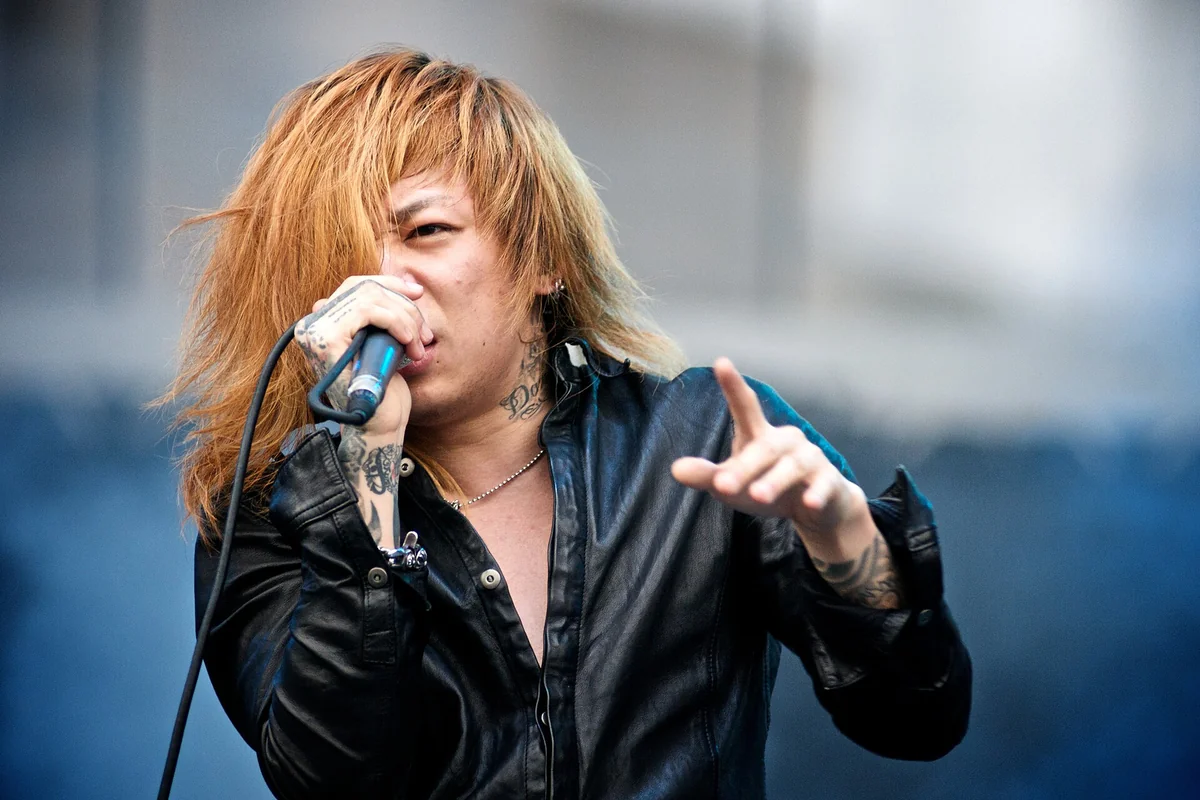
The second half of the 2000s brought what the Japanese media called neo visual kei, a new wave of chart success. The GazettE, formed in Kanagawa in 2002, made their major label debut in 2005 and played the Budokan in 2006. NIGHTMARE’s “the WORLD” became widely known as the opening theme of the anime Death Note. Versailles paired the costumes of European royalty with symphonic power metal, and in 2007 Yoshiki brought many of the era’s bands to Los Angeles for the Jrock Revolution festival.



Visual Kei Today: TikTok, Dress to Impress and the 2020s
Visual kei never went away, and it has had several reunions on a grand scale. LUNA SEA’s LUNATIC FEST in 2015 drew around 60,000 people, and Yoshiki’s three-day VISUAL JAPAN SUMMIT in 2016 drew more than 100,000. In 2022 Yoshiki, HYDE of L’Arc-en-Ciel, SUGIZO and MIYAVI formed the supergroup THE LAST ROCKSTARS.
The 2020s also brought losses: BUCK-TICK’s singer Atsushi Sakurai died in 2023, and the band carried on with its guitarists Hisashi Imai and Hidehiko Hoshino sharing vocals; the GazettE’s bassist Reita died in April 2024. At the same time, a new audience arrived online. Memes about Atsushi Sakurai and MALICE MIZER’s Mana spread on social media, TikTok made SHAZNA a favourite with young fans, younger heavy bands such as DEXCORE, DEVILOOF and JILUKA went viral through YouTube reaction videos, and visual kei even became a theme in the Roblox fashion game Dress to Impress.
Visual Kei Fashion and Make-Up
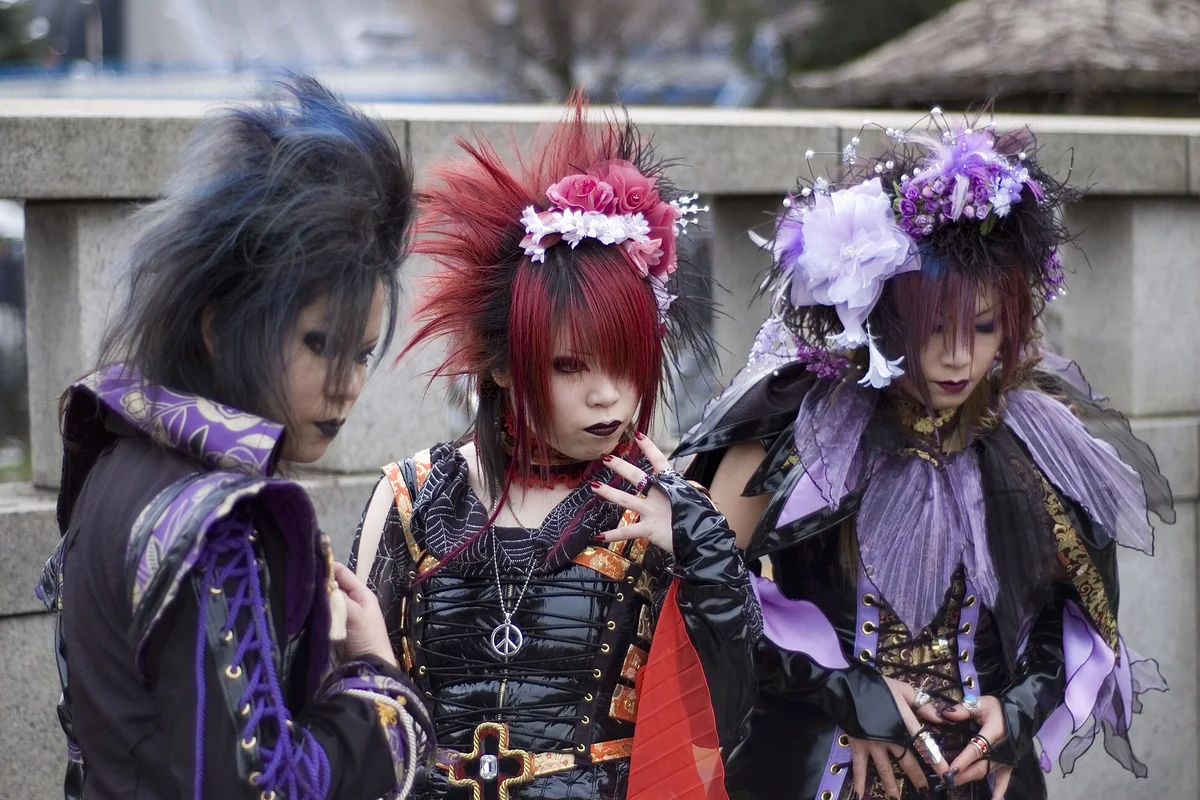
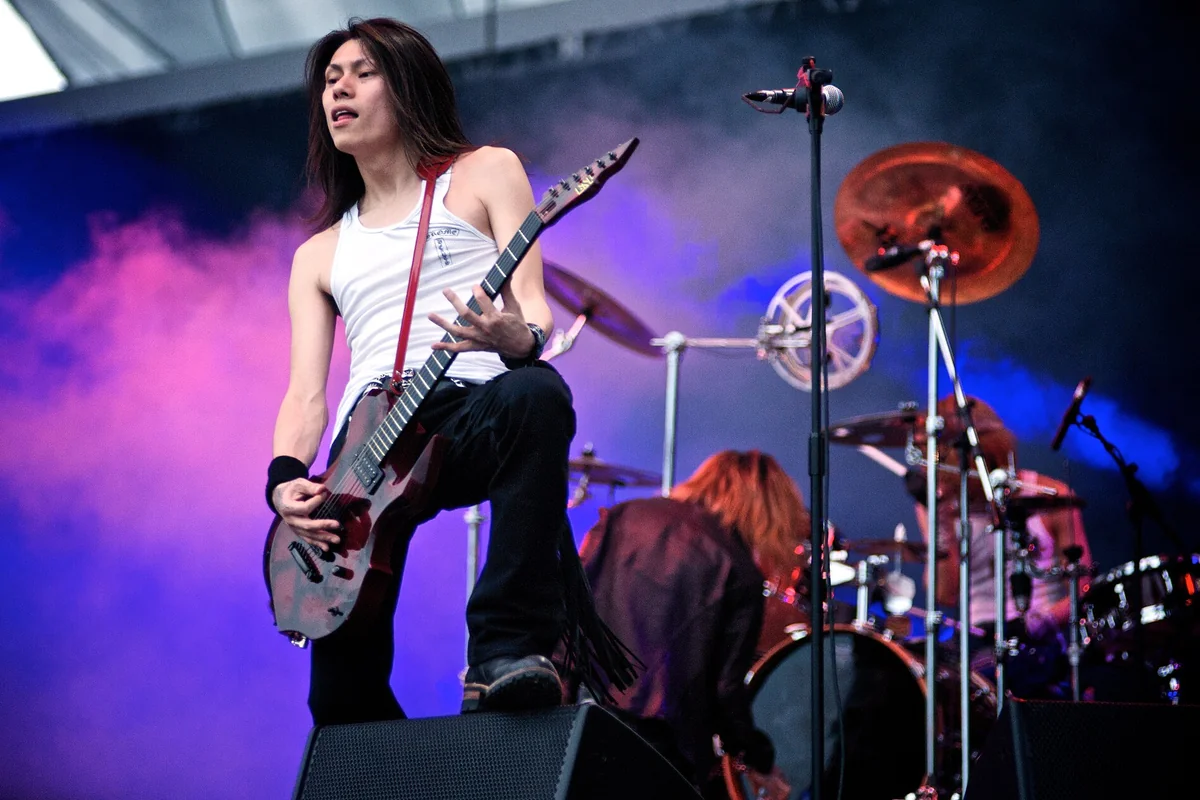
The look borrows from glam rock, punk, goth and Japanese street style, and androgyny sits at its centre. Male musicians wear foundation, heavy eyeliner, dark lipstick and dramatic hair, and some dress in a way that recalls the onnagata, the male actors who play women in kabuki. Early fans of the Extasy bands copied a tougher style, with long jackets embroidered in kanji.
The best-known crossover into fashion came from MALICE MIZER’s Mana. In 1999 he founded the label Moi-même-Moitié, whose two lines, Elegant Gothic Lolita and Elegant Gothic Aristocrat, are credited with helping to popularise gothic lolita style worldwide. The V&A’s guide to Lolita fashion traces that wider street style. For many years fans gathered in costume on Jingūbashi, the bridge by Harajuku Station, and our guide to Harajuku’s fashion streets covers the neighbourhood today. Visual kei grew up beside another 1990s Tokyo look that turned heads for opposite reasons: the tanned, bleached style explained in our piece on what gyaru means.
Visual Kei Subgenres, From Kurofuku Kei to Oshare Kei
Fans and Japanese guides sort the scene into substyles. Bands rarely label themselves, so treat these as a map.
| Substyle | What it means | A band to hear |
|---|---|---|
| Kurofuku kei (黒服系) | The first subgenre: black clothes and dark, beat rock based songs, from 1990 | LUNA SEA |
| Nagoya kei (名古屋系) | A darker, more violent theatrical sound from Nagoya, from 1993 | Kuroyume |
| Soft visual | Radio-friendly songs and subdued looks, the mid 1990s chart sound | GLAY |
| Kote kei (コテ系) | Fast, chaotic and heavily costumed, from the mid 1990s indie scene | La:Sadie’s |
| Tanbi kei (耽美系) | Aesthetic, European-flavoured fantasy and period costume | MALICE MIZER, Versailles |
| Oshare kei (オサレ系) | Brighter, more everyday clothes and pop hooks, from the early 2000s | baroque |
| Loud kei (ラウド系) | Heavier, metal and nu metal sounds | MUCC, Dir en grey |
| Angura kei | Underground style, often in kimono or old Japanese uniforms | A loose label, so no single band |
For the idol and chart side of Japanese music in the same decades, see our guide to J-pop for beginners.
Six Visual Kei Songs to Start With, on Official Channels
X Japan, “Kurenai”, filmed at The Last Live, Tokyo Dome, 1997, from Yoshiki’s official channel.
LUNA SEA, “ROSIER”, the band’s 1994 single, from LUNA SEA’s official channel.
MALICE MIZER, “Gekka no Yasoukyoku”, the official music video, with the costumes and staging that made the band famous.
DIR EN GREY, “THE FINAL”, from the band’s official channel.
the GazettE, “Red”, from the band’s official channel.
Esprit D’Air, “Shadow of Time”, the official video from the London band touring the UK in February 2027.
Visual Kei in the UK: Gigs and Club Nights for 2026 and 2027
One of the UK’s own visual kei bands is based in London. Esprit D’Air are led by the guitarist and singer Kai, who grew up on LUNA SEA, L’Arc-en-Ciel, X Japan, BUCK-TICK and DEAD END and is also a current member of The Sisters of Mercy. Asked whether his band is visual kei, Kai answered on Esprit D’Air’s site: “Yes, Esprit D’Air is a visual kei band, but that’s not the only thing we are.”
| Date | Who | Where | Tickets |
|---|---|---|---|
| Saturday 21 November 2026 | Chaidura, LIMINAL BEYOND EP launch, with Shirobon | Camden, London (Eventbrite lists The Black Heart, 3 Greenland Place, NW1 0AP); 18+, doors 7pm | Eventbrite or DICE |
| 12 to 18 February 2027 | Esprit D’Air UK tour | Birmingham Asylum (12), Cardiff The Globe (13), Leeds Brudenell Social Club (14), Edinburgh La Belle Angele (16), Newcastle The Cluny (17), Nottingham Rescue Rooms (18) | SeeTickets, DICE, Universe |
| Friday 19 February 2027 | Esprit D’Air, tour finale | The Garage, London | Esprit D’Air tour page |
For DJ nights, Visual-kei Night is a series founded in London that plays Japanese rock, metal and visual kei. It marked its seventh anniversary with a daytime boat party at Tamesis Dock in August 2026, brought Seth of Moi dix Mois, KOUKI of D=OUT and TSUKASA of THE MICRO HEAD 4N’S to London for a fan meeting in October 2026, and runs nights across Europe; its next listed date is in Cologne on 6 November 2026. Chaidura has appeared as a guest vocalist at its events.
Touring Japanese visual kei bands visit London most years. Listings show JILUKA at O2 Academy Islington on 9 September 2026 and KAMIJO, the singer of Versailles, at The Dome on 24 September 2026, both now past. For Japanese guitar rock beyond visual kei, SPYAIR close their European tour at Scala on 7 November 2026; our guide to SPYAIR at Scala has the times and entry rules. In Tokyo, the live houses of Koenji’s indie music scene are a good place to see smaller bands.
Visual Kei: Questions and Answers
Is visual kei a music genre or a fashion style?
It began as a music scene, and the look is part of the music. Shoxx magazine’s founding editor, Seiichi Hoshiko, defined visual kei as the music together with all its visual aspects. The bands play many styles, from heavy metal to pop, so it is usually described as a movement. Since the 2020s, TikTok has also made it a fashion style in its own right.
Who started visual kei?
No single band invented it. X, later X Japan, are the band most often credited, because the name came from the slogan “Psychedelic Violence Crime of Visual Shock” on their 1989 album Blue Blood, and Yoshiki’s Extasy Records launched many key bands. BUCK-TICK, DEAD END, COLOR and D’ERLANGER were part of the same late 1980s wave.
Is visual kei still popular?
Yes, at a smaller scale than its late 1990s peak. Labels such as Free-Will still sign new bands, veterans such as LUNA SEA and BUCK-TICK still tour, and young bands like JILUKA and DEVILOOF play Europe. TikTok and YouTube reaction videos have brought in a new overseas audience since the 2020s, and London has a regular club night, Visual-kei Night.
What does visual kei mean in Dress to Impress?
In the Roblox fashion game Dress to Impress, visual kei is one of the themes players dress to. A winning look borrows from the bands: black or deep purple layers, lace, buckles and leather, platform boots, big teased hair in black, red or blonde, pale make-up and heavy eyeliner. MALICE MIZER and early Dir en grey photos are good reference points.
What is the difference between visual kei and J-rock?
J-rock simply means Japanese rock music. Visual kei is a part of it defined by image as much as sound: make-up, costume and stage persona. Plenty of J-rock bands, such as SPYAIR, play without any visual kei styling, while visual kei bands can sound like metal, punk, goth or pop. Some bands, including LUNA SEA and GLAY, toned their look down as they became famous.
Is gothic lolita part of visual kei?
They are separate, but closely linked. Gothic lolita is a street fashion, and it was popularised in part by MALICE MIZER’s Mana, whose label Moi-même-Moitié launched Elegant Gothic Lolita and Elegant Gothic Aristocrat lines in 1999. Many visual kei fans wore it to concerts and to Harajuku’s Jingūbashi bridge, where fans gathered in costume.