In your close-to-endless scrolling on TikTok, you might have come across short videos of people donning both makeup and style so bold you have no choice but to watch. Coupled with creative nails, (often) blonde hair, and tans, the look inevitably catches attention. This is Gyaru, the caption would say. But, what exactly is it?
Gyaru (ギャル) is the Japanese way of saying the English slang word “gal”, and it names a fashion subculture built around tanned skin, bleached hair, dramatic eye makeup and decorated nails. It took shape in Tokyo’s Shibuya district during the late 1980s and peaked in the 1990s and early 2000s, when clusters of young women in eye-catching clothes and sun-kissed tans turned heads with their unapologetically glamorous style. Along the way it split into kogal, ganguro and other looks, and became one of Japan’s most iconic and misunderstood fashion subcultures.
The Word Gyaru in Japanese
Gyaru is written ギャル in katakana, the script Japanese uses for words borrowed from other languages. It comes from the English slang “gal”, and the word was already familiar in Japan by 1979, when Kenji Sawada had a hit with the song “OH! Gal”. From the early 1990s it came to mean a specific group: young women in Shibuya with tanned skin, dyed hair and bold makeup. Related terms add a prefix. Kogyaru, usually shortened to kogal, described high school gyaru in shortened uniforms and loose socks from around 1992 to 1993. Today the word still carries both meanings, a style and the attitude that comes with it.
Gyaru Origins: Bodycon, Namie Amuro and 1990s Shibuya
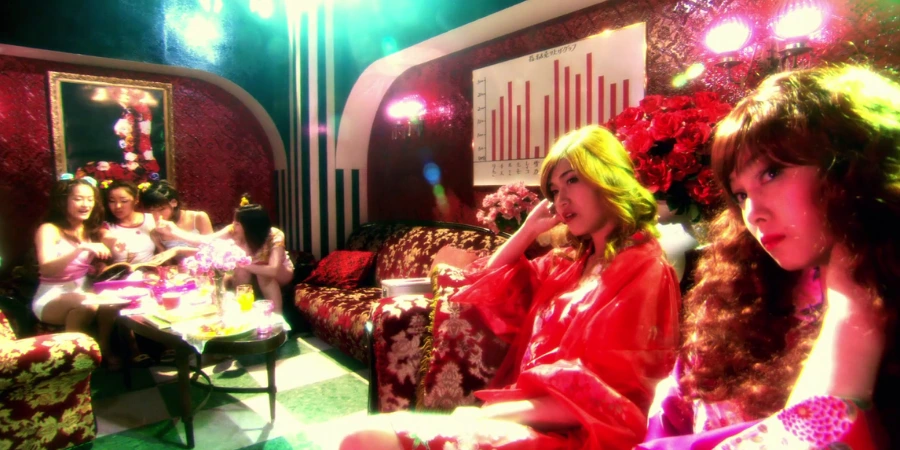
Gyaru first emerged in the late 1980s, in the midst of Japan’s economic boom. At its core was “gal culture”, a rebellious spirit expressed through bold fashion choices. During this era, many young women sought ways to assert independence from rigid social expectations.
The idea behind Gyaru traces back to “bodikon” (short for “body-conscious”) style: tight, figure-hugging clothing that flaunted confidence rather than restraint. While traditional Japanese beauty ideals prized fair skin, demure behaviour and natural looks, Gyaru turned those expectations upside down. They embraced tanned skin, bleached hair and flashy, Western-inspired clothing. In the early 1990s the singer Namie Amuro made the tanned skin and brown hair famous, and her look was copied across Shibuya.
Interestingly, this rejection of conventional beauty standards has now gone full circle, making its way back to Western audiences. Social media platforms like TikTok have recently seen a revival of Gyaru aesthetics, with creators experimenting with the same bold makeup, over-the-top nails and daring outfits that defined the movement.


Kogal, Ganguro and the Magazines Egg and Popteen
For the young women in the subculture, Gyaru was a form of rebellion in the same manner that it was a fashion statement. By rejecting conventional ideals, they carved out a space where they could express independence and individuality. More than just looking sexy, it was about challenging the norms imposed on women and redefining what beauty could be.
The Gyaru lifestyle extended far beyond clothes. It came with its own slang, music preferences and social hangouts. Magazines like Egg, launched in 1995, printed until 2014 and relaunched online in 2018, and Popteen, published since 1980, served as cultural bibles, featuring style tips, interviews and reader-submitted photos. Even the smallest details were important: elaborate nail art, sometimes embedded with rhinestones or charms, became a signature marker of a committed Gyaru.
At its peak in the late 1990s and early 2000s, Gyaru culture splintered into various substyles. Kogyaru, which took off around 1992 to 1993, featured high school girls with shortened uniforms, oversized sweaters and iconic loose socks, embodying a playful, rebellious schoolgirl look. Ganguro, on the other hand, pushed boundaries even further with deep tans, bleached or neon-coloured hair, and stark white makeup accents around the eyes and lips. These extreme variations drew fascination and controversy alike, often sensationalised in the media.
Backlash and Misunderstanding in the Japanese Media
Despite its popularity, Gyaru faced significant pushback. Mainstream Japanese media often portrayed its members as unruly or morally questionable, framing their bold fashion choices as signs of rebellion gone too far. Critics claimed that Gyaru undermined traditional femininity and Japanese cultural values, especially in an era when women were still expected to be modest and subdued.
However, it is exactly this response that gives power to the style. It only reinforces that a status quo exists waiting to be subverted.
Neo Gyaru, Shibuya 109 and the TikTok Revival

Photo Credit: Timeout Tokyo
In recent years, Gyaru culture has transformed. While the extreme looks of Ganguro have faded, modern Gyaru, or “neo-Gyaru”, incorporate more toned-down styles. Influencers blend Gyaru’s signature elements, like dramatic eyelashes and styled hair, with contemporary trends, creating a softer yet still distinct look. Shibuya 109, open since 1979, remains a hub for fashion-forward youth, though it now shares the spotlight with global fast-fashion brands and social media microtrends.
The revival of Y2K fashion worldwide has also sparked renewed interest in Gyaru. TikTok creators experiment with the aesthetic, pairing low-rise jeans with flashy accessories and platform shoes reminiscent of the early 2000s. This digital resurgence shows how the subculture’s rebellious nature continues to resonate, especially among young people looking for ways to stand out in an increasingly homogenised online world.
Despite these changes, Gyaru’s core spirit endures. It remains emblematic of defiance against restrictive norms and a celebration of individuality.








How Gyaru Changed Japanese Street Fashion
In a society often known for conformity, Gyaru’s impact is undeniable. Beyond clothes or makeup, it was about visibility in a world that preferred women to remain invisible. By breaking rules around appearance, behaviour and femininity, Gyaru paved the way for future generations of women to explore identity through fashion without fear.
As Tokyo’s streets continue to evolve and trends shift with each passing year, the bold imprint of Gyaru still lingers. Whether through TikTok revivals or nostalgic photo spreads, the subculture stands as a reminder of how something as simple as style can spark a cultural movement, and how, sometimes, rebellion can be beautiful.