If you’ve been curious about Japanese pop music, you’re not alone. With K-Pop taking the global stage through acts like BTS and Blackpink, many fans are now tracing the roots of “idol culture” back to its origins: Japan. Enter J-Pop (ジェイポップ), a world of dazzling idol groups with a vibrant history that shaped much of today’s Asian pop landscape. Existing idol group fans may find familiarity, while newcomers can discover the diverse sounds that Japan’s pop culture has to offer. Either way, J-Pop has something for everyone. From heart-wrenching ballads to upbeat anime soundtracks, there’s a niche for every taste.
What Is J-Pop?
J-Pop, short for Japanese pop, is the name for mainstream Japanese pop music from the late 1980s onwards. The Tokyo radio station J-WAVE coined the term around 1988 for the Western-style Japanese music it played, and by the early 1990s it was the everyday name for the genre. Today it covers solo singers such as Hikaru Utada, idol groups such as AKB48 and Nogizaka46, and the anime theme songs that bring most overseas listeners to it.
A Brief History of J-Pop

Kayokyoku artists Koichi Miura and Teruko Akatsuki. Album covers: Koichi Miura Greatest Hits and Teruko Akatsuki Greatest Hits, from the Japanese Kayokyoku Star series.
Before J-Pop became the genre we know today, Japanese music was shaped by kayōkyoku (歌謡曲) and enka (演歌). These styles, rooted in traditional Japanese melodies and emotional storytelling, dominated the airwaves throughout the mid-20th century.
Kayōkyoku laid the groundwork for what we now call J-Pop, blending Western and Japanese music styles. Enka, however, leaned towards slower melodies and prioritised conveying messages through poetic lyrics, often performed in a highly emotive singing style. Differences aside, both these styles contributed to the evolution of Japanese popular music.

Album covers: The Modern Enka 1950-1951, Vol. 1 and The Modern Enka 1953-1955, Vol. 3, from the Vintage Japanese Music series.
Through the 1950s, western jazz, rock ’n’ roll, and R&B filtered into post-war Japan through US military bases and jazz cafes, inspiring a new wave of artists. Soon, Japanese musicians began blending local sensibilities with Western structures, producing a fresh sound that leaned more contemporary and upbeat.
Around 1988, the Tokyo radio station J-WAVE coined the term “J-Pop” for the Western-style Japanese music it played, and by the early 1990s the name was in general use. It marked a generational break from kayōkyoku, signalling a modern, globally aware era of pop music. Unlike the heavier beats of Western pop or the slick, choreography-driven style of K-Pop, J-Pop developed its own niche: bright, melodic, and intentionally mainstream-friendly.


The Sounds of J-Pop
Japanese pop is catchy and accessible. Think Kyary Pamyu Pamyu’s ‘PonPonPon’, whose looping chorus became instantly memeable online. Expect upbeat tempos, singable choruses, and layered harmonies that prioritise emotional connection.
You might find that Asian pop scenes often emphasise dance-heavy production or global collaborations, while J-Pop tends to highlight storytelling and melody. YOASOBI’s songs, like ‘Yoru ni Kakeru’ (夜に駆ける), are such examples.

Image Credit: The Japan Times. J-Pop girl group Atarashi Gakko.
Some key characteristics include:
- Melodic choruses designed to stick in your head.
- Genre diversity spans ballads, idol pop, electronic dance, and even rock-inspired pop.
- Anime influences, where theme songs double as chart-toppers.
This variety makes J-Pop less uniform than K-Pop, and it’s as much about the sound as the cultural experience around it.
J-Pop Meets Anime and City Pop

Image Credit: The First Take. LiSA on The First Take.
Anime and J-Pop are inseparable. Many artists find their biggest hits through anime openings or endings. A recent example is LiSA’s “Gurenge” for Demon Slayer: Kimetsu no Yaiba, which exploded internationally and introduced countless new listeners to J-Pop.
Alongside anime, city pop (シティポップ) features smooth, jazzy Japanese pop from the late ’70s and ’80s and has enjoyed a global revival in recent years on platforms like YouTube. Modern J-Pop often borrows city pop’s nostalgic grooves, blending them with contemporary idol ballads and dance beats. Miki Matsubara’s ‘Mayonaka no Door (Stay With Me)’ from 1979, for instance, went viral on TikTok in late 2020, while Mariya Takeuchi’s ‘Plastic Love’ became the genre’s YouTube anthem.
J-Pop and Idol Culture
J-Pop’s strongest link is to idol culture. In Japan, idols are multimedia personalities designed to connect with fans through music, TV appearances, and live performances.

J-Pop boyband ARASHI, who disbanded in May 2026 after a farewell dome tour.
Talent agencies play a major role in shaping idols. Johnny & Associates, for instance, became a powerhouse for boy bands, debuting legendary acts like SMAP and Arashi. After the sexual abuse scandal involving its late founder, Johnny Kitagawa, the agency renamed itself SMILE-UP. in October 2023 to handle compensation for victims, and its artists are now managed by a new company, STARTO ENTERTAINMENT. Meanwhile, girl groups like AKB48 popularised the concept of large rotating memberships, making fans feel more personally involved in supporting their favourites.
In contrast, the past decade has seen the rise of independent and underground idols, offering more niche, grassroots experiences. Groups like BiSH (before their disbandment) follow an edgier concept and sound that subvert idol tropes. These groups might not have the mainstream reach of Johnny’s acts, but they thrive on intimate fan communities and livehouse performances.






10 J-Pop Songs to Start With, Era by Era
To truly delve into J-Pop, it’s helpful to examine its defining eras and the artists who shaped them. Here’s a breakdown, with suggested “entry tracks” to start your playlist.
1990s to 2000s: The Global Breakthrough
The 90s to 2000s were years of transformation for J-Pop. This era marked the beginning of Japan’s music extending to the rest of the world. Here are some classics to introduce you to the earlier sounds of J-Pop.
Hikaru Utada, “First Love”: The title track of First Love (1999), still the best-selling album in Japanese history, setting the standard for modern J-Pop ballads.
SMAP, “Sekai ni Hitotsu Dake no Hana”: A boy band anthem beloved across generations.
Ayumi Hamasaki, “M”: The “Empress of J-Pop,” whose influence rivalled Western pop divas in her prime.
2000s to 2010s: Idol Dominance
By the early 2000s, Johnny’s Entertainment started to dominate the charts, while girl groups like AKB48 gained popularity. This was the dawn of mainstream idol culture. Some key tracks from the period include the following.
Arashi, “Love so Sweet”: The theme of the 2007 TV drama Hana Yori Dango 2, from the Johnny’s flagship group that disbanded in 2026 after a farewell tour.
AKB48, “Heavy Rotation”: A fan favourite that cemented their massive popularity.
Perfume, “Polyrhythm”: Pioneers of technopop, blending futuristic visuals with infectious beats.
Current Wave (2010s to Present)
From the 2010s up to now, idol groups have begun to innovate their approach to both their music and concepts. They started deviating from emphasising fan service to more complex artistry. Here are some examples of groups and their tracks to get you hooked.
King & Prince, “moooove!!”: A Johnny’s group, formerly with 5 members now 2, carrying forward the boy band tradition. Since becoming a two-piece, they have started to explore a new sound, further reinventing idol culture.
Nogizaka46, “Influencer”: A leading “sakamichi” group known for their elegant idol concept.
Number_i, “GOAT”: A fresh act composed of former King & Prince members pushing the boundaries of boy group music in Japan.
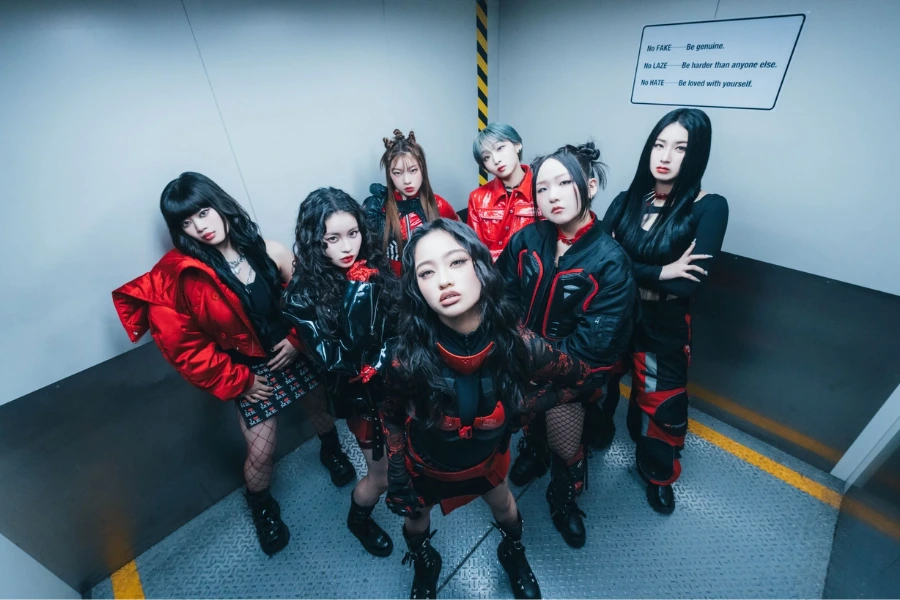
HANA, “ROSE”: A girl group formed through Chanmina’s audition show No No Girls, whose debut single topped the Billboard Japan Hot 100 in 2025.
J-Pop vs K-Pop: How the Two Differ
While K-Pop has taken the spotlight worldwide, J-Pop’s influence runs deep. NPR has reported that SM Entertainment founder Lee Soo-man modelled K-Pop’s trainee system on the one Johnny Kitagawa built in Japan. Today the exchange runs both ways: K-Pop borrows Japan’s melodic pop sensibilities, while J-Pop adopts global production styles.
The differences show up in how the music is made and sold. K-Pop groups usually train for years before debut and launch with sharply choreographed singles aimed at a global audience, often mixing English into the lyrics. J-Pop acts are more often built around a home fanbase, with songs that lean on melody and storytelling, close ties to anime and TV dramas, and a market where physical CDs still sell in large numbers. For a newcomer, that means K-Pop tends to arrive through its music videos, while J-Pop usually arrives through an anime opening or a drama theme.
Anime has also propelled J-Pop into international fandom. From classics like Neon Genesis Evangelion’s “Cruel Angel’s Thesis” to LiSA’s Demon Slayer hit, anime soundtracks often serve as a gateway to the genre.
Digital platforms have transformed access. Once confined to CDs and domestic markets, J-Pop now thrives on platforms like Spotify, Apple Music, and YouTube. Spotify is notable, in particular, when it arrived in Japan in 2016. YouTube channels like ‘The First Take’ have also extended Japan’s music to the rest of the world, and vice versa. This has opened the doors for global listeners to explore not just mainstream idols but also indie acts and niche genres.
From Kayōkyoku Ballads to Anime Openings
Beyond its historical significance, J-Pop offers a sound for everyone. From idol ballads to city pop revivals, there’s one bound to resonate with you. Listening to J-Pop also means connecting with Japan’s entertainment, anime, and fashion culture. Thankfully, with streaming services, building a J-Pop playlist has never been easier.
If you’re looking for a place to start, queue up Utada Hikaru on a night bus ride, or stream Perfume while walking through Shibuya Crossing. Both give you an instant sense of how J-Pop soundtracks Japanese life.
Through every era, from enka and idol culture to today’s streaming charts, J-Pop has kept reinventing itself while staying true to its melodic core.