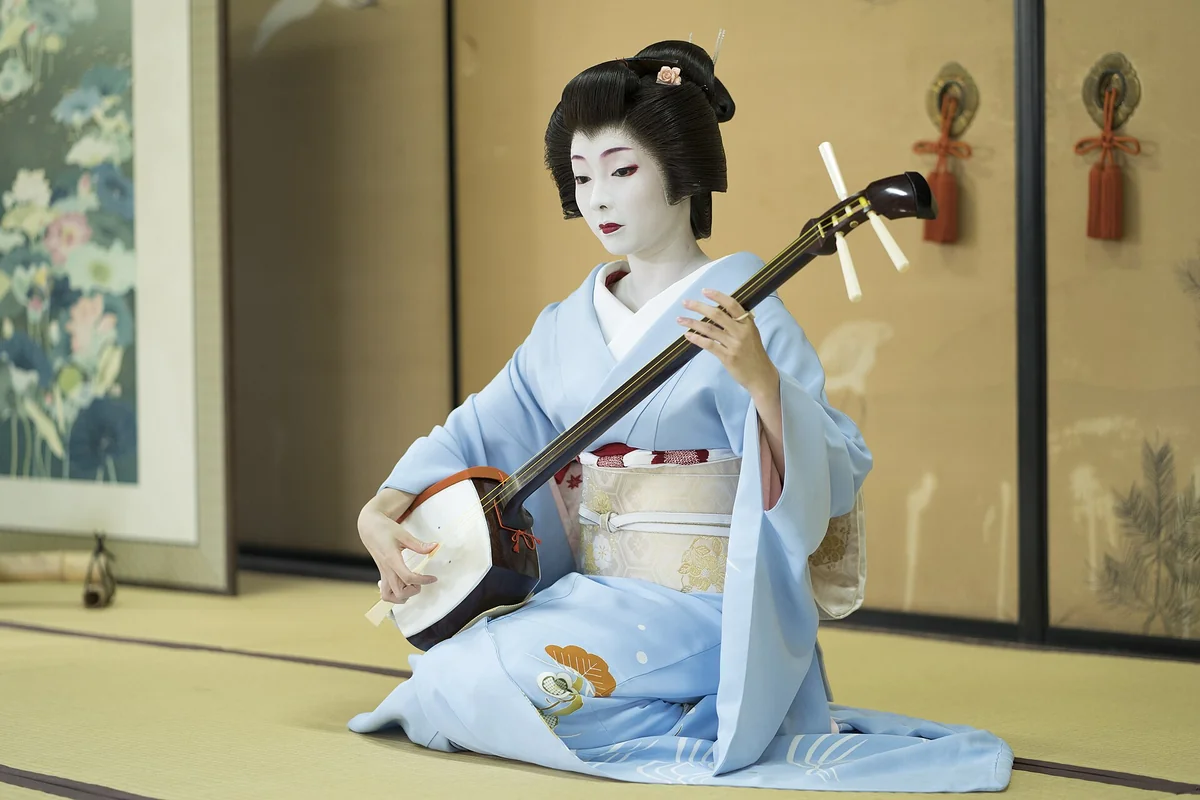
The shamisen is a three-string Japanese lute with a long fretless neck and a small square body covered in skin, played with a large plectrum called a bachi that strikes the string and the skin at the same time. It reached Japan from the Ryukyu Kingdom, now Okinawa, in the 16th century and became the sound of kabuki, the puppet theatre, geisha music and the fiery folk style of Tsugaru.
This guide covers where it came from, the three types and how they differ, how it is played and tuned, the players worth hearing first, its life in anime and film, and where to hear or learn it in London.
Shamisen: key facts
- Japanese: 三味線. Also called sangen, “three strings”, and samisen in older English books
- Strings: three, of silk for performance or nylon for practice
- Body: a wooden frame covered front and back with skin, traditionally cat or dog, now often synthetic
- Played with: a bachi plectrum, or the fingernails in some styles
- Arrived: 16th century, from the Okinawan sanshin, through the port of Sakai near Osaka
- Three types: hosozao (thin neck), chūzao (medium neck), futozao (thick neck, including the Tsugaru shamisen)
Shamisen, the Japanese Three-String Lute
No headings found.
Shamisen History: From the Okinawan Sanshin to the Kabuki Stage
The family tree starts in China with the sanxian, a three-string lute. It reached the Ryukyu Kingdom through trade and became the sanshin, which Okinawan families still keep at home, with a body covered in python skin. In the 16th century the sanshin arrived at Sakai, the trading port next to Osaka, and Japanese makers reworked it into the instrument now called the shamisen.
It spread fast because it suited the new entertainments of the Edo period. Zoë Kincaid, in Kabuki: The Popular Stage of Japan (1925, chapter eight), traces its first stage appearance to the women’s kabuki troupes of the early 1600s, whose singers “recited to the strains of the samisen”. Until then the theatre had used the Noh drums and flute. Kincaid notes that the shamisen, “with its strident, irregular rhythms”, soon belonged to the whole lively world of the city, far from the ritual of Noh. It also replaced the biwa as the instrument behind narrative ballads, which grew into jōruri, the chanting that drives bunraku puppet plays to this day.
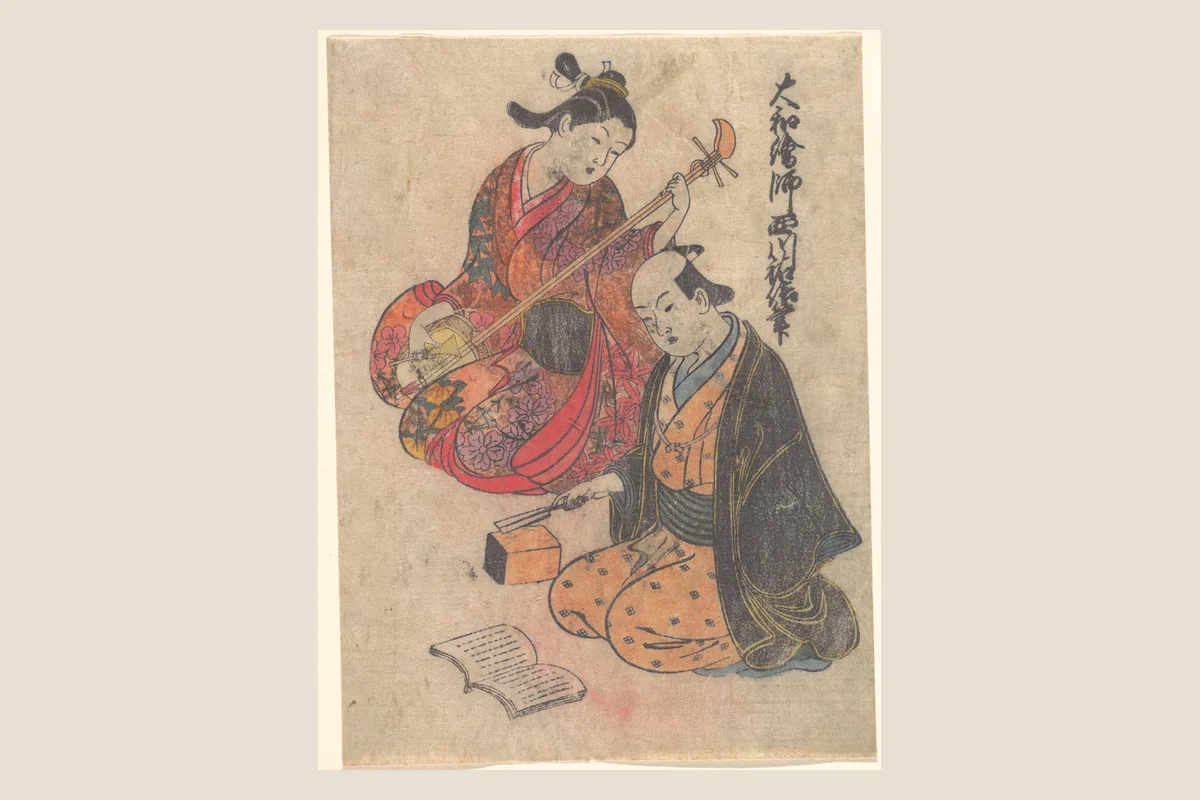
By the 18th century each genre had its own shamisen and its own way of playing. Gidayū-bushi, the puppet theatre style named after Takemoto Gidayū (1651 to 1714), uses the largest instrument and plectrum. Nagauta, the long songs of kabuki dance, uses the slimmest. Geisha learned kouta, short songs plucked with the fingernails, alongside nagauta. You can hear a modern take on the kabuki side in our report on A Kabuki Winterreise at Wigmore Hall, where a Tsugaru shamisen accompanied the kabuki dance Yasuna in October 2026.


Hosozao, Chūzao and Futozao: The Three Types of Shamisen
Shamisen are sorted by the thickness of the neck, and the neck decides the music. A player of one genre usually cannot read another genre’s notation, because each names the positions on the neck differently.
| Type | Neck | Main music | Sound |
|---|---|---|---|
| Hosozao (細棹) | Thin, tapering towards the body | Nagauta for kabuki dance; kouta | Light, quick and bright |
| Chūzao (中棹) | Medium, with an extended fingerboard | Jiuta chamber music; Kiyomoto and Tokiwazu narrative styles; an all-rounder | Broader and more mellow |
| Futozao (太棹) | Thick and long | Gidayū puppet theatre; folk song; Tsugaru-jamisen | Heavy, loud and percussive |
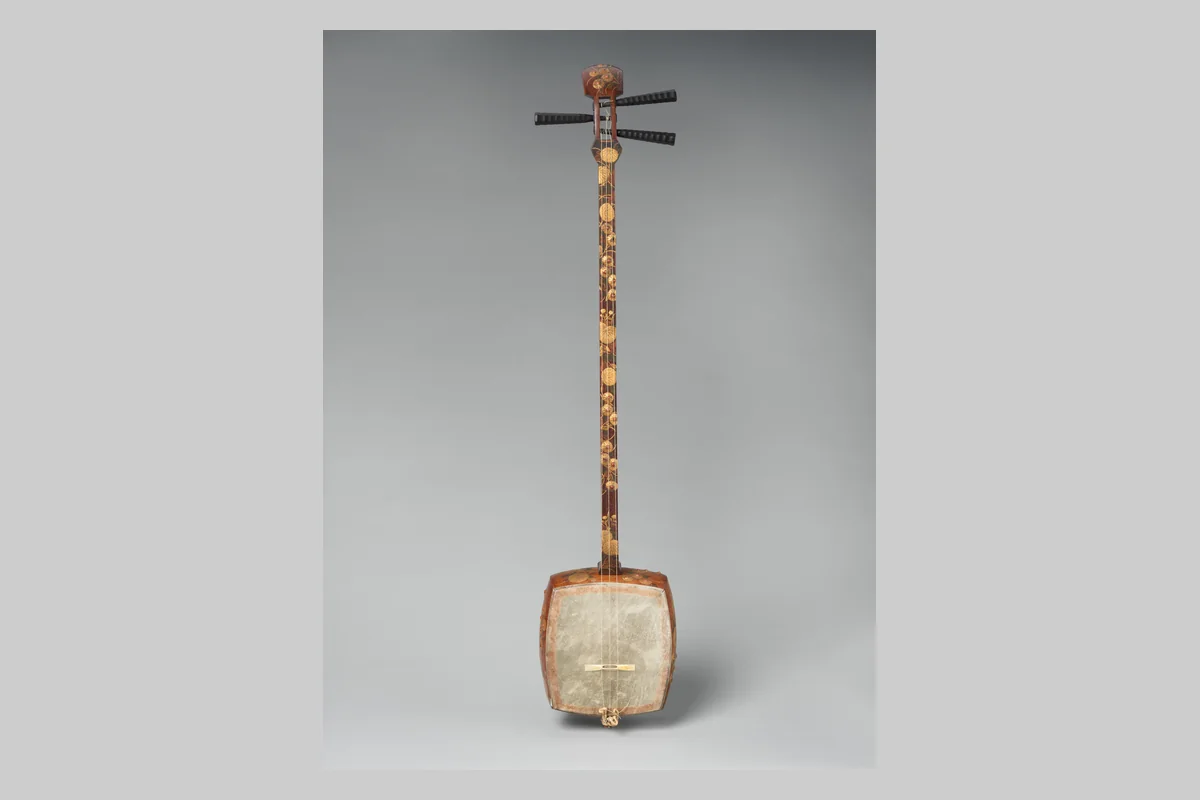
The difference matters to players. When Dai Fujikura wrote his duo Reizei for alto flute and shamisen, he was firm that his teacher Hidejiro Honjoh plays it on a chūzao, not a Tsugaru instrument, as he explained in our feature on Dai Fujikura’s album Reizei. The rehearsal recording below lets you hear how a medium-neck shamisen sits beside a flute.
How the Shamisen Is Played: Bachi, Sawari and Three Tunings
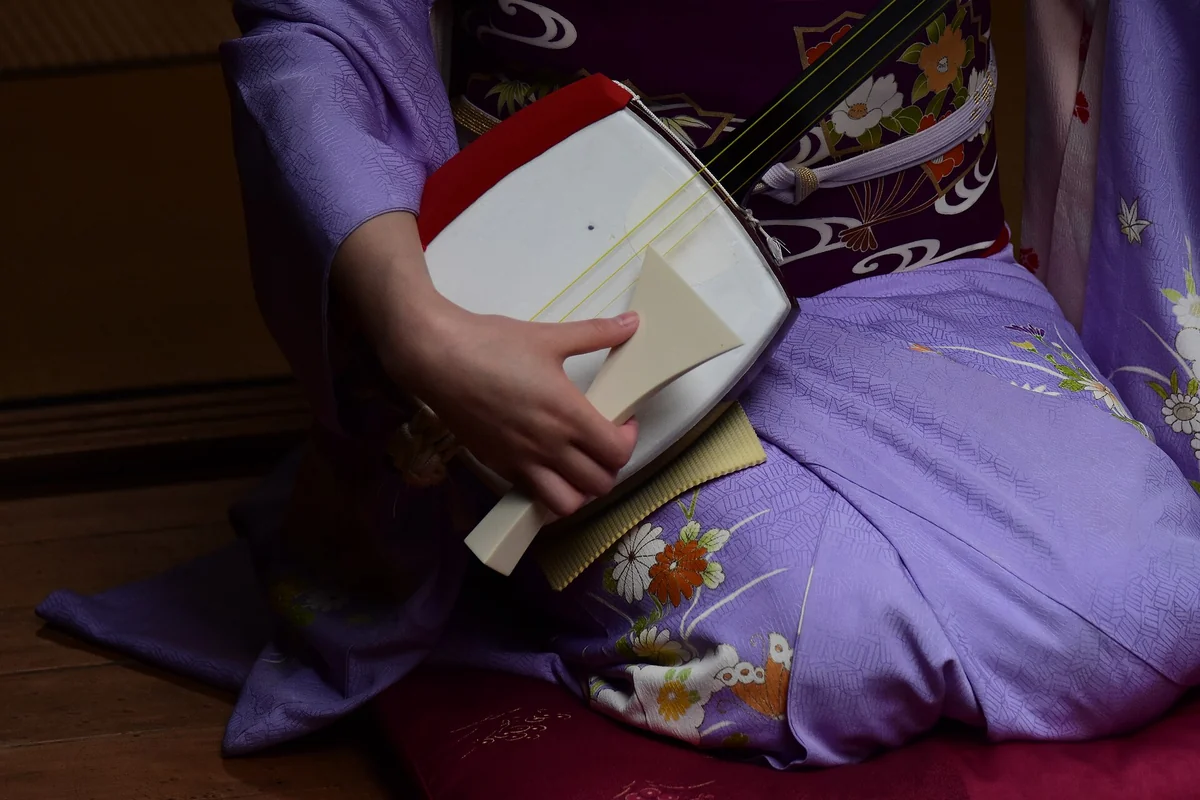
The player kneels or sits with the body on the right thigh and the neck angled up to the left. The right hand holds the bachi, a flat plectrum shaped like a small fan, and brings it down so it catches the string and then slaps the skin. That double hit is why a shamisen sounds partly like a drum. The left hand slides along the fretless neck, often with a small cloth loop called a yubikake on the fingers so they glide.
Listen for the buzz on the lowest string. It is deliberate: the string is set so it brushes the neck at the top, which makes a sizzling overtone called sawari. Each genre also has its own bachi. Jiuta plectrums are the longest and widest, gidayū players use the heaviest and thickest, and the Tsugaru bachi is the smallest, almost always tipped with tortoiseshell.
There is no fixed pitch. The shamisen is tuned to suit the singer, using three standard relationships between the strings.
| Tuning | Meaning | Example in C |
|---|---|---|
| Honchōshi (本調子) | “Home tuning”, the base | C, F, C |
| Niagari (二上り) | “Second string raised” | C, G, C |
| Sansagari (三下り) | “Third string lowered” | C, F, B flat |
Tsugaru Shamisen: The Blind Musicians of Aomori
The style most people now picture when they hear the word shamisen comes from the Tsugaru Peninsula, in the west of Aomori Prefecture at the northern tip of Honshu. It was first played by blind travelling musicians known as bosama, who earned a living playing at people’s doors through the northern winters. One researcher, Daijō Kazuo, traces the style to a blind player called Nitabō, who in 1877 rounded off his plectrum and began striking the area around the bridge, though the history is not fully documented.
The Tsugaru shamisen is a futozao with a thicker neck and heavier strings than other types. Its music is built on folk songs, but players stretch them with long improvised passages and rapid, hammered strokes, which is why it is often compared to bluegrass banjo. Shirakawa Gunpachirō took it to Tokyo concert halls, a 1959 run with the singing star Michiya Mihashi made it famous, and the blind master Takahashi Chikuzan began touring Japan with it in 1964.








Famous Shamisen Players to Start With
Takahashi Chikuzan (1910 to 1998)
Born in Nakahiranai, now part of Hiranai in Aomori, Chikuzan lost his sight to measles at about two and was apprenticed to a local Tsugaru player as a boy. Before the Second World War he travelled Tohoku and Hokkaido playing on doorsteps. After it he became the accompanist to the Tsugaru folk singer Narita Unchiku, who gave him the name Chikuzan, and from 1964 he toured Japan as a soloist. His many recordings are the place to hear the style before it became a stage spectacle, and a film, The Life of Chikuzan, was made about him.
The Yoshida Brothers
Ryōichirō (born 1977) and Kenichi Yoshida (born 1979) grew up in Noboribetsu, Hokkaido, and started on the shamisen at five, switching to Tsugaru style around 1989. Their first album, Ibuki (1999), sold more than 100,000 copies in Japan. Their track “Kodo (Inside the Sun Remix)” was used in Nintendo’s Wii commercials in North America from November 2006, and they supervised the shamisen music for the anime Those Snow White Notes. Rising, below, shows how they mix the instrument with drums and synths.
Hiromitsu Agatsuma
Born in Hitachi, Ibaraki, in 1973, Agatsuma started Tsugaru shamisen at six and won the All-Japan Tsugaru-jamisen Competition at 14. His 2001 debut, Agatsuma, was named Traditional Japanese Music Album of the Year at the Japan Gold Disc Awards. Agatsuma Plays Standards (2008) is the record to try if you come from jazz: it puts jazz standards and Western songs on the shamisen.
Hidejiro Honjoh and Beni Ninagawa
For contemporary classical shamisen, Hidejiro Honjoh plays Reizei with the flautist Claire Chase and the solo piece Sparkler on Fujikura’s album. For rock, Beni Ninagawa played shamisen in the eight-piece Wagakki Band, whose 2014 video for Senbonzakura spread the sound far beyond Japan before the band paused at the end of 2024.
Shamisen in Anime, Film and Pop
- Kubo and the Two Strings (2016): Laika’s BAFTA-winning stop-motion film gives its hero a magical shamisen. Dario Marianelli wrote the score, the London player Hibiki Ichikawa played on the soundtrack, and the Yoshida Brothers recorded an instrumental “While My Guitar Gently Weeps” for the Japanese dub.
- Those Snow White Notes (Mashiro no Oto): Marimo Ragawa’s manga about a teenage Tsugaru shamisen player ran in Monthly Shōnen Magazine from 2009 to 2022 across 31 volumes. Shin-Ei Animation’s anime aired from April to June 2021, with the Yoshida Brothers supervising the shamisen music.
- Rock and pop: Wagakki Band, the guitarist Miyavi and the Yoshida Brothers have all put the shamisen in front of rock audiences.
The shamisen is one of nine instruments in our guide to traditional Japanese instruments, which explains how it fits beside the koto, the shakuhachi and the taiko.
Where to Hear and Learn the Shamisen in London
- Lessons with Hibiki Ichikawa: the London-based Tsugaru player teaches one-to-one at £40 an hour, with a £10 trial lesson for first timers and 30 minute lessons for children. A shamisen is provided, he runs group lessons at the Kaetsu Centre in Cambridge, he visits students at home within London for a travel fee, and his students give a concert each February. Book through his lessons page.
- Hibiki on stage: in 2026 he played alongside the calligrapher Setsuhi Shiraishi at Japan Night: Ink and Strings in June and at Wigmore Hall in October. Follow his Instagram for new dates.
- SOAS Min’yō Group: sings Japanese folk songs with shamisen and shakuhachi at SOAS, University of London, and welcomes beginners who are not students. See the SOAS Min’yō Group site.
- The sanshin: the London Okinawa Sanshinkai practises Okinawan song on the shamisen’s ancestor every Saturday from 3pm to 6pm in Room G52 at SOAS. See the London Okinawa Sanshinkai site.
- Japan Matsuri: the 2026 festival in Trafalgar Square on 4 October featured the singer and shamisen player YUZU, who blends the instrument with pop and anime songs, and the Japan Association’s Awa Odori dancers with live shamisen. The full line-up is on the Japan Matsuri performers page.
If you are in Japan in August, the street bands of Tokushima’s Awa Odori are the loudest place to hear shamisen outdoors, and our guide to Japan in August has the 2026 dates and how the festival works.
Shamisen Questions
How many strings does a shamisen have?
Three. The name is written with the characters for three, taste and string, and the instrument is also called sangen, meaning three strings. The strings are silk for professional performances and nylon or tetron for practice, because silk breaks easily. The lowest string is set to buzz against the neck, a sound called sawari.
What is a shamisen made of?
A hardwood neck, usually in three pieces that slot together, runs through a square wooden body covered front and back with skin. Cat and dog skin were traditional, but they fell out of use from the mid 2000s and synthetic skins are now common. Pegs and bridges were once ivory; today wood, bone, horn and plastic are used.
What is the difference between the shamisen and the sanshin?
The sanshin is the Okinawan ancestor of the shamisen. Its body is covered in python skin, and it is traditionally played with a pick of water buffalo horn worn on the index finger. The shamisen developed from it after it reached the mainland port of Sakai in the 16th century, with a larger body, animal or synthetic skin and the bachi plectrum.
Is the shamisen hard to learn?
The fretless neck means you find each note by ear and feel, and each genre has its own notation, so a teacher helps a great deal. Beginners usually start on simple folk songs. In London, Hibiki Ichikawa offers a £10 trial lesson with an instrument provided, which is the cheapest way to find out whether it suits you.
What is Tsugaru shamisen?
It is both a style and an instrument from the Tsugaru area of Aomori in northern Japan. The thick-necked shamisen is struck hard and fast, with improvised passages built on folk songs. It grew out of blind travelling musicians’ playing in the late 19th century and is the style of Takahashi Chikuzan, the Yoshida Brothers and Hiromitsu Agatsuma.