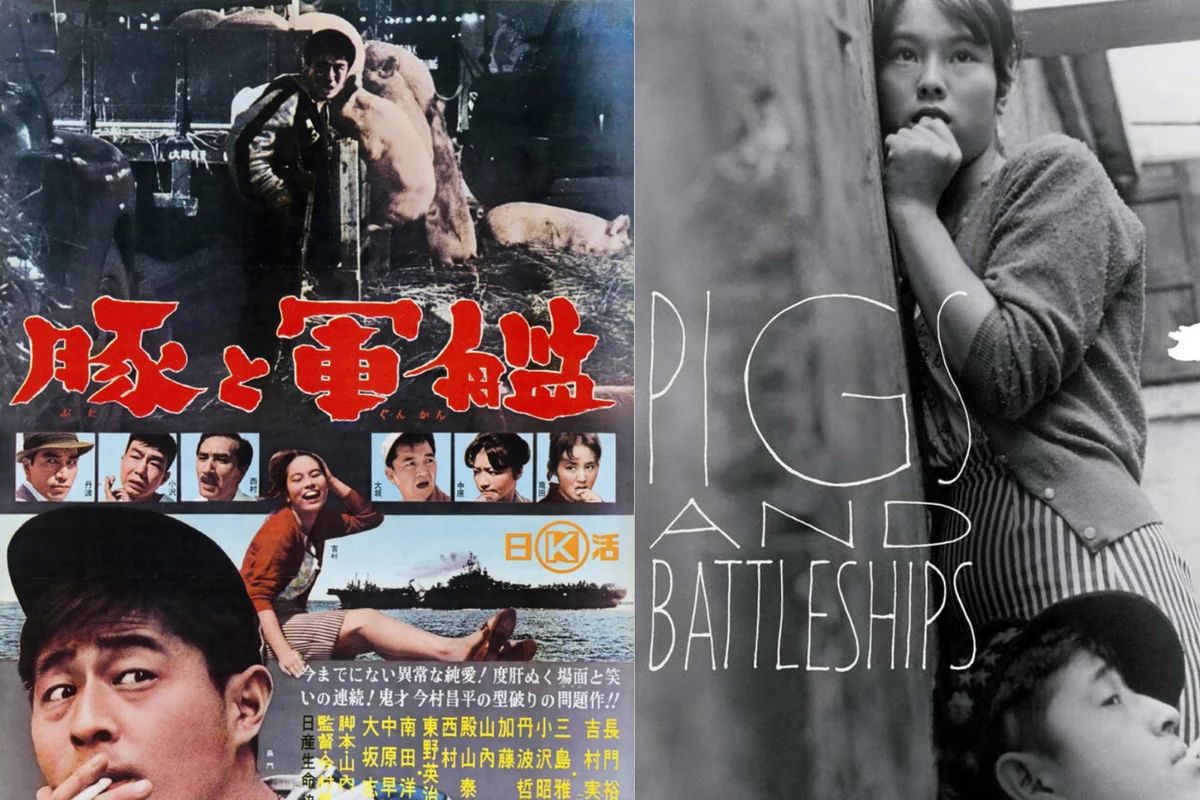
Few films capture the chaotic contradictions of postwar Japan quite like Shōhei Imamura’s Pigs and Battleships (Buta to Gunkan, 1961). Set in Yokosuka, home to a major US naval base, the film is a frantic mixture of gangster film, black comedy, romance and social satire in which almost everybody is trying to make money from somebody else.
The film was Imamura’s fifth feature but the first in which he was given significant creative freedom, and it would establish many of the themes that came to define his career: people on the fringes of society, sex, money, criminality, strong-willed women and a fascination with the less respectable corners of Japanese life.
Pigs and Battleships recently screened at London’s ICA as part of The Lower Depths: The Cinema of Shohei Imamura, the first major UK retrospective of Imamura’s work in more than twenty-five years. Running from 22 October to 13 December 2026, the season explores a filmmaker who consistently rejected idealised visions of Japan in favour of people living much further down the social ladder.
Pigs and Battleships, From Kinta’s Pig Scheme to Dobuita Street
Pigs and Battleships Plot: Kinta, Haruko and the Pig Scheme
Watch the Pigs and Battleships trailer on MUBI.
Kinta (Hiroyuki Nagato) is a young hoodlum living in Yokosuka who dreams of becoming an important gangster. His girlfriend Haruko (Jitsuko Yoshimura) has rather different ambitions: she wants Kinta to leave the criminal world behind and build an ordinary life with her.
Kinta believes his opportunity has arrived when the small-time gang he works for moves into the pig business. The plan is simple enough: acquire discarded food from the nearby American naval base, use it to feed pigs and sell the pork for profit. But beneath the scheme lies a world of extortion, prostitution, bribery and betrayal in which Kinta is considerably less important than he imagines.
Haruko, meanwhile, faces her own pressures. Her mother encourages her to follow the path taken by her older sister, whose relationship with an American serviceman provides the family with money and the possibility of a life in America. Haruko wants neither this nor Kinta’s fantasy of gangster success. She simply wants to escape Yokosuka on her own terms.
As competing schemes begin to collapse, Imamura pushes the story towards an increasingly chaotic climax involving gangsters, guns and a stampede of pigs through Yokosuka’s streets.


Filming in Yokosuka and on Dobuita Street
Yokosuka is much more than a backdrop to Pigs and Battleships. The relationship between the city and the American naval base is at the heart of the film.
Imamura deliberately resisted relying entirely on studio filming and instead pushed for extensive location shooting in Yokosuka. Actual locations included Yokosuka railway station, the surrounding hilly farmland and Dobuita Street, the entertainment district lined with bars, shops and establishments catering to American servicemen.
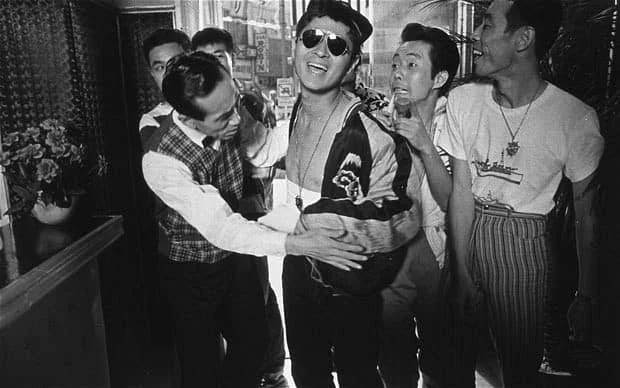
Getting access was not straightforward. According to film historian Hiroshi Kitamura, Imamura made connections with local yakuza to help the production work in some of Yokosuka’s rougher neighbourhoods. He also approached the US military for assistance but was refused. Determined to photograph real American warships rather than simply reproduce them, Imamura kept his camera crew on standby for weeks waiting for aircraft carriers to enter the harbour.
This insistence on filming the real city gives Pigs and Battleships an almost documentary quality. The opening takes us from an American flag and the harbour down into the streets of Dobuita, where sailors, military police, shopkeepers and young women mingle beneath signs written in English. Not everything, however, should be seen as documentary reality. Later accounts of the production describe studio-built versions of Yokosuka streets being used for some of the more elaborate sequences, allowing Imamura to stage the film’s increasingly anarchic action. The finished film therefore blends the reality of the base town with the more controlled chaos of the studio.
Pigs Fed on US Navy Leftovers After the 1960 Anpo Protests
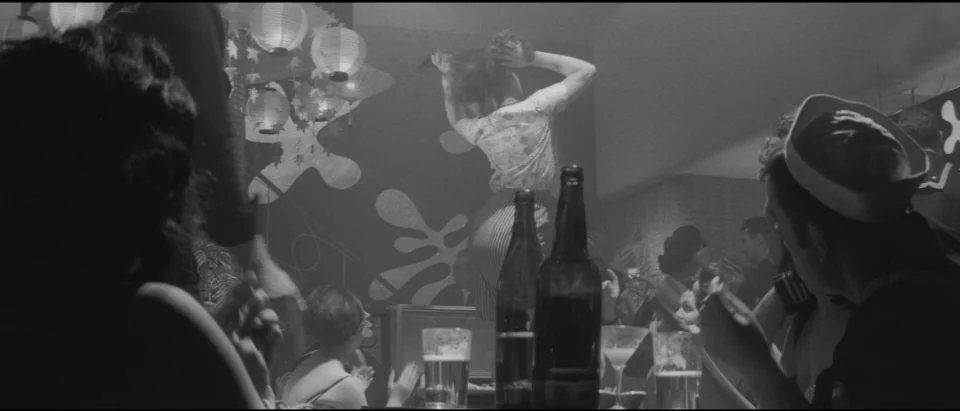
The timing of the film is important. Although the Allied occupation of Japan formally ended in 1952, American military bases remained a highly visible presence. In 1960, opposition to the renewal of the US-Japan Security Treaty exploded into the enormous Anpo protests, with students, activists and ordinary citizens taking to the streets. Historian Hiroshi Kitamura places Pigs and Battleships directly within this period of intense debate about American power and Japan’s continuing relationship with the United States.
Imamura turns that political relationship into something wonderfully crude: pigs eating American leftovers. The gang’s supposedly brilliant business opportunity depends upon buying food discarded by the naval base to feed their animals. The Japanese characters are therefore quite literally attempting to profit from American waste.
But Pigs and Battleships is not simply an anti-American film. Imamura is equally interested in the Japanese characters willing to exploit the system. The gangsters swagger around as if they are powerful businessmen, yet their livelihood depends upon the naval base they resent. Everyone wants a piece of somebody else: gangsters exploit civilians, businessmen exploit gangsters, Haruko’s family sees relationships with American servicemen as a financial opportunity and Americans consume the entertainment Yokosuka provides.
The battleships represent obvious military power. The pigs are messier. They eat whatever is put in front of them and become, intentionally or otherwise, an uncomfortable reflection of the people scrambling for profit beneath the American fleet.
Haruko and the Way Out
It is Haruko who ultimately gives the film its emotional centre.
Imamura’s male characters are full of ambition but frequently have very little idea what to do with it. Kinta believes becoming a gangster will make him independent while repeatedly surrendering that independence to more powerful men.
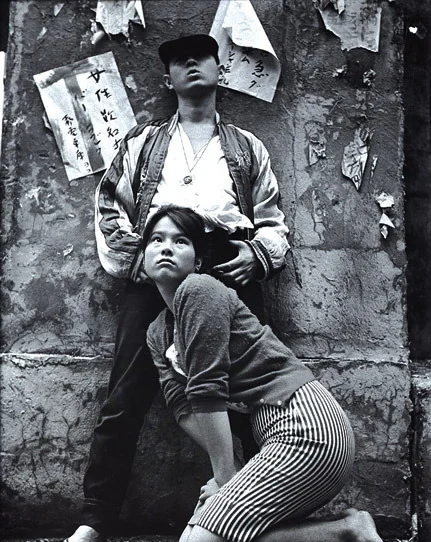
Haruko sees things more clearly. She rejects the idea that becoming an American serviceman’s mistress represents success, but she is equally unimpressed by Kinta’s criminal posturing. Critic Audie Bock argues that while Kinta repeatedly pursues fantasies of status and money, Haruko possesses the practical will to walk away when those fantasies prove empty. Her desires are strikingly ordinary: work, stability and the chance to control her own future. Haruko’s independence and determination point towards the strong, resilient women who would become central to many of Imamura’s later films.






Imamura’s Film Without an Easy Villain
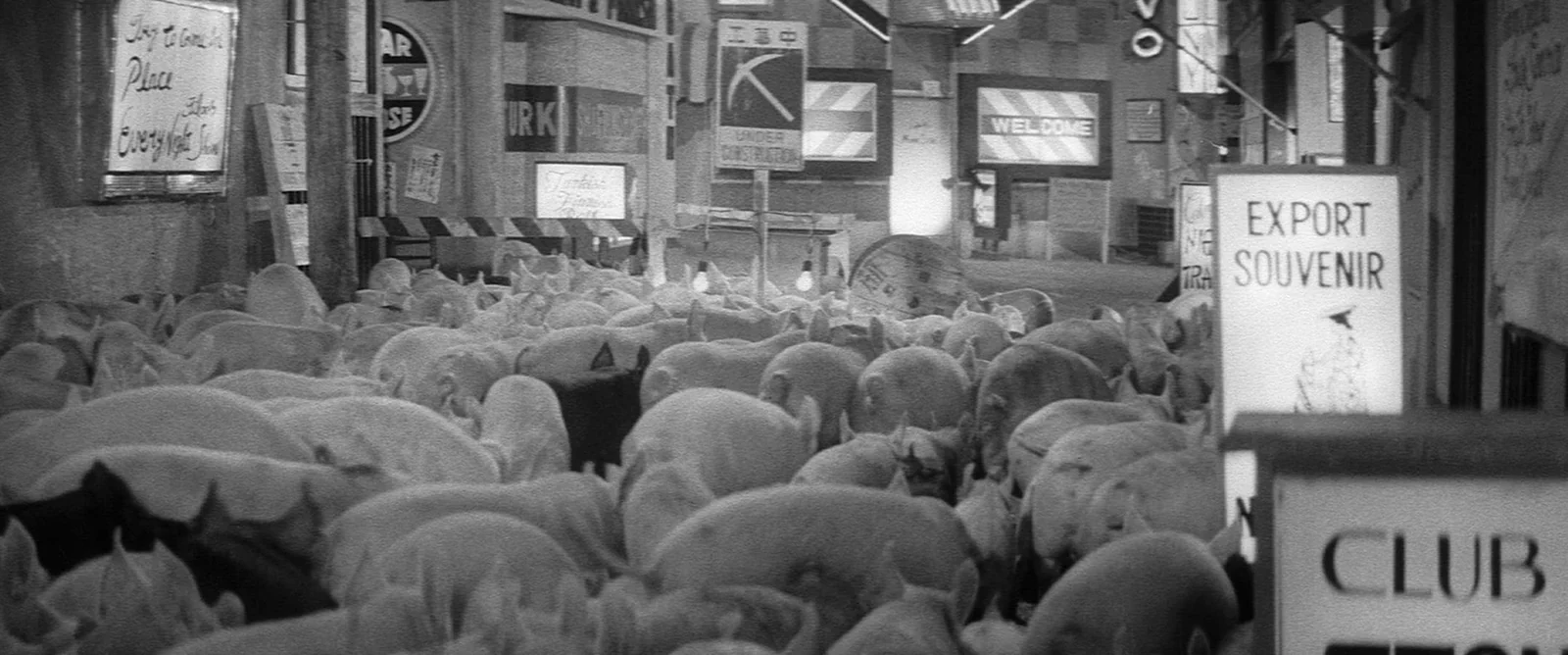
Pigs and Battleships is angry, but it is also extremely funny.
Imamura turns postwar politics into something physical and deliberately vulgar. His Japan is not one of serene temples, polite families and restrained emotions. It is crowded with pimps, prostitutes, sailors, gangsters, opportunists and several hundred very unruly pigs.
To me, what makes the film particularly effective is that Imamura refuses to give the audience an easy villain. American military power hangs over Yokosuka, but Japanese opportunism helps sustain the system below it. Almost everyone believes they can manipulate somebody else and almost everyone discovers that they are being manipulated in return.
Haruko is the exception. While the men around her dream about status, easy money and America, she eventually understands that survival may depend upon simply walking away.
More than sixty years later, Pigs and Battleships remains a wonderfully unruly portrait of a country attempting to decide what it wants to become, caught somewhere between American battleships in the harbour and pigs feeding on their leftovers.
Pigs and Battleships at the ICA and on 4K Blu-ray
Pigs and Battleships screened at the Institute of Contemporary Arts on 29 October 2026 as part of The Lower Depths: The Cinema of Shohei Imamura. The wider retrospective continues until 13 December 2026 and includes films from throughout Imamura’s career alongside contextual screenings, new restorations and rarely seen works.
Radiance Films releases a new 4K restoration of Pigs and Battleships on 30 November 2026, in its limited edition box set Radical Japan: Survival and Desire, alongside The Insect Woman and Intentions of Murder.