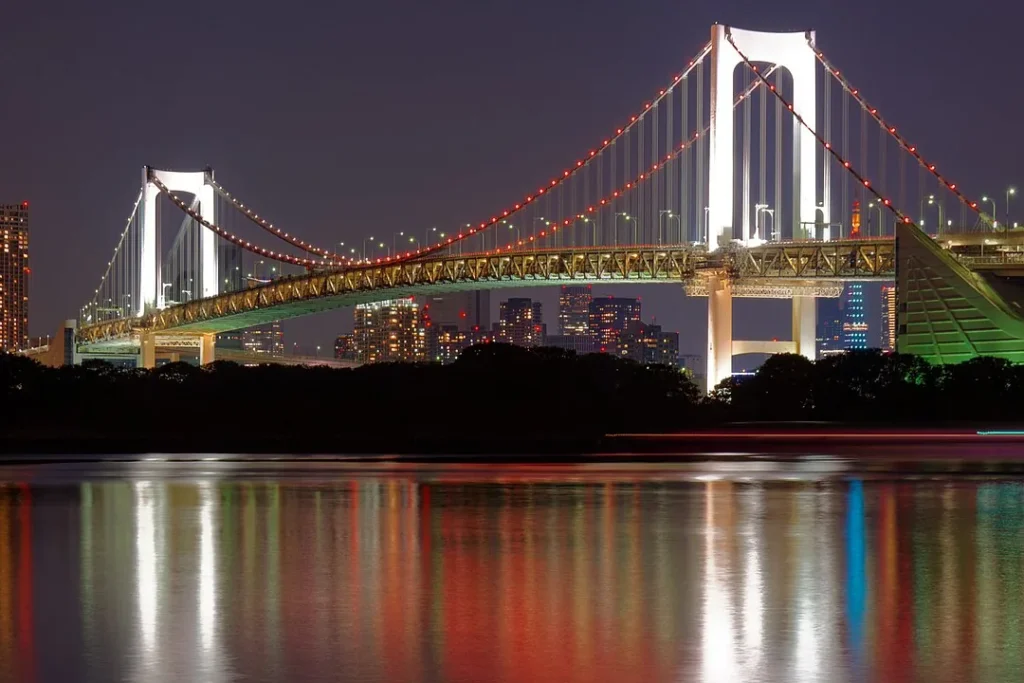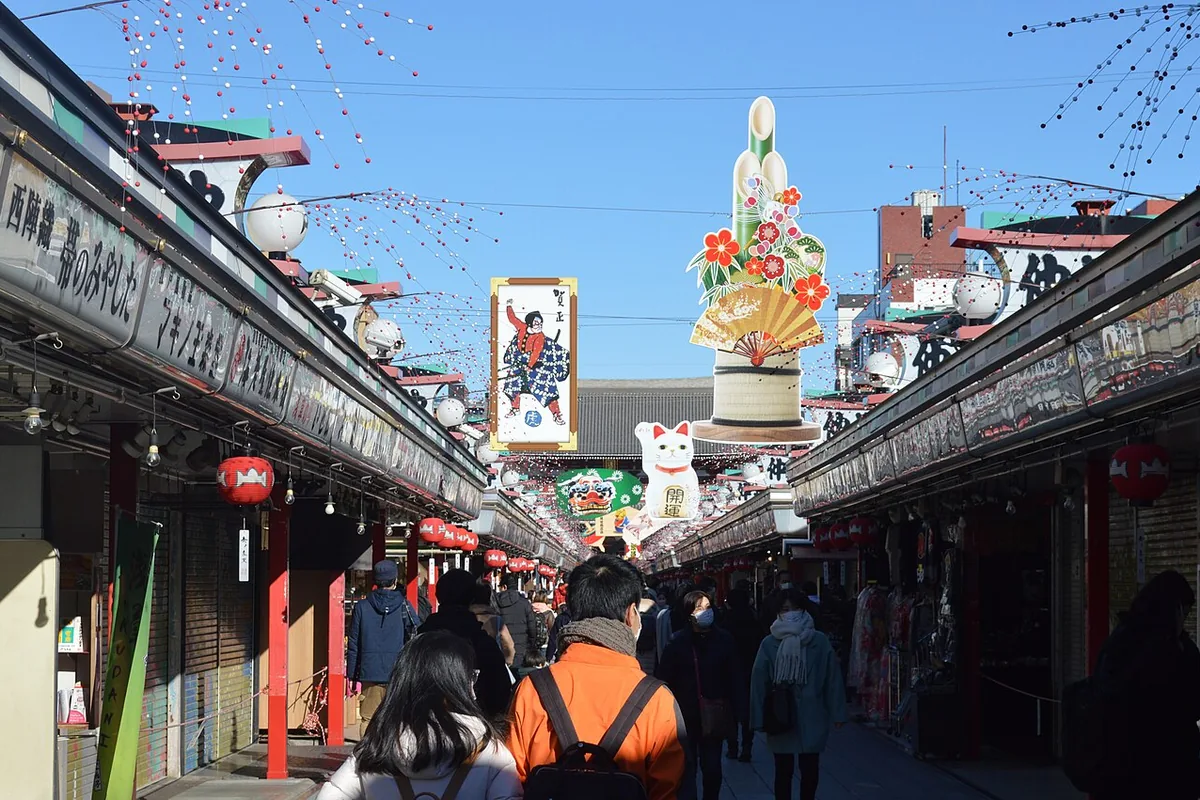
Asakusa is the old-town district of north-east Tokyo, built around Senso-ji, the city’s oldest temple, and the busy shopping street of Nakamise that leads up to it. Entry to the temple is free, its grounds never close, and the main hall opens at 6am (6.30am from October to March), so an early start gives you the gates and lanterns before the crowds.
This guide covers Senso-ji and Kaminarimon, Nakamise, Asakusa Shrine and its Sanja Matsuri in May, Hoppy Street, Kappabashi, the Sumida riverside, rickshaw prices and where to eat, with a walking route we measured and opening hours checked on 1 November 2026. It is part of our Tokyo travel guide.
Asakusa at a glance
Where: Taito City, on the west bank of the Sumida River
Stations: Asakusa (Tokyo Metro Ginza Line, Toei Asakusa Line, Tobu Skytree Line, Tsukuba Express) and Tawaramachi (Ginza Line)
Senso-ji main hall: 6am to 5pm (opens 6.30am from October to March); grounds always open; free
Big festival: Sanja Matsuri, third weekend of May (expected 14 to 16 May 2027)
Next temple fair: Hagoita-ichi battledore market, 17 to 19 December 2026
Checked: 1 November 2026
Things to Do in Asakusa, From Senso-ji to the Sumida
Senso-ji and Kaminarimon: Tokyo’s Oldest Temple, Open From 6am
Senso-ji traces its story to 628, when two fishing brothers pulled a small statue of Kannon, the Buddhist figure of compassion, from the Sumida River. The temple says around 30 million people visit each year. Almost everything you see is post-war: the main hall burned in the air raid of 10 March 1945 and was finished again in 1958, and the Hozomon inner gate was rebuilt in 1964 and the five-storey pagoda in 1973.
You enter through Kaminarimon, the Thunder Gate, whose official name is Furaijinmon after the statues of Fujin, god of wind, and Raijin, god of thunder, on either side. A fire in 1865 destroyed it, and for 95 years the temple had no gate here, until Matsushita Konosuke, founder of the company now called Panasonic, paid for the present one in 1960. The red lantern under it is 3.9 metres tall, 3.3 metres wide and weighs about 700kg; look up at its base to see a carved dragon.
The main hall opens from 6am to 5pm, and from 6.30am between October and March. The grounds stay open all night and nothing is charged. The temple’s year has its own fairs: the Hozuki market of potted ground cherries on 9 and 10 July, and the Hagoita-ichi, a market of decorated battledore paddles, from 17 to 19 December.
Asakusa in 1878, as Isabella Bird saw it
The traveller Isabella Bird visited in 1878 and wrote that “every day is a festival-day at Asakusa”. She bought bouquets of firework flowers at 50 for 2 sen, watched “hundreds of men, women, and children” stream through the temple gateway, and noted that on the great matsuri days the mikoshi was “carried in a magnificent, antique procession to the shore and back again”. The scene would be familiar on Nakamise today. From Unbeaten Tracks in Japan (1880), in the Japan Nakama book library.


Nakamise: 250 Metres of Stalls From Kaminarimon to Hozomon
Nakamise is the temple’s main approach, a street of red-painted shops running for about 250 metres from Kaminarimon to the Hozomon gate. Senso-ji calls it one of the oldest shopping streets in Japan and says the name may mean “middle shops”, because the stalls sat between those on the main road and those in front of the temple hall. The shops sell snacks, souvenirs, toys, umbrellas, festival dance props and traditional crafts. Arrive at 7am and you have the lanterns almost to yourself; by late morning the street is shoulder to shoulder.
Asakusa Shrine and the Sanja Matsuri, Third Weekend of May
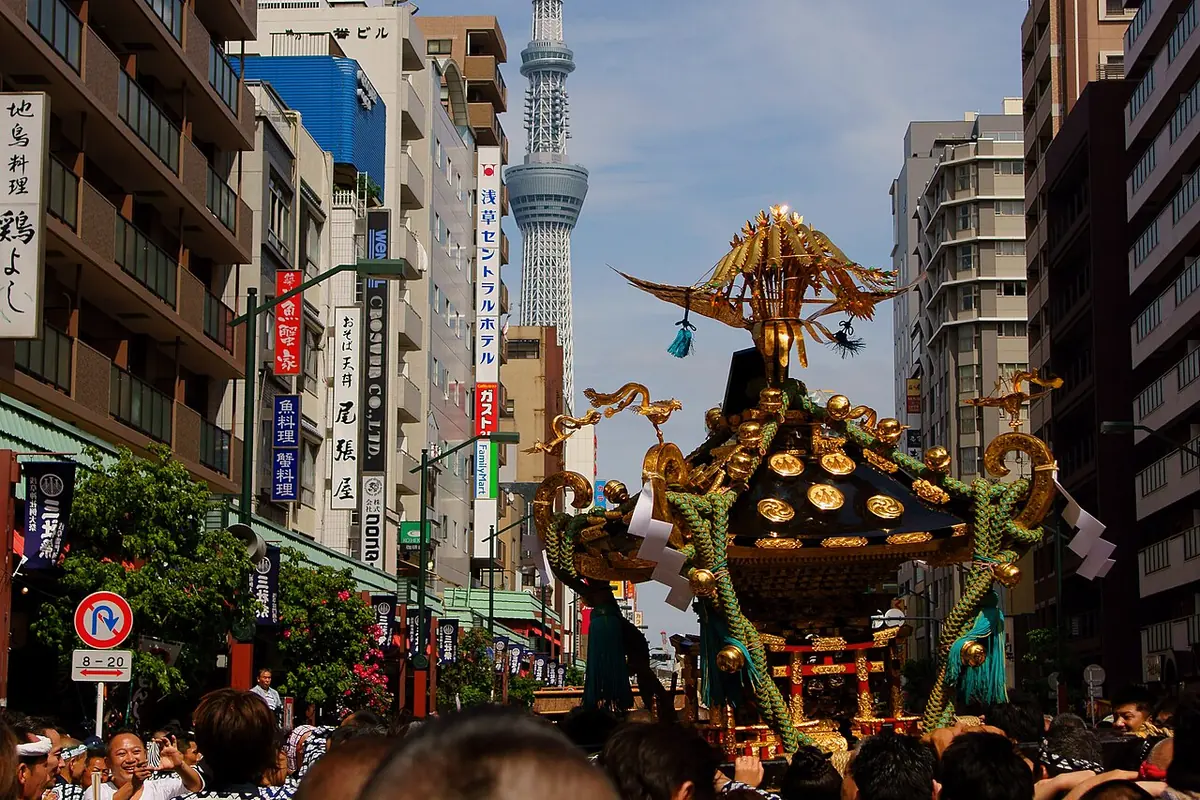
Just east of Senso-ji’s main hall stands Asakusa Shrine, which honours three men as the founders of Asakusa: Hajinomatsuchi, the local landlord who enshrined the Kannon statue, and the fishermen Hamanari and Takenari. Its festival, the Sanja Matsuri, is held by the shrine’s parishioners on the third Saturday and Sunday of every May, and the shrine counts it among the three great festivals of old Edo. Nippon.com puts the crowds at 1.5 million.
| Day | What happens |
|---|---|
| Friday afternoon | The Daigyoretsu procession through the streets, and the Binzasara dance at the shrine |
| Saturday from about noon | Around 100 neighbourhood mikoshi (portable shrines) from Asakusa’s 44 parishes are blessed and carried |
| Sunday from early morning | The three main mikoshi leave the shrine and are carried through the parishes until about 8pm; spectators are kept out of Senso-ji’s gates during the early scrum |
Why the Sanja Matsuri is called a yakuza festival
No festival in Japan is officially called a yakuza festival. The phrase is a nickname some foreign media and travel blogs use for the Sanja Matsuri, because men with full-body traditional tattoos have long been a visible part of the crowds around the mikoshi, and some have been reported to be members of yakuza crime groups. In 2007 TIME described “yakuza in loincloths” showing their tattoos in a normally forbidden display.
The shrine has pushed back. The Japan Times reported in May 2008 that organisers had tried for years to stop people riding on top of the three main mikoshi, and that in 2007 riders it described as “most probably members of the yakuza” had climbed on and damaged a carrying pole. The shrine kept its main mikoshi off the streets in 2008, and when they returned in 2009 organisers said no riding of any kind would be allowed. Those reports describe some riders in some years. The festival itself belongs to Asakusa Shrine and the parishioners of its 44 neighbourhoods, who carry the mikoshi for their own community.
Hoppy Street: an 80-Metre Alley of Izakaya West of Senso-ji
Hoppy Street, or Hoppy-dori, is a roughly 80-metre lane on the west side of the temple grounds, lined with old-fashioned izakaya whose tables spill out onto the street. It is named after Hoppy, a beer-taste soft drink its maker has sold since 1948, and Time Out notes it is also known as Stew Street. The street once drew a hard-drinking crowd reading the horse-racing papers from the off-track betting office next door; today regulars, families and visitors share the terrace seats, and Tobu Railway notes that many start drinking there from the afternoon on fine days.








Kappabashi Kitchen Town, 800 Metres of Knife and Tableware Shops
A short walk west of Hoppy Street, Kappabashi Dougu Street runs for 800 metres with more than 170 shops selling knives, tableware, lanterns and the plastic food samples seen in restaurant windows. Most shops open from about 10am to 5pm and only around 30% open on Sundays, so go on a weekday or a Saturday; Tawaramachi on the Ginza Line is five minutes away. Our Kappabashi Street guide lists the knife shops, the food sample workshop and how tax-free shopping has worked since 1 November 2026.
The Sumida River: Sumida Park, the River Walk and Boats to Odaiba
Asakusa’s eastern edge is the Sumida River, with Sumida Park along the bank and Tokyo Skytree on the far side. The quickest way across on foot is the Sumida River Walk, a 160-metre walkway beside the Tobu railway bridge with a glass floor section over the water, open from 7am to 10pm. On the far bank it leads into Tokyo Mizumachi, a row of shops and cafés under the railway arches that opened in 2020, and on to the Skytree.
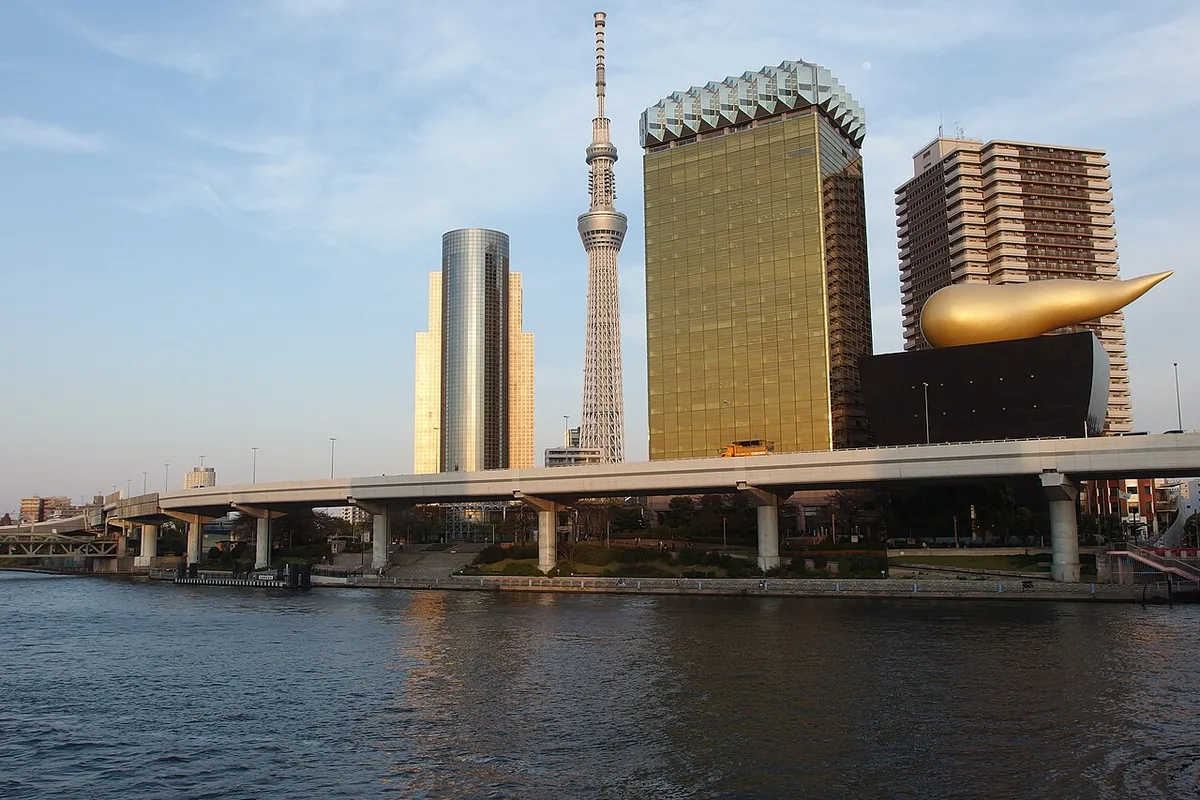
From Tokyo Cruise’s Asakusa pier at 1-1-1 Hanakawado, a minute from the Ginza Line station, water buses run down the river and out into Tokyo Bay. On 1 November 2026 its fare table listed Asakusa to Hinode Pier at ¥1,000 (about 40 minutes), and boats run down the river to Odaiba Seaside Park for ¥2,000, taking 55 to 70 minutes depending on the boat. Check the day’s operating status before you go, as sailings change with the weather.
Asakusa Rickshaw Prices: From ¥4,000 for 12 Minutes
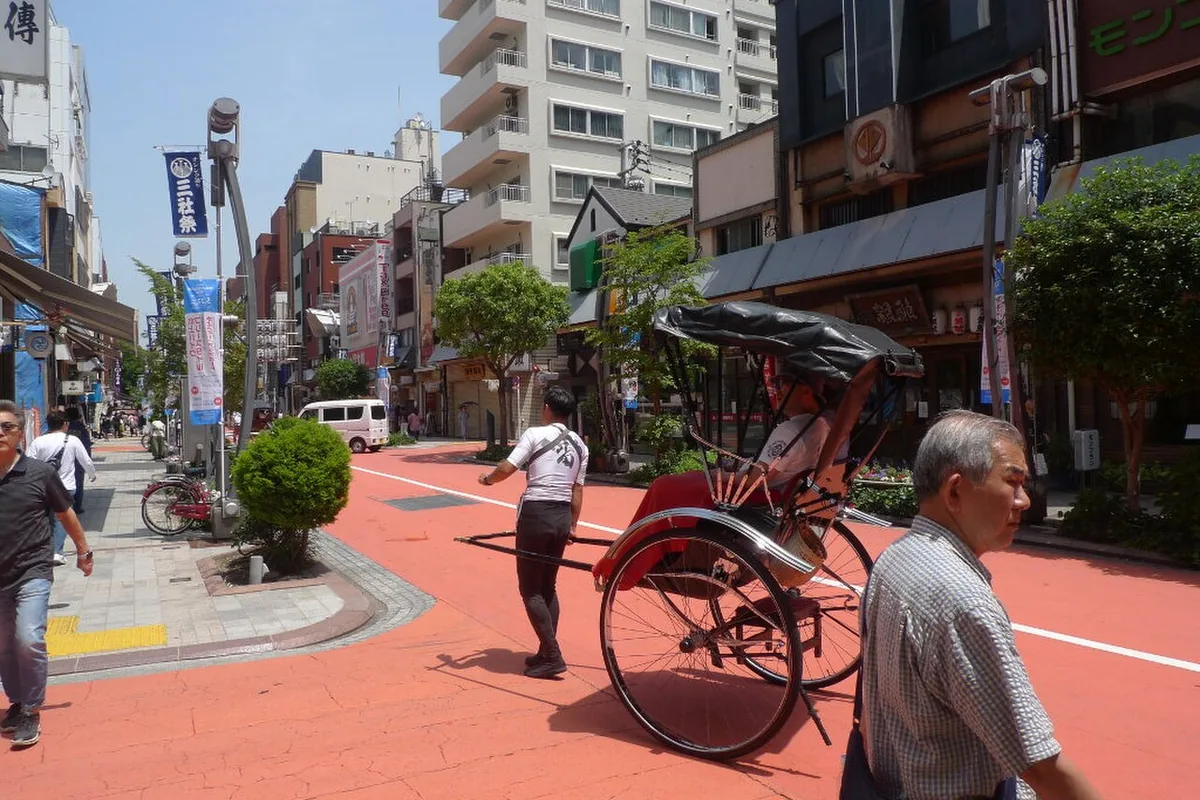
Rickshaw pullers wait beside Kaminarimon from the morning, guiding you round the sights and taking photographs as they go. Ebisuya, which also runs rickshaws in Kyoto, Kamakura and other towns, starts from its stand about 30 seconds’ walk to the right of the gate and opens daily from 9.30am. Its prices on 1 November 2026, per rickshaw including tax:
| Course | One rider | Two riders | Book ahead? |
|---|---|---|---|
| 12 minutes | ¥4,000 | ¥5,000 | No, walk up only |
| 30 minutes | ¥9,000 | ¥10,000 | Yes |
| 45 minutes | ¥13,000 | ¥15,000 | Yes |
| 60 minutes | ¥16,000 | ¥20,000 | Yes |
Where to Eat in Asakusa: Tempura Since 1887, Sukiyaki Since 1895 and Melon Pan
Asakusa’s oldest restaurants are a short walk from the temple, and each is known for one dish. These were checked on Japan’s official and listings sites on 1 November 2026; hours change, so look again before you go.
| Place | Known for | Address | Hours and price |
|---|---|---|---|
| Daikokuya Tempura, since 1887 | Tendon, a bowl of rice topped with prawn tempura in a dark sauce | 1-38-10 Asakusa | 11am to 8pm, no regular closing day; from about ¥2,300 |
| Asakusa Imahan, Kokusai-dori main branch, since 1895 | Sukiyaki of Japanese Black beef; limited lunch beef bowls | 3-1-12 Nishi-Asakusa | 11.30am to 9.30pm, irregular closing days; lunch from ¥3,000, dinner from ¥15,000 |
| Asakusa Kagetsudo | Jumbo melon pan, which it says sells 3,000 a day | 2-7-13 Asakusa | 9am to 5pm daily, often sold out by about 4pm |
For a drink later in the day, Hoppy Street’s izakaya put tables out on the street.
Our 3.5km Asakusa Walking Route, Kappabashi to Tokyo Mizumachi
This route crosses Asakusa from west to east in about 50 minutes of walking, so it fills a day with stops. It starts at Kappabashi at 10am, when the shops open, and ends across the river. We measured each leg on OpenStreetMap’s walking routes on 1 November 2026. If you would rather see Senso-ji at its emptiest, walk the route backwards from Kaminarimon at 7am and reach Kappabashi as it opens.
| Leg | From | To | Distance | Walk |
|---|---|---|---|---|
| 1 | Tawaramachi Station (Ginza Line) | The golden kappa statue, Kappabashi Dougu Street | 750m | 11 minutes |
| 2 | Golden kappa statue | Hoppy Street | 550m | 8 minutes |
| 3 | Hoppy Street | Asakusa Shrine | 400m | 6 minutes |
| 4 | Asakusa Shrine | Senso-ji main hall | 130m | 2 minutes |
| 5 | Senso-ji main hall | Hozomon, then down Nakamise to Kaminarimon | 380m | 6 minutes |
| 6 | Kaminarimon | Sumida River Walk | 750m | 11 minutes |
| 7 | Sumida River Walk | Tokyo Mizumachi, for Tokyo Skytree | 510m | 7 minutes |
| Total | about 3.5km | about 50 minutes |
Getting to Asakusa on the Ginza Line, Toei Asakusa Line or Tobu
Asakusa Station is served by the Tokyo Metro Ginza Line, the Toei Asakusa Line and the Tobu Skytree Line, and Kaminarimon is a short walk from the Ginza Line exits. The Tsukuba Express has its own Asakusa station further west, five minutes from Kappabashi. From Tokyo Station allow about 20 minutes with a change at Kanda, and from Ueno the Ginza Line runs straight through. Asakusa, Ueno and Yanaka all sit in Taito City, and our Taito City guide covers the quieter streets between them. Asakusa also makes a good base: our guide to where to stay in Tokyo compares it with Shinjuku, Shibuya and Tokyo Station.
Asakusa: Questions and Answers
Asakusa is famous for Senso-ji, Tokyo’s oldest temple, whose story begins in 628, and for Kaminarimon, the gate with the giant red lantern. Nakamise’s 250 metres of stalls lead up to the temple, Hoppy Street has outdoor izakaya, Kappabashi sells kitchenware, and every May the Sanja Matsuri carries around 100 portable shrines through the streets.
Senso-ji is free to enter and its grounds never close. The main hall opens from 6am to 5pm, and from 6.30am between October and March, according to the temple’s own site. Arrive around 7am to see Kaminarimon and Nakamise before the crowds; by late morning the approach is packed, especially at weekends.
Asakusa Shrine holds the Sanja Matsuri on the third Saturday and Sunday of May, so the 2027 festival falls on Saturday 15 and Sunday 16 May, with the Daigyoretsu procession on Friday 14 May. In 2026 it ran from 15 to 17 May. The shrine publishes exact times each spring, and the main mikoshi leave the shrine early on the Sunday morning.
It is a nickname, mostly used abroad, for the Sanja Matsuri in Asakusa. Tattooed men, some reported to be yakuza members, have long been visible around the portable shrines, and The Japan Times reported riders it believed were yakuza damaging a main mikoshi in 2007. The shrine kept its main mikoshi off the streets in 2008 and banned riding on them from 2009.
At Ebisuya, which starts beside Kaminarimon, a 12-minute ride cost ¥4,000 for one person or ¥5,000 for two on 1 November 2026, and 30 minutes cost ¥9,000 or ¥10,000. Rides of 30 minutes or more can be booked online; the 12-minute course is walk up only. An English-speaking puller adds ¥1,000 per rickshaw.
The scenic way is Tokyo Cruise’s water bus from its Asakusa pier, a minute from the Ginza Line station, which reaches Odaiba Seaside Park in 55 to 70 minutes for ¥2,000 (fares checked 1 November 2026). By train, take the Ginza Line to Shimbashi, then the Yurikamome line over Rainbow Bridge to Odaiba-kaihinkoen or Daiba.