Golden Week in 2027 is Shōwa Day on Thursday 29 April plus three holidays from Monday 3 to Wednesday 5 May, which with the weekend gives Japan a five-day break from Saturday 1 to Wednesday 5 May. It is one of the busiest travel periods of the Japanese year, so expect full trains and higher rail fares between late April and 6 May, and the quietest travel to return from Thursday 6 May.
This guide gives the 2027 dates day by day, a crowd and price timeline built from the rail and road operators’ own figures for 2026, what stays open over the holidays, and how to plan a trip so Golden Week works for you.
Golden Week 2027 at a glance
Holidays: Thursday 29 April (Shōwa Day), Monday 3 May (Constitution Memorial Day), Tuesday 4 May (Greenery Day), Wednesday 5 May (Children’s Day). Longest break: Saturday 1 to Wednesday 5 May. Normal working days in between: Friday 30 April. Back to normal: Thursday 6 May. Busiest travel days (2026 pattern): out of the cities on the first Saturday, back on the last holiday.
Golden Week 2027 Dates, Crowds and Prices
Golden Week 2027 Dates, Day by Day
Golden Week is a cluster of four national holidays that fall within a week at the turn of April and May. The 2027 dates below come from the Cabinet Office’s list of national holidays and the National Astronomical Observatory of Japan’s 2027 almanac. In 2026, 6 May was an extra substitute holiday because Constitution Memorial Day fell on a Sunday; in 2027 it is not, so the break ends on Wednesday 5 May.
| Date in 2027 | Day | Holiday | What it means for a traveller |
|---|---|---|---|
| 24 to 28 April | Saturday to Wednesday | None | Normal days; in 2026 all-reserved Nozomi trains began on the Friday before Golden Week |
| 29 April | Thursday | Shōwa Day (Shōwa no Hi) | A single holiday; sights and trains busy for the day |
| 30 April | Friday | None | A normal working day |
| 1 May | Saturday | Weekend | The five-day break begins; expect the heaviest departures from the big cities |
| 2 May | Sunday | Weekend | Second day of the break |
| 3 May | Monday | Constitution Memorial Day (Kenpō Kinenbi) | Holiday; Hakata Dontaku begins in Fukuoka |
| 4 May | Tuesday | Greenery Day (Midori no Hi) | Holiday; second day of Hakata Dontaku |
| 5 May | Wednesday | Children’s Day (Kodomo no Hi) | Last day off; expect the heaviest return trains and roads |
| 6 May | Thursday | None | Back to work; crowds drop |
| 7 to 10 May | Friday to Monday | None | In 2026 JR East charged its cheapest off-peak seat fees from 7 to 10 May |


Shōwa Day, Constitution Memorial Day, Greenery Day and Children’s Day
Each holiday has its own purpose, set out in the law on national holidays. Shōwa Day (29 April) is a day to look back on the turbulent Shōwa era and Japan’s recovery, and think about the country’s future. Constitution Memorial Day (3 May) marks the day Japan’s constitution came into force. Greenery Day (4 May) is for enjoying nature and being thankful for it. Children’s Day (5 May) is for respecting children’s personalities, caring for their happiness and thanking mothers.
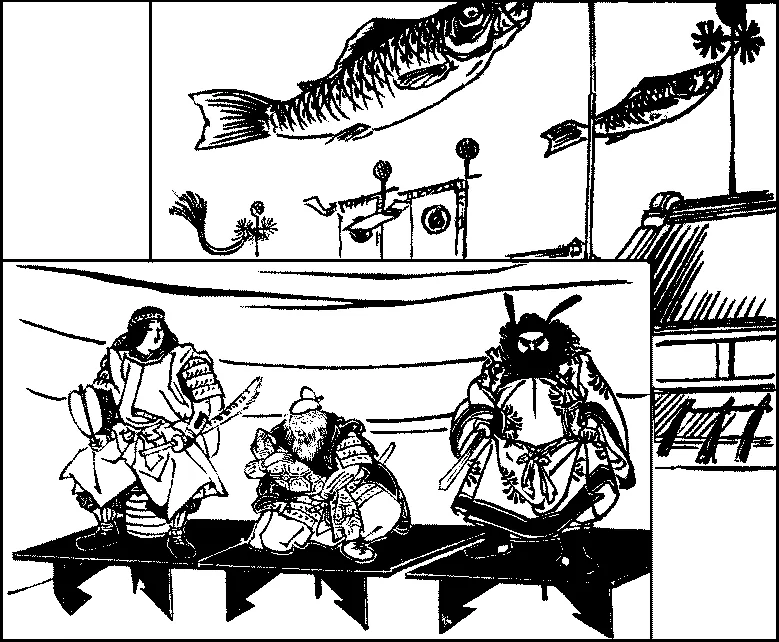
Children’s Day carries on Tango no Sekku, the Boys’ Festival on the fifth day of the fifth month, when families fly koinobori, carp-shaped streamers, from tall poles. Jukichi Inouye wrote in 1910 that the carp stood for strength because it can swim up a fast current, and that families set out figures of famous heroes indoors, much as girls display their dolls in March; Alice Mabel Bacon noted that half a dozen poles in one yard meant a household with many boys. Our guide to visiting Japan in May covers the festivals and weather for the rest of the month.
Golden Week Crowd and Price Timeline From Official Data
No single body publishes a Golden Week crowd forecast for visitors, so we put together what the rail operators, Japan’s largest travel agency and the motorway operator published for 2026, the most recent Golden Week. The 2027 versions appear from January (rail) and April (travel forecasts); we will update the table when they do.
| What | Golden Week 2026 | Who published it |
|---|---|---|
| Every Tokyo to Hakata Nozomi all-reserved (no unreserved cars) | Friday 24 April to Wednesday 6 May | JR Central and JR West, 7 January 2026 |
| Peak reserved-seat fee (400 yen above normal) on JR East, Hokkaido and Hokuriku lines | 27 April to 6 May | JR East seat fee calendar |
| Peak reserved-seat fee on JR Central, West, Shikoku and Kyushu lines | 1 to 6 May | JR East seat fee calendar (inter-company section) |
| Busiest day for domestic departures | Saturday 2 May | JTB forecast, 2 April 2026 |
| Worst motorway jams leaving the cities | Saturday 2 May | NEXCO Central results, 8 May 2026 |
| Worst motorway jams heading home | Tuesday 5 May | NEXCO Central results, 8 May 2026 |
| Off-peak reserved-seat fee (200 yen below normal) returns | 7 May (JR Central and West lines); 7 to 10 May (JR East lines) | JR East seat fee calendar |
24 Million Travellers and All-Reserved Nozomi Trains
The travel company JTB forecast that 24.47 million people would take an overnight trip during Golden Week 2026 (25 April to 7 May): 23.9 million within Japan and 572,000 abroad, with domestic departures peaking on Saturday 2 May and more people choosing destinations close to home. That is the crowd a visitor shares the trains with.
The clearest sign is on the Tōkaidō Shinkansen. From 24 April to 6 May 2026, every Nozomi between Tokyo and Hakata ran with no unreserved cars at all. Passengers with an unreserved ticket could still board, but had to stand in the vestibules and could not take an empty seat. The Hikari, Kodama, Mizuho and Sakura kept their unreserved cars. Japan Rail Pass holders need the separate Nozomi and Mizuho supplement ticket to ride a Nozomi at all, so a reserved Hikari is the simpler choice; our Japan Rail Pass guide explains seat reservations.








Peak Seat Fees, Hotel Rates and Travel Spending
JR prices its reserved seats by season. In the peak season, which includes Golden Week, a reserved seat on a limited express or shinkansen costs 400 yen more than in the regular season; in the busy season it is 200 yen more, and in the off-peak season 200 yen less. On a return trip that is a small sum, but it shows when the railways expect demand to peak, and the off-peak rate came straight after Golden Week in 2026.
Hotels and ryokan set their own rates, and there is no official index for Golden Week. JTB forecast that the average domestic Golden Week trip in 2026 would cost 46,000 yen per person, and the average trip abroad 329,000 yen. The practical test is simple: price the same hotel for the night of Saturday 1 May 2027 and for Saturday 8 May before you book, and if the difference is large, move your dates by a week.
What Stays Open During Golden Week
Golden Week is a holiday for offices and schools, and the visitor economy is open for business: the festivals, the gyoza fair and the full trains in this guide all depend on it. The thing to watch is museums with a weekly closing day. The Tokyo National Museum, for example, normally closes on Mondays, but opens when the Monday is a holiday, as 3 May 2027 is, and closes on a later weekday instead, so check its calendar before you plan a day in Ueno.
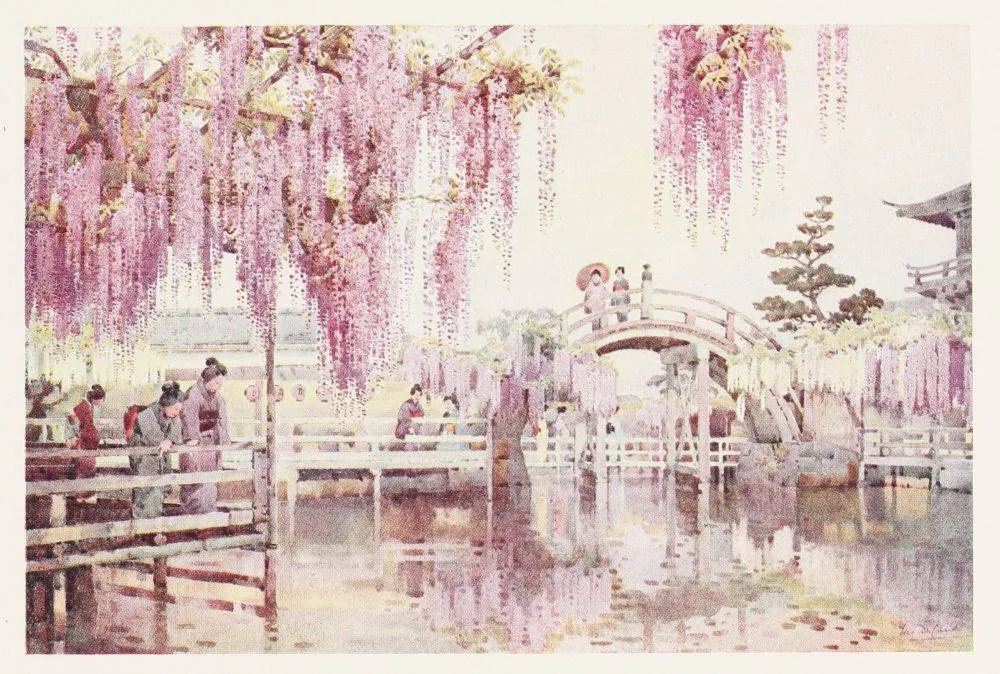
Sights with limited capacity can sell out. The Kawachi Wisteria Garden in Kitakyushu, at its best around Golden Week, sells timed-entry tickets in advance during its peak season, so book before you travel. Wisteria crowds are nothing new: in 1908 Florence Du Cane called Kameido in Tokyo perhaps the most popular haunt of the pleasure-seeker in May, with hosts of people feasting all day under its purple trellises.
Hakata Dontaku, Craft Gyoza Fes and Carp Streamers
Golden Week is also festival season. In Fukuoka, the Hakata Dontaku Minato Matsuri fills the city on 3 and 4 May every year, with an eve-of-festival programme on 2 May, and its roots are in Hakata Matsubayashi, the traditional procession the festival grew from. In Tokyo, Craft Gyoza Fes filled the central plaza of Komazawa Olympic Park for the whole of Golden Week 2026, with a parallel event in Osaka Castle Park, as our gyoza guide describes. And across the country, carp streamers fly for Children’s Day.
Six Ways Around the Golden Week Crowds
1. Arrive on 6 May or later. The holiday ends on Wednesday 5 May 2027. In 2026 the off-peak seat fee started the day after the holiday. If you would rather go before it, our guide to Japan in April covers the cherry blossom weeks.
2. Use the working days. Friday 30 April 2027 is a normal working day between Shōwa Day and the weekend, which makes it a better day than the weekend for a long-distance train. In 2026 the JR Central and JR West peak seat fee did not start until 1 May.
3. Travel against the flow. In 2026 the roads and trains were fullest leaving the cities on the first Saturday and returning on the last holiday. Heading into Tokyo on Saturday 1 May, or out of it on Wednesday 5 May, runs the other way.
4. Reserve every long-distance seat. With no unreserved cars on the Nozomi, a reserved seat on the Hikari or Kodama is the safe option for Tokyo to Kyoto and Osaka during the holiday.
5. Stay put from 1 to 5 May. Pick one base for the five-day break and explore it by local train; from Tokyo, our guide to day trips from Tokyo lists towns under an hour away by train.
6. Book timed tickets early. Anything with timed entry, such as the Kawachi Wisteria Garden, can sell out over Golden Week. Book as soon as sales open.
Golden Week in Japan: Questions and Answers
Golden Week 2027 is Shōwa Day on Thursday 29 April, then Constitution Memorial Day, Greenery Day and Children’s Day on Monday 3, Tuesday 4 and Wednesday 5 May. Friday 30 April is a normal working day, so the longest break runs from Saturday 1 to Wednesday 5 May, according to the Cabinet Office’s list of national holidays.
Golden Week is the cluster of four national holidays at the turn of April and May: Shōwa Day, Constitution Memorial Day, Greenery Day and Children’s Day. With a weekend it gives most workers several days off at once, so it is one of Japan’s busiest times for domestic travel. Children’s Day carries on the old Boys’ Festival, when carp streamers fly.
It is the hardest time to travel around Japan, though the festivals are a reward. In 2026 every Nozomi bullet train between Tokyo and Hakata was all-reserved from 24 April to 6 May, and JTB forecast 24.47 million holiday travellers over the period. If your dates are flexible, arrive on Thursday 6 May 2027 or later, when crowds and seat fees drop.
Yes. Golden Week is a holiday for offices and schools, and festivals such as Hakata Dontaku in Fukuoka on 3 and 4 May run through it. Museums with a weekly closing day can move it: the Tokyo National Museum opens on holiday Mondays, such as 3 May 2027, and closes on a later weekday. Timed-entry sights can sell out, so book ahead.
JTB forecast that 24.47 million people would take an overnight trip during Golden Week 2026, between 25 April and 7 May: 23.9 million within Japan and 572,000 abroad. It expected domestic departures to peak on Saturday 2 May, and NEXCO Central’s figures showed the worst motorway jams leaving the cities that day and heading home on 5 May.
Golden Week 2027 ends on Wednesday 5 May, Children’s Day, and Thursday 6 May is a normal working day. That is a day earlier than in 2026, when 6 May was a substitute holiday because Constitution Memorial Day fell on a Sunday. Expect the heaviest return traffic on 5 May and calmer trains from 6 May.
Silver Week is the name for a run of holidays in September, when Respect for the Aged Day and the Autumnal Equinox fall close together. In 2026 JR Central and JR West treated 18 to 23 September as a peak period with all-reserved Nozomi trains. In 2027 the two holidays fall on Monday 20 and Thursday 23 September, with normal working days between them.