For anime fans and enthusiasts, visiting Japan is a chance to step into the vibrant worlds of your favourite anime shows and films. Many anime series are set against the backdrop of real-life locations, allowing fans to walk the same streets as their beloved characters. Several famous anime places in Japan let fans wander through the very worlds their favourite characters live in, so maybe you’d like to experience an anime trip for yourself!
Lucky for you, some of the most memorable anime series ever were based on real places in this beautiful nation. If you’re planning a trip to Japan and want to map out locations for your anime pilgrimage, here are fifteen places to visit in Japan for anime fans.
4. Weathering With You: Kabukicho
7. One Punch Man: Saitama’s Apartment in Setagaya
9. K-On!: Old Toyosato Elementary School
13. Anohana: The Flower We Saw That Day: Old Chichibu Bridge
14. Your Lie in April: Shakujii River
1. Steins;Gate: Akihabara
Often referred to as the heart of otaku culture, Akihabara is a bustling district in Tokyo known for its electronics shops, themed cafés, and anime merchandise stores. This area is the setting for numerous anime series, including Steins;Gate (2011), one of the best and most loved anime shows. In the first episode, a mysterious satellite, later revealed to be a time machine, crashes into the roof of Radio Kaikan, a real electronics and hobby building a minute’s walk from Akihabara Station. The original building was demolished in 2011, and the new Radio Kaikan that opened in July 2014 still draws fans of the show. You can spend an entire day walking through these streets, losing yourself in the many sights and sounds brought to you by Akiba.
Once you exit Akihabara Station, you are greeted by colourful buildings left and right, with flashing billboards and crowds of tourists, much like New York’s Times Square. Arcades, maid cafés, and 8-storey gaming and anime shops flood Akihabara’s upbeat and quirky streets. Make sure to bring home memories and keepsakes from your anime pilgrimage!
2. Tokyo Revengers: Shibuya
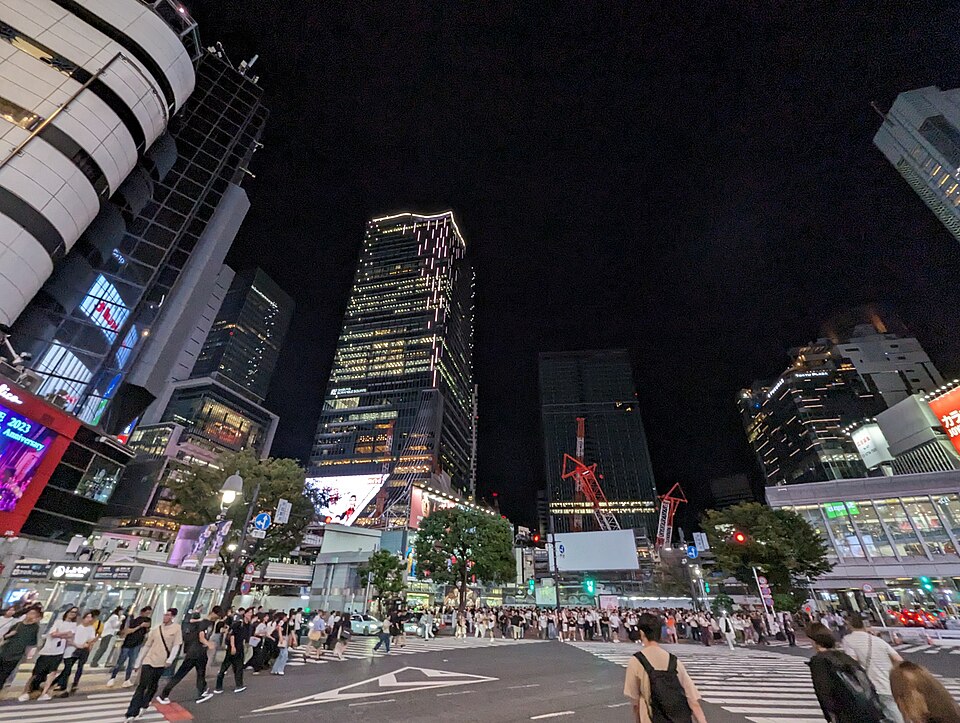
Image Credit: Syced / Wikimedia Commons, CC0
Tokyo Revengers began as Ken Wakui’s manga and became an anime in 2021. It follows Takemichi Hanagaki as he leaps back twelve years in time to save his former girlfriend, Hinata. The Tokyo Manji Gang, known as Toman, is founded in Shibuya, and after the founding the members celebrate with a group photo on the Shibuya Scramble Crossing. Standing on that same crossing, surrounded by giant screens and crowds pouring in from every direction, is the easiest way to feel part of the story.
The shrine where the gang is formed is widely linked to Numabukuro Hikawa Shrine in Nakano, a short ride from Shinjuku on the Seibu Shinjuku Line. Fans will recognise its approach path, stone steps and main hall, and the shrine has offered an omamori charm made in collaboration with the series.


3. Jujutsu Kaisen: Harajuku
One stop from Shibuya Station on the JR Yamanote Line, where the infamous Shibuya Incident takes place, Harajuku has been featured in Jujutsu Kaisen multiple times. In the third episode, Yuji and Megumi wait outside Harajuku Station before meeting Nobara for the first time. Takeshita Street, where Nobara makes her first appearance, is a busy and lively area filled with colourful cafés, trendy shops, and food stalls, showcasing the youthful centre of fashion known as Harajuku. So, don’t forget to check it out!
Furthermore, since Harajuku is conveniently located between Shibuya and Shinjuku, it’s an ideal stop for your anime trip. As well as walking the same streets as the Jujutsu Kaisen characters, you can explore cosplay shops and iconic cafés, and collect unique souvenirs to commemorate your anime adventure in Japan!
4. Weathering With You: Kabukicho
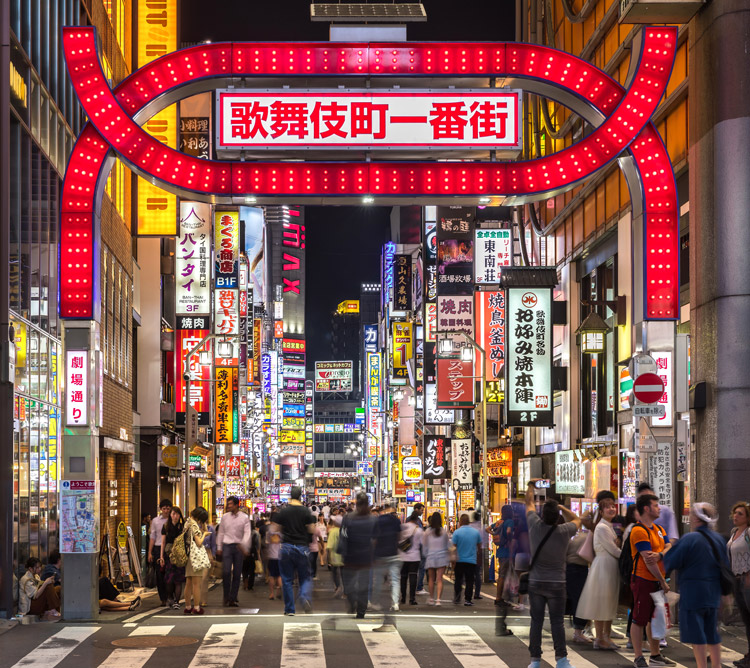
Image Credit: Basile Morin / Wikimedia Commons, CC BY-SA 4.0
Makoto Shinkai and his team brought the busy streets of Kabukicho to audiences everywhere with their 2019 film, Weathering With You. Tourists go to Shinjuku for some of the best ramen spots in Tokyo and for Golden Gai, a small, unique collection of tiny bars that visitors love. Kabukicho, Shinjuku’s entertainment district, is well known for its adult-oriented nightlife, its neon-lit streets and its many bars, restaurants and karaoke venues. This is where Hodaka, the runaway teenager at the heart of the film, struggles to get by after arriving in Tokyo, and where he first meets Hina, the film’s “sunshine girl”, when she hands him a free burger at the McDonald’s by Seibu-Shinjuku Station.
Kabukicho is about a five-minute walk from the east exit of Shinjuku Station. You might also spot one of its most famous residents, the giant Godzilla head on top of Hotel Gracery Shinjuku, which serves as both a landmark and a popular photo spot. Make sure to drop by the McDonald’s where Hodaka and Hina meet as part of your Japan anime tour!
5. Your Name: Suga Shrine
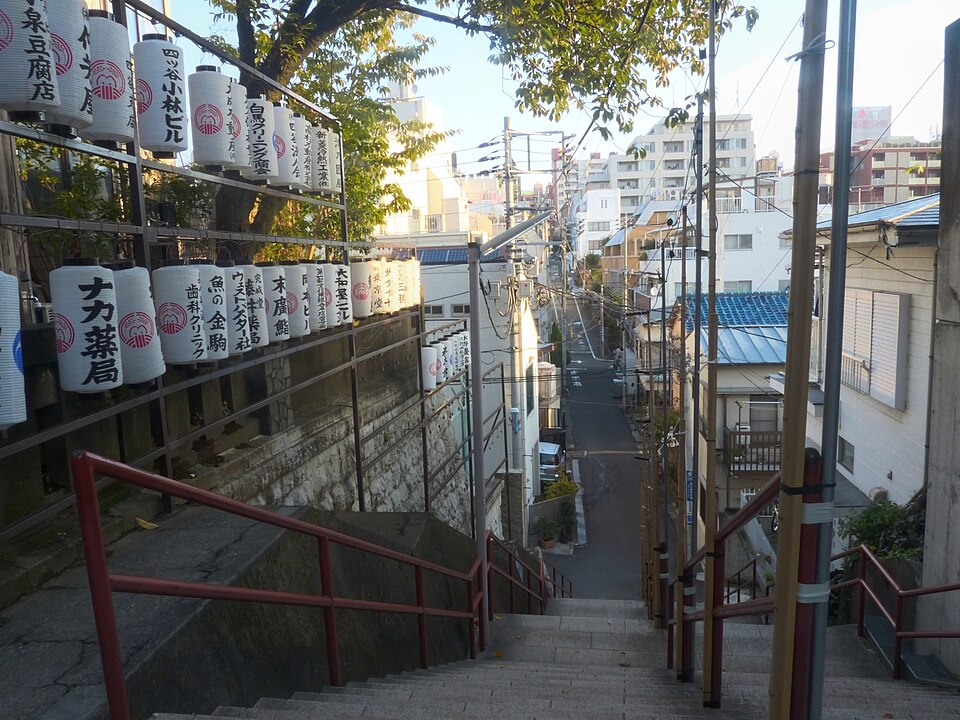
Image Credit: Hisagi / Wikimedia Commons, CC BY-SA 4.0
The settings of Makoto Shinkai’s works are so lifelike that they’ve become renowned in and of themselves. His films are rooted in real places across Japan, and his team photographs locations to use as reference, so many scenes closely match real towns and tourist hotspots, down to small details.
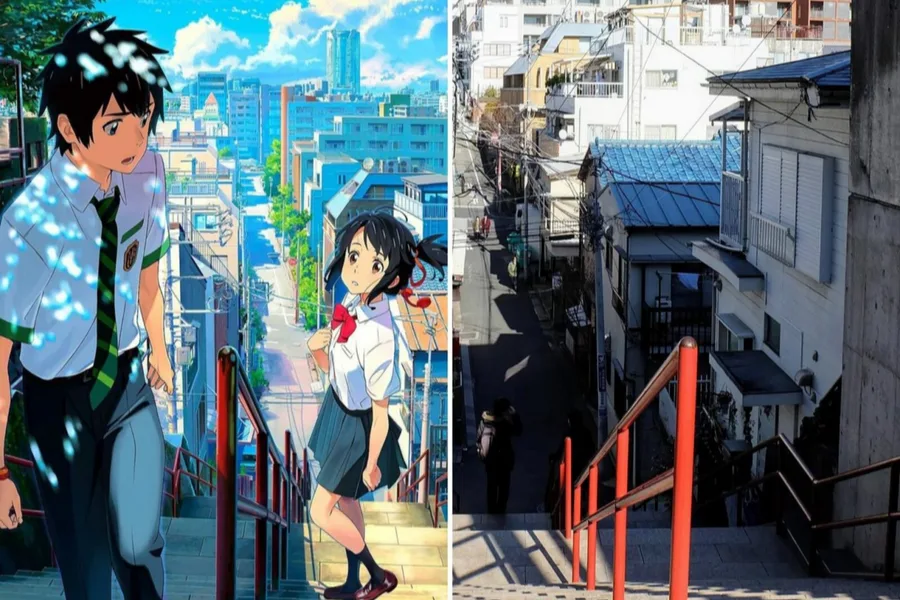
One such location is the staircase leading up to Suga Shrine in Yotsuya, where Taki and Mitsuha finally pass each other in the closing scene of Your Name (2016). Fans of Shinkai from all over the world make the trip to the site, as it is one of the film’s most iconic sequences. The shrine is about a seven-minute walk from Yotsuya-sanchome Station on the Tokyo Metro Marunouchi Line. The stairs sit on a quiet residential street, so keep the noise down while you take your photos.








6. Bungo Stray Dogs: Yokohama
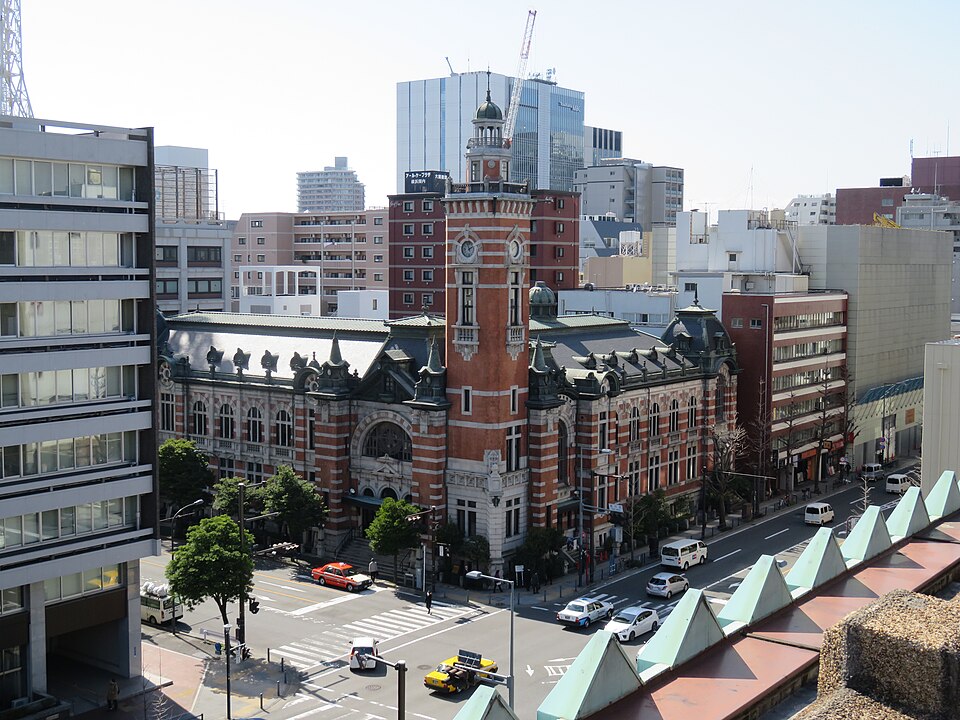
Image Credit: flasksrw / Wikimedia Commons, CC BY 2.0
Yokohama is home to Japan’s biggest Chinatown, and it’s also the primary setting for the anime Bungo Stray Dogs, whose characters are named after real-life Japanese authors. The programme’s premise is rich with real-world references, and the characters’ abilities are based on genuine works of literature. Therefore, this city is a must-see for lovers of the show.
Yokohama is Japan’s second-largest city, and real landmarks appear throughout the series, including Yokohama Landmark Tower, Yamashita Park, Motomachi Shopping Street and the red brick Yokohama Port Opening Memorial Hall pictured above. The Anime Tourism Association lists Yokohama among its 88 anime pilgrimage spots for Bungo Stray Dogs. At night, the Cosmo Clock 21 Ferris wheel at Yokohama Cosmo World lights up the waterfront, making it a striking symbol of the city.
7. One Punch Man: Saitama’s Apartment in Setagaya

Image courtesy of Mipon
One Punch Man is one of the funniest and craziest anime, with its main character, Saitama, one of the most famous protagonists. People now question if Saitama is the strongest anime character ever. He is often at the centre of debates about power levels. This is no surprise, as season one showcased his incredible strength.
Saitama is loved by anime fans, though season two didn’t match the high expectations of the first. In the series he lives in a small flat in the fictional Z-City, and fans have matched it to a residential building near Meidaimae Station in Setagaya, Tokyo. It is a private block of flats, so view it quietly from the street. Fans imagine his humble flat as the perfect place to relax and play video games with Genos, King, and the rest of the One Punch Man cast.
One Punch Man Season 3 began airing in Japan in October 2025, so there is plenty of new Saitama to catch up on before your trip.
8. Yuru Camp: Lake Motosu
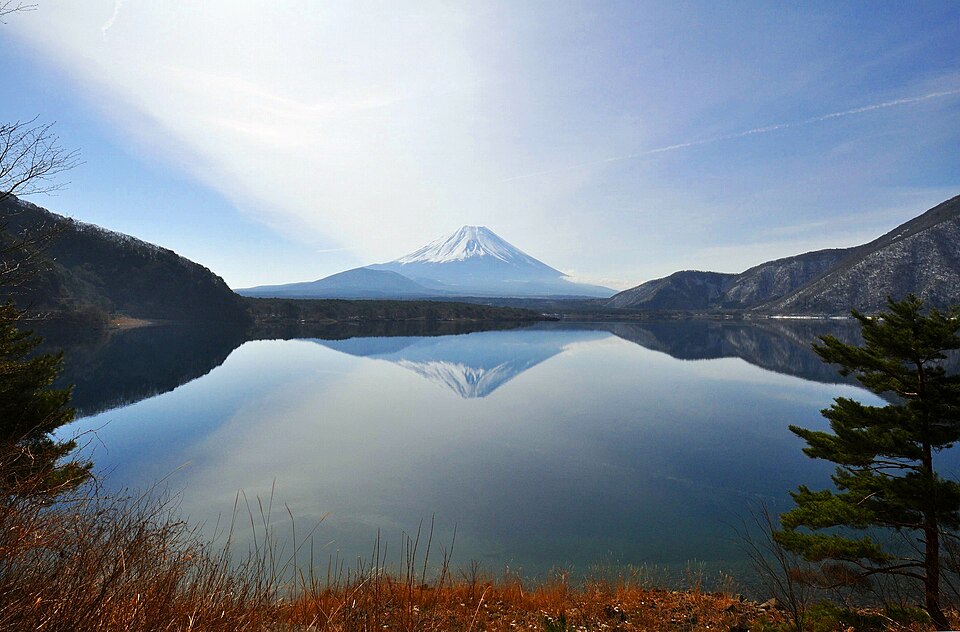
Image Credit: Captain76 / Wikimedia Commons, CC BY-SA 3.0
Yuru Camp, also known as Laid-Back Camp, is a charming slice-of-life anime, first broadcast in 2018, that showcases some of the finest camping spots in Japan. It makes camping feel simple and welcoming by following a group of friends into the outdoors, and the activities, attractions, and dining options around each site that Rin, Nadeshiko, and the rest of the crew visit are detailed throughout.
The most famous spot is Koan Campground on the shore of Lake Motosu in Minobu, Yamanashi, where Rin camps alone in the first episode and first meets Nadeshiko. The lakeside pitches look across the water to Mount Fuji, and on a calm day the lake reflects the mountain almost perfectly. If you’re in the mood for something out of the ordinary in the great outdoors, this is just one of the numerous camping locations Yuru Camp brings to its viewers. The campground is popular, so book through its official website well ahead in peak season.
9. K-On!: Old Toyosato Elementary School
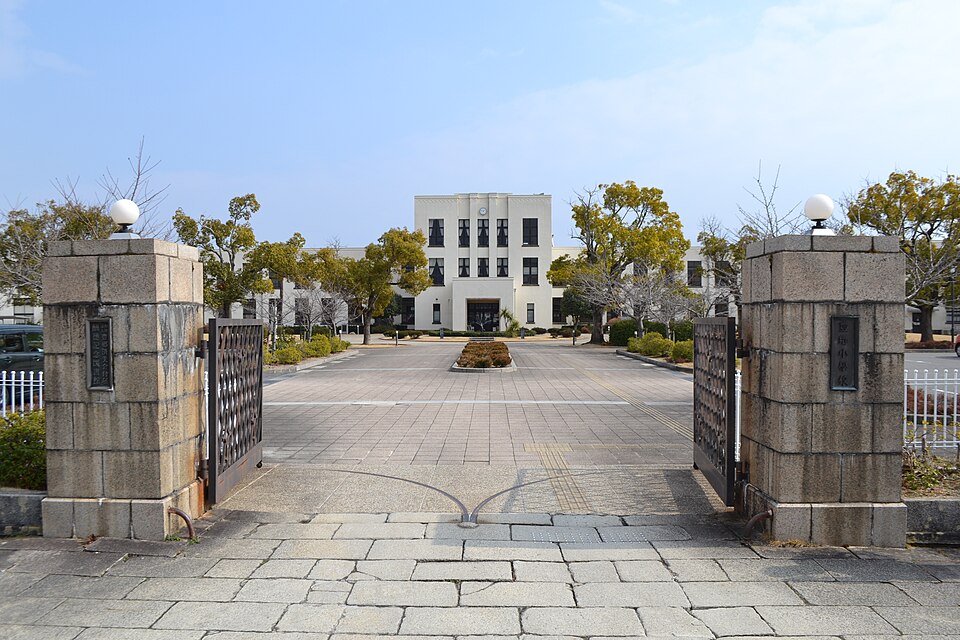
Image Credit: 先従隗始 / Wikimedia Commons, CC0
K-On! (2009) is another favourite from the slice-of-life genre, and the old Toyosato Elementary School buildings in Toyosato, Shiga Prefecture, served as the model for Sakuragaoka High School, where Yui, Mio, Ritsu, Mugi and later Azusa play together in the Light Music Club. Designed by the American architect William Merrell Vories and completed in 1937, the school is a striking white building that looks just as it does in the anime.
Today, parts of the building such as the auditorium and exhibition rooms are open to visitors, and the third floor has been set aside as a space for anime fans, who leave messages on the blackboard. Fans have recreated the band’s club room with instruments just like the ones in the series, and a photo there makes it feel like you were truly part of the band. Guided tours take you into rooms that are normally closed, including the rooftop, and must be booked in advance through the Toyosato Tourism Association.
10. Sword Art Online: Ginza
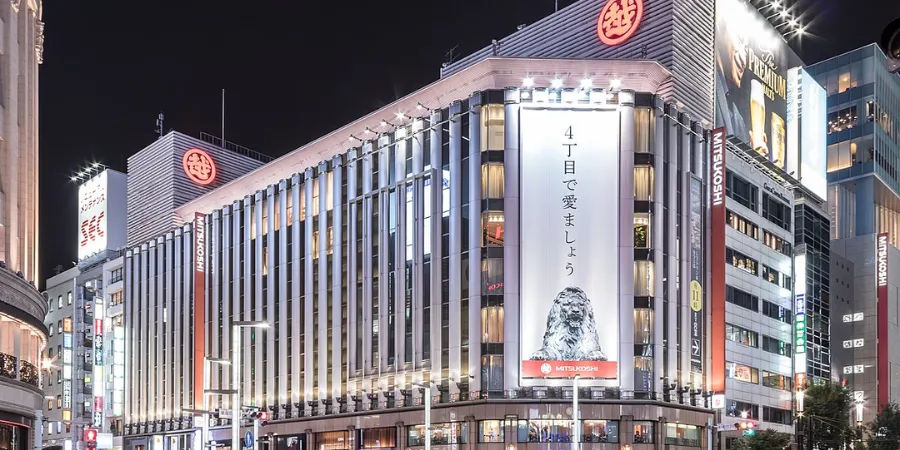
Image Credit: Kakidai / Wikimedia Commons, CC BY-SA 4.0
Many fans wish they were Kirito from Sword Art Online. Much of its widespread appeal comes from imagining yourself in its power-fantasy, isekai-style world, as an overpowered player among monsters and weaker rivals. Some of its real-world scenes take place in Ginza, Tokyo’s upmarket shopping and dining district.
Ginza is well known as a shopping and eating destination due to its many boutiques, speciality shops, and restaurants. Whether it’s ramen, poke, or sushi, Ginza is a great place to eat, just like the characters in Sword Art Online. At the beginning of Sword Art Online II (2014), Kirito meets government official Seijiro Kikuoka at an elegant Ginza café that fans recognise as Shiseido Parlour. The real Shiseido Parlour Ginza main store has its Salon de Café on the third floor of the Tokyo Ginza Shiseido Building, so you can order a dessert in the same setting as Kirito.
11. Higurashi: Shirakawa-go
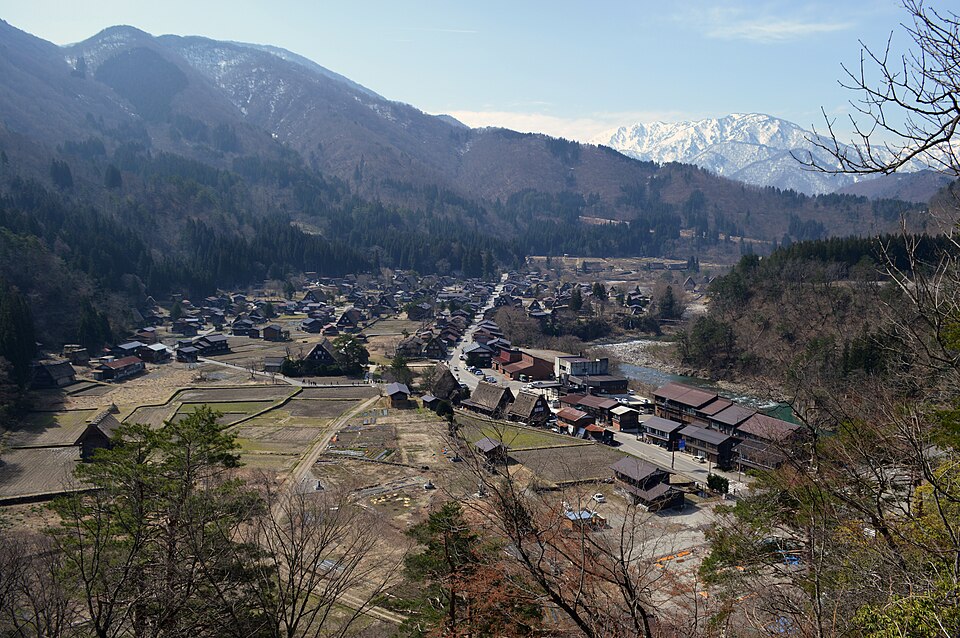
Image Credit: DimiTalen / Wikimedia Commons, CC0
Next, we visit Shirakawa-go, a UNESCO World Heritage site in Gifu Prefecture, listed in 1995 together with the villages of Gokayama. Higurashi: When They Cry is set in Hinamizawa, a fictional mountain village modelled on Shirakawa-go that will take you back to simpler times. Shirakawa-go is a beautiful sight, a river valley filled with traditional farmhouses whose steep thatched roofs look like something from a fairytale.
The moment you step into Shirakawa-go, you will feel transported to another world, far from the hustle and bustle of modern living. The picturesque village of gassho-zukuri farmhouses and its stunning landscapes beautifully capture the essence of rural Japan. That isolation suits Higurashi, whose story loops through the same fateful June in 1983 again and again. Making the trek here lets you stand in the same spots where Keiichi, Rena, Mion, Satoko, Rika and their friends live through the series’ murder mystery. Nohi Bus services reach the village in about 50 minutes from Takayama Station and about 1 hour 15 minutes from Kanazawa.
12. Sailor Moon: Azabu-Juban

Image courtesy of Unbothered Life
For fans of the iconic and well-loved series, Sailor Moon, the real-life Azabu-Juban inspired the fictional Juban, where Usagi lives a seemingly ordinary life as a schoolgirl by day and transforms into a powerful magical warrior at night. Walking through the streets of Azabu-Juban allows Sailor Moon enthusiasts of all ages to walk in the footsteps of Sailor Moon herself and experience a piece of the magic that has enchanted audiences for decades. Naoko Takeuchi, the author of the manga, studied at Kyoritsu College of Pharmacy in Minato Ward, which is where she might have taken inspiration for some of the locations.
Azabu-Juban is a charming neighbourhood in Tokyo’s Minato Ward, located close to the bustling areas of Roppongi and Akasaka, and Minato is known as one of the most expensive wards of Tokyo to live in. Travel around Azabu-Juban to find upscale restaurants, cosy cafés, and several trendy shops that might catch your eye. You can visit places fans link to Sailor Moon, such as the Azabu-Juban shopping streets and Azabu Hikawa Shrine, which shares its name with Rei’s family shrine. While some of the areas have developed since the 1990s, Azabu-Juban is still a must-visit on your Japan itinerary.
13. Anohana: The Flower We Saw That Day: Old Chichibu Bridge

Image courtesy of Imgur
Anohana: The Flower We Saw That Day (2011) is a deeply emotional anime that explores themes of grief, friendship, and healing. The series is set in Chichibu, a scenic city in Saitama Prefecture. It follows childhood friends who reunite to face the pain of losing Menma, who died years ago. One key real-life location in the anime is the old Chichibu Bridge, an arched bridge over the Arakawa River that has become a beautiful and emotional spot for fans.
Chichibu, near Tokyo, is famous for its natural beauty, historic temples, and rural charm. The anime captures the city’s serene landscapes, combining its peacefulness with the story’s emotional depth. Real locations like Chichibu Shrine, Mount Buko, and the old Chichibu Bridge are depicted with care, grounding the anime in a realistic setting. Seibu Railway’s Laview limited express runs direct from Ikebukuro to Seibu-Chichibu Station, which makes Chichibu an easy day trip from Tokyo.
It’s the perfect stop in your anime pilgrimage if you need a place to wind down and reflect.
14. Your Lie in April: Shakujii River

Image courtesy of Japan Tour
Your Lie in April (2014) is a poignant anime that touches on themes of love, loss, and the healing power of music. While the story is fictional, the anime’s setting in Nerima Ward and the locations that inspired it ground the emotional drama in a tangible reality. One of them is the Shakujii River in Tokyo, the backdrop for some of the anime’s most picturesque scenes.
The Shakujii River rises in Kodaira and flows east through Nishitokyo and the Nerima, Itabashi and Kita wards before joining the Sumida River. It is a relatively quiet and scenic waterway, known for its cherry trees and greenery, and it offers a peaceful contrast to the fast-paced urban landscape of Tokyo.
The river is lined with walking paths and parks, making it a popular spot for leisurely strolls, picnics, and quiet reflection. You might also recognise other places in Nerima, such as Shakujii Park and the restaurant Butcher’s Table near Oizumi-Gakuen Station, which you can stop at for a bite to eat.
15. Demon Slayer: Asakusa
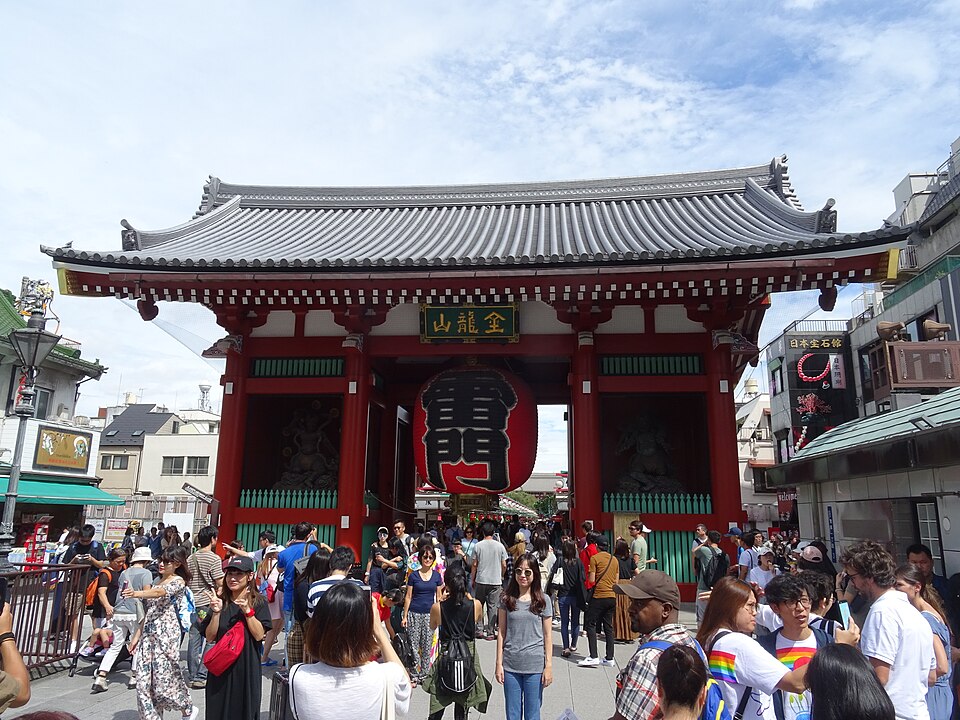
Image Credit: Christophe95 / Wikimedia Commons, CC BY-SA 4.0
Although you won’t find any demons or demon slayers in traditional Asakusa, this area is still a must-see for fans of Demon Slayer. In the anime’s first season (2019), Tanjiro’s mission takes him to the bright, crowded streets of Taisho-era Asakusa, where he comes face to face with Muzan Kibutsuji for the first time and meets the demon doctor Tamayo. It is one of the biggest turning points in the story. The anime takes creative liberties, but Asakusa’s historic charm fits the world of Demon Slayer.
Located in Tokyo’s Taito Ward, Asakusa is a famous district known for its history and culture. It draws visitors to Senso-ji Temple, its Kaminarimon gate and the Nakamise shopping street. The area’s traditional vibe offers a glimpse of old Tokyo. For anime fans, Asakusa stands out for its ties to Demon Slayer.
Which of these 15 real-life anime locations has caught your eye? The next time you book your tickets and plan your itinerary, mark these sites for your Japan anime tour! Remember: Are you a fan if you never visit these sites, even once in your life?