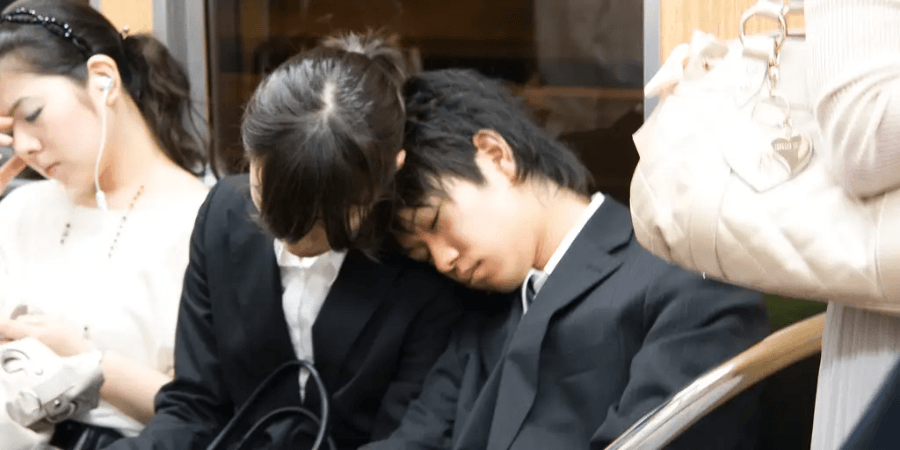
Few real-life figures are as enduring and recognizable as the Japanese Salaryman (サラリーマン). The Japanese salaryman is the suited, salaried company employee who has symbolised corporate Japan since the post-war boom. For many people outside the country the salaryman in Japan is the default image of Japanese work: the crowded commuter train, the long office hours, and the deep loyalty to a single employer. This guide looks at where that figure came from, how the life really feels, and how it is changing. Japanese media, for example, has depicted Salaryman and its culture in many ways; from films like Shall We Dance? (1996), to anime like Miss Kobayashi’s Dragon Maid (2017). The Salaryman is, fundamentally, more than a worker or a subculture; it’s a living representation of Japan’s modern socio-economic history.
The “salaryman”, as an idea, as an identity, wasn’t created in a vacuum. Japan changed significantly over the last century for the role to be forged. The country went through the Meiji Era modernization, the high economic growth of the post-war era, the bursting of the economic bubble and today’s promises of a flexible, stable life. The Japanese Salaryman was and still is a direct response to Japan’s shifting economy and social contract. Today, we explore how the Salaryman became a national archetype, examining its past, present and possible future.
How the Salaryman Was Born (1900s-1945)
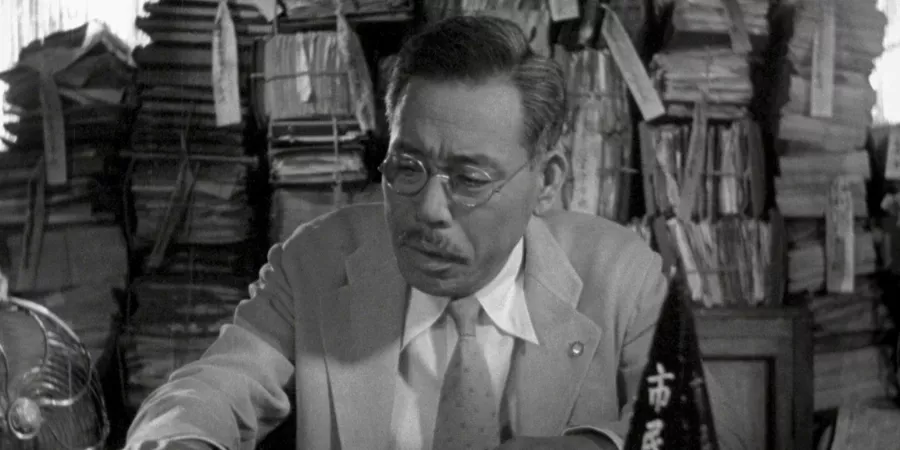
While the term “Salaryman” wouldn’t officially arrive in Japan until the early 1900s, the roots of the concept date further back. The year is 1868, the Tokugawa Shogunate has ended and the Meiji Era (1868–1912), ruled by Emperor Meiji (Mutsuhito), began. Under this new imperial rule, the country would open its borders for the first time in 200 years, leading to massive social and economic changes. What’s important to note, for the purposes of this article, is that the now-open Japan felt the pressure to modernize in order to compete with the rest of the world, especially the western hemisphere.
This modernization led to the rapid growth of industry and, crucially, Westernization. The industrialization efforts proved to be a success, continuing into the early Shōwa Era (1912–1945), which sparked the need for administrative work. This sudden necessity would be met by the early wave of white collar workers in the nation, the ones that would later be known as the Salaryman.
Westernization, however, wasn’t merely an economic phenomenon. The imperial government pushed for liberal Western ideas in education and governance, many of which ended up in the 1889 Meiji Constitution. Additionally, western intellectual trends, such as their culture and architecture, were heavily promoted by the government throughout the Meiji Era. Being more of a Western man, in a Japanese way, was seen as the desirable outcome.
Salaryman, a Wasei eigo
It is now that we arrive at the first part of the Salaryman’s origin: its name. With the Meiji Era push for Westernization, many European language loanwords would end up being adopted and adapted, with English being no exception. The specific term for this phenomenon with the English language is Wasei eigo (和製英語), which essentially means “Japanese made into English.” This is not to be confused with Gairaigo (外来語), the far broader term used for loanwords in Japan.
What’s crucial to understand is that Wasei eigo words are, as professor Laura Miller states, “not really loanwords.” The words themselves didn’t come through contact with other cultures, rather, were adopted because there was a push for them by Westernization. Moreover, Laura explains, Wasei eigo words are coined in Japan. Many of them are composed of “two English lexemes combined in a novel way to create a new word.”
The term “Salaryman” is no exception to this rule, combining the words “salary” and “man” into one uniform concept. And while one would be inclined to believe anyone working in a salaried job would be a Salaryman, this couldn’t be further from the truth. The term only applies to a very specific set of professions, with a great emphasis in the bureaucratic business world. This is to say, the term Salaryman, from its inception, was coined to address a profession and a way of being.


Hierarchy, Loyalty, and Wartime Bureaucracy
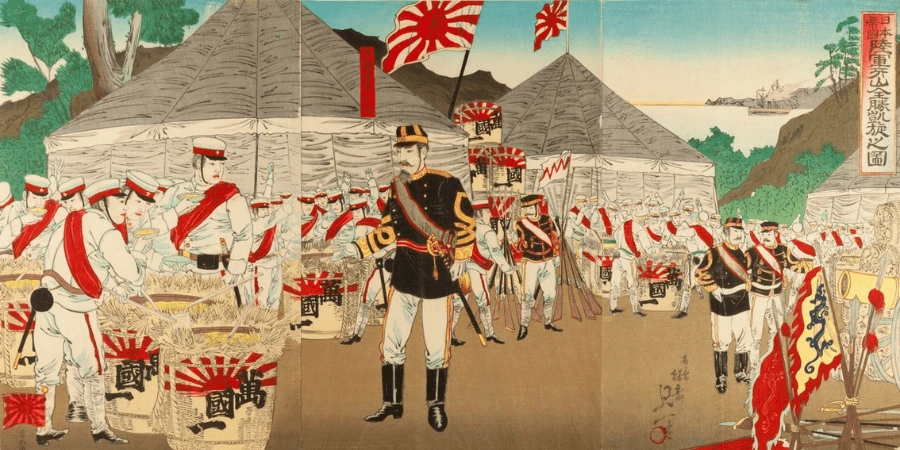
The name is not the only foundation the Meiji Era and early Showa Era laid for the Salaryman. In fact, its signature loyal attitude traces its roots back to these time periods. The Meiji Constitution not only brought industrialization, but also a rigid hierarchy in which the emperor was above all, followed only by the State. Additionally, the bushido code, a feudal samurai code of loyalty, was transformed in the Meiji Era. Instead of loyalty to one’s lord, people were taught absolute loyalty to the state was a social virtue. For common Japanese citizens, loyalty, as a trait, became not only desirable, but necessary for national stability.
On the other hand, the Westernization efforts had the side effect of renewed appreciation for traditional Japanese values. While this may sound positive, in the context of imperial rule, it meant a rise in violent nationalism. This would reach its logical conclusion in the Showa Era, where Japan’s military faction grew and started to prioritize expansionist policies. According to historian and mangaka Shigeru Mizuki, “The military’s growing influence led to the suppression of dissent and a shift toward authoritarian rule.”
This hierarchy, sense of loyalty, and militaristic infrastructure was eventually adopted by the business world. According to Mizuki, after the great depression, there was an “increased support for militaristic solutions to economic problems.” Japanese citizens believed that, if they behaved like soldiers, loyal to their company, maybe they could turn things around. In the minds of many, corporate success became a patriotic duty. This mindset helped lay the groundwork for the commitment expected of a Salaryman.
The Salaryman Golden Age (1945–late 1980s)
Japan’s militaristic apparatus was dismantled following their unconditional surrender in World War II and the subsequent American occupation (1945-1952). The country was destroyed, scarred by the devastation of two nuclear bombs, and tasked with rebuilding itself. The American government, for its part, made it its mission to revitalize the Japanese economy during their occupation, which is why the period is also known as Japan’s Reconstruction. By all historical accounts, these efforts were successful, and the Japanese economy now had a foundation to build upon.
The Japanese government then pushed for a series of economic reforms, which gave the nation an annual GDP growth of 9% between 1955 and 1973. This time period would later be known as the Japanese Economic Miracle, as they became an economic powerhouse able to rival the US. The reforms were, as one paper on the role of the government explains, mostly focused on industrial policy, spearheaded by the Ministry of International Trade and Industry (MITI, now known as METI).
Manufacturing became Japan’s beating heart, and when the oil crisis of 1973 hit, they shifted their focus to the technology sector. This was met by a still impressive 4% GDP annual growth between 1973 and 1990. And, in both these industries, administrative staff was needed.
It is now that we return to the Salaryman, as the government reforms would directly and indirectly lead to their golden age. This is the time period in which they became the iconic figure we know today.
Corporate Paternalism

Many of the economic reforms spearheaded by the government led to a sort of family structure within the corporate environment. This system established clearly defined roles and special protections for workers, operating like a father looking after his offspring. And while it was a hierarchy, it wasn’t necessarily a rigid one, as the promise of upward mobility was embedded into the system.
This is best exemplified with the practices of Shūshin koyō (終身雇用) and Nenkō joretsu (年功序列). The first one (Shūshin koyō) refers to “lifetime employment,” a government backed standard where employees would have a secure job, often until retirement. For the average Japanese worker, which by now was mostly Salaryman, this meant staying in one company for almost your entire life. The second (Nenkō joretsu) was a seniority-based wage system, where a worker was compensated based purely on age/time served. In other words, the system was designed for them to stay at one company and, the longer they stayed, the better it was. Loyalty was financially compensated, and Salaryman took this lesson to heart.
As for the protections, the government made corporations look after their workers with a series of welfare reforms. These weren’t a direct government cash transfer to the company, rather, a complex net of corporate ties built to sustain one another. This allowed workers easier access to housing, healthcare, and even club activities.
At this point, the average Salaryman was not only promised a stable life, it was almost guaranteed. They, in turn, felt indebted to their company, and their economic success would be intrinsically tied to their personality.








The Ritualistic Enterprise
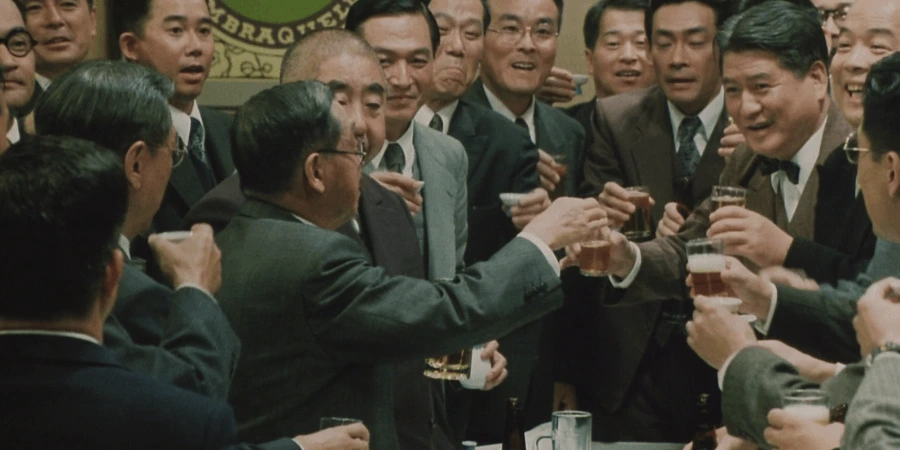
During this time period, with Japan’s economic success, the average Japanese citizen had more money to spend. This, consequently, saw a massive rise in consumerism, with a lot of it geared towards leisure and goods for the households. This is to say, one could spend the money in the growing entertainment industry, or with family. And, since the company functioned as the Salaryman’s family, fostering deep, non-negotiable bonds with his coworkers (his ‘siblings’) became a necessity. Wouldn’t it be best, for the family’s sake, if we could get along a little better? Maybe over a beer?
Here we enter what would become a pillar of Salaryman’s culture: Nomikai (飲み会). These were (and still are) after-work drinking sessions, where coworkers go to Izakayas, karaokes and hostess bars as team-building exercises. While not technically mandatory, in a traditional Japanese work environment there’s a strong social pressure to go. Declining it, especially back in the Salaryman golden age, made people believe one was uninterested in team culture. And when a salaryman’s identity was becoming inseparable from its company success, this was a perception he couldn’t allow.
With this, we arrive at a sort of daily routine in the salaryman’s life, almost like a ritual. Wake up early, catch the 07:58 on the Tōkaidō Line into Shinagawa, drink a coffee on the way in, work, eat, keep working and then sing at a Big Echo Karaoke Bar. Moreover, Japanese media shows us this routine was not only common, it was the norm. Manga like Salary Man Kintaro (サラリーマン金太郎), for example, depict this way of living as the modern aspirational Japanese standard. The Salaryman was, by now, the everyday Japanese man.
The Salaryman Working Hours
The four decades that constitute the Salaryman golden age were marked by a slow reduction in worked hours. It should be stated that this reduction was necessary, as Japan had one of the highest rates of annual working hours in the world. To give a comparison, in 1960 the US Labor statistic reported an average of 1,959 annual working hours, while Japan’s, according to an International Labour Review, had an average of 2,432. This number was reached, in part, due to Salaryman working 6 days a week, with many Saturdays included.
After the 1960s, this number would see a steady decline and would somewhat stabilize around the 1980s. This decade in particular saw the number of annual working hours settle at a little over 2,000. Crucially, this number was still higher than many other industrialized nations. To go back to our US example, the number of annual working hours was, by the 1980s, 1,828, which is almost 200 hours less than Japan’s average.
Thanks to labour unions and better regulations, the country’s average has gone down significantly. According to a study by the global economy, Japan’s current annual working hours average is 1,607. This, to be clear, is a good thing, as one of the dark sides of Salaryman culture (which we’ll get to later) was overworking, causing significant mental and health issues.
The overall picture confirms that, during this time period, Japanese workers (and especially the Salaryman) were operating under an absurd workload. And many claimed to love it.
Sources: U.S. Bureau of Labor Statistics and theStatistics Bureau of Japan.
The Current State of the Salaryman (1990s-today)
The 1980s in Japan were, in hindsight, a time of blissful ignorance. After the USA signed the Plaza Accord of 1985, weakening the dollar relative to the yen, the bank of Japan dropped interest rates to a record low of 2.5%. Easy loans appeared almost overnight, prompting Japanese citizens to take credit like never before. They had more money than they ever dreamed of having and, because of this, much of it was spent in the extravagant neon nightlife. It was a time of rising cultural importance, over the top partying and technological innovation. From the salaryman’s perspective, this was the result of their hard work and dedication. In reality, there was a bubble about to burst.
It inevitably did in the 1990s, beginning a lengthy period of economic stagnation now known as the Lost Decades. The precise time frame that encompasses this period is debated among historians, with some arguing it’s from the 1990s to 2000s, while others say it persists to this day. In any case, the Lost Decade is a period marked by slow economic growth (measured in GDP) and persistent deflation.
Regarding the Salaryman, the Lost Decades and the years that followed proved the government reforms that sparked its existence and popularity were unsustainable. Moreover, its perception as the aspirational Japanese standard shifted significantly, with newer generations either rejecting it or looking at it in a more meditative, nuanced way.
The Collapse of the Old Contract
The most pressing thing to acknowledge regarding the current state of the Salaryman is how both Shūshin koyō and Nenkō joretsu fell out of fashion. If you recall, these were the systems that allowed the Salaryman to become the national archetype.
In the case of Shūshin koyō, it had appeared to survive the bubble’s burst, as it was still a widely acceptable practice throughout the 1990s. In the 2000s, however, things changed when prime minister Jun’ichirō Koizumi (小泉 純一郎) was elected. Under his administration (2001-2006), Japan privatized many publicly owned companies and agencies, encouraging a more liberal approach to economics. The idea was: competition would foster innovation. But under this framework, older, more expensive workers became a financial liability. Many of these newly privatized companies laid off their employees, something that in Japan was, at the time, unprecedented. Shūshin koyō, as the standard, was no longer the case.
For many of the same reasons, Nenkō joretsu also proved to be economically unsustainable. Moreover, Japanese companies started transitioning towards a merit-based wage system in order to bring in more skilled talent into this competitive work environment. Additionally, non-regular employment started to emerge, with a good example being the haken-shain (派遣社員), who are agency dispatched workers. Another example is the freeter (フリーター) (another Wasei eigo), which are usually young people working a series of part-time jobs.
For the Salaryman, this meant loyalty, one of their core values, was being dismissed. Moreover, the idea that they could live forever with their company and have a stable life was starting to erode. Their era of cultural dominance was coming to an end.
The Ways of the Youth
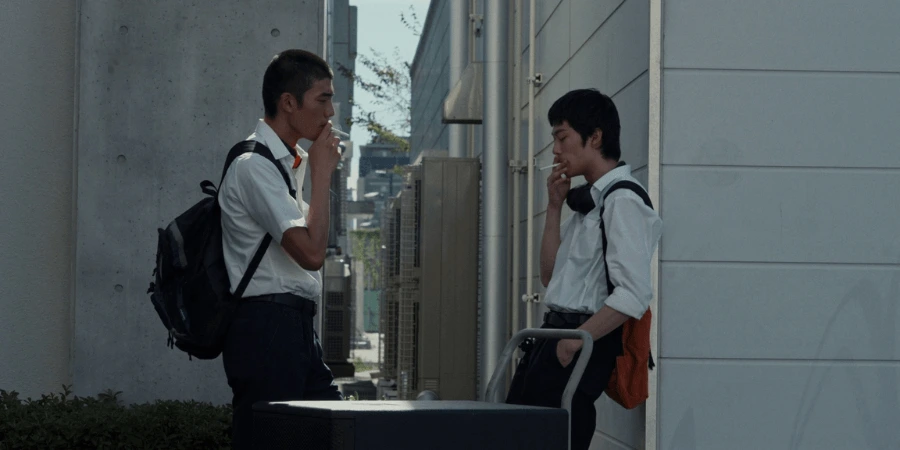
While the economic foundations of the Salaryman were starting to weaken, their public perception, especially among the youth, shifted. The once aspirational tale of the Salaryman was proving to be, for many, an incomplete story. For others, it was a cautionary tale, where false promises lead to a boring, uneventful life. This shift resulted in the increasing use of terms like Kaisha Ningen (会社人間), or “company man,” a derogatory way of referring to a Salaryman, as to imply they lack individuality.
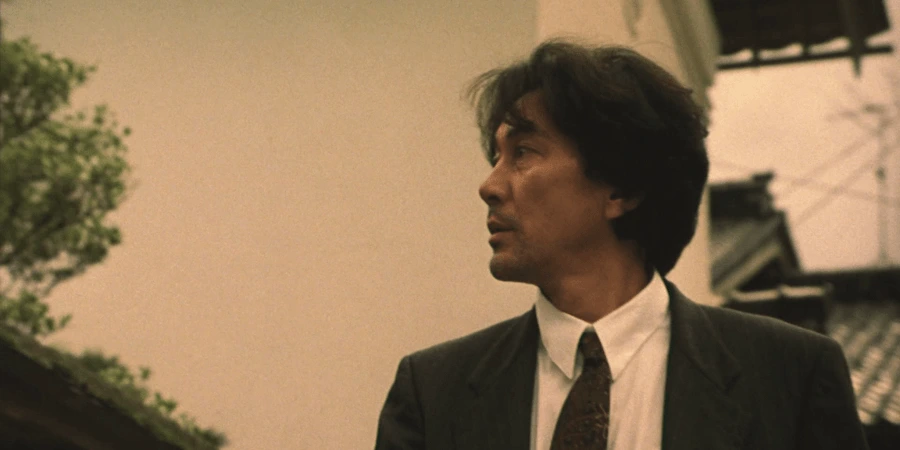
This change in perspective can’t be solely attributed to economic factors, much of it also stems from education. The 1990s and early 2000s saw the implementation of the Yutori Education (ゆとり教育), a new school curriculum aimed at fostering creativity within a less stressful academic environment. Japanese students now had more free time, something they would go on to treasure. This immediately contrasts with the extreme collectivism characteristic of the Salaryman, which is why this curriculum is controversial among older generations: many claimed it made the youth less disciplined. In any case, the youth started to prioritize shigoto to seikatsu no chouwa (仕事と生活の調和), which essentially means “work-life balance.” The film Shall We Dance? (1996), for example, captures this shift masterfully, depicting a Salaryman who has grown disillusioned with the system and finds in dancing a way of balancing his personal and professional life.
Because of the previously discussed factors, young people were more likely to become non-regular employees. But, of course, many would go on to become Salaryman, bringing a new perspective to the profession. The emphasis on work-life balance and personal hobbies over mandatory group activities, is one of the most significant changes in understanding current Salaryman culture. The iconic figure we’ve come to know is not gone, it has evolved.
A Day in the Life of a Salaryman, Then vs. Now
The Salaryman identity is still alive in Japan, and its core values have essentially remained unchanged throughout the decades. One can still expect a salaryman to show an unwavering loyalty to their company, participate in team building exercises, drink in a secluded bar of the Golden Gai after a long day of work, and so on. The way the Salaryman has changed is, like most things, in the subtle details.
This being said, these subtle details are extremely important, as they reflect Japan’s shifting socio-economic realities. The Salaryman wasn’t born in a vacuum, and its changes weren’t either. The subtle differences we can find in the life of a Salaryman from 1985 and 2025 can tell us a lot about the rich, evolving society that is Japan. So let’s examine these lives.
A Salaryman Snapshot, 1985
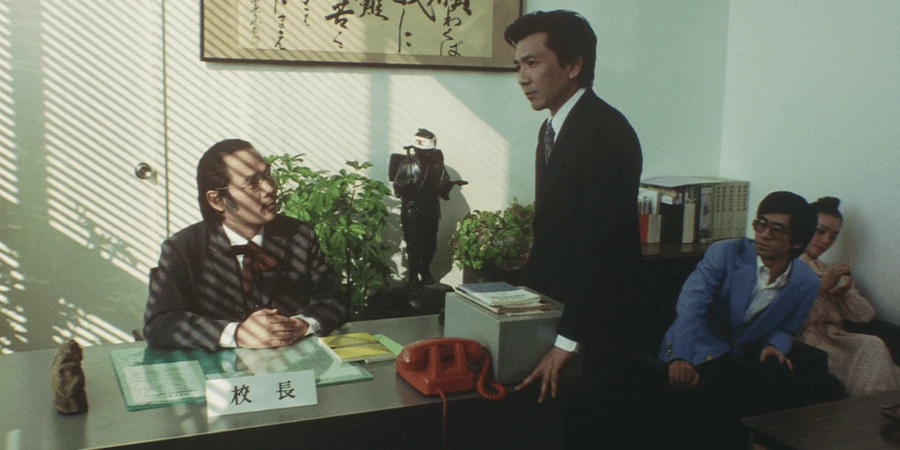
Grabbing on tight to his briefcase and morning coffee, Kazuya, a Hitachi Salaryman, is making his way into the office through the orange (Ginza) metro line. Like most days, he is as early as one can be, arriving fifteen minutes before his boss so he can welcome him into the building. It’s the third time he has done so this week. The boss is not particularly fond of this routine, but he certainly admires Kazuya’s dedication to it. Deep down, this is all Kazuya wants, not merely to be acknowledged, but considered, as he wants to ask for a promotion later that day.
The first hours of work fly by after a few phone calls, and now it’s time for the lunch break. Sitting next to his coworkers, Kazuya pulls out a bento box made by his wife, who was specially considerate this week, giving him an extra piece of fried shrimp. Next to the salad there are three rice balls shaped like pandas, something he knows wasn’t made by his wife, but rather his four-year-old daughter. Kazuya has been thinking about his daughter lately, especially her upcoming adolescence, believing their flat to be too small to sustain it. He always thought he would have a house by the time he was thirty; he is thirty-three. Furthermore, he doesn’t want to wait any longer. Today, he says to himself, he will Zangyō (残業) (work overtime), refusing to leave until his boss does, where he will ask for the promotion.
Way past the closing hours, Kazuya remains with his boss and coworkers, but not in the office, but an Izakaya. As far as he is concerned, these spaces are one and the same: part of the job, another team-building exercise. And so he drinks, laughs, eats and eventually forgets to say goodbye as his boss leaves. This is the third time this has happened this month. When he finally arrives at his home, his wife and daughter are asleep. He can’t remember the last time he saw them awake, but thinks the next time will surely be when they have the house.
A Salaryman Snapshot, 2025
If there’s a thing Takeru never thought he would become is a Salaryman. Back in school, he remembers telling his classmates he values freedom more than anything, quoting One Piece in the process. For this reason, after graduating with a degree in business administration, he became a freeter, working part-time job after part-time job. However, much to his dismay, this lifestyle proved to be too precarious, and yet he insisted upon it through his twenties. Now, at thirty-three years old, there’s nothing he wants more than a stable life, and becoming a Salaryman proved to be the best option.
Being picked up by an electronics conglomerate, Takeru slowly learned his view of the Salaryman was incomplete. After the Hatarakikata Kaikaku (働き方改革, work style reform) initiative, he only commutes to the main office twice a week; the other three days he works remotely. Moreover, he wishes he spent more time in the office, as his fellow Salaryman proved to be young, driven people. Many of them, just like him, feel indebted to the company for providing a somewhat stable life, especially in the precarious post-pandemic world.
Considering he doesn’t see his team often, Takeru believes team building exercises are necessary, which is why he often joins the crew for afterwork drinks. However, when he is not practicing Nomikai, Takeru likes to play golf and exercise in kintore (筋トレ, muscle training), a hobby he has come to liking ever since his boss, and older Salaryman, himself a remnant of the Shūshin Koyō, recommended it to him.
With this current lifestyle, Takeru is, for the first time in his life, considering having kids. He and his wife have rented an apartment for almost two years now, and they thought having a child was unfeasible in today’s economic climate. But with this newfound stability, there is a chance. Takeru knows the path to a promotion is slower and less guaranteed, unlike older generations (or even other companies), Nenkō Joretsu is not there to ensure his ascent. But deep down he knows, if he gives it his all, he can achieve work life balance, which he now views as true freedom.
Pitfalls and Pressure Points
Before we reach the conclusion of this article, it’s important to address the pitfalls and pressure points the identity of the Salaryman has carried throughout its history. Like any institutionalized role, the Salaryman was bound to a specific system and, as such, inherited some of its worst traits. Moreover, the particular manifestation incarnated by the Salaryman, with its steady loyalty to a company, meant these systemic issues could be attributed to a problem with the identity itself. So, for example, one could wrongly say: It’s not that the Salaryman was exploited for its labour, they simply love working to death.
Of course, systemic problems require systemic solutions, and today’s Japan has pushed many reforms to address them. Nevertheless, it would be insincere to suggest these problems have gone away entirely, but they have been greatly reduced and combating them is still a work in progress. The Salaryman is, in this equation, neither the perpetrator nor the victim, rather, as this article has argued, a reflection.
The Mental and Physical Toll
The concept most closely associated with the Japanese Salaryman is severe burnout, leading to Karoshi (過労死), which is commonly translated to “death from overwork.” This term is, sadly, no hyperbole. We’re referring to an acute physical reaction prompted by the excessive workload placed upon workers. Many Japanese employees, especially during the economic miracle and 1980s bubble, died from heart attacks, where Karoshi is cited as the cause. The problem became so widespread in Japan that, in 1988, a Karoshi hotline was established, seeking to help those whose problems were a direct result of overworking.
The Salaryman, due to its status as the 1980s everyday Japanese man and its reputation for devotion towards a company, would become the poster child of Karoshi. It is crucial to emphasize, however, that this was and continues to be a systemic issue. There exists a corporate culture created around loyalty, and many Salaryman felt the need to conform to it, even if it cost them significantly.
Beyond physical reaction, Karoshi is also associated with mental health issues. As a matter of fact, one of the leading causes of death related to Karoshi is suicide. This comes back to the need to perform, as once a standard is settled, the ones who can’t reach it face psychological distress trying to attain it. Moreover, as the systems of Shūshin Koyō and Nenkō Joretsu fell out of fashion, the fear of being laid off became palpable, prompting many to work more instead of less.
Government and corporate reforms have been made to combat Karoshi, with reduction of working hours, health insurances and a push for a different attitude towards work. And while there’s been a significant improvement, Karoshi is still a present issue to this day.
Gendered Expectations
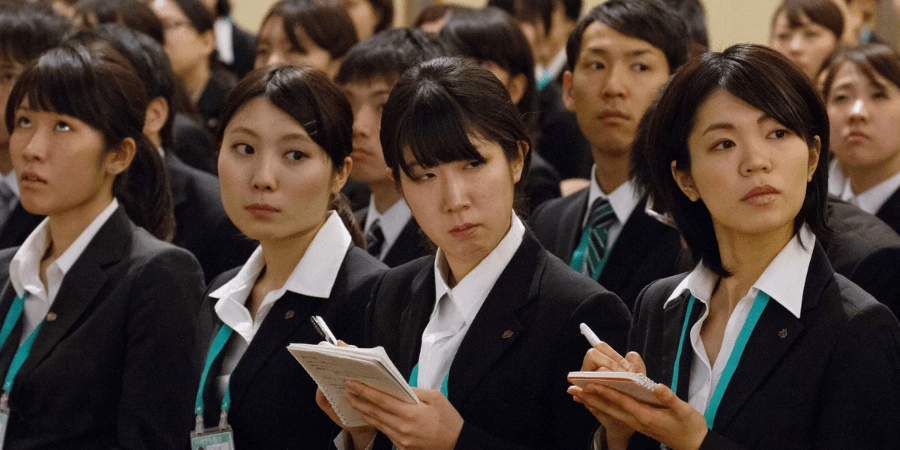
Going back to the Wasei eigo section, the word “man” was embedded into the DNA of the Salaryman from the very beginning. And this term, although it may appear as neutral, carries with it the gendered expectation. Indeed, the Salaryman is a male centric profession, and thus had adhered to strict gender roles. The Salaryman were not only husbands and fathers, they were breadwinners, and their wives were expected to take care of the household. Once again, we can look at 1996 Shall We Dance? where there’s a plot point about how the protagonist’s wife is getting a job to help pay the mortgage. Before the bubble burst, this gesture could be seen as saying the man was insufficient, but after the 1980s, it was what had to be done.
Moreover, the male-centric corporate world, dominated by Salaryman, has made it difficult for women to navigate the workforce. Journalist Sophia Yan states in an article, “women typically end up in the non-career roles, which involve administrative jobs with hardly any upward mobility.” She then goes on to explain that, in today’s competitive environment, having women in the workforce is demonstrated to increase profitability. Additionally, women want to work, but the Japanese corporate culture, shaped around the Salaryman ideal, has been a hard barrier for them to cross.
Today, these gendered expectations are being slowly but steadily challenged. For example, we have the ikumen (イクメン), which are fathers actively involved in raising their kids and household chores. This trend was popularized by the Japanese government itself with the Ikumen Project, a campaign aimed to make fathers have a more active role in parenting.
Next Steps for the Salaryman
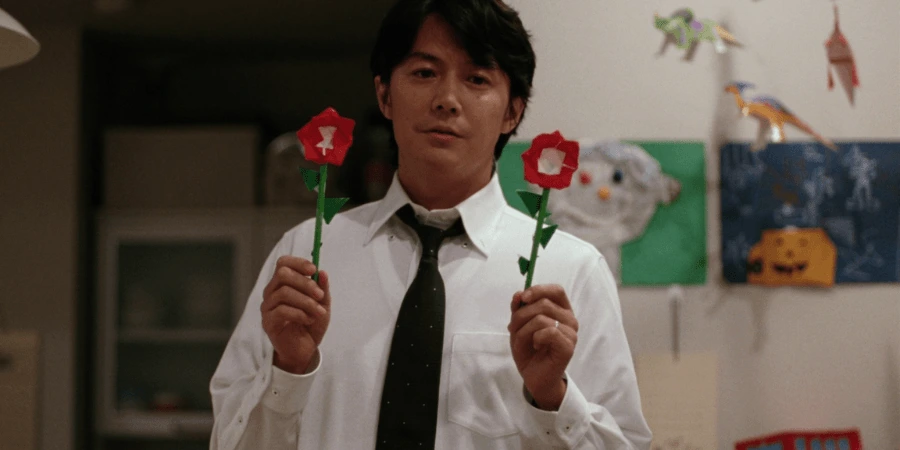
From the Meiji Era white-collar workers to today’s remote-working millennials, the Salaryman has always been more than a job description. The Salaryman is the figure that appears when a mirror is pointed at Japan’s economic and social etiquette; the reflection its citizens necessarily project towards their corporate environment, social security and societal norms. As such, the Salaryman is constantly changing and evolving, always responding to the shifting tides in the Japanese economy and social contract, something that has made it an everlasting figure. Deep down, the Japanese Salaryman wants to have a normal life, but what “normal” means has changed, and will undoubtedly continue to change in the future.
Today’s Japan has to face its own problems and encourage a lifestyle that it wants to be the “normal” way moving forwards. That, consequently, means addressing issues regarding the Salaryman, with one of the most concerning being the rapidly ageing workforce. Will the last remnants of the Shūshin Koyō and Nenkō Joretsu prove to be a liability, prompting companies to completely eradicate the system? Will a positive change, like the possibility of hybrid work, destroy the culture of Nomikai that people have become fond of? Or will new reforms make prescient issues like Karoshi finally disappear? No one knows for sure what’s next for the Salaryman, but whatever happens, it will be a key indicator of Japan’s social and economic future.
Japanese Salaryman: Frequently Asked Questions
What is a salaryman?
A salaryman is a white-collar, salaried employee at a Japanese company, almost always in a permanent full-time role. The word describes the suited office workers who fill the morning commuter trains, along with the expectations that come with the job: long hours, loyalty to one employer and a career built step by step inside the same firm.
What does salaryman mean?
Salaryman, in Japanese sarariman, is a word borrowed from English that joins salary and man. It refers specifically to a salaried corporate worker rather than any paid employee, and it has stood for the typical Japanese office worker since the decades of post-war growth.
What do salarymen actually do?
Most salarymen work in office roles such as administration, sales, finance or planning inside large companies. A normal day stretches well past contracted hours and often ends with nomikai, the after-work drinks with colleagues that double as informal networking and team bonding.
Is the salaryman still common in modern Japan?
Yes, although the model is shifting. Lifetime employment and total company loyalty have weakened, and younger workers are more willing to change jobs and push back on long hours, but the salaryman is still the most recognisable figure in Japanese working life.
How much does a salaryman earn?
Pay rises with age and length of service under the traditional seniority system, so earnings vary widely by company and tenure. Average full-time pay in Japan is commonly cited at around 330,400 yen per month.