

Studying in Japan has never been more appealing or more confusing. Between headlines about rising costs, glossy campus brochures, and TikToks of konbini snacks and neighbourhood guides, it can be hard to tell what student life in Japan is actually like in 2026. This FAQ cuts through the noise. It answers the questions students really ask, about money, language, visas, work, and careers—so you can decide whether Japan is a good fit for your goals, not just your Pinterest board.
FAQs 2026 Edition
Is studying in Japan worth it for international students?
For many students, yes, but the value depends on what you want from university. Japan works particularly well for students seeking a lower-cost degree than the US, access to respected STEM and research institutions, or a base in East Asia for language study and long-term career development. Japan also remains one of the safer places to study abroad, and Tokyo ranked second in the QS Best Student Cities 2026 ranking.
The stronger argument for Japan is not “anime and convenience stores”. It is fit.
National universities have regulated tuition, the country offers a wide spread of English-medium and Japanese-medium programmes, and there is a clear route from study to part-time work, internships, and job hunting if you plan early. At the same time, Japan is not automatically a soft option. Academic culture can feel more lecture-heavy and more rule-bound than many students from the UK or US expect, and workplace entry usually demands more Japanese than marketing pages imply.
Japan is usually a strong choice for students who want structure, urban safety, and a realistic path to Japanese language growth. It is less ideal for people expecting a highly discussion-led classroom or a guaranteed job offer after graduation.


Can I study in Japan without speaking Japanese?
Yes. You can study in Japan without Japanese if you choose an English-taught programme, and the official Study in Japan portal lists dedicated English-programme options for international students.
That said, “you can study in English” is not the same as “you can live comfortably in English”. Daily admin still pushes you towards basic Japanese. Opening a bank account, reading lease terms, joining clubs, dealing with a ward office, and visiting a local clinic become far easier once you have survival Japanese. For Japanese-taught degrees, universities commonly ask for proof of proficiency, often through the Japanese-Language Proficiency Test (JLPT) and, in some cases, the Examination for Japanese University Admission for International Students (EJU). JASSO has already published the 2026 EJU application windows, which underlines how early test planning matters.
A good rule of thumb is this:
- English-taught degree: no Japanese may be required for admission, but basic Japanese still improves daily life.
- Japanese-taught degree: expect formal proof of Japanese and stronger reading, writing, and lecture comprehension.
Students who want to work in Japan after graduation should treat Japanese as a career skill, not an optional extra.
How much does it cost to study in Japan per year?

For most international students, annual costs usually land somewhere between about ¥1.8 million and ¥3.5 million, depending on tuition, rent, and city. National university tuition is far more predictable than private university tuition, and living in Tokyo usually costs more than living in regional cities. The official Study in Japan site notes that average monthly housing for international students is about ¥41,000 nationally and around ¥57,000 in Tokyo.
A realistic yearly sketch looks like this:
- National university tuition: roughly ¥535,800 per year, plus admission fees in many cases.
- Private university tuition: often much higher, especially in business, design, or specialist programmes.
- Living costs: usually the deciding factor, with rent, transport, and move-in fees creating the biggest gap between Tokyo and regional cities.
Set-up costs catch many students out. A private flat can require deposit, agency fees, guarantor-related costs, and advance rent before you even buy bedding. Health insurance, phone bills, and transport also stack up quickly in the first month.
Worked example:
A student at a national university outside Tokyo might pay around ¥535,800 tuition + ¥282,000 admission fee + roughly ¥110,000 to ¥150,000 a month in living costs, putting year-one spending near ¥2.1 million to ¥2.6 million before flights and personal travel. A Tokyo-based student can land much higher once rent and move-in costs are added.
Can I study in Japan for free or get a scholarship?
You can sometimes study in Japan with most major costs covered, but “free” is the exception rather than the baseline. The best-known route is the Japanese Government (MEXT) Scholarship, which can include a monthly stipend, tuition exemption, and round-trip airfare. On the official Study in Japan scholarship page, MEXT lists undergraduate support at ¥117,000 per month and graduate-level research support at ¥143,000 to ¥145,000 per month, with tuition exempted.
There are also smaller scholarships. The official scholarship pamphlet on Study in Japan lists JASSO’s Monbukagakusho Honors Scholarship for Privately-Financed International Students at ¥48,000 per month for some students and ¥30,000 per month in certain categories, plus exchange-related schemes around ¥80,000 per month.
The catch is competition. MEXT is generous, but it is not a mass-market award. You usually need strong grades, a convincing study plan or research proposal, and enough lead time to handle embassy or university recommendation routes. For 2026 embassy recommendation, the official Study in Japan site says recruitment for April 2026 or September/October 2026 arrival was conducted between April and May of the previous year.
So yes, it is possible to study in Japan with most of your costs covered. It is smarter to plan for a mix of savings, scholarship applications, and realistic monthly budgeting.








How do I apply to study abroad in Japan?
The exact route depends on your goal: exchange, full undergraduate degree, graduate study, or language school. The official Study in Japan flowchart lays out the broad order: choose a school, confirm eligibility, prepare documents and tests, receive admission, then complete immigration procedures and visa steps.
In practice, most applicants move through five stages:
Choose the type of study
An exchange programme is the simplest if your home university already has a Japanese partner. Direct enrolment for a degree takes longer and often needs more documents. Graduate applicants may also need a research plan and supervisor contact, depending on programme structure.
Check language and test requirements
Some universities want IELTS or TOEFL for English-taught courses. Japanese-taught courses may require JLPT and sometimes EJU. The 2026 EJU sessions were scheduled for June and November, with spring and summer application windows published by JASSO.
Prepare documents
Typical requirements include transcripts, passport copy, proof of graduation or predicted grades, a statement of purpose, recommendation letters, and proof that you can fund your stay. The precise list varies by institution.
Apply early
A safe planning window is around 12 months ahead, especially if you need scholarships, translations, or language test scores. Study in Japan explicitly recommends beginning preparations as soon as possible.
Move into visa processing after admission
Once accepted, your school often helps as proxy for the Certificate of Eligibility (COE) application, which comes before the visa itself.
Do I need a visa to study in Japan?
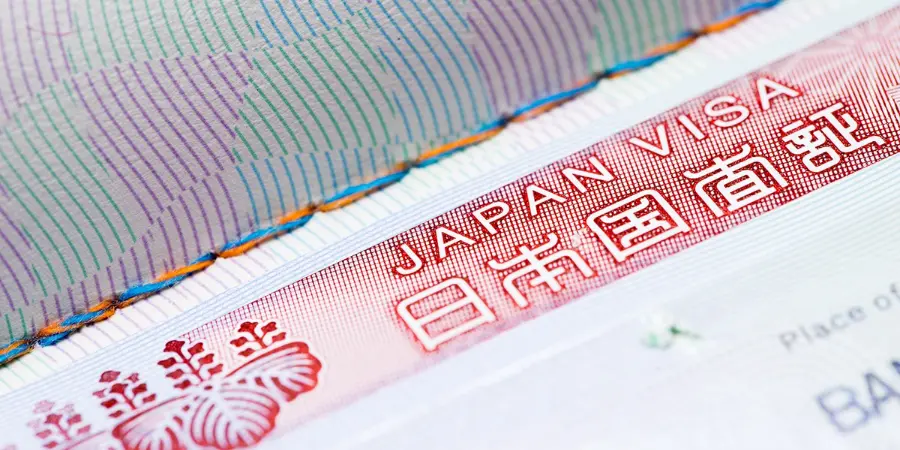
If you are moving to Japan for formal study longer than a short tourist stay, yes, you will usually need a Student visa. The standard route starts with a Certificate of Eligibility (COE). The official Study in Japan immigration page states that the student or a proxy, often the accepting school, first applies for the COE through a regional immigration services bureau in Japan.
After that, you apply for the visa at a Japanese embassy or consulate in your country. COEs issued on or after 1 August 2022 are generally valid for three months from the date of issue, according to the Immigration Services Agency. That means poor timing can create avoidable stress if you leave the embassy stage too late.
Visa compliance does not end when you arrive. You must keep your address up to date, remain properly enrolled, and follow work restrictions. Study in Japan’s FAQ for current students notes that school changes must be reported within 14 days to the regional immigration bureau, while residence changes must be reported to the municipal office.
How do I become an exchange student in Japan?
The easiest exchange route is through your current university. If your institution has a partnership with a Japanese university, the admin is usually lighter than a full direct-enrolment application because credit transfer, tuition arrangements, and nomination processes are already set up between the two schools.
In most cases, you should start by asking your study abroad office four things:
- Which Japanese partner universities are available
- Which semester dates fit your degree
- How credits transfer back home
- What language level is needed for classes or housing
Exchange students often keep paying tuition to their home university rather than to the host university, but this varies by agreement. The main advantage is lower complexity. The main risk is academic mismatch: some students arrive expecting broad course freedom, then find strict course approval rules or limited English-taught modules.
If your university does not have a Japan exchange agreement, you may need to look at fee-paying short-term study or direct enrolment instead.
Can I study Japanese in Japan before applying to university?
Yes, and for a lot of students it is the smartest first move. Japan has dedicated Japanese-language institutes listed through the official Study in Japan portal, and language schools can work well for students who need structured immersion before attempting a Japanese-taught degree.
This route makes sense if you are serious about reaching classroom-level Japanese, not just casual conversation. It can also help you get used to trains, paperwork, banking, and social rhythms before the pressure of degree study begins. The risk is drift. Students sometimes spend a year or two in language school without a clear next step, then run into visa limits, funding strain, or slower-than-expected progress.
A good language-school plan should answer three questions before you enrol:
- What JLPT level are you targeting?
- Are you aiming for university entry, work, or general fluency?
- What is your deadline for moving on to the next stage?
Language school works best as a bridge, not as a vague holding pattern.
When should I start preparing to study in Japan?
Start about 12 months before your intended intake if you want the smoothest route. That gives you enough time for test dates, scholarship windows, document translation, passport renewal, funding proof, and housing decisions. Study in Japan’s prospective-student FAQ recommends beginning preparations as early as possible, and its planning timeline places admissions and immigration steps months before departure.
A simple planning rhythm looks like this:
- 12 months before: shortlist universities, decide on April or autumn intake, start language study, map required tests
- 6 months before: submit applications, chase scholarships, sit language or admissions exams
- 3 months before: confirm your place, pay key fees, and begin COE processing
- 1 month before: apply for the visa once the COE is issued, book flights, confirm housing
Students who leave everything to the last minute usually struggle most with paperwork, not academics.
Can international students work part-time in Japan?
Yes, but only with the right permission and within the legal limit. Study in Japan states that students must obtain permission to engage in activity outside their status of residence before taking paid part-time work. The standard limit is up to 28 hours a week, with longer hours allowed during long school holidays under the usual rules.
Part-time work can help, but it is not a magic budget fix. Study in Japan’s part-time work page cites JASSO’s 2023 survey showing average monthly income of around ¥81,000 for privately financed international students. That is useful for groceries, transport, or phone bills, but it does not reliably cover tuition and city-centre rent on its own.
Jobs that use Japanese can build confidence fast, but they also add pressure. If your main reason for working is survival rather than experience, your study schedule can become fragile very quickly.
Is it hard to get a job in Japan after graduating?
It is possible, but it is not automatic. The biggest obstacle is usually not a lack of jobs; it is timing and fit. Many Japanese employers recruit through shūshoku katsudō (就職活動), the formal graduate job-hunting cycle that often starts long before graduation. The official Study in Japan portal has a dedicated employment section for international students, which is a clue in itself: job hunting is a separate process you need to plan for, not a simple add-on after finals.
Students in the strongest position usually have three things in place before final year:
- functional to business-level Japanese for interviews and office life
- some understanding of Japanese hiring etiquette and recruitment calendars
- a degree or specialism that matches a role employers can sponsor for
English-only roles do exist, particularly in multinational firms, tech, research, and some start-up environments, but they are still a smaller slice of the market. A Japanese degree helps, but it does not remove the need for language growth, networking, and early preparation.
Your journey begins. Ganbatte!

Studying in Japan is an adventure unlike any other.
It is a unique blend of rigorous academics, rich culture, and personal growth. The path is not always simple, and the challenges can be unexpected, but for students who plan carefully, stay adaptable, and embrace the experience with both curiosity and realism, the rewards are immense. From navigating university systems and language requirements to managing daily life and building a future career, each step is an opportunity to learn, grow, and discover what you are truly capable of.
As you embark on this journey, be open to the challenges, celebrate the small victories, and soak in every moment of your time in Japan.


