In 1877 the American zoologist Edward S. Morse, newly arrived in Japan, looked out of a train window near Ōmori, between Yokohama and Tokyo, and spotted a bank of old shells. He dug there and found pots pressed with twisted cord, which he called cord marked. Translated into Japanese as jōmon, the phrase now names more than 10,000 years of Japanese prehistory.
This guide explains who the Jōmon people were and how they lived, introduces the pottery and figures they left behind, and ends with the places in Japan and the UK where you can see them.
What was the Jōmon period? The Jōmon period is Japan’s prehistoric age of hunters, fishers and gatherers who made pottery and lived in settled villages. UNESCO dates it from about 13,000 BC to 400 BC, though many books end it around 300 BC. Over more than 10,000 years the Jōmon people never turned to farming as their way of life, yet they built large villages, tended chestnut trees, made some of the oldest pottery in the world and raised great stone circles.
Jomon Art and Culture, From Cord-Marked Pots to Stone Circles
Edward Morse, the Ōmori shell mound and the name Jōmon
Morse dug the Ōmori shell mound in 1877 and published his finds in Shell Mounds of Omori in 1879, describing the pottery as cord marked. The Japanese scholar Shirai Mitsutarō turned the phrase into jōmon doki, cord-marked pottery, in 1886, and the name later spread from the pots to the people and to the whole age.

The patterns were made by rolling or pressing twisted cord into the wet clay. Shell mounds like Ōmori were the rubbish heaps of Jōmon villages, layered with shells, bones and broken pots, and they remain some of the richest places to learn how these people ate and lived.


15,000 year old pots and the first Jōmon people
Pottery marks the start of the period. Plain, undecorated sherds from the Odai Yamamoto site in Aomori Prefecture have been dated to about 15,000 years ago, among the oldest pottery found in Japan and thousands of years older than the first pottery in Europe or the Middle East.
The Jōmon people had lived in the archipelago since roughly 16,000 years ago. A University of Tokyo study published in 2026, based on mitochondrial DNA from Jōmon skeletons, suggests they descend from a single early migration whose lineage later split into regional groups. Their numbers grew sharply between about 13,000 and 8,000 years ago, especially in eastern Japan, where forests and seas were richest in food.
Villages without farming: Sannai-Maruyama, chestnut groves and stone circles
For more than 10,000 years the Jōmon people hunted, fished and gathered without turning to agriculture, yet they settled down in permanent villages. That combination is the reason UNESCO added 17 Jōmon sites in Hokkaido and northern Tōhoku to its World Heritage List in 2021.
Around their villages they shaped the forest. The official Jōmon World Heritage guide describes chestnut, walnut and lacquer trees growing near settlements, with chestnuts probably managed and grown for food and timber.
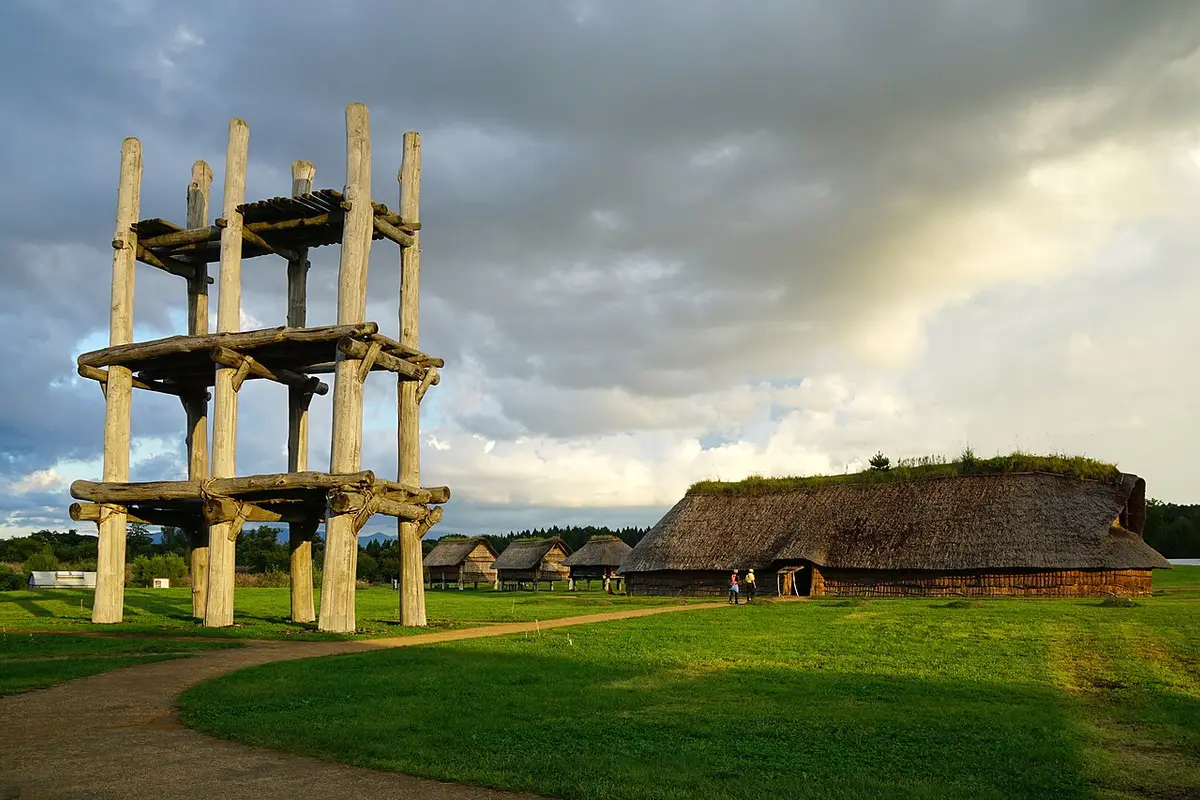
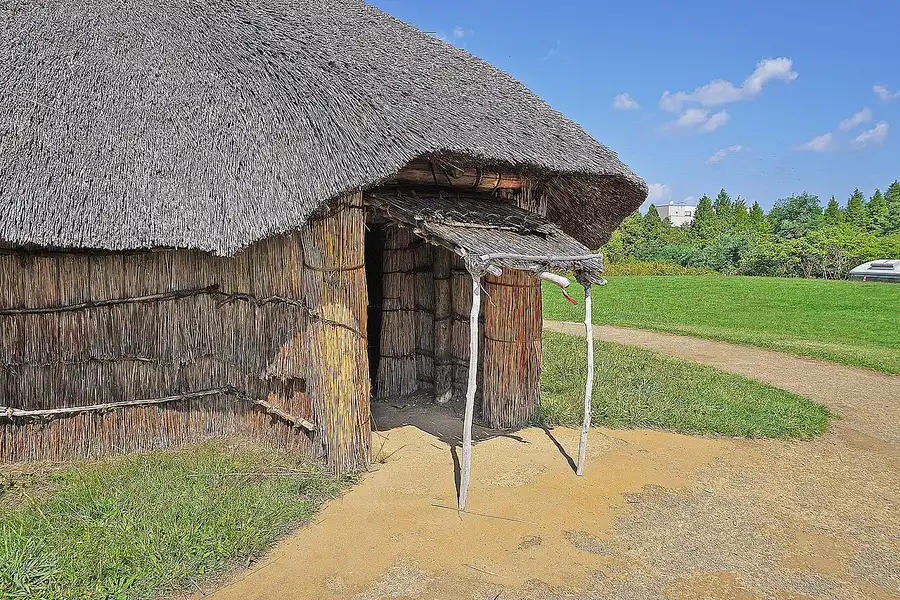
The biggest village found so far is Sannai-Maruyama in Aomori, lived in from about 5,900 to 4,200 years ago. Its rebuilt six-pillar tower and longhouse have become the best-known images of the Jōmon world, and our Tōhoku travel guide covers a visit.
In Akita, the Ōyu Stone Circles at Kazuno hold two great rings of stones. The larger, Manza, is 52 metres across, and a line drawn through the centres of the two circles points roughly towards the midsummer sunset.
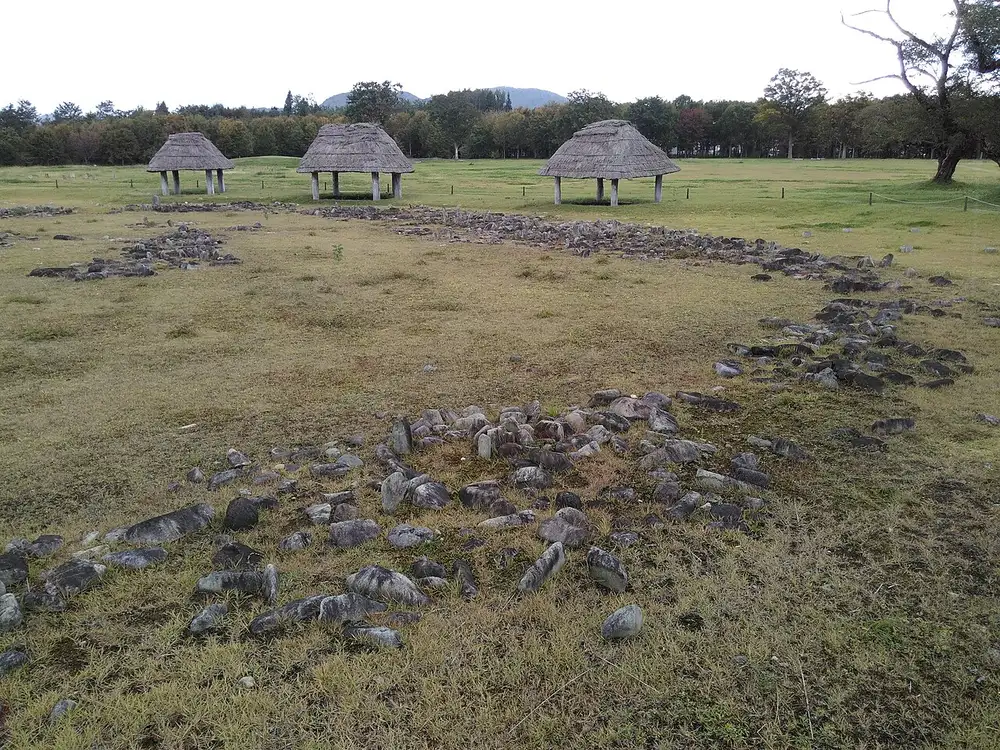
Jōmon pottery, from cooking pots to the flame vessels of Niigata
Jōmon pottery changed a great deal over 10,000 years. The cord patterns that gave the period its name appear on pots right across Japan, and by the Middle Jōmon period each region had its own style of pot.
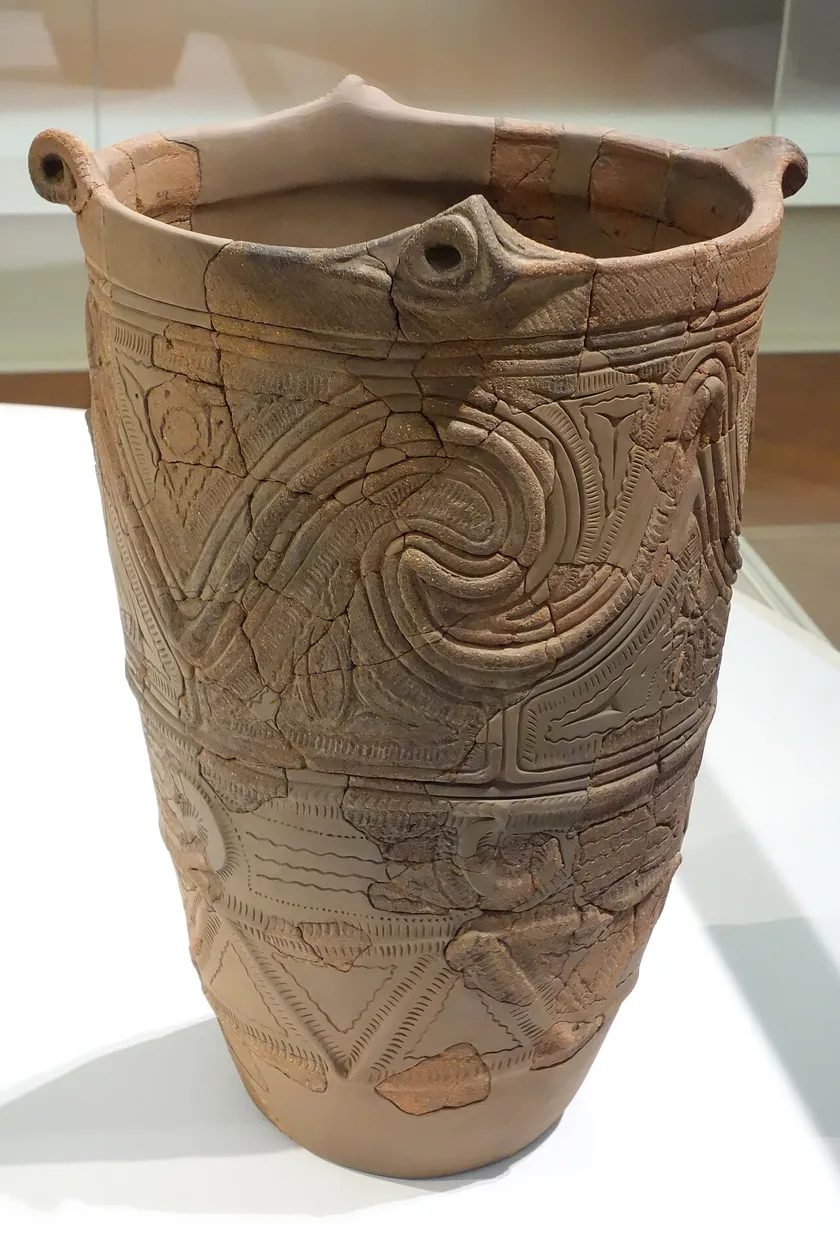
By the Middle Jōmon period, about 5,000 years ago, potters along the Shinano River in Niigata were making the most extravagant pots of all, with rims that rise in crests and loops like flames. In June 1999 a group of finds from the Sasayama site in Tokamachi, including 14 flame-style pots, became the first Jōmon pottery made a National Treasure. They are always on display at the Tokamachi City Museum, a 10 minute walk from Tokamachi Station.
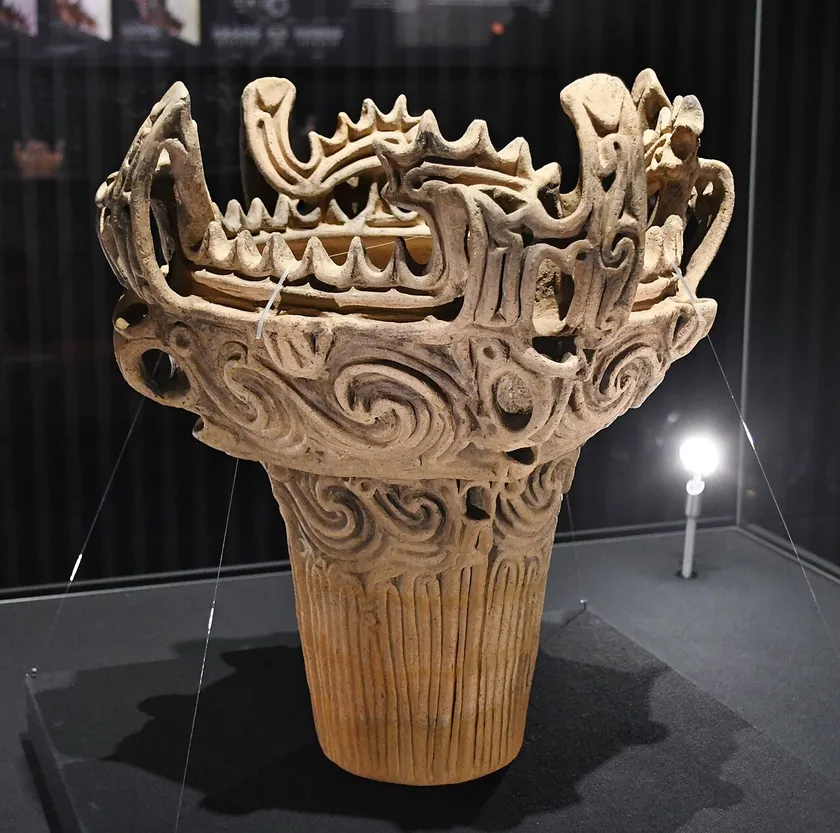
For a long time these pots were studied as archaeology. When the Tokyo National Museum introduced its 2018 Jōmon exhibition, it credited the artist Okamoto Tarō and others with finding artistic value in them in the 1950s.



Dogū, the clay figures of the Jōmon world
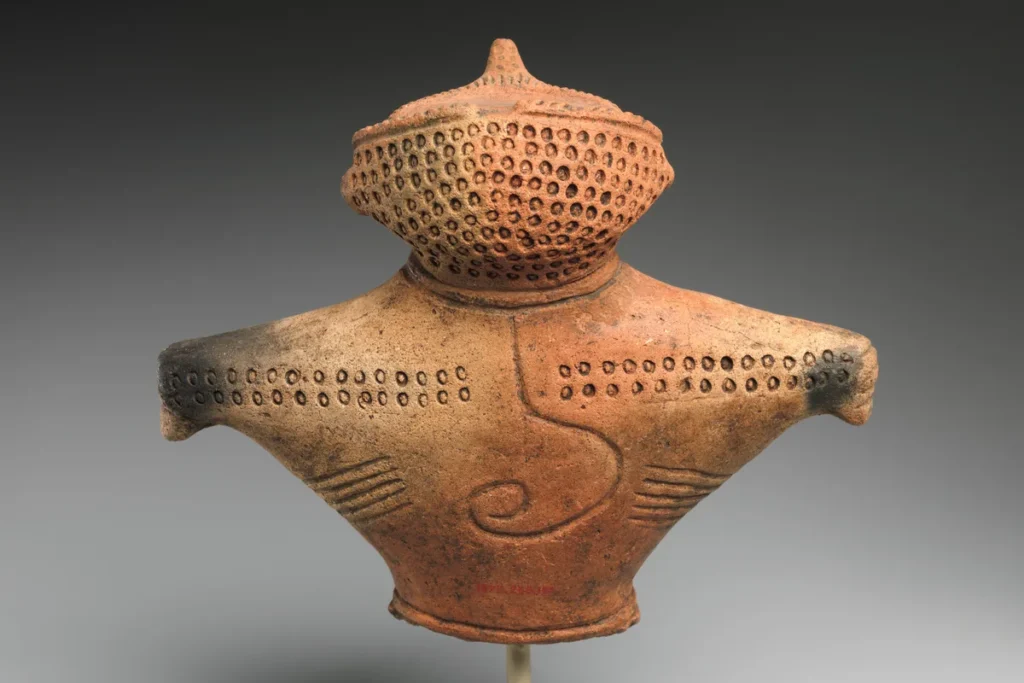
The Jōmon people also made clay figurines called dogū, most of them showing women, from about 13,000 years ago to the end of the period. Five are now National Treasures, and the goggle-eyed figures of Aomori have become the best-known face of Jōmon Japan. JR Kizukuri Station, near the Kamegaoka site where the most famous one was found, even has a station building in the shape of a goggle-eyed dogū. Our guide to dogū covers the figures and where to see them.
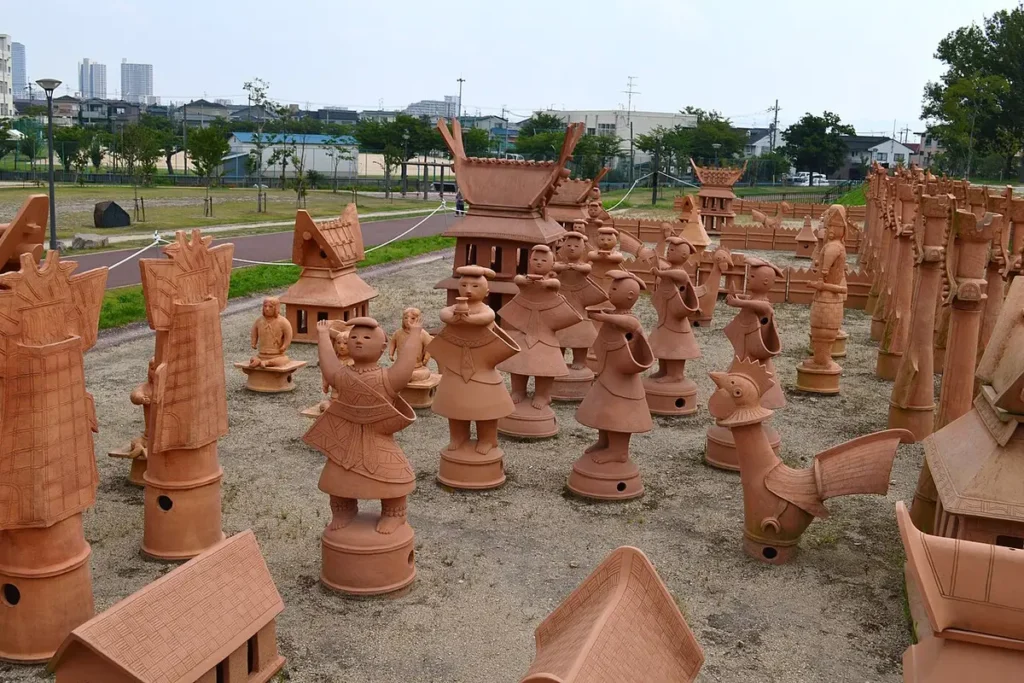
Haniwa, the clay figures most often confused with dogū, belong to a much later age. They were set up on burial mounds from the middle of the 3rd century AD, several centuries after the Jōmon period ended, and our haniwa guide tells their story.
Jōmon and Yayoi: what changed when rice farming arrived
The Jōmon period gave way to the Yayoi period when full-scale rice farming took hold. Rice paddies, and migrants from the Asian mainland, changed how communities lived over the following centuries.
The Jōmon people did not vanish. University of Tokyo research published in 2023 found that Japanese people today carry a mix of Jōmon and later migrant ancestry, in proportions that vary from region to region.
The Jōmon name today, from Yakushima’s great cedar to a Persona 3 question
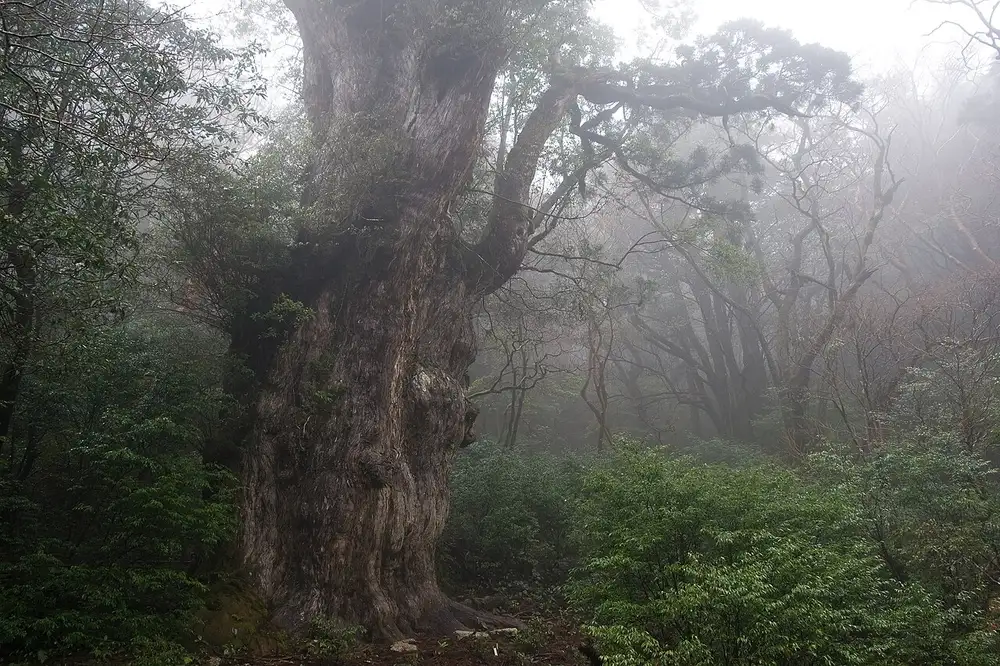
The name turns up far from museums. On Yakushima, the Jōmon Sugi is the largest known Yakusugi cedar, 25.3 metres tall and 16.4 metres around its trunk, and it was named because it was thought to date back to the Jōmon period. Japan’s Forestry Agency gives its estimated age as anywhere from 2,170 to 7,200 years. Our guide to hikes beyond Mount Fuji covers the 9 to 10 hour return walk to see it.
Gamers meet the Jōmon in Persona 3 Reload, where a history teacher asks what the places people dumped their waste in the Jōmon period are called today. The answer is middens, the same kind of shell heap that led Morse to the Jōmon in the first place.
Where to see the Jōmon world in Japan and in the UK
The best Jōmon sites and collections are spread from Tokyo to the far north. These are the places to start.
| Where | Town | What to see |
|---|---|---|
| Sannai Maruyama Jomon Culture Center | Aomori City | Rebuilt buildings and finds from the largest Jōmon village yet found |
| Ōyu Stone Circles | Kazuno, Akita | Two great stone circles, the larger 52 metres across |
| Tokamachi City Museum | Tokamachi, Niigata | The National Treasure flame-style pots from the Sasayama site |
| Togariishi Museum of Jōmon Archaeology | Chino, Nagano | The Jōmon Venus and the Masked Goddess |
| Tokyo National Museum | Ueno, Tokyo | Jōmon pottery and the goggle-eyed dogū from Kamegaoka |
The 17 sites of the Jōmon World Heritage listing are spread across Hokkaido, Aomori, Iwate and Akita, and our guide to Japan’s UNESCO sites covers the rest of the country’s World Heritage.
In the UK, the Sainsbury Centre at the University of East Anglia in Norwich has a goggle-eyed dogū of the Kamegaoka type on display, and the British Museum showed 67 dogū lent from Japan in The Power of Dogu in 2009. The Sainsbury Institute for the Study of Japanese Arts and Cultures, also in Norwich, runs its own Jōmon research programme, Project Jomon.
Jōmon Period Questions and Answers
UNESCO dates the Jōmon culture from about 13,000 BC to 400 BC. Other sources often give about 14,000 to 300 BC. The oldest Jōmon pottery is about 15,000 years old.
Jōmon (縄文) means cord-marked, after the patterns pressed into the pottery with twisted cord. The American zoologist Edward S. Morse called the pots cord marked after digging at the Ōmori shell mound in 1877, and the Japanese term followed in 1886.
The Jōmon people were the hunters, fishers and gatherers who lived across the Japanese islands for more than 10,000 years before rice farming. They lived in settled villages, made pottery and clay figures called dogū, and built stone circles.
The Jōmon people lived by hunting, fishing and gathering. The Yayoi period began when full-scale rice farming took hold, with migrants arriving from the Asian mainland. Japanese people today carry ancestry from both.
Their way of life ended, but their descendants did not disappear. University of Tokyo research shows that Japanese people today carry a mix of Jōmon and later migrant ancestry, in proportions that vary by region.
Yes. The Sainsbury Centre in Norwich has a goggle-eyed Jōmon dogū on display. In 2009 the British Museum showed 67 dogū lent from Japan in The Power of Dogu.