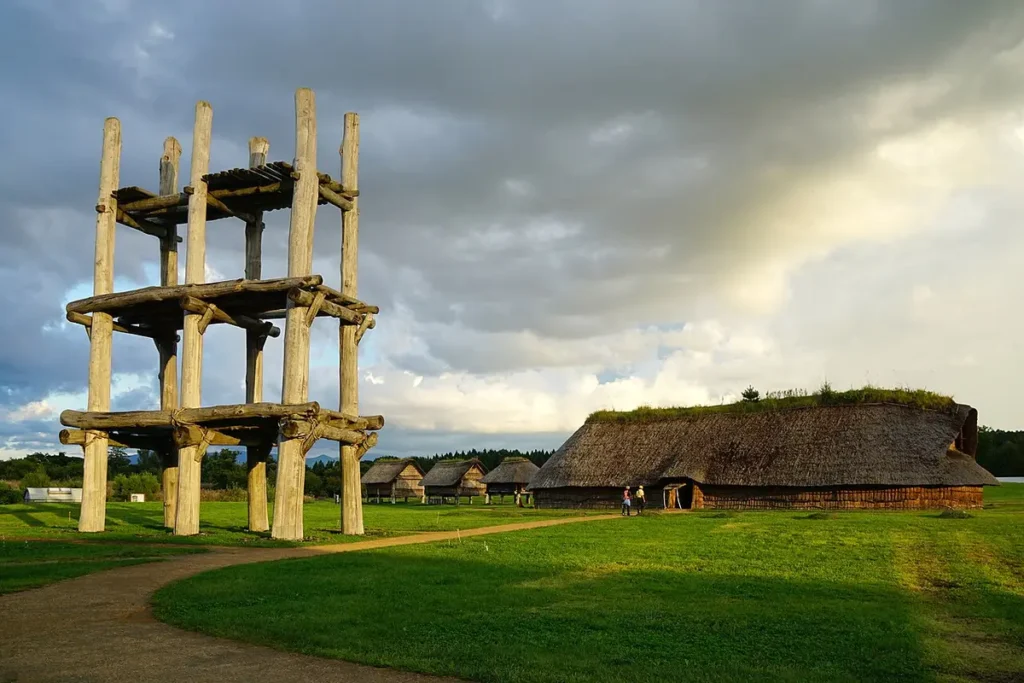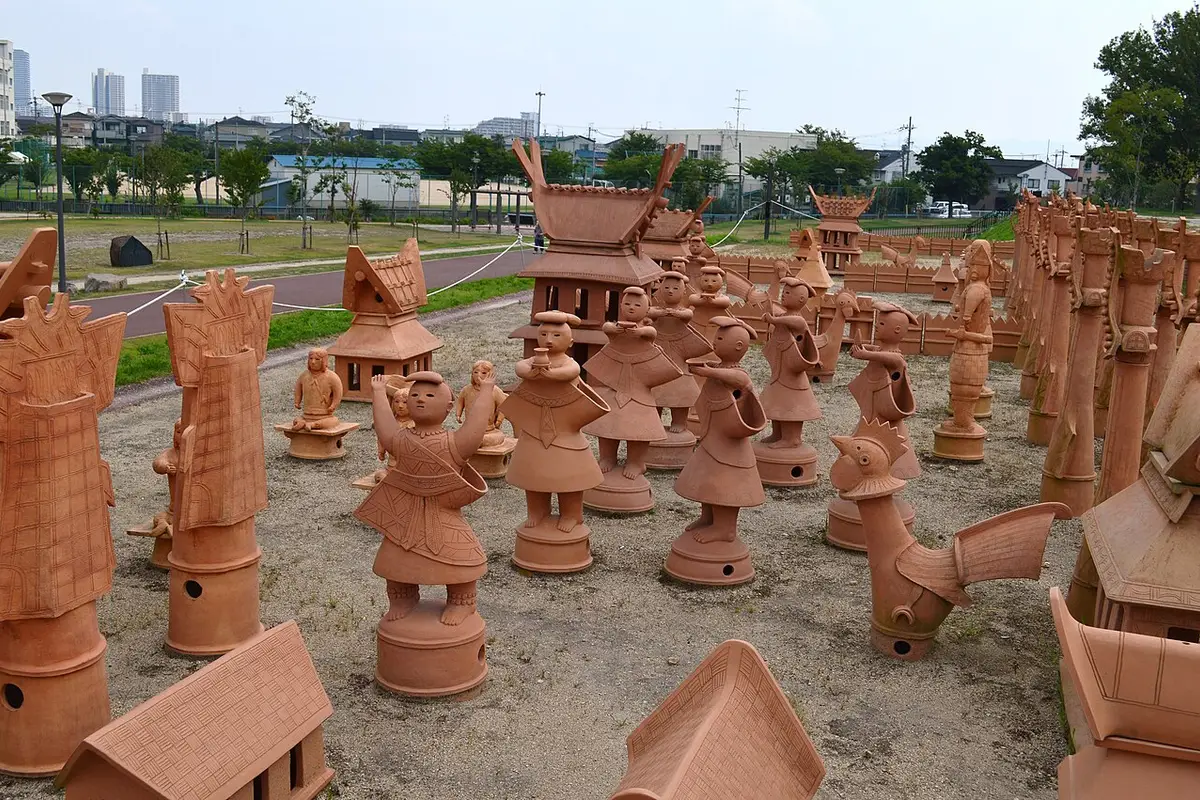
Beside a 6th century royal tomb in Takatsuki, between Osaka and Kyoto, about 190 clay figures stand in rows: people, horses, birds, swords, shields and houses. They are full-size replicas of haniwa, the figures that once lined the burial mounds of Japan’s early kings, and visitors are free to touch them.
Haniwa were made for more than 300 years. This guide explains where they came from, the legend that grew up around them and the warrior that became a National Treasure, then shows where to see haniwa in Japan and in the UK.
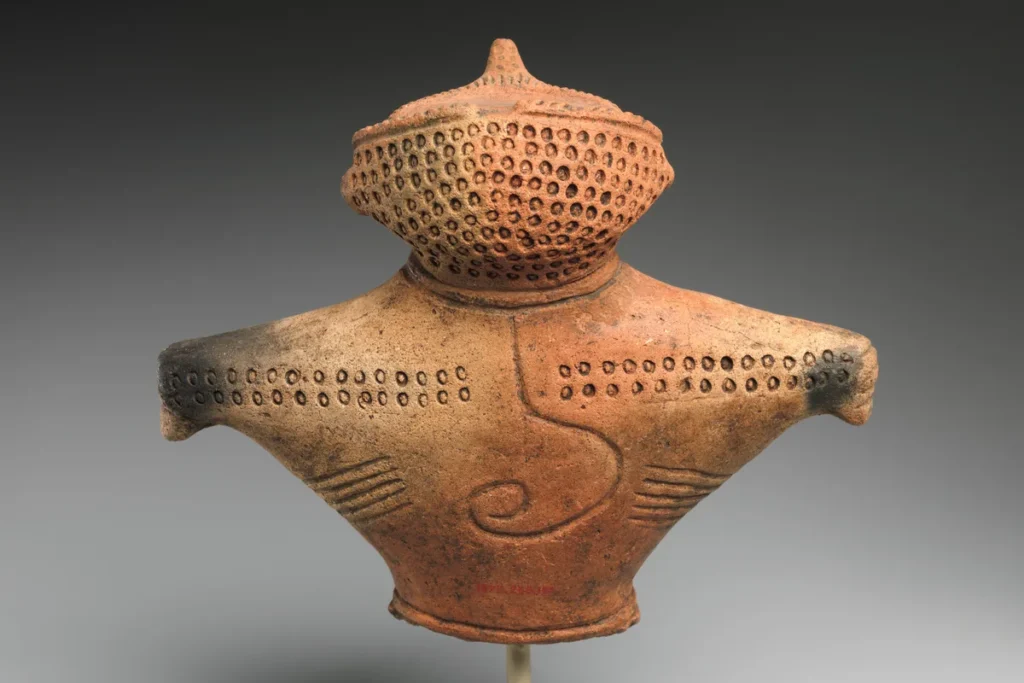
What are haniwa? Haniwa (埴輪) are unglazed clay cylinders and figures that were set up on and around kofun, the burial mounds of Japan’s rulers, from the middle of the 3rd century to the 6th century. The earliest were plain cylinders. Houses, boats, shields and other objects followed, and later came people and animals: warriors, shrine maidens, musicians, horses, dogs and boars. They are much younger than dogū, the clay figurines of the Jōmon period.
Haniwa Figurines of Warriors, Horses and Dancers
Haniwa began as clay pot stands in Kibi, now Okayama Prefecture
The first haniwa were cylinders. According to Okayama Prefecture’s ancient Kibi archaeology centre, they were modelled on the tall pot stands, called tokushu kidai, that people in the Kibi region placed on their burial mounds in the late Yayoi period. In the 3rd and 4th centuries, rows of cylinders went up on the new keyhole-shaped tombs and spread across Japan with them.
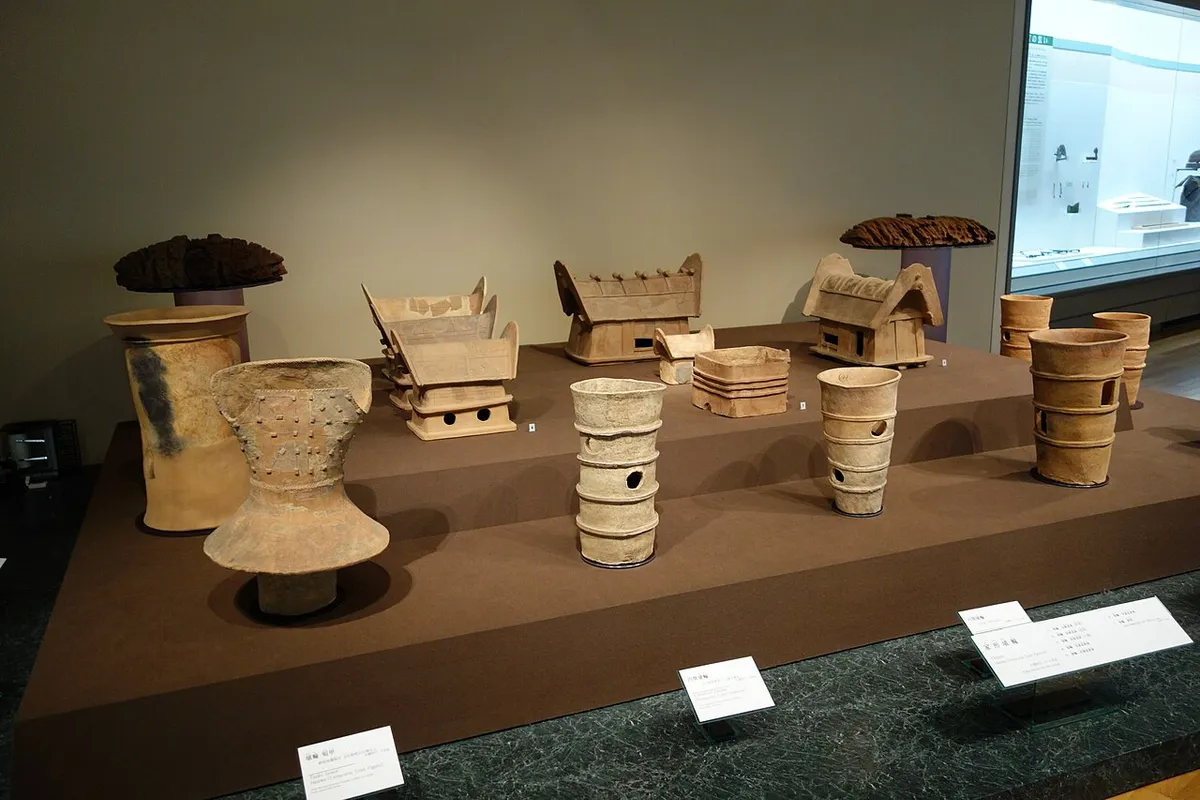
Shaped haniwa came next. Houses, boats and chairs appeared before most of the human and animal figures, the Kyushu National Museum explains. People and animals belong mostly to the later Kofun period, when whole scenes were set out on the tombs.
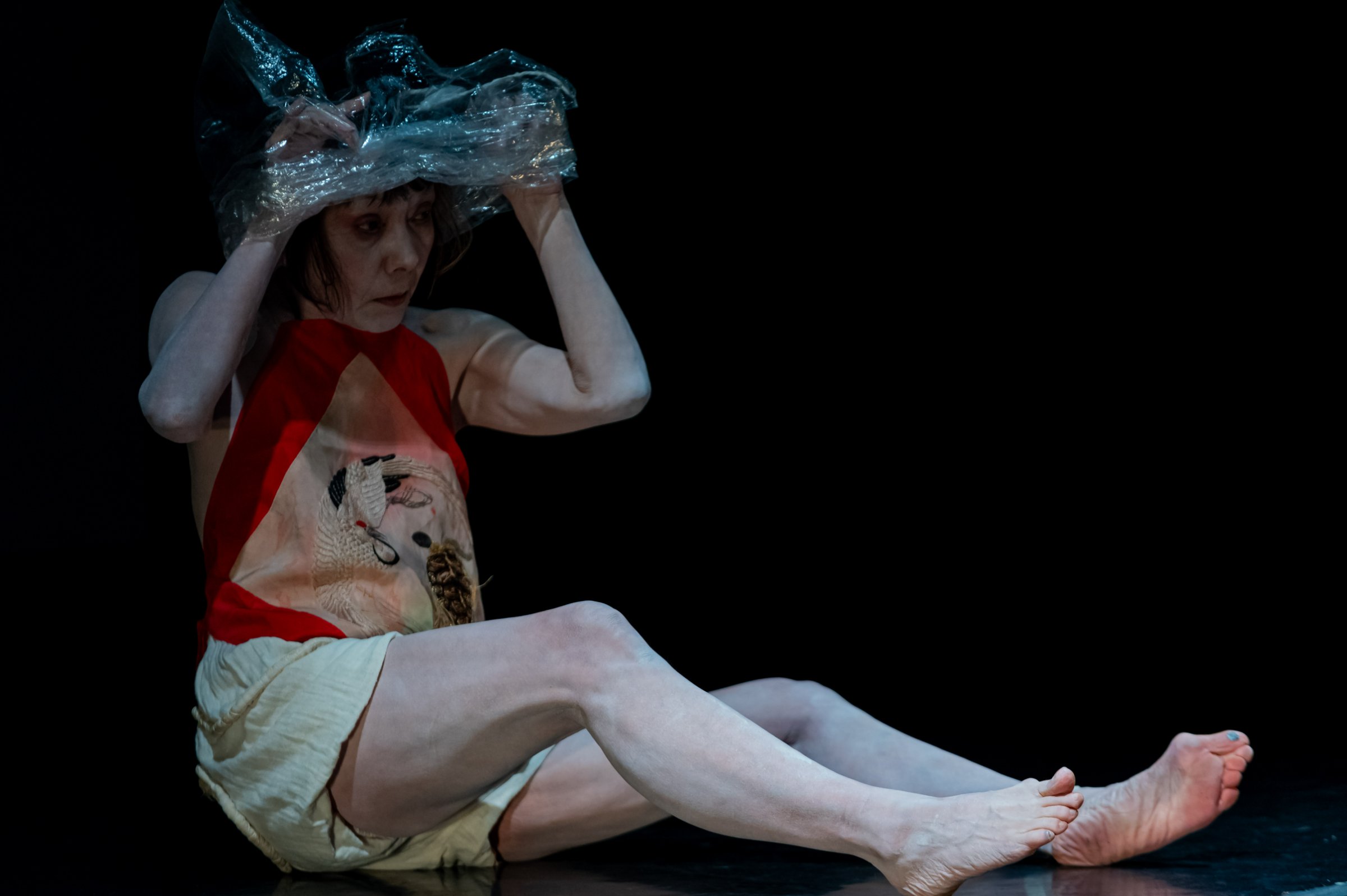

Nomi no Sukune’s clay figures and the legend of how haniwa began
Japan’s oldest official history, the Nihon Shoki of 720, gives haniwa a darker origin. When the younger brother of Emperor Suinin died, the chronicle says, his attendants were buried alive around his tomb, and they wept for days before they died. When the empress died, a courtier called Nomi no Sukune sent for a hundred clay workers from Izumo, had them shape figures of men and horses, and proposed that clay should take the place of living people from then on.
Frank Brinkley retold the story in A History of the Japanese People (1915, chapter nine), with a warning that Japanese dates before the 5th century are “very apocryphal”. In chapter eight he describes haniwa faces daubed with red pigment, in streaks across the face or patches over the eyes and cheeks, which he took for ceremonial face paint.
The same chronicle gives Nomi no Sukune the first wrestling match in Japanese history, in which he kicks his opponent to death, and sumo still honours him as a founding figure, with a small shrine to him in Ryōgoku, Tokyo.
The excavated record tells a different story about haniwa. The first ones were cylinders, and human figures only came much later.
The Warrior in Keikō Armour, Gunma’s National Treasure haniwa
The most famous haniwa was dug up at Iizuka-chō in Ōta, Gunma Prefecture. It stands 130.5 centimetres tall in a helmet and armour made of small laced plates, keikō in Japanese, with one hand on a sword. It dates from the 6th century, and on 8 June 1974 it became the only human figure among haniwa to be made a National Treasure.
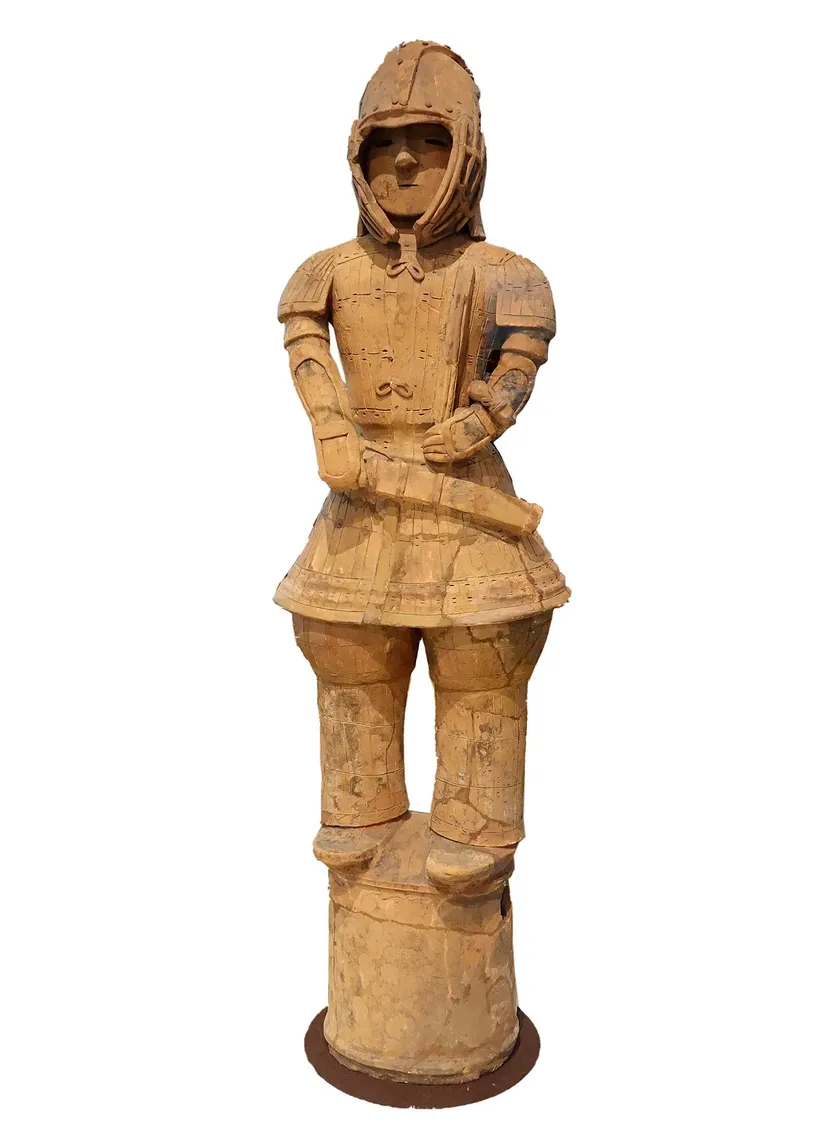
The Tokyo National Museum marked the 50th anniversary in 2024 with Haniwa: Tomb Sculptures of Japan, its first big haniwa exhibition in about half a century. For the first time, it stood the warrior beside four close relatives, one of them lent by the Seattle Art Museum. The show then moved to the Kyushu National Museum until May 2025.
Gunma is the heartland. About 40 per cent of the haniwa designated National Treasures or Important Cultural Properties were found there, and the prefecture celebrates 20 August as Haniwa Day, because 8, 2 and 0 can be read as ha, ni and wa. More than 90 per cent of the animal haniwa found in Gunma are horses, according to the prefecture’s own guide.
The Dancing People, a drummer and a boar with bound feet
Among the most popular objects at the Tokyo National Museum is a pair of figures from the Nohara Kofun in Kumagaya, Saitama Prefecture, known as the Dancing People. With round hollow eyes, open mouths and one arm raised, they look mid-song, and the museum’s official mascot, Tohaku-kun, is based on them.
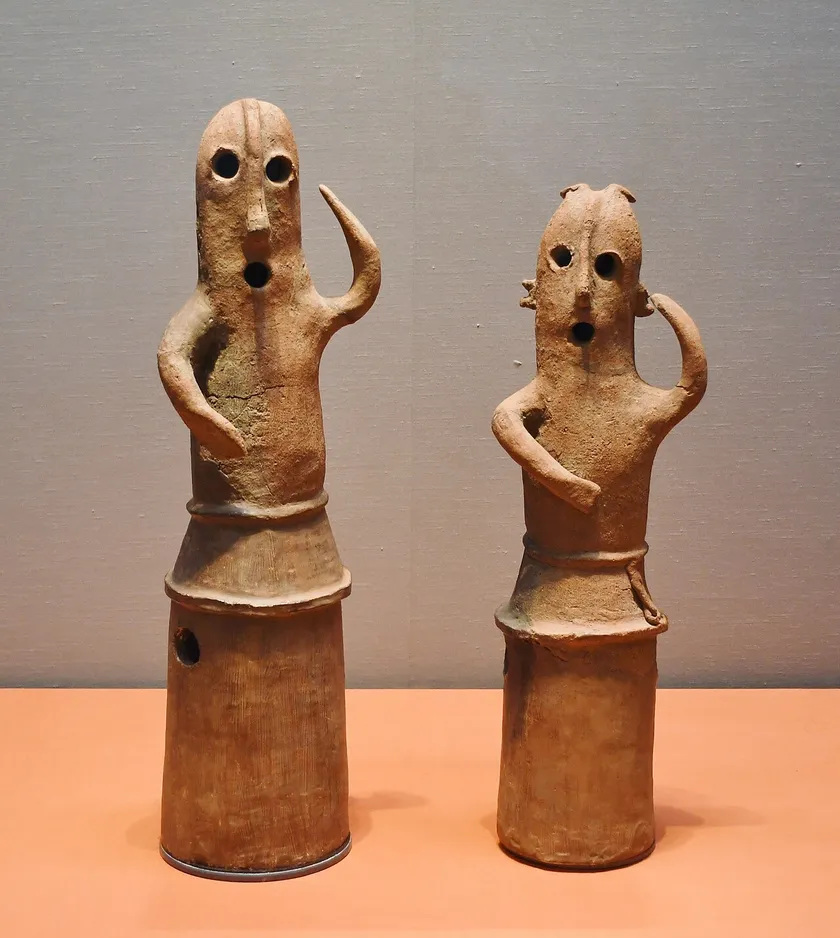
Nobody knows if they are dancing. The Agency for Cultural Affairs points out that the smaller figure wears a sickle at the waist and a man’s hairstyle, and that figures in the same pose are often found next to horse haniwa. One theory makes them grooms, raising a hand to hold the reins.
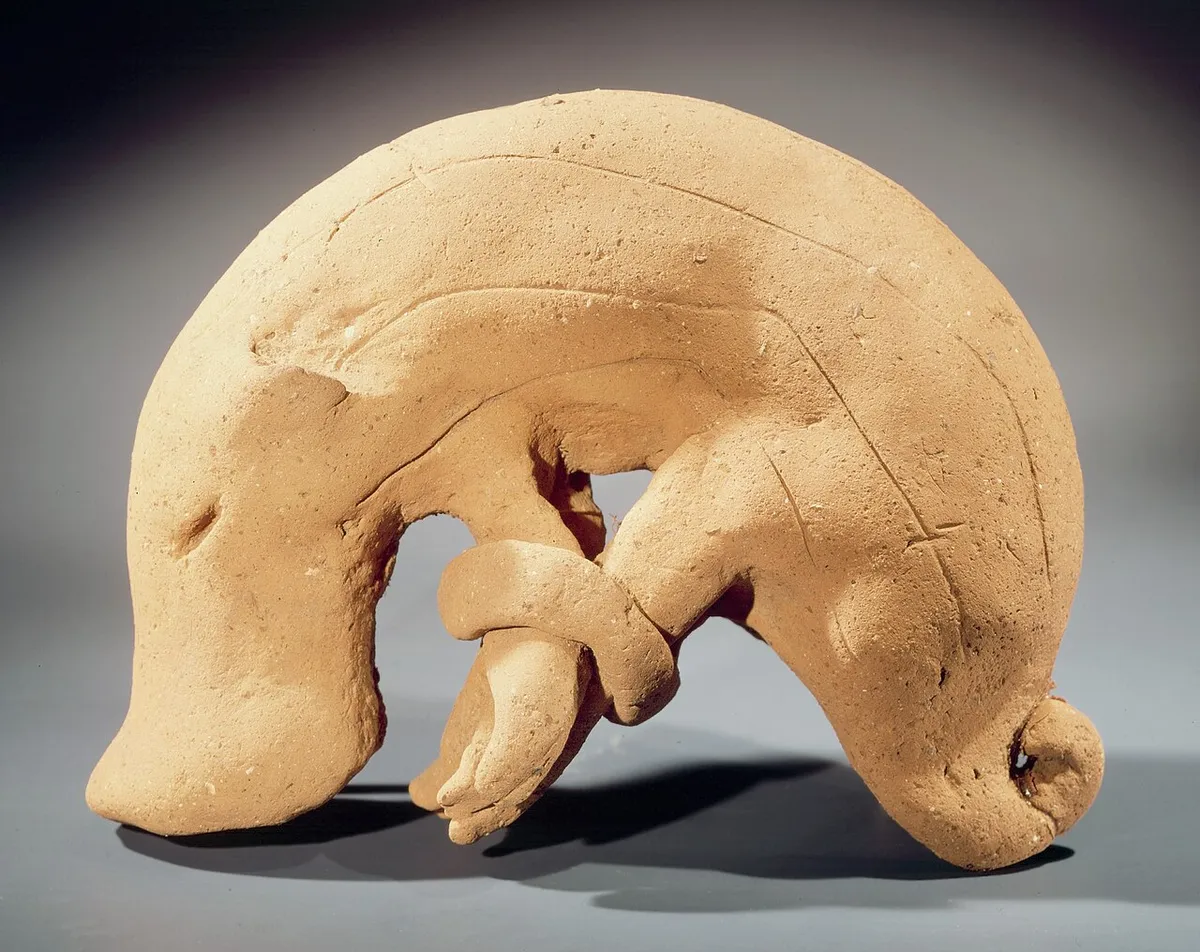
Animals tell stories too. Horses are the most common animal haniwa. Boars were often set out with dogs to show a hunt, and some of the dogs wear collars, a sign they were kept by people.
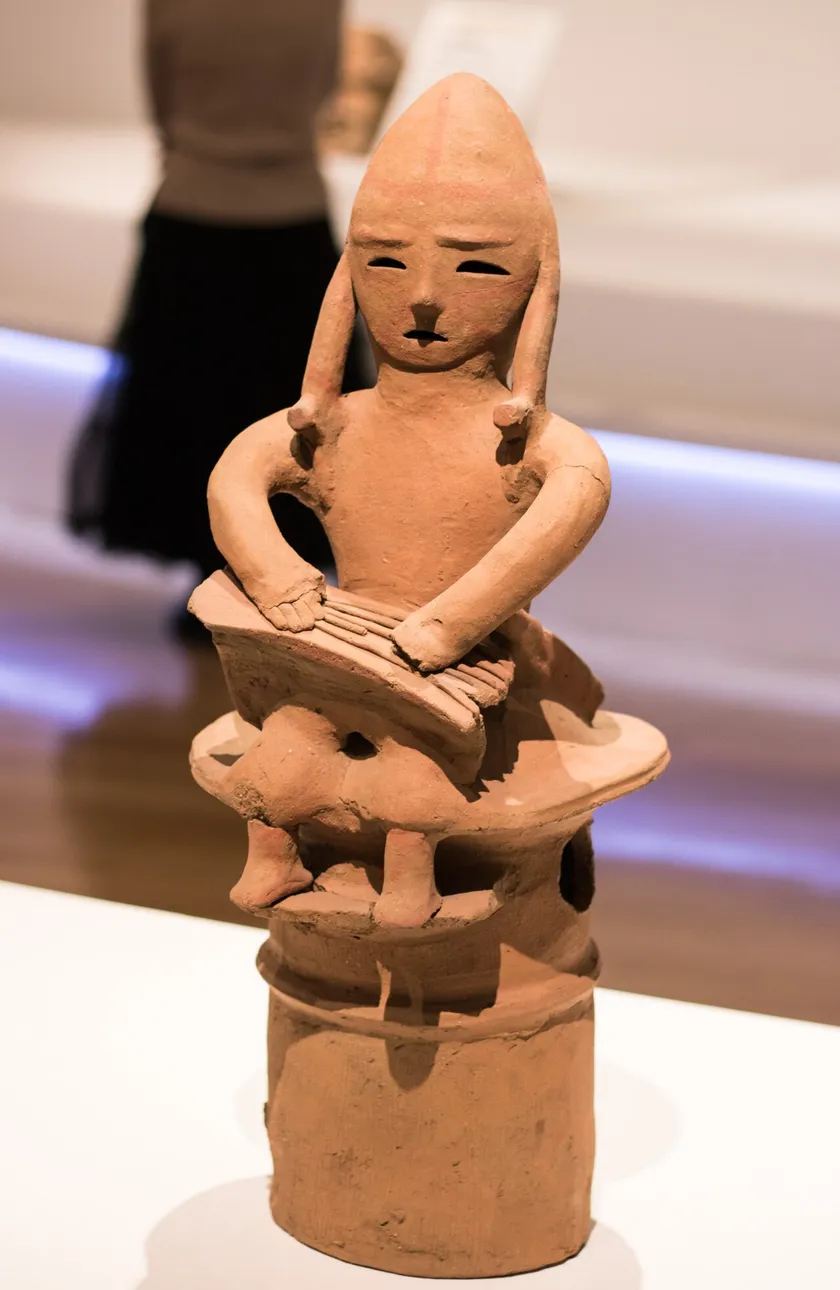
Some haniwa make music. The Tokyo National Museum has a rare figure of a man beating a drum, and another haniwa, said to come from Sakuragawa in Ibaraki Prefecture, shows a seated man playing a zither on his lap. Our guide to taiko drumming begins its history with a haniwa drummer.


Imashirozuka Kofun, a royal tomb you can walk on, with 190 replica haniwa
Imashirozuka Kofun in Takatsuki, built in the first half of the 6th century, is the only great royal tomb in Japan that visitors can walk on freely. With its double moat it stretches about 350 metres. Archaeologists widely regard it as the tomb of Emperor Keitai, although the Imperial Household Agency names a different mound, Ōta Chausuyama in Ibaraki, as his.
Excavations turned up a huge range of shaped haniwa, including a house 171 centimetres tall, the largest house haniwa in Japan. About 190 full-size replicas now stand on the haniwa ritual ground beside the tomb, where visitors can touch them and take photos with them. Next door, the Imashirozuka Ancient History Museum displays haniwa found at the tomb.
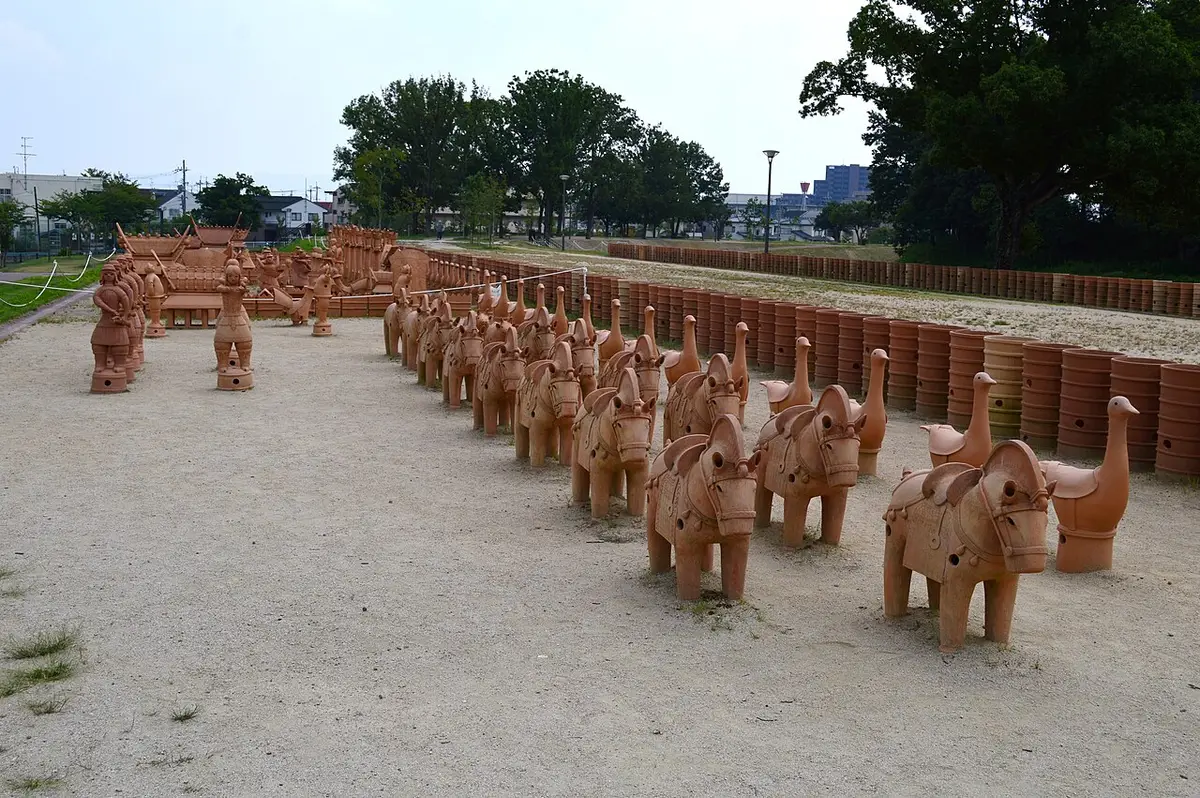
Entry to the park and the museum is free. The museum opens from 10am to 5pm, with last entry at 4.30pm, and closes on Mondays. It is about a 25 minute walk from JR Settsu-Tonda Station, and Takatsuki City’s museum page has the latest details. Nearby, the Shin-ike Haniwa Factory Park preserves one of the oldest and largest haniwa workshops in Japan, with its kilns rebuilt.
Where to see haniwa in Japan and in the UK
Haniwa are spread across museums near the tombs they came from. These are good places to start.
| Museum | Where | Haniwa to see |
|---|---|---|
| Tokyo National Museum | Ueno, Tokyo | The Warrior in Keikō Armour, the Dancing People and the drummer |
| Imashirozuka Ancient History Museum | Takatsuki, Osaka | Haniwa from Imashirozuka Kofun, with 190 replicas outside |
| Gunma Museum of History | Takasaki, Gunma | Gunma haniwa, including a cockerel and a warrior in patterned trousers |
| Kamitsuke no Sato Museum | Takasaki, Gunma | Haniwa from the Hodota kofun, with models of the tombs as they were |
| Saitama Prefectural Sakitama Historical Museum | Gyoda, Saitama | Haniwa from the largest group of kofun in eastern Japan |
| Museum, Archaeological Institute of Kashihara | Kashihara, Nara | Haniwa from the kofun of Nara Prefecture |
The star pieces at the Tokyo National Museum are sometimes lent to other museums, so check its website before a special trip.
In the UK, the British Museum holds the collection of William Gowland, the British engineer who worked for the Osaka Mint and investigated more than 400 kofun while living in Japan from 1872 to 1888. A keen mountaineer, he also coined the name Japanese Alps. The museum acquired his finds in 1889, and they include a 55 centimetre haniwa of a woman from the 6th century. Not every piece is on display, so search the online collection before you go.
Haniwa Questions and Answers
Haniwa (埴輪) combines hani, fine clay, and wa, a ring or circle. The figures are named for the clay cylinders that were set up in rows around the burial mounds.
Haniwa marked out the tomb and set it apart from the world around it. The later figures of people and animals are thought to show the funeral rites, or scenes from the life of the person buried there.
The oldest haniwa are about 1,750 years old. They were made from the middle of the 3rd century to the 6th century, during the Kofun period.
Dogū are much older clay figurines from the Jōmon period, most of them small and made before about 300 BC. Haniwa belong to the Kofun period and were set up outdoors on the burial mounds of rulers.
Yes. In the Japanese versions of Animal Crossing, gyroids are called haniwa, and they sell for 828 Bells, a number that can be read as ha, ni, wa.
The British Museum holds William Gowland’s collection of finds from Japanese burial mounds, haniwa among them, though not every piece is on display. Search the museum’s online collection before you visit.