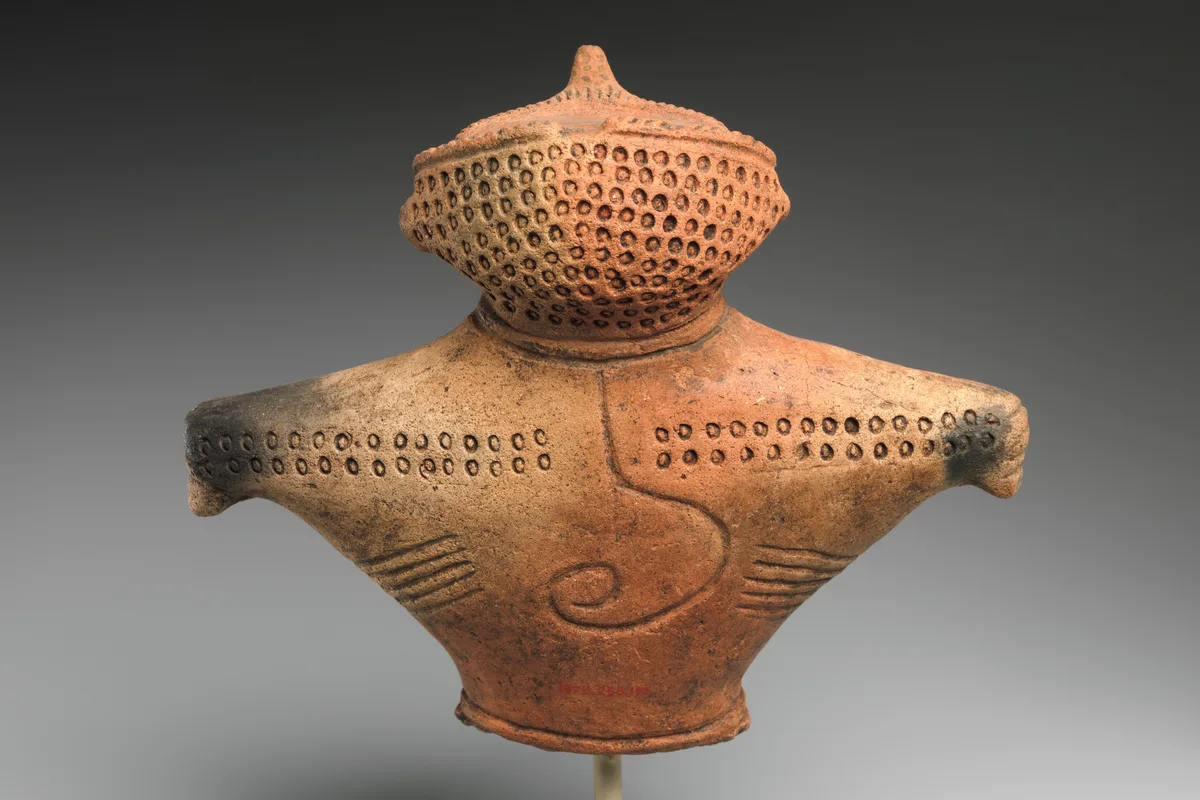
In 1887 a clay figure with huge oval eyes, a crown of looped clay and only one leg came out of the ground at Kamegaoka, near the northern tip of Honshu in Aomori Prefecture. It now stands in a glass case at the Tokyo National Museum, and it has become the best-known face of an art form that began about 13,000 years ago: the dogū.
Dogū (土偶, clay figures) were made by the Jōmon people, the hunter-gatherers who lived across the Japanese islands from about 14,000 BC to around 300 BC. This guide follows them from the oldest known examples to the five that Japan has made National Treasures, and ends with where to see dogū in Japan and in the UK.
What are dogū? Dogū are clay figurines made in Japan during the Jōmon period. Most show women, often pregnant, and they range from a few centimetres to 45 centimetres tall. Archaeologists believe they were used in rituals, probably to pray for safe childbirth and good harvests, and many were broken, some clearly on purpose. The oldest are about 13,000 years old.
Dogu Figurines, From the Oldest Clay Torso to the Goggle-Eyed Dogū
The oldest dogū: two small figures from Shiga and Mie, about 13,000 years old
The first dogū were tiny, with no faces. In 1996 archaeologists at the Kayumi Ijiri site in Matsusaka, Mie Prefecture, found one 6.8 centimetres tall near the floor of a pit dwelling.
In 2010 a similar figure turned up at the Aidani Kumahara site in Higashiomi, Shiga Prefecture, and was dated to about 13,000 years old. When the Mie figure was radiocarbon dated it came out slightly older, according to Mie Prefecture’s archaeology centre.
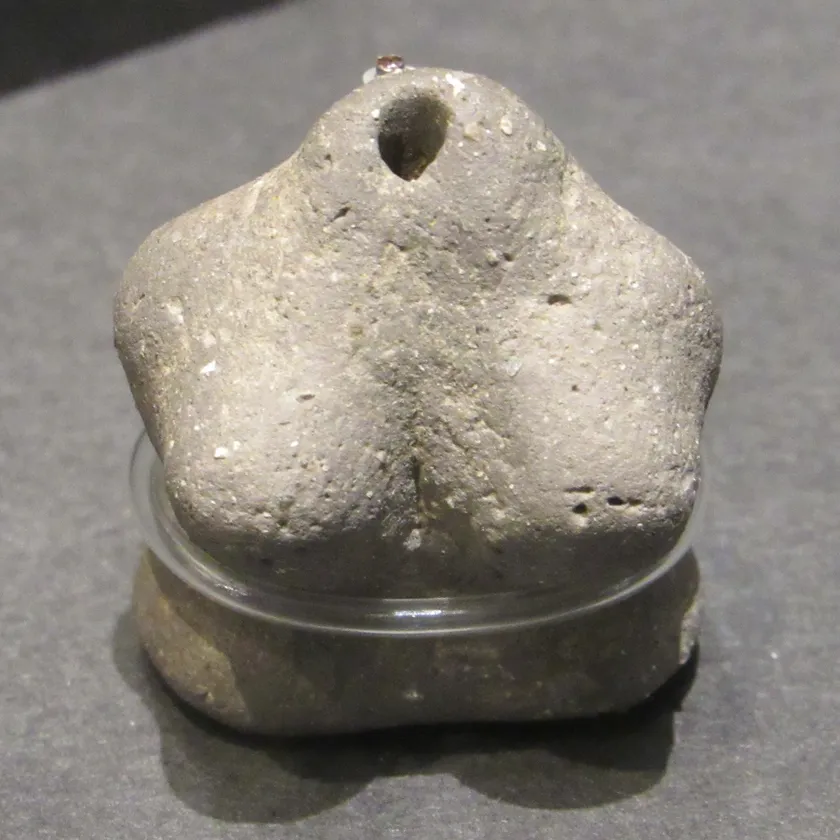
The Aidani Kumahara figure is a torso with two small breasts. That focus on the female body runs through most of the dogū made over the next ten thousand years.

From flat, faceless figures to hollow ones, and the 2,000 dogū of Sannai-Maruyama
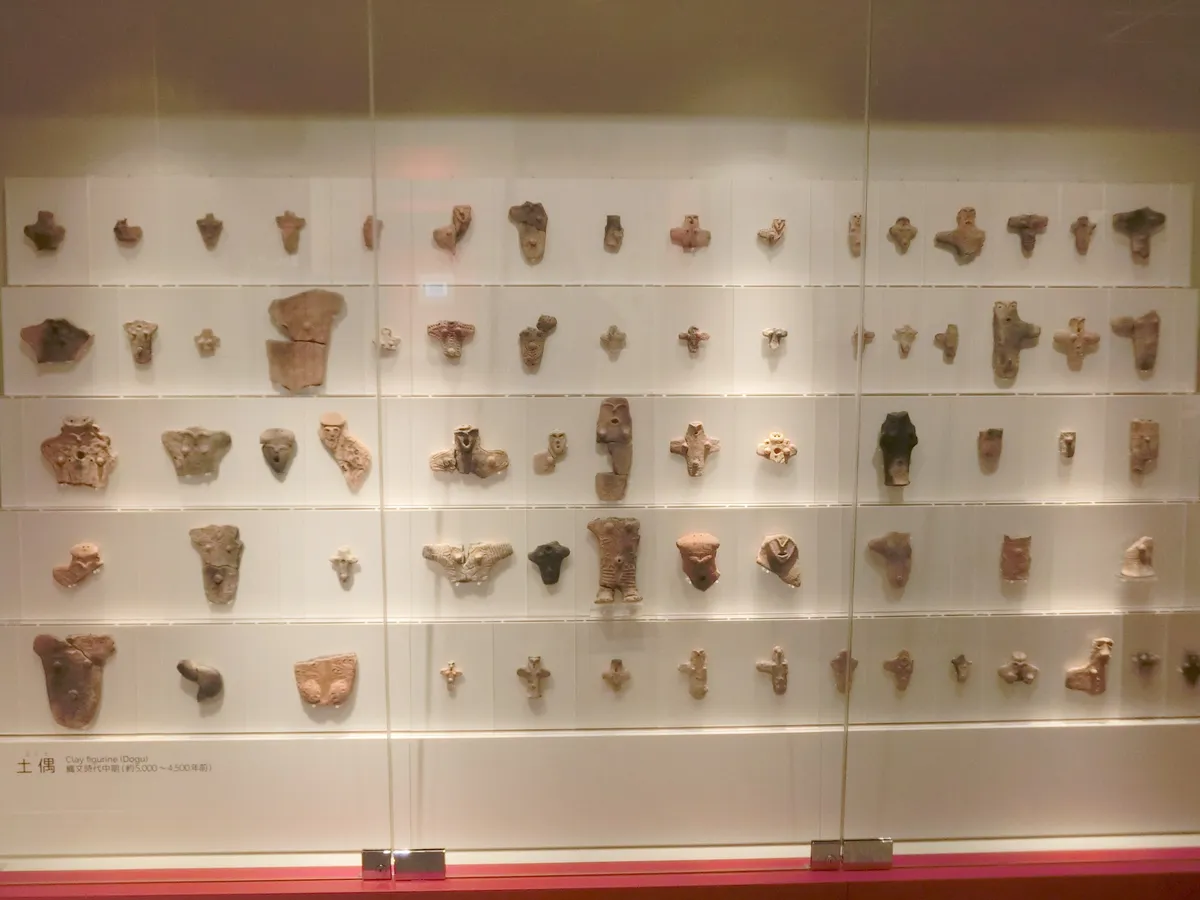
Hokkaido’s dogū show how the figures changed over the Jōmon period. The earliest are small, with no eyes, noses or mouths. Many flat figures were made in the Middle Jōmon period, and the Late Jōmon period brought large figures that were hollow inside, as Hokkaido’s Akarenga history site explains.
The biggest single haul comes from the Sannai-Maruyama site in Aomori, where more than 2,000 dogū have been excavated, more than at any other site in Japan. Most of them are flat and shaped like a cross. Our Tōhoku travel guide tells how the site was nearly lost to a baseball stadium.
Why most dogū are women, and why so many were broken
Most dogū show women, and many show pregnant women with swollen bellies and wide hips. Japan Search, the national digital heritage portal, gives the long-held reading that they were made to pray for fertility. The Tokyo National Museum labels one of its goggle-eyed figures as an object of prayer for safe childbirth and good harvests.
Many dogū come out of the ground in pieces, and on some the damage was clearly deliberate. The Masked Goddess from Chino in Nagano was buried in a pit that archaeologists read as a grave, with its right leg deliberately broken off. That has led to the idea that dogū were used in rituals of death and rebirth.
No one can say for certain. The Jōmon people left no writing, so every explanation comes from where and how the figures were found.
Japan’s five National Treasure dogū, from the Jōmon Venus to the Jōmon Goddess
Japan has made six Jōmon objects National Treasures, its highest grade of protection for cultural property, and five of them are dogū. Each is normally on display near where it was found.
The Jōmon Venus, from the Tanabatake site in Chino, Nagano
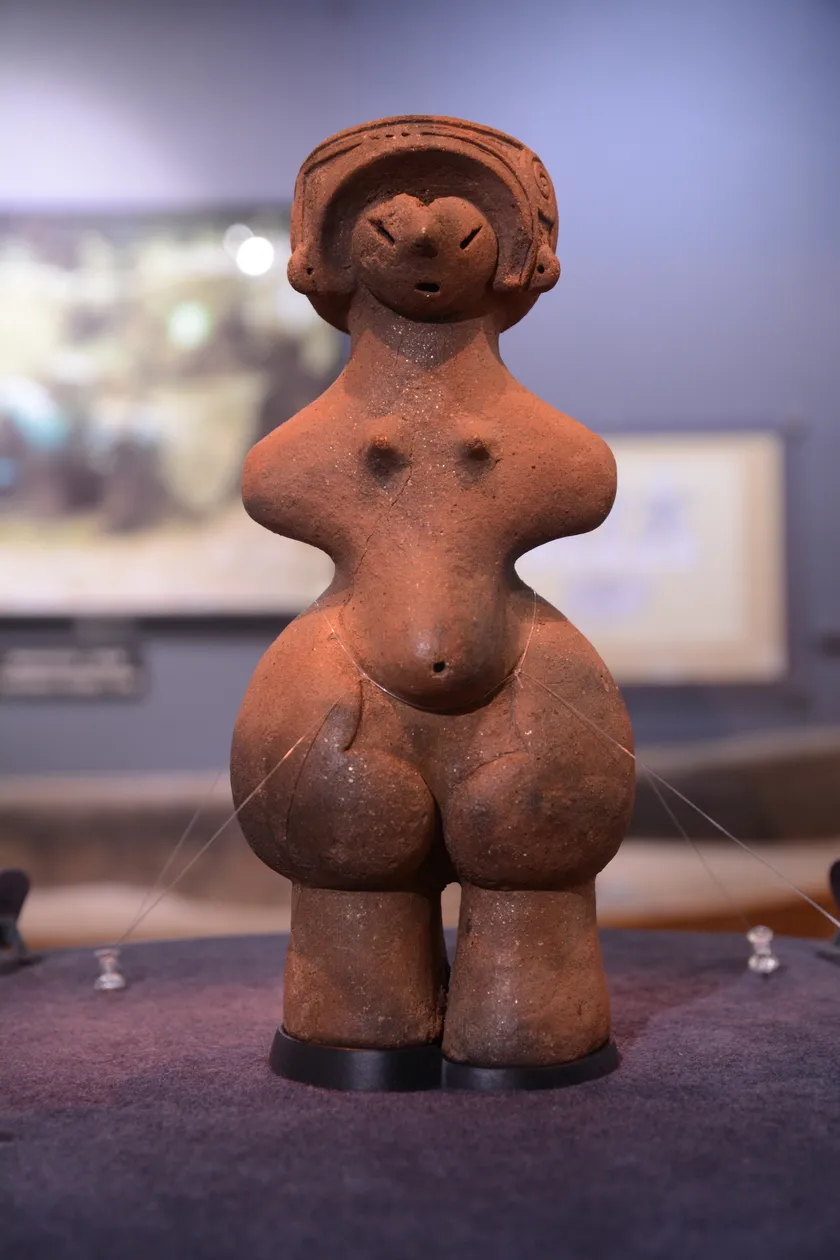
Found on 8 September 1986, the Jōmon Venus is 27 centimetres tall and weighs 2.1 kilograms, with a small heart-shaped face above the full body of a pregnant woman. It is about 5,000 years old, from the Middle Jōmon period, and it came out of the ground almost undamaged in the middle of a village, which is rare for a dogū. In 1995 it became the first dogū to be made a National Treasure.
The Masked Goddess, from the Nakappara site in Chino, Nagano
Found at another site in Chino, the Masked Goddess wears a flat, upside-down triangle over its face. It is hollow, 34 centimetres tall and 2.7 kilograms in weight. Made about 4,000 years ago, in the Late Jōmon period, it became a National Treasure on 21 August 2014, which made Chino the only city in Japan with two National Treasure dogū.
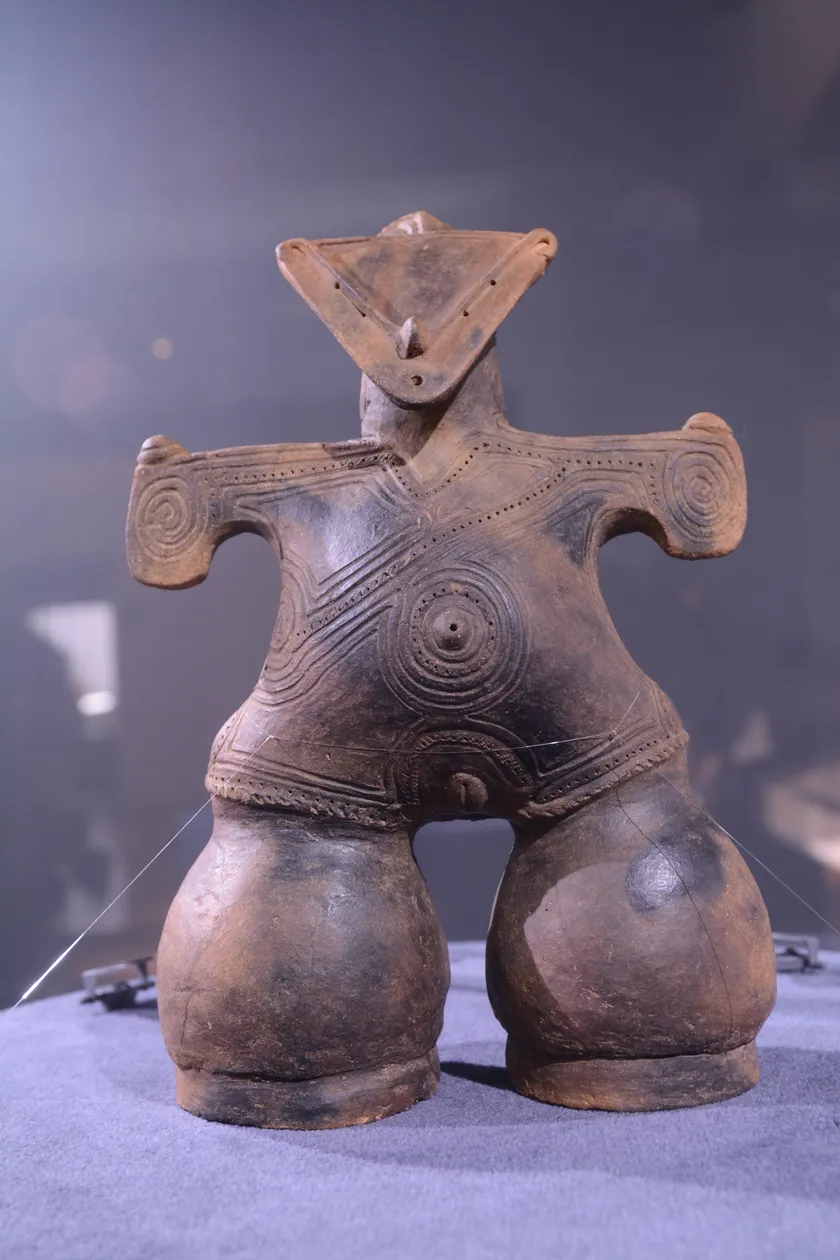
Both figures are shown at the Togariishi Museum of Jōmon Archaeology, which opens from 9am to 4.30pm, closes on Mondays and charges adults 600 yen. A temporary closure is planned for February and March, so check Chino City’s museum page before travelling. Buses from the west exit of Chino Station take about 20 minutes.
The hollow dogū, from the Chobonaino site in Hakodate, Hokkaido
This one turned up by chance in a potato field on 24 August 1975. Hollow from head to feet, with thin, finely made walls, it stands 41.5 centimetres tall, the largest hollow dogū found in Japan. It dates from about 3,200 to 3,500 years ago and became Hokkaido’s first National Treasure. It is always on display at the Hakodate Jomon Culture Center.
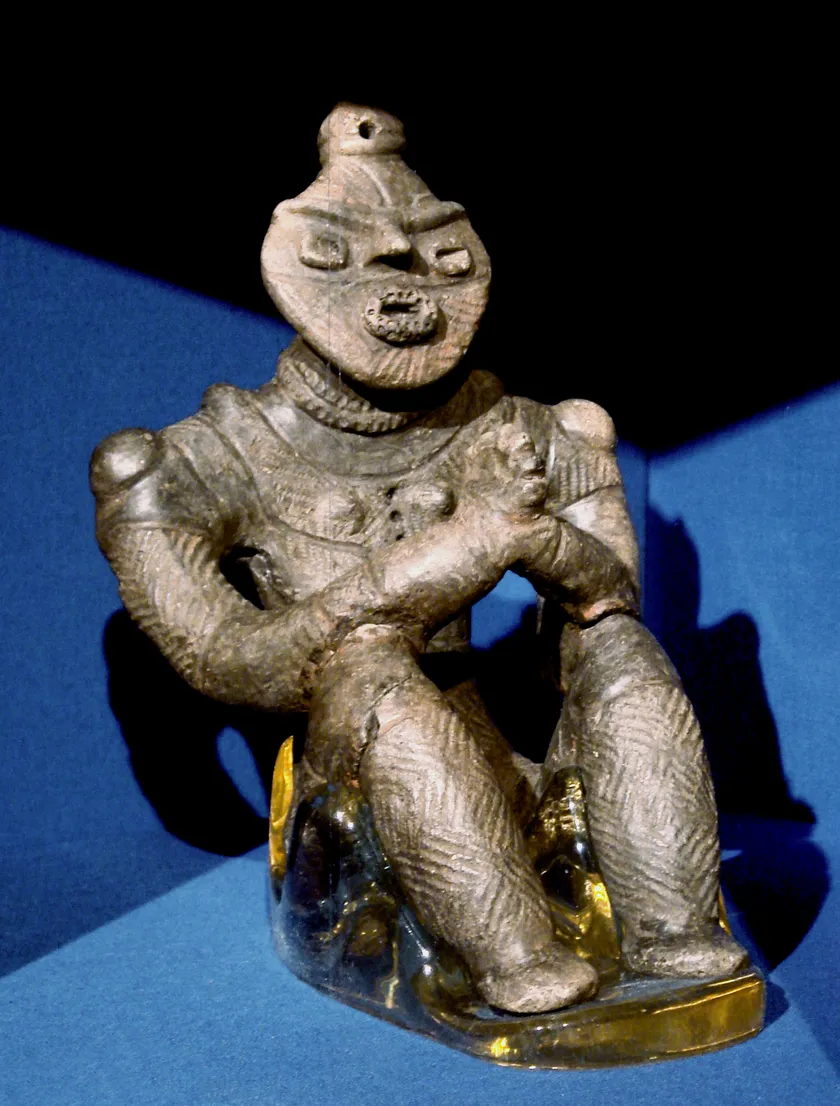
The Dogū with Palms Together, from the Kazahari I site in Hachinohe, Aomori
This figure sits with its knees drawn up, its arms resting on them and its hands pressed together in front of it, the gesture of prayer that gives it its Japanese name, gasshō dogū. It was found during a rescue excavation at Kazahari I, where archaeologists recorded the remains of 253 houses, and it is on show at the Korekawa Jomon Kan in Hachinohe.
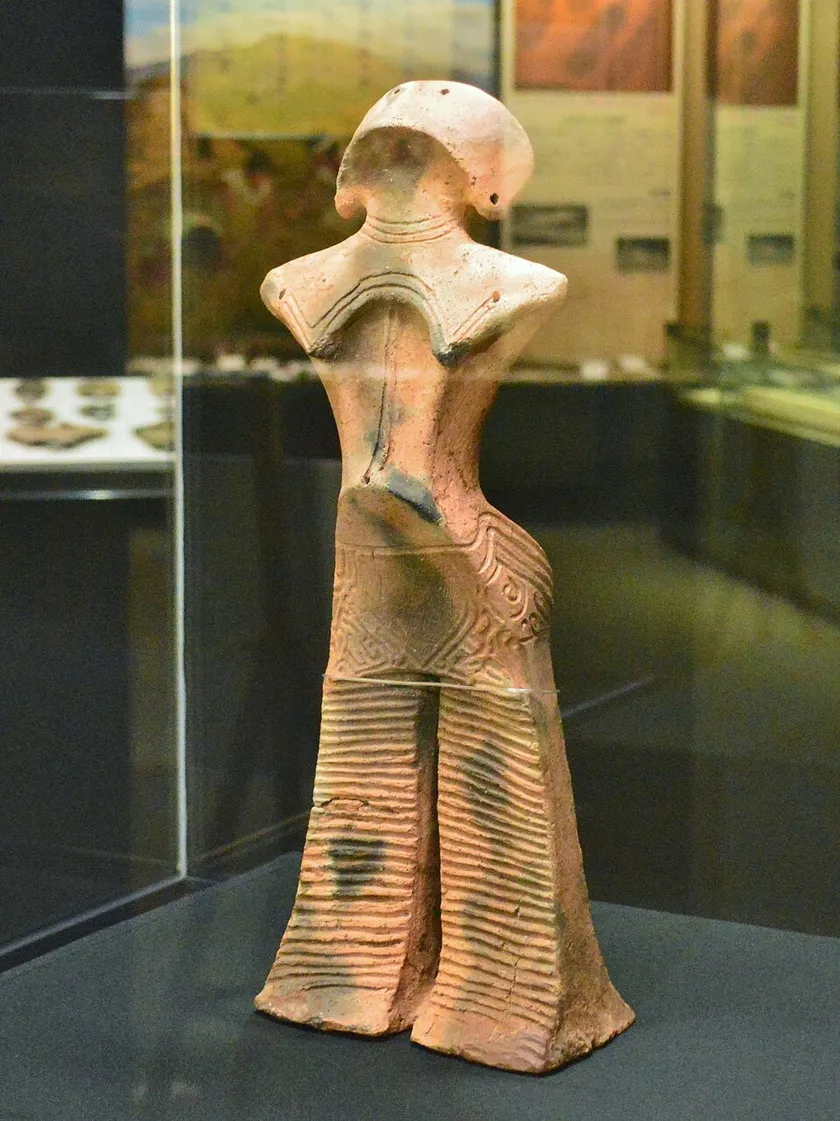
The Jōmon Goddess, from the Nishinomae site in Funagata, Yamagata
At 45 centimetres, the Jōmon Goddess is the tallest dogū found in Japan. It is a Middle Jōmon figure, slim with wide, flared legs, and its flat head has no face at all. It was dug up in August 1992 and restored complete, with no missing pieces.
It became a National Treasure in 2012 and is on permanent display in the second gallery of the Yamagata Prefectural Museum, in Yamagata City.


The goggle-eyed dogū of Kamegaoka, and the ancient astronaut myth
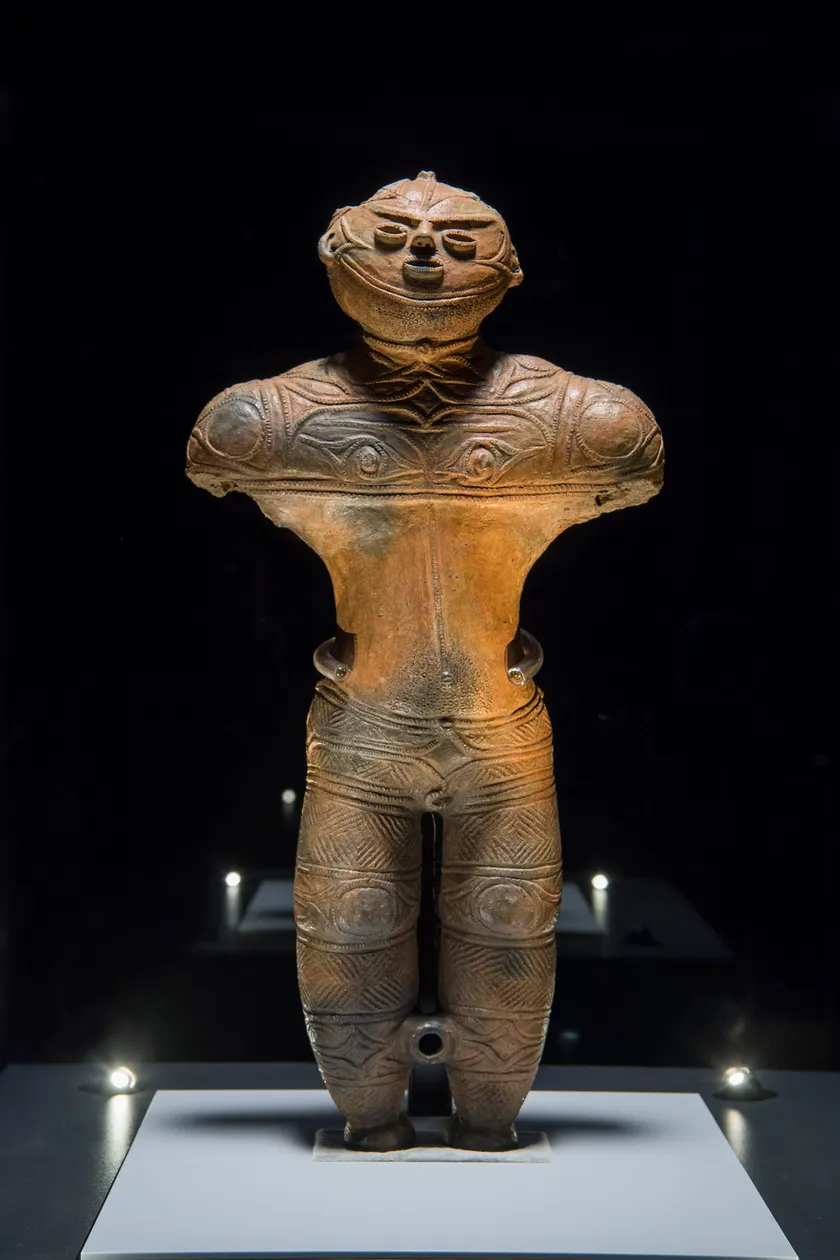
In the final centuries of the Jōmon period, about 1000 to 400 BC, the Kamegaoka culture of northern Tōhoku produced the dogū most people now picture: a squat, hollow body covered in swirling grooves, under two huge oval eyes, each split by a single line. Japanese archaeologists call these figures shakōki dogū, after the snow goggles worn by Arctic peoples such as the Inuit.
The most famous one was found at Kamegaoka in 1887, missing its left leg. It was made an Important Cultural Property in 1957 and is on show at the Tokyo National Museum.
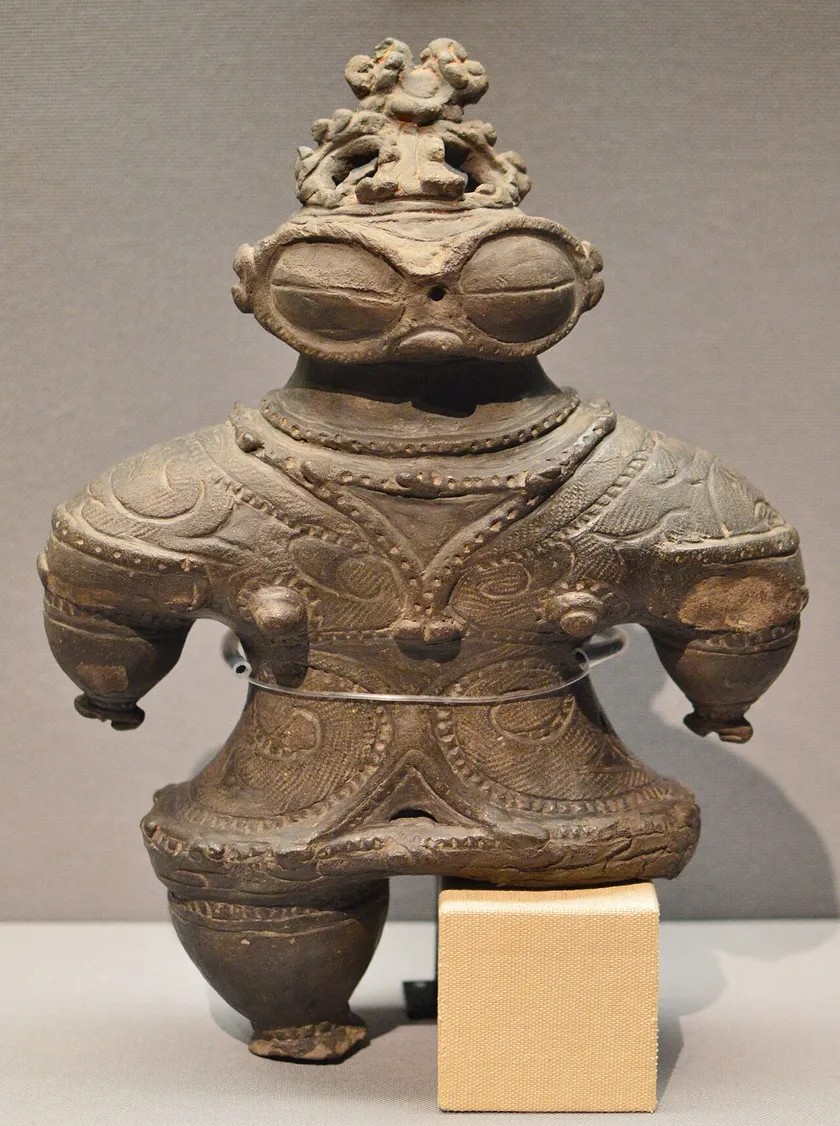
Those eyes made the figures famous for the wrong reason. In his 1968 bestseller Chariots of the Gods?, Erich von Däniken presented dogū as proof that astronauts in spacesuits had visited prehistoric Japan, without any evidence to back it.
The goggle-eyed figures are one regional style, made in northern Japan over a few centuries, and goggles is a nickname given to the eyes much later. Archaeologists believe the Kamegaoka people used them in rituals, as with other dogū.
Where to see dogū in Japan and in the UK
Most of the famous dogū stay close to where they were found, so seeing them means travelling well beyond Tokyo.
| Museum | Where | Dogū to see |
|---|---|---|
| Tokyo National Museum | Ueno, Tokyo | The goggle-eyed dogū from Kamegaoka |
| Togariishi Museum of Jōmon Archaeology | Chino, Nagano | The Jōmon Venus and the Masked Goddess |
| Hakodate Jomon Culture Center | Hakodate, Hokkaido | The hollow dogū from Chobonaino |
| Korekawa Jomon Kan | Hachinohe, Aomori | The Dogū with Palms Together |
| Yamagata Prefectural Museum | Yamagata City | The Jōmon Goddess |
| Sannai Maruyama Jomon Culture Center | Aomori City | Flat, cross-shaped dogū from the biggest find in Japan, with adult tickets at 410 yen |
Our Ueno guide covers the Tokyo National Museum and the other museums around Ueno Park.
In the UK, the Sainsbury Centre at the University of East Anglia in Norwich has a goggle-eyed dogū of the Kamegaoka type on display. It was put back together from five fragments and is missing its legs. The Sainsbury Centre opens from 9am to 6pm Tuesday to Friday and 10am to 5pm at weekends, closes on Mondays and offers free entry tickets.
London had its own close look at dogū in 2009, when the British Museum showed 67 of them, lent from Japan, in The Power of Dogu, from 10 September to 22 November. Simon Kaner of the Sainsbury Institute for the Study of Japanese Arts and Cultures in Norwich curated the exhibition.
Dogū Questions and Answers
Dogū (土偶) means clay figure, from do, earth or clay, and gū, a figure or doll. In English the word is used for the clay figurines of Japan’s Jōmon period.
The oldest known dogū, from the Aidani Kumahara site in Shiga and the Kayumi Ijiri site in Mie, are about 13,000 years old. People went on making them until the end of the Jōmon period, when rice farming spread across Japan.
Most archaeologists believe dogū were used in rituals, probably to pray for safe childbirth and good harvests. Many were found broken, some of them deliberately, which suggests the breaking was part of the ritual.
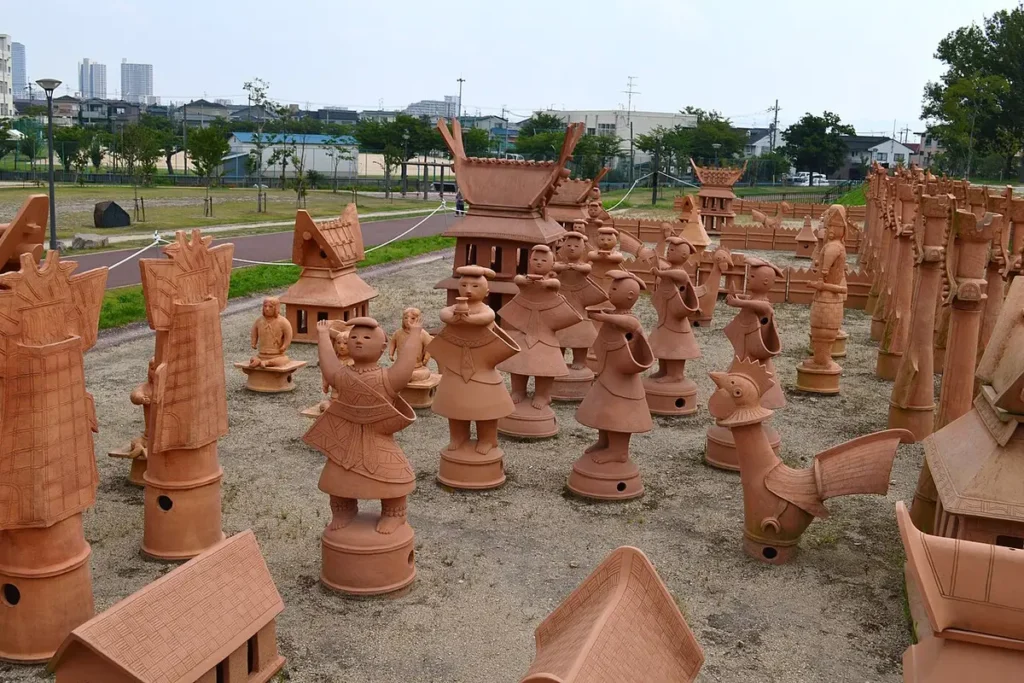
Dogū are Jōmon period figurines, mostly small, made before the Yayoi period began. Haniwa are clay cylinders and figures from the much later Kofun period, set out on and around the burial mounds of rulers, and some stand more than a metre tall.
No. In his 1968 book Chariots of the Gods?, Erich von Däniken claimed that goggle-eyed dogū showed astronauts in spacesuits, with no evidence to support it. Goggles is a modern nickname for the eyes, and archaeologists believe the figures were used in Jōmon rituals.
Yes. The Sainsbury Centre in Norwich has a goggle-eyed dogū of the Kamegaoka type on display, with free entry tickets. In 2009 the British Museum showed 67 dogū lent from Japan in The Power of Dogu.