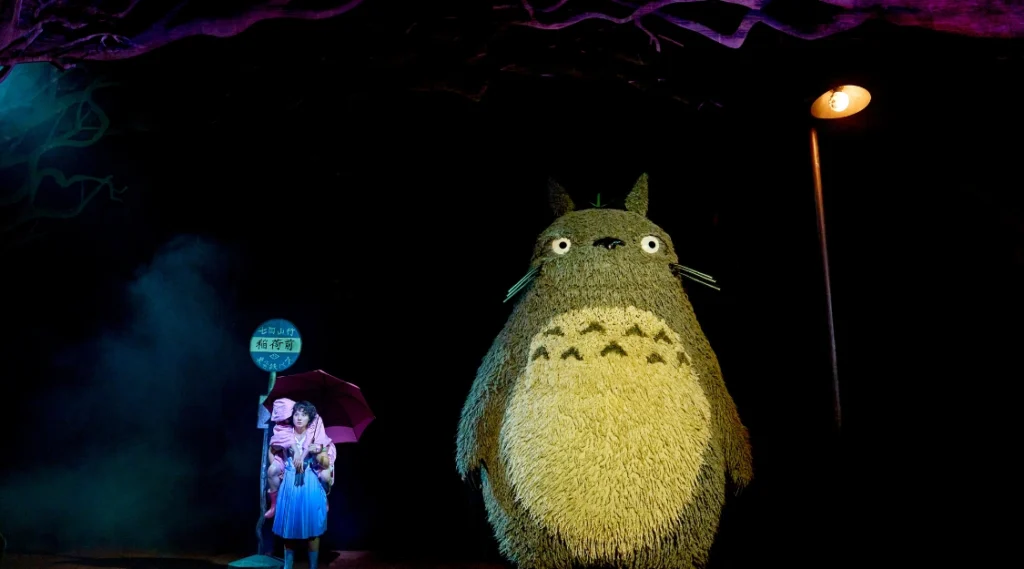
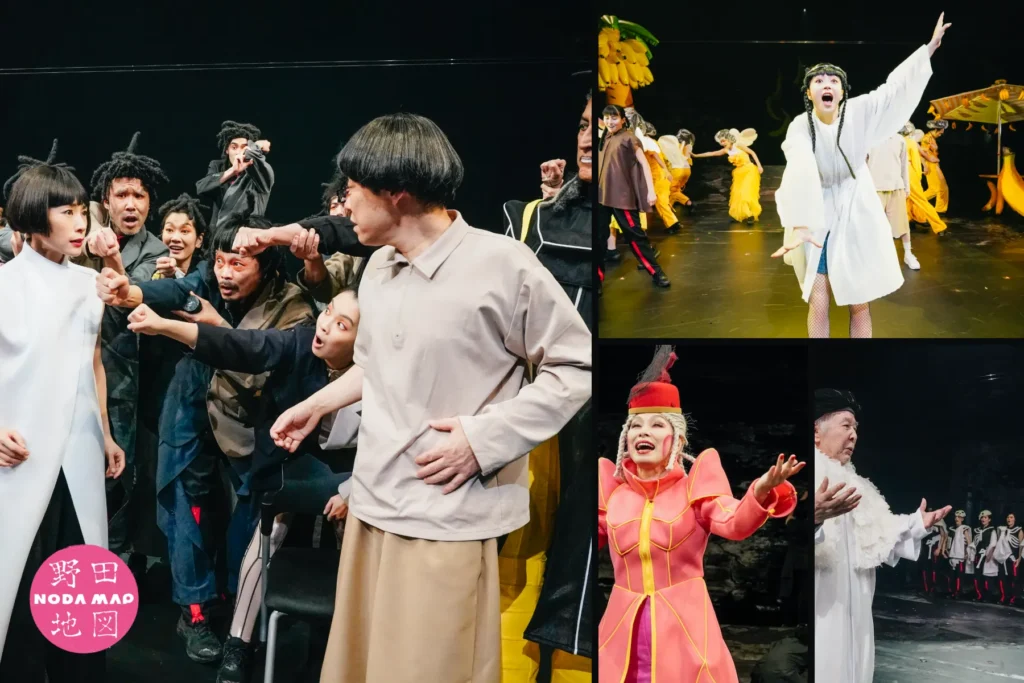
In September 2025, Dance Company Lasta brought Yoshimitsu Kushida’s Naraku (奈落) to The Coronet Theatre — a dark, surreal contemporary dance work that takes its audience into the grotesque and beautiful undercurrents of human desire. Also known as Abyss, Naraku is a dark and surreal contemporary dance performance that invites audiences into the grotesque and beautiful desires of humanity.
It depicts a man locked in battle with himself, framed through a clash between reality and fantasy. The civilised, tempered reality is suddenly confronted by a bizarre, erotic, seductive dreamworld. What follows is a downward spiral expressed through dancing, as the protagonist’s fantasies become increasingly extreme and he reaches the abyss. Naraku was first performed in 2020, in Yokohama, and since then it has received more and more accolades for its fascinating depth and inventive storytelling. However, an often unmentioned part when discussing Naraku is its connection to Japanese horror cinema, specifically the one found in cine-dance.
The choreographer and director of Naraku, Yoshimitsu Kushida, said in an interview that ‘Japanese horror has been my great interest’. And indeed, Kushida hasn’t shied away from Japanese horror in his dance performances. Going back to the interview, Kushida is interested in the atmosphere Japanese horror provides: the underlying insistence that people should behave in a specific way, and the deep unease when they don’t. This is key for understanding Japanese horror cine-dance.
In this article, we want to explore how Yoshimitsu Kushida’s Naraku takes and improves upon a tradition of Japanese dance-horror cinema. Carrying forward a legacy, while digging into new ground.
Japanese Horror Cine-dance

Tetsuo: The Iron Man, directed by Shinya Tsukamoto
To go over this topic, it’s important to get a grasp of what cine-dance is in the first place. Essentially, as the name implies, cine-dance is a dance performance specifically tailored to the medium of film. This is not simply a recording of a dance performance, but rather, a symbiotic relationship between camera and choreography.
What is shown is as important as what is not, as the camera guides the viewers through the movement the same way a choreography would in a live setting. Editing, framing, and pacing become part of the dance itself. Tetsuo: The Iron Man, directed by Shinya Tsukamoto, holds a unique spot in Japanese horror by turning body-horror into a mechanical, cyberpunk choreography: metal and flesh merge through editing and camera movement, so the film’s terror is felt as motion as much as image.
With that understood, why did the Japanese artists find potential for horror in cine-dance? The answer to this question is both historical and cultural. Following World War II, the arts were some of the first to embrace a new age of decadence in Japan, where beauty could be found in the grotesque. Concepts like deformity, eroticism, quiet violence and more became themes worth exploring artistically.
The Buraiha, for example, were famous for translating that decadence into writing. Dancers, of course, were no exception, with a new contorted bodily movement, rash blitz of anger, and even eerily still moments of calm. From the outside looking in, one could even say they looked possessed or like zombies. The association with the horror genre, thus, came naturally. And in cine-dance, where a camera could emphasise or obscure more of this movement to great horror effect, it was a match made in heaven.
Honne and Tatemae

Image credit:The Coronet Theatre, photography by Hiroyasu Daido
Concepts like Honne and Tatemae, common in Japanese society, add a layer of nuance to Japanese horror dance worth discussing.
Firstly, we have Honne, which refers to the hidden desires, intentions, or feelings someone has. Crucially, these are part of a person’s true personality, and the reason they choose to hide it could be because they’re inexplicably dark. Tatemae, on the other hand, refers to the public persona individuals show to adhere to societal norms. It’s a communal agreement, acting the way society deems correct, to maintain social harmony. Japanese horror, in many cases, is about Honne breaking through Tatemae. Tension rises as these concepts come closer together, and their eventual clash could lead to madness, violence, etc. This is precisely what Yoshimitsu Kushida was referring to in the interview we quoted before. This is the unsettling atmosphere Japanese horror can provide.
Even though all horror media could benefit from these concepts to various degrees, Japanese horror dance has done wonders with it. The restrained movement with violent bursts that horror dance is known for, translates naturally to the concept of Honne, as if the dancer’s true nature was showing. It is as beautiful as it is liberating, but deeply terrifying. Tatemae, in this context, provides a narrative framework from which the dancer can slowly come closer to its truer self. As you might’ve guessed, this is precisely what happens in Naraku, as the protagonist’s fantasies lead him to the abyss. Kushida takes this concept present in Japanese horror cine-dance, and adds modern elements and choreography to make it anew.
To see these ideas in motion, let’s look at a few examples from Japanese horror cine-dance.
Butoh Dancing
Before we dive into specific examples of Horror cine-dance, it would be remiss not to mention Butoh. Butoh (or Butō, “dance of darkness”) is a genre of dancing born out of post-war Japan, often accredited to Tatsumi Hijikata and Kazuo Ohno. It emphasises grotesque, erratic, slow and often repetitive movements, with a focus on the body’s vulnerability and its perceived ‘ugliness’. Through these means, Butoh dancers explored taboo subjects: the trauma of the nuclear bombs, post-war Japanese society, sexuality and the boundaries of the body itself. The body was their greatest tool, as they often pushed the boundaries of what it was capable of, to prove their point. It wasn’t pretty to watch, but it was impossible not to do so.
Butoh dancers were among the early pioneers of cine-dance, with many making short and feature-length films that wove their movement vocabulary into clear narrative structures. Because of this, many Japanese horror cine-dance films are either butoh or butoh adjacent. The latter is probably the most common, as many choreographers took lessons from Butoh dancers but didn’t necessarily delve deeper into the genre. One could argue that this is even the case of Yoshimitsu Kushida, who adopts Butoh’s commitment to bodily exploration. His overall goals are, however, very different. To quote from his website, he ‘pursues beauty not in form or style, but in action or attitude’. Horror, to him, is not separated from beauty, it is part of it.
But then again, Yoshimitsu Kushida draws from a long tradition of Japanese dance horror, and seeing some examples in cine-dance can bring us closer to his worldview.
The Masseurs (Anma) (1963)
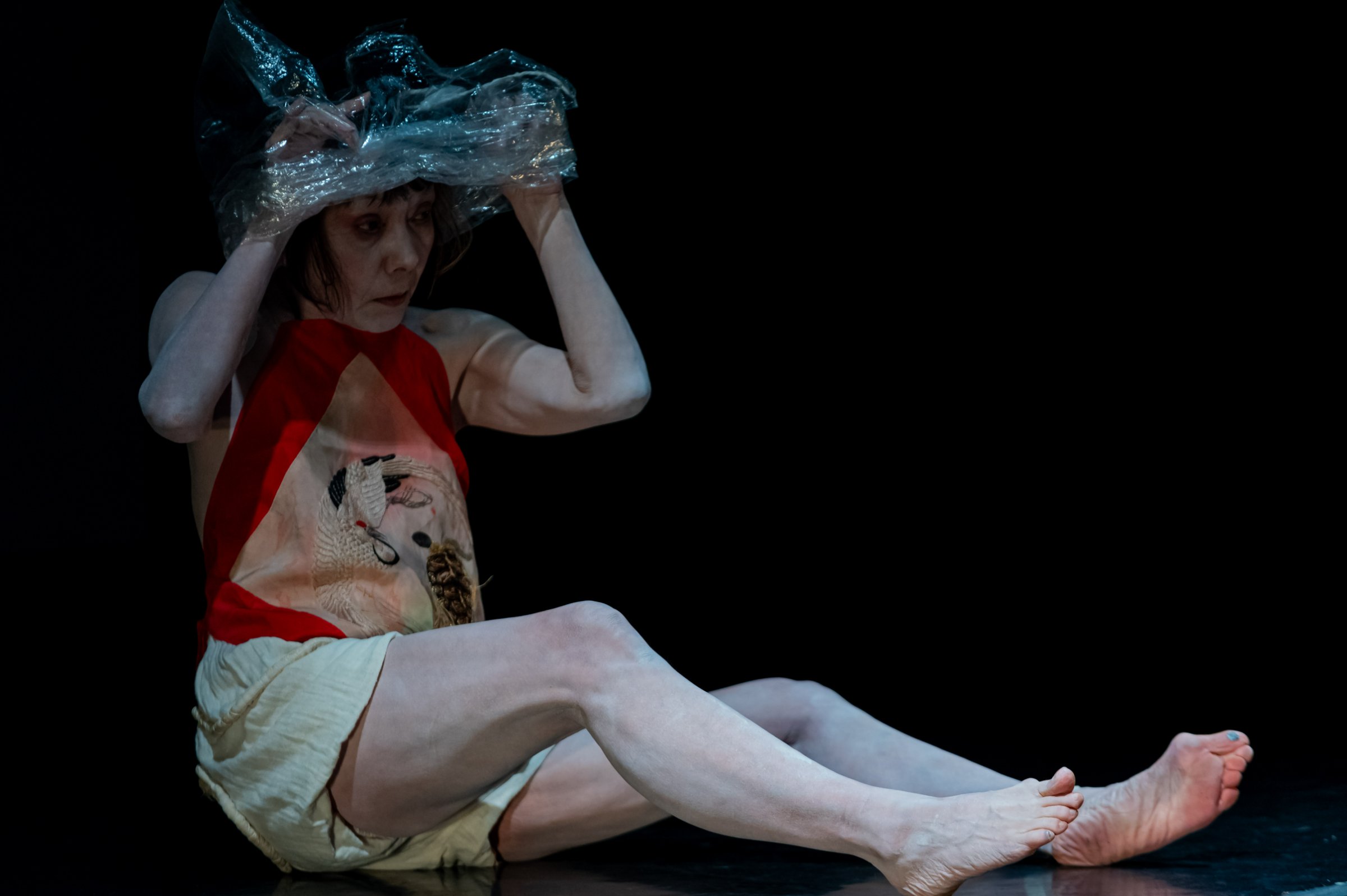
The Masseurs (Anma) is a Butoh cine-dance film from 1963 that features both Tatsumi Hijikata and Kazuo Ohno, the fathers of the genre. Consequently, it is one of the earliest examples of horror in Japanese cine-dance, as the sheer physicality of the dancer, whose skeletal bodies are accentuated by the camera and white paint, makes for haunting scenes. The set and narrative framing contribute to the eerie atmosphere, as we see the dancers in a tatami room, apparently existing for the amusement of men in suits. It is as if we were shown some sort of tribal ritual that dancing is able to conjure.
Special credit should be given to Takahiko Iimura, the director of the film. Thanks to his vision, a true symbiotic relationship between dance and film was achieved, as the camera moves along with the dancers. The result is a dizzying yet focused experience, as if you were one of the suited spectators that is getting a little too close, enough for the spell of dance to get a hold of you. The music also adds to the horror elements, with a mix of ambient sounds and disorganised percussion that make the film uncomfortable to experience.
Finally, perhaps the most important aspect of the film is the text that occasionally appears to frame the story around massages. Specifically, the Japanese Anma massage. As the film states, Anma is about releasing mind and body by rubbing skin and muscle, enhancing the metabolism. It is often practiced by the blind, but, occasionally, people with sight may partake in it. The concept is subsequently twisted, turning into something akin to a cult. You’re invited to join in, and by the end, the camera gets closer to the dancer, almost as if saying you did.

Navel and the Atomic Bomb (Heso to genbaku, 1960)
Navel and the Atomic Bomb, directed by Eikoh Hosoe
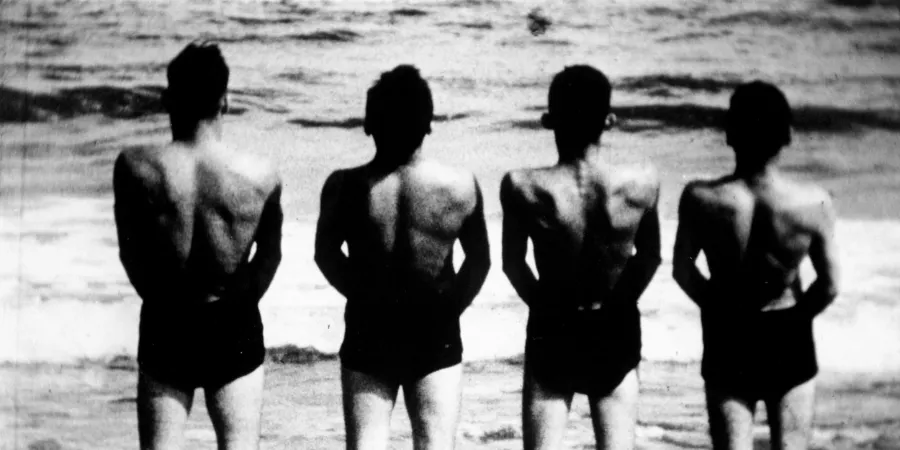
Directed by Eikoh Hosoe and choreographed by Tatsumi Hijikata, Navel and A-Bomb is an abstract exploration of the nuclear bombs and their effect on Japanese youth. At first, the film’s connection to the bombings isn’t clear; its imagery is disjointed and surreal. However, as the film progresses, we understand their relationship in retrospect. The horror comes from this retrospection, as the movement of the dancers gets re-contextualised into a darker narrative.
Set entirely on a beach, the film begins by introducing us to a group of dancers. The dancers move with restless unease: scratching themselves, kicking the sand, leaping around the waves and, most striking of all, digging into their navels with disturbing insistence. Occasionally, we see them dancing around animals, like cows, goats and chickens. At first, this surreal imagery seems to be the movie’s purpose; but two thirds into the film there’s a shift. The music changes and becomes an uplifting jazz piece. The dancers turn into naked children. The dancers turn into naked children, each with an X drawn over their navel — a small symbolic barrier preventing them from touching it. The film is suggesting paradise, one that immediately gets shattered with the ending: the nuclear bombs.
Upon reflection, we realise the adult dancers at the beach had, on occasion, attitudes similar to that of a child. They played, laughed and danced around without a care in the world. But they are not kids any more, not since the bombs abruptly ended their childhood. Any attempt at rekindling that innocence is, as the film suggests, terrifying, as their bodies are no longer fit for it. When they scratch themselves, they get scars. When they hurt themselves, there is nothing to stop it. Life changed, and our true selves, even our most innocent selves, have no business in the rigid Tatemae of the post-bomb world.
Mr. O’s Book of the Dead (1973)

Mr O’s Book of the Dead, directed by Chiaki Nagano
At Japan Nakama, we already have a dedicated article to this groundbreaking film, and would recommend you read it to get the full picture. For now, we’ll say that Mr. O’s Book of the Dead is probably the best realised and most ambitious horror cine-dance film Butoh has produced. It comes after dancer Kazuo Ohno and director Chiaki Nagano joined forces for the third time, being the last instalment in the Mr. O trilogy. As a result, the production value is immense, with a vast cast of dancers, breathtaking settings, amazing make-up and a chilling yet smooth score that ties everything together.
With an impressive runtime of an hour and a half, this is the longest cine-dance horror film we will discuss today. That being said, it shares the abstract approach of the other films, as all that really happens is Ohno leading groups of dancers through lush and desolate landscapes. At times, mist swallows them whole, and they’re shown carrying religious props with their faces ghostly cracked with white paint. The end result feels like following a cult through its initiation rituals. It is worth noting that this came after Ohno and Nagano were already celebrated artists, so it could almost be read as a meta commentary on Butoh: bringing people liberation, but unable to provide its practitioners with a clear answer.
In any case, the film ultimately champions liberation, as the dancers found themselves free of the shackles of society. Their sexuality, religious beliefs and personal identity are set to run wild. It is a celebration of Honne without Tatemae holding it back. It is terrifying, yes, but also beautiful. Similar to what Yoshimitsu Kushida believes, Mr. O’s Book of the Dead refuses to separate beauty from horror.
Final Words

Image credit:The Coronet Theatre, photography by Hiroyasu Daido
In conclusion, Yoshimitsu Kushida’s Naraku wasn’t born in a vacuum, it draws from a long tradition of Japanese horror cine-dance, among many other influences. This isn’t to say it’s any less original — far from it. Creating something as distinctive as Naraku against such an impressive lineage takes real talent. When every choice you make invites comparison with classic arthouse cinema, standing out at all is a testament to the work’s quality. As a matter of fact, Kushida and the Dance Company Lasta pride themselves in this fact, as one of the few Japanese dance companies that, and we quote from their website, ‘continues to create horror and suspense works’.
In the end, Naraku is very different from the horror cine-dance films we’ve discussed in this article. Kushida’s approach, for starters, is much more accessible, taking less from Butoh than it does from contemporary dance and even classical ballet. Nevertheless, great artists like Kushida take, reinterpret and transform, creating something new and special. In this case, another fantastic tale of dance being used to breach Honne and Tatemae. Naraku, as a work of dance horror, is as impressive and haunting as any discussed here. When it was adapted to film in 2022, it received recognition at European art-film festivals across Paris, Athens and London.
Naraku is a striking work of dance horror, and one that rewards close watching for anyone interested in the genre. Keep an eye on The Coronet Theatre’s calendar for future runs.