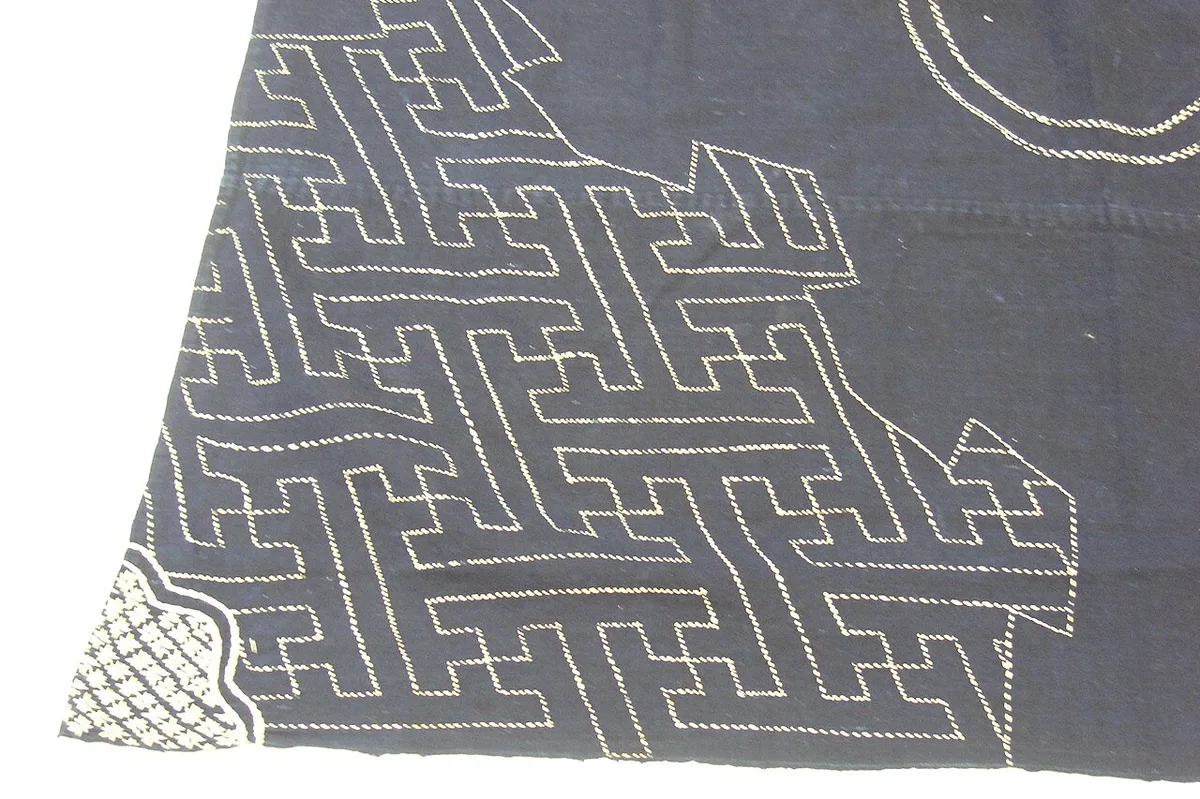
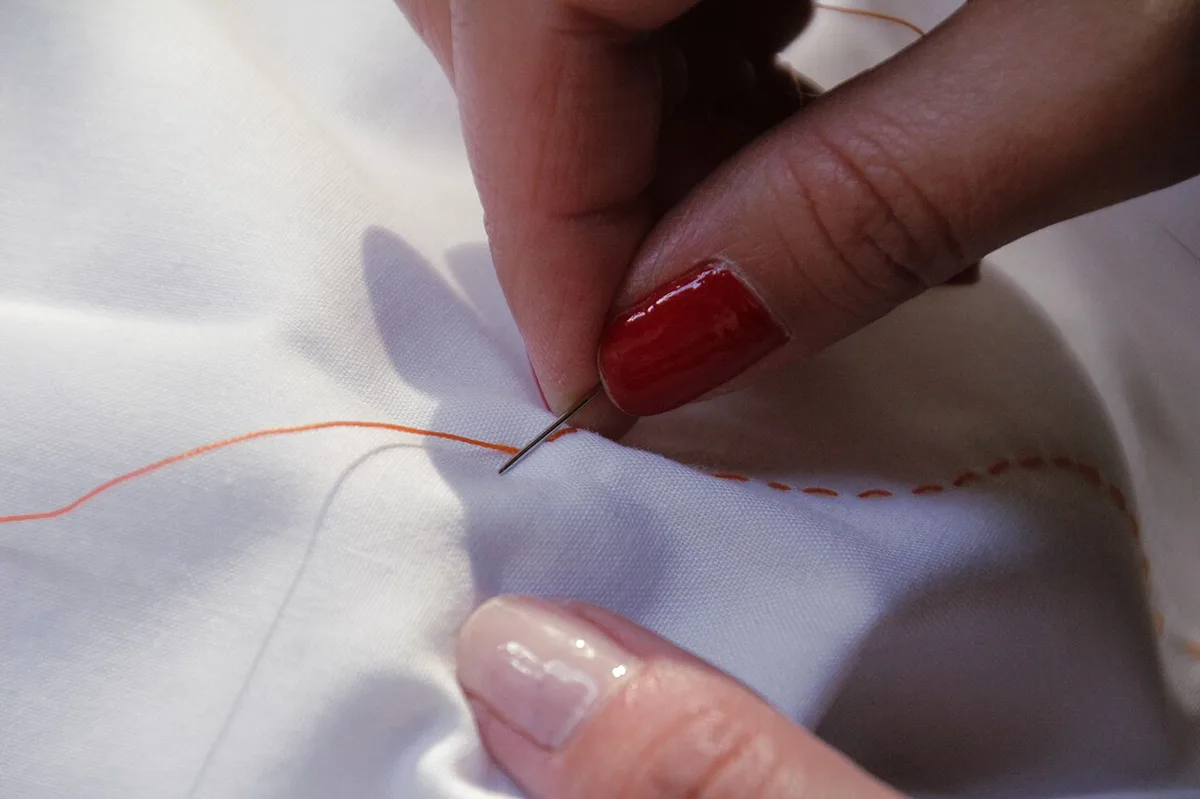
Sashiko is a Japanese hand-stitching technique: rows of small running stitches, traditionally white cotton thread on indigo cloth, used to strengthen worn fabric and hold patches in place. It grew up in Tohoku in northern Japan, where cotton was scarce, and today it is widely used for visible mending.
This guide explains where sashiko came from and how it relates to boro, shows four patterns to start with, and lists where to learn it and buy thread and needles in London, all checked on 1 November 2026.
Sashiko at a glance
Name: 刺し子, from the verb sasu, to pierce or stitch.
Where it began: Tohoku and remote mountain and fishing villages, where cotton was hard to get.
Two methods: hitomezashi, built on a grid of equal stitches, and moyōzashi, which follows drawn lines.
Try it in London: Ray Stitch’s three-hour mending class on 30 November 2026 (£75), or UNIQLO’s in-store sashiko stitching from £10.
Sashiko Stitching, Patterns and London Classes
Indigo, Hemp and Scarce Cotton: How Sashiko Began in Tohoku
In the far north of Honshu, cotton stayed a luxury for a long time. PAPERSKY magazine, writing about Aomori, notes that bitter winters and regular famine kept cotton out of reach there until well into the Meiji period (1868 to 1912), so families wore hemp and made every scrap of cloth last. Heibonsha’s World Encyclopedia places the start of sashiko in exactly these conditions: in Tohoku and in remote mountain and fishing villages, people layered cloth over worn areas and stitched through the layers to reinforce them and keep warm. The Edo-period traveller Sugae Masumi recorded sashiko clothing on his journeys through Aomori and Akita.
Each district developed its own style. In Tsugaru, in western Aomori, white cotton thread was stitched into indigo hemp one thread of the weave at a time, a counted style called kogin; our report on sashiko and Tsugaru kogin at UNIQLO Regent Street covers one family’s collection shown in London in May 2025. In the Nanbu area of Aomori, hishizashi builds every motif from diamonds, worked in coloured wool yarn. In Akita and Yamagata, plainer running stitches covered indigo cotton work clothes, in named patterns such as asanoha-zashi and chirimen-zashi, whose stitches are under 2mm long.
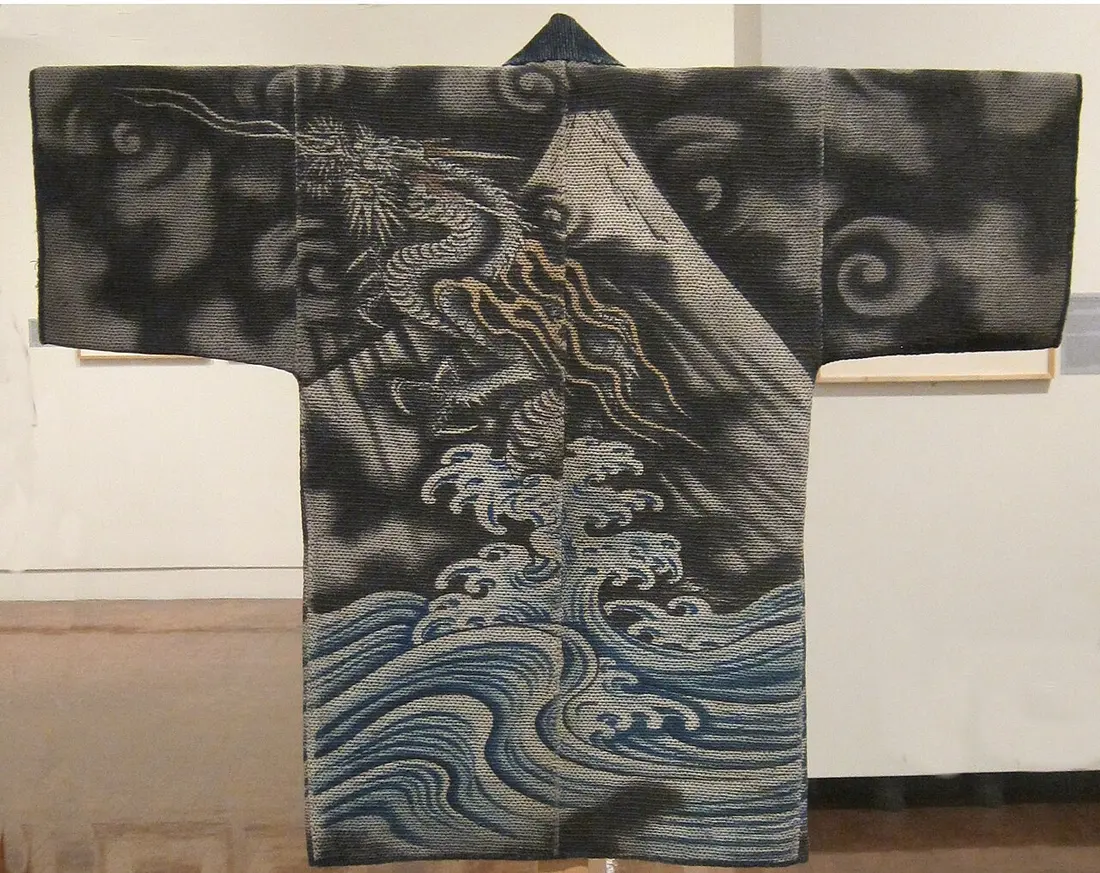
Sashiko also went to work in the city. The Mypedia encyclopedia records layered, stitched cotton in use from the Edo period for firefighters’ clothing and martial arts practice wear, and the word still names the heavy cloth of judo and kendo uniforms.


Boro: The Patched Cloth That Sashiko Holds Together
Boro comes from boroboro, worn to rags, and the Digital Daijisen dictionary defines it as clothing that is torn or heavily patched. In Aomori, small pieces of indigo cloth were stitched together and layered over coats and quilts for warmth, generation after generation, until the patches became the cloth. Sashiko is the stitch; boro is the patched textile those stitches hold together.
Much of what is known about boro survives because of one collector. The ethnologist Tanaka Chūzaburō (1933 to 2013), from the region, gathered nearly 30,000 folk objects because he feared their stories would be lost, and PAPERSKY reports that nearly 800 of them are designated important cultural properties. Part of his collection was shown at the Amuse Museum in Asakusa, Tokyo, which has since closed and now tours its boro exhibitions abroad. In London, indigo boro workwear turns up at Furuki Yo-Kimono, the vintage kimono shop in Dalston behind the Yokimono markets.
Hitomezashi and Moyōzashi: The Two Ways to Stitch
Hitomezashi, one-stitch sashiko, is worked on a grid. Olympus, the Nagoya thread company, describes it as stitches of one constant length, sewn first in horizontal rows, then vertical, then diagonal, with the pattern appearing where the lines of stitches meet. Each stitch spans the same distance, so the whole design depends on keeping the grid even.
Moyōzashi, pattern stitching, follows lines drawn or printed on the cloth, so it can make curves such as seigaiha waves and the overlapping circles of shippō. Ray Stitch’s mending class in Islington uses dissolvable fabric printed with sashiko motifs, which washes away once the stitching is done.
Asanoha, Seigaiha, Shippō and Hitomezashi: Four Patterns to Start With
Most sashiko patterns are old textile motifs with meanings attached. These four are a good place to start, and the meanings below come from the Nippon Communications Foundation’s guide to traditional Japanese patterns.
| Pattern | Japanese | What it looks like | Traditional meaning | How it is stitched |
|---|---|---|---|---|
| Asanoha (hemp leaf) | 麻の葉 | A repeating six-pointed star made of diamond-shaped leaves | Hemp grows tall and straight with little care, so the pattern went on babies’ and children’s kimono as a wish for healthy growth | Straight lines, usually moyōzashi |
| Seigaiha (blue ocean waves) | 青海波 | Overlapping fan-shaped arcs, like rows of waves | Named after the gagaku court dance Seigaiha, whose dancers wear it; it also appears in The Tale of Genji | Curves, moyōzashi |
| Shippō (seven treasures) | 七宝 | Circles overlapping by a quarter, forming petals with a star at each centre | A lucky pattern for prosperity of descendants, ties between people and harmony | Curves, moyōzashi; square versions are worked as hitomezashi |
| Hitomezashi (one stitch) | 一目刺し | Grid patterns made of stitches of one length that meet to form small repeating motifs | A method more than a single motif | Horizontal, then vertical, then diagonal rows on a grid |
Asanoha is also one of the named sashiko patterns that Heibonsha’s encyclopedia lists for Akita and Yamagata work clothes, alongside masu-zashi (squares) and yama-zashi (mountains), so it is a good first pattern with a real Tohoku history.



Sashiko Thread, Needles and Cloth
Sashiko needs very little. The thread is a cotton thread made for the job: Ray Stitch sells Groves and Banks sashiko thread, 40m of 100% cotton, for £8, and Japan House London stocks fine sashiko thread from the Japanese maker Yokota for £3. Sashiko needles come long or short; Ray Stitch has Clover long sashiko needles at £4.50 and short ones at £6, and Japan House London sells a Yokota needle set for £4.
For cloth, start with plain cotton or linen. Ray Stitch notes that its denim mending method works best on 100% cotton denim or denim with very little stretch, and that jeggings or denim with a high lycra content are not suitable. Japan House London’s linen handkerchief kit (£22) includes a blue 100% linen handkerchief, thread and three pattern designs, which is an easy first project.
If you would sooner wear sashiko than stitch it, the Japan Nakama shop sells hanten jackets with sashiko stitching at £135, and our guide to the hanten, Japan’s padded winter jacket explains where the style comes from.
Where to Learn Sashiko in London
Sashiko lessons in London run through sewing shops and community workshops, and UNIQLO’s repair studios will stitch it onto your clothes for you. Checked on each provider’s own site or booking page on 1 November 2026; prices are per person.
| Where | What | Price | Next date | Address |
|---|---|---|---|---|
| Ray Stitch | Sashiko Inspired Visible Mending for Denim, with Shelley Zetuni of Sewing Smith, 3 hours, up to 8 people | £75 | Monday 30 November 2026, 2pm to 5pm | 66 Essex Road, Islington, N1 8LR |
| The Remakery | Clothing Repair: Sashiko Visible Mending Workshop, with textile artist Selina Latour, 3 hours | £15, £25 or £35 tickets | No date listed; check the booking page | 51 Lilford Road, SE5 9HY |
| UNIQLO RE.UNIQLO Studio | Sashiko stitching added to UNIQLO clothes by trained staff (a stitching service) | From £10 | Any day, no appointment | Regent Street, Covent Garden, 311 Oxford Street and Coal Drops Yard |
| Niwaki | Sashiko workshop with Untied, 3 hours, up to 8 people, materials included | Not yet published | To be confirmed | 38 Chiltern Street, W1U 7QL |
Map of Ray Stitch
Ray Stitch, Islington: denim mending on 30 November
Ray Stitch is a fabric and haberdashery shop with its own sewing school. Its three-hour class, Sashiko Inspired Visible Mending for Denim, is taught by Shelley Zetuni of Sewing Smith and is open to complete beginners. You bring worn denim or workwear, and learn to reinforce it with patches and scraps using sashiko-style stitching on printed dissolvable fabric. The next session is on Monday 30 November 2026 from 2pm to 5pm at £75, with up to eight people, and booking a class gives 10% off full-price stock in the shop (books excluded) from a week before. Book on Ray Stitch’s class page.
Address: 66 Essex Road, Islington, London N1 8LR. Open: Monday to Saturday 10am to 6.30pm, Sunday 11am to 5pm. Nearest Tube: Angel.
The Remakery, Loughborough Junction: pay what you can
The Remakery is a community reuse workshop in south London. Its three-hour sashiko visible mending workshop is led by the textile artist Selina Latour, and you bring a garment with a worn patch or hole to work on. Tickets are tiered: £15 community, £25 true cost and £35 pay it forward. No future date was listed when we checked, so watch The Remakery’s website. Selina Latour also taught a one-day textile repair course covering sashiko and boro at the Goodlife Centre in Southwark in July 2026.
Address: 51 Lilford Road, London SE5 9HY. Nearest station: Loughborough Junction.
UNIQLO RE.UNIQLO Studio: sashiko stitching from £10
UNIQLO’s repair and remake studios add traditional sashiko stitching to UNIQLO clothes from £10, and repairs start from £3.50. The service runs at four London stores, Regent Street, Covent Garden, 311 Oxford Street and Coal Drops Yard, with no appointment needed; turnaround depends on the store. UNIQLO lists Oxford shirts, denim jackets and jeans among the garments it can stitch, excluding designer collaborations. The staff were trained by Studio Masachuka, the London garment maker run by Masahiko Morikawa, and the Regent Street studio sits in the former Austin Reed barbershop on the lower ground floor. Details are on UNIQLO’s RE.UNIQLO Studio page.
Address: UNIQLO Regent Street, 103-113 Regent Street, London W1B 4HL. Open: Monday to Saturday 11am to 8pm, Sunday 12pm to 6pm. Nearest Tube: Piccadilly Circus.
Niwaki, Marylebone: small workshops, dates to come
Niwaki, the Japanese tool company, lists three-hour sashiko workshops at its Chiltern Street shop with Michelle Urvall-Ashraf and Ieva Hofmane of Untied. Each workshop takes up to eight people with no experience needed, with tools and threads included. No dates or price had been published when we checked. See Niwaki’s sashiko workshop page.
Address: 38 Chiltern Street, London W1U 7QL. Nearest Tube: Baker Street.
If your mending project is a broken bowl, our guide to kintsugi workshops in London compares the classes for repairing pottery with gold.
Where to Buy Sashiko Thread and Needles in London
Japan House London stocks Japanese-made sashiko supplies. On 1 November 2026 its shop listed Yokota sashiko needles (£4), fine sashiko thread (£3), a navy sashiko sampler (£7.50), the linen handkerchief kit (£22) and Susan Briscoe’s The Ultimate Sashiko Sourcebook (£16.99), plus finished sashiko coasters and oven mitts made by Teras. Entry to the building is free. See the Japan House London shop.
Address: 101-111 Kensington High Street, London W8 5SA. Open: Monday to Saturday 10am to 8pm, Sundays and bank holidays 12pm to 6pm (closed from 4pm on 10 November 2026). Nearest Tube: High Street Kensington.
Ray Stitch in Islington stocks sashiko thread in white, navy and cream (£8 each), Clover sashiko needles and The Ultimate Sashiko Card Deck (£14.99), so you can buy everything for a first project in one stop. Studio Masachuka also sells Japanese haberdashery online from its studio in Walthamstow.
Sashiko: Questions and Answers
Sashiko is a Japanese hand-stitching technique of small running stitches, traditionally white cotton thread on indigo cloth, used to reinforce worn fabric and hold patches in place. Japanese encyclopedias trace it to Tohoku and remote mountain and fishing villages, where cotton was hard to obtain. The name comes from sasu, to pierce or stitch, and today it is widely used for visible mending.
Sashiko is the stitch and boro is the cloth. Boro, from boroboro meaning worn to rags, describes textiles patched again and again, such as the indigo coats and quilts of Aomori, and sashiko running stitches are what hold the patches together. The ethnologist Tanaka Chūzaburō collected nearly 30,000 folk objects from the region, many of them boro.
A sashiko needle, sashiko thread and a piece of plain cotton or linen. In London, Japan House London sold a Yokota needle set for £4 and fine sashiko thread for £3 on 1 November 2026, and Ray Stitch in Islington sold 40m of sashiko cotton thread for £8. A pre-printed kit, such as Japan House London’s linen handkerchief kit at £22, saves drawing the pattern.
Yes, on UNIQLO clothes. The UNIQLO UK help page lists traditional sashiko stitching from £10 at its repair studios, including Regent Street, Covent Garden, 311 Oxford Street and Coal Drops Yard in London, with no appointment needed. Oxford shirts, denim jackets and jeans are among the garments it can stitch; designer collaborations are excluded, and turnaround depends on the store.
Ray Stitch at 66 Essex Road, Islington, runs a three-hour Sashiko Inspired Visible Mending for Denim class on 30 November 2026 for £75. The Remakery in Loughborough Junction lists a three-hour sashiko mending workshop with Selina Latour at £15 to £35, and Niwaki on Chiltern Street lists workshops with Untied, both with dates still to be announced when checked on 1 November 2026.
Asanoha means hemp leaf and forms a repeating six-pointed star of diamond-shaped leaves. Because hemp grows tall and straight with little care, the pattern was used on babies’ and children’s kimono as a wish for healthy growth, according to the Nippon Communications Foundation. It is also one of the named sashiko patterns recorded on work clothes in Akita and Yamagata.