Revisiting older media can be a challenge. What once felt new can look dated and clichéd today, as anyone who has rewatched old special effects or played a game with “realistic” PlayStation graphics will know.
There is a particular case to be made, though, for work that was designed to be ugly in the first place. Chiaki Nagano’s Portrait of Mr O was made to be as raw and unfiltered as possible, and time has only sharpened that feeling. The result is a film with a lot of value to offer.
Value is the right word, because this film is anything but entertaining. Portrait of Mr O works best as a historical document, one that shows the early development of butoh dance. Its experimental ideas and raw look lay the groundwork for what makes butoh so compelling.
Japan Nakama first reviewed it when it screened at the 2021 Japanese Avant-Garde and Experimental Film Festival (JAEFF), whose theme that year was the body: its sensations, and the body in triumph and in crisis. The distorted movement and unsettling music that would come to define butoh are already there, but it is clear this was a transitional moment for the form.
It returns to a London screen at Birkbeck on Friday 16 October 2026, as part of the Rebellious Bodies butoh festival, which is showing all three Mr O films this autumn.
What This Portrait of Mr O Review Covers
Filming Portrait of Mr O in Yokohama and Tokyo Bay
Portrait of Mr O was released in 1969, shot in black and white on 16mm and running 65 minutes. It is the first of three films Kazuo Ohno made with Nagano. According to the NPO Dance Archive Network, which holds Ohno’s archive, it was filmed over about a year at Ohno’s home in Yokohama, in the boiler room of Soshin Girls’ School, where he worked as a teacher, on the uninhabited island of Sarushima in Tokyo Bay, and at Hōshōji Temple in Yokohama.
Nagano described the approach as being a partner to the dance with the camera, responding to Ohno as if the camera were dancing too. The films came during a long break from the stage. Ohno stepped back from stage performance after 1968 and did not return until 1977, with Admiring La Argentina, directed by Tatsumi Hijikata. The trilogy continued with Mandala of Mr O in 1971 and ended with Mr O’s Book of the Dead, the only one in colour. All of it grew out of the wider 1960s Japanese avant-garde scene that also produced underground theatre and radical photography.

Portrait of Mr O and the ‘pioneer symptom’

Portrait of Mr O suffers from what could be called the ‘pioneer symptom’. This is when an artist creates or reinvents an art form, and over time the people who follow surpass them in almost every respect.
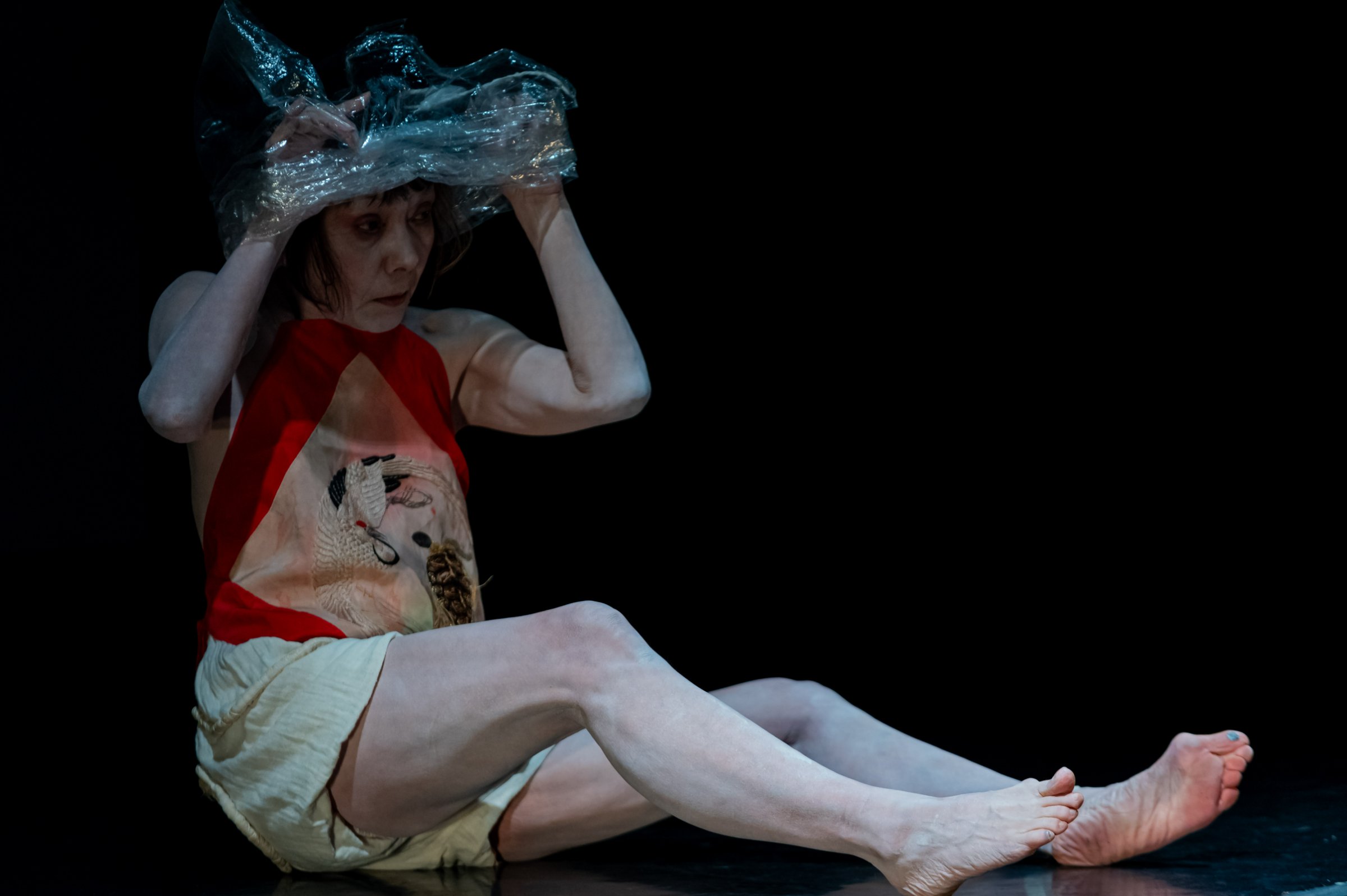
Contemporary butoh is hugely expressive and dramatic without losing the rawness that made it compelling in the first place. It is also far harder to perform, with feats of strength that show real mastery of the craft while staying completely improvised. Portrait of Mr O, by contrast, shows only the basic elements, which makes it most appealing to people who want to learn more about the dance.
Kazuo Ohno’s face and hands, the parts of butoh already in place

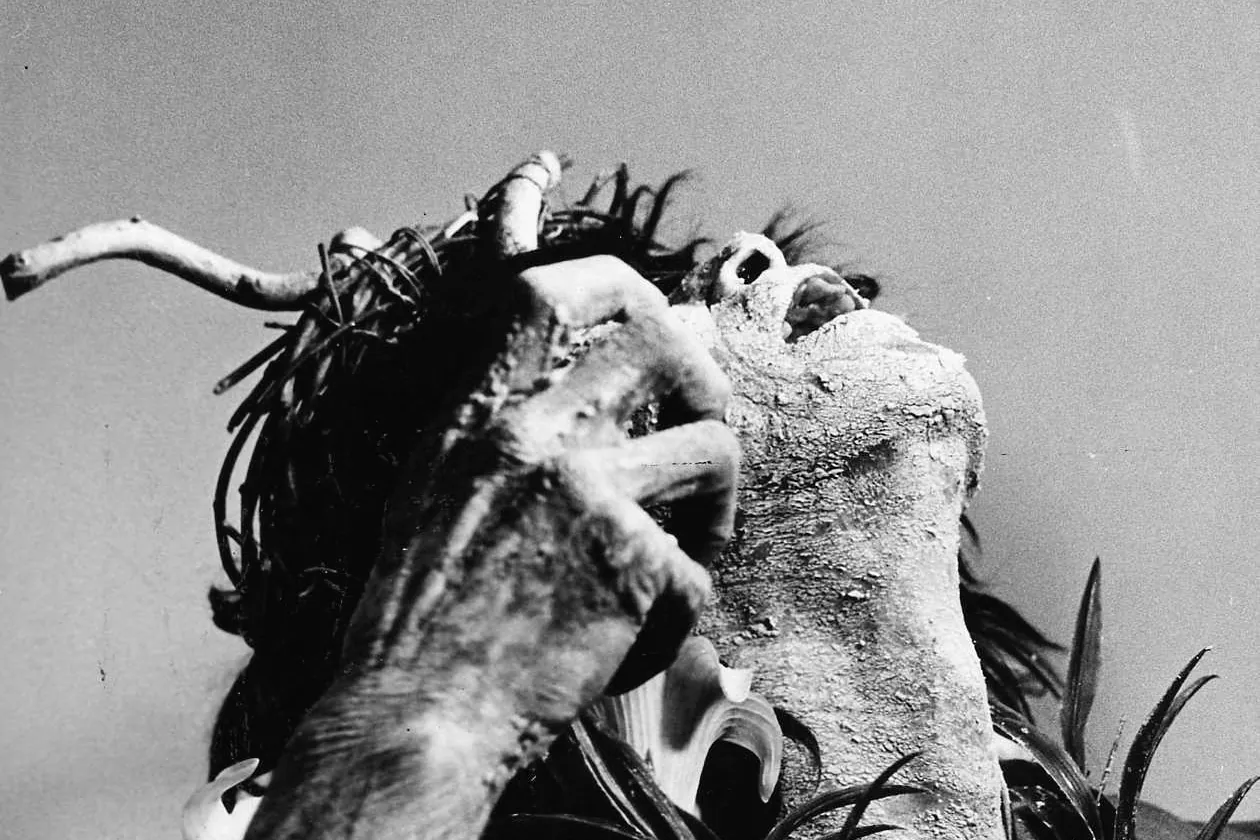
A lot of what would become staples of butoh is already in the film, which is no surprise with Kazuo Ohno himself in the lead. His facial expression is something to behold. It is unsettling and very hard to hold, yet he keeps it for the whole film.
His hands are just as striking. He moves them in unnatural ways as he walks and holds objects, which heightens the mood the film is after. Everything else in the dance falls short, though. The lower body is so underused it might as well have been cut, and the shoulder and chest movements common in contemporary butoh are barely there.
Portrait of Mr O for butoh fans and newcomers

As said at the start, this film is not entertaining. It will give you plenty to think about as you try to make sense of it, but as with much avant-garde film, the experience is the point. You are meant to feel unsettled, even repulsed, and the make-up does a lot to drive that. Depending on who you ask, it either achieves that aim or tips into pretension.
If you are already interested in butoh and want to understand it better, watch it. It will give you something you love, which is always valuable. If you are only mildly curious, there are better places to start, such as contemporary performances, before coming back to the film to see where the form began.
If butoh does not interest you, there is a good chance this film will not either. It is so far removed from what most viewers expect of a film that many will find it boring. Whichever group you fall into, take this as one interpretation among many.