Mr O’s Book of the Dead is the last film in the experimental butoh trilogy made by the dancer Kazuo Ohno and the director Chiaki Nagano. The time the two spent together on the earlier films seems to have helped them mature as artists, because this is the most fully realised and conceptual of the three. Unlike the first film, it features a whole troupe of dancers, which makes it feel far grander. It is also about as accessible as butoh gets, so it makes a good starting point for anyone wanting to get into the dance.
The film explores four major themes through the language of butoh: religion, Japanese identity, sexuality and nature. Nagano conveys each one clearly enough that you always know what is being explored, while leaving the film’s exact stance on them open to interpretation. He does it visually, through make-up and setting, and lets the dancers do the talking. The music, which ranges from eerie instrumentation to soothing jazz, is worth paying attention to as well, because it does a lot to carry the film.
What This Mr O’s Book of the Dead Review Covers
Filming Mr O’s Book of the Dead between 1973 and 1976
According to the NPO Dance Archive Network, which holds Kazuo Ohno’s archive, filming began in 1973 and was completed in 1976. That is why the film is dated 1973 on most listings and 1976 on some others. It runs 88 minutes and was shot on 16mm, and it is the only one of the three films made in colour.
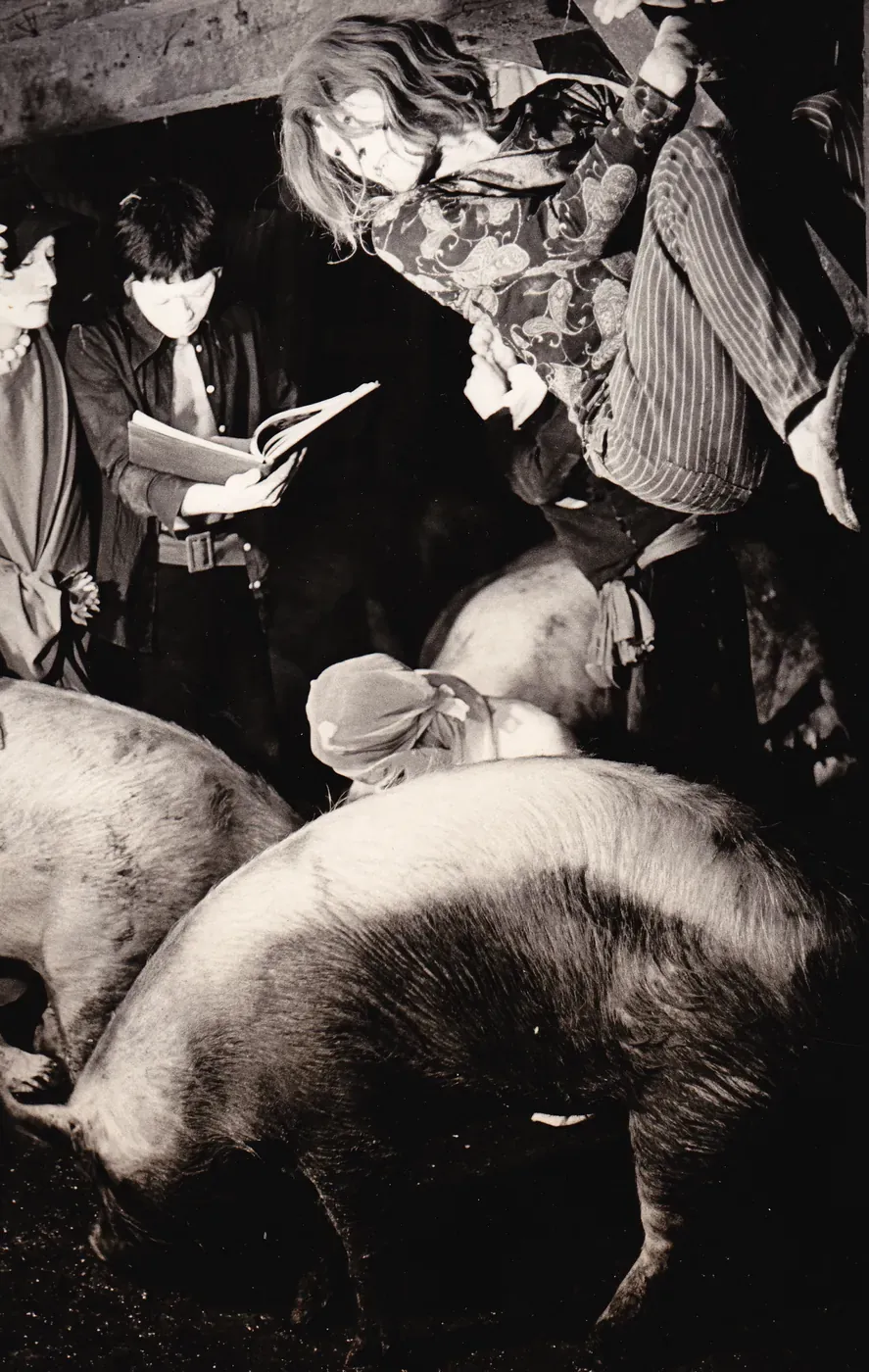
Nagano filmed at Lake Shikotsu in Hokkaido, in Aizuwakamatsu, at Ōyama Afuri Shrine in Kanagawa and at the Yokodai Pig Farm in Yokohama. Ohno’s students in the cast include Tomiko Takai, Mitsuyo Uesugi, Moritsuna Nakamura, Atsuko Onodera, Kei Katō and Minoru Hideshima. Nagano later said the film was about one of their deaths, and a starting point towards somewhere new.
Religion and the rituals built around Kazuo Ohno
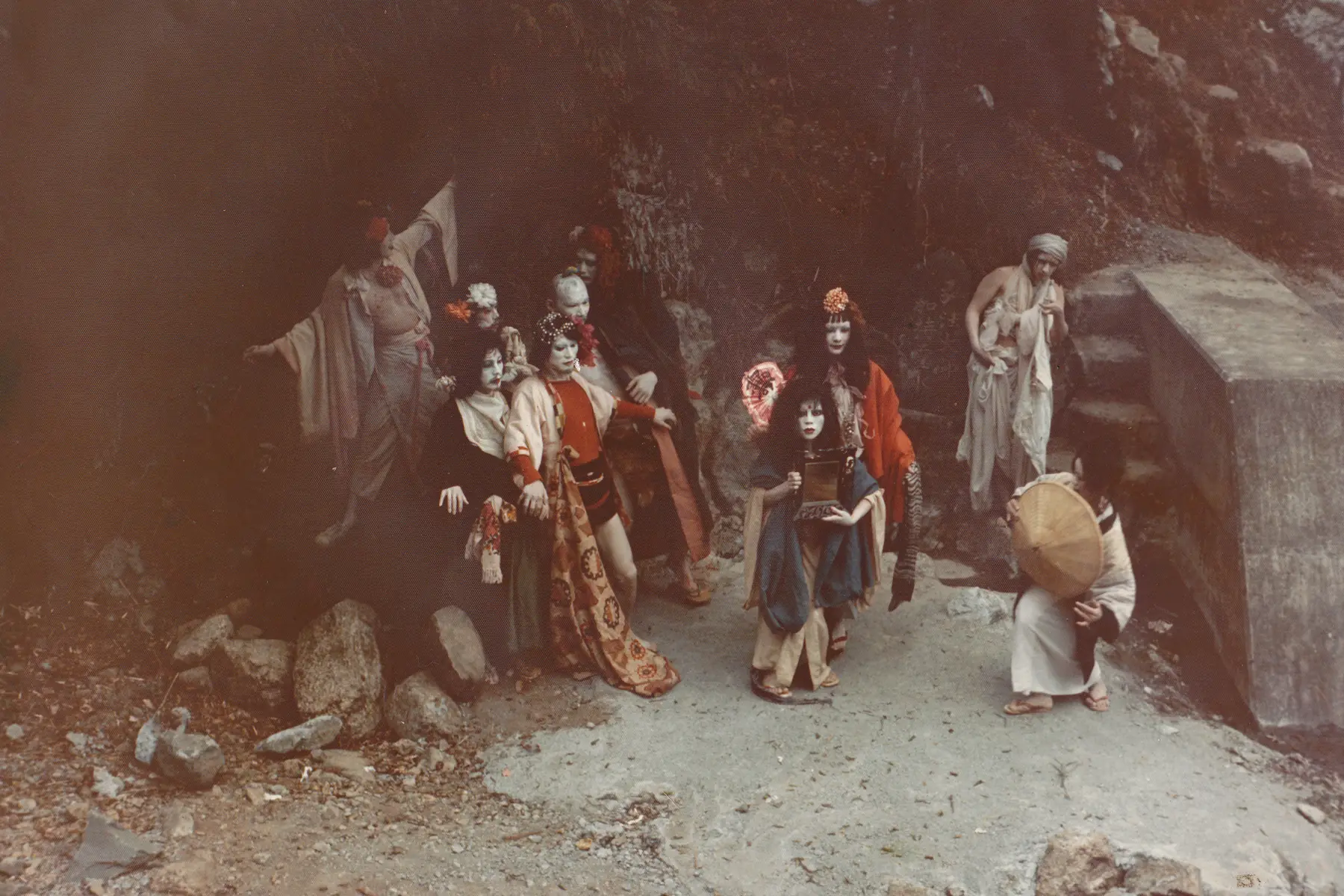
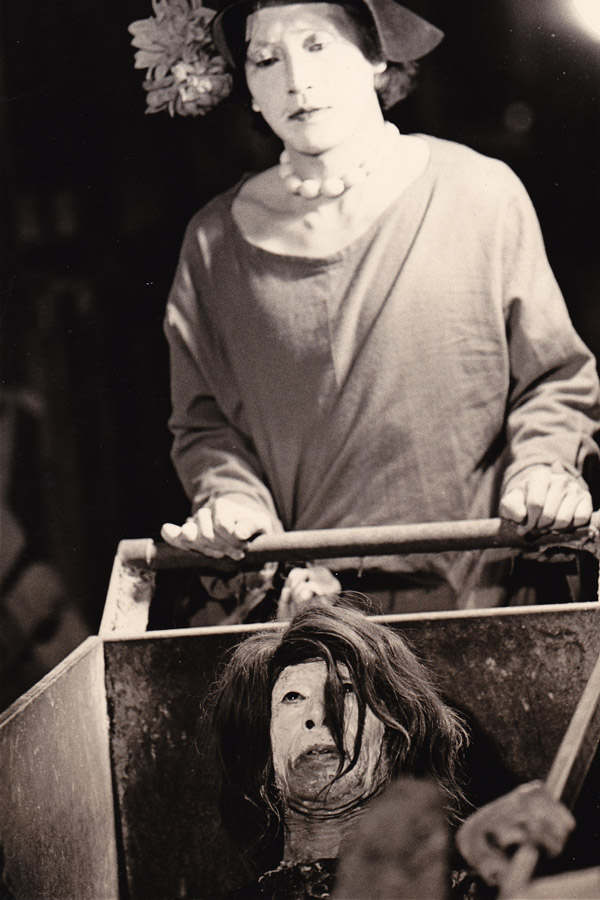
Mr O’s Book of the Dead takes a very clear stance on religion. Much of it is shot around what appear to be abandoned temples, and in several scenes the dancers seem to glorify an object or another dancer, in what feels like a complete deconstruction of religious ceremony.
The way butoh handles religion here suggests a number of things. It could be a call to see religion in a fresh light, or an outright rejection of it through butoh’s harsh lens. Kazuo Ohno takes centre stage, often praised by the others or placed at the heart of what appear to be rituals. Depending on the scene, his presence can be overwhelming or overwhelmed, and that tension is left for the viewer to make sense of.
The rest of the dancers deserve just as much attention. Many of them are far more expressive than Ohno, with movements that feel animalistic and raw, which in this theme could suggest anything from possession to religious fanaticism.
Traditional costume and Japanese identity
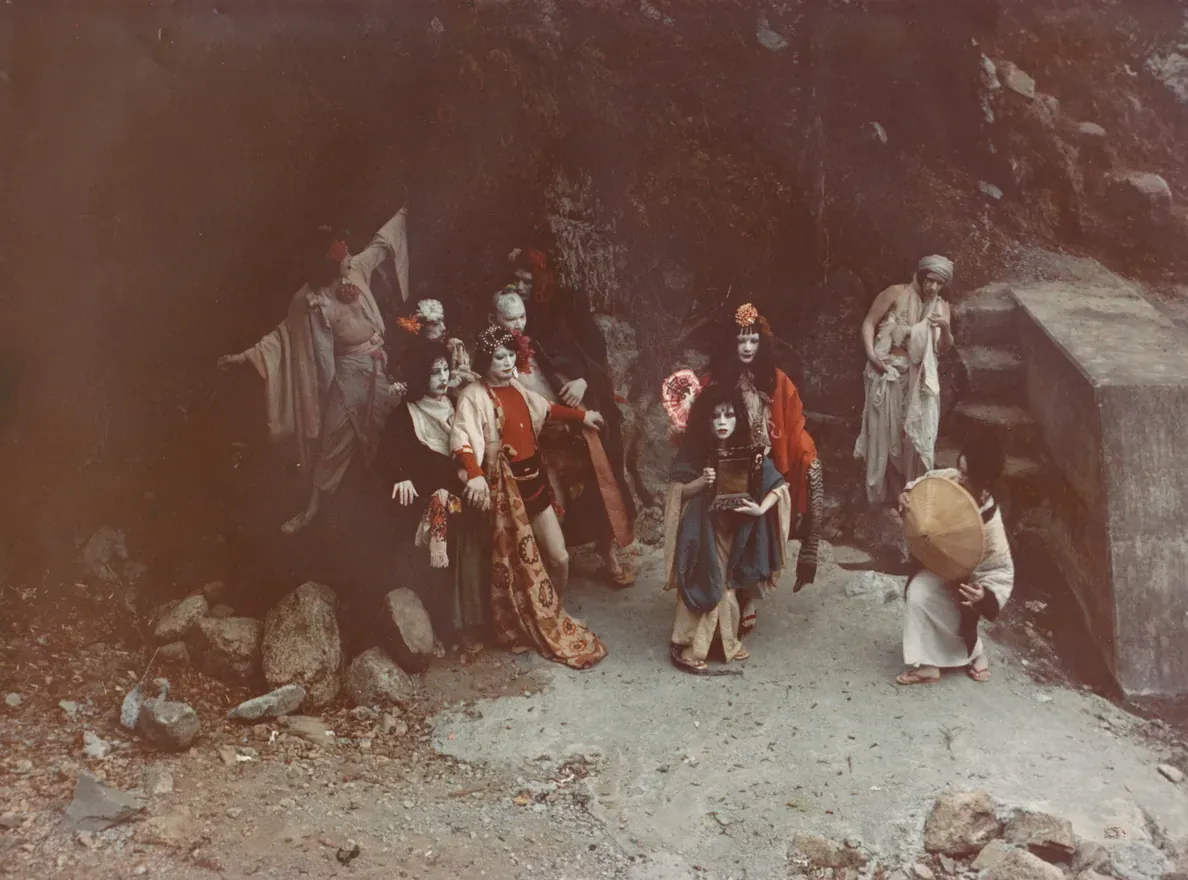
Nagano and the design team chose to dress most of the performers in what appears to be traditional Japanese clothing. These exquisite costumes contrast sharply with the settings, and with the frenetic, improvised movement. Given butoh’s historical roots, this most likely represents the feeling of not being at home in your own country.
Some scenes support that reading, such as those where Ohno appears in a red spandex suit, moving very expressively. It suggests someone who has found peace in wearing what he wants, rather than forcing himself to be something he is not.
Sexuality, from the rock scene onwards
Sexuality is one of the most prominent themes in the film. In one of the first scenes a man throws a rock out of his underwear into the sky and is visibly relieved to no longer carry it. As in that scene, the film repeatedly shows sexuality as liberation. Homosexuality is less clearly represented, which is notable given that butoh has dealt with it since the very first butoh performance, Tatsumi Hijikata’s Kinjiki (Forbidden Colours) in 1959, based on the novel by Yukio Mishima.
This is where the film benefits most from its large cast. The first film in the trilogy, Portrait of Mr O, also touches on sexuality, but with only Ohno on screen its depiction falls short. Adding more people brings the theme into focus, with real tension between the dancers.
As in many films, sexuality is portrayed as a return to our most basic instincts. Some scenes are bound to shock, and that is clearly the intention.



Lake Shikotsu and the dances filmed outdoors
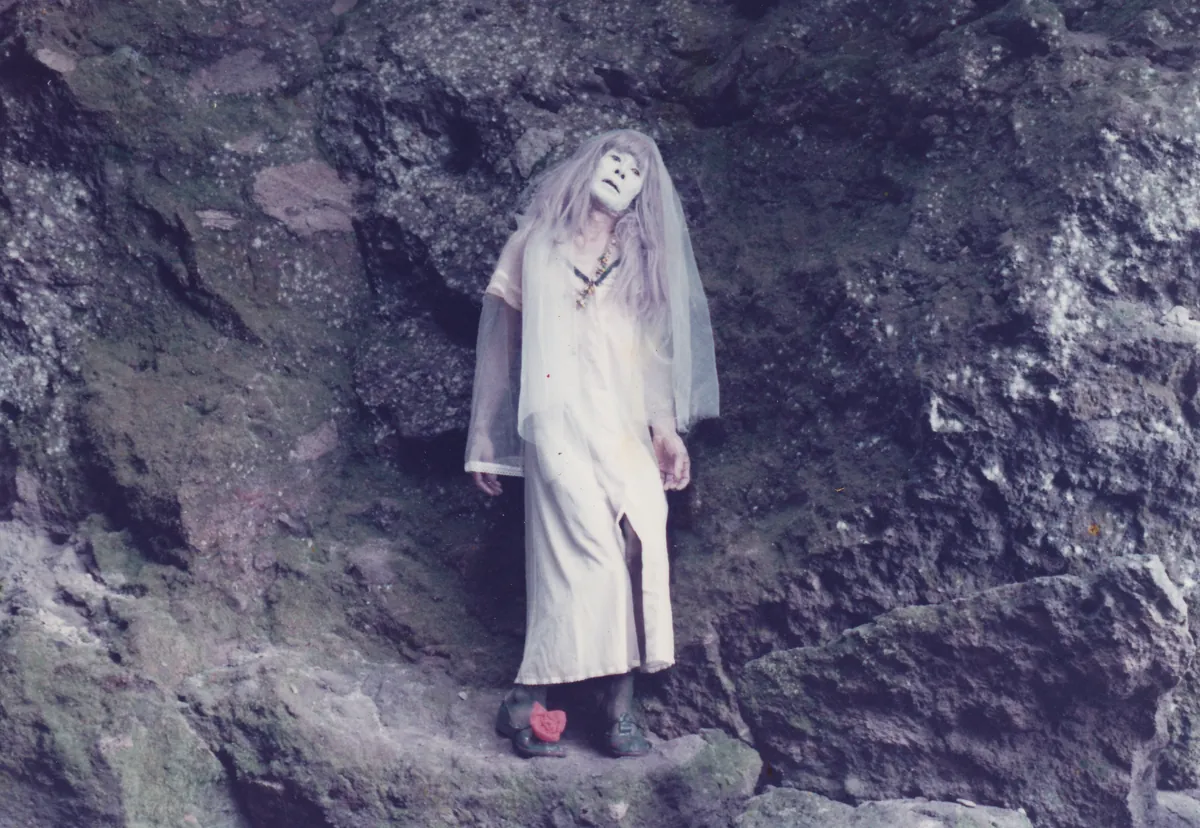
Nature is overwhelmingly present. Much of the film is shot outdoors, around Lake Shikotsu and in open landscapes where the dancers move freely. The earlier films also went outside, to a mountain in Gunma and the island of Sarushima in Tokyo Bay, but nothing in them matches the scale here.
The film sets nature against closed rooms. Dancers filmed in open landscapes move in a more erratic and outlandish way, while those filmed indoors tend to move slowly.
The dancers’ faces suggest nature is far more fun than the indoors, but it is a terrifying kind of fun that few viewers would want to join in with. Once again, what you make of it is up to you.
Mr O’s Book of the Dead as a first butoh film
Mr O’s Book of the Dead wants to say a lot, and it has found a language it is comfortable using to say it. That language is raw and unfiltered, but if it appeals to you, this is a good way in. Like much avant-garde film, it is more theoretical than practical, but if you want to learn more about butoh, this is where to start.