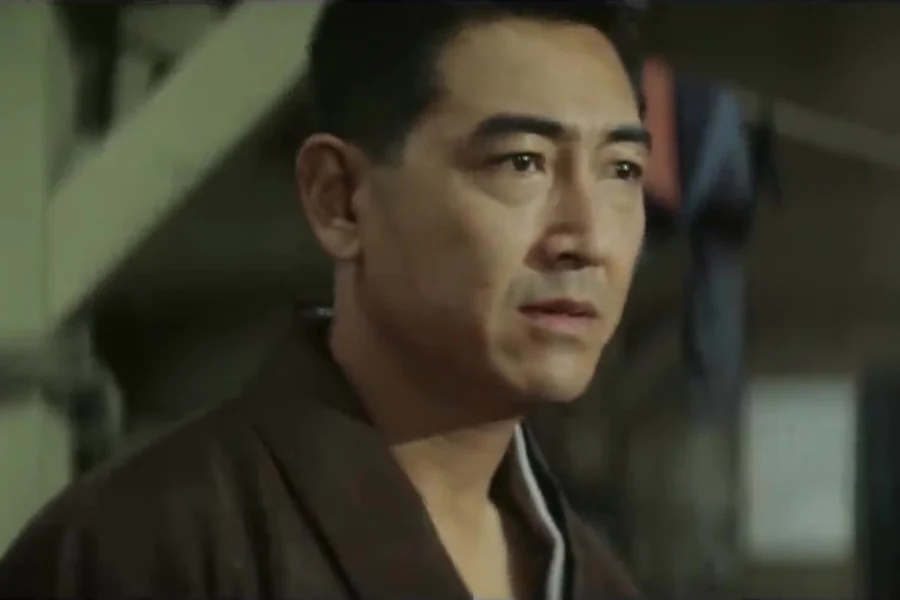
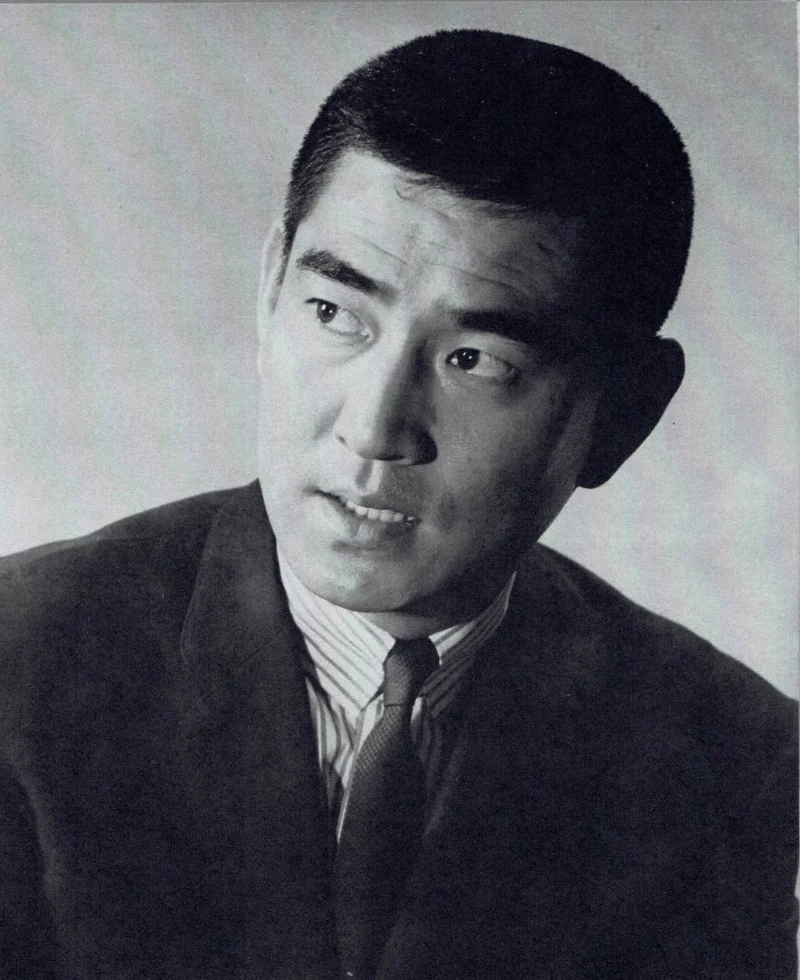
In Dandadan, the shy occult fan everyone calls Okarun has a real name that his classmate Momo Ayase refuses to say out loud. He is Ken Takakura, and so was the film star she has a crush on. The anime has sent a new generation of viewers looking for the original, and he is well worth finding.
Who was Ken Takakura? Ken Takakura (1931 to 2014) was a Japanese film actor who appeared in more than 200 films. He became a star in Toei’s yakuza films of the 1960s, playing quiet men bound by duty. He won the Japan Academy Prize for best actor four times, more than any other actor. In the West he is best remembered as the Osaka police inspector in Ridley Scott’s Black Rain (1989). He died in Tokyo on 10 November 2014, aged 83.
Inside Ken Takakura's Life on Screen, 1956 to 2012
Why Momo Calls Him Okarun in Dandadan
Yukinobu Tatsu’s manga has run on Shueisha’s Shonen Jump+ app since April 2021. Science SARU’s anime adaptation has two seasons out, and a third has been announced for 2027.
Momo has a crush on the actor Ken Takakura and goes out with boys who look like him. When the gangly classmate she meets turns out to share the name, she cannot bring herself to use it. She calls him Okarun instead, built from the Japanese word for occult.
The joke lands because of who the real Takakura was on screen. He played men of few words who kept their promises whatever it cost them. Okarun is a nervous loner convinced that aliens exist, about as far from Momo’s ideal as a boy could be, which is why the series keeps coming back to it.


Born Oda Takeichi in Nakama, Fukuoka, in 1931
Takakura was born on 16 February 1931 in Nakama, in Fukuoka Prefecture on the island of Kyushu. His birth name was 小田剛一, read Oda Takeichi in Japanese records, although most English obituaries give it as Goichi Oda.
He studied commerce at Meiji University in Tokyo. After graduating he struggled to find work, and he was applying for a manager’s job when Toei recruited him instead. He joined the studio’s second intake of “New Face” trainees in 1955 and made his debut a year later, straight into the lead, in the karate picture Denko Karate Uchi (Lightning Karate Blow, 1956).
Abashiri Prison and Toei’s Chivalry Films of the 1960s
His breakthrough came in the middle of the decade, through two long running Toei series. Tales of Japanese Chivalry (Nihon kyōkakuden) began in 1964. Abashiri Prison (Abashiri bangaichi) followed in 1965.
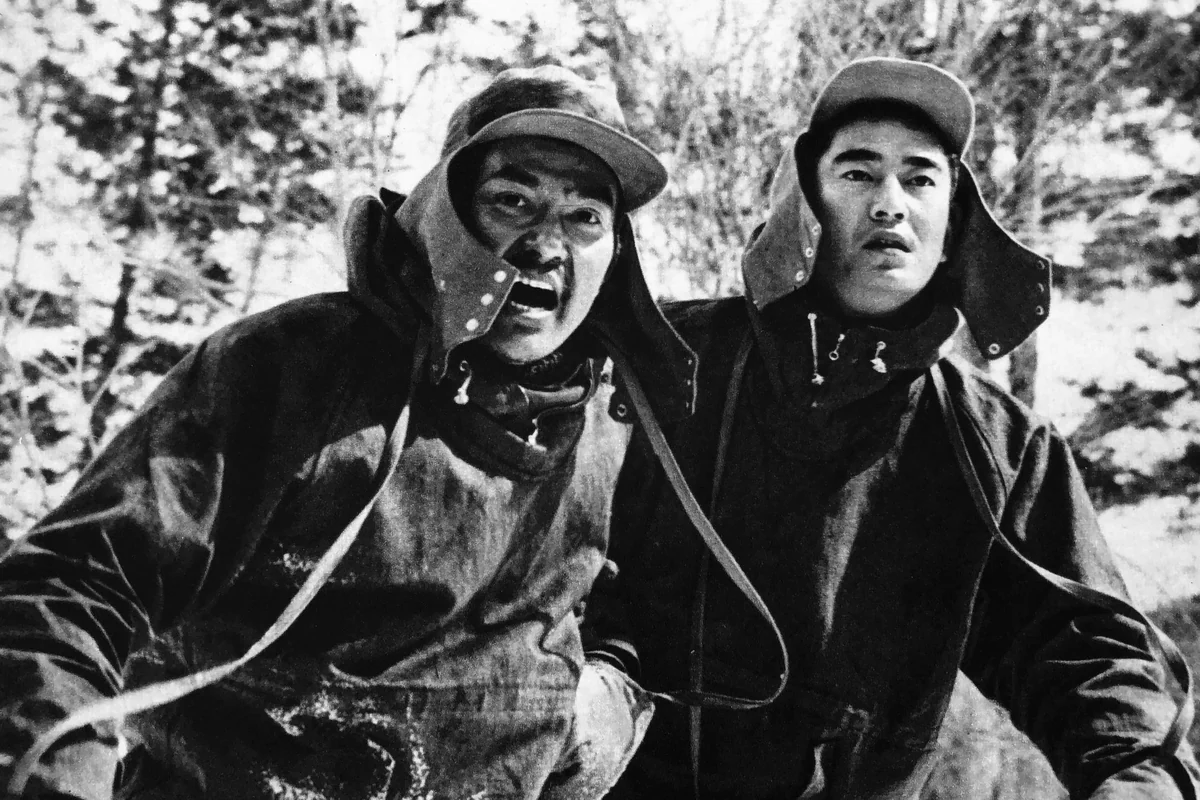
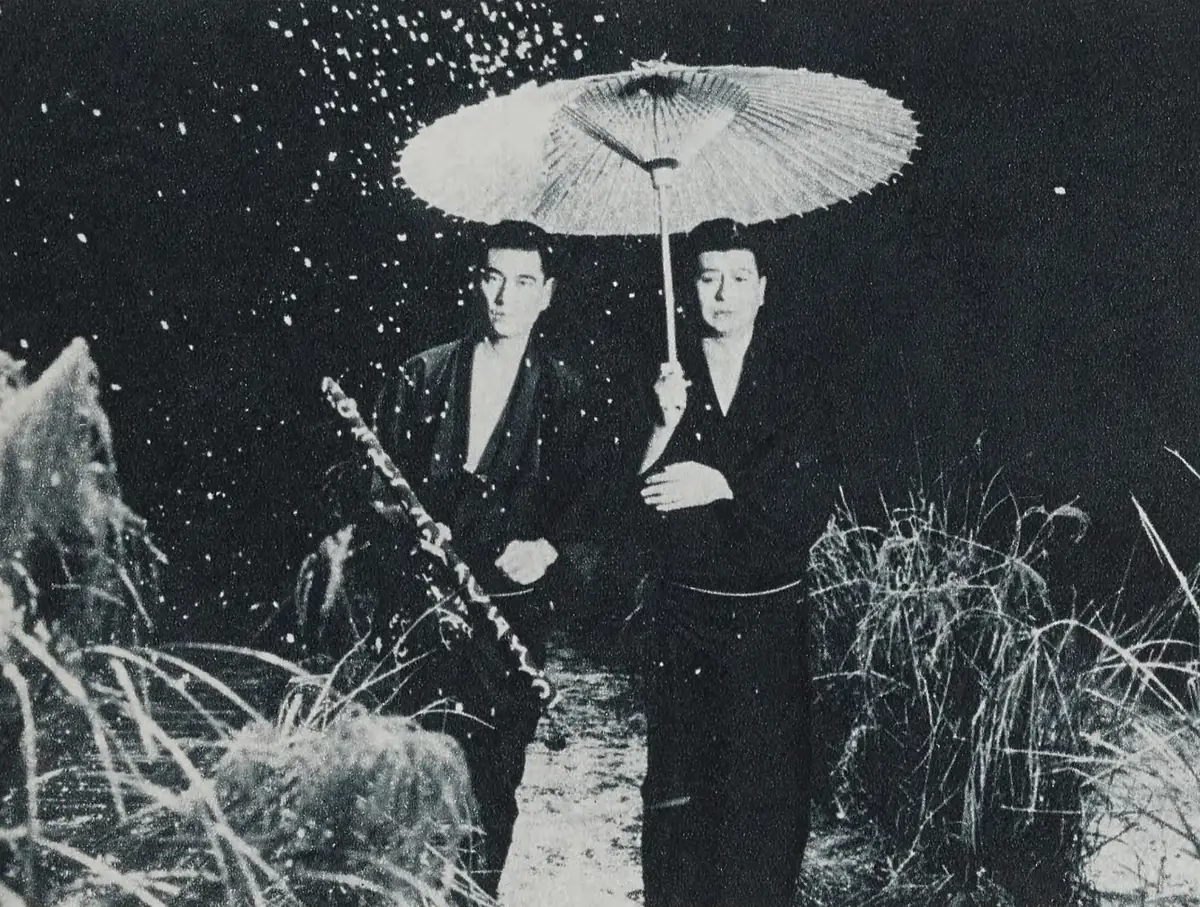
In Abashiri Prison, directed by Teruo Ishii, Takakura plays a yakuza serving time at the real prison in the far north of Hokkaido. During an escape across the snow he finds himself chained to a hardened convict, a set-up borrowed loosely from Stanley Kramer’s The Defiant Ones. He sang the theme song himself, and it came out as a single in January 1965. Ishii directed ten Abashiri films with him in all, and the series was then relaunched as New Abashiri Prison in 1968, which ran to a further eight.
Brutal Tales of Chivalry (Shōwa zankyōden) also began in 1965 and ran until 1972. Takakura plays Hanada Hidejirō, and from the fourth film onwards he carries a lion and peony tattoo, karajishi botan, across his back. Our guide to irezumi, Japan’s traditional tattoo art, explains how that kind of full back piece became tied to the yakuza on screen and off. His recording of the series theme, Karajishi Botan, is still one of his best known songs.
These were ninkyō eiga, chivalry films. The hero is an old fashioned gangster who keeps to a code of duty and loyalty while modern, money minded gangs break every rule around him, and he usually ends the film walking in alone to settle the score. Lone Wolves and Stray Dogs, the booklet Yale University published for its 2015 season of Japanese crime films, notes that the genre was embraced by the political left and right alike (Gerow et al., 2015). Its fans included the students then protesting on Japan’s university campuses.
He crossed into period drama as well. Tomu Uchida cast him as the cold, brilliant swordsman Sasaki Kojirō in his Miyamoto Musashi films, up to their final duel on Ganryū Island in 1965. Japanese critics still point to it as casting deliberately against type.
Three Takakura Films in Yale’s Crime Film Season
Takakura died a few months before that Yale season opened. Three of the films the organisers had already chosen starred him, so they dedicated the season to him and called it a small memorial (Gerow et al., 2015).
Wolf, Pig and Man (Ōkami to buta to ningen, 1964) came from Kinji Fukasaku a decade before his Battles Without Honor and Humanity series. Takakura plays Jirō, the middle one of three brothers raised in a slum, who plans a robbery against a yakuza gang and pulls his younger brother into it. The booklet points to the hand-held camera and location shooting that Fukasaku later made his trademark (Gerow et al., 2015). Fukasaku’s last completed film was Battle Royale (2000).
A Fugitive from the Past (Kiga kaikyō, 1965) is Tomu Uchida’s three hour crime epic. It opens in 1947 with a pawnshop murder in Hokkaido on the night a typhoon sinks a ferry in the strait, and Takakura arrives in the second half as Ajimura, a young detective at the Higashi Maizuru police station who connects a new murder to the old case. Uchida shot it on 16mm film and blew it up to 35mm for its grainy, grey look. Japanese critics placed it third in a 1999 poll of the country’s greatest films (Gerow et al., 2015), and Arrow Video has released it on Blu-ray in the UK.
The Red Peony (Hibotan bakuto: hanafuda shōbu, 1969) was the third of eight Red Peony Gambler films starring Junko Fuji as Oryū, whom the booklet calls arguably the most famous female yakuza in Japanese cinema. Director Tai Katō casts Takakura as Hanaoka, a lieutenant in the rival gang. Katō wanted his camera so close to the ground that the crew dug up a paved road to get the angle (Gerow et al., 2015).





Leaving Toei in 1976, and Manhunt in China
By the time Takakura left Toei in 1976 he had appeared in more than 180 films. The same year he starred in Manhunt (Kimi yo fundo no kawa o watare), a Daiei thriller directed by Junya Satō, as a Tokyo prosecutor framed for crimes he did not commit.
Manhunt did badly in Japan. Two years later it became the first Japanese film shown in China after the Cultural Revolution, and his brooding hero became a new model of screen masculinity for Chinese audiences. John Woo remade it in 2017 as a tribute to him.
The Yellow Handkerchief and Four Japan Academy Prizes
The role that recast him for Japanese audiences came from Yōji Yamada. In The Yellow Handkerchief (1977), Takakura plays a man just released from Abashiri Prison, the setting of his 1960s hit, travelling to the mining town of Yūbari. He has written to his wife asking her to hang a yellow handkerchief outside the house if she still wants him back.
That film, together with Mount Hakkōda (1977), won him the first ever Japan Academy Prize for best actor in 1978. He won again in 1981, then in 1982 for Yasuo Furuhata’s Station. The fourth came in 2000 for Furuhata’s Poppoya (Railroad Man), in which he plays the stationmaster at the end of a dying railway line in Hokkaido. No other actor has won the prize four times, and Poppoya also earned him best actor at the 1999 Montreal World Film Festival.
The 1980s also brought Yasha (1985), set in a fishing port on the Sea of Japan, with Takeshi Kitano in the cast.
Hollywood Roles: The Yakuza, Black Rain and Mr. Baseball
His first Hollywood part was Major Yamaguchi in Robert Aldrich’s war film Too Late the Hero (1970). In Sydney Pollack’s The Yakuza (1974), written by Paul Schrader and Robert Towne, he plays Tanaka Ken opposite Robert Mitchum, a former yakuza bound by an old debt.
Black Rain (1989) is the part most Western viewers know. In Ridley Scott’s Osaka thriller he plays Inspector Masahiro Matsumoto, the by the book detective assigned to keep an eye on Michael Douglas’s American cop. Three years later he played Uchiyama, manager of the Chunichi Dragons, opposite Tom Selleck in Fred Schepisi’s baseball comedy Mr. Baseball (1992).
Final Films, the Order of Culture and Ken San
His later films often sent him on long journeys. In Zhang Yimou’s Riding Alone for Thousands of Miles (2005), he plays a Japanese fisherman estranged from his dying son, who travels to Yunnan to film a folk mask opera the son had hoped to record. His final film, Dearest (Anata e, 2012), reunited him with Yasuo Furuhata.
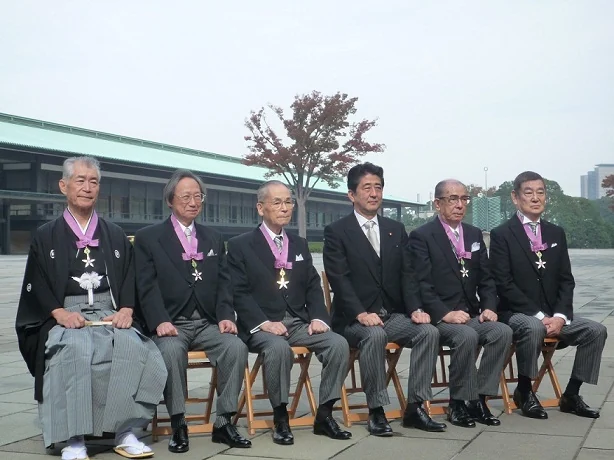
Japan named him a Person of Cultural Merit in 2006 and awarded him the Order of Culture in 2013. He died of malignant lymphoma in a Tokyo hospital on 10 November 2014, and his office announced his death eight days later. A documentary about him, Ken San, directed by Yuichi Hibi, premiered at the Cannes Film Festival in 2016.
Ken Takakura Films to Watch First
- Abashiri Prison (1965), Teruo Ishii. The prison escape that made him a star. Eureka has the first three films on UK Blu-ray as Prison Walls: Abashiri Prison I to III.
- Brutal Tales of Chivalry (1965), Kiyoshi Saeki. The first Hanada Hidejirō film, and the chivalry formula at its cleanest.
- A Fugitive from the Past (1965), Tomu Uchida. A three hour postwar crime epic, with Takakura arriving as the detective in its second half. On UK Blu-ray from Arrow Video.
- The Red Peony (1969), Tai Katō. Junko Fuji’s female gambler leads, and Takakura supports her as the rival gang’s lieutenant. Eureka has it on UK Blu-ray as Red Peony Gambler 3: The Flower Cards Game, in the box set The Valiant Red Peony.
- The Yakuza (1974), Sydney Pollack. His Hollywood breakthrough, opposite Robert Mitchum.
- Manhunt (1976), Junya Satō. A flop at home that made him a star in China.
- The Yellow Handkerchief (1977), Yōji Yamada. The gentle road film that won him his first Japan Academy Prize.
- Station (1981), Yasuo Furuhata. A policeman’s life in Hokkaido told across the years, and his third Japan Academy Prize.
- Black Rain (1989), Ridley Scott. The best route in for anyone arriving from Dandadan.
- Poppoya (Railroad Man) (1999), Yasuo Furuhata. A late career peak that brought his fourth Japan Academy Prize.
Questions About Ken Takakura and Dandadan
Yes. Ken Takakura (1931 to 2014) was one of Japan’s most famous film actors. Dandadan’s Okarun shares his name, which is why Momo, a fan of the actor, refuses to use it.
In the story it is his real name. The joke is that Momo has a crush on the actor of the same name, so she nicknames her nerdy classmate Okarun rather than say it.
In Japan it is usually Abashiri Prison (1965) or The Yellow Handkerchief (1977). Outside Japan it is Ridley Scott’s Black Rain (1989).
He died of malignant lymphoma in a Tokyo hospital on 10 November 2014, aged 83. His office announced the news on 18 November.
Yes. He sang the theme songs for his own yakuza films, including Abashiri Bangaichi and Karajishi Botan, and both are still reissued on CD in Japan.