Pokémon has been loved around the world since the first games, Pocket Monsters Red and Green, came out in Japan in 1996. Eevee, Pikachu and friends now turn up somewhere less expected: under your feet. Poké Lids are manhole covers painted with Pokémon artwork, and more than 480 of them now sit in towns and cities across Japan. Tracking them down has become a hobby of its own, and a good excuse to see parts of the country most visitors never reach.
This guide covers where Poké Lids came from, how the official map shows you where each one is, how the paper stamp books and the Pokémon GO stamp rally work, and how to reach one example, the Slowpoke lid in Ayagawa, Kagawa.
Your Poké Lid Hunting Roadmap
Decorative Manhole Covers in Japan Since the 1980s
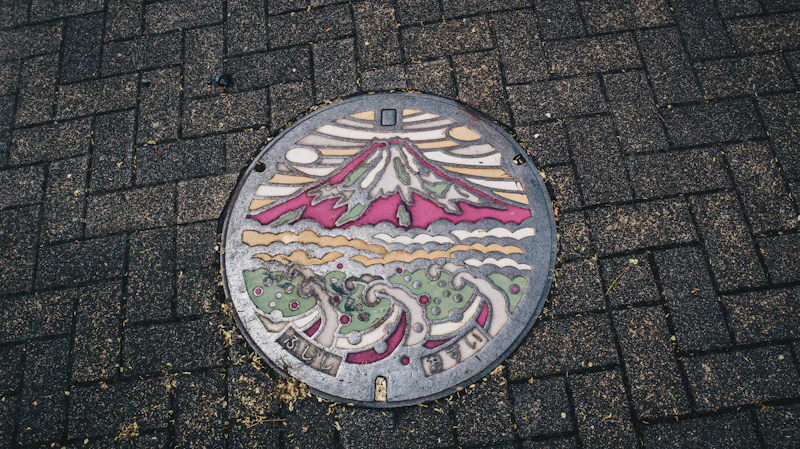
Poké Lids build on a much older Japanese habit. Towns and cities across the country have been putting their own designs on manhole covers for decades, usually a local landmark, flower, festival or mascot, so the cover underfoot tells you where you are.
The trend took off in the late 1980s, when Japan’s then Ministry of Construction encouraged local authorities to give their sewer covers original designs. The aim was to improve the image of sewers and win public support for the costly sewer building of the time. Thousands of designs later, decorative covers are a normal part of the street in most Japanese communities, which made them a natural canvas for Pokémon.


What Are Poké Lids? Pokémon Manhole Covers From Kagoshima to Hokkaido

Poké Lids are manhole covers decorated with Pokémon artwork, each one designed for the town where it sits. They are part of Pokémon Local Acts, a project run by The Pokémon Company with prefectures and municipalities to promote local areas, with each partner region represented by an Ambassadorial Pokémon that suits its character. The first lid went in outside JR Ibusuki Station in Kagoshima Prefecture in December 2018. It shows Eevee, a play on the town’s name (Eevee suki, or “love Eevee”, sounds like Ibusuki), and Ibusuki now has nine designs featuring Eevee and its evolutions.
As of October 2026 the official Poké Lid website lists more than 480 lids across 42 of Japan’s 47 prefectures, from Hokkaido, which has the most at 50, down to Okinawa. Many are in smaller towns well away from Tokyo, Kyoto and Osaka, and that is the point of the project: the lids give travellers a reason to visit places beyond the usual route, and each new design gives fans another stop to add to the list.
Poké Lid Stamps: Local Stamp Books and the Pokémon GO Stamp Rally
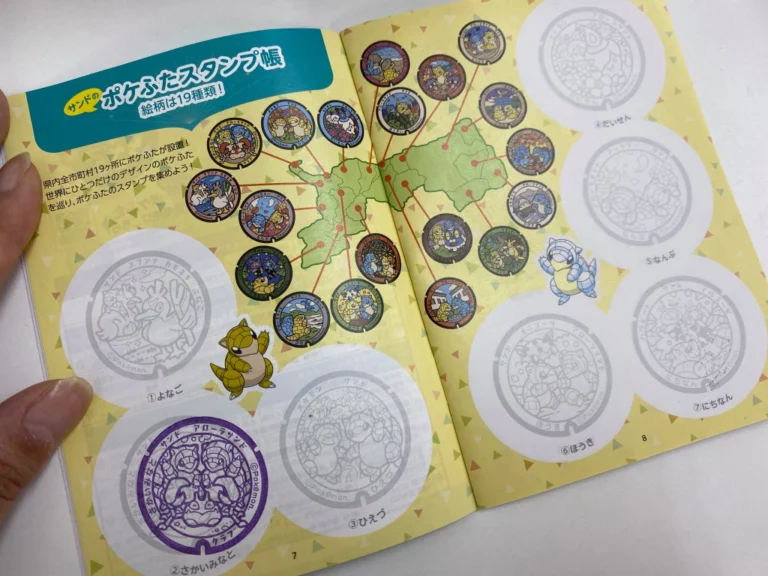
There are two ways to keep a record of the lids you find. The first is on paper. Some prefectures and towns have printed their own Poké Lid stamp books, with a space for a stamp from each lid in the area. Tottori Prefecture’s Sandshrew stamp book, pictured above, has 19 designs to collect from lids in every one of the prefecture’s municipalities. These paper rallies are run locally and come and go, so check the prefecture or town tourism website before you travel.
The second is in Pokémon GO. Poké Lids are PokéStops in the game, and spinning one gives you a postcard of that lid to keep or send to a friend. The game also runs a Poké Lid Stamp Rally, which launched in Kyushu and Okinawa on 7 November 2025 and reached the rest of Japan in January 2026. Visiting the PokéStop at a lid adds its stamp to your sheet, and every two stamps collected in the same prefecture gives you a chance to encounter Pikachu with a Location Background for that prefecture. You need to be at least level 5 to take part, and new lids are added to the sheet automatically as they are installed.
Finding Poké Lids on the Official Pokémon Local Acts Map
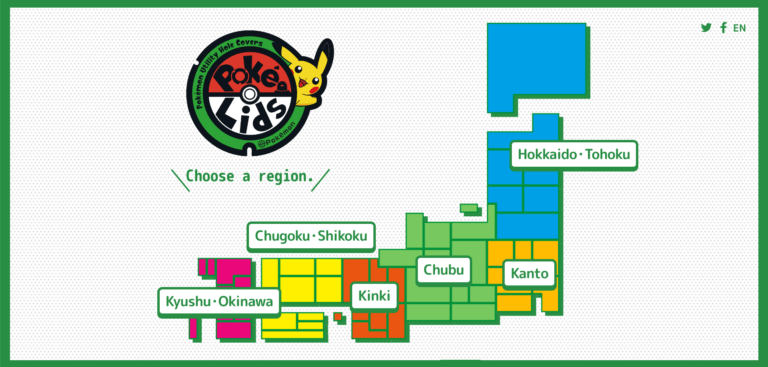
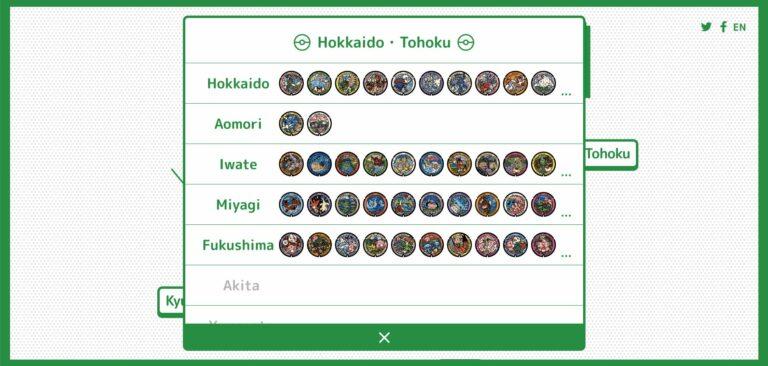
The official Poké Lid website, part of the Pokémon Local Acts site, maps every lid in Japan. Its home page shows Japan split into six regions: Hokkaido and Tohoku, Kanto, Chubu, Kinki, Chugoku and Shikoku, and Kyushu and Okinawa. Choose a region and the next page lists its prefectures, with a row of lid designs for each:
Select a prefecture, then a lid, to open that lid’s own page:
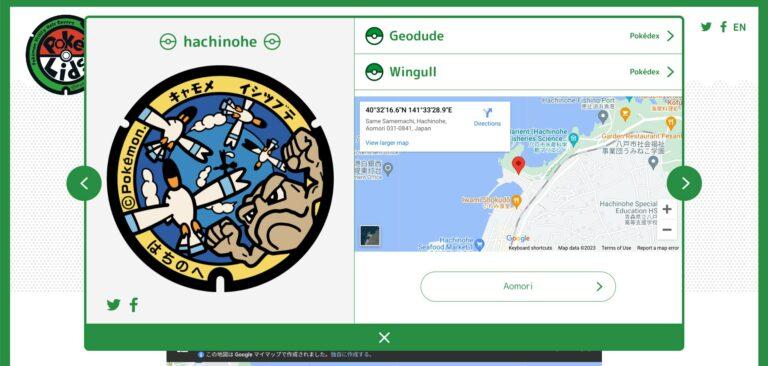
Each lid page names the Pokémon on the design, links to their Pokédex entries and shows the lid’s location with a link to Google Maps. You still need to keep your eyes on the ground when you arrive, because a lid can sit on a busy pavement, outside a station or inside a park.
Some fans skip the map altogether and search a town on foot. It takes longer, but finding a lid that way feels much more like a real Pokémon hunt.








Getting to the Slowpoke Poké Lid in Ayagawa, Kagawa

Many Poké Lids are in smaller towns, so reaching one usually means a local train or bus rather than a bullet train. The Slowpoke lid in Ayagawa, Kagawa Prefecture, shows how a typical lid trip works.
Slowpoke, called Yadon in Japanese, is the official ambassador for Kagawa, which promotes itself as Udon Prefecture, and Slowpoke lids now sit in all 17 of Kagawa’s cities and towns. Ayagawa has two. The one pictured, at Kayahara 253-7, is in Hidamari Park Ayagawa, a free Slowpoke themed playground better known as Yadon Park, which opened in April 2023.
Takamatsu, the prefectural capital, makes the easiest base. It has its own airport and JR Marine Liner trains from Okayama. From Takamatsu-Chikko or Kawaramachi station, take the Kotoden Kotohira Line to Ayagawa Station, a ride of about 40 minutes from Takamatsu-Chikko. The adult single fare from either station is 640 yen from 1 October 2026. Yadon Park is about 350 metres, or a five minute walk, from Ayagawa Station. Ayagawa is known as the birthplace of Sanuki udon, so a bowl of noodles makes a natural stop before the ride back.
Plan Your Poké Lid Trip: Official Map, Studio Ghibli Spots and a Vlog
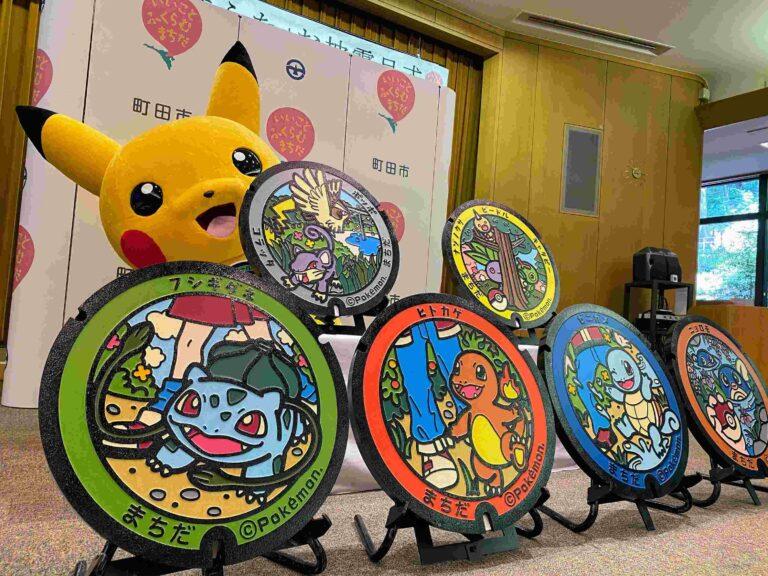
The official Poké Lid map is the best place to plan a route, since new lids are added to it as they are installed.
If your trip passes through Kyoto, Japan Nakama’s guide to real life Studio Ghibli locations covers the Arashiyama Bamboo Forest and other spots that fit easily around a day of lid hunting.
For a feel of what a day of lid hunting looks like, YouTuber Sharla of the Sharla in Japan channel filmed a road trip that includes her own Poké Lid hunt: