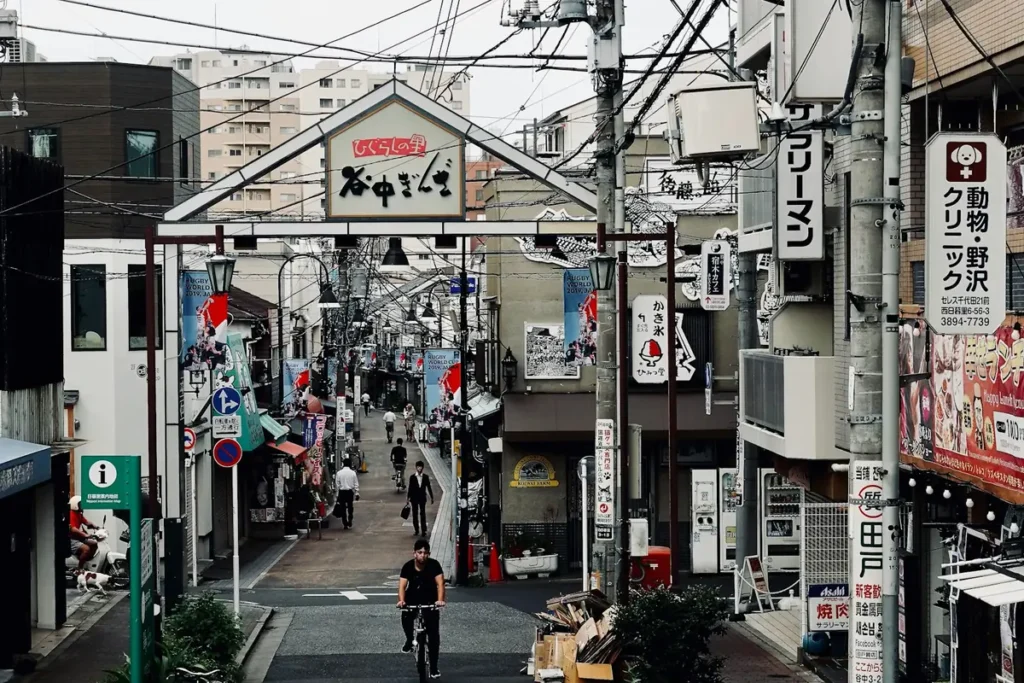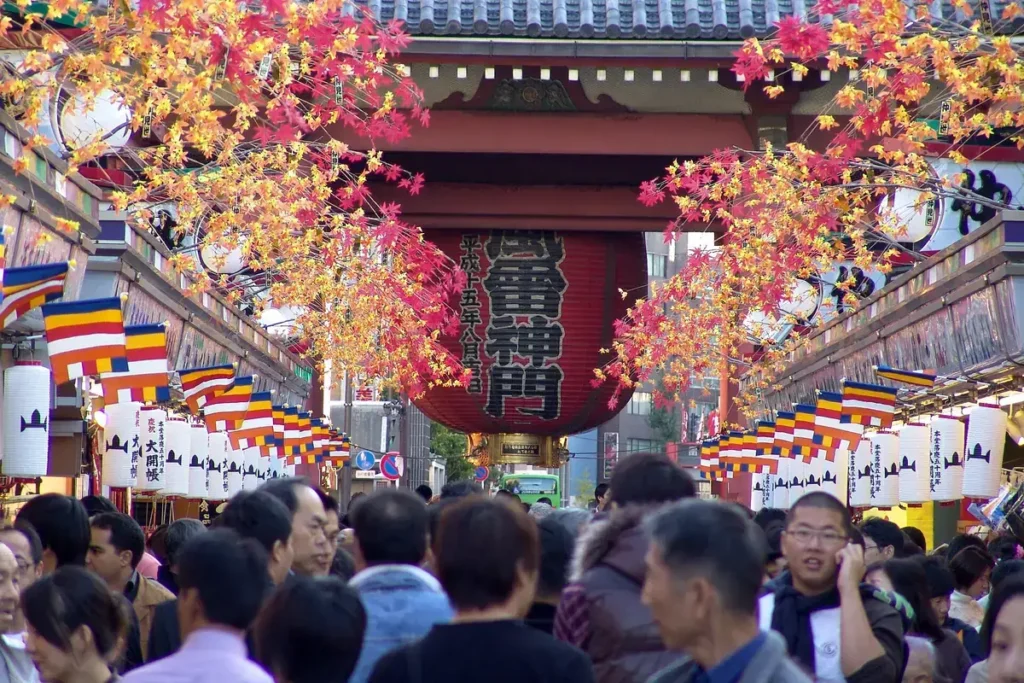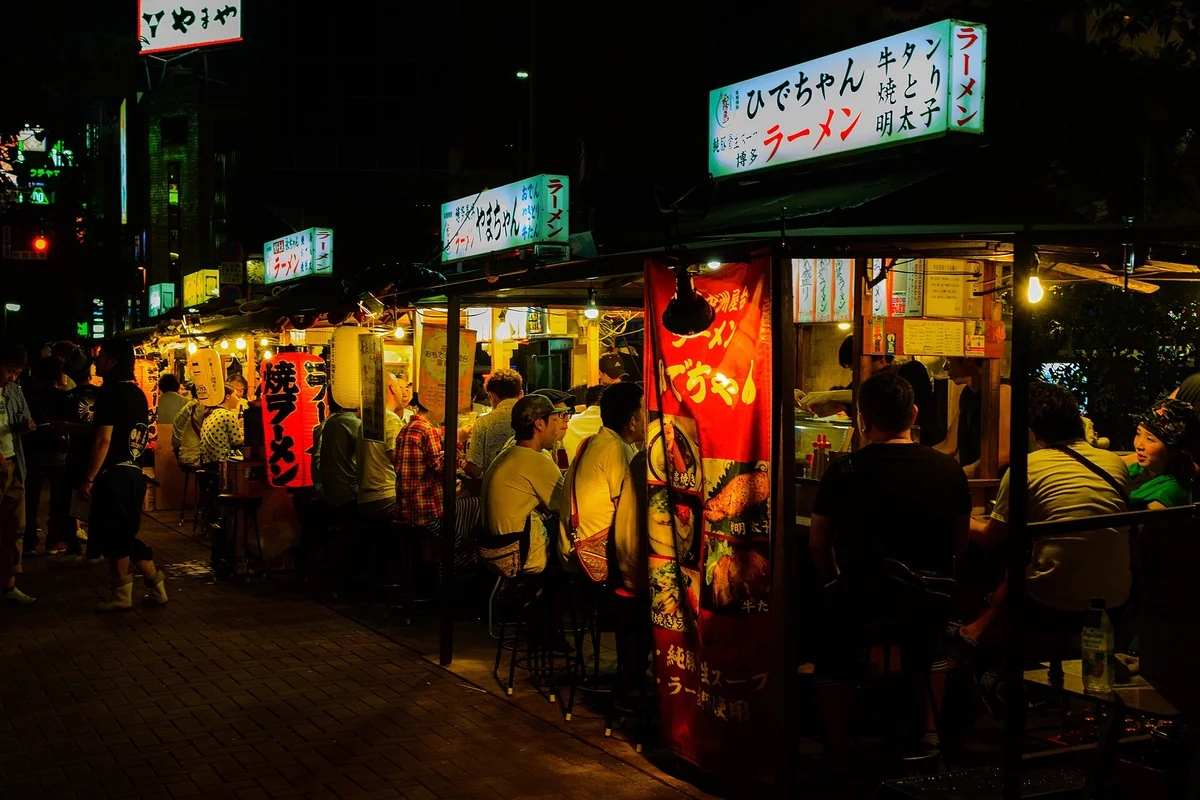
The best things to do in Fukuoka are eating at the yatai food stalls that open along the river at dusk, a bowl of Hakata tonkotsu ramen, an afternoon between the Fukuoka Castle ruins and Ohori Park, and a day trip to the plum trees of Dazaifu Tenmangu or the canals of Yanagawa. Fukuoka is the largest city in Kyushu, and its airport sits five minutes from Hakata Station by subway, so you can land and be eating within the hour.
This guide covers the areas worth knowing, how the yatai work, which ramen shops have the history, the festivals that set the calendar and how to fit Dazaifu and Yanagawa into the same trip.
Fukuoka Yatai, Ramen and Day Trips at a Glance
| Where | North coast of Kyushu. The city’s two centres are Hakata (around the station) and Tenjin (shopping and offices) |
| By Shinkansen | Hakata Station: about 4 hours 52 minutes from Tokyo, 2 hours 28 minutes from Osaka |
| From the airport | Subway from the domestic terminal: 5 minutes to Hakata, 10 minutes to Tenjin. Free shuttle bus from the international terminal, about 10 minutes |
| Eat | Tonkotsu ramen, motsunabe (offal hot pot), mentaiko (spicy cod roe), anything at a yatai |
| Best time | Late March to early April for cherry blossom, 1 to 15 July for the Hakata Gion Yamakasa, November for sumo and autumn leaves |
| Time needed | Two days for the city, plus a day for Dazaifu and Yanagawa |
Hakata, Nakasu and Tenjin: the Fukuoka areas to know
Fukuoka has two names, and you will see both on every map. Hakata is the old merchant port. When Japan traded with Ming China in the Muromachi period, Hakata was the busiest harbour for that trade after Hyogo, according to Frank Brinkley’s A History of the Japanese People (1915, chapter XXXII). Fukuoka was the castle town that Kuroda Nagamasa, the first lord of the Fukuoka Domain, began laying out beside it in 1601. Today Fukuoka is the name of the city, and Hakata lives on in the ward, the main station and the ramen.
- Hakata: Hakata Station, Fukuoka’s Shinkansen stop and transport hub, with the temples and shrines of Hakata Old Town a short walk away. Canal City Hakata, a few blocks from Kushida Shrine, has four floors of shops, restaurants and a cinema.
- Nakasu: Fukuoka’s main downtown and night-time district, home to its best-known yatai row along the Naka River.
- Tenjin: the largest shopping district in Kyushu, with about half of the city’s yatai, and Daimyo next door.
- Nagahama: a seaside neighbourhood near the baseball dome, and the birthplace of Nagahama-style tonkotsu ramen.
- Ohori Park and the castle: the green west side of the centre, beyond Tenjin on the same subway line.
Hakata Bay is also where the Mongol fleets landed in 1274 and 1281, a story told in our guide to the Kamakura period.


Fukuoka yatai: the rules at around 100 food stalls
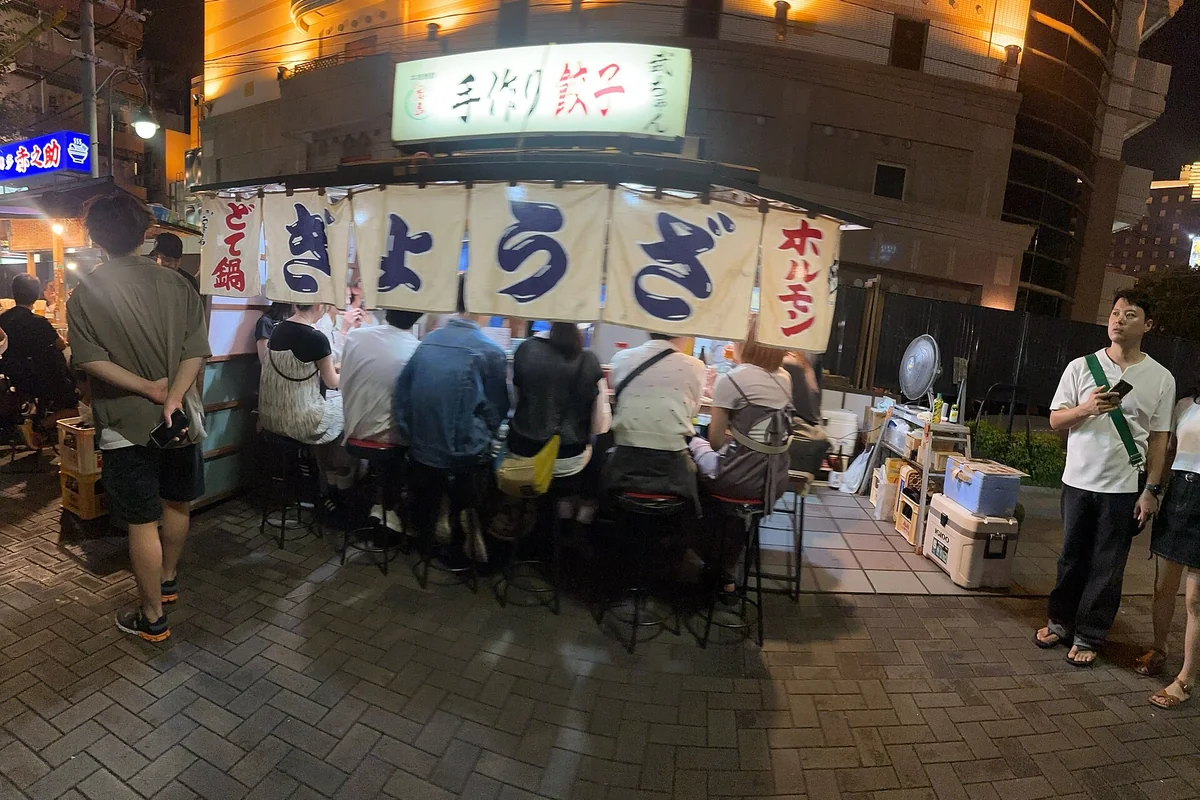
As dusk falls, over 100 yatai, the city’s portable food stalls, set up in Nakasu, Tenjin and Nagahama. Most open from around 6pm, each seats about ten people at a counter, and the menu runs from ramen and oden to yakitori, gyoza and even cocktails. They work under strict hygiene rules, and the official guide to yatai manners is short and worth reading before you sit down.
| Yatai area | What it is like | Go for |
|---|---|---|
| Nakasu | The classic riverside row, lit up and busy with queues of visitors and locals | Ramen, yakiramen and oden by the water. North Nakasu has a quieter group of about 10 stalls |
| Tenjin | Around half of all the city’s yatai, beside the department stores | Coffee and bar yatai as well as food. Arrive around 6pm to get a seat |
| Nagahama | Revived in 2023, and the closest yatai area to the baseball dome | A yatai crawl ending in Nagahama ramen, plus Mentaiko Chudoku, the city’s only yatai built around spicy cod roe |
Five yatai rules first-timers miss
- No takeaway. Yatai are not allowed to sell food to take away, for hygiene reasons.
- No raw food. Salads and sashimi are banned, so everything you order has been cooked.
- Order something. One order per customer is the basic rule, and the stalls rely on people eating, paying and moving on.
- Travel light. There is nowhere to put a suitcase, so leave bags in a station locker or at your hotel.
- Check before you go. Stalls close in strong wind or heavy rain, sometimes without warning. Fukuoka City’s FUKUOKA GUIDE account on the LINE app shows which yatai are open from about 6pm each evening, in English.
In winter the stalls hang plastic sheeting around the counter to keep the heat in. Lift a gap, ask if there is room, and the owner will usually shuffle the regulars along. Going alone is a good way to start, because it is easier to get talking to the owner and the people beside you.
Map of Nakasu Yatai
Hakata ramen: three tonkotsu stops with history
Hakata ramen means a rich tonkotsu broth made from pork bones, served with thin noodles. When the bowl runs low, ask for kaedama, a second serving of noodles for the same soup. These are three places with a real claim to the story.
- Ganso Akanoren Setchan Ramen, Tenjin main store. Open since 1946, it got its name from students who called it “Aka Noren” after the red curtain glowing at its door. The broth simmers pork heads, feet and backbones for more than 15 hours. 2-6-4 Daimyo, Chuo Ward, a 3-minute walk from Tenjin Station, 11am to 9pm, closed Tuesdays (Fukuoka City’s ramen and udon guide).
- Ichiran Main Store, Nakasu. Ichiran’s classic tonkotsu recipe dates from 1960, and its flagship stands at 5-3-2 Nakasu, a minute from Exit 2 of Nakasu-Kawabata Station. Order on a paper form and eat in a solo “flavour concentration” booth. Hours change with staffing, so check the main store page before a late visit.
- The Nagahama yatai. Nagahama is the birthplace of Nagahama-style ramen, and Yatai no Tamachan Bekkan, run by Daisaku Kida, is where Fukuoka City’s own Nagahama yatai crawl ends with a classic bowl.
Fukuoka is also believed to be the birthplace of udon and manju in Japan, thanks to milling techniques brought from China around the 13th century. For a soft Hakata udon, Udon Wasuke (opened 2007, near Ropponmatsu and Befu stations) serves a burdock tempura udon in a kelp and bonito broth. On a cold evening, order motsunabe, the city’s offal hot pot.








Fukuoka Castle ruins and Ohori Park
Kuroda Nagamasa was given the province of Chikuzen for his part in the Battle of Sekigahara, and soon afterwards he and his father, Kuroda Yoshitaka, built Fukuoka Castle. Its inner compound alone covered about 410,000 square metres, with 47 turrets and more than ten gates. The army took over the site in the Meiji period and many buildings were taken down, but the stone walls and the Tamon Turret, a nationally designated cultural property, still stand where they were in the Edo period. In spring 2025 the authentic Shiomi Turret, which had been moved to Sofukuji Temple in the Meiji period, was rebuilt inside the grounds using Edo-period pillars and roof tiles wherever possible.
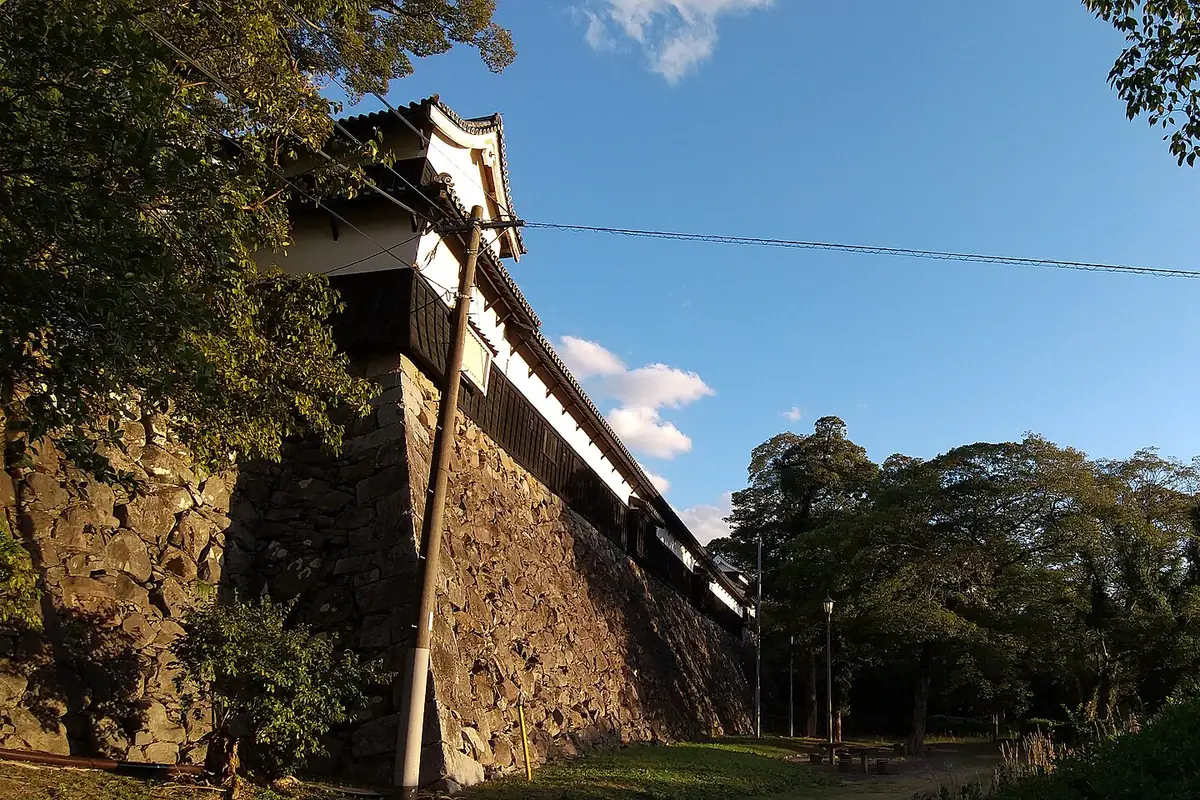
The castle grounds are now Maizuru Park, one of the city’s classic cherry blossom spots, with the Fukuoka Castle Cherry Blossom Festival from mid March to early April. Inside the park, the Korokan Ruins Exhibition Hall tells the story of the Korokan, an ancient diplomatic facility that stood here and is a national historic site in its own right (9am to 5pm, last entry 4:30pm, closed 29 December to 3 January). Take Exit 3 or 5 at Ohori Koen Station on the Kuko subway line and walk five minutes. Read more in the official guide to the Kuroda clan sites.
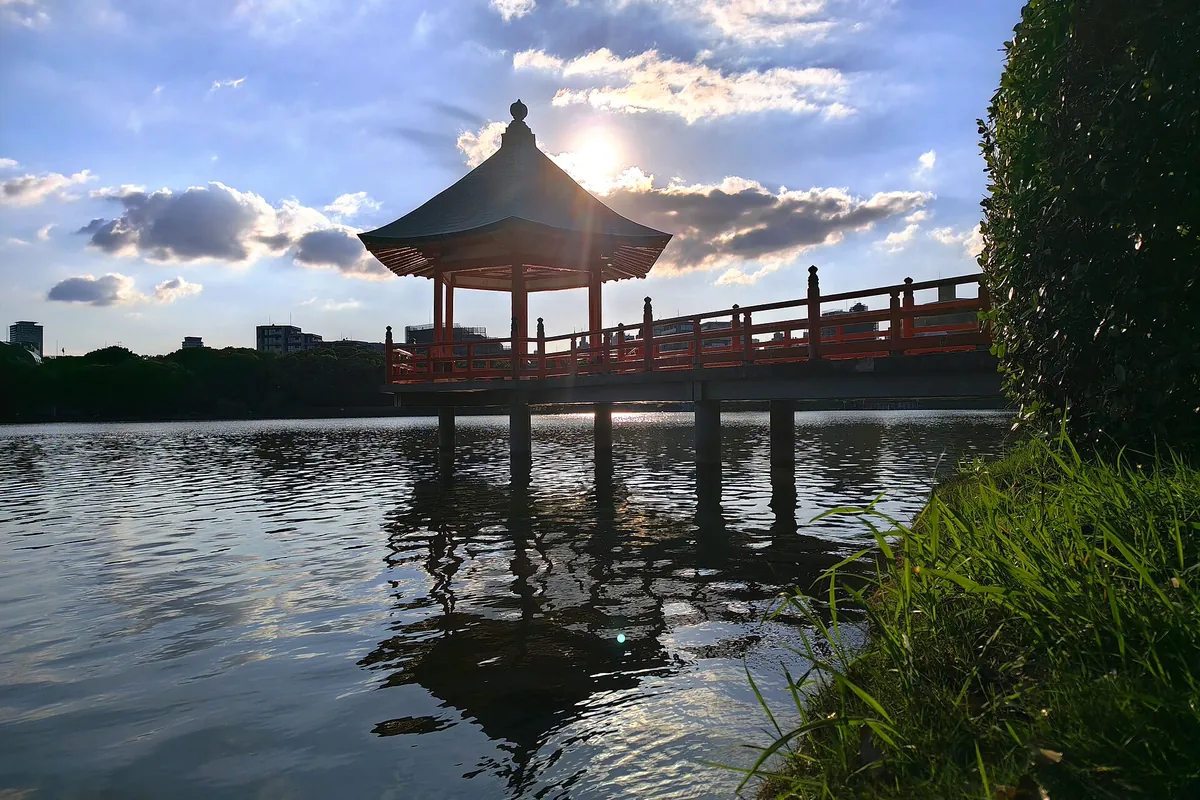
Ohori Park, next door, was made from the castle’s western moat and opened in 1929. Its pond is crossed by five bridges, and the hexagonal Ukimido pavilion, which survived the wartime air raids at the old zoo and was moved here, is the park’s symbol. The whole park is a nationally registered Place of Scenic Beauty, and the Fukuoka Art Museum sits on its waterfront.
Kushida Shrine and the Hakata Gion Yamakasa
Kushida Shrine has been the guardian shrine of Hakata since its founding, traditionally dated to 757, and it is the heart of the Hakata Gion Yamakasa, the city’s great summer festival. The festival’s organisers date it to 1241, when the priest Shoichi Kokushi was carried through the streets sprinkling holy water to drive away an epidemic. It was added to UNESCO’s Intangible Cultural Heritage list in 2016.
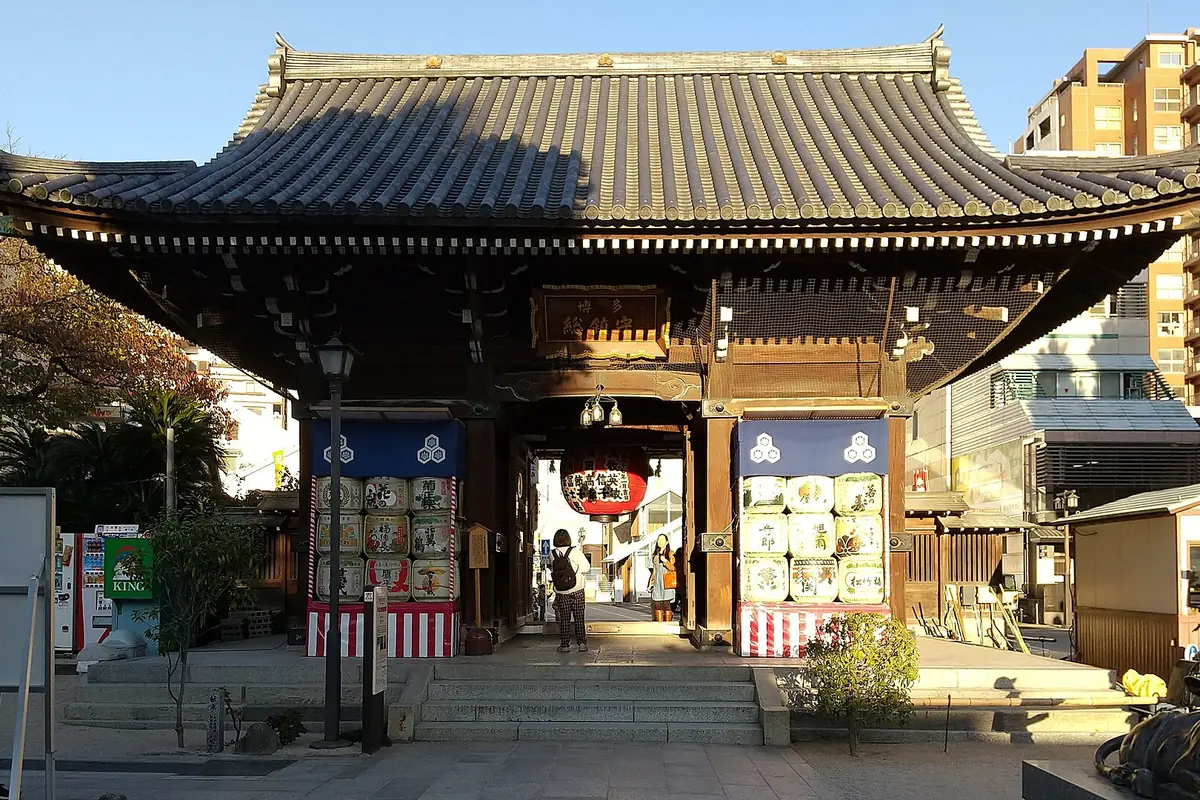
From 1 to 14 July, decorated kazari-yama floats more than 10 metres tall stand around the city. The climax, the Oiyama, starts at 4:59am on 15 July, when the first team of men in festival dress runs a float weighing over a tonne into the shrine grounds on their shoulders, then races the roughly 5km course through Hakata. Watching from the street is free. See the official Hakata Gion Yamakasa site for the year’s timings, and our guide to things to do in Japan in July for the rest of the month’s festivals.
Map of Kushida Shrine
teamLab Forest Fukuoka at BOSS E・ZO FUKUOKA
teamLab Forest is on the fifth floor of BOSS E・ZO FUKUOKA in Jigyohama, Chuo Ward. It has two halves. In the Catching and Collecting Forest you use your phone to catch and record digital animals, including extinct ones in a dinosaur forest, and colour in a creature to watch it come to life in Graffiti Nature. The Athletics Forest has spinning spheres to bounce on and soft slopes to climb. Tickets start at ¥2,400 for 16 and over, ¥2,000 for students with ID and ¥1,000 for ages 4 to 15, and prices can rise in high season. It opens 11am to 7pm on weekdays and 10am to 7pm at weekends and on holidays (teamLab Forest official page). Compare it with every teamLab site in Japan before you book.
Day trip to Dazaifu Tenmangu
Dazaifu Tenmangu enshrines Sugawara no Michizane, the scholar who died here in exile in 903 and was deified as Tenjin, god of learning. It is the head shrine of about 12,000 Tenjin shrines across Japan and draws more than 10 million visitors a year, many of them students praying before exams. Entry to the grounds is free.
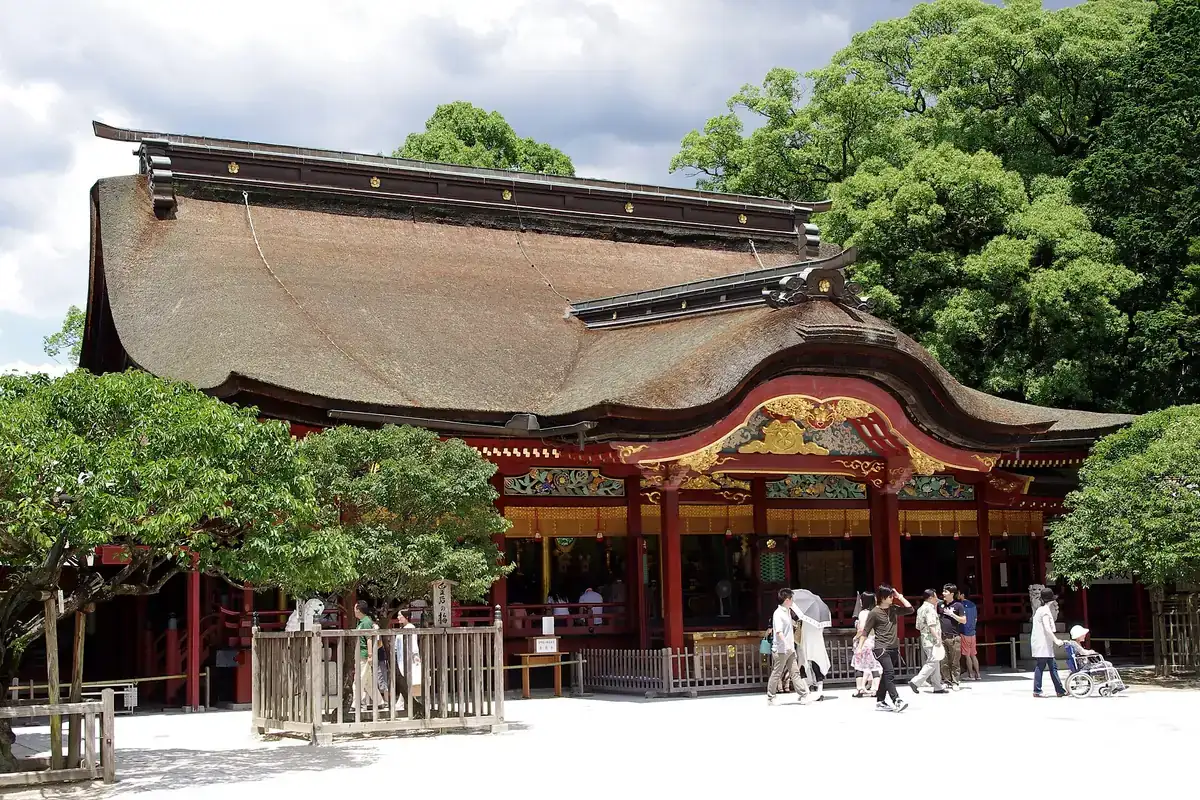
2026 is a good year to go. The main hall has been under a major restoration since spring 2023, and on 19 September 2026 the shrine reopened worship from the front of the hall after about three and a half years (shrine notice, in Japanese). To its right stands the Tobiume, the “flying plum” that legend says followed Michizane from Kyoto. It is the most famous of the shrine’s 6,000 plum trees, which flower in late winter and explain why plum blossom belongs to Tenjin shrines. Buy umegae mochi, the local sweet, from the shrine’s teashops.
- From Tenjin: Nishitetsu train from Nishitetsu Fukuoka (Tenjin) Station, changing at Nishitetsu-Futsukaichi for Dazaifu, about 30 minutes.
- From Hakata Station: direct bus from Hakata Bus Terminal, about 40 minutes.
- From the airport: Nishitetsu bus from the international terminal, about 25 minutes.
- Hours: open by 6:30am; closes 6:30pm December to March, 7:30pm June to August and 7pm the rest of the year. Shrine museums last entry 4pm.
The shrine’s own getting there page has the timetables and the Fukuoka Tourist City Pass, which covers the trains and buses.
Map of Dazaifu Tenmangu
Day trip to Yanagawa: canal boats and the water town
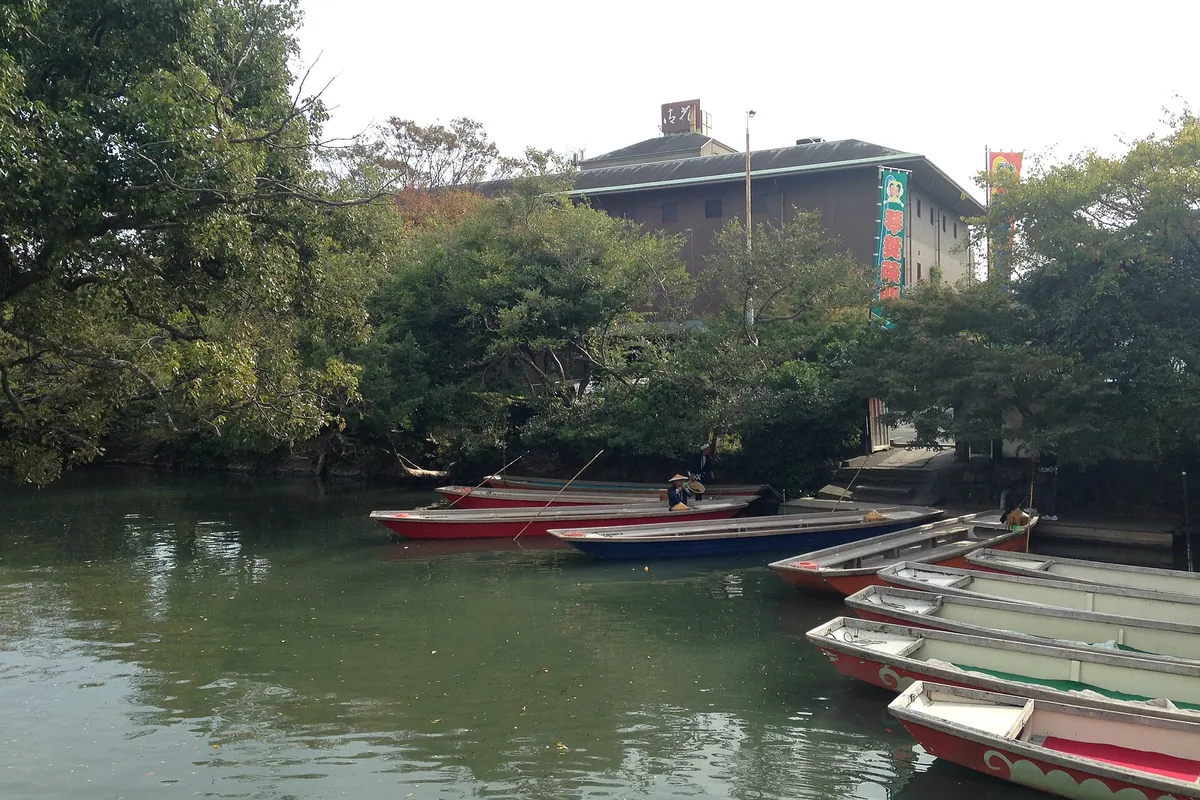
Yanagawa is a water town about 50 minutes south of Tenjin on a direct Nishitetsu train, criss-crossed by around 930km of canals that its people have dug, cleaned and defended since the Yayoi period. You see them from a flat-bottomed boat, poled along by a boatman who tells the town’s stories and sings as he goes. On 29 October 2026 the international group Green Destinations named Yanagawa’s canal conservation one of its Top 100 sustainable tourism stories of 2026.
| Boat company | Course | Adult | Child |
|---|---|---|---|
| Yanagawa Tourism Development | Standard river course, shared boats every 30 minutes, reception 9:30am to 3pm | ¥2,200 | ¥1,100 (6 to 12) |
| Daito Enterprise | Normal course, about 70 minutes | ¥2,000 | ¥1,000 (7 to 12) |
| Daito Enterprise | Short course, about 30 minutes | ¥1,000 | ¥500 |
Seven companies run canal boats, each from its own landing, so check the official river cruise guide for maps. Nishitetsu sells a combined Dazaifu and Yanagawa sightseeing ticket for doing both in one day (Nishitetsu discount tickets). Yanagawa’s best-loved son is the poet Kitahara Hakushu, and every 1 to 3 November the town holds the Hakushu Festival Water Parade, a lantern-lit boat procession along a course of about 4km with performances on the banks and fireworks at the end. 2026 is its 74th year.
Studio Ghibli fans may know the town already. Hayao Miyazaki’s visit to Yanagawa led to Isao Takahata directing The Story of Yanagawa’s Canals (1987), a documentary about the residents who rescued these waterways.
Getting to Fukuoka: Hakata Station and Fukuoka Airport
Most visitors arrive by Shinkansen from Osaka or Tokyo, or fly in on a domestic or Asian connection.
- By Shinkansen: Hakata Station is Fukuoka’s Shinkansen stop. The fastest trains take about 2 hours 28 minutes from Osaka and 4 hours 52 minutes from Tokyo, and the Japan Rail Pass covers almost all JR lines into Hakata.
- By air: flights take about 1 hour 35 minutes from Tokyo and 1 hour 15 minutes from Osaka. Fukuoka Airport’s domestic terminal connects straight to the Kuko subway line: 5 minutes to Hakata Station and 10 minutes to Tenjin. From the international terminal, a free shuttle bus reaches the domestic terminal in about 10 minutes.
- Getting around: the subway and Nishitetsu buses cover everything in the city, and the day trips use Nishitetsu trains.
If your trip continues south through Kyushu, check JNTO’s travel updates on the 2026 Kumamoto earthquake for the latest on lines and facilities. Full routes and times are on the official Fukuoka City guide.
Best time to visit Fukuoka, month by month
| When | What is on | Where |
|---|---|---|
| Late winter | Plum blossom season among 6,000 plum trees | Dazaifu Tenmangu |
| Mid March to early April | Fukuoka Castle Cherry Blossom Festival | Maizuru Park |
| 3 and 4 May | Hakata Dontaku Port Festival, with parades of rice-scoop clappers and over 2 million visitors | Around the city |
| 1 to 15 July | Hakata Gion Yamakasa, Oiyama race at 4:59am on 15 July | Kushida Shrine and Hakata |
| 12 to 18 September | Hojoya festival | Hakozaki Shrine |
| 1 to 3 November | Hakushu Festival Water Parade | Yanagawa |
| Mid to late November | Grand Sumo Kyushu Tournament (15 days) and autumn leaves | Fukuoka Convention Center, Yusentei Park |
Spring and autumn are the most comfortable months. July is hot and humid, but it is the Yamakasa. Winter brings cold winds off the Sea of Japan and the odd snowfall, and it is the season for steaming yatai and motsunabe. Fukuoka City keeps a full seasonal calendar.
Two days in Fukuoka: a plan that includes Dazaifu
| Morning | Afternoon | Evening | |
|---|---|---|---|
| Day 1 | Kushida Shrine and Hakata Old Town, then Canal City Hakata | Fukuoka Castle ruins and Ohori Park | Yatai in Nakasu, or ramen at Ganso Akanoren in Daimyo |
| Day 2 | Nishitetsu train to Dazaifu Tenmangu, arriving by 8:30am for morning prayers | On to Yanagawa for a canal boat ride | Back to Tenjin for the yatai, or Nagahama for a yatai crawl |
With a third day, add teamLab Forest and the Momochi seaside, or keep the extra time for the sumo in November.
Fukuoka travel questions answered
Is Fukuoka worth visiting?
Yes, especially for food. Fukuoka has around 100 yatai food stalls, ramen shops going back to 1946 and an airport five minutes from the main station by subway. Dazaifu Tenmangu and the Yanagawa canals are both easy day trips on Nishitetsu trains, and Hakata is under two and a half hours from Osaka by Shinkansen.
How many days do you need in Fukuoka?
Two days cover the city: Kushida Shrine, the castle ruins, Ohori Park and a night at the yatai. Add a third day for Dazaifu Tenmangu and Yanagawa, which fit together on one Nishitetsu ticket, or for teamLab Forest and the bay.
How do you get from Fukuoka Airport to Hakata Station?
Take the Kuko subway line from the domestic terminal: Hakata Station is 5 minutes away and Tenjin 10 minutes. If you land at the international terminal, take the free shuttle bus to the domestic terminal first, which takes about 10 minutes.
What are the rules at Fukuoka yatai?
Each customer orders at least one item, nothing is sold to take away, and raw dishes such as sashimi are not served. Stalls seat about ten, so make room for others and leave luggage elsewhere. Most open around 6pm and close in bad weather. The city’s FUKUOKA GUIDE account on LINE shows which stalls are open.
When is the Hakata Gion Yamakasa?
Every year from 1 to 15 July. The decorated floats are on display around Hakata until the 14th, and the main race, the Oiyama, starts at 4:59am on 15 July with the first float’s run into Kushida Shrine, followed by a course of about 5km. Watching from the street is free.
What is the difference between Hakata and Fukuoka?
Hakata is the old merchant port and Fukuoka the castle town the Kuroda lords built beside it from 1601. Today Fukuoka is the city’s name, while Hakata is the name of a ward, the main Shinkansen station and the local style of ramen.