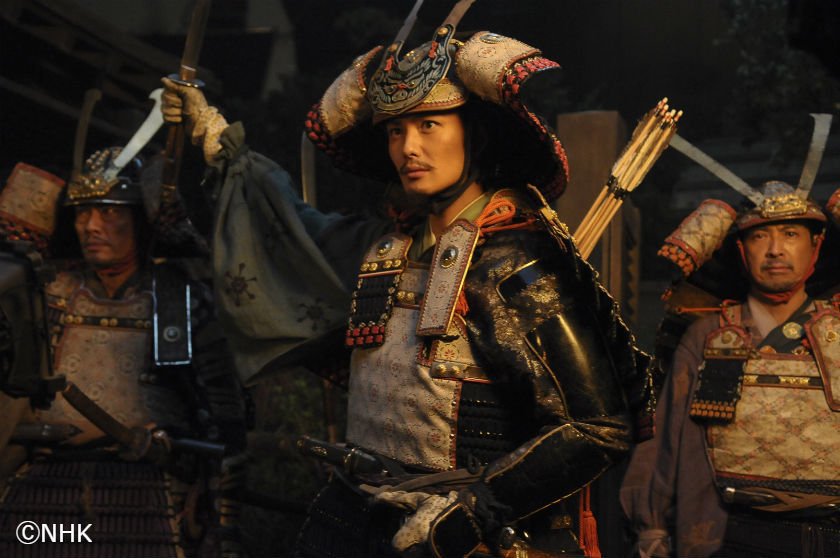
Kamakura is Japan’s former capital city located in the Kanagawa Prefecture, about an hour from Tokyo Station on the JR Yokosuka Line. This traditional city is famous for being the place where the first Samurai ruler Minamoto no Yoritomo started the first shogunate, or bakufu, to dominate across Japan. The Kamakura period ran from 1185 to 1333, a time shared with the Mongol empire unifying most of Eurasia.
The Story Arc of Japan’s First Samurai Age
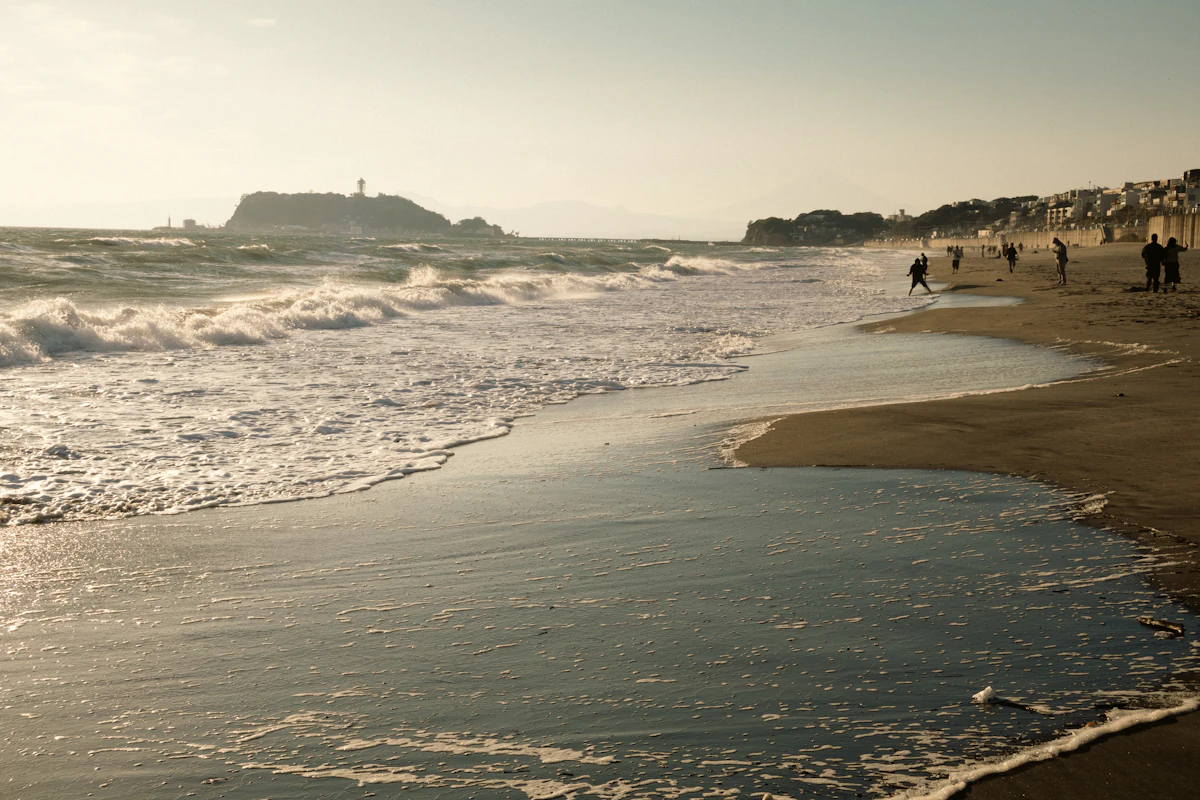
The Shōnan coast near Kamakura, with the island of Enoshima on the horizon. Photo by Kate Kasiutich on Unsplash.
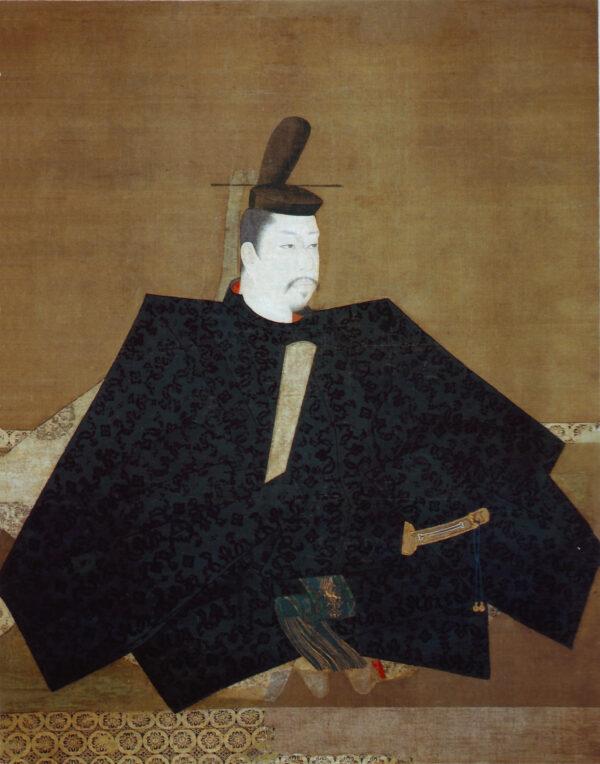
The portrait traditionally identified as Minamoto no Yoritomo, the first Kamakura shogun. Attributed to Fujiwara no Takanobu, Kamakura period, thirteenth century. Jingo-ji, Kyoto, National Treasure, public domain.
Before the Kamakura era, the title of emperor was given only to a member of the Imperial family. Similar to European kings, it was typical for the emperor to be the ruler of Japan. Japan’s imperial family is the oldest continuous hereditary monarchy in the world, and tradition dates its founding to 660 BC.
The Kamakura period was a huge turning point in Japanese history as the emperors no longer held power and only acted as symbolic figureheads. The emperors were still responsible for appointing the ruling shogun Samurai ruler as they were seen as direct descendants of the sun goddess Amaterasu.
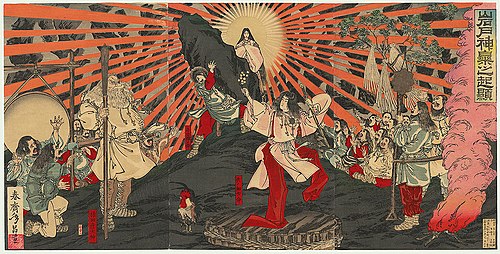
The sun goddess Amaterasu, from whom the emperors claimed descent, emerges from the rock cave. Origin of Music and Dance at the Rock Door (Iwato kagura no kigen) by Utagawa Shunsai Toshimasa, 1887. Jordan Schnitzer Museum of Art, public domain.
Minamoto no Yoritomo and the Kamakura Shogunate
Minamoto no Yoritomo (1147 to 1199) won the Genpei War against the rival Taira clan in 1185, with the final sea battle at Dan-no-ura, and ruled from Kamakura, his family’s stronghold in the east. In 1192 the emperor gave him the title of sei-i taishogun, and his military government became known as the Kamakura shogunate, or bakufu, which literally means tent government.
Yoritomo died in 1199, reportedly after a fall from his horse, and real power soon passed to the family of his widow, Hojo Masako. The Hojo ruled as regents, or shikken, for the rest of the period, and the Minamoto line of shoguns ended when Yoritomo’s son Sanetomo was murdered in 1219. The shogunate fell in 1333, when the army of Nitta Yoshisada captured Kamakura.
Shugo, jitō and the Hōjō regents
Yoritomo’s real power came from a right granted in 1185, after the Taira were destroyed at Dan-no-ura: he could appoint his own vassals, the gokenin, as military governors (shugo) and estate stewards (jitō) across the country. The shugo kept order and recruited guards for the capital. The jitō collected taxes, managed the landed estates and kept the peace locally. The emperor and his court stayed in Kyoto, while Kamakura’s own men ran the provinces.
Once Yoritomo’s line died out, nine successive members of the Hōjō family held the regency until 1333. In 1221 the retired emperor Go-Toba called for the overthrow of the regent Hōjō Yoshitoki. Few warriors answered, a shogunate army took Kyoto, and Go-Toba was exiled to the Oki Islands. This is the Jōkyū War, and it left Kamakura firmly in charge. In 1232 the regime drew up its own legal code for the warrior class, the Jōei Formulary.
The Mongol invasions of 1274 and 1281 began the shogunate’s decline. Defending Kyushu was ruinously expensive, many jitō fell into debt, and the bond between the Hōjō and their vassals was strained to breaking point. By 1333 the Hōjō had lost enough support for Emperor Go-Daigo to overthrow them.
Kamakura shogunate timeline, 1180 to 1333
| Year | What happened |
|---|---|
| 1180 | Yoritomo moves Tsurugaoka Hachimangu to its present site in Kamakura |
| 1185 | The Taira are defeated at Dan-no-ura, and Yoritomo gains the right to appoint shugo and jitō |
| 1192 | Yoritomo is named sei-i taishogun |
| 1199 | Yoritomo dies |
| 1219 | The third shogun, Minamoto no Sanetomo, is murdered at Tsurugaoka Hachimangu |
| 1221 | Jōkyū War: Go-Toba’s rising fails and he is exiled to Oki |
| 1232 | The Jōei Formulary, the shogunate’s legal code, is drawn up |
| 1252 | Work begins on the Great Buddha of Kamakura |
| 1253 | The regent Hōjō Tokiyori founds Kenchō-ji, Kamakura’s great Zen monastery |
| 1274 | First Mongol invasion, at Hakata Bay in northern Kyushu |
| 1281 | Second Mongol invasion, its fleet wrecked by a typhoon |
| 1333 | Go-Daigo overthrows the Hōjō, and Kamakura falls to Nitta Yoshisada |


The Significance of the Kamakura Period
A principal aspect of the Kamakura period is the emergence of several new Buddhist movements that would ultimately become the dominant schools of Buddhism at the time and still resonate in modern Japan today.
Six new schools of Buddhism took shape in the Kamakura period: Jōdo (Pure Land), Jōdo Shinshū, Ji, Nichiren, and the Rinzai and Sōtō schools of Zen Buddhism. Zen became the school most closely tied to the samurai. It emphasises rigorous self-restraint, meditation-practice, insight into the nature of mind and existence, and this personal expression in daily life, for the benefit of others.
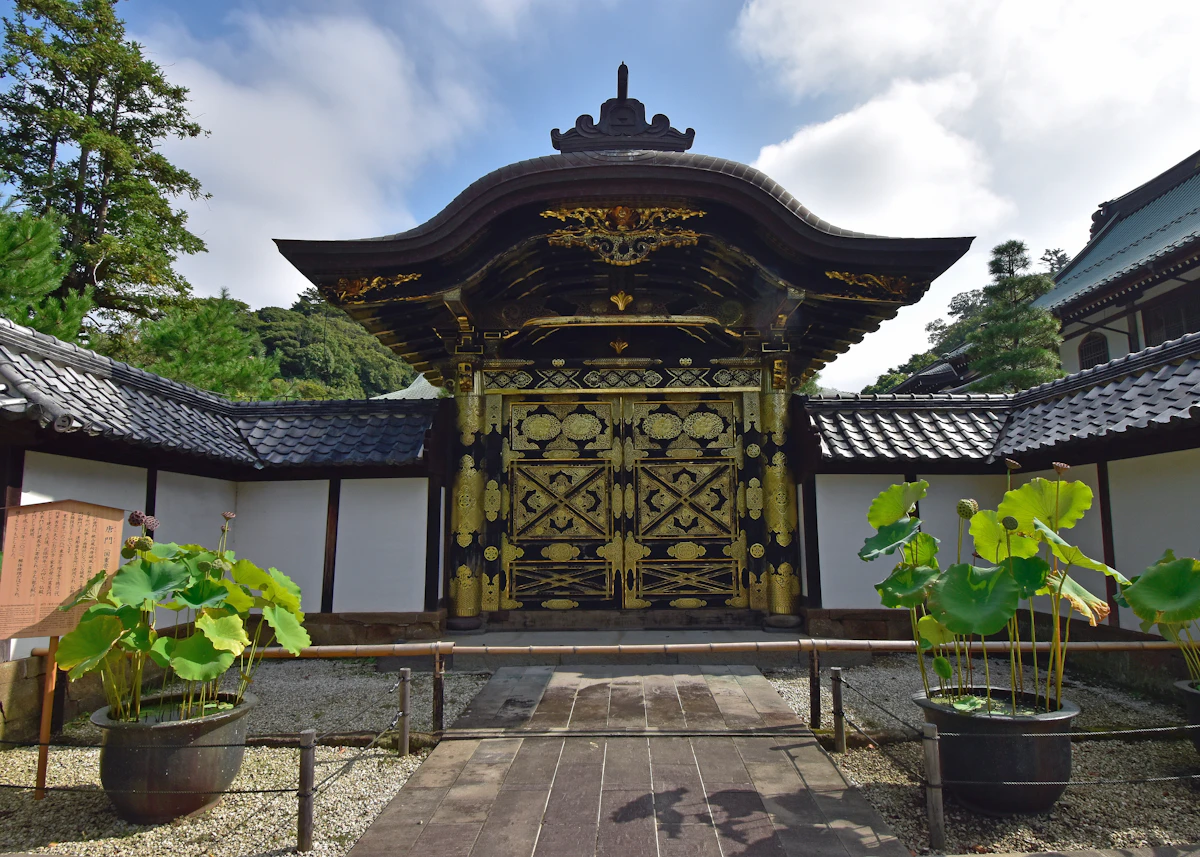
The Karamon gate at Kenchō-ji, the Zen monastery founded in Kamakura in 1253 by the regent Hōjō Tokiyori. Photo by Geoff Oliver on Unsplash.
In the late 13th century, Samurai Warriors began to practice Zen meditation. This intensive level of concentration and meditation aided in enhancing their martial arts skills and helped conquer the fear of death on the battlefield, Zen Buddhism was seen as a warrior’s religion. The patronage of the Samurai brought many perks to Zen Buddhism, that you can find within Zen temples in the Kamakura area, today.
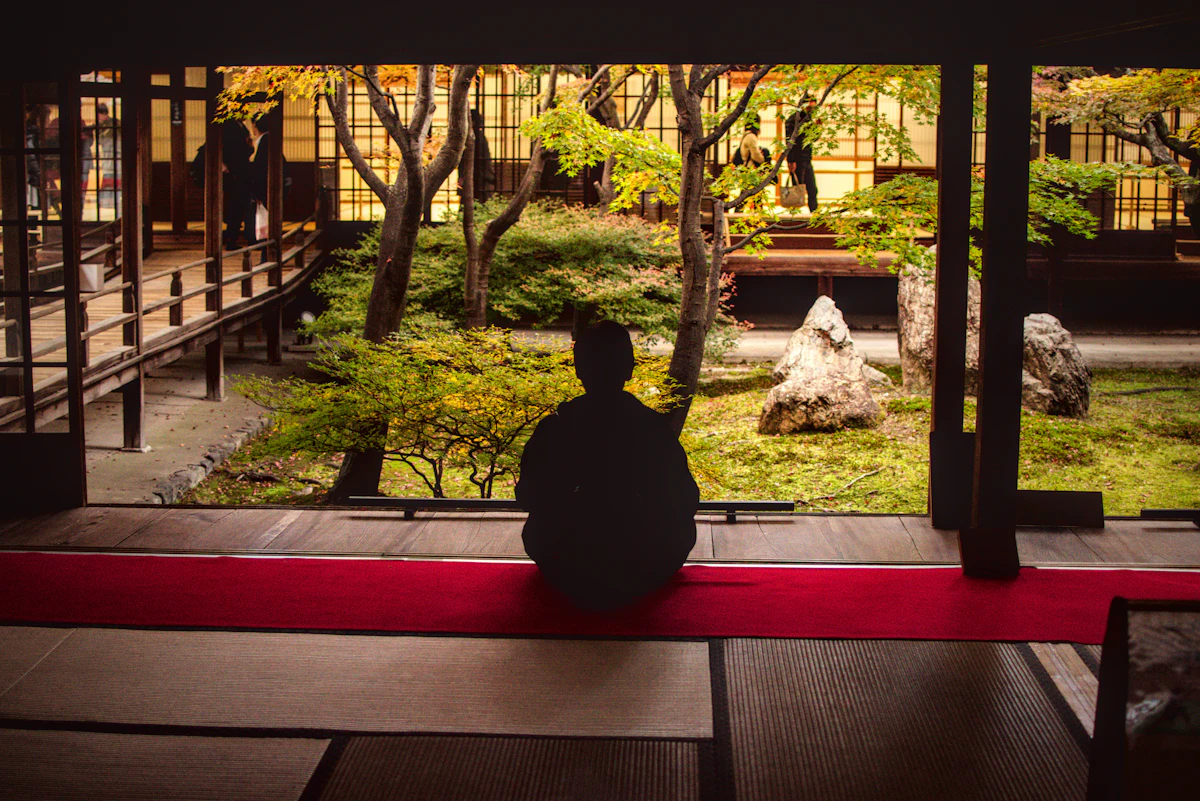
Zazen, or seated meditation, is the core practice of both the Rinzai and Sōtō schools of Zen. Photo by Stefano Bucciarelli on Unsplash.
Another significant event in the Kamakura period was the Mongolian Invasion. The word “Kamikaze” stemmed from the story of this battle. Kamikaze (Japanese: 神風) literally means “divine wind” and refers to the two typhoon storms that are said to have saved Japan from two Mongol fleets under Kublai Khan.
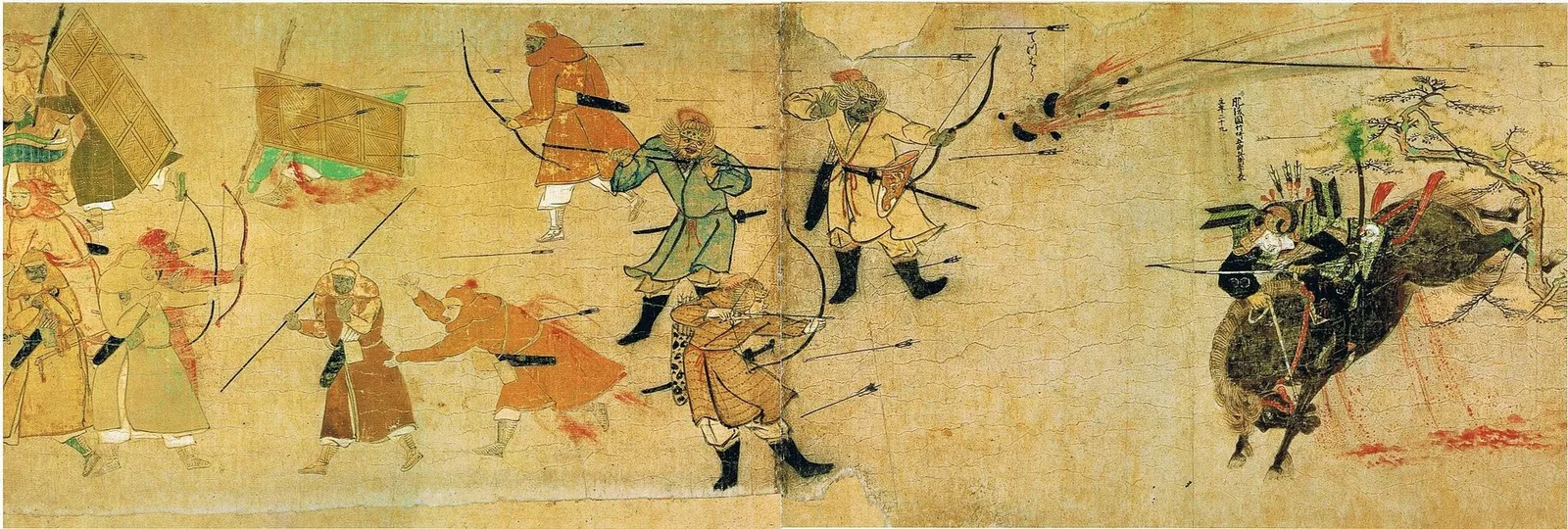
The samurai Takezaki Suenaga charges Mongol archers during the 1274 invasion as a bomb bursts overhead. Detail from the Mongol Invasion Scrolls (Mōko Shūrai Ekotoba), made for Suenaga around 1293. Museum of the Imperial Collections, Sannomaru Shōzōkan, Tokyo, public domain.
These fleets attacked Japan in 1274 and again in 1281. The name that was given to the storm, Kamikaze, was later used during World War II as nationalist propaganda for suicide attacks by Japanese pilots. The metaphor meant that the pilots were to be the “Divine Wind” that would again sweep the enemy from the seas. This use of Kamikaze has come to be the common meaning of the word in English.
The Mongol invasions came in the reign of Kublai Khan, who had demanded that Japan submit, and in the regency of Hojo Tokimune, who refused. Yuan records put the first fleet in 1274 at about 900 ships and some 30,000 men, and the second in 1281 at more than 4,000 ships and 140,000 men, though modern historians believe both figures are greatly exaggerated. In 1274 the invaders took the islands of Tsushima and Iki and landed at Hakata Bay in northern Kyushu, then withdrew after a single day’s fighting, and whether a storm played a part is still debated. The Kamakura shogunate then built a stone wall along Hakata Bay, which helped hold back the second landing, and in August 1281 a typhoon struck the fleet at anchor and destroyed much of it. That second storm is the kamikaze of legend.
The Legacy of the Kamakura Period
You can still see aspects of the Kamakura period, alive today, that influence and exist in modern Japan.
The Japanese Spirit & Mind
In this first Samurai rulers period, some unique cultures which affect Japan today were developed. For example, you can find that Japanese nationality stems from Samurai spirits which developed in this Kamakura time. Also, modern Buddhism which the Japanese nowadays have faith in was established in this period.
Many people in the world say that Japanese people are hard workers. The Japanese expression “Isshou-kenmei” emphasises the Japanese spirit of hard work. It literally translates to “to do something very hard”.
“Isshou-Kenmei(一生懸命 one-living-devote-life)” is commonly used in daily life. For example, when people join a new workplace, they might say “I will work Issho-kenmei! Nice to meet you.” Or when young athletes might say “I will play football Issho-kenmei ”
In fact, this word came from the Samurai spirit of the Kamakura period. It was originally Issho-Kenmei(一所懸命 one-place-devote-life). Samurai devoted their lives to protect the lands which were given to them by their Daimyo or Shogun, as a favour or inherited from their ancestors. The Samurai developed a culture of loyalty and honour that was often carried to extremes to return their lord’s favour.

A mounted samurai rides out alone against Mongol troops. A scene from the Mongol Invasion Scrolls (Mōko Shūrai Ekotoba), made for the samurai Takezaki Suenaga around 1293 to record his part in the fighting, public domain.
Landmarks of the Kamakura period
Tsurugaoka Hachimangu
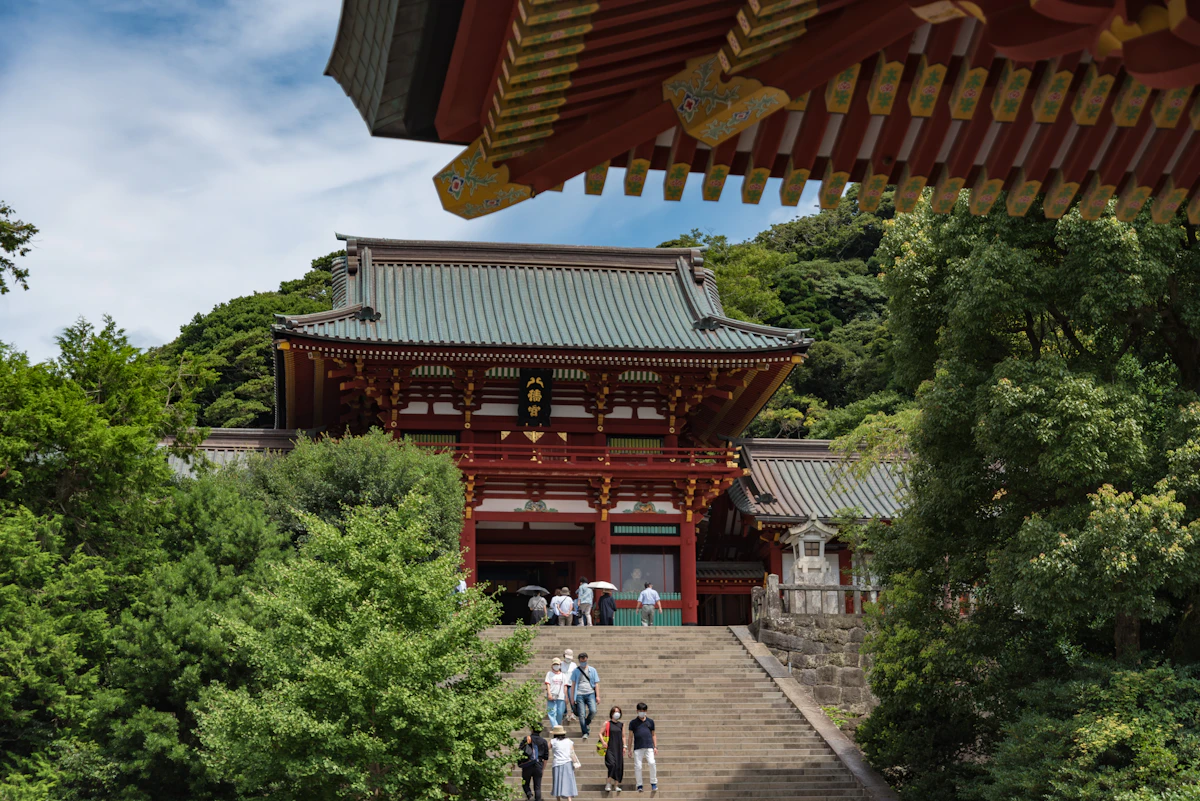
The main hall of Tsurugaoka Hachimangu, at the top of the stone staircase where Sanetomo was killed in 1219. Photo by Tsukada Kazuhiro on Unsplash.
Tsurugaoka Hachimangu was established by Minamoto Yoriyoshi (源 頼義, 988 to 1075) in 1063. He built a power base for the Minamoto warrior clan after the suppression of a rebellion started by rebels in North-Eastern Japan in 1051.
He returned to Kamakura and built a small shrine for the Hachiman kami (the Japanese word for Shinto deities) near the coast to give thanks for success in suppressing the rebellion. The Hachiman kami was regarded as the protector kami of the warrior class.
In 1180 Yoritomo moved the shrine inland to its present site, and it became the spiritual centre of his new capital. It was also the scene of the most famous murder of the Kamakura period. On a snowy night in February 1219 the third shogun, Minamoto no Sanetomo, was leaving the shrine after a ceremony marking his promotion at court when his nephew Kugyo killed him on or near the great stone staircase. Later tellings had Kugyo hiding behind the huge ginkgo tree beside the steps. The tree, thought to be around a thousand years old, blew down in 2010, and new growth has since sprouted from its roots.
Great Buddha of Kamakura

Photo Credit: Unsplash
The statue is commonly known as Kamakura Daibutsu (Great Buddha of Kamakura), a colossal copper image of Amida-butsu (Amitabha Buddha), is the principal image of Kotoku-in. The fact that it sits in the open air makes it unusual amongst large Buddha statues in Japan.
The Great Buddha is designated a National Treasure by the Japanese government, it is 11.3 metres tall and weighs around 121 tons. Though in size it falls short of the Great Buddha of Todai-ji Temple at Nara (an image of Rushana-butsu [Vairochana Buddha]), it has essentially retained its original form; and as such, it is an invaluable example of Japanese historical Buddhist art.
According to Kotoku-in, work on the statue began in 1252. It originally sat inside a great hall, which was damaged by typhoons in 1334 and 1369 and destroyed by a severe earthquake in 1498. The hall was never rebuilt, which is why the Great Buddha has sat in the open air for more than five centuries.
Hase-kannon Temple
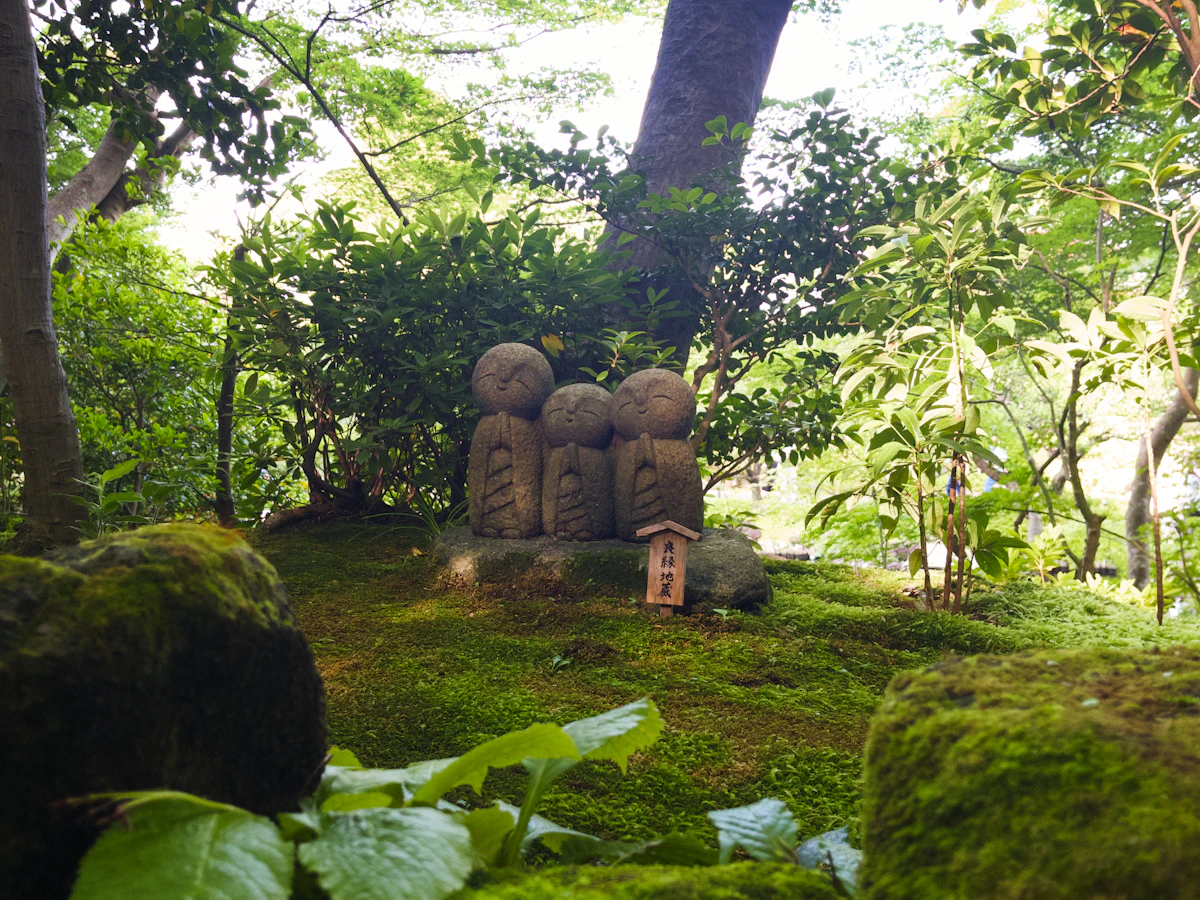
Stone Jizō statues in the garden at Hasedera. Photo by Alex Pagnotta on Unsplash.
Around 1300 years ago, two sculptors carved two Kannon statues out of a sacred tree. One of them was enshrined here at Hasedera in Kamakura. It is commonly called “Eleven-headed Kannon” since it has eleven heads on top of its own head. It measures 9.18 metres tall and this makes it one of the largest wooden Buddhist statues in Japan.
The temple dates the carving to 721, in Hatsuse in present-day Nara Prefecture. One statue was enshrined at Hase-dera in Nara and the other was thrown into the sea with a prayer that it would come ashore wherever it could save people. It washed up fifteen years later on the coast of present-day Kanagawa, and Hase-dera in Kamakura was founded in 736 to house it. Lafcadio Hearn, who visited in 1890, retells the legend in Glimpses of Unfamiliar Japan (1894), where the two carvers of the camphor tree turn out to be gods in disguise.
Hasedera temple resides on a mountain called “Kannon-zan”. The ground holds a large variety of flowers that bloom throughout the year welcoming visitors. Additionally, the scenic view from the observation platform on the upper ground is recognised as one of the most picturesque spots in Kamakura.
Hōkoku-ji Temple
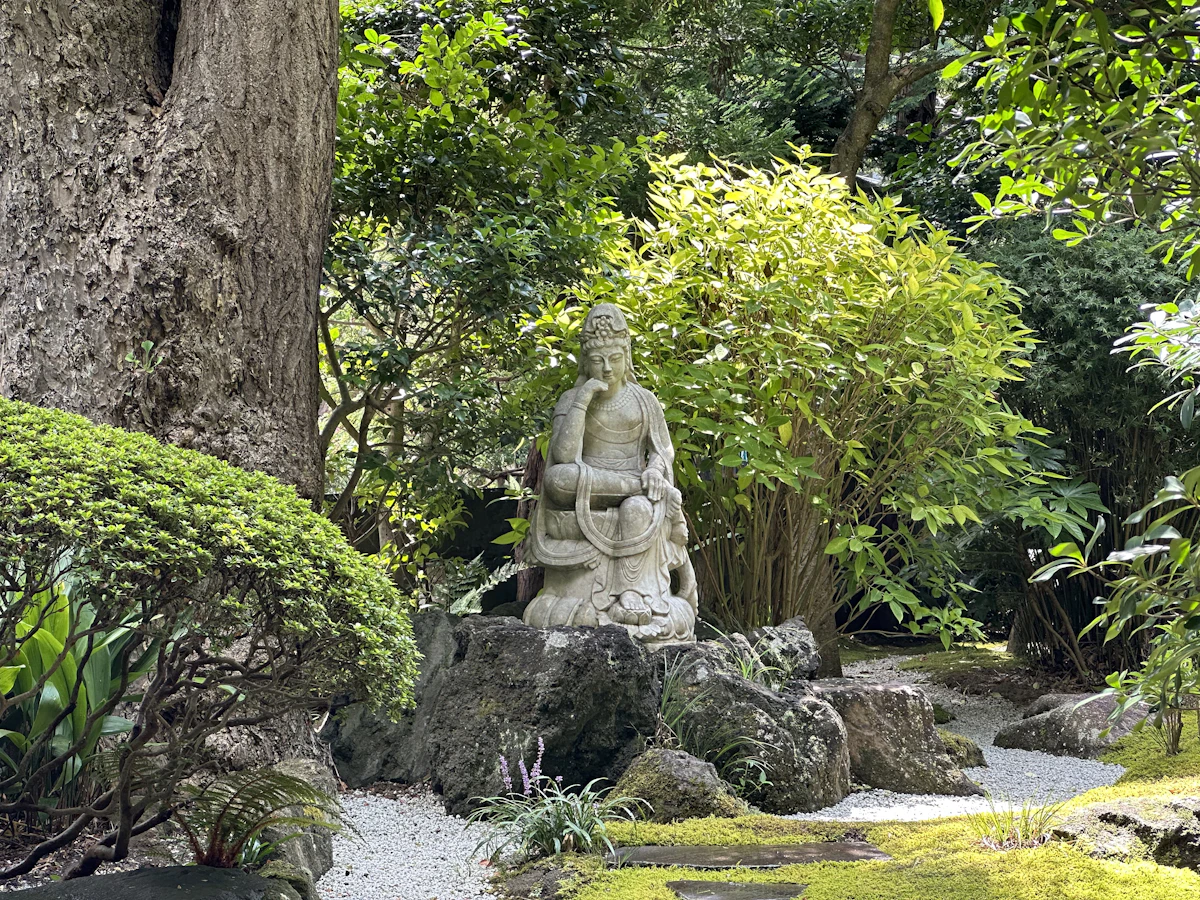
A stone statue in the garden at Hōkoku-ji. Photo by Sixing Huang on Unsplash.
Hōkoku-ji (報国寺) is an old temple in the Kenchō-ji school of the Rinzai sect of Zen Buddhism located in Kamakura, Japan. Famous for its bamboo garden, it is also known as “Bamboo Temple”.
Strictly, it arrived a year after the period ended: the temple says it was founded by the monk Tengan Ekō in 1334, the year after the shogunate fell, in memory of Ashikaga Ietoki. It belongs to the Kenchō-ji order, named after the Kamakura Zen monastery founded in 1253. The temple is open daily from 9am to 4pm, except 29 December to 3 January and in bad weather, and entry is 400 yen.
Tokozenji at Yokohama
Tokozenji is a small Zen temple situated in the Yokohama-Kamakura area. Tokozenji is one of the few temples in this area to offer a real Zen experience to international visitors.
Established around the year 1200, it is one of the oldest temples of the Rinzai school of Zen Buddhism in Japan. Zen Buddhism has been a cornerstone of life and culture in Japan for almost 800 years.
Enter into the passage of Zen mindfulness and discover a small journey to seek who you are and “what you are”.