Mainland Japan is surrounded by many other islands that make up the beautiful country. A 2023 recount by the Geospatial Information Authority of Japan put the total at 14,125! Yes, that’s a huge number of places to explore and a vast range of things to discover. Some weird, some wonderful; the islands make Japan feel like there’s a surprise around every corner. Top of the list to visit often is Naoshima, Japan’s Art Island.
Naoshima Island is famous all around the world for its modern art museums, architecture, and sculptures that make the beachy and rural destination, with breezy sea air, a special dream-like destination for those who love art.
Naoshima, Teshima and Inujima Art Island Guide
How the Fukutake Family and Tadao Ando Made Naoshima an Art Island
Naoshima’s art story began with a meeting in 1985 between Tetsuhiko Fukutake, founding president of Fukutake Publishing (the company now called Benesse), and Chikatsugu Miyake, then mayor of Naoshima. Fukutake wanted a place in the Seto Inland Sea where young people from around the world could meet, and Miyake wanted a cultural and educational area on the island. Tetsuhiko died in 1986, and his son, the billionaire businessman Soichiro Fukutake, carried the plan forward, starting with the Naoshima International Camp in 1989.
Going against the formula that big cities equal an economic boost, he came up with the idea of turning three islands that had suffered from the effects of industrialisation, Naoshima, Teshima and Inujima, into places known for contemporary art.
The billionaire certainly had the means to make his vision bigger than life and something truly unique. He managed to get the architect Tadao Ando, AKA “the king of concrete”, to design the Benesse House Museum, which opened in 1992 as a museum and hotel in one, and so the art island started to form.

Bruce Nauman, 100 Live and Die (1984), Benesse House Museum, Naoshima. Image Credit: Flickr / Garrett Ziegler / CC BY-NC-ND 2.0


Chichu, Benesse House, Kusama’s Pumpkins and the Teshima Art Museum
There’s so much to see on Naoshima! The Art House Project in the Honmura district turned empty residential houses into art spaces. Since the first house, Kadoya, opened in 1998, artists have taken empty homes scattered about the residential area and turned the spaces themselves into works of art, weaving in history and memories of the period when the buildings were lived in and used. There are seven art houses today, and one multi-site ticket covers five of them.
The Chichu Art Museum, which Tadao Ando built mostly underground in 2004, holds five of Claude Monet’s Water Lilies paintings, three works by James Turrell including the sky room Open Sky, and a Walter De Maria installation. Entry is by a timed ticket booked online in advance, from ¥2,500 on weekdays and ¥2,700 at weekends, and when online tickets sell out there are no sales at the door. Benesse House Museum is based on the concept of “coexistence of nature, art, and architecture”. It has an incredible collection of modern art inside, and its spot overlooking the sea makes it a calm place to pause after wandering and discovering all the galleries have to offer.
Two more Ando buildings are worth the walk: the Lee Ufan Museum, devoted to the Korean-born artist Lee Ufan, and the Naoshima New Museum of Art, which opened in spring 2025 on a hilltop near Honmura as Ando’s tenth building for Benesse Art Site Naoshima.
Naoshima is also home to the funkiest bathhouse ever. Naoshima Bath I♥︎湯, created by the artist Shinro Ohtake and opened in 2009, is a mish-mash of colour and groovy pattern on the outside. Inside, an elephant sculpture named Sadako stands on top of the wall between the men’s and women’s baths, because who doesn’t want to bathe with an elephant towering over you? It opens from 1pm to 9pm and entry is ¥660.
Alongside many of the internationally famous artists whose work is part of this special place, the Japanese artist Yayoi Kusama has also left her print on the island. Her Red Pumpkin (2006) sits by Miyanoura Port, where the ferries dock, and her yellow Pumpkin sits on an old pier jutting into the sea near Benesse House Museum. Typhoon Lupit damaged the yellow Pumpkin in August 2021, and a remade version went back on the same pier on 4 October 2022.
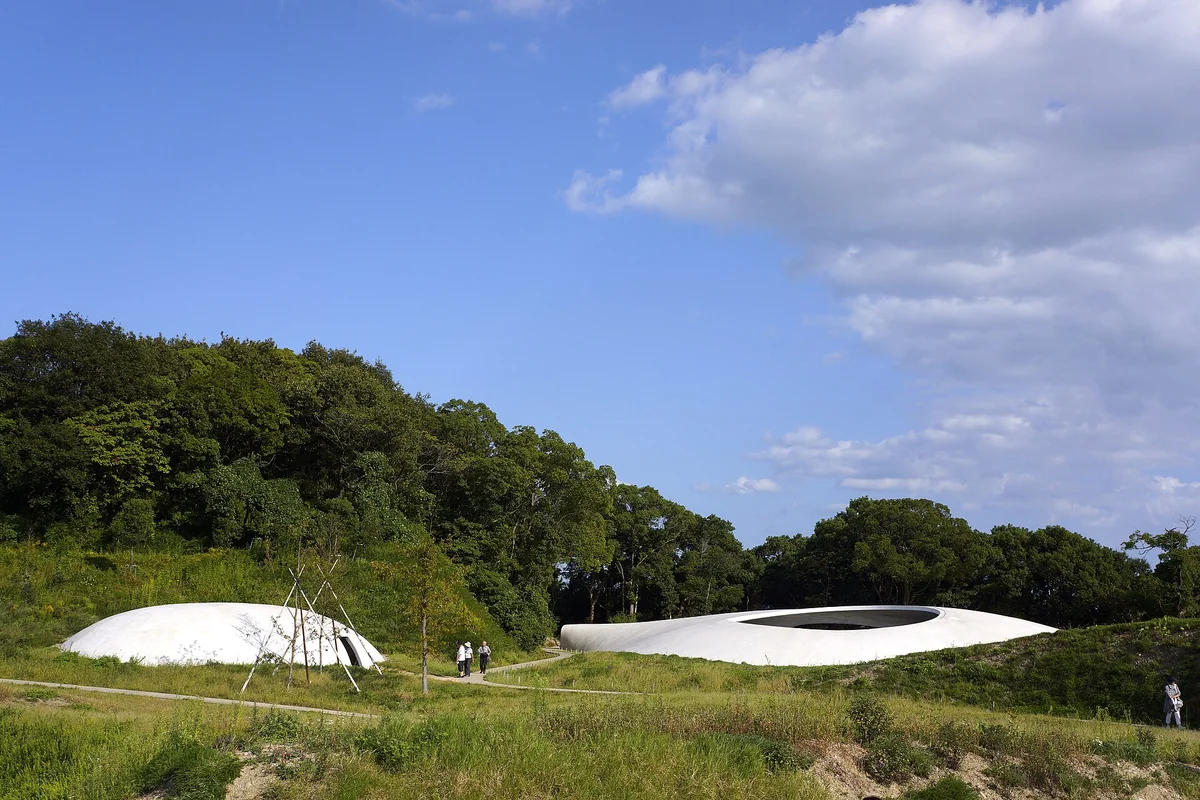
Another architectural gem, on Teshima island (a short ferry ride away from Naoshima), is the Teshima Art Museum, which opened in 2010 and is the work of artist Rei Naito and architect Ryue Nishizawa. The museum was designed to look like a water droplet at the moment of landing. Two oval openings in the circular shell-shaped building’s ceiling open up to the wind, sound, and light from nature. It looks like a serene spaceship sat on top of a hill and is another example of how art, architecture, and nature combine to make something beautiful. Tickets are timed and booked online, and the museum closes on Tuesdays (Tuesday to Thursday from December to February).
Other sites on Teshima include Christian Boltanski’s Les Archives du Cœur and Teshima Yokoo House. In many of the galleries and museums, including Chichu and the Teshima Art Museum, photography is prohibited, making it truly an in-the-moment experience. Each location offers something unusual to look at and another idea to explore. Outside of the museum walls, there are random outdoor artworks to stumble upon as well.
Teshima and Inujima, the Art Islands Beyond Naoshima
Teshima is the island to add when one day on Naoshima is not enough. Ferries run from Naoshima’s Miyanoura and Honmura ports, from Takamatsu and from Uno to Ieura port, and the Teshima Art Museum sits on a hillside in the corner of a rice terrace that the islanders restored with the museum. Inside the concrete shell, about 40 by 60 metres with no pillars, Rei Naito’s work Matrix has water springing from the floor all day. Book a timed slot online: entry costs ¥1,800 online or ¥2,000 on the day, and children 15 and under go free. Teshima Yokoo House, a village house remade by Tadanori Yokoo with Yuko Nagayama, costs ¥600 online or ¥700 on the day.
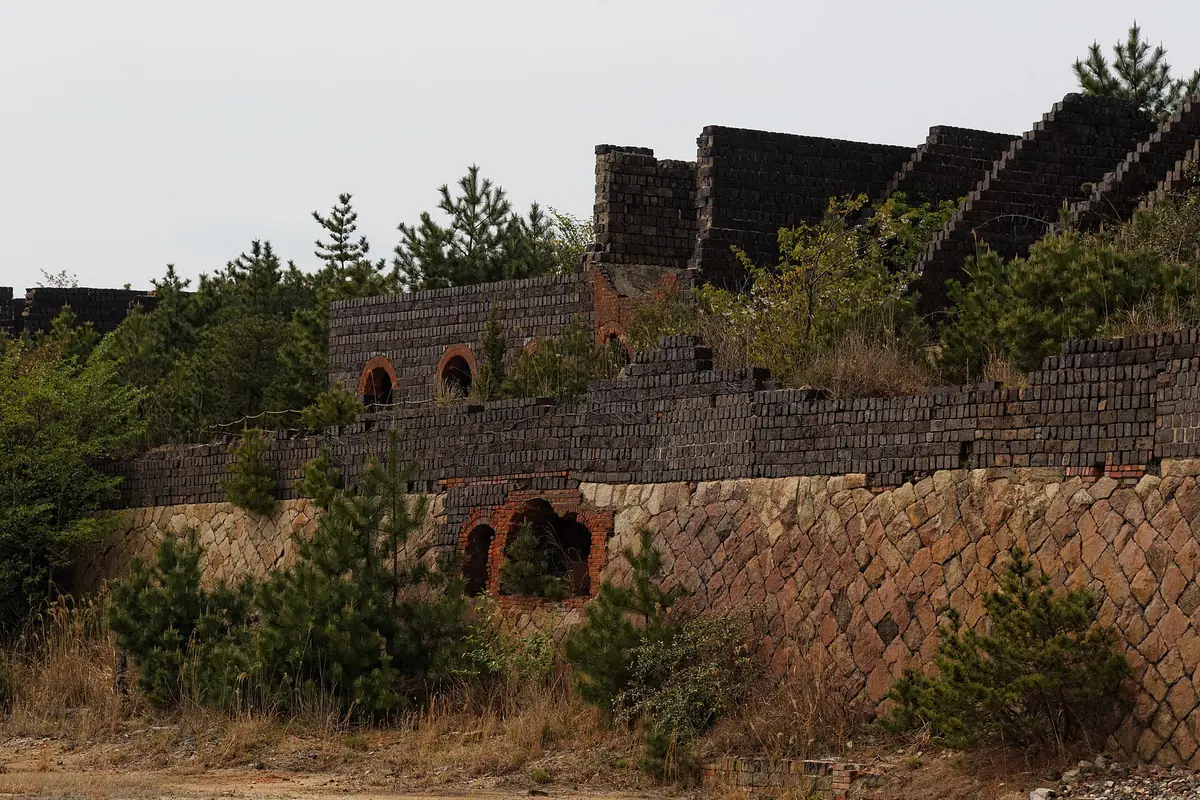
Inujima is smaller, quieter and further out. A copper refinery opened here in 1909 and shut about ten years later when copper prices collapsed, leaving brick chimneys and walls made from karami, the black slag of the smelting process. In 2008 the artist Yukinori Yanagi and architect Hiroshi Sambuichi turned the ruins into the Inujima Seirensho Art Museum, cooled and heated by the old chimney, the sun and the earth, with Yanagi’s installations built around the novelist Yukio Mishima. The Inujima “Art House Project” scatters small galleries through the village, first opened in 2010. One ticket covers both: ¥2,100 online or ¥2,300 on the day.
Check the opening calendar before you sail. Inujima’s art sites close from Tuesday to Thursday between March and November and for the whole of December to February, and the Miyanoura to Teshima to Inujima boat is suspended on days when both the Teshima Art Museum and the Inujima museum are shut. From Okayama, the quickest way to Inujima is a bus to Hoden and a 10 minute boat, ¥400 each way.

Benesse House Park, part of Benesse Art Site Naoshima, Kagawa Prefecture. Image Credit: 663highland / Wikimedia Commons (CC BY 2.5)
Ferries from Uno and Takamatsu, Town Buses and Bikes on Naoshima
Naoshima sits in the Seto Inland Sea between Okayama on Honshu and Takamatsu on Shikoku, roughly halfway between Osaka and Hiroshima. Ferries run from Uno Port in Okayama Prefecture to Miyanoura Port and to Honmura (about 20 minutes, ¥370), and from Takamatsu Port to Miyanoura (about 50 minutes by car ferry, ¥680). Most people explore the island and its sights in a day or two, and there are a few small places to stay there, including yurts and fancy museum hotels, if you should want to take your time to take in the art. A town bus (¥100 a ride, coins only) links Miyanoura Port, Honmura and Tsutsujiso, and a free shuttle carries visitors on from Tsutsujiso to the museums, but both fill up at busy times, so a lot of tourists rent bicycles near Miyanoura Port or in Honmura instead.
Plan your art day around Mondays. Chichu, the Lee Ufan Museum, the Art House Project, the Naoshima New Museum of Art and the bathhouse all close on Mondays (when a Monday is a national holiday they open and close the next day instead), and the museum shuttle does not run either. Benesse House Museum opens every day.
Naoshima and the Teshima art islands have such an incredible collection of world-class modern, majestic and magical art. It certainly makes for an impressive perspective of how to transform lands into engaging creative spaces. These islands offer the perfect contrast to the hectic, busy city, with a simpler, slower way of life, perfect for providing a moment of zen.
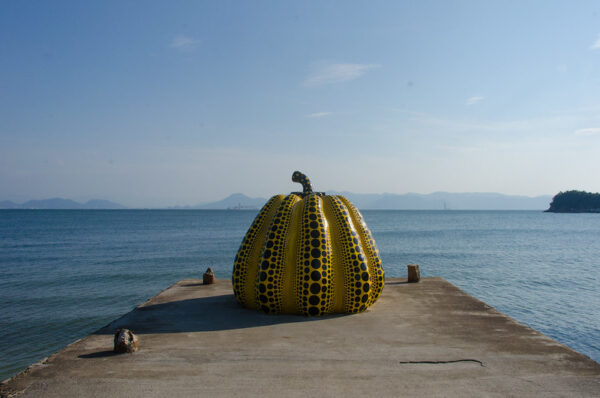
Yayoi Kusama’s yellow Pumpkin on Naoshima, photographed before the 2021 typhoon. Image Credit: Flickr / cotaro70s / CC BY-ND 2.0








Setouchi Triennale, Next Held in 2028
Every three years since 2010, the Setouchi Triennale spreads contemporary art across the islands and ports of the Seto Inland Sea for 100 days, split into spring, summer and autumn sessions. Naoshima, Teshima, Megijima, Ogijima, Shodoshima, Oshima and Inujima take part in every session, with other islands and coastal towns joining for one season each, 17 venues in all. The 2025 edition drew about 1.08 million visitors, and it brought long queues for ferries and hot summer days.
The next edition is the Setouchi Triennale 2028. The organisers are selecting new works through an open call that closes on 2 November 2026, and they are looking at online booking for ferries and high speed boats to cut the queues, with trials running in autumn 2026. Dates for 2028 had not been announced by the end of October 2026; they will appear on the official Setouchi Triennale website. Between festivals, many of the festival’s indoor works open to the public on the second Saturday and Sunday of each month.
Naoshima Ferries, Tickets and Closing Days at a Glance
| Route or venue | Time | Adult price | Notes |
|---|---|---|---|
| Uno to Miyanoura or Honmura (Naoshima) | About 20 minutes | ¥370 | Shikoku Kisen ferry or high speed boat; Uno is about 50 minutes from Okayama on the JR Uno Line |
| Takamatsu to Miyanoura (Naoshima) | About 50 to 60 minutes | ¥680 ferry, ¥1,590 high speed boat | Ferries and fast boats use different piers |
| Miyanoura to Ieura (Teshima) to Inujima | 30 minutes, then 25 minutes | ¥820 to Teshima, ¥2,450 to Inujima | Three sailings a day; suspended when both the Teshima and Inujima museums are closed |
| Takamatsu to Honmura to Ieura (Teshima) | About 35 minutes direct | ¥1,450 | Teshima Ferry high speed boat |
| Hoden (Okayama) to Inujima | About 10 minutes | ¥400 | Does not run when Inujima’s art sites are closed |
| Chichu Art Museum | 10am to 5pm, last entry 4pm | ¥2,500 weekdays, ¥2,700 weekends online | Timed ticket; ¥2,800 and ¥3,000 on the day if any remain; closed Mondays |
| Teshima Art Museum | 10am to 5pm March to September, 10am to 4pm October to February | ¥1,800 online | Closed Tuesdays, and Tuesday to Thursday from December to February |
| Inujima Seirensho Art Museum and Art House Project | 9am to 4:30pm | ¥2,100 online | Closed Tuesday to Thursday from March to November, and all of December to February |
| Naoshima town bus | Miyanoura, Honmura, Tsutsujiso | ¥100 | Coins only; free museum shuttle on from Tsutsujiso, not on Mondays |
Children 15 and under go free at Chichu, the Teshima Art Museum and Teshima Yokoo House. All three Benesse Art Site islands sell tickets online through the Benesse Art Site Naoshima website, and timed museums do not sell at the door when online tickets have sold out.
Naoshima Questions and Answers
How do you get to Naoshima?
From Okayama, take the JR Uno Line to Uno, about 50 minutes, then a 20 minute ferry to Miyanoura or Honmura for ¥370. From Shikoku, ferries leave Takamatsu for Miyanoura in about 50 to 60 minutes for ¥680, or a high speed boat for ¥1,590. Okayama is on the Shinkansen from Osaka and Hiroshima.
Can you visit Naoshima as a day trip?
Yes, from Okayama or Takamatsu, but choose a Tuesday to Sunday, since most museums close on Mondays. Book a timed Chichu ticket first and build the day around it. A day covers Chichu, the Lee Ufan Museum, Benesse House Museum and both Kusama pumpkins; the Art House Project in Honmura needs another half day.
Do you need to book the Chichu Art Museum in advance?
Yes. Entry is by timed ticket booked online, ¥2,500 on weekdays and ¥2,700 at weekends and holidays, free for children 15 and under. Any tickets left on the day cost ¥2,800 and ¥3,000, but when online tickets sell out there are no sales at the door. The museum opens 10am to 5pm and closes on Mondays.
When is the next Setouchi Triennale?
In 2028. The festival is held every three years and the 2025 edition has finished. Organisers are choosing works for the Setouchi Triennale 2028 through an open call in autumn 2026, and the session dates will be published on the official website. Past editions ran for 100 days across spring, summer and autumn.
Can you see Naoshima, Teshima and Inujima in one trip?
Yes, over two or three days. A Shikoku Kisen boat links Miyanoura on Naoshima with Ieura on Teshima and on to Inujima three times a day, about 55 minutes in all, but it only sails when the Teshima or Inujima museums are open. Inujima’s art sites close for the whole of December to February, so plan Inujima between March and November.
Is Naoshima open on Mondays?
The island is, but most of its art is not. Chichu, the Lee Ufan Museum, the Art House Project, the Naoshima New Museum of Art and the I♥︎湯 bathhouse close on Mondays, as does the museum shuttle. Benesse House Museum and the outdoor works, including both pumpkins, can be seen every day. When Monday is a holiday, closures move to Tuesday.