Chiten Theatre brings another classic to life. With the company’s penchant for deconstruction and fragmented presentations, The Gambler’s themes of conflict and chance are reimagined. But how does the idea of risk become more visceral? Through sound, of course.
Enter Kukangendai.
A Deep-dive into Kukangendai
Who Are Kukangendai?

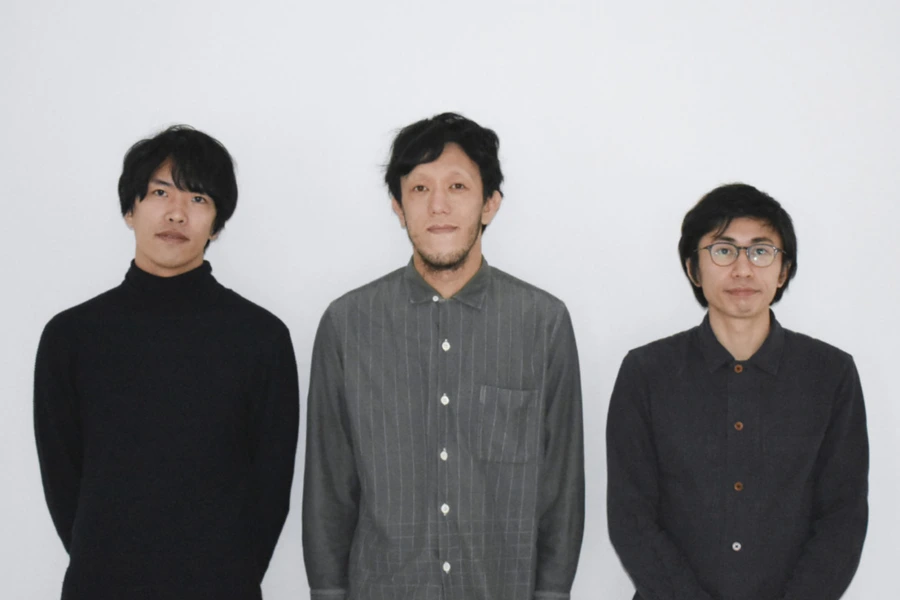
Kukangendai is an experimental rock trio from Japan signed with HEADZ. The three-piece is composed of Junya Noguchi on guitar and vocals, Keisuke Koyano on the bass, and Hideaki Yamada on the drums.
As of the time of writing, they have released a total of seven albums since their inception. In addition, while they are mostly indie, they have collaborated with big personalities such as late musician Ryuichi Sakamoto and poet Gozo Yoshimasu.
In their 2018 album, Zureru, they incorporated Sakamoto’s piano recordings into their already-unique and multi-layered musical style. In hindsight, Kukangendai and Sakamoto have very distinct styles from each other. This collaboration challenged conventional listening by demonstrating how different styles that seemingly don’t fit can create a memorable listening experience.
In 2019, they collaborated on a performance with yet another experimental artist, albeit in poetry, Gozo Yoshimasu. Entitled Se (背), the performance was an experiment in re-creating Gozo’s window poetry in a live music venue.
These notable collaborations are a preview of Kukangendai’s distinct approach to their music and the lengths they are willing to go to explore its full extent.


The Band’s Inception

Kukangendai was formed in 2006 while the members were still in university. Despite not having any musical knowledge, Noguchi had the idea to form a band and recruited both Koyano and Yamada. It was “youthful impulse,” as he describes it. However, this same impulse eventually proved to be the best choice he could ever make.
They were initially influenced by Japanese bands at the time before coming into contact with different musical styles such as electronic music, experimental music, and hip-hop, among many others. These genres eventually served as a foundation for how they treat their music.
The head of HEADZ, Atsushi Sasaki, was actually Noguchi’s lecturer. From him, Noguchi learned of concepts like ex-music and post-silence, with the latter becoming an integral part of the band’s technique. This is where their conceptual approach to music began.
Kukangendai’s Sound: Structured Deconstruction
Kukangendai’s sound could only be described as a systematic distortion, resulting in a sense of unease. To achieve this, their band is known for using editing, replication, and deliberate error in their technique. Tentei (2021) features these techniques heavily. To illustrate, here’s one track from the album:
Before their technique solidified into what it is now, the band was built on the belief that musical instruments are systems of their own. The instrument one plays determines the framework of music they can make. Meaning, each instrument comes with its own set of rules: how you play it, what kind of music you make with it, and the kind of emotion it evokes.
The fact that they are a three-piece band in itself is loyal to this idea. Three instruments – in this case, three different systems with their own sets of rules – suffice in creating the sound they envision.
Noguchi was insistent that three is enough. The band would rather bend the rules of these existing instruments than add more to the roster. Simply put, they treat their instrumentation as a formula, which they try to bend into different iterations.
Key Elements to Their Technique

Curious as to what makes up the group’s technique? This list breaks it down.
- Repetition as collage: Sound jumps in their music showed that sudden, collage-like change could happen within repeated phrases, not by abandoning repetition but by reworking it.
- Breaking conventions without new gear: This performance approach suggested a way to step outside musical conventions without changing instruments, or precisely by not changing them.
- Rule-based experiments: The band began creating compositional rules, such as:
- “Distribution” – dividing a single phrase’s sounds evenly across guitar, bass, and drums.
- “Opening holes” – randomly removing notes from each player’s assigned sounds.
- Non-repetition through subtraction: Although phrases technically repeat, removing sounds creates new intervals and textures, making repetition feel constantly new.
- Productive instability: Imperfect transitions twist rhythms, and this instability became a source of surprise and interest for both them as performers and their listeners.
Hear how these manifest by listening to another one of their most recent songs:
The Sound of Risk in the Gambler
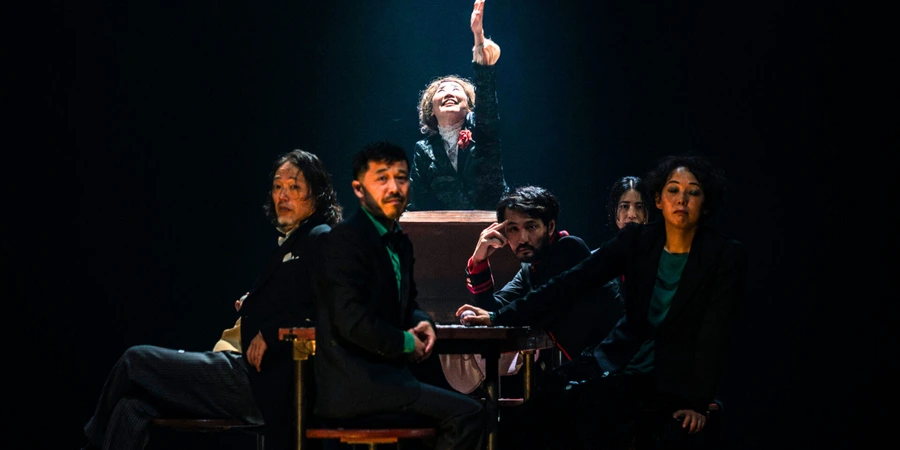
Kukangendai’s music will accompany Moto Miura’s interpretation of Dostoevsky’s The Gambler. A deep-dive into the band’s history, influence, and techniques is significant in setting expectations for the show.
To provide a summary, The Gambler is about a man who grapples with his self-destructive addiction to gambling and uncontrollable love for his employer’s daughter. He is stuck in a vicious cycle he always sworn to stop. This turmoil that the character goes through is central to the narrative and must be highlighted in production. Most importantly, it puts the theme of risk center-stage.
The risk faced by the character in The Gambler is to be audible. This is where Kukangendai enters. The band’s technique of repetition and withholding sound can be a tool to make the audience feel the tension in the story exactly for what it is.
Kukangendai’s style lends so much to The Gambler. The kind of music they make is tense and unstable, which fits into the inner workings of the main character’s mind. While this is so, this instability is also intentional.
For instance, the band uses polyrhythms, a method where two or more different beat patterns are played at the same time. This technique can be used to evoke feelings of disorientation, which could help translate the concept of risk as a sound.
Staying true to gambling as a theme, imagine a roulette wheel. How would you describe it in music form? To Kukangendai, it might be as easy as using strategic silence to represent the pause before the ball falls on the wheel, repetition for the wheel’s circling, and eventual rupture for when the results show.








Conclusion
Now knowing about the depth of Kukangendai’s music, their involvement in the production of The Gambler is one to look forward to. Expect to watch, feel, and hear the tension of risk.
The show runs at The Coronet Theater from February 5 to 15. Make sure to book your tickets via The Coronet Theater’s official website.