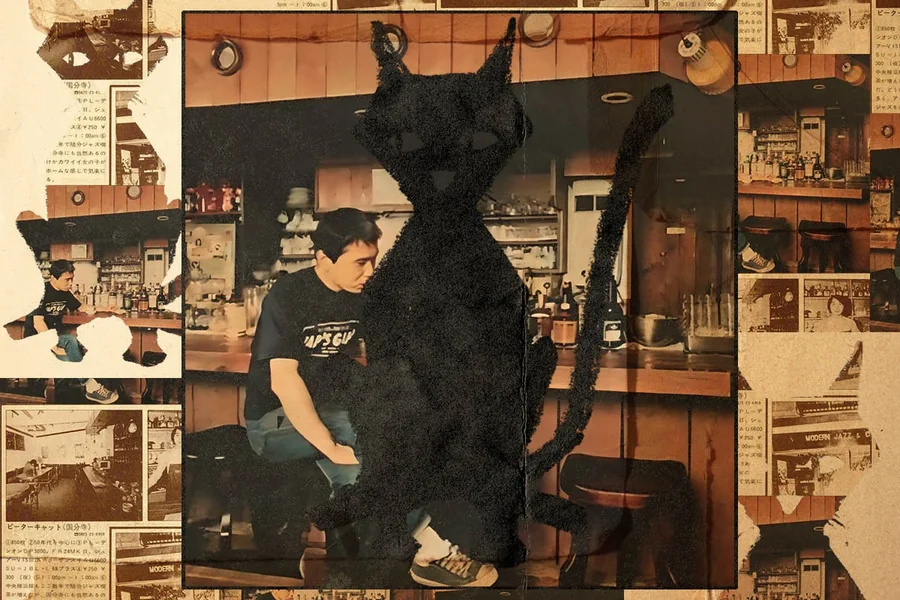
What do we gain when behaviour becomes habit—and what do we lose when habit starts to decide our lives?
Japan’s social fabric can feel almost miraculous: crowded cities that move smoothly, service with little friction, and public spaces that stay calm even at peak times. To visitors, this efficiency can seem paradoxical—traditional and modern at once, attentive yet restrained.
That tension eases once you see the design beneath it. Public life in Japan is built to avoid collisions, social and physical. Systems reduce friction, conserve attention, and keep shared spaces working at scale. Individuality doesn’t disappear; it shifts into private settings and close-knit circles where it won’t disrupt the flow.
This is social architecture: an invisible framework of cues and habits that guides behaviour without needing to be spelt out. Like any structure, it brings trade-offs—order and predictability in exchange for spontaneity and blunt expression.
That’s why a Japanese staging of The Gambler can feel unusually precise. Dostoevsky’s story is about loops that begin as comfort and harden into fate. In a culture fluent in unspoken systems, repetition doesn’t need explanation—it can be shown. Chiten Theatre’s adaptation of The Gambler at The Coronet Theatre puts those loops on stage, revealing how rules shape bodies, habits, and desire in real time.
If you’re headed to the show, think of this as a primer for what the play’s atmosphere can amplify: the rhythm of repetition, the seduction of systems, the cost of “just one more turn.”
The Gambler, at a glance

The Card Players (1893) by French Post-Impressionist artist Paul Cézanne, featured as the cover art for the Penguin Classics edition of “The Gambler and Other Stories” by Fyodor Dostoevsky.
The Gambler is set in a European spa town built around a casino. The story follows Alexei Ivanovich, a young tutor who drifts into gambling while entangled in debts, power games, and emotional dependence on those around him.
On the surface, the plot is simple: Alexei bets, wins, loses, promises to stop, then returns to the table. But the real story is not about luck or money. It’s about how a system takes hold. The casino runs on fixed rules and repeated cycles—place a bet, watch the wheel, feel the rush, repeat—and Alexei’s life slowly reshapes itself around that rhythm.
What makes The Gambler enduring is how clearly Dostoevsky shows the loop forming. Gambling offers structure, certainty, and short bursts of hope in an otherwise unstable life. Over time, that structure stops feeling optional. The routine becomes familiar, then necessary, then inescapable. Choice gives way to habit.
That focus on repetition—how environments train behaviour, how systems promise control while quietly taking it away—is what makes The Gambler such a useful lens for thinking about social order, not just personal vice.
From a European casino to a Japanese adapted stage
The Gambler was originally set in nineteenth-century Europe, in a spa town built around a casino. Its world is one of inherited wealth, fragile social rank, and financial desperation played out in drawing rooms and at the roulette table. The setting matters because it is unstable. Status can rise or fall in a single evening, and money becomes the fastest route back into favour.

A dramatic production still from Chinten, a theatrical adaptation of Fyodor Dostoevsky’s The Gambler, featuring an ensemble cast and atmospheric live music. Photography by Shotaro Ichihashi.
Chiten’s adaptation does not relocate the story to Japan in a literal sense. Instead, it reframes the novel through a Japanese sensitivity to systems, repetition, and unspoken rules. The focus shifts away from spectacle and excess, and toward structure. What comes forward is not just the drama of gambling, but the quiet mechanics that keep the gambler returning.
Audiences can expect a production that pays close attention to rhythm, restraint, and pattern. Actions repeat. Movements feel measured. Silences carry weight. Rather than explaining motivation, the staging allows behaviour to speak for itself. The effect mirrors everyday Japanese systems where rules are rarely stated outright, yet deeply felt.
This is why the adaptation feels precise rather than ornamental. Dostoevsky’s novel is already about environments that train people how to behave. Chiten’s approach makes that training visible. The casino becomes less a place of chaos and more a machine, one that rewards, punishes, and conditions through repetition.
The Quiet Power of Repetition

A still from the 1992 film Tokyo Decadence, directed by Ryū Murakami, capturing a moment of focus within a vibrant Japanese arcade.
For viewers, this means watching The Gambler less as a story of bad choices and more as a study of how systems shape bodies, habits, and time. The question shifts from why the gambler cannot stop to how the world around him makes stopping so difficult.

A high-contrast silhouette frame from the music video for “Modern Times” by Mika, directed by Mika and W.I.Z.
That lens prepares the ground for what follows. When we look at how crowds move through Japanese cities, how service interactions are designed, and how belonging is quietly regulated, the connection to Dostoevsky becomes clearer. Different cultures, different contexts, but the same underlying tension between order and freedom.


The orchestrated city: public movement as social expression

Baraka (1992), directed and photographed by Ron Fricke, captured in 70mm to show the grand scale of a Japanese pedestrian crossing.
Stand in a big station at rush hour—Shinjuku in Tokyo or Umeda in Osaka—and you’ll see how Japan keeps crowds moving. Lines form quickly, platform markings are followed, and escalators become quiet lanes. It looks effortless, but it’s design: arrows on the floor, painted queue lines, tactile paving, and signs placed exactly where decisions happen. The rule is simple: move with the system.
What surprises visitors is how little gets said out loud. Nobody needs to lecture you. The space guides you, and the group reinforces it. After a while, the behaviour becomes automatic.
That’s the bridge to The Gambler—not because stations are casinos, but because both show how environments train behaviour through repetition. In Dostoevsky’s story, roulette runs on fixed cycles: bet, spin, win/lose, repeat. Psychiatrist Sanju George reads the novel as a portrait of a loop where reward, debt, and relapse build momentum over time (From the gambler within: Dostoyevsky’s The Gambler).
Modern research describes explainable mechanics behind that feeling of “tomorrow I’ll stop.” Japanese studies on ashita (“tomorrow”) frame procrastination as a habit under reward pressure (University of Tokyo press release; Scientific Reports study).
In short: Japan’s stations show the bright side of social systems—habits that reduce friction and keep life workable. The Gambler shows the dark side—habits that tighten into a trap.
Service culture as attention management (not performative sweetness)

An illustration by E.D. Gibson depicting Omotenashi, the refined Japanese art of selfless hospitality. Source: Medium
Japanese service can feel warm and exact at the same time: a bow, set phrases, money placed on a tray, very little small talk. To some visitors, that reads as “robotic.” A better way to see it is attention-saving. The goal is to make everyday interactions smooth, predictable, and low-stress.
That’s why so much is standardised. Ticket machines, tablets, clear procedures, and familiar greetings don’t just speed things up—they remove uncertainty. Less guessing means fewer awkward moments, fewer misunderstandings, and less emotional effort for everyone involved. In that sense, omotenashi is less “charm” and more “don’t make the other person work.”
This is also where The Gambler fits—again, not because service is sinister, but because both show how scripts shape behaviour. In Dostoevsky’s story, roulette runs on a strict routine: place the bet, watch the spin, feel the jolt, repeat. Psychiatrist Sanju George describes it as a loop where repetition, reward, debt, and relapse train the gambler over time.
Scripts can protect people (by reducing friction in public life), and scripts can trap people (when the routine is built to keep you coming back).
Uchi and soto: the boundaries of belonging

The Japanese cultural concept of Uchi-Soto, which defines social circles and relationships based on in-groups and out-groups. Source: Tofugu
A key idea in Japanese social life is uchi / soto—“inside” and “outside.” People move through several “inside” groups (family, workplace, school friends, clubs), and each group comes with its own expectations. When you cross the boundary, your tone, language, and behaviour often shift too.
This is why Japan can feel welcoming but still hard to fully enter. People may be kind right away, but real belonging usually takes time. Think of uchi/soto less like a wall and more like a filter: trust, shared context, and introductions matter.
That group structure can be supportive. But it can also feel heavy, especially for people who struggle to meet the expected role. At the far end of that pressure is hikikomori, a term used in clinical discussions about prolonged social withdrawal (see Teo & Gaw’s overview).
The link to The Gambler is emotional, not literal. Dostoevsky’s narrator often sits on the outside—socially unstable, financially desperate—chasing a win that promises a way “back in.” The roulette room becomes a fake version of belonging: clear rules, familiar rituals, and the constant promise that the next spin will change his status. That’s exactly the kind of social pressure a stage production can make visible. If you’re seeing Chiten Theatre: The Gambler at The Coronet, watch who gets included, who gets used, and who gets pushed to the edge.
Time as discipline: punctuality as shared responsibility
In Japan, punctuality often carries moral weight. Being late isn’t just inconvenient—it can feel like disrupting a shared rhythm that keeps dense life running. Trains apologise for minutes. Meetings start on time. Arriving a little early is normal.

1983 film The Girl Who Leapt Through Time, directed by Nobuhiko Obayashi
There’s an interesting contrast here with the “tomorrow” habit. Recent Japanese research frames ashita (“tomorrow”) as a kind of reward-driven delay loop—less about laziness, more about how people decide under pressure. You can start with the University of Tokyo press summary and then go deeper with the Scientific Reports study (and a broader angle via this PubMed record).
Now flip the lens back to Dostoevsky: gambling is time discipline turned inside out. The gambler doesn’t control time—time drains through him. Hours disappear into ritual. “Tomorrow I’ll stop” becomes the excuse that protects the next bet. That’s why Chiten’s production can feel sharply modern: it’s a story about loops that swallow the calendar.
Modern pressures: when the system strains
Japan’s social “operating system” is under stress—ageing population, job insecurity, uneven reforms, and rising pressure on younger generations. When a society is built on stability and coordination, instability hits hard because it shakes the deal people thought they were living under.
That mood shows up in reporting on youth finances—like Unseen Japan’s piece on widespread dissatisfaction. When security feels less guaranteed, people don’t just lose money—they lose confidence in the script.
This is where The Gambler lands with force. It’s a story about hope becoming predatory: debt isn’t only financial, it’s dignity and future. Dostoevsky himself lived close to that edge—deadlines, contracts, money pressure—and popular profiles still return to this part of his life.








Why a Japanese adaptation can feel “right” for Dostoevsky.
Dostoevsky wrote about how environments and social scripts steer behaviour, how loops harden into fate. Japan’s unspoken social architecture makes those forces easier to stage because it already takes systems seriously: space, ritual, hierarchy, and restraint.

A production still from Chiten Theatre’s interpretation of Dostoevsky’s The Gambler. Photography by Shotaro Ichihashi.
In Chiten’s hands, The Gambler doesn’t become “Japanese-themed.” It becomes cleaner, sharper, and more legible; a story about the machinery around a person, and the machinery inside them.
What Chiten adds: theatre as a social x-ray
Theatre makes these invisible systems visible. On stage at The Coronet Theatre, you’ll see rules turn into posture, status into tone, desire into routine, while Kukangendai’s fractured soundscape sharpens the effect, letting risk linger in pauses and repetition refuse comfort. Chiten’s style is especially good at exposing the machinery: how language, power, rhythm, and silence organise a room.

Performers from the Chiten Theatre Company in a scene from their acclaimed adaptation of Fyodor Dostoevsky’s The Gambler. Photography by Shotaro Ichihashi.
In The Gambler, the casino becomes a role-making machine, winner, loser, creditor, dependent, spectator. The casino’s role-machine is built to extract.
That contrast is the heart of the piece.
Final Words
Repetition is never neutral. In Japan, routines and unspoken rules can be the difference between chaos and a city that works—shared habits that keep life calm, clean, and coordinated. In Dostoevsky, repetition turns darker: the same loop becomes a lure, then a leash, then a trap.
See Chiten Theatre’s The Gambler at The Coronet with one question in mind: what is repeating, and what is that repetition doing to people? If you caught Chiten at The Coronet before, you’ll know the feeling—this looks set to be another of their razor-sharp, rhythm-led nights, in the same spirit as Good-Bye (2024).