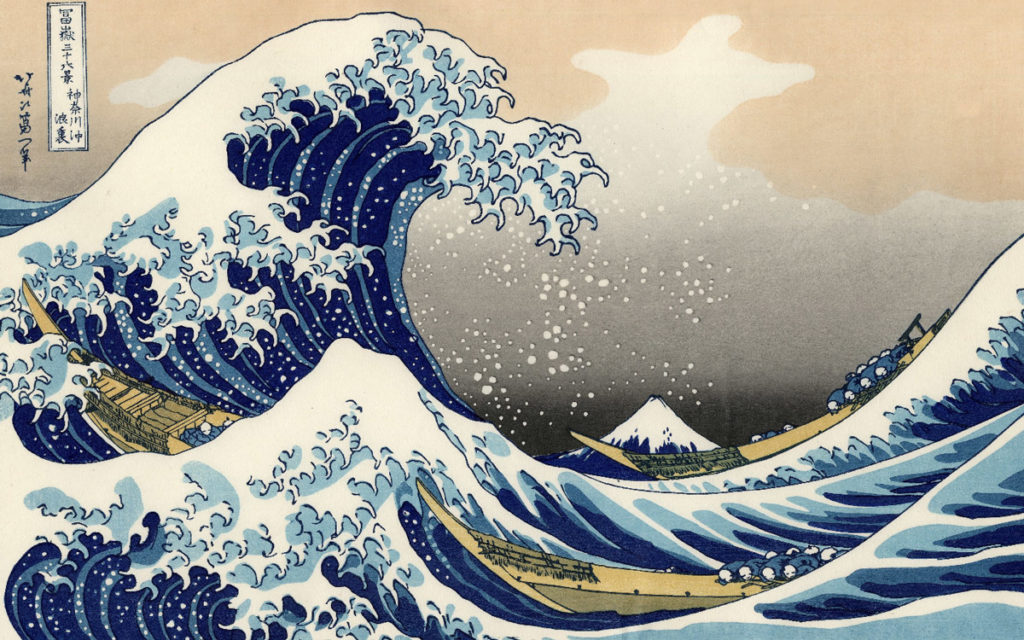
The appreciation of local art and culture has found an enormous platform in the digital world. Through the power of technology, Japanese art is able to create an impact on the global contemporary audience and still preserve its ancient values. One of Japan’s iconic pieces of art is The Great Wave off Kanagawa, commonly recognized as the country’s famous wave painting.
Its road to fame began when thousands of physical copies were replicated and sold in the market during the late Edo period. Today, it remains to be a renowned work that inspires modern art forms and designs. The Great Wave remains a timeless influence that continues to transcend different art periods throughout history.
The Story Behind The Great Wave Print
Why is The Great Wave famous?
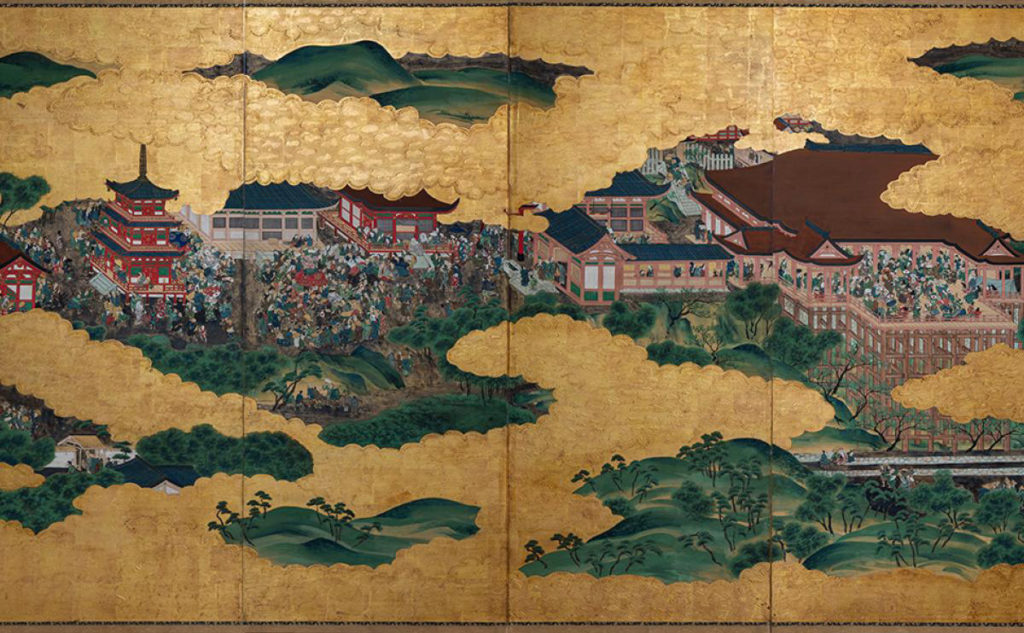
After recovering from centuries of civil war under the feudal power of emperors, Japanese art was given a pedestal to flourish during the Edo period, paving the way for large productions of work from different artists with their own distinctive styles. Works that depicted peaceful and prosperous lives were highly sought after by the elite as a return to normalcy after times of constant warfare.
The Great Wave was published around 1831.The print was so compelling to the public not just because of its visually appealing seascape motif, but more importantly for its connection to the sacredness of Mount Fuji. Throughout history, the beauty of this landscape has heavily influenced and inspired Shintoism and Buddhism.
As practitioners expressed their profound faith in daily life, inspired artworks were very much welcomed and supported wholeheartedly by the community. Prints of The Great Wave continued to spread even with the imposed restrictions in trade. When cities began to embrace modernization and urban life, the industry of art experienced a surge of popularity under the blossoming growth of tourism.


The Life of Hokusai
Many people don’t know that it was not until his 70’s that the great Katsushika Hokusai birthed The Great Wave into the world. At a young age, he was exposed to wood-cut blocks carved into books, paintings, and prints. Hokusai spent his early years learning this craft from a woodcarver where he developed his own take of woodblock prints.
He trained in the studio of Katsukawa Shunshō from 1778 to 1793, and afterwards was greatly inspired by the Western perspective he found in European prints brought to Japan through Dutch trade.Later in his life, he was able to increase his published collections and gain attention from fellow artists and the public.
The Great Wave off Kanagawa was the very first print of his series called The Thirty-Six Views of Mount Fuji which he worked on from 1830 until 1832. Hokusai believed that this was the moment he began creating works that were important and deserving of attention. The prints that he published in his lifetime were characterized by his integration of European art influence and his mastery of a new perspective in the Ukiyo-e art style.
Katsushika Hokusai from 1760 to 1849: His Life in Dates
Katsushika Hokusai was born in Edo, today’s Tokyo, in 1760. He joined Shunshō’s studio at 18 and published his first prints, pictures of kabuki actors, in 1779 under the name Shunrō. It was the first of around thirty names he would use over his long career.
In 1814 he published the first volume of Hokusai Manga, sketchbooks packed with people, animals, plants and everyday scenes, which grew to fifteen volumes, the last appearing long after his death. Thirty-six Views of Mount Fuji followed around 1830 to 1832, and in 1834 came the first volume of his picture book One Hundred Views of Mount Fuji.
In the afterword to that book Hokusai wrote that nothing he had drawn before the age of seventy was worth noticing, that at seventy-three he had begun to understand the true forms of birds, animals, insects and fish, and that by one hundred and ten every dot and line he drew would seem alive. He signed it Gakyō Rōjin Manji, “the old man mad about drawing”. Hokusai died in Edo in 1849, aged 88, still working.
The Ukiyo-e Art Genre
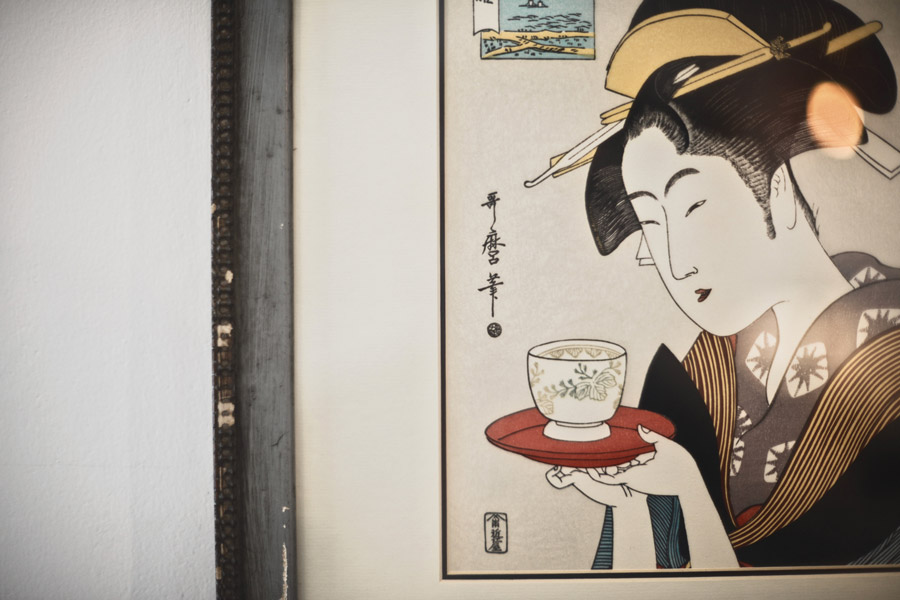
The Great Wave’s art style is always tied to the world of the Ukiyo-e art genre. Originally, woodblock prints and paintings depicted how city life was in the Edo period. This included people and their surroundings mainly people in the emerging higher classes of their society – actors, geishas, sumo wrestlers, mistresses, and Samurai warriors. The Great Wave was a result of Hokusai’s attempt to break away from the traditional elements of Ukiyo-e taught during his years of education.
Instead of human portraits demonstrating leisure and pleasure districts, Hokusai decided to use sceneries and landscapes as a new subject. Fully-colored portraits of Ukiyo-e art usually consist of a combination of bright and neutral colors.
Hokusai made The Great Wave stand out by using a dark blue pigment called Prussian Blue to capture the realistic tone of waves crashing in the ocean. Ultimately, the development of Ukiyo-e was shaped by the exchange of knowledge with Western culture. This opened the door for succeeding art to be accessed and known by the audience outside of Japan.
How The Great Wave Was Made and Sold as a Cheap Print
The Great Wave is a woodblock print, issued by the Edo publisher Nishimuraya Yohachi, whose firm traded as Eijudō. Hokusai drew the design, a carver cut it into blocks of cherry wood, with one block for the outlines and further blocks for the colours, and a printer made each copy by hand, rubbing the paper against the inked blocks with a flat pad called a baren. Small registration marks cut into every block kept the colours lined up from sheet to sheet.
Because the same blocks could be printed again and again, the design was produced in large numbers. A British Museum researcher has estimated that as many as 8,000 impressions may have been made, and as the blocks wore down, later copies lost some of the crisp detail of the first. According to the same research, a Great Wave cost about the same as two helpings of noodles in the mid-19th century, cheap enough to buy as a souvenir or pin up at home. Its buyers included pilgrims who belonged to Mount Fuji worship groups and the many travellers on the roads around the mountain.
Only a small share of those impressions survive, and a good early one is now among the most valuable Japanese prints on the market. In March 2023 one sold at Christie’s in New York for $2.76 million.





Significance of The Wave in the 21st Century
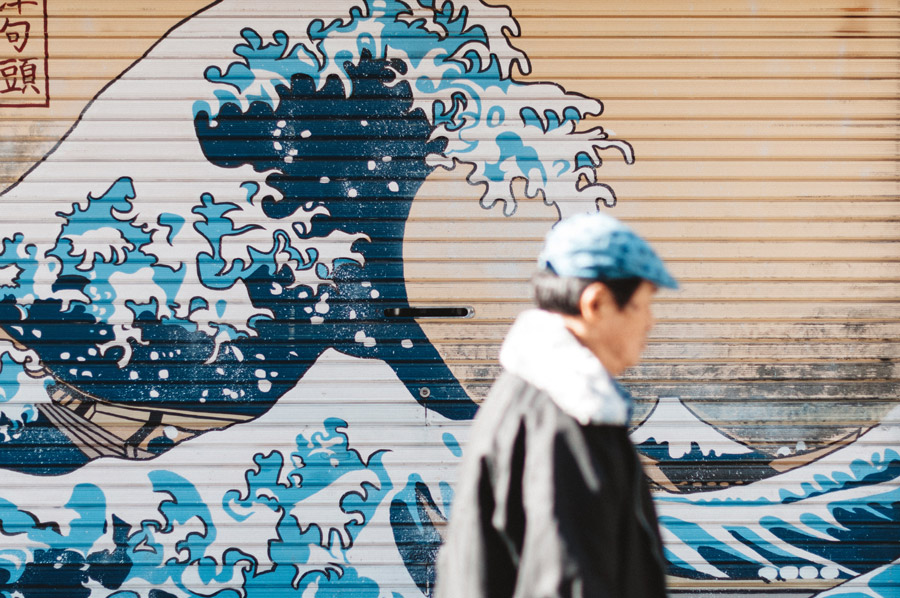
From the “great Hokusai wave,” it is evident how cultural exchange and modernization can definitely go a long way. The preservation of this artwork made it possible for different people of different backgrounds to experience a connection with their respective beliefs and preferences. At the same time, it created an open dialogue for diverse interpretations of the artist’s intended message.
The Great Wave is one of Japan’s greatest cultural identities, and it continues to inspire the global audience to build a history that will leave a legacy for future generations to see.
Inspired by The Great Wave
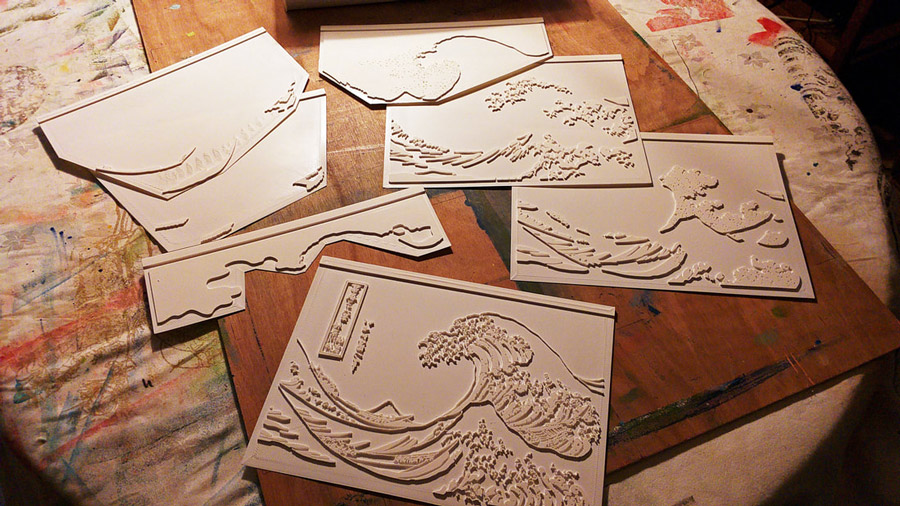
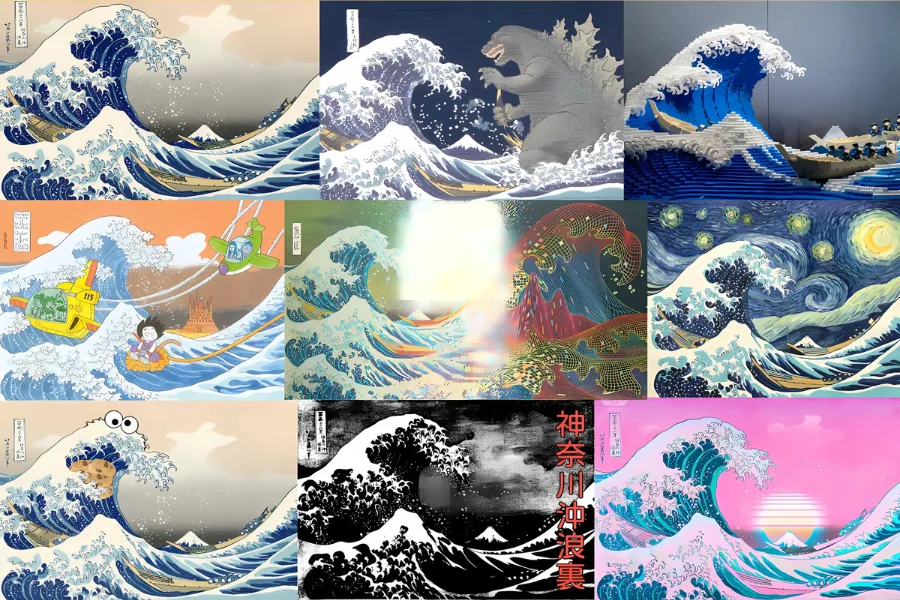
The Internet has made it easier to discover and learn about The Great Wave than ever before. Even if you are unfamiliar with this work of art, it is likely that you have seen an image of The Great Wave in other forms. It can still be seen today in its original form but it has also been adapted countless times into modern-day cultural adaptations.
Memes
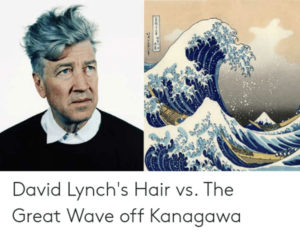
The features have made The Great Wave easy enough to be inserted in memes to hilarious effect.

Popular Culture
The Great Wave continues to influence the many aspects of pop culture. The blending of pop culture icons or existing design styles onto the signature seascape motifs is a visual homage.
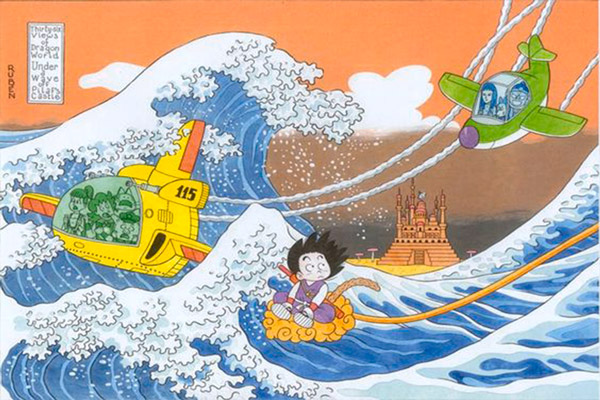
Dragon Ball
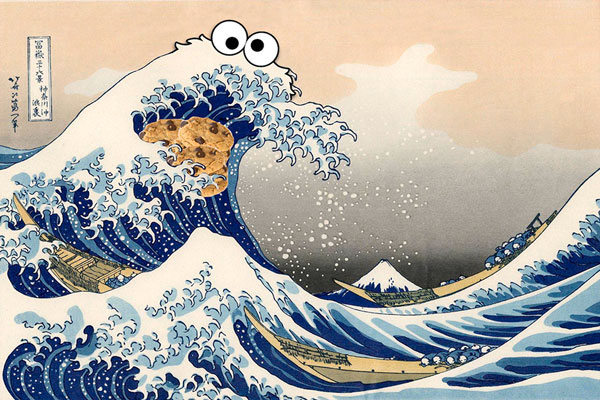
Cookie Monster
Pokemon
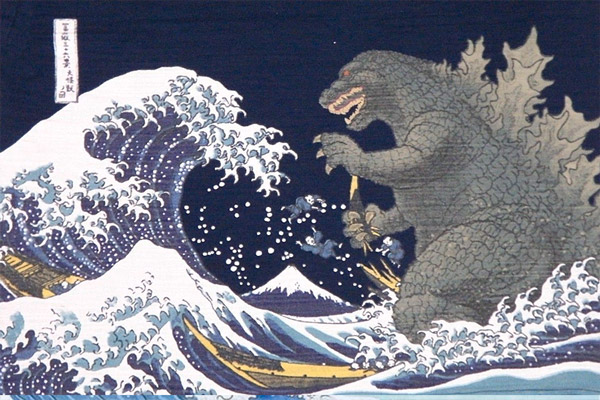
Godzilla vs. The Great Wave
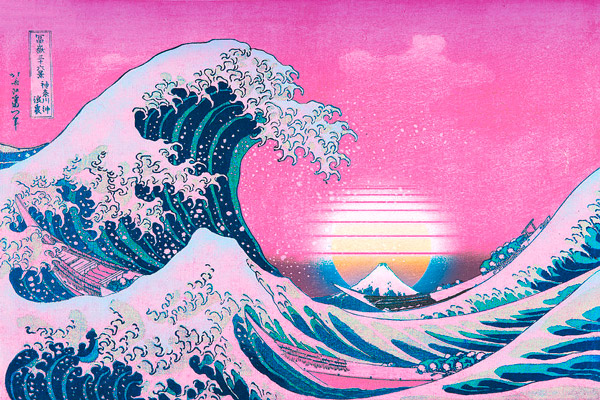
Vaporwave Great Wave
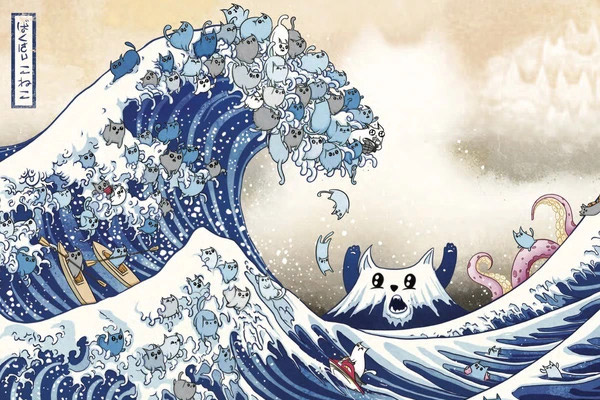
The Great Wave Off Cat-a-gawa
Merch
The Great Wave is still a fresh and colourful emblem that visually inspires modern design.
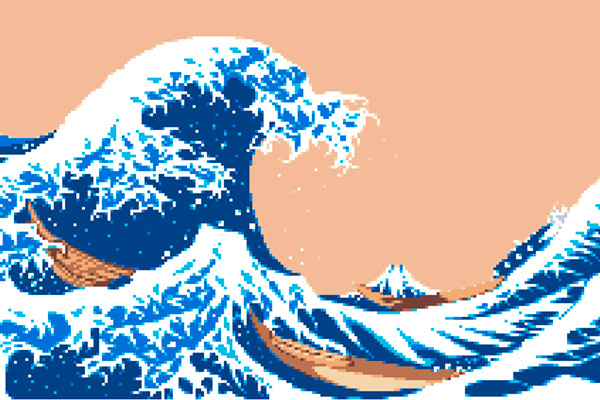
8-bit Great Wave
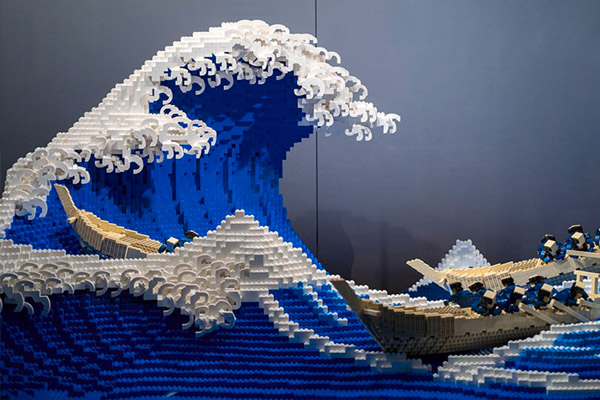
The Great Lego Wave Off Kanagawa