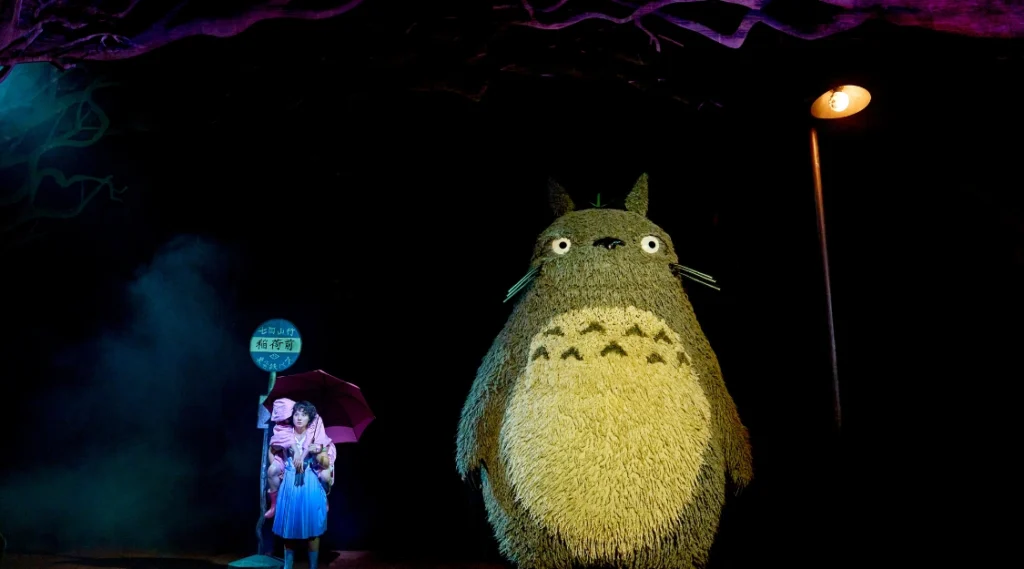
When entering into a theatre, there is always something below: the darkness under the boards, the place where things rise that shouldn’t. In Japanese, that under-stage void is called naraku—the same word used for hell and abyss in Buddhist cosmology. It is an architectural fact and a metaphysical hint, a trapdoor into the underworld.
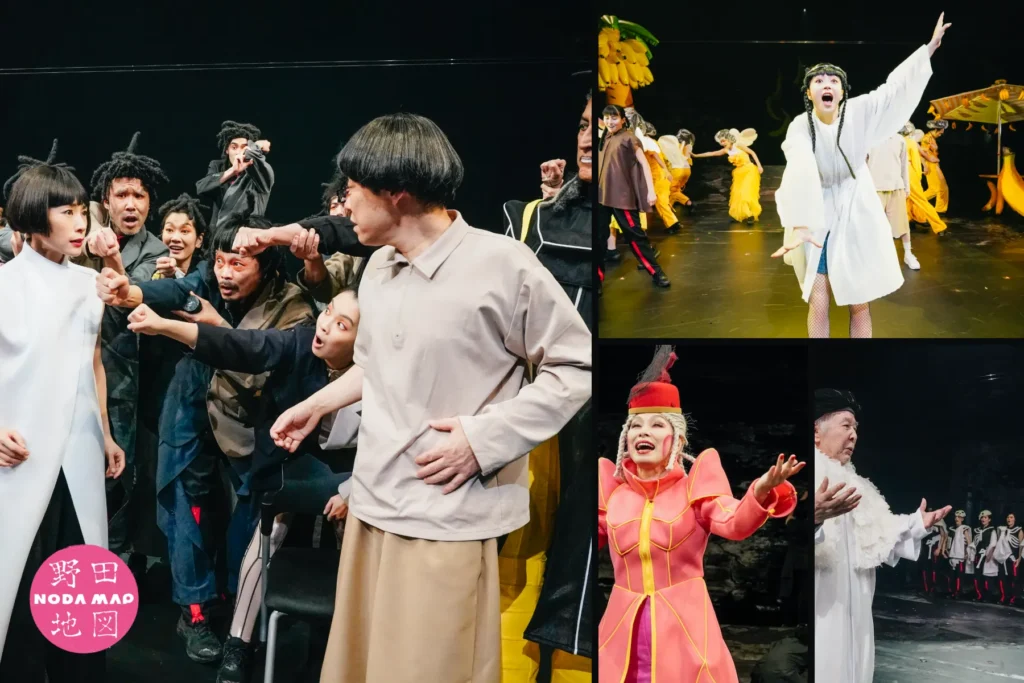
In September 2025, Yoshimitsu Kushida’s dance work Naraku ran at The Coronet Theatre, turning that hint into a full descent: a live, pulsating hellscape where desire and dread wrestle in the body itself. Think of it as a medieval hell scroll unrolled onstage — only now the flames move, breathe, and stare back.
To watch Naraku is to see nearly a thousand years of Japan’s hell imagery breathe again — from 12th-century picture scrolls to a contemporary stage in west London.
What does hell look like in Japan?
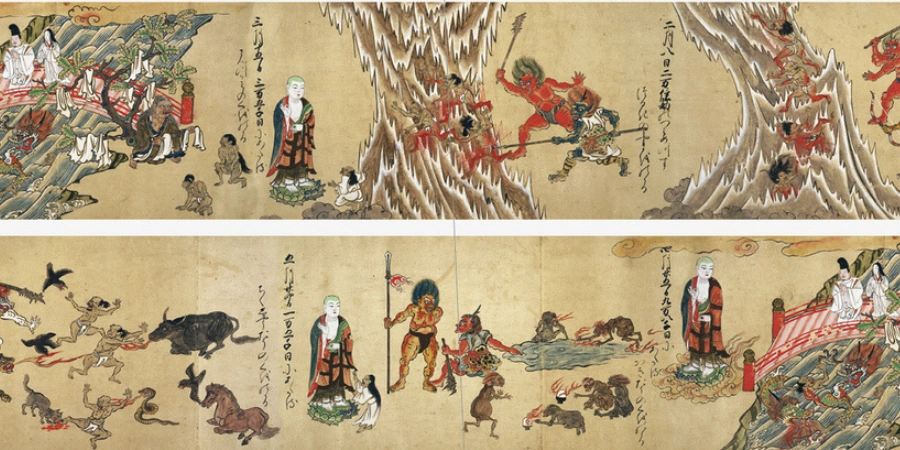
Image Credit: E-Museum
Long before cinematic J-horror representations, Japan had its own vivid visual language for damnation. The 12th–13th-century Jigoku-zōshi (“hell picture scrolls”) depicted sinners boiled, crushed, flayed, and pecked by demon birds; they were moral warnings painted with astonishing elegance.
The Tokyo National Museum’s Hell Scroll renders infernos in vermilion and ink, bodies twisted into eloquent agony—art that was meant, in the Tokyo National Museum’s own description, to ‘make viewers shudder’ and turn back from vice. The Nara National Museum preserves related scenes from the “Six Realms” tradition, including sub-hells like the Hell of the Flaming Rooster and the Hell of the Iron Mortar—grotesque tableaus that etched Buddhist ethics in unforgettable images.
If you look closely a pattern emerges. Colour narrows to hot reds and sooty blacks. Lines are quick, calligraphic, alive. Demons—oni—work with a bureaucrat’s efficiency. The aesthetic is refined, the content horrifying. That friction is the signature: grotesque beauty, designed to move the conscience as much as the eye.
The Medieval Origins of Japan’s Hell Scrolls
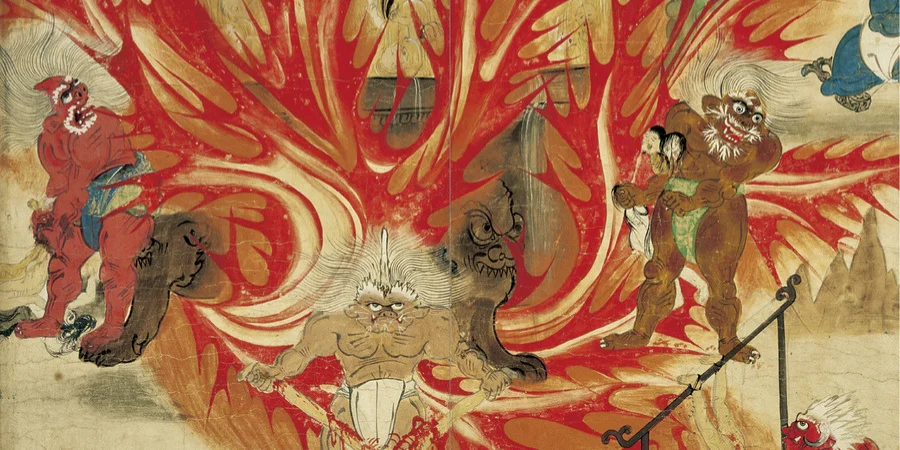
Image Credit: E-Museum
The Jigoku-zōshi were created in Japan during the late Heian and Kamakura periods (12th–13th centuries). Commissioned by temples and the imperial court, these handscrolls illustrated the Six Realms of Rebirth, focusing especially on the torments of the Buddhist hells. Their purpose was both didactic and devotional: to frighten viewers into moral reflection while reinforcing Buddhist teachings on karma and salvation.
The images are brutally imaginative. We see sinners boiled in cauldrons, ground in iron mortars, or pecked apart by monstrous birds like the “Flaming Rooster.” Demons (oni) oversee each punishment with bureaucratic efficiency. Yet the artistry is just as striking as the horror—fluid brush lines, glowing vermilion flames, and carefully composed scenes that feel almost cinematic in their sequencing.
Unlike the eternal damnation of Christian hell, these Buddhist visions were temporary. The message was clear: hell is real, but it isn’t forever. With repentance and rebirth, one could still aspire to the Pure Land. That balance of fear and hope is what gave the Jigoku-zōshi their enduring power—and what makes them such a vital backdrop for understanding Kushida’s modern Naraku.
From scroll to stage: why Naraku is a hellscape
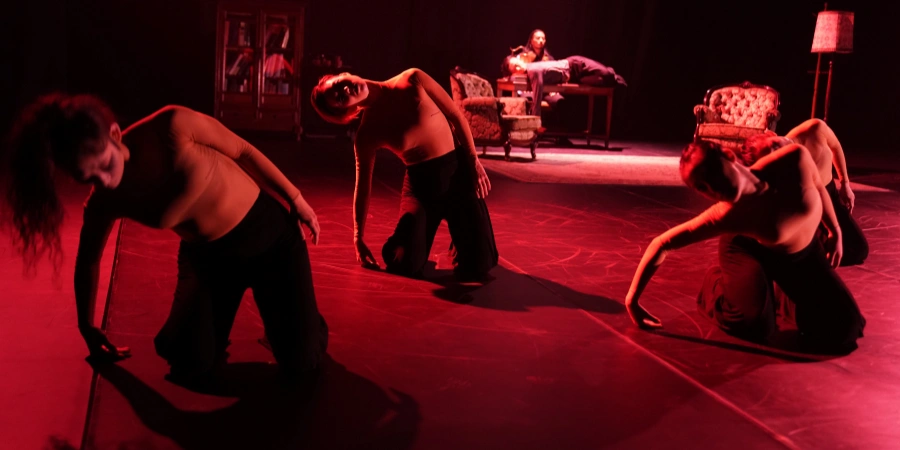
Kushida’s Naraku clearly declares its lineage with the title alone. In theatre, naraku names the under-stage: damp, shadowed and used for traps and apparitions — nicknamed for its hell-like atmosphere. In Buddhism, Naraku is the realm of suffering. Two meanings, one word, and a bridge between stagecraft and myth.
What the body can say that paint cannot
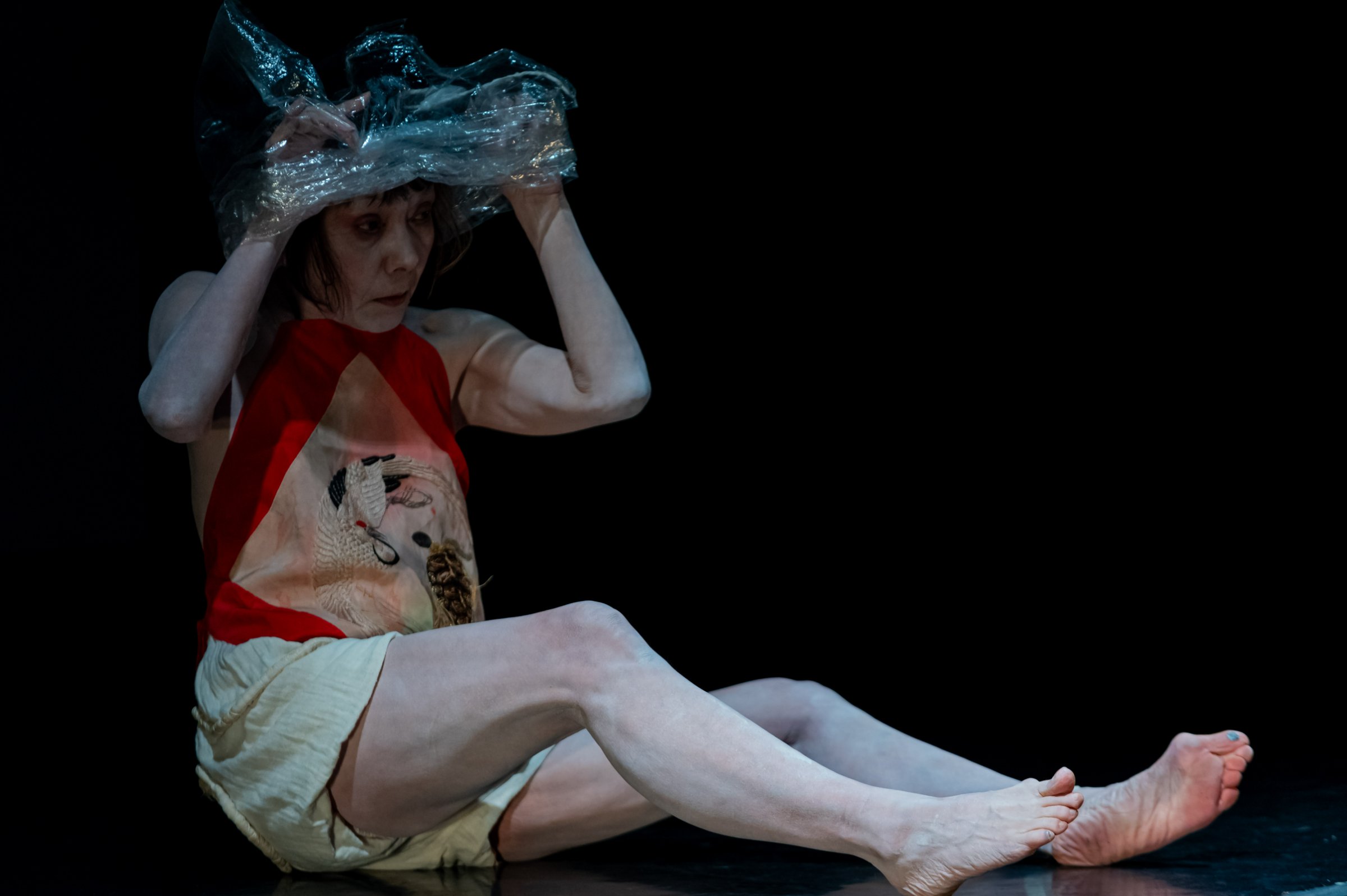
Dance Company Lasta’s dancers move with a raw, unsettling vocabulary drawn from butoh—chalk-white skin, twisted poses, sudden jolts and tremors that look like possession brought to life. Expect a hypnotic style of Japanese dance — blending J-horror tension (silence, dread, eruption) with sharp avant-garde control.
Meanwhile, composer Motoi Matsuda fills the space with deep drones and bursts of distortion. The sound doesn’t just accompany the movement—it hangs in the air like heat shimmer, the audio equivalent of a wavering flame.
This is where the comparison to Jigoku-zōshi sharpens:
- Descent: The scrolls chart punishment as consequence; Naraku charts obsession as gravity. In both, a figure is pulled downward by what he refuses to face.
- Tormenting agents: Hell scrolls people their frames with oni; Naraku populates the stage with strange, compelling figures who tempt, restrain or ride the protagonist like living demons.
- Colour and light: Vermilion heat and charcoal smoke in the scrolls; red-orange washes and knife-edged shadow on stage. The palette rhymes across centuries.
- Grotesque beauty: Refinement doesn’t cancel horror; it focuses it. That paradox — polished terror — defines both media.

Hell as Psychology, Not Just Geography

Image Credit: E-Museum
In Buddhism, Naraku is a state shaped by cause and effect. You enter it through your actions, and you leave it through change. The medieval hell scrolls made that lesson graphic and unforgettable, showing how sin leads to suffering.
On stage, Naraku translates that idea into the language of psychology: the abyss as a state of mind, an “internal struggle” with forbidden desire, where man is “pulled back from the void.” There are no gods stepping in to save him—only the chance to face himself and return changed.
Hell as Performance at The Coronet Theatre
 A thousand years ago, Japanese artists painted vivid scrolls of torment to shock audiences into reflection. Today, choreographer Yoshimitsu Kushida and composer Motoi Matsuda use movement and sound to do the same: exposing how shame, desire, and grief take shape in the body.
Watching Naraku at The Coronet, you don’t just witness suffering—you recognise it. That recognition is unsettling, but it’s also what makes the work so powerful.
And the title carries one last, literal twist. In Kabuki theatres, the trap room beneath the stage was called naraku—the space of shadows and illusions, nicknamed “hell” because of its darkness. Kushida throws open that trapdoor and dares us to look. What rises up isn’t a horned demon, but something closer to home: the self, caught in a red light.
For anyone interested in how Japan has imagined hell — from painted scrolls to avant-garde performance — Naraku stands as a striking modern chapter in that tradition.