Japanese horror films are built on dread that creeps up slowly, from the cursed videotape of Ringu (1998) to the folk tale ghosts of Kwaidan (1964). If you only watch one, start with Ringu. Then go back to Kwaidan and Onibaba (1964) for the older ghost stories, and on to Cure (1997) for the psychological end of the genre.
This list covers 15 Japanese horror films, from 1960s classics to the low budget hit One Cut of the Dead (2017). Each entry says who made it and what makes it frightening, and the table below gives where to watch every film legally in the UK, checked on 31 October 2026.
Horror also has a season in Japan. Ghost stories have been a summer entertainment for centuries, helped by the fact that Obon, when the spirits of the dead are believed to return home, falls in the summer months. Zoë Kincaid noted in Kabuki: The Popular Stage of Japan (1925) that theatres put on their creepiest ghost plays in midsummer, because a good chill helped audiences forget the sticky heat of the streets outside.
J-Horror, the Onryō and the Cursed Videotape
J-horror is the name critics gave to the wave of Japanese horror films that began with Ringu in 1998 and carried on through Ju-on: The Grudge (2002), Pulse (2001) and Dark Water (2002). Hollywood remade most of them, starting with The Ring in 2002.
The ghosts in these films are much older than the films. Many are onryō, vengeful spirits of people wronged in life, usually women, who come back to punish the living. The most famous onryō on the Japanese stage is O-Iwa in Yotsuya Kaidan, the ghost play by Tsuruya Namboku. Zoë Kincaid wrote in 1925 that Namboku made O-Iwa enter through a large lighted lantern and vanish through a solid wall, and that the play’s “power to make the flesh creep is undiminished”.
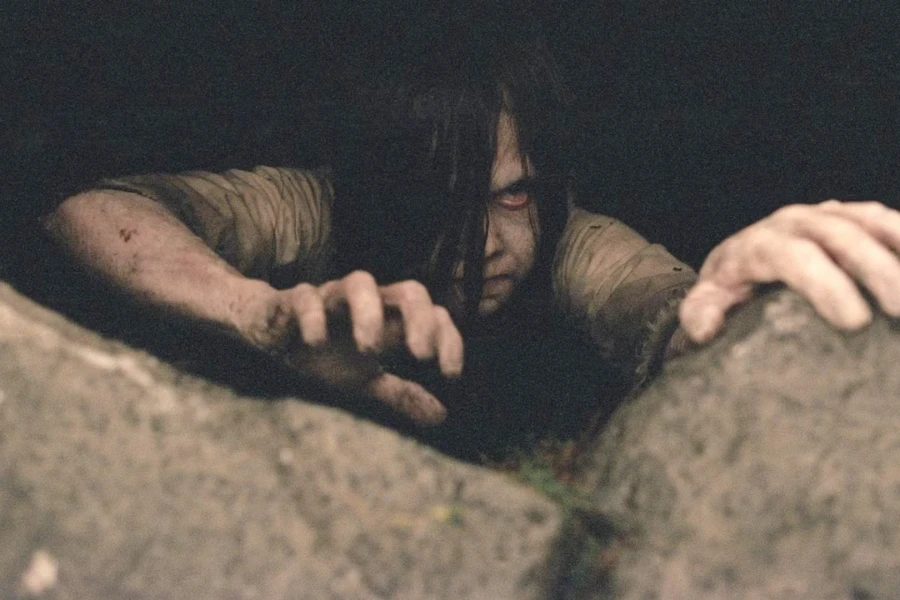
Sadako in Ringu and Kayako in Ju-on follow the same pattern. Both were killed by someone who should have protected them, and both bring their anger into ordinary modern spaces: a videotape, a family house in suburban Tokyo. That is why J-horror relies on long silences and things half seen at the edge of the frame more than on jump scares.
Tsuruta’s Videos, Takahashi’s Scripts and Ringu: How the J-Horror Wave Began
The wave started on video before it reached cinemas. Between 1991 and 1992 the director Norio Tsuruta made three straight-to-video films called Honto ni Atta Kowai Hanashi (Scary True Stories), and their quiet, low budget way of showing a ghost shaped what came next. The screenwriter Hiroshi Takahashi carried that approach into the script for Ringu, which Hideo Nakata directed in 1998, according to a Nippon.com history of J-horror published in August 2026.
Ringu’s success opened the door for the rest. Takashi Shimizu’s Ju-on was released on video in 2000 and reached Japanese cinemas in 2003. Nakata returned to Koji Suzuki’s writing for Dark Water, which Toho released on 19 January 2002, and Takashi Miike’s One Missed Call followed in 2004. The ghosts in these films come out of a long stage tradition, which our article on J-horror’s roots in noh, kabuki and butoh traces.
From The Ring (2002) to One Missed Call (2008): The Hollywood Remakes
Hollywood bought the wave film by film. Every remake below reached American cinemas within five years of the Japanese release, and Shimizu directed The Grudge himself. Our history of what Hollywood paid for Ringu and Ju-on sets the budgets side by side.
| Japanese original | Director | Released in Japan | Hollywood remake |
|---|---|---|---|
| Ringu | Hideo Nakata | 1998 | The Ring, 2002 |
| Pulse (Kairo) | Kiyoshi Kurosawa | 2001 | Pulse, 2006 |
| Dark Water | Hideo Nakata | 2002 | Dark Water, 2005 |
| Ju-on: The Grudge | Takashi Shimizu | 2003 in cinemas (video version 2000) | The Grudge, 2004 |
| One Missed Call | Takashi Miike | 2004 | One Missed Call, 2008 |
Dark Water and One Missed Call are not in our 15, but the other three originals are, each with its UK streaming details in the table below.
Japanese Horror Films at a Glance, and Where to Watch Them in the UK
Streaming services change their catalogues often. Every entry below was checked on 31 October 2026. “Channel on Prime Video” means a paid add on subscription inside Prime Video.
| Film | Year | Director | Where to watch in the UK |
|---|---|---|---|
| Kwaidan | 1964 | Masaki Kobayashi | BFI Player |
| Onibaba | 1964 | Kaneto Shindō | BFI Player |
| House | 1977 | Nobuhiko Obayashi | BFI Player |
| Tetsuo: The Iron Man | 1989 | Shinya Tsukamoto | Not streaming. Arrow Video Blu-ray, paired with Tetsuo II |
| Cure | 1997 | Kiyoshi Kurosawa | Not streaming. Eureka Masters of Cinema Blu-ray and 4K UHD |
| Ringu | 1998 | Hideo Nakata | Prime Video; Arrow Video and Shudder channels on Prime Video |
| Tomie | 1998 | Ataru Oikawa | Shudder; Arrow Video channel on Prime Video |
| Audition | 1999 | Takashi Miike | BFI Player; Arrow Video channel on Prime Video; Tubi (free with adverts) |
| Pulse (Kairo) | 2001 | Kiyoshi Kurosawa | Arrow Video and Shudder channels on Prime Video |
| Suicide Club | 2001 | Sion Sono | Not streaming in the UK |
| Ju-on: The Grudge | 2002 | Takashi Shimizu | Arrow Video channel on Prime Video |
| Marebito | 2004 | Takashi Shimizu | Not streaming in the UK |
| Noroi: The Curse | 2005 | Kōji Shiraishi | Arrow Video channel on Prime Video |
| The World of Kanako | 2014 | Tetsuya Nakashima | Tubi (free with adverts) |
| One Cut of the Dead | 2017 | Shin’ichirō Ueda | Shudder |




The 15 Japanese Horror Films on This List
House (1977)

House (1977), dir. Nobuhiko Obayashi
The Japanese horror classic House (1977), also known as Hausu, is one of the best examples of mixing horror, fantasy, and nonsense in a way few other films can. The House (1977) film, directed by Nobuhiko Obayashi, is about seven schoolgirls. They go to an old home owned by one of the girls’ aunts. When the house shows off its scary, magical powers, what starts as a fun trip quickly transforms into a terrifying nightmare.
One of the most famous scenes is the one with the House (1977) clock. Time starts to bend, which shows how chaotic things are getting inside the house. As a result of this, the house consumes them one by one, and the imaginative ways that it does this make House a unique horror movie.
One of the many interesting things about the movie is that it has martial arts. The House (1977) Kung Fu fight scenes add a strange but fun spin to the plot, combining scary and silly scenes. Blanche, the mystery white cat, is another crucial part of the film. The Hausu cat is both a sign of the magical power of the residence and a scary factor that pushes the movie’s plot. The creepy appearance of Blanche adds to the general fear in the House (1977) movie.
Blanche also joins a long line of sinister cats in Japanese folklore. The bakeneko, or monster cat, is a cat with supernatural powers, and the best-known tale is the vampire cat of the Nabeshima family, retold in A. B. Mitford’s Tales of Old Japan (1871), in which a huge cat kills a prince’s favourite, takes her shape and slowly drains his life away. The story was a kabuki favourite, and Osman Edwards recalled in Japanese Plays and Playfellows (1901) that a Nabeshima cat play was the first thing he ever saw in a Japanese theatre.
Consequently, fans and directors will remember it for long because it is one of the most terrifying Japanese horror movies ever made. Given these points, House 1977 is a must-see for anyone interested in the strange side of Japanese film or unconventional horror films in general. Look at any Hausu review, and you’ll see its critics loving it for how goofy and crazy it gets.
Ringu (1998)

Ringu (1998), dir. Hideo Nakata
Ringu (1998), a Japanese horror classic, is frequently regarded as one of the most essential works in the field of horror movies. This movie, directed by Hideo Nakata, has been turned into many other movies, including the infamous Westernised The Ring (2002) movie. The story is about the devilish Ringu VHS tape that, when watched, kills its viewer within seven days. One of the most famous horror stories ever was based on this wild idea.
Meanwhile, one big reason people like the Japanese version of The Ring is that it is centred more on horrors of the mind than the Western version. Although Ring in Japanese is still scary, it doesn’t have as much blood and guts as the English version. Instead, it relies more on psychological states and fear. Along with its fundamental approach to horror, the movie’s frightening sound design makes people even more scared and keeps them on the edge of their seats.
The movie became even more scary with the help of Ringu’s cast, which included Hiroyuki Sanada. Fans often wonder if The Ring is based on a true story, which adds to the scary legacy of the film. However, it is only a piece of imagination. Even so, it had a noticeable effect because it played on basic fears about dying, unknown forces, and the paranormal.
In the UK, Ringu streams on Prime Video and on the Arrow Video and Shudder channels. Despite being straightforward, it is one of the most terrifying Japanese horror movies. To this day, it continues to impact the horror genre globally.



Marebito (2004)

Marebito (2004), dir. Takashi Shimizu
If you’ve seen “The Grudge” series, you may know Takashi Shimizu, who directed Marebito (2004). This movie stands out because it mixes terrifying moments with complex psychological explorations of dread, life, and humanity. Marebito is a Japanese word for a mysterious being or “stranger,” which fits with the creepy theme of the movie. This creepy Japanese horror movie is about exploring the unknown.
The premise is about an independent cameraman who sees an individual commit suicide and becomes obsessed with recording the spirit of fear. During his investigations, he finds a dark realm and a strange woman who might also be a Marebito. Accordingly, concerning ideas of interest and the darker side of people, the Marebito meaning is at the heart of the movie.
One of the most terrifying Japanese horror movies, which came out only in 2004, is a less rapid and more dramatic entry. It’s a disturbing and reflective journey. In conclusion, for people who like psychological horrors, the Marebito movie is very provocative and causes you to think, making you wonder what dread is all about.
Ju-on: The Grudge (2002)

Ju-on: The Grudge (2002), dir. Takashi Shimizu
Ju-on: The Grudge (2002) is one of the most famous and most terrifying Japanese horror movies. It has had a huge impact on the horror genre as a whole. Directed by Takashi Shimizu, Ju-on describes a curse that originates in a place of great anguish and continues to torment everybody who sets foot there. The curse has disastrous implications for all who meet its furious spirits, Kayako and Toshio. Audiences who want to watch Ju-on: The Grudge have been able to get it more easily over the years thanks to its legacy in the genre.
When something this popular comes out of Asia, you know the West will find a way to get a hold of it. Enter The Grudge, a remake digestible for Western audiences. As with most remakes, there is a difference between Ju-on and The Grudge. The former is rooted in Japanese tradition, with its mood more strongly linked with country folklore. Meanwhile, The Grudge has been Americanised, with its plot centred around an American living in Tokyo. One common point of contention in the age old Ju-on vs. The Grudge discussion is whether adaptation does a better job at re-creating the original’s creepy vibe.
After the release of the initial film, the series grew to include several spin-offs, such as Ju-on: White Ghost and Ju-on: Black Ghost. Also, there have been many sequels in the franchise, including Ju-on: The Grudge 2. All of these movies hold a special place in the horror industry as a whole. Additionally, for those looking for an interactive experience, there are games and versions, too. Players may confront the curse and tour the terrifying house themselves through Ju-on: The Grudge Wii.
Overall, the terrifying tone, spooky atmosphere, and disturbing cinematography of The Ju-on: The Grudge have made it an iconic horror film. In the UK it streams on the Arrow Video channel on Prime Video.
Noroi: The Curse (2005)
A nail-biting found-footage movie called Noroi: The Curse (2005) is considered one of the most terrifying Japanese horror movies ever. Directed by Kōji Shiraishi, Noroi: The Curse is unique because it is told through lens in first person, mixing scary supernatural events with investigative news. In the story, a ghost researcher looks into a string of strange events that lead him to find a scary curse.
People who watch the full Noroi: The Curse movie often say its strong point is its slow-burn nature. However, the film isn’t based on jump scares. Through mockumentary fashion, it makes you feel scared because it all feels so real. Its atmospheric environments and characters place you right in the thick of the narrative. In the UK, Noroi: The Curse streams on the Arrow Video channel on Prime Video.
As one of the newer entries on this list, horror fans have many good things to say about the movie. Any Noroi: The Curse review will focus on the artful narrative, which gradually builds dread rather than depend on cheap tricks. Ultimately, whether you purchase the Noroi: The Curse DVD or watch it online, there is no denying the movie’s uniqueness in Japanese horror.
Tetsuo: The Iron Man (1989)
Tetsuo: The Iron Man (1989), dir. Shinya Tsukamoto
Tetsuo: The Iron Man (1989) is a beloved classic in Japanese horror that stands out for its recognisably eerie visuals and unexpected story. Shinya Tsukamoto directed Tetsuo: The Iron Man movie, a truly terrifying monster movie about a man who slowly turns into a hellish mix of man and machine. The film very disturbingly looks at industrialisation, anatomy, and control.
In the horrifying Tetsuo: the Iron Man scene, the main character’s change worsens, mixing humans and machines in horrifying ways. Feeling weak? Get your buckets ready, as these gruesome scenes show Tsukamoto’s uncompromising sense of fleshy horror. Its rough and distorted visuals support the film’s dark mood, creating a novel watching experience. Additionally, the Tetsuo: The Iron Man soundtrack featuring clanging metal and harsh sounds, complements the film’s unsettling symbols.
Movies like Tetsuo: The Iron Man, which examine related themes of technology and body transformation, have tried to replicate this grungy setting, but they have yet to do it as wildly as this film. First thing to remember, it helps that it’s an old film, complete with low-budget visuals that add as much charm as it does atmosphere. Collectable items featuring the film’s memorable visuals are available to fans, such as the Tetsuo: The Iron Man poster and even the Tetsuo: The Iron Man shirt. As a result of the movie’s lasting impact, these have become recognisable markers for Japanese cyberpunk and horror movie aficionados.
Overall, Tetsuo II: Body Hammer is a sequel that explores the disgusting and strange ideas presented in the first movie. It’s a film for people who want to examine the lore behind this hideous world’s reality. For experimental and body horror fans, Tetsuo: The Iron Man is an absolute must-see.
Suicide Club (2001)

Suicide Club (2001), dir. Sion Sono
Sion Sono’s 2001 film Suicide Club is a chilling addition to this list of the most terrifying Japanese horror films. Just look at how the movie starts: At the beginning, there is a frightening scene where more than fifty schoolgirls quickly jump in front of a train going through Tokyo. The film revolves around a very touchy topic of suicide and looks into the worrisome taboo behind it.
In the movie Suicide Club, they try to figure out what’s happening with the strange deaths. Mostly, they do this by following vague hints and running into strange situations. One time, rolled-up human skin is sent to the police. As the police look into the case more, the movie gets more and more crazy with its twists and turns. As a group of detectives tries to figure out why these people are committing suicide, the story jumps between police drama and supernatural aspects. On sites like Suicide Club Letterboxd, fans often say that lacking a main character makes it more tricky to follow.
The Suicide Club Japanese movie’s fans like how bravely the film deals with sensitive social problems in the country. In particular, the Suicide Club manga dives deep into how Japan’s younger generation is pressured to fit in. Consequently, the movie has caused a lot of debate because it shows the dark side of modern society and mass suicide disturbingly. Suicide Club was not on any UK streaming service when we checked on 31 October 2026.
One Cut of the Dead (2017)

One Cut of the Dead (2017), dir. Shin’ichirō Ueda
The 2017 Japanese horror movie One Cut of the Dead starts off looking like a cheap, B-rated zombie flick. But it’s just that setup that makes the movie grow into something much bigger than it seems. One Cut of the Dead became a surprise hit because of the way it subverts your expectations. Following the initial thirty minutes, which seemed too simple, the movie turns into a genius blend of horror and comedy. We prefer not to say more, so check it out! It’s one of the more unique zombie films that have come out because of the “one-cut” style that shows how the production process falls apart.
The movie became popular quickly following its release, and One Cut of the Dead news spread about how hugely successful it was. It was made for ¥3 million and took ¥3.12 billion at the Japanese box office alone, according to The Guardian. The film’s original meta-story, which initially serves as a set-up for a typical horror story, really hit home with viewers.
Beyond being well-received by critics and audiences, the movie was also widely released on Blu-ray. The One Cut of the Dead Blu-ray has become a collectable for Japanese horror film fans. With its success in hand, One Cut of the Dead Spin-Off: In Hollywood was produced. It’s a sequel made in the same mould as its predecessor, now following the daughter of the original’s main character.
In the UK, One Cut of the Dead streams on Shudder. There are also many One Cut of the Dead Reddit discussions, where people talk about the movie and share their thoughts on it. We suggest going blind for maximum viewing pleasure.
Tomie (1998)

Tomie and Hello Kitty in the Junji Ito and Sanrio collaboration artwork. Image via CBR.
The ghostly Japanese horror movie Tomie (1998), directed by Ataru Oikawa, is based on Junji Ito’s manga. Tomie is the main character of the series. She is an unusual and gorgeous woman who has an odd ability to heal herself after being killed. This makes her a frightening and ever-lasting entity. Fans of Junji Ito’s Tomie art will recognise her by her smooth black hair, mystifying eyes, and mischievous look, all qualities that attract as much as they terrify people.
The protagonist, a young lady, keeps mentioning “Tomie” while under treatment for repressed memories. A detective is also looking into a string of brutal killings, and Junji Ito’s Tomie appears to be the most probable suspect. As the study and the counselling conversations go on, it becomes clearer how scary the possibilities get.
It’s not quite as gruesome as the Junji Ito Tomie manga, yet the movie does capture the creepy vibe that has made Tomie such a famous character in Japanese horror. Constant discomfort is created by the simple, eerie visual arts, which echo the unpleasant tone of Junji Ito’s art.
Especially with Halloween coming up, cosplaying as Junji Ito’s Tomie has become more prevalent in recent years. Collaborations such as Junji Ito Tomie x Sanrio have also helped spread Tomie’s popularity, as they team the character up with well-known faces like Hello Kitty. The unique mix of Tomie’s spookiness and Hello Kitty’s cuteness shows Tomie’s lasting cultural influence. This collaboration is a niche collaboration that’s sure to attract a handful of fans.
Junji Ito Tomie’s book collection fans will enjoy this movie, which stays loyal to the source material but adds unique narrative twists. Despite Tomie (1998) moving slower, it is an integral part of the Junji Ito Tomie tradition. It combines psychological horror with Junji Ito’s signature spooky style, making it one of the most terrifying Japanese Horror movies.
The World of Kanako (2014)
The World of Kanako (2014), dir. Tetsuya Nakashima
In Tetsuya Nakashima’s 2014 harrowing horror The World of Kanako, Kôji Yakusho plays a former police officer on a mission to find his missing daughter. As the search continues, surprising truths emerge about Kanako’s secrets, which the father discovers. Adapted from the book Hateshinaki Kawaki, the movie explores the underbelly of culture at large, with tales of assault and neglect sprinkled into this terrifying Japanese horror movie.
In the UK, The World of Kanako streams free with adverts on Tubi. The movie’s complex, unpredictable story needs your full attention. Some parts call for a deeper look into The World of Kanako, and the jarring ending can be explained for those who need it by theory crafters online.
Nana Komatsu’s Kanako does a frighteningly awesome job of adding to the movie’s atmosphere. At the heart of the movie’s emotional strain is her character’s multifaceted nature: she seems naive while also being deceptive. The grim and distorted tone of the story is matched by the actors, and Nana Komatsu leads the talented cast.
In The World of Kanako’s universe, the film depicts youthful misbehaviour with an edgy style. Nakashima’s distinctive brand of art brings out the chaos and sorrow of the story. Additionally, The World of Kanako’s cast gives strong performances that keep viewers on edge. If you like films that explore deep ethical issues and show the worst sides of the human condition, you may find movies like The World of Kanako concerning but captivating.
Kwaidan (1964)
Kwaidan (1964), dir. Masaki Kobayashi
Masaki Kobayashi’s Kwaidan is the classic place to start if you want to see where Japanese ghost stories on film come from. It adapts four tales collected by Lafcadio Hearn: The Woman of the Snow and Hoichi the Earless from his 1904 book Kwaidan, and The Black Hair and In a Cup of Tea from two of his other collections. It won the Special Jury Prize at the 1965 Cannes Film Festival.
Hoichi the Earless is the segment most people remember. In Hearn’s telling, a blind biwa player at the Amidaji temple at Akamagaseki is summoned night after night to recite the sea battle of Dan-no-ura for an audience he cannot see. The priests paint holy text over his whole body to hide him from the dead, and forget his ears. The Woman of the Snow retells the legend of the yuki-onna, the snow woman who spares a young woodcutter on one condition.
Kobayashi shot the whole film on hand painted sets, so it looks like a scroll painting come to life. The complete Japanese cut runs 183 minutes. It is slow, and that slowness is the point. In the UK, Kwaidan streams on BFI Player.
Onibaba (1964)
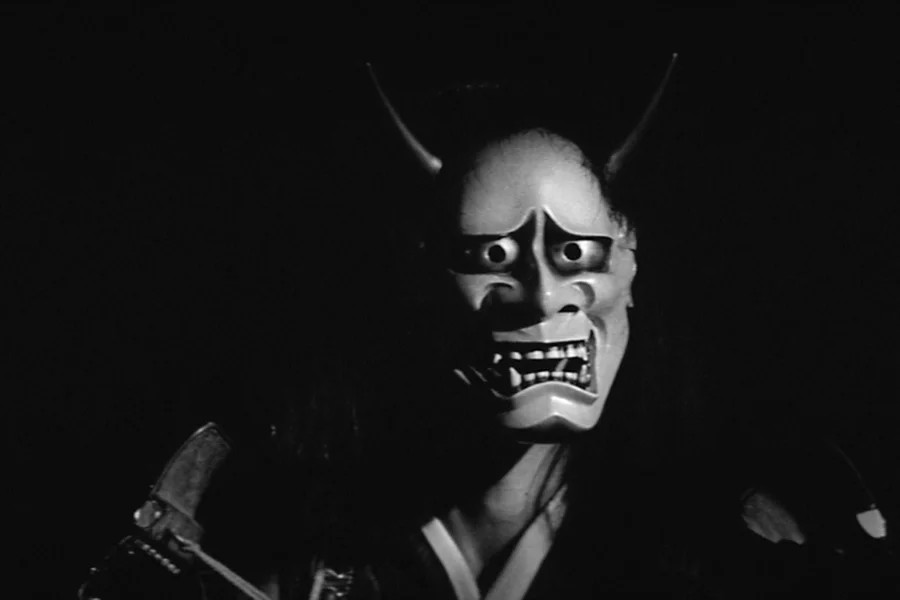
Kaneto Shindō’s Onibaba is set during a civil war in medieval Japan, in a sea of tall susuki grass that hides everything. Two women, played by Nobuko Otowa and Jitsuko Yoshimura, survive by killing lost soldiers and selling their armour. When a neighbour returns from the fighting and starts visiting the younger woman at night, the older one turns to a demon mask taken from a dead samurai to frighten her away.
The mask is modelled on the hannya mask from noh theatre, which is associated with a vengeful female spirit, and what happens when it will not come off is one of the most famous endings in Japanese cinema. The title means “demon hag”. In the UK, Onibaba streams on BFI Player.
Cure (1997)
Cure (1997), dir. Kiyoshi Kurosawa
Kiyoshi Kurosawa’s Cure came out a year before Ringu, and CinemaBlend’s 2025 ranking of Japanese horror films puts it first. Kōji Yakusho, the same actor who leads The World of Kanako, plays a Tokyo detective investigating a run of murders. Each killer is an ordinary person who confesses at once and cannot explain why they did it.
The only link between them is a quiet young man with no memory who asks everyone he meets the same questions. There are no ghosts in Cure. The horror is the idea that anyone could be talked into violence, and Kurosawa films it in long, still takes. Cure was not on any UK streaming service on 31 October 2026, but Eureka sells it on Blu-ray and 4K UHD in its Masters of Cinema series.
Audition (1999)
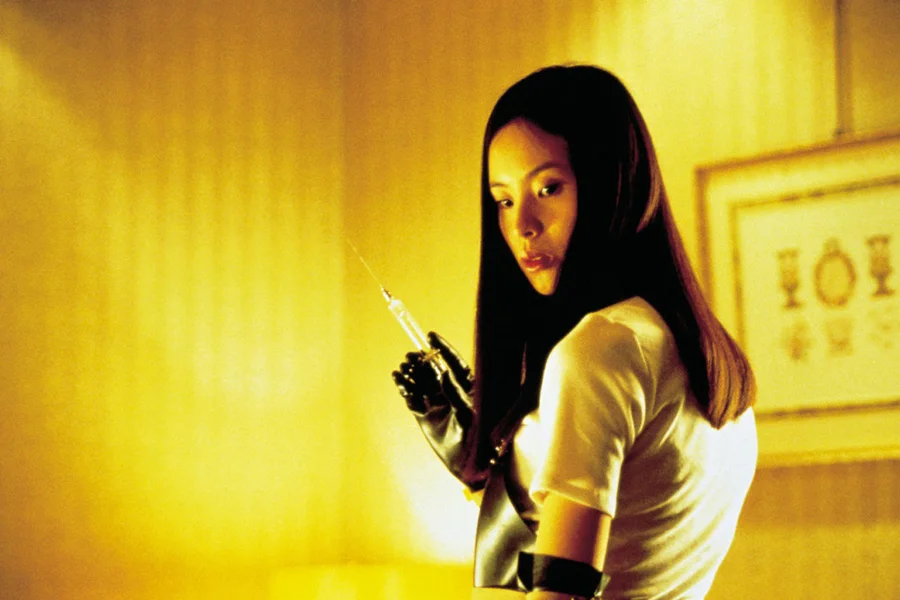
Takashi Miike’s Audition starts as a gentle drama. Ryo Ishibashi plays a widower whose film producer friend, played by Jun Kunimura, sets up fake auditions for a film that will never be made, so that he can meet a new wife. He chooses Asami, a quiet former ballet student played by Eihi Shiina, and the film takes its time before showing what she wants.
The screenplay by Daisuke Tengan adapts Ryu Murakami’s 1997 novel. Audition is remembered for its final half hour, which is hard to watch, so go in knowing that. In the UK it streams on BFI Player, on the Arrow Video channel on Prime Video and free with adverts on Tubi. In London, Rich Mix in Shoreditch gave Audition, Cure and One Cut of the Dead a J-horror Halloween weekend in 2025.
Pulse (2001)
Pulse, called Kairo in Japan, is Kiyoshi Kurosawa’s second film on this list. It follows two stories in Tokyo: a young woman who works at a plant shop and whose friends start disappearing, and a college student whose computer keeps connecting him to a website that shows lonely figures in dark rooms. The ghosts have found a way into the world of the living through the internet.
Pulse was made in 2001, and the dial up sounds and grainy webcams date it. What does not date is its picture of a city full of people who are already disappearing from each other’s lives. It was screened in the Un Certain Regard section at the 2001 Cannes Film Festival. In the UK it streams on the Arrow Video and Shudder channels on Prime Video.
The Lasting Pull of Japanese Horror Films
Ultimately, the most terrifying Japanese horror movies keep people watching by mixing emotional terror, a creepy ambience, spooky stories, and frightening characters. These films do a great job of establishing tension through mood and drama. They deal with heavy, upsetting topics that stick with you even when the movie is over. Japanese horror always pushes the limits of what is unsettling.
Overall, the brilliant minds behind these J-horror films know that their stories can make you feel deeply uneasy by tapping into deep-seated fears everyone shares. Those who like horror films but are looking for something different can find what they want in Japanese horror. Given these points, the genre’s lasting impact and reputation globally ensures that the Japanese horror genre remains one of the most effective in cinematic history.
Questions About Japanese Horror Films
Most lists put Ringu (1998) first, because its cursed videotape and the image of Sadako climbing out of the television changed horror around the world. Critics who prefer psychological fear often choose Cure (1997) or Pulse (2001) by Kiyoshi Kurosawa, while fans of found footage name Noroi: The Curse (2005) as the one that stays with them longest.
J-horror is short for Japanese horror. It usually means the run of Japanese horror films that began with Ringu in 1998 and carried on into the early 2000s with Ju-on: The Grudge, Pulse and Dark Water. These films rely on slow dread, long silences and vengeful ghosts called onryō more than on gore or jump scares.
No. Ringu is based on Kōji Suzuki’s 1991 novel Ring, which is fiction. Its ghost, Sadako, draws on much older Japanese ghost stories about wronged women who return for revenge, such as O-Iwa in the kabuki play Yotsuya Kaidan, but the cursed videotape and the seven day deadline were invented for the book.
BFI Player has the older classics, including Kwaidan, Onibaba, House and Audition. The Arrow Video and Shudder channels on Prime Video carry most of the J-horror wave, including Ringu, Ju-on: The Grudge, Noroi and Pulse. Tubi streams The World of Kanako and Audition free with adverts. Cure is on Blu-ray from Eureka.
Ringu (1998) is the original Japanese film directed by Hideo Nakata, based on Kōji Suzuki’s novel. The Ring (2002) is the American remake directed by Gore Verbinski. Both keep the cursed videotape and the seven day countdown, but the money was very different: Ringu cost roughly one million dollars and The Ring an estimated 48 million.
The best known are The Ring (2002) from Ringu (1998), The Grudge (2004) from Ju-on, Dark Water (2005) from Hideo Nakata’s 2002 film, Pulse (2006) from Kiyoshi Kurosawa’s Kairo (2001) and One Missed Call (2008) from Takashi Miike’s 2004 film. Takashi Shimizu directed The Grudge himself, after making the Japanese Ju-on films.
Sources and further reading
- Zoë Kincaid, Kabuki: The Popular Stage of Japan (1925)
- A. B. Mitford, Tales of Old Japan (1871)
- Osman Edwards, Japanese Plays and Playfellows (1901)
- Lafcadio Hearn, Kwaidan: Stories and Studies of Strange Things (1904)