It’s been over 20 years since the release of Lost in Translation, and with hindsight we can confidently say what the movie critics intuitively knew back in 2003: the film is a modern classic. Sofia Coppola’s second full-length movie captivated critics and casual viewers alike, something evidenced by its commercial success and the Academy Award for Best Original Screenplay that it ended up winning.
The story of Bob and Charlotte (played by Bill Murray and Scarlett Johansson) is still one of the best displays of human connections in film, as these characters find themselves lost, both figuratively and literally, in the city of Tokyo, only to find each other and learn what they truly want. It’s a platonic love story, a coming-of-age story and, surprisingly, a story about coming to terms with your own age. As is expected of a movie with such status, many things have been written about it over the years, but there is one question we found particularly intriguing: Why Japan?
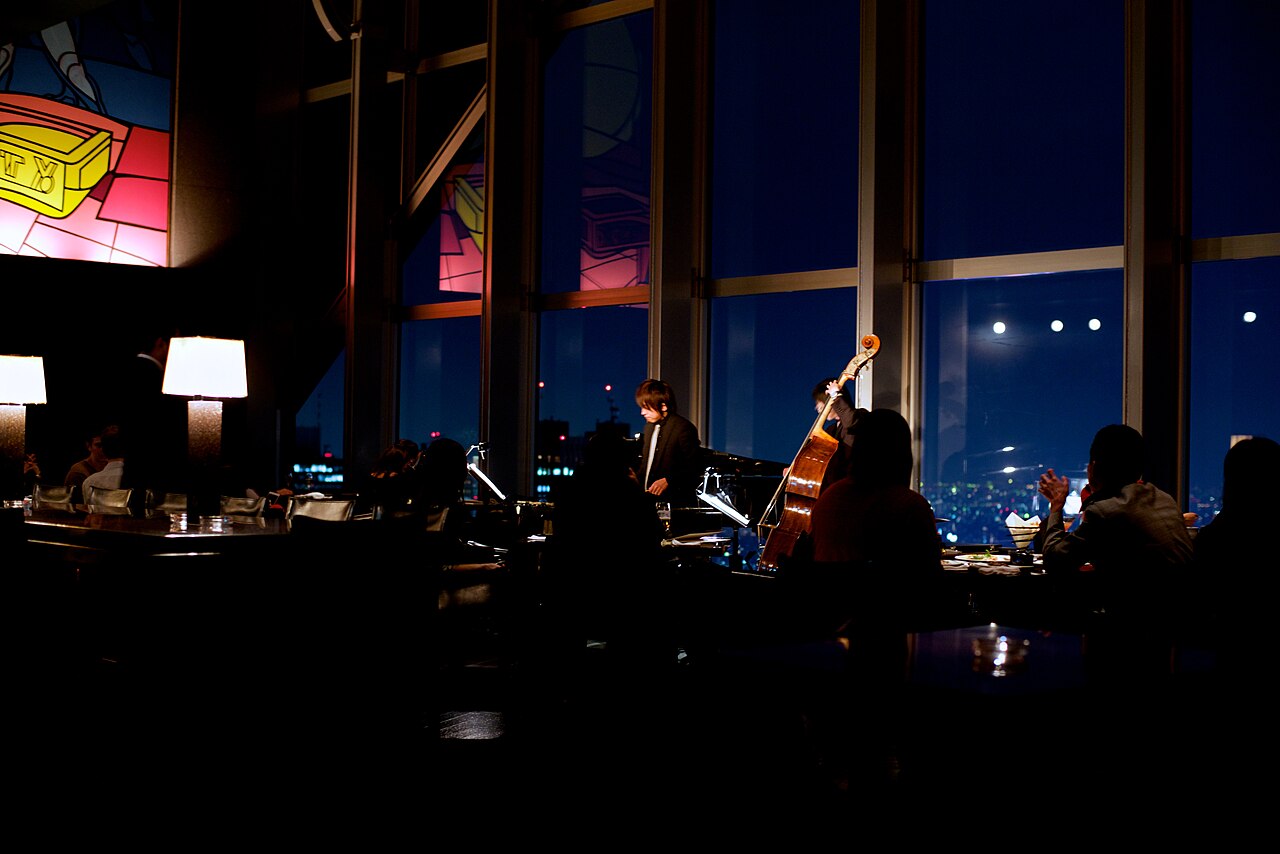
The simple answer is biographical. Sofia Coppola has made it no secret that she came up with the idea of the movie after spending some time in Tokyo for a press tour of her first film, The Virgin Suicides. She even stayed at the Park Hyatt Tokyo, the same hotel where most of Lost in Translation takes place. The hotel fills the 39th to 52nd floors of Shinjuku Park Tower, and it reopened in December 2025 after a renovation lasting 19 months. So, in a hypothetical scenario, there exists a version of this film that is set in another city, one with admittedly few English speakers, and its core ideas would remain unchanged. Here, Japan is nothing more than a replaceable setting.
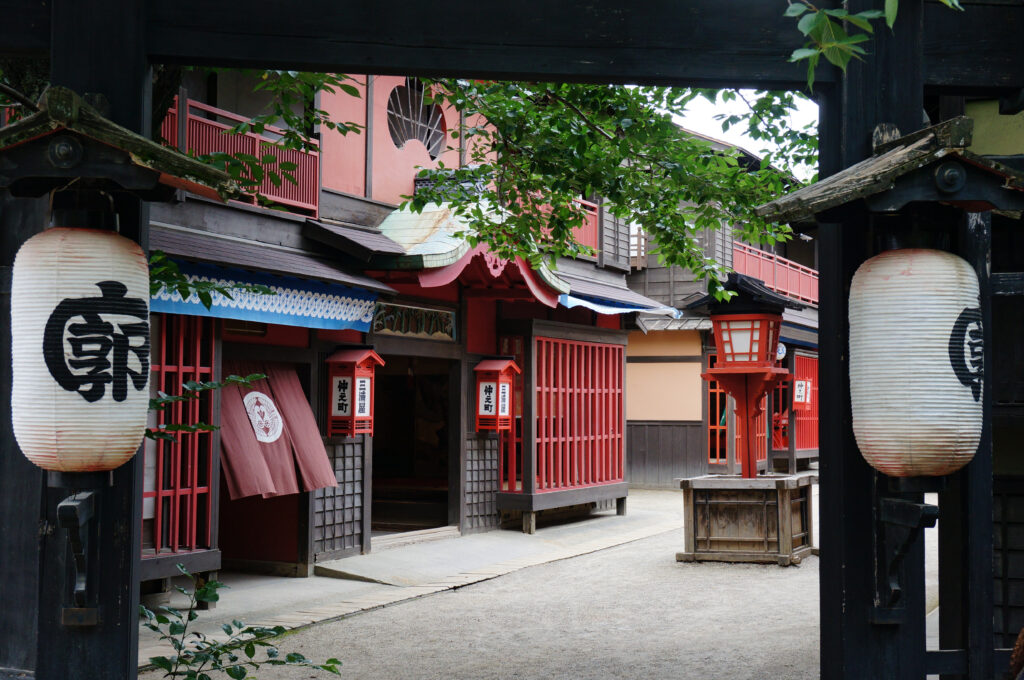
Explore the Parts of Japan in Lost in Translation
Japan as a living character in Lost in Translation
The far more complicated (and interesting) answer comes once we examine Japan’s influence in the film and its characters. Even among the major detractors of the movie, who rightfully recognise the elements that haven’t aged as well or were poorly thought-out from the beginning, it is hard to deny that Sofia Coppola portrayed Japan (and especially the city of Tokyo) with passion and care.
The culture of the country meant something to her, and even if she couldn’t articulate what exactly that was, she let us know through her characters. In both Bob’s and Charlotte’s personal development, Japanese culture is essential, as the environment around them slowly challenges their preconceived ideas of the world. Here, Japan is a character that is alive, and now let’s explore that statement.


The plot of Lost in Translation, from Park Hyatt Tokyo to Karaoke Kan
Before we begin this discussion, it is necessary to recount what Lost in Translation is about and the events that occurred during the film’s runtime. After an opening shot of Charlotte’s underwear, that, according to Coppola, was designed to hint at the characters’ nature, “a sweet, young girl waiting around in her hotel room”, the film properly starts as Bob Harris arrives in Tokyo, Japan.
We’re introduced to him in the back seat of a taxi, admiring the neon lights of Yasukuni Avenue that immediately contrast with his appearance, before arriving at the previously mentioned Park Hyatt Tokyo. Once here, we find out that he is a movie star, he is married, has a daughter, but is currently suffering from a midlife crisis. At 55 years of age, his marriage has become mundane, the relationship with his daughter distant, and his career as an actor has taken a break for him to do commercials, in this case, promoting the Japanese brand Suntory Whisky.
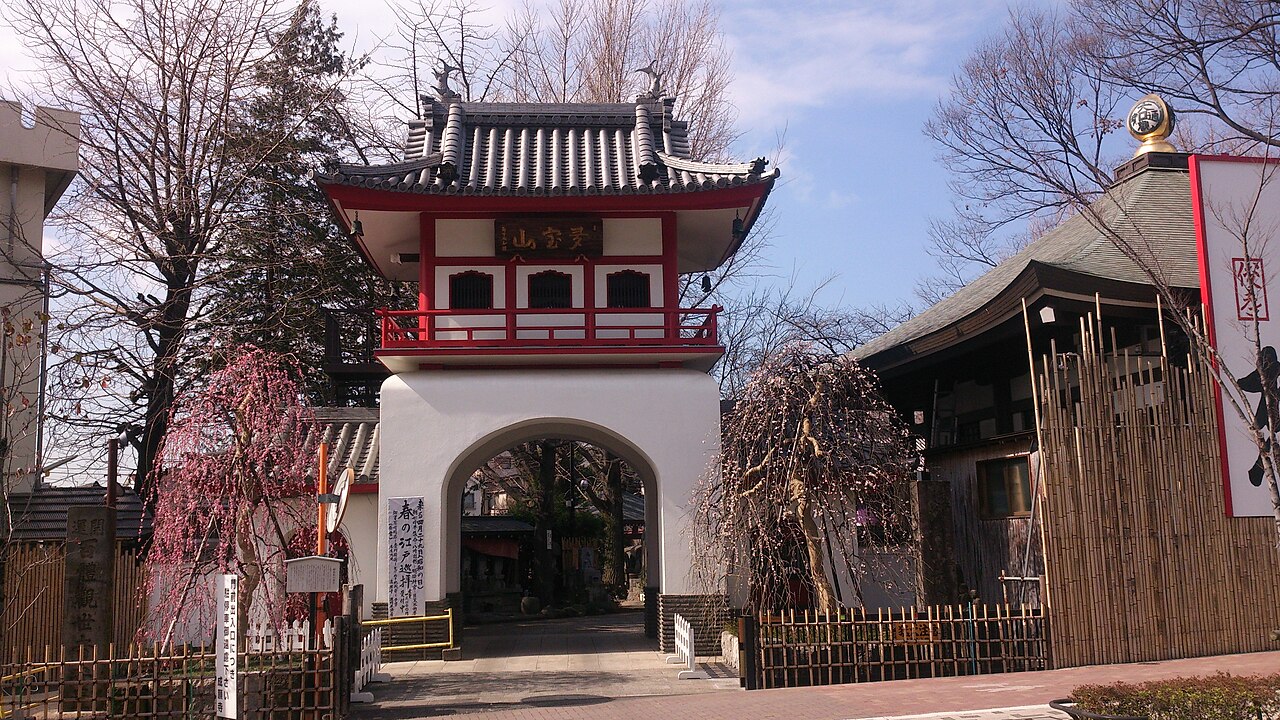
In the same hotel, just a few floors above Bob’s room, resides Charlotte, a girl in her early twenties that is going through a different, but in many ways similar, crisis. Just after finishing her studies at Yale as a Philosophy major, she married a photographer, and is accompanying him in Japan for work. The lack of certainty that her degree provides in the labour market, added up by her husband’s tight schedule and often distancing nature, makes her doubt her life’s choices and fear what the future holds. This is best shown as she tries to find a purpose by visiting Jogan-ji temple in Nakano, just west of Shinjuku, or when she aimlessly walks around the famous Shibuya Crossing, only to feel even more lost.

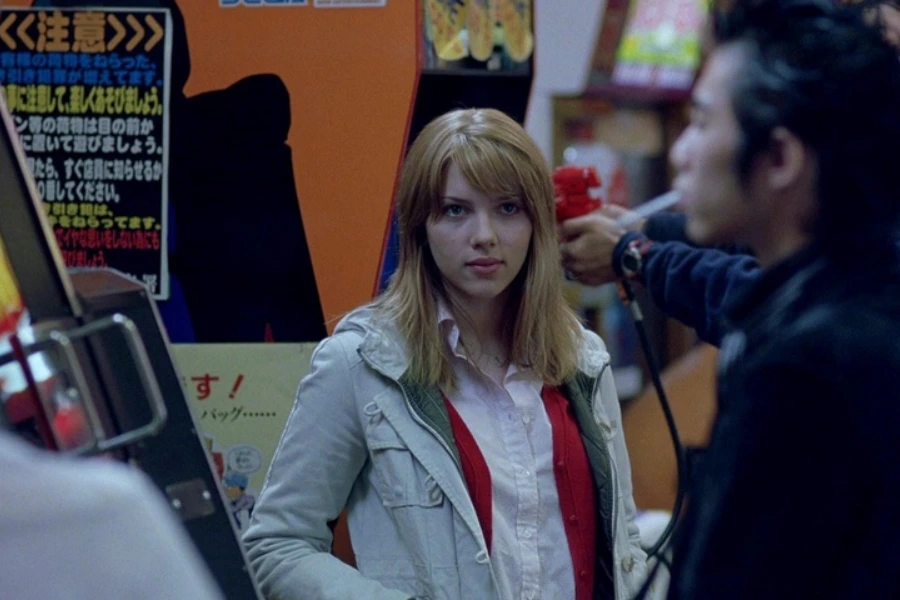
Halfway through the movie, the two characters finally get a chance to interact at the hotel’s 52nd floor New York Bar. After a few meetings, Charlotte invites Bob to go out with her and some friends, thus properly sparking their relationship. On this night out they drink at a bar, play in an arcade and, in one of the most famous scenes in the movie, sing songs by The Pretenders and Roxy Music in rooms 601 and 602 of Karaoke Kan’s Shibuya branch.
From there on out, the two characters start to become more intimate around each other, but, as critics rightfully point out, in a manner that never becomes sexual. In another famous scene, we see the two of them sharing a bed, fully clothed, as they confess their personal fears and the difficulties they’re going through, hoping to gain insight from each other’s perspective.
The film comes to an end as Bob leaves Japan, implying that both he and Charlotte will be returning to their respective spouses, but before the credits roll, he rushes to say goodbye, kisses her for the first time, and whispers something in her ear that remains a mystery to this day.
How Japan changes Bob Harris, from his hotel room to a Tokyo taxi

To understand how Bob’s perspective changed with his exposure to Japanese culture, we first must understand how he and Japan were designed to mirror each other.
As previously stated, Bob is going through a difficult period of his life; he believes his best days are behind him and throughout the film he finds himself constantly missing his acting career and the way that used to spark his marriage. These personal struggles are mirrored in Japan’s own challenges during the film’s setting. The country, once an economic powerhouse able to rival the US, was still recovering from the economic stagnation of the 90s, a period that eventually would be known as “The Lost Decade”.
At the beginning of Lost in Translation, Bob is eager to leave Japan as soon as possible. From his limiting perspective, the country is old-fashioned and alienating, full of cultural practices that he doesn’t understand. Crucially, he believes engaging in that culture would aggravate how antiquated he currently feels, which is why he remains in the hotel for half of the movie, a place that is designed to care for his every need. But, even in this place of comfort, something feels off, as demonstrated by one of the major plot points of the movie: Bob can’t sleep.
It’s not until he decides to hang out with Charlotte, a girl almost thirty years younger than him, that Bob finally gives Japan a chance. While enjoying a beer, arcades and karaoke along with Charlotte and her Japanese friends, he is able to challenge his preconceived ideas of the country, as he realises that the place can be youthful, quirky and fun. The film, to illustrate this point, shows us Bob sleeping for the first time right as the night is ending, and he drifts off in the back seat of a taxi, far from his hotel bed. There, illuminated by the same neon lights that contrasted so heavily with him in the opening scene, he can feel young again and sleep after a long night.
With Bob, Coppola shows us her perspective of how Japan went forward after the Lost Decade. The country successfully came to terms with its traditional way of life, without sacrificing the youthful entertainment that was gaining notoriety in this period, the same many of us came to know and love.
By the end, Bob finds it difficult to leave Japan. He has found in their culture a way to embrace his age and would at least like to take some of that knowledge back to the USA. Even though he still struggles to fully understand the culture, he has grown to appreciate it in a way he didn’t know before.
How Japan changes Charlotte, from Jogan-ji in Tokyo to Nanzen-ji in Kyoto

Unlike Bob, Charlotte doesn’t hesitate to explore Japan. Throughout the film we see her constantly engaging with the culture in many different ways. She, as the movie stand-in for the youth, is insecure about the future and her place in the world, so believes that by exploring the country she will find some sort of guidance.
Especially important for our discussion here is Charlotte’s status as a Philosophy major. In what’s perhaps one of the most revealing scenes of her character, we see her calling an American friend right after she visits Jogan-ji temple. As tears slowly come down her face, she tells her in disbelief that she saw the monks chanting and didn’t feel anything, which eventually leads to her talking about how alone she feels. In short, she went to the temple looking for an answer, the answer, a sudden epiphany that clarified her place in the world, but couldn’t find it.

Those familiar with eastern philosophy, and especially eastern religions, would’ve already spotted Charlotte’s mistake. Western philosophy, her field of study, is often considered more individually focused than eastern philosophy, and if we add religion into the mix, the idea of looking for “the answer” already comes into conflict. To give an example, Shintoism, one of Japan’s most practised religions, has no heaven of the Christian kind. It holds that we must be one with nature and, after our bodies reach their limit, we continue to assist the living as spirits of that nature.
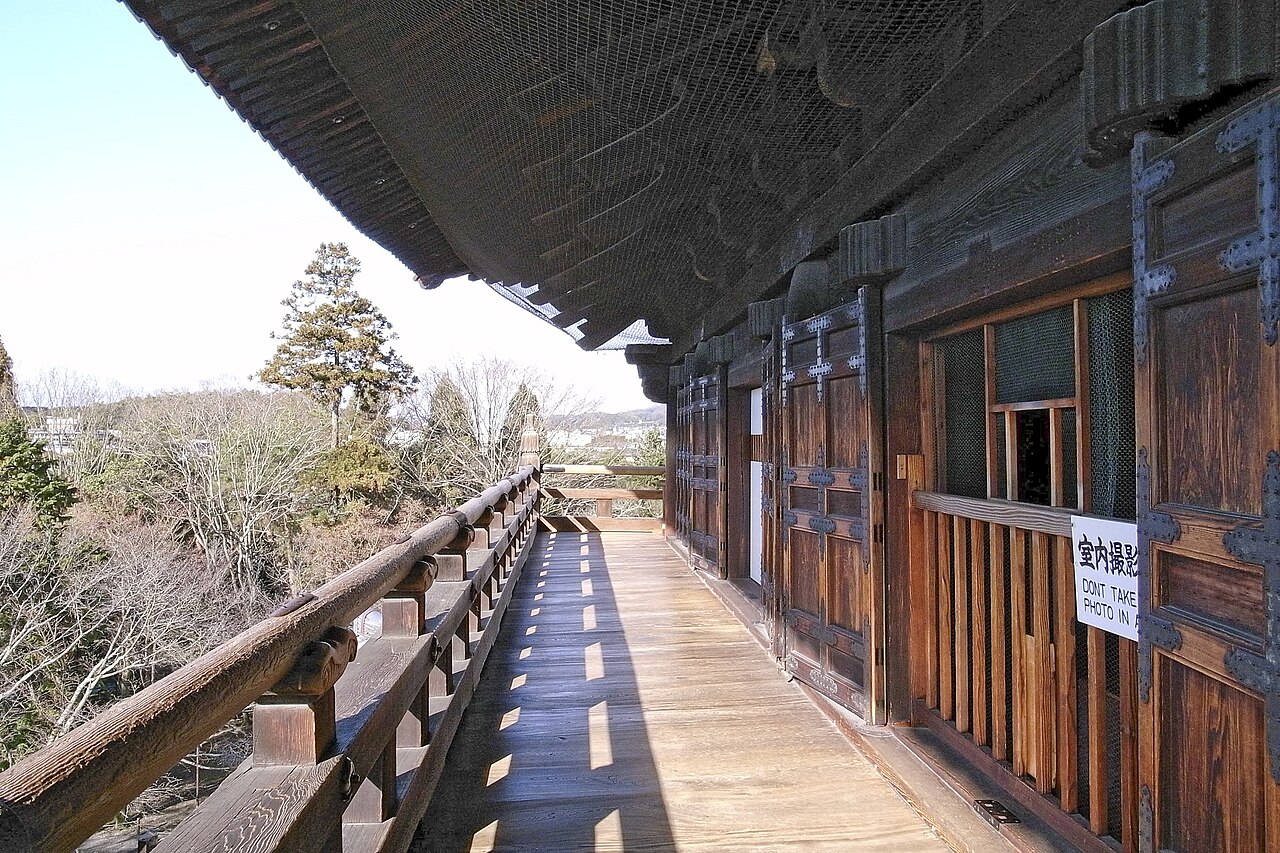
The problem with Charlotte’s approach is not only that she expected to find the answer to all her problems, but also that she did not think of anyone else while doing so. This is why it is so important when, after she meets Bob, she goes to Kyoto, because we see a very different reaction. Despite the fact that these scenes have no dialogue, as we watch her climb the steps to the Sanmon gate at Nanzen-ji (close to Keage station on the Tozai Line), cross the stepping stones in the garden of Heian Shrine and tie a wish written on a piece of paper to a tree, we can infer that this time she does feel something.
Thanks to her relationship with Bob, Charlotte slowly came to understand what she needed to learn from Japanese culture. As the movie comes to an end and it’s clear she will be returning to her husband, we no longer see her scared of the future. She still has doubts, of course, but now has learned that she is going through a stage of life and has come to accept that these are the challenges she has to face.
With this character, Coppola is showing us how Japanese culture can help us in the face of uncertainty, especially when we’re young. We must explore new environments, be open to different ways of thinking, learn from our elders and be at peace with our surroundings, because that’s one of the best ways to move forward when every step feels like jumping into a void.








Japan’s part in making Lost in Translation a modern classic

As Bob and Charlotte leave Japan to return to their respective lives, it is only fitting we end this article by returning to its opening statement: the film is a modern classic. Sofia Coppola crafted a piece of art that was profound and layered, where every decision had a purpose, including the camera work, the soundtrack and, as we explored, the setting.
The choice of Japan for Lost in Translation may seem like a superficial decision to some viewers, a mere nod to the filmmaker’s life, but if it was any other country it wouldn’t be the same movie. Sofia Coppola made sure to show Japan as a character that is alive, capable of surprising the other characters, changing their perspective and allowing them to see new possibilities for their respective futures.