At a glance
Kyoto rewards those who slow down. Among its quiet treasures, the Philosopher’s Path, or Tetsugaku no michi (哲学の道), invites reflection beside a tree-lined canal in northern Higashiyama. Stretching for about two kilometres, this peaceful walkway links two of the city’s most beautiful temples: Ginkaku-ji (The Silver Pavilion) and Nanzen-ji.
Named for philosopher Nishida Kitarō (1870 to 1945), founder of the Kyoto School of Philosophy, the path is where he once meditated daily as he strolled between lectures at Kyoto University. Today, it remains one of the city’s most contemplative and picturesque experiences, a space where nature, history, and thought intertwine.
The origins of a reflective route
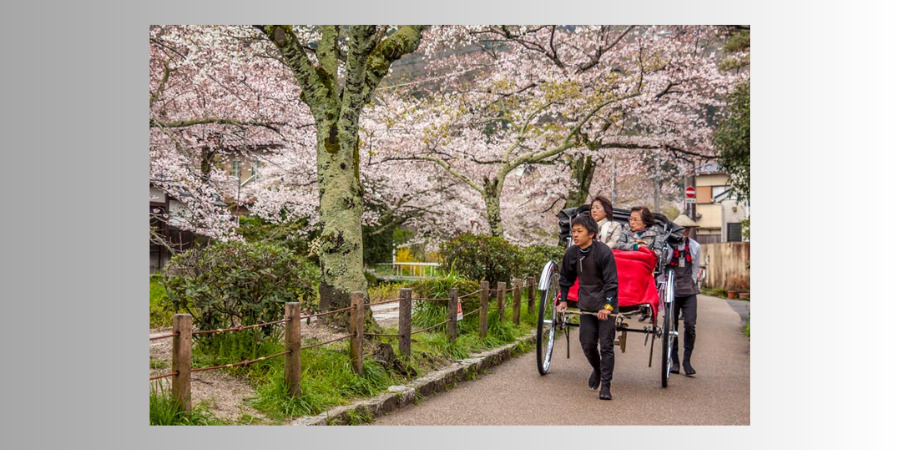
Its history begins in the early 20th century, when the stone walkway was built alongside the Biwa Canal, an engineering project carrying water from Lake Biwa to Kyoto. Locals began using the path for gentle strolls between nearby temples.
Later, Nishida Kitarō turned this stretch into a walking meditation route. His daily practice of walking and reflecting gave the path its name. While the original philosopher is long gone, the quiet rhythm of the canal still encourages unhurried thought.


Following the route
Most visitors begin at Ginkaku-ji, heading south towards Nanzen-ji. The full length is about two kilometres, around 30 to 45 minutes at a relaxed pace, though many stretch it into a half day by stopping at shrines, tea houses, and galleries along the way.
Direction matters less than timing. Walking south from Ginkaku-ji saves the grandest finale, Nanzen-ji and its aqueduct, for last, while starting from Keage Station clears the busiest southern stretch early. In cherry blossom season, arriving before 9:00am is the difference between a quiet canal and a procession.
To reach the northern end, take Kyoto City Bus route 5, 7, 32, 203 or 204 to the Ginkakuji-michi stop; city buses run on a flat ¥230 adult fare. Alternatively, start from the southern end by taking the Tozai Subway Line to Keage Station, a short walk from Nanzen-ji Temple, or ride the Keihan Line to Demachiyanagi Station and walk east for the northern end.
Both ends are marked on the free Kyoto walking maps handed out at tourist information offices.
What to see along the way
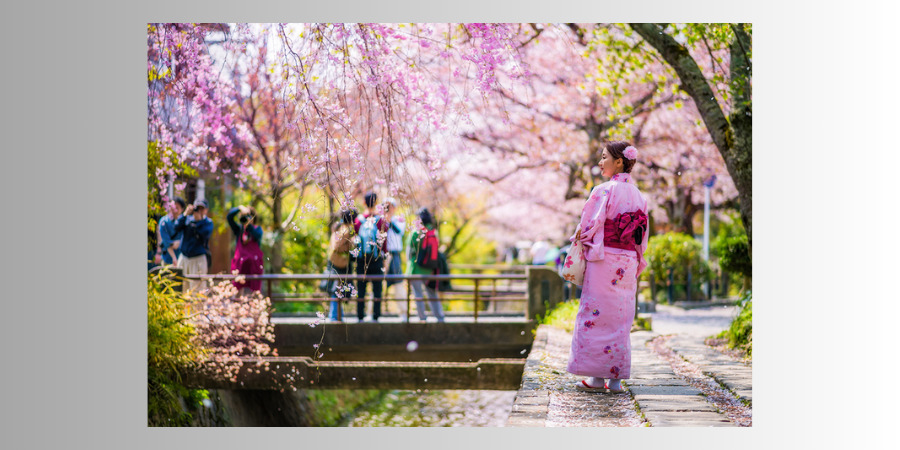
The canal walk is beloved for its seasonal changes. In early April, hundreds of cherry trees bloom in pastel clouds along the water, creating one of the city’s most peaceful hanami spots. During autumn, the same branches blaze red and gold, so spring and autumn are equally rewarding.
Beyond its beauty, the path passes some of Kyoto’s most atmospheric temples and shrines:
- Ginkaku-ji (Silver Pavilion): The northern trailhead. Open 8:30am to 5:00pm from March to November and 9:00am to 4:30pm in winter, with admission at ¥1,000 for high school age and above and ¥500 for elementary and junior high.
- Hōnen-in Temple: A quiet retreat surrounded by moss and trees. The grounds are free and open 6:00am to 4:00pm, while the temple buildings open just twice a year, from 1 to 7 April and 18 to 24 November, for an ¥800 preservation fee.
- Otoyo Shrine: A small, whimsical shrine known for its mouse guardian statues, reached by a short side path off the canal. Entry is free.
- Eikan-dō Zenrin-ji: Famous for autumn colours and its hillside pagoda views. Reception runs 9:00am to 4:00pm with gates closing at 5:00pm, and regular admission is ¥1,000 for adults. During the autumn treasures exhibition (11 November to 6 December in 2026) admission rises to ¥1,500, with a separate ¥1,000 ticket for the evening illuminations.
- Nanzen-ji Temple: A grand Zen complex where the canal disappears under the red-brick aqueduct. The grounds are free and open 8:40am to 5:00pm (until 4:30pm December to February, last entry 20 minutes before closing), with separate ¥600 tickets for the Sanmon gate and the Hojo garden and ¥500 for the Nanzen-in subtemple.
Hidden galleries, local artisan shops, and the occasional cat fill the gaps between temples, while nearby tea houses make inviting pauses. Among the most charming are the cafés tucked into restored townhouses, offering matcha ice cream and quiet garden views.
Walking and accessibility
The route is paved and mostly flat, making it accessible to most visitors. It is open 24/7, allowing morning solitude or twilight ambience depending on your mood. Signs along the way mark the nearby temples and rest areas.
Walking time varies, typically 30 to 45 minutes, though those keen on photography or temple stops might spend two hours. As a public walkway, it’s also free, and there’s no restriction on entry times.
For first-time visitors, both access points are easy to find:
- North end: Near Ginkaku-ji (take bus to Ginkakuji-michi stop)
- South end: Near Nanzen-ji, a short walk from Keage Station on the Tozai Line
Google Maps gives a good overview of the landmarks, with clear markings for the canal crossings and rest stops.








The seasons of the path

Each visit reveals a different personality.
- Spring: The canal transforms into a tunnel of pink petals, the classic cherry blossom stroll. Early mornings are best for peace before crowds arrive.
- Summer: Lush greenery shades the walkway, with the sound of running water offering calm during humid days.
- Autumn: Red maples frame stone bridges, creating one of Kyoto’s most photographed autumn walks. Colour usually peaks from mid to late November, which is also when Eikan-do runs its evening illuminations.
- Winter: A light dusting of snow makes the quiet walk even more contemplative, echoing its philosophical roots.
A walk through Kyoto’s philosophy
More than a pretty street, the Philosopher’s Path reflects Kyoto’s intellectual and spiritual heritage. The Kyoto School of Philosophy, founded by Nishida, was rooted in Zen and the idea that contemplation comes from direct experience with nature. That idea still runs along this canal, where movement and mindfulness coexist.
Many visitors describe it as a walking meditation, a place to pause, breathe, and reflect. Whether under cherry trees or crimson leaves, the path’s calm invites introspection, far removed from Kyoto’s tourist bustle.
For those planning cultural exploration, pairing the walk with the temples at either end, Ginkaku-ji and Nanzen-ji, fills a comfortable day.
Map of the Philosopher’s Path
Philosopher’s Path frequently asked questions
How long is the Philosopher’s Path?
The path runs for about two kilometres between Ginkaku-ji and Nanzen-ji, which takes 30 to 45 minutes at a relaxed pace. Allow two hours or more if you plan to enter the temples along the way.
Does the Philosopher’s Path cost anything?
The walkway itself is free and open around the clock. The temples charge separately: ¥1,000 for Ginkaku-ji, ¥1,000 for Eikan-do, ¥600 each for Nanzen-ji’s Sanmon gate and Hojo garden, while Honen-in’s grounds and Otoyo Shrine cost nothing.
When is the best time to walk it?
Early April for cherry blossoms and mid to late November for autumn colour, with early mornings before 9:00am the quietest in both seasons. Summer brings green shade and winter offers near solitude, so the walk rewards every season differently.
How do you get to the Philosopher’s Path?
For the northern end, Kyoto City Bus route 5, 7, 32, 203 or 204 stops at Ginkakuji-michi, with a flat ¥230 adult fare. For the southern end, take the Tozai subway line to Keage Station and walk down past Nanzen-ji to join the canal.
Final reflections
To walk the Philosopher’s Path is to encounter Kyoto at its most human scale, where philosophy, art, and nature meet quietly along a modest canal. Free of entry fees and distractions, it remains one of the most rewarding walks in the city, offering not just scenery but space to think.
Whether you start at Ginkaku-ji or Nanzen-ji, pause under the cherry blossoms, sip tea by the water, and let this tranquil scenic walk remind you why reflection remains one of Japan’s most beautiful traditions.