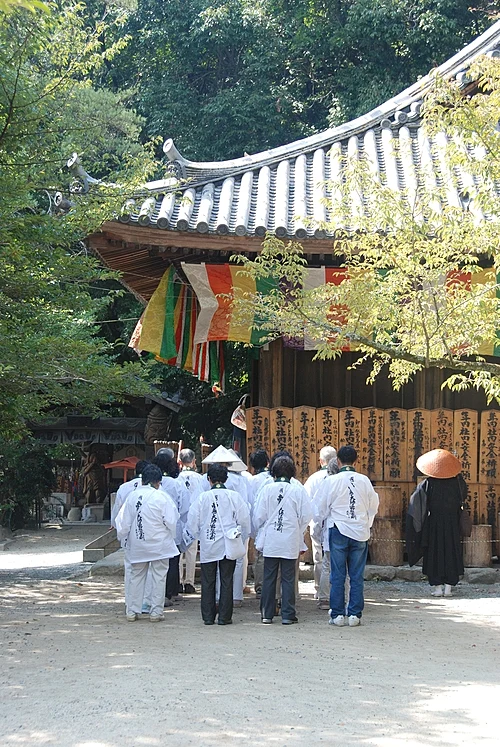
Shikoku, the smallest of Japan’s four main islands
Of the four main islands that form the majority of Japan, Shikoku, the smallest island of the bunch, is largely unexplored in comparison to its neighbours. Shikoku is a part of Japan that has been historically more secluded than the rest of the country. However, in turn, this island has a much more rural landscape; it’s home to serene coastlines, deep imposing valleys, and pristine waterways that have remained relatively unchanged, and is an environment that you might truly call idyllic.
Alongside this comes the benefit of preserved local tradition and culture. No matter where you find yourself in Shikoku, there is a deeper connection to tradition than perhaps elsewhere in Japan, even in the developing cities across its four prefectures of Ehime, Kagawa, Kochi and Tokushima. Therefore the island of Shikoku can feel like a world away from anywhere else and is a perfect getaway location.
Hopefully I’ve whetted your appetite for a trip to Shikoku.
To cement it even further let me introduce 12 things you should definitely see, do, and experience in Shikoku, Japan.
Shikoku at a glance


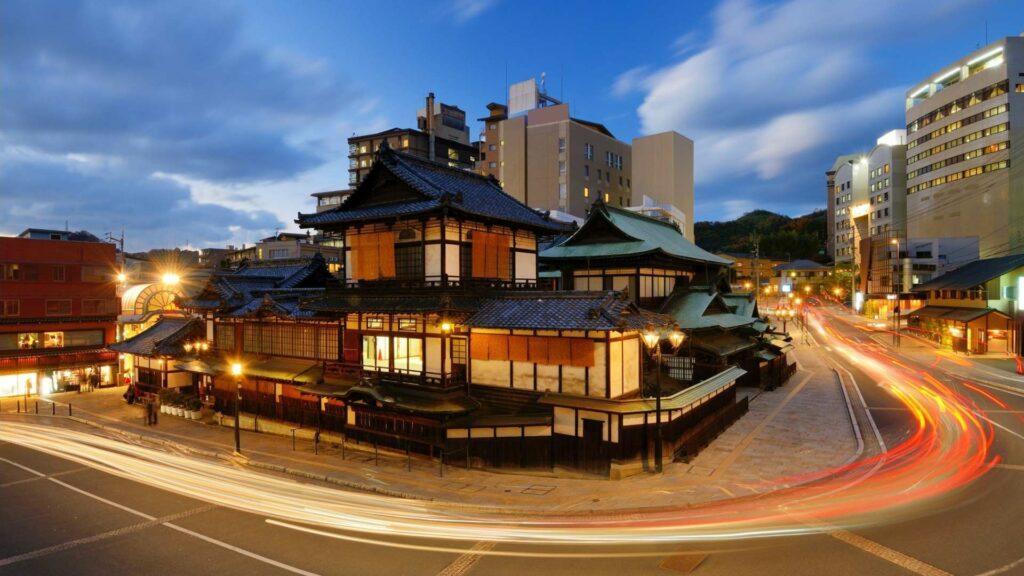
1. Bathe at Dogo Onsen Honkan in Matsuyama
Dogo Onsen is a hot spring resort with a history said to stretch back about 3,000 years, and it is often described as the oldest onsen in Japan. It sits at the top of the list of things to do in Matsuyama City.
There are worse things to do than spending an evening soaking in the warm onsen waters and relaxing in the tatami rest rooms upstairs, where the second floor and private room courses come with a rental yukata, tea and Japanese sweets. Afterwards spend time walking the immediate vicinity in a traditional yukata, where numerous other onsens and ryokans populate the area.
The main bathhouse, Dogo Onsen Honkan, reopened in full on 11 July 2024 after five and a half years of conservation work carried out while the baths stayed open. A soak in the downstairs Kami-no-Yu bath costs 700 yen for adults, and the second floor course with a rest area costs 1,300 yen.
While you will have already bathed the body, your mind will bathe amongst the site’s historic charm and character that you cannot help but be in awe of. The architecture is second to none in terms of being uniquely Japanese in style and is a sightseeing spot in its own right. Fans also link the building with the bathhouse in Spirited Away, which is why it opens our guide to Studio Ghibli locations you can visit.
2. Zipline 220 metres across the Shimanto River
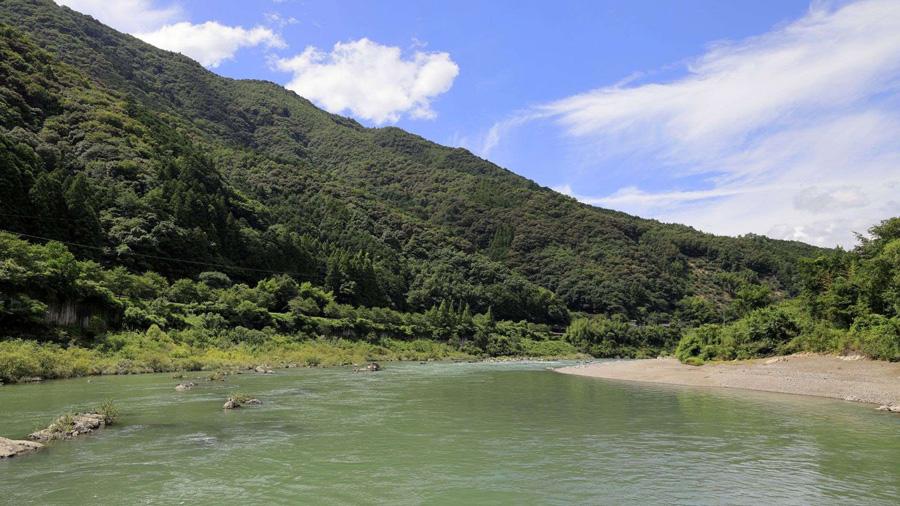
Flowing through western Kochi Prefecture is the Shimanto River, at 196 km (about 122 miles) the longest river in Shikoku. Amongst the flowing waterway surrounded by picturesque hillsides is an unobtrusive setup allowing the chance to zipline across this beautiful landscape.
The Shimanto River Zipline lets you see the river from both up close and from the air. After checking in at the Shimanto Towa roadside station, staff drive you to the start tower on the opposite bank. From about 20 metres up, you then fly 220 metres back across the water in a ride of 20 to 30 seconds, with views up and down the valley. The whole experience takes about 40 minutes and costs 2,130 yen for adults and 1,470 yen for under 18s.
Although tucked out of the way, the zipline can be reached by local train. Tōkawa Station on the JR Shikoku Yodo Line is about a 30 minute walk away.
3. View the Seto Inland Sea from Imabari and Aji
While being an island has the benefit of an eventual 360 degree coastline, the northern portion looks across Japan’s Seto Inland Sea and is often regarded as one of the most spectacular landscapes of the entire country.
With a northern coastline that stretches for approximately 190 miles, there are a lot of points where you can appreciate its beauty, and a few that may prove to be particularly special.
You can find the first two in the city of Imabari. One is the Kurushima Strait Observatory, which sits near the water’s edge. The other, slightly further inland, is a fantastic vantage point named the Chikamiyama Observatory. Towards the eastern end of the coastline, Aji Ryuozan Park sits on top of Mount Ryuo in Takamatsu, with views over the islands from the Seto Ohashi Bridge in the west to Awaji Island in the east.









4. Explore Matsuyama Castle and its 1854 keep
In the heart of Matsuyama City, the capital of Ehime Prefecture, lies the spectacular Matsuyama Castle.
Sitting on top of Mount Katsuyama, 132 metres above the city, Matsuyama Castle dominates the area with its imposing presence. The site is a complex of gates, turrets, walls and keeps. Building began in 1602 under the feudal lord Kato Yoshiaki and took around a quarter of a century. The main keep you see today was rebuilt after a lightning fire and completed in 1854, which makes it one of only 12 original castle keeps still standing in Japan.
Japanese castles are always an impressive sight for those who enjoy viewing Japanese architecture and this one doesn’t disappoint in that regard. It’s also a location that is home to a number of cherry blossom trees and is known to be a fantastic viewing spot in the spring.
The Honmaru square at the summit is free to explore. Entry to the keep, where exhibits tell the castle’s history, costs 520 yen for adults and 160 yen for primary school children, and a return trip up the hill on the ropeway or chairlift costs 520 yen for adults. Opening hours and prices are on the official Matsuyama Castle website.

5. Walk to Todoroki Falls and Todoroki Shrine in Kaiyo
After all the talk of natural scenery it would be a shame not to witness it, and a trip to Todoroki Falls gives you that chance.
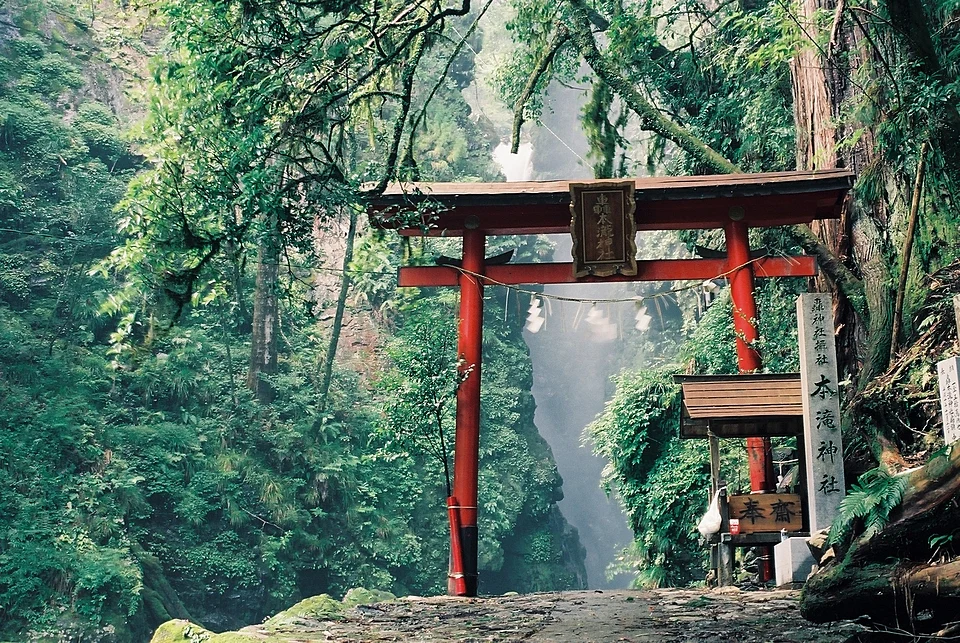
On the east side of Shikoku, in Kaiyo Town in southern Tokushima Prefecture, a walking trail leads up a valley of waterfalls known as the Todoroki Kujuku Taki, or Todoroki Ninety Nine Falls. The main fall, Todoroki Hontaki, is listed among Japan’s Top 100 Waterfalls, and several smaller falls line the valley above it.
The trail from the main fall up to Nabewari Falls takes about an hour each way and passes Todoroki Shrine, torii gates and bridges that create a somewhat mystical environment amongst the lingering water spray. At the shrine’s autumn festival, its portable shrine is carried into the waterfall pool.
Kaiyo is the closest hub to begin your journey from. Buses run from JR Awa-Kainan Station to the Todoroki Jinja stop, about a five minute walk from the main fall.
6. See 33 historic buildings at Shikoku Mura in Takamatsu
Over in Takamatsu, at the foot of Mount Yashima, Shikoku Mura, or Shikoku village, is an open-air museum showcasing Japanese architectural styles.
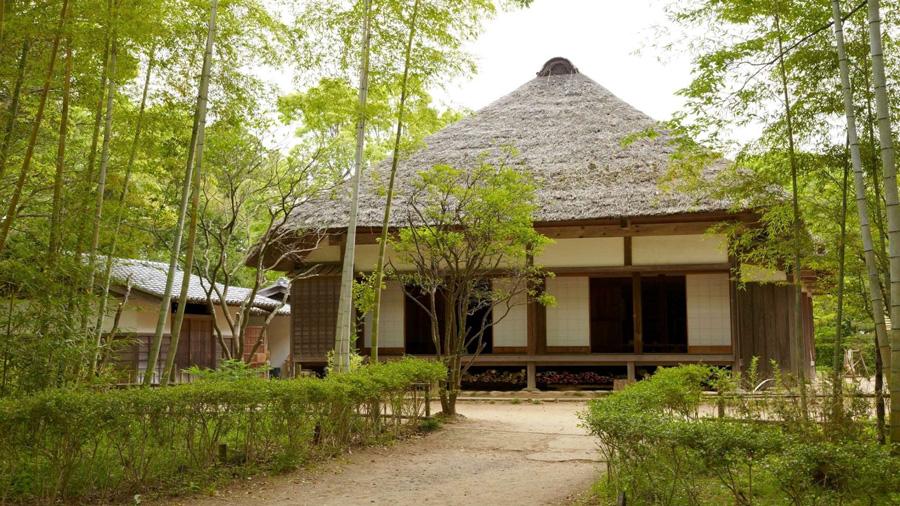
Here you can find 33 historic buildings moved from all four prefectures of Shikoku and restored, dating from the Edo period to the Taisho era (1912 to 1926). They include farmhouses, a kabuki theatre, a rice storehouse and a soy sauce brewery. Taking a stroll around the site that spans 50,000 square metres across its entirety can be enjoyable in itself, as you enter and observe these immaculately preserved remnants of a different era.
7. Take a boat around Ritsurin Garden in Takamatsu
If you are looking for somewhere truly idyllic without venturing too far, a trip to Ritsurin Garden should be an absolute certainty.
This public garden is another spot that sits amongst the bustling city of Takamatsu, however, once inside, all traces of city life vanish completely. This immaculately curated garden, completed in 1745 and covering 75 hectares, has everything from bridges to teahouses such as Kikugetsu-tei, and a network of six ponds and streams so vast that you can take a traditional wasen boat ride around the South Pond (850 yen for adults).
One of the most impressive features is its use of ‘borrowed landscape’, in which the forested slopes of Mount Shiun behind the garden make the space feel so much bigger and more isolated than it truly is and provide a stunning backdrop to the entire area.

8. Make Sanuki udon at Udon House in Mitoyo
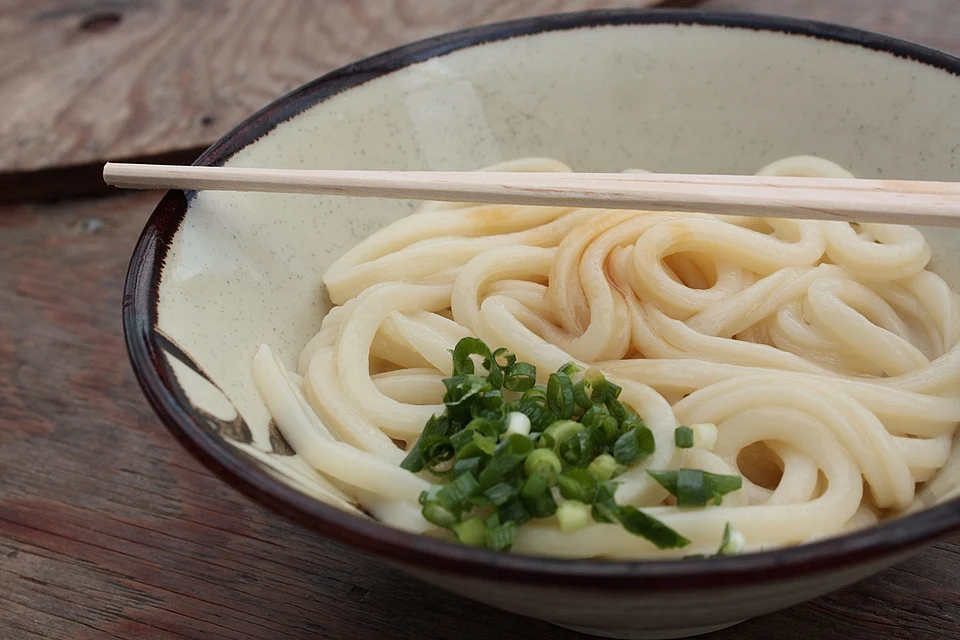
In the north-easterly prefecture of Kagawa, you should certainly try the regional speciality of Sanuki udon. Compared to other udon varieties, Sanuki noodles are even thicker with a chewy texture, while the broth is made from dried sardines.
But why stop at just trying this local cuisine when you can take part in making it?
In the smaller city of Mitoyo, in western Kagawa, is a place known as Udon House. Here you can spend up to two days learning the ins and outs of udon, making your own noodles from scratch with local udon specialists, visiting the farms that grow the toppings, and of course indulging in local and personally made udon dishes. Since April 2026 Udon House has opened mainly at weekends, so book ahead.
9. Climb Mount Ishizuchi, Shikoku’s 1,982 metre peak
Mount Ishizuchi, in Ehime Prefecture, is the highest peak on Shikoku and in all of western Japan, and climbing it is a popular day out.
At 1,982 metres high, this climb isn’t for the faint of heart, but you’ll find no better view across the region should you make it to the summit. The journey to the peak uses rocky trails and four near vertical chain sections that you pull yourself up, although a detour path lets less confident climbers bypass the chains.

10. Raft the Yoshino River through the Oboke gorge
If you are looking for something a little more active, then rafting is something you can find in Shikoku too.
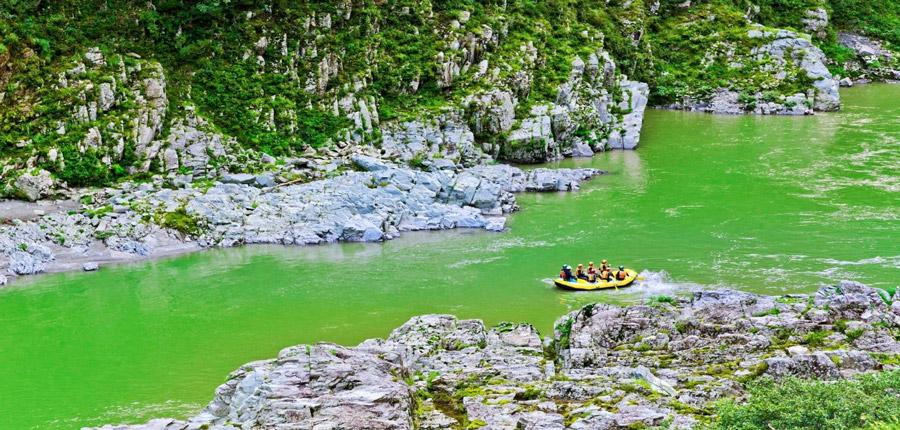
There is a portion of the Yoshino River in the west of Tokushima Prefecture, through the Oboke and Koboke gorges in Miyoshi City, that is perfect for rafting, with both white water and calmer sections for those wishing for a gentle boating experience. This stretch of gorges is about 8 km long, hosted the World Rafting Championships in 2017, and has numerous rafting companies dotted up and down it.
Conveniently, the JR Dosan Line has stops along the gorge as well, including Oboke Station, which is also where buses leave for Ochiai, a hillside village in the Iya Valley.
11. Walk the Nakatsu Gorge to Uryu Falls
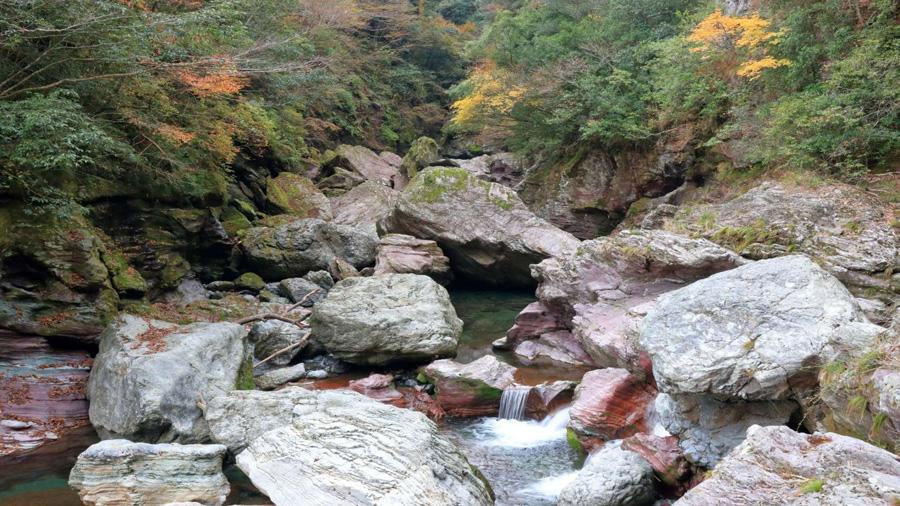
With Shikoku’s vast untamed landscape, it should be no surprise that there is another walking trail waiting to be discovered, this time it’s the Nakatsu Gorge in Niyodogawa Town, central Kochi Prefecture.
This 2.3 km riverside walk, although remote, feels less so when you are there. It’s a popular tourist spot and as such numerous facilities have popped up nearby. The route itself takes you alongside clear blue streams and between narrow rock formations that loom large overhead, with stone statues of the Seven Lucky Gods tucked among the boulders.
There are man-made paths, stepping stones and small bridges here, which allow you to focus more on the scenery and less on the work required to reach the destination. The final point along the route is Uryu Falls (Uryu no Taki), where the river drops about 20 metres into clear blue pools.
12. Walk the Shikoku 88 temple pilgrimage
You may have noticed that so far only one shrine has come up on this list. In truth, Shikoku is home to hundreds of temples and shrines, and visiting some is definitely recommended. The island also has a unique way to appreciate them.
Shikoku is home to the 88 Temple Pilgrimage, which follows in the footsteps of the Buddhist monk Kūkai, known after his death as Kōbō Daishi. It is believed these are places he spent time and trained during his life. The full circuit is about 1,200 km and takes around six weeks on foot, so many pilgrims, known as henro, walk it in sections over several trips.
While some will perform the pilgrimage for religious reasons, for many others it’s a fantastic way to see everything that Shikoku has to offer. The route snakes round the entire island through all the major cities and some fantastic sightseeing spots. The temples themselves are also great sightseeing spots in their own right with great architectural features and stunning scenery.
By the time that you finish you will have seen most of what the island of Shikoku has to offer and feel a great sense of satisfaction, even in a non-religious sense.