In Osaka, there’s an expression called kuidaore (食い倒れ) which roughly translates to “eat ‘til you drop.” It’s no surprise this phrase originated in Osaka, as this city is known as the food capital of Japan. Osaka is even referred to as tenka no daidokoro (天下の台所) which means “Japan’s Kitchen!”
Delve into Osaka’s food and traverse through rows of street stalls, markets, and diners that deliver bold and exciting flavours that’ll leave your bellies full and satisfied. Osakans and their love for food knows no bounds, so you need to match their level of passion!
Dedicate your Osaka trip to their street food, main meals, and desserts. In this guide, we spotlight 10 must-try dishes in Osaka; street food favourites, dinner classics, and top desserts.
What you need to eat in Osaka
Street food favourites
Takoyaki – たこ焼き (Octopus Balls)
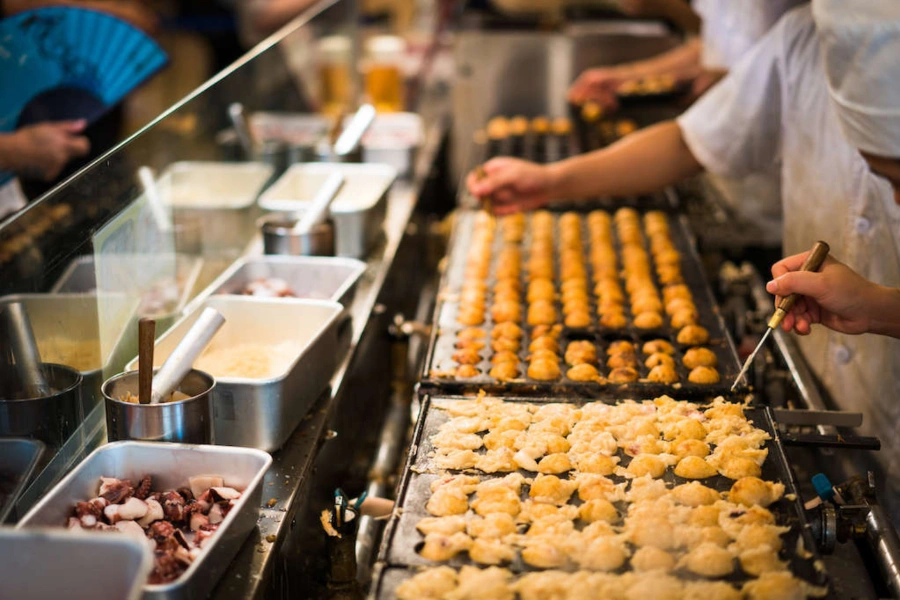
In the 1930s, a street vendor in Osaka named Tomekichi Endo, wanted to create a snack that the locals could enjoy either hot or cold with a beer. He experimented on different dishes, combining the rajioyaki ラジオ焼き (dumplings filled with konjac, red pickled ginger, snow peas, and shoyu) and the akashiyaki 明石焼き (snack with egg-rich batter and octopus) and thus, creating the iconic takoyaki balls!

Image Credit: Trip to Japan
With a core batter consisting of wheat flour, eggs, dashi broth, and soy sauce – takoyaki cooks into a crisp, golden-brown exterior that has a creamy interior filled with octopus bits. tenkasu 天かす (tempura scraps), green onions, and pickled ginger are also included to spice up the flavour. Before serving, street vendors sprinkle toppings such as takoyaki sauce, Japanese mayo, powdered seaweed, and dried bonito 鰹節 to complete the snack.
What makes takoyaki so special is its contrast of textures (crispy on the outside, creamy on the inside), its visual flair, and its affordability. In Osaka, you’ll find tons of street food stalls selling bundles of takoyaki for around ¥400–¥800 for 6–8 pieces. Because it’s served hot and fresh, takoyaki is eaten best on a cold day, but locals say takoyaki is perfect for any time for snacking!
Okonomiyaki – お好み焼き (Savoury Pancake)
The history of okonomiyaki is admirable – amid rice shortages post-World War II, the locals of Osaka had to find ways to feed one another on limited ingredients. With a blend of wheat flour, cabbage, and toppings like bonito flakes, the okonomiyaki was born! It gained massive popularity for its affordability and easy eating as a savoury pancake dish.
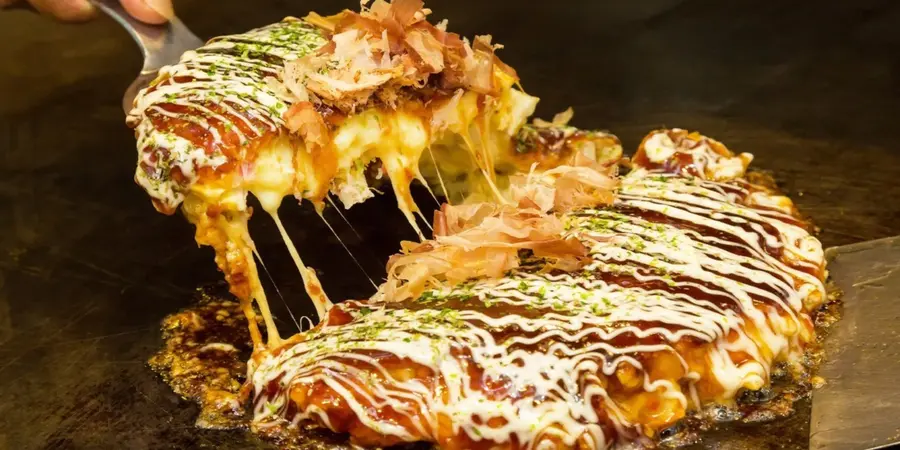
Image Credit: Agoda
Nowadays, okonomiyaki is widely sold throughout Japan with different variants, yet Osaka’s version remains the original. The base batter combines flour, eggs, dashi, yam, and shredded cabbage; plus common proteins such as pork, shrimp, squid or beef. It’s not okonomiyaki without its toppings which include okonomiyaki sauce, Japanese mayo, dried bonito shavings, and green seaweed powder.
In Osaka, okonomiyaki is usually cooked right in front of you. You get to see how these savoury pancakes are made on a steaming teppan 鉄板 (flat griddle) before serving them to you and your companions. A standard single serving costs about ¥800–¥1,500 at restaurants in Dotonbori, but street stalls also sell them for around ¥600–¥1,000.
Kushikatsu – 串カツ (Deep-fried Skewers)
Another street classic in Osaka is kushikatsu or deep-fried skewers that originated around 1929 in Osaka’s Shinsekai district near Tsutenkaku Tower. A shop owner wanted to create a simple dish for blue-collar labourers during this time by battering and frying ingredients such as meat, seafood, and veggies on sticks.
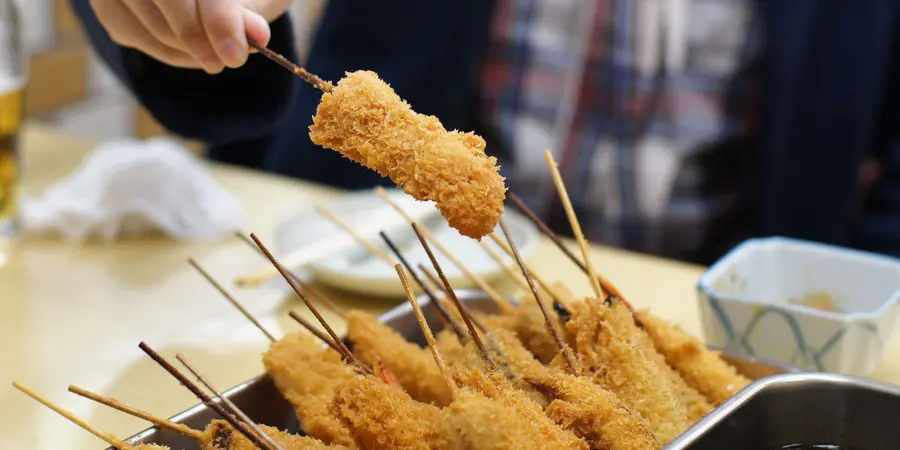
Image Credit: Matteoingiappone
Kushikatsu is a dish that is the opposite of complex – it merely consists of meat, seafood, and veggies coated in flour, egg, and panko パン粉 (breadcrumb) batter that is deep-fried to a crisp. On the side, you’ll have a variety of sauces to choose from; a sweet-savoury Worcestershire-like sauce, mustard, or tartar.
The appeal of kushikatsu stems from its ultra-crispy batter that locks in the juicy fillings, with a sacred “no double-dipping” rule at restaurants with shared sauce trays! Most people enjoy their kushikatsu with a beer or two, making it a staple in Japanese bars and pubs. Expect a cost of ¥500–¥1,200 for a set of 5–10 skewers; it’s cheap, delicious, and easy to eat!
Negiyaki – 葱焼き (Green Onion Pancake)
If you like okonomiyaki, then let us introduce to you its lighter and crispier friend – negiyaki! A thinner green onion pancake akin to okonomiyaki, this dish highlights heaps of chopped green onions mixed in a batter of wheat flour and water. After fried thin on a griddle, chefs splash the pancake with soy sauce and lemon juice for that zingy flavour!
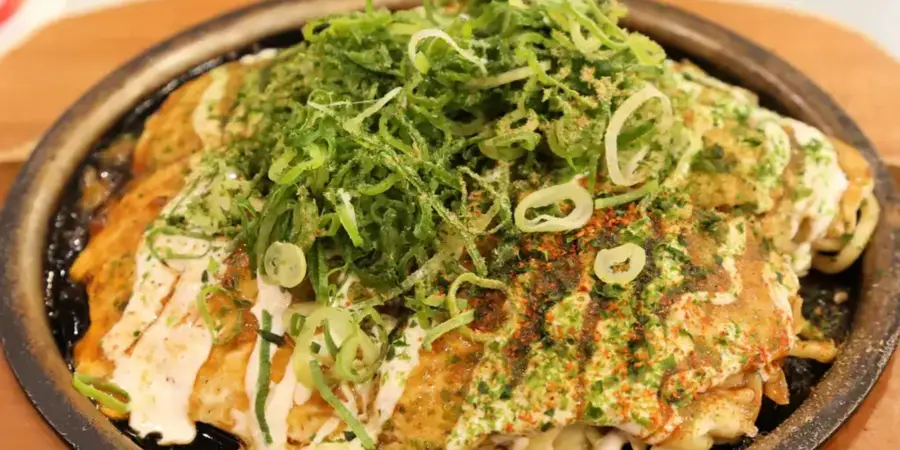
Image Credit: Sakura Co
Negiyaki is straight-to-the-point as a quick snack for hungry people who are on-the-go. It originated in Osaka around 1965 where a shop owner improvised a cabbage-free version of okonomiyaki. Now, negiyaki has become its own entity, a gourmet staple in restaurants and street stalls in Osaka that are sold for around ¥600–¥1,000.
Osaka Dinner Classics
Kitsune Udon – 狐うどん (Thick Noodles with Fried Tofu)
For the soup lovers out there, Osaka is proud to serve you their Kitsune Udon! Featuring thick udon noodles topped with sweet-savoury fried tofu, you can find this soup dish at local restaurant shops in Osaka for only ¥500–¥900 per bowl. It’s a comfort food staple for a lot of Osakans because of how warm, hearty, and delicious it tastes.

Image Credit: Recipes
The charm of Kitsune Udon is its rich dashi broth along with the thick, bouncy udon noodles and the sweetened fried tofu sheets simmered in mirin-soy glaze. Most Kitsune Udon bowls also have green onions in them and sometimes kamaboko 蒲鉾 fish cake. Unlike ramen bowls that have a lot of heavy toppings in them, Kitsune Udon aims for a more pure and clean flavour to truly highlight the stars of the dish: the broth, the udon noodles, and the tofu.
If you’re curious about the name of the dish, kitsune means “fox” in Japanese. They say that aburaage 油揚げ (Japanese fried tofu pouch) is a fox’s favourite food in Japanese folktales, so that’s why people call this dish kitsune udon! Now, Kitsune Udon has become part of Osaka’s food capital legacy as an everyday staple enjoyed hot for breakfast, lunch, or dinner.
Yakiniku – 焼肉 (Japanese BBQ)
Yakiniku, which translates to “grilled meat” in Japanese, refers to a style of cooking slices and pieces of meat on gridirons over a flame. A quick history fact: yakiniku was introduced by Korean immigrants in Osaka after World War II where they introduced the original version called gogi-gui (고기구이).
In a typical modern yakiniku restaurant, prepared raw ingredients are brought to the table and the customers cook it themselves on a grill built into the table. Tare タレ, also known as dipping sauces, are served on the side for customers to dip their freshly cooked meats in before eating them. It’s a very interactive eating experience which makes it enjoyable for groups of people who like to cook and share food together.
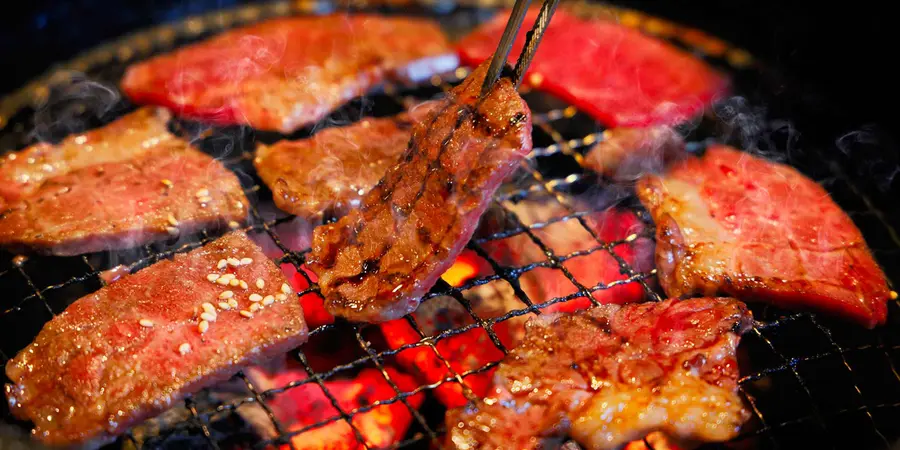
Image Credit: Inspired Pencil
Yakiniku has become one of the most popular dishes in Japan, mainly because of its variety of ingredients. You get to grill different kinds of meat (beef or pork), try out various sauces, and even eat side dishes like rice, vegetables, miso soup, and potato salad. Depending on the restaurant, you can enjoy Yakiniku through an all-you-can-eat setup (¥2,500–5,000 per person) or through set plates (¥1,000–3,000).
Horumon – 臓物 (Offal BBQ)
Can’t get enough Japanese BBQ? Here’s one that’s a bit different. Horumon is similar to Yakiniku except that the meats that are grilled in Horumon are mainly offal. Offal refers to organ meats of an animal used as food, and in Japan, it usually includes hatsu ハツ (heart), reba レバー (liver), mame マメ(kidney), and shiro シロ (intestine) from cows and pigs.
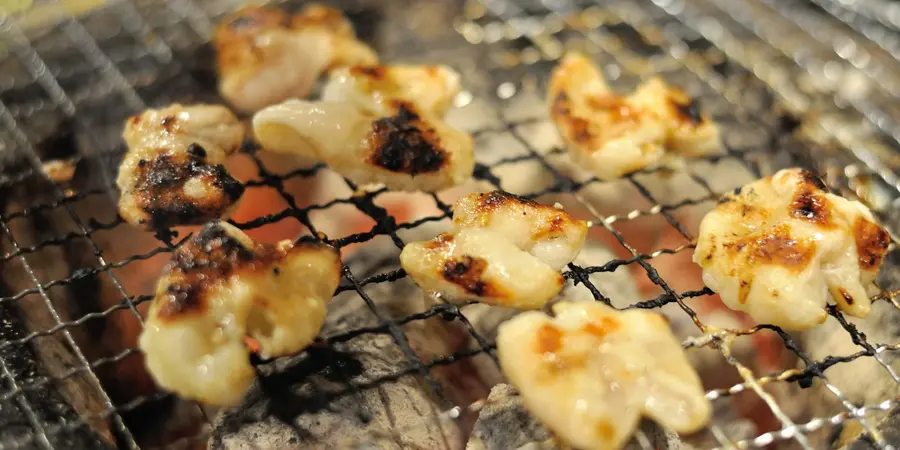
Image Credit: Magical Trip
Some people may find offal unpleasant to eat, but the Japanese believe in the mentality of mottainai 勿体ない which means “not to waste.” They value almost every part of the animal for cooking, especially in the 1940s when Osaka was facing meat shortages. Offal meat is also incredibly rich in nutrients, making it a favourite among health-conscious locals and tourists.
Horumon dishes are typically found in Yakiniku restaurants and izakaya 居酒屋 pubs, as they’re easily paired with alcoholic beverages. Sets of horumon meats cost ¥800–¥1,500 while all-you-can-eat runs ¥2,000–¥4,000, much cheaper than yakiniku for its variety and volume!
Oden – 関東煮 (Hotpot Stew)
Another comfort dish that Osakans love to eat is oden, a comfort hotspot stew of simmered ingredients that will keep you wanting more! Oden emerged from another dish called dengaku 田楽, which is grilled tofu skewers topped with miso. By adding daikon 大根, konnyaku 蒟蒻, and fish cakes in a soy-dashi broth, Oden was created and is now a winter soul food staple in Japan.
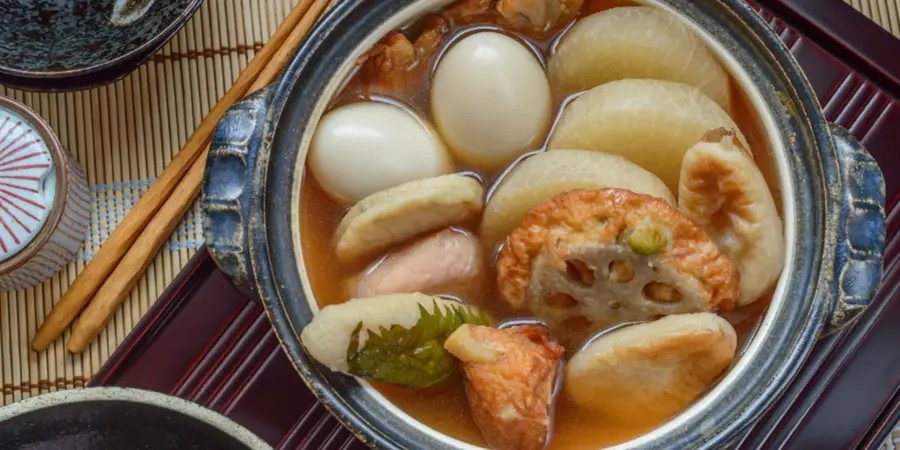
Image Credit: Guidable
Those who crave Oden crave for its warmth, comfort, and heartiness. Its soulful broth and combination of ingredients (boiled eggs, tofu pouches, kombu kelp, and more) have people ordering it during chilly evenings at izakayas or buying ready-to-make versions at convenience stores. Single servings cost around ¥500–¥1,000 while konbini packs cost only ¥300–¥600.
Sweet treats from Osaka
Taiyaki – 鯛焼き (Fish-Shaped Dessert)
In Osaka’s street stalls, convenience stores, and supermarkets – you’ll find these cute fish-shaped waffles for sale. They’re called taiyaki and they’ve been around since 1909 during the Meiji era! It all started when Seijiro Kobe, a street vendor, was struggling to sell imagawayaki 今川焼き(round red bean pancakes) so he decided to bake them into dish shapes resembling tai 鯛, Japanese sea bream which is considered a symbol of luck and fortune in Japan. Since then, it has become a popular snack among everyday folks in Osaka.
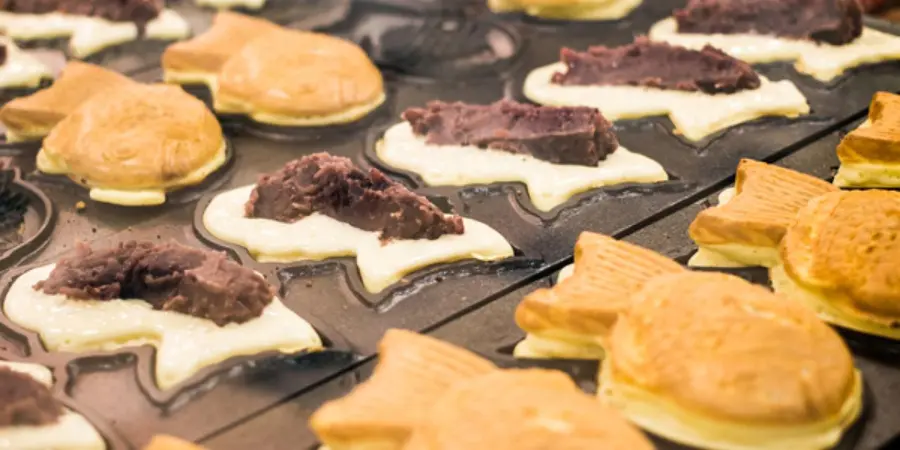
Image Credit: Food Network
Although taiyaki is mostly known for its adorable fish shape, what makes this dessert a crowd favourite is also its taste. Its batter mixes flour, eggs, sugar, water, and baking powder while its typical filling consists of smooth anko 餡子 (sweet azuki bean paste). Other taiyaki variations include custard, chocolate, or matcha fillings. No toppings needed!
Let’s not forget its texture too; a crisp golden exterior envelopes the soft interior. The size of a taiyaki is perfect to hold on-the-go and its sweetness is perfect for a quick dessert fix. You can find this cheap treat almost anywhere in Osaka; one piece costing ¥150–¥300 only!
Rikuro Cheesecake / Pablo Cheesecake (local desserts)
Osaka’s dessert culture has evolved over time, with various desserts dominating the culinary sphere. One of the many bestsellers in Osaka’s dessert scene is Rikuro Cheesecake, a type of cake that went viral in recent years for its fluffy and jiggly texture. You’ll notice the jiggle the moment you see the cake – it wobbles like jelly!

Image Credit: Ask The Man
Another iconic dessert in Osaka is Pablo Cheesecake, a bakery that specialises in cheese tarts from Kobe that made a name for itself in Osaka. Their main dessert, their mini tarts, boast a caramelised, burnt exterior cracking into velvety, tangy filling. Pablo Cheesecake has become a modern melt-in-mouth delicacy, trending among kids and young adults of today.
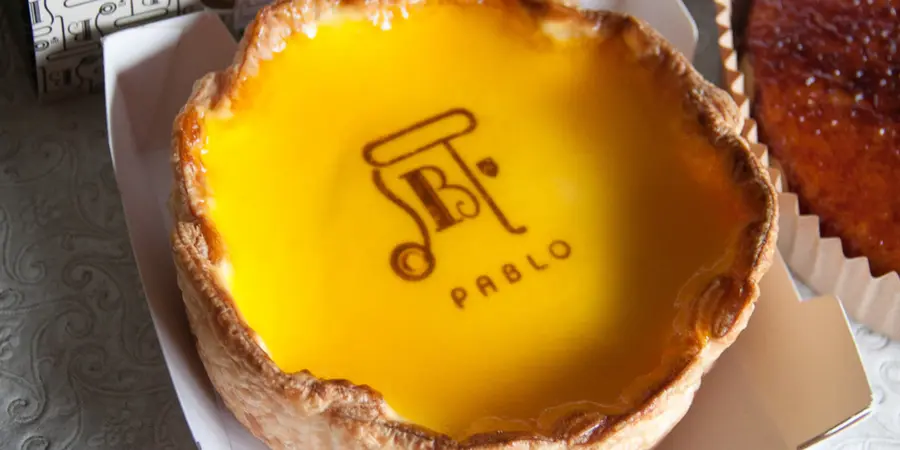
Image Credit: Our Awesome Planet
These two bakeries have made a huge impact on Osaka’s dessert economy as locals and tourists wait in long lines just to get a taste of their goodies which range from ¥900–¥3,000. Both Rikuro Cheesecake and Pablo Cheesecake have multiple branches all over Osaka.
Planning your food route is much easier once you’ve chosen a base. If you’re still deciding, here’s our guide to where to stay in Osaka for the first time, broken down by neighbourhood vibe and budget.
Where to eat in Osaka
Dotonbori – 道頓堀 (Street food & nightlife)
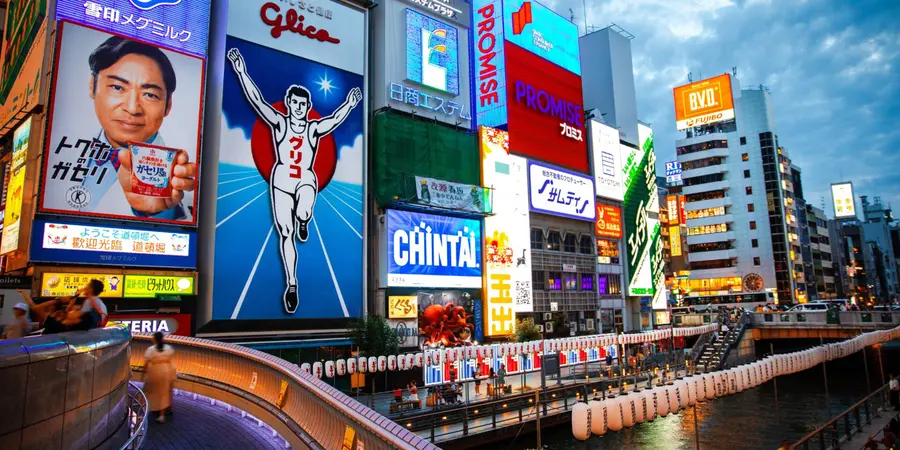
Image Credit: Nippon Narrative
Any person travelling to Osaka knows that Dotonbori is a must-add to the itinerary. Missing out on Dotonbori means skipping the city’s most electric food-and-neon corridor, where street stalls, late-night cafés, and riverside crowds keep the energy rolling well past dinner. If you want the bigger picture on how Dotonbori connects to Namba and Shinsaibashi in one easy circuit, read our Minami area guide (Namba–Dotonbori–Shinsaibashi).
- For Takoyaki: Takoyaki Wanaka Dotonbori (~¥1,000)
- For Okonomiyaki: Okonomiyaki Mizuno (¥1,000–¥2,000)
- For Izakaya: Sake-dokoro Daikichi Dotonbori (¥1,000–¥2,000)
Shinsekai – 新世界 (Kushikatsu and local diners)
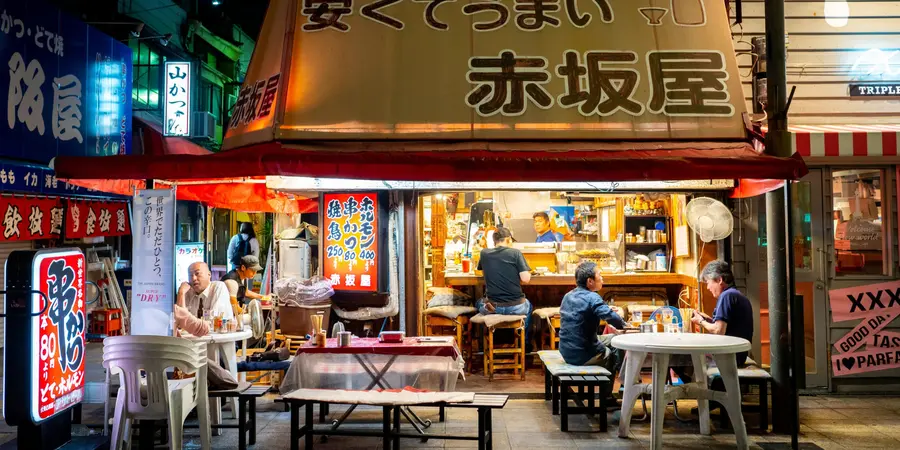
Image Credit: Expedia
Shinsekai is an entertainment district in Osaka that remains timeless in its retro and nostalgic energy. The district’s centerpiece, the Tsutenkaku Tower, is a popular tourist destination that offers panoramic views of the city. In Shinsekai, you’ll find a lot of diners, casual restaurants, and simple eateries such as the following;
- For Kushikatsu: Kushikatsu Daruma – Hozenji (¥2,000–¥3,000)
- For Yakiniku & Horumon: Yakiniku Horumon Kagiya Shin-Imamiya (¥4,000–¥5,000)
- For Negiyaki: Chitose (¥1,000–¥2,000)
Kuromon Ichiba Market – 黒門市場 (Fresh seafood)
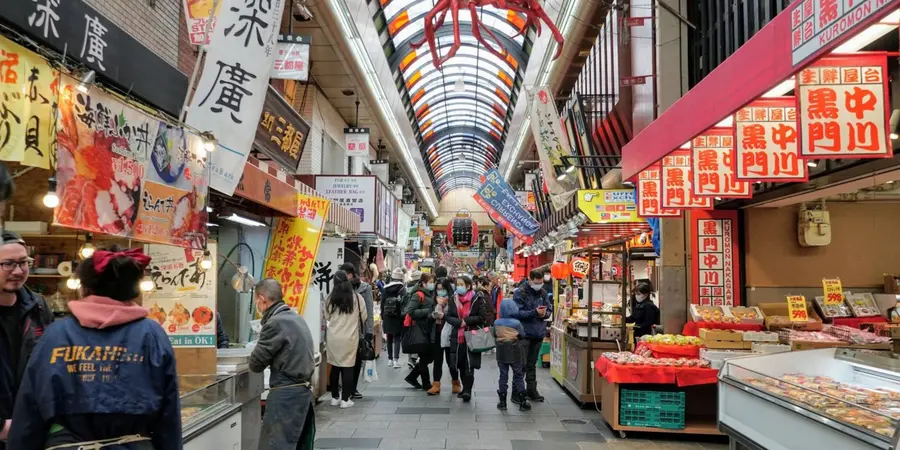
Image Credit: Wongnai
With over 150 stalls selling fresh seafood, wagyu, and other local delicacies – the Kuromon Ichiba Market is a foodie’s paradise. This 600-metre arcade mainly serves as a fish wholesaler hub but has opened its doors to other fresh produce that you can check out. The best part about this place is how affordable yet high-quality their goods are! Fill your stomach a little bit more by strolling through this seafood haven; eat some grilled scallops, fresh uni, and sushi sold in stalls around Kuromon Ichiba Market, reflecting broader Skyscanner insights on food travel trends shaping where to eat.
- For Sushi: Sushi Dokoro Kuromonsuehiro (¥2,000–¥3,000)
- For Fish: Futomasa Kuromonichiba (¥1,000–¥2,000)
- For Grilled Seafood: Kushisei (¥1,000–¥2,000)
Namba & Shinsaibashi – 難波 & 心斎橋 (Cafes & Izakaya)
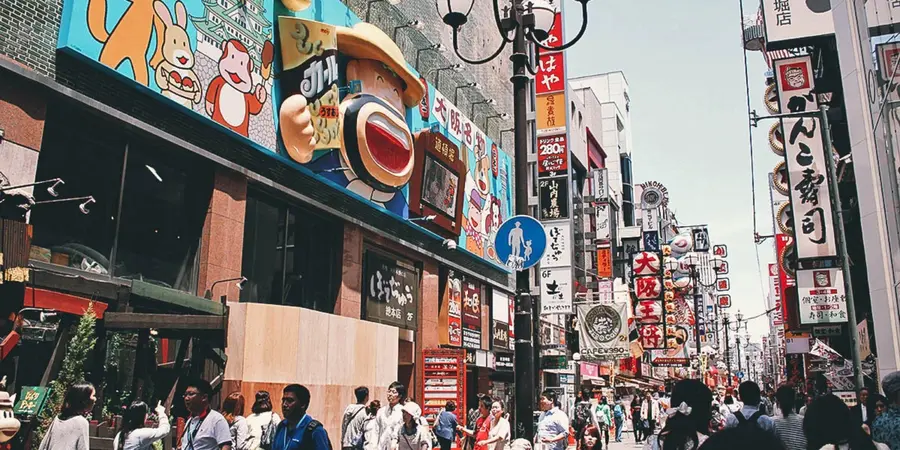
Image Credit: Will Fly For Food
The southern part of Osaka is Namba and Shinsaibashi, an area filled with shopping arcades, entertainment establishments, and endless eateries! You can explore a variety of shops here and purchase a few souvenirs before you leave. From cafés to bars, Namba and Shinsaibashi caters to all kinds of tourists looking for a place to chill in.
- For Coffee: Kiefel Coffee 1963 Namba Walk (~¥1,000)
- For Dessert: Cheese Tart Pablo Shinsaibashi (~¥1,000)
- For Izakaya: Osusumeya Namba Store (¥2,000–¥3,000)
Umeda – 梅田 (Restaurants with city views)
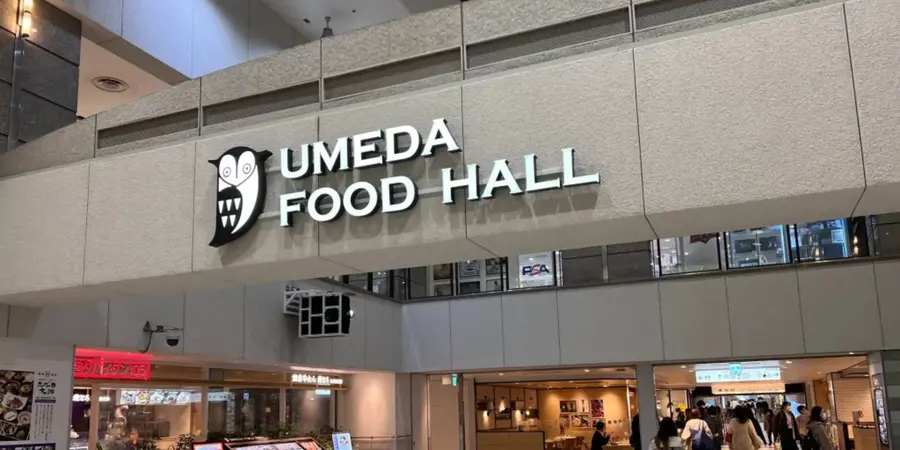
Image Credit: Enjoy Osaka
On the opposite of Namba and Shinsaibashi is Umeda, the northern powerhouse of Osaka packed with skyscrapers and malls. This futuristic business district highlights the modern cityscape of Japan and showcases the daytime hustle of Japanese workers. Here, you’ve got sky-high restaurants that offer city views and underrated eateries that will elevate your trip to Osaka.
If you want a more old-school food crawl under the modern skyline, Shin-Umeda Shokudougai is a classic: a tight maze of bars and counters just off JR-Osaka where locals eat, drink, and reset between trains.
- For Negiyaki: Negiyaki Yamamoto Umeda EST Shop (¥1,000–¥2,000)
- For Kitsune Udon: Udon-bo Osaka (¥1,000–¥2,000)
- For Dessert: Rikuro Daimaru Umeda (~¥1,000)


Our Osaka one-day food trip
No matter how short or long your trip is in Osaka, you have to dedicate a day to just the city’s food. Here’s an easy Osaka food trip guide that you can accomplish within one day!
- Morning: Namba & Shinsaibashi (8:00–10:00)
- Start the day with coffee from Kiefel Coffee and something sweet from Pablo Cheesecake. To get to Kuromon Ichiba Market, take a train from Nagahoribashi Station 長堀橋駅 to Nippombashi Station 日本橋駅.
- Late Morning: Kuromon Ichiba Market (11:00–12:30)
- Fill your stomach a little bit more by strolling through this seafood haven; eat some grilled scallops, fresh uni, and sushi sold in stalls around Kuromon Ichiba Market. Eat some fresh fruits afterwards to cleanse your palate!
- Lunch: Umeda (13:00–14:30)
- From Namba Station 難波駅, take a train to Umeda Station 梅田駅. Discover Umeda and its city views (Umeda Sky Building has an amazing observatory tower) before eating some negiyaki at Negiyaki Yamamoto Umeda EST Shop. Make sure you try the popular Rikuro Cheesecake before you leave Umeda!
- Afternoon Snack: Shinsekai (16:00–17:00)
- After exploring Umeda, take a train from Umeda Station to Dobutsuen-Mae Station 動物園前駅 to arrive at Shinsekai. Have an afternoon snack and eat some kushikatsu at Kushikatsu Daruma.
- Evening: Dotonbori (18:00–20:00)
- End the food trip at Dotonbori (from Dobutsuen-Mae Station, take a train back to Namba Station) with some takoyaki at Takoyaki Wanaka Dotonbori followed by a yummy plate of okonomiyaki at Okonomiyaki Mizuno. To cap off the night, hop around some izakaya bars around the area and drink a few beers to celebrate the wonderful energy of Osaka!
We’ve allotted hours in between areas to give you enough time to rest your stomachs and explore each district.
Osaka’s timeless food legacy
In Osaka, there is no such thing as a bad dish. Every meal served in this city is treated with utmost perfection, even the non-gourmet foods like takoyaki and okonomiyaki. Osakans pour so much love and soul into their food that eating a single bite from any of the dishes above will really give you a glimpse of what it feels to be a part of Osaka’s culture and heritage.
Osaka’s must-try dishes embody the spirit of the city. You’ll find yourself swimming through different kinds of flavours, textures, and smells that will linger long after you leave the city. Embrace kuidaore in Osaka, where every bite becomes an unforgettable memory in Japan’s Kitchen.