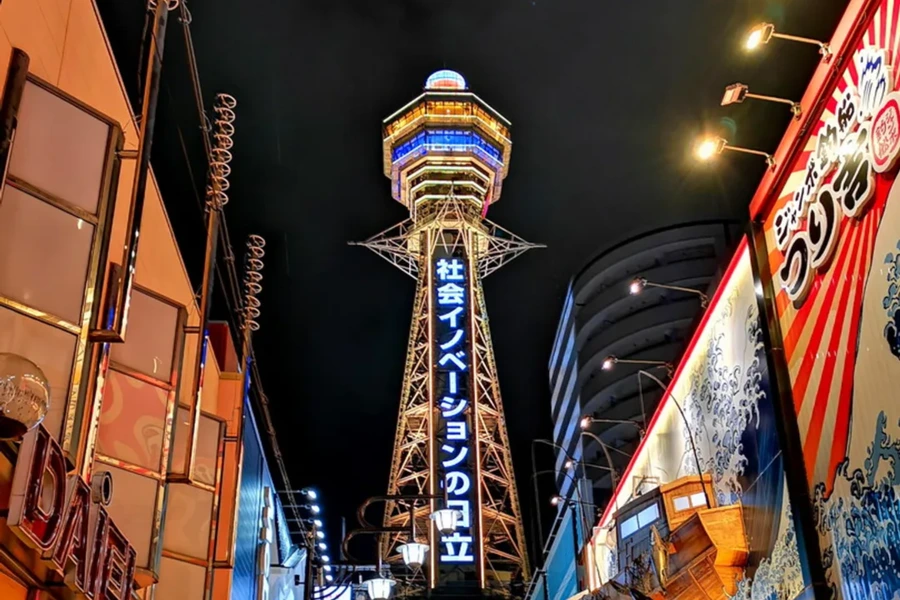
Tsutenkaku Tower stands as a retro-futuristic symbol in Osaka’s vibrant Shinsekai district, drawing tourists with its nostalgic charm. Built in 1956 (replacing its 1912 predecessor), this 103-metre tower, 108 metres to the tip of its lightning rod, combines mid-century systems with retrofitted modern amenities to create an experience distinctly different from Tokyo Tower or other observation decks across Japan.
Unlike purely tourist-oriented landmarks, Tsutenkaku serves as a neighbourhood beacon for locals, functioning as both an attraction and a practical utility.
Tsutenkaku Tower
Tsutenkaku Tower: Osaka's Retro Icon

Tsutenkaku Tower at a Glance

Location: Heart of Shinsekai district, southern Osaka
Operating hours: 9:00 AM to 9:45 PM (last entry 9:15 PM)
Admission: ¥1,500 for adults aged 15 and over and ¥800 for children aged 5 to 14, following the April 2026 fee change. The open-air Tenbo Paradise deck is sold only as a set with the general observation deck, and the Tower Slider is charged separately.
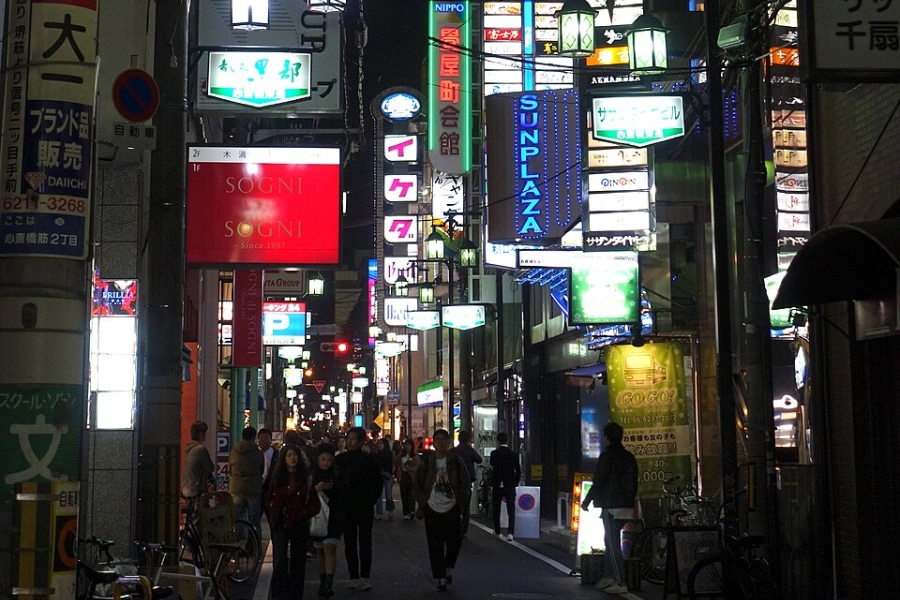
Set in the heart of Osaka’s retro Shinsekai district, Tsūtenkaku Tower rises 103 metres above the neighbourhood’s neon signs and kushikatsu joints. It’s an easy stop to weave into a southern Osaka wander, with Ebisuchō Station just a three-minute walk away and Shin-Imamiya Station about seven minutes on foot.
Inside, lifts take you up to the main observation deck on the 5th floor, before continuing to the open-air Tenbo Paradise deck at the top, where the city stretches out in every direction. For shorter queues and a calmer experience, aim for 9:00 to 10:30 am, or come after 6:00 pm when the daytime crowds thin and the city lights begin to glow.
Ideal for
- Photographers seeking retro urban landscapes
- Cultural insights into Osaka’s Showa-era heritage
- Views of the southern Osaka cityscape
- Combining visits with local kushikatsu dining experiences
Not ideal for
- Visitors expecting sleek, modern observation facilities
- Those uncomfortable in crowded, compact spaces
- Travellers with large luggage
- Anyone on a tight schedule during peak times
Be prepared for
- Separate queues for tickets and elevators
- Mid-century facilities rather than sleek modern amenities
- Narrow passageways and vintage elevator systems
- The bustling energy of the surrounding Shinsekai neighbourhood
Navigating the Shinsekai Neighbourhood and Tower Access
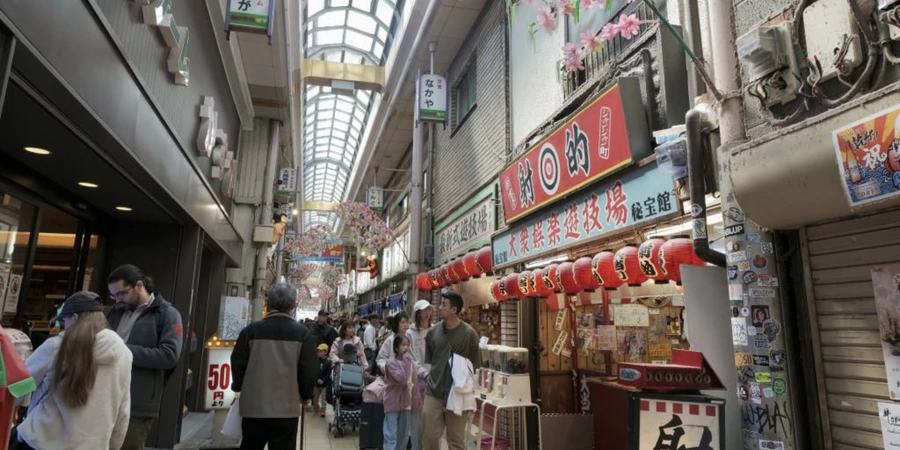
The most direct approach is via Ebisucho Station (恵美須町駅) on the Sakaisuji Line, just three minutes from the tower’s base. This exit places you directly into bustling market streets, which can feel initially disorienting.
Alternatively, Shin-Imamiya Station (新今宮駅) offers a seven-minute walk that provides a better context of the neighbourhood. This approach passes the massive stone lion statue at the district’s northern entrance, a useful orientation landmark.
Despite the tower’s height, Shinsekai’s narrow streets and colourful signage can make visual orientation surprisingly difficult. Janjan Yokocho (じゃんじゃん横丁) Shopping Street serves as the main passageway, though its busy atmosphere often causes visitors to miss directional signage.
When navigating, position yourself to the left of walkways when stopping to consult maps or take photos, following the same crowd-navigation protocols used in train stations.
Timing and Elevator Bottleneck
A common misconception is that advance tickets allow you to skip all queues. In reality, they only bypass the ticket purchase line, not the elevator queue, which is the primary bottleneck. The vintage elevator system can transport just 18 passengers at a time, creating inevitable waits during busy periods.
Visit patterns at Tsutenkaku differ from other observation towers in Japan. While many towers peak at sunset, Tsutenkaku sees its heaviest traffic between 2:00 and 4:00 PM, when tour groups converge. Arriving between 9:00 and 10:30 AM or after 6:00 PM typically reduces elevator wait times from 45+ minutes to under 15 minutes. Monday and Thursday mornings consistently offer the shortest waits year-round.
During high season, like the cherry blossom season, Golden Week, and autumn foliage viewing, arriving within 30 minutes of opening is strongly recommended.


Inside the Tower: Navigating Floors and Features

Ground floor (entry level)
The visit begins at street level, where ticketing and lifts funnel visitors upwards. It’s functional rather than flashy, designed to move people efficiently into the tower rather than keep them lingering.
3rd floor: Top Floor, Shinsekai history and the Tsūtenkaku Café
The first main stop is the floor the tower calls Top Floor, 22 metres up, given over to a display on Shinsekai’s history and to the Tsūtenkaku Café. It is the one place in the tower designed for sitting down, which makes it the sensible stop before or after the decks rather than a queue you pass through. It is also the floor where the Tower Slider begins, which has its own section below.
4th floor: the Light Observation Deck
At 84 metres, the 4th floor is the Light Observation Deck, the lower of the tower’s two enclosed viewing levels. By day it is a straightforward viewing gallery. After dark it switches to coloured lighting and a mirror ball, which catches most first-time visitors off guard and is worth timing your visit around if you like the idea.
Tsūtenkaku’s official shop sits lower down on the 2nd floor, alongside an indoor recreation of the old Jan Jan Yokocho, and the basement holds Wakuwaku Land, where Morinaga, Glico and Nissin each run a small shop. Both are on the way out, so leave souvenir buying until the decks are done.
5th floor: main observation deck and Billiken statue
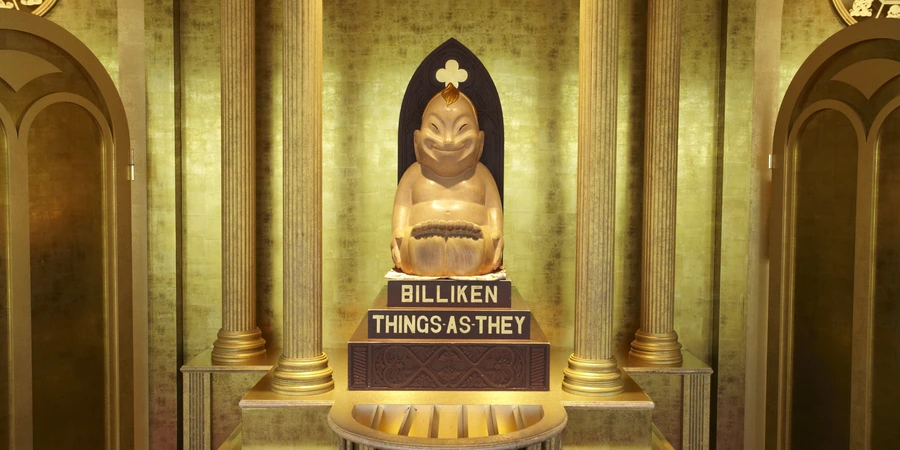
The heart of the tower is the 5th-floor observation deck, home to the famous Billiken statue, Osaka’s unofficial god of good fortune. Touching the soles of Billiken’s feet is said to bring luck, and queues often form around the statue. During busy periods, it’s best to come here first, then work your way down to avoid congestion.
Top floor: Tenbo Paradise
Hidden behind the 5th-floor deck is a narrow staircase that many visitors overlook. It leads to the Tenbo Paradise, an open-air deck with unobstructed views across southern Osaka. Only around 30% of visitors make it this far, so it’s noticeably calmer, especially welcome during weekends and holidays.
After dark: illuminated tower and local forecast
Once evening falls, Tsūtenkaku’s lighting switches from scenic to practical. The illuminated top doubles as a neighbourhood weather forecast, changing colour daily at 7:00 pm:
- White: clear weather
- Orange: cloudy
- Blue: rain
- Green: typhoon warnings
- Pink: cherry blossom season
Optional extra: the Tower Slider
For something more playful, the Tower Slider spirals from the 3rd floor down to basement level, roughly 60 metres of track covered in about 10 seconds. It costs ¥1,100 for ages 15 to 65 and ¥600 for children aged 7 to 14, on top of observatory admission. Riders must be at least 120cm tall, and children aged 7 to 12 need an adult with them.
Visiting for Photography?
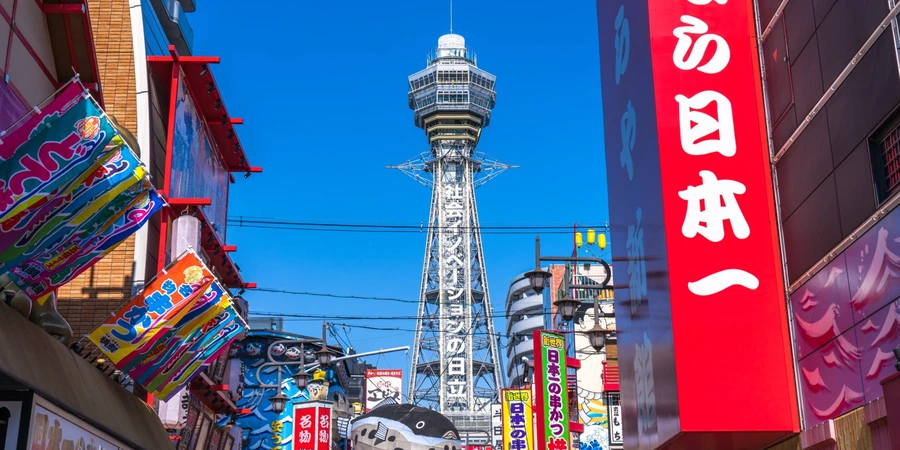
Capturing Tsutenkaku’s iconic silhouette presents unique challenges, especially for photographers used to wide boulevards framing Tokyo landmarks.
For the classic “tower with hanging lanterns” composition seen in Osaka tourism materials, position yourself at the intersection of Shinsekai-Hondori and Jan Jan Yokocho. This spot, approximately 100 metres northwest of the tower’s base, frames the structure behind traditional lanterns and shop signs.
Morning light between 8:00 and 10:00 AM provides the best illumination, as afternoon sun sits directly behind the tower, creating harsh backlighting. For cleaner architectural shots, the Tennoji Zoo north entrance area offers a less cluttered foreground than street-level viewpoints.
Inside the observatory, congestion predictably forms at west-facing windows overlooking Tennoji Park, while east-facing windows toward Osaka Bay remain noticeably calmer. The deck’s vintage design uses framed windows and support pillars rather than continuous glass, requiring photographers to work with architectural constraints.
Practical Tips: Storage, Timing, and Surrounding Amenities
Here are some tips to make your visit hassle-free.
- Luggage and space: Tsūtenkaku’s compact, mid-century interior has narrow corridors and limited public space. Small backpacks are fine; carry-on-sized suitcases are awkward and disruptive.
- Storage options: On-site storage is very limited. Shin-Imamiya Station lockers are the most reliable option, with larger sizes often unavailable at Ebisuchō Station. Naniwa Food Garage, near the tower’s southern approach, offers rental lockers for ¥500 to 700.
- Time planning: Allow at least 45 minutes to visit the tower itself. Add around one hour to properly explore the wider Shinsekai area.
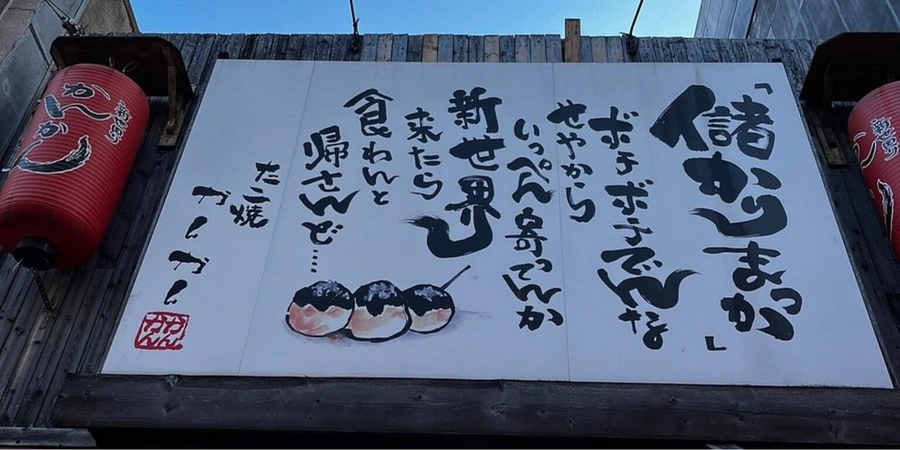
- Food: Shinsekai’s signature dish is kushikatsu (串カツ), deep-fried skewers eaten locally. Shinsekai Kankan food hall at the tower’s base serves regional dishes with English menus, which is useful when time is tight.
Tsutenkaku Tower
Beyond Shinsekai & Tsutenkaku Tower: Where to Go Next in Osaka
Nearby neighbourhoods to explore: Shinsekai pairs well with a wander through Osaka’s trendier districts. Head north to Amerikamura, Osaka’s youth culture hub packed with street fashion, vintage stores, and indie cafés.
Explore Amerikamura’s street fashion scene
Food detours worth planning: If Shinsekai’s kushikatsu leaves you curious for more, Osaka’s food culture runs far deeper, from takoyaki and okonomiyaki to hidden izakayas and late-night ramen counters.
Read the complete Osaka food guide
Market stop for snacks and souvenirs: Kuromon Ichiba Market is a short ride away and ideal for sampling fresh seafood, wagyu skewers, and sweet treats. It’s also a practical place to pick up edible souvenirs and gifts.
Discover Kuromon Ichiba Market
Extend the evening in Minami: After Tsūtenkaku, consider heading to Minami (Namba and Dotonbori), Osaka’s nightlife and entertainment heart. Neon-lit streets, canal walks, and late-night dining make it a natural continuation of the day.
Guide to Minami and Namba
Recalibrating for an Authentic Tsutenkaku Experience
Visiting Tsutentaku presents you with an opportunity to connect with Osaka’s enduring character.
Visitors who enjoy Tsutenkaku most approach it as a neighbourhood landmark with deep cultural roots and unapologetic quirks. By timing visits strategically, understanding the dual-line access system, and recognising the tower’s role as a functioning community utility, the experience can be a meaningful encounter.
Tsutenkaku Tower offers something increasingly rare in modern Japan: a genuinely local experience that has not been fully standardised for international tourism.