Matcha, literally “powdered tea”, has shaped Japanese culture for centuries. Green tea was first introduced to Japan from China during the Heian period (794 to 1185), though matcha, the powdered form associated with Zen practice, arrived during the Kamakura period (1185 to 1333). Brought by the monk Eisai, it was embraced by Zen monks and samurai as both drink and spiritual aid, valued for calm focus and steady energy. Over time, preparing and sharing matcha evolved into the Japanese tea ceremony (茶の湯, chanoyu), a refined ritual where each gesture, from scooping the emerald powder to whisking a fine foam, expresses mindfulness and respect. In this setting, matcha became more than a beverage but an embodiment of Japanese aesthetics and Zen sensibilities.
Today, the ceremony still embodies harmony, tranquillity, and ichigo ichie (“one time, one meeting”), while matcha endures as both meditative elixir and living cultural art. Continuing this legacy, Matcha & CO bridges centuries of tradition with modern wellness, sourcing authentic, organic matcha from Kyoto’s finest fields to deliver purity, calm, and focus in every sip.
Japan Nakama readers can enjoy an exclusive 15% off their first order with Matcha & CO using the code NAKAMA15 at checkout.

Image Credit: Zed Can
From Japan to the World: A Matcha Boom
What began as a uniquely Japanese discipline (茶道, chadō) is now a global trend. Matcha has moved from Kyoto tea houses to cafés and kitchens worldwide, and Britons are among the keenest converts. The market is booming, projected to grow from about $2.3 billion in 2024 to $2.9 billion by 2028 (theguardian.com). In the UK, once-hard-to-find matcha is now everywhere—from high-street chains to hip London bars—with beverage sales surging over 200% in 2023 alone (timeout.com).

Image Credit: Christian Dala
Matcha’s vivid green hue has become a visual trademark of modern café culture—its ‘Instagram-ability’ fuels popularity among influencers and Gen Z, turning every cup into a shareable aesthetic moment. Yet beyond its photogenic appeal, matcha maintains a reputation as a genuinely healthy beverage thanks to its high concentration of catechins—particularly EGCG—and L-theanine, which together promote calm alertness, sustained energy, and reduced jitters ( Tea & Coffee Trade Journal, 2025 ). Unlike sugar-laden matcha lattes or frappés, pure matcha remains valued for these antioxidants, which research shows can help lower blood pressure, improve metabolism, and reduce cell damage linked to aging and disease.
Despite contemporary spins, heritage isn’t lost. Culturally curious fans seek tea-ceremony workshops and authentic cafés, making matcha a gateway to Japanese culture—an ancient ritual thriving in a modern, cosmopolitan world.
Health Benefits, Origin, and How to Choose Well
So, what exactly is matcha—and why the fuss? Simply put, it’s powdered green tea from Camellia sinensis, where you drink the whole leaf, delivering a concentrated mix of catechins (antioxidants), vitamins, minerals, and L-theanine.
In fact, all tea—including green, black, white, oolong and pu-erh tea comes from the same plant species, Camellia sinensis.
What makes each tea different isn’t the plant itself, but how the leaves are processed after picking and where they’re grown. Here’s how that breaks down:
- Green tea – The leaves are quickly steamed or pan-fired to stop oxidation, keeping their bright green color and fresh, grassy taste.
- Black tea – The leaves are fully oxidized, turning them dark brown or black and giving a bolder, malty flavor.
- Oolong tea – Partially oxidized, sitting between green and black in both color and flavor.
- White tea – Made from young buds and minimally processed, with the most delicate aroma.
- Pu-erh tea – Aged and fermented, often pressed into cakes and known for its earthy depth.
There are also two main varieties of Camellia sinensis:
- Camellia sinensis sinensis – native to China and Japan; smaller leaves, used for green and white teas.
- Camellia sinensis assamica – native to India; larger leaves, used mainly for black teas like Assam and pu-erh.
So yes, when you drink matcha, sencha, Darjeeling, or Earl Grey, they all trace back to this single, remarkable plant. For a deeper dive into the different types of Japanese green tea, read our guide: Understanding All Varieties of Japanese Green Tea
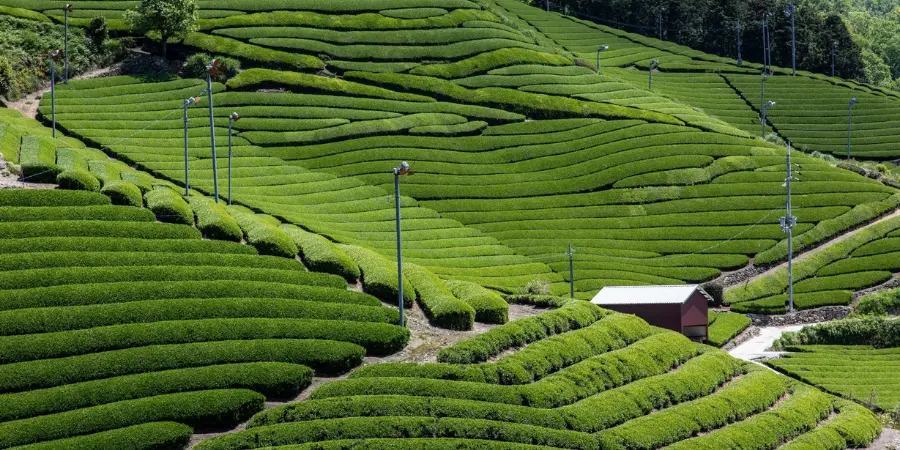
Authentic matcha comes from Japan—especially Uji, Kyoto. Its character starts in the field: tea bushes are shaded for weeks to boost chlorophyll and L-theanine and soften bitterness.
Only the youngest leaves are picked, then steamed, dried, and deveined into tencha, before being stone-ground on granite mills at a slow pace to protect delicate aromas. The result is a vivid, silky powder with creamy body, umami depth, and gentle sweetness.
Not all matcha is equal
Quality cues go beyond colour alone, they engage all the senses. High-quality matcha (such as Ceremonial grade) has a luminous, spring-green hue with a soft, almost velvet-like texture that clings lightly to the whisk and dissolves effortlessly in water. Its aroma is fresh and grassy with subtle notes of sweetness and umami, reminiscent of steamed spinach, toasted nuts, or a cool sea breeze. When sipped, it feels creamy and round on the palate, leaving a smooth aftertaste with layers of sweetness and gentle umami that linger long after each sip.
By contrast, lower-quality matcha often appears dull or yellowish-green, with a coarser, sandy texture. Its aroma leans flat or hay-like, lacking the lively fragrance of young, shade-grown leaves. On the tongue, it may taste bitter or astringent, with a thin mouthfeel and little depth of flavour.
Because you consume the entire leaf, organic cultivation is especially important — ensuring purity and preserving the delicate compounds that define its signature taste. Above all, buy from trusted specialists who clearly state their matcha’s origin, harvest season, and grade. These small details reveal the care behind every vibrant cup.
Above all, buy from trusted specialists who are clear about origin and harvest.
A note on “grades”: outside Japan, “ceremonial” and “culinary” serve as buyer shorthand, but they’re not official Japanese classifications.


Meet Matcha & CO: Bringing Japanese Matcha Excellence to You

Image Credit: Matcha & CO.
Rooted in long-term partnerships with Japanese growers, Matcha & CO offers authentic matcha globally at accessible prices. Founded in 2018, it is dedicated to wellness from within, blending time-honored tradition with modern nutritional science. The brand calls itself a “nutricosmetic” company, meaning it focuses on products that enhance beauty and health from the inside out. What began with premium organic matcha powder has expanded into a range of tea-based supplements and superfood blends aimed at improving skin, hair, and overall well-being. At its core, Matcha & CO believes that taking care of your body should be a delightful daily ritual – much like enjoying a calming cup of matcha.
Quality is central: certified-organic, ceremonial-grade matcha sourced directly from Japan, in partnership with fifth-generation farmers in Uji, Kyoto. From shaded fields to granite stone-mills, the process yields vivid, additive-free matcha. An exclusive production agreement with renowned Uji farms helps ensure consistent flavour and freshness.

Image Credit: Matcha & CO.
A further point to highlight is the brand’s commitment to clean formulation. They have a “the less, the better” mentality and their products — whether it be pure matcha or matcha-infused collagen — are non-GMO and free of unnecessary additives. The brand pairs Japanese simplicity with modern transparency and has quickly become a go-to for matcha enthusiasts, be they curious first-timers or seasoned tea aficionados.
Heritage, Health, and a Daily Ritual
Matcha & CO stands out as a brand that marries heritage and health. They honor the provenance of matcha – the serene tea fields of Kyoto and the artistry of generations of tea masters – while also innovating products for today’s wellness trends. Their ethos can be summed up simply: care for people and quality above all.

Image Credit: Matcha & CO.
By bringing genuine Japanese matcha to British doorsteps (and beyond), Matcha & CO invites everyone to partake in a small daily ritual that’s both deeply cultural and refreshingly good for you. From a quiet bowl of usucha to a grab-and-go matcha latte, the care behind the leaf comes through.
Enjoy your matcha moment, knowing it’s a tradition that connects you with centuries of Japanese heritage and a community of tea lovers worldwide!