Japanese cuisine’s global rise has been shaped as much by chefs working outside Japan as by the country’s own food culture. From sushi counters in New York to omakase rooms in London, Japanese chefs abroad have built the bridges through which the cuisine has reached wider audiences. Chefs like Nobuyuki ‘Nobu’ Matsuhisa demonstrate Japanese food’s versatility, blending traditional technique with North and South American influences.
Discover how his commitment to authenticity contributed to the success of his career and the overall worldwide popularity of Japanese food culture.
Nobu's Network
The Culinary Lives of Nobuyuki Matsuhisa

Nobuyuki Matsuhisa, commonly known as “Nobu,” was born in 1949 and grew up in Saitama, Japan. He received training as a sushi chef at Matsuei Sushi in Shinjuku, Tokyo, after completing high school. His father’s extensive travels inspired him to dream that he would work abroad at some point while still an apprentice.
He seized the opportunity to work as a sushi chef in Lima, Peru, after finishing his seven years of training in 1973, and he later did the same in Buenos Aires, Argentina. In many respects, the three years he spent working in South America were essential to his later career as a chef in the United States. His start in the US was bruising: his first restaurant in Anchorage, Alaska, burned down within weeks of opening, forcing him to rebuild from nothing. He spent several years working in Los Angeles before opening Matsuhisa in Beverly Hills in 1987, the restaurant that ultimately launched the wider Nobu name.
His flagship Nobu restaurants sit in major world cities such as New York, Los Angeles, London and Tokyo — high-density hubs through which people, ingredients and culinary ideas move freely. Nobu has established his culinary network at these world-city nodes; through this global world-city geography, he has created a sense of authenticity for his dishes.
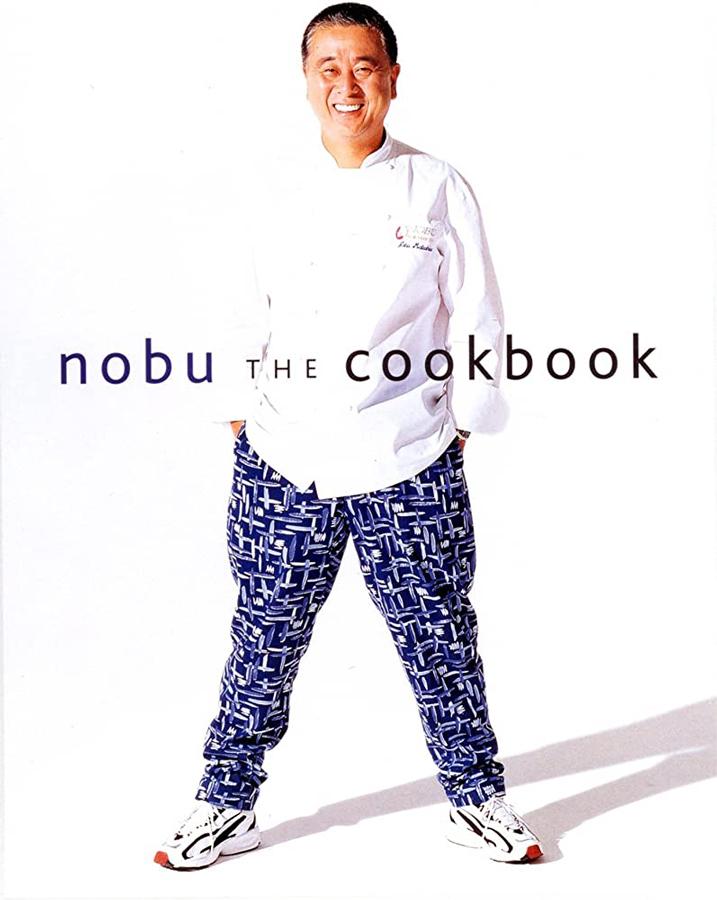
Authoring several cookbooks since 2001, Nobu released his first publication Nobu: The Cookbook, which was then translated from English to Japanese and released in 2003. It features his biography along with his original recipes served in his restaurants. In his own words, his cooking style is “firmly based on Japanese cooking—fundamentally sushi—but with North and South American influences.”
Built on those Peruvian years, Nobu’s style brings out the best in the freshest seafood, drawing out vegetables’ natural sweetness and textures. The cookbook brought wider attention to both Nobu and his dishes, helping introduce his style of cooking to readers around the world.
In the decades following the Second World War, as Japan’s economy grew and exports like electronics, anime, fashion and film travelled outward, Japanese cuisine followed a similar trajectory — and Nobu’s career sits squarely inside that wider story.

Food Culture in World Cities
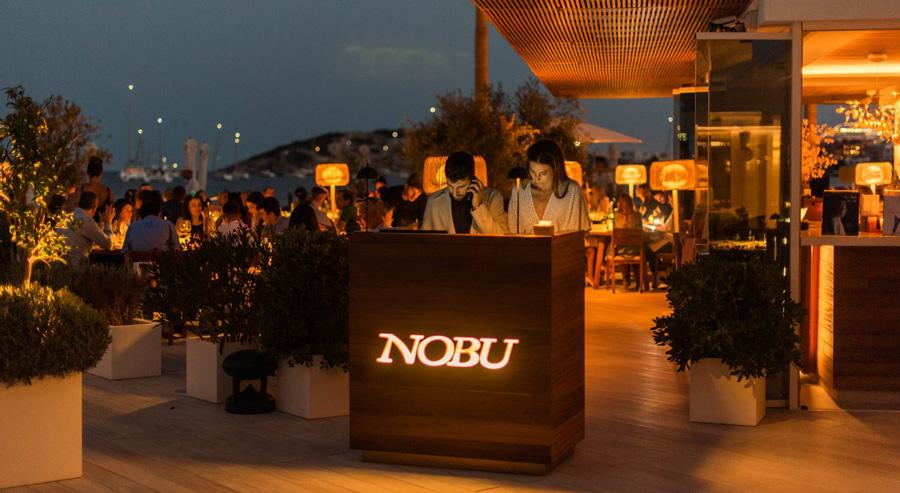
We can find the location of Nobu’s restaurants primarily in large cities often described as “world cities,” such as Los Angeles, New York, London, Tokyo, Milan, and Miami. World cities are characterised by their scale, the density of their populations, and their functions as information systems. They also act as sites where new social and aesthetic norms of everyday living take shape. As the world becomes more interconnected, food culture is no longer restricted to its place of origin and can now be found all over the world. We can see various ethnicities, languages, cultures, cuisines, and religious beliefs in these world cities.
World cities also serve as distribution centres of the food industry, looking at the circulation of food items. Information (food culture and techniques), goods (food items and ingredients) and people (cooks and customers) are moving around the networks through the nodes of the world cities on our globe today. The interactions of suppliers and consumers in world cities can be seen in the flows of the products and ingredients used in Nobu’s restaurants and the places from which those materials come.
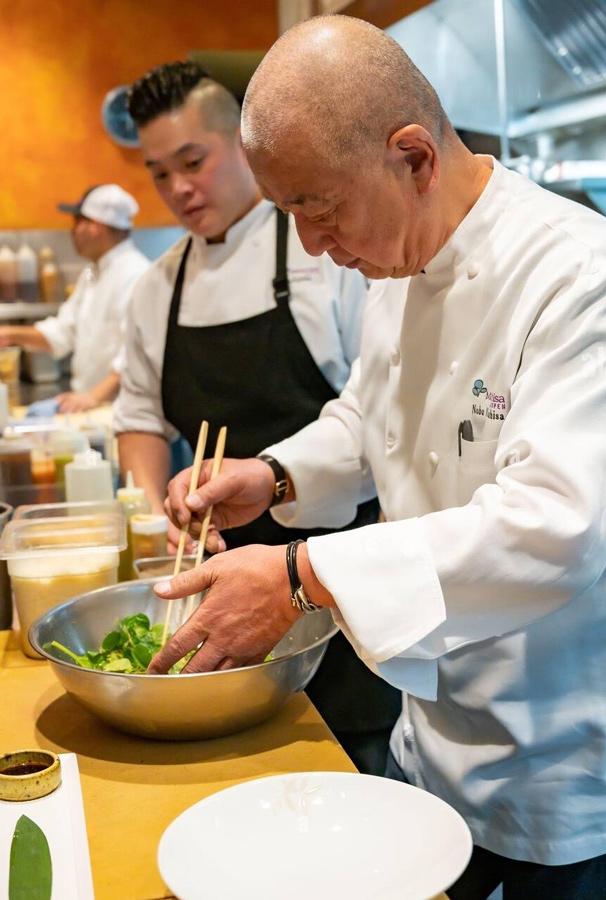
The supply chain behind the menu consists of rock shrimp, soft-shell crabs, and Kumamoto oysters from the U.S. Pacific coast, and snow crab and king crab from Alaska. Tiger prawns come from Australia and Thailand. Kuruma shrimp, sea urchins and octopus are from Japan, and black cod and Chilean sea bass are from Chile.
We can assume that various import-transport networks exist to maintain the high quality of Nobu’s food, which can change depending on the season and other situations. These are very important items that distinguish the high quality of Nobu’s dishes.
What Makes Up the Nobu-Style

His unique approach to Japanese cuisine is founded on the customs surrounding traditional Japanese food with which he was raised and apprenticed. But, he also combines a range of spices, sauces, and ingredients that he learnt to utilise while working in Latin America with western culinary techniques that he grew to embrace while working in the U.S. and Europe.
Most of Nobu’s flavour, ingredient and technique influences come from Peru, where he worked for several years in the 1970s. He uses various foods, spices, and herbs from the indigenous, homemade cooking techniques he discovered there. He adds European flavours, mainly olive oil, grape seed oil, and balsamic vinegar, to further distinguish Nobu’s style.
Additionally, he has invented unique variations of Italian foods, including risotto and squid pasta. As for desserts, he has employed special chefs since the opening of his first restaurants, and these desserts are very westernised.
American culinary preferences have also influenced Chef Nobu. His sushi rolls use avocado to represent California, and he also provides American favourites like Kobe beef, lobster, and oysters. Together with these ingredients, he constantly engages with his American clients to see what foods and flavours they find most appealing.
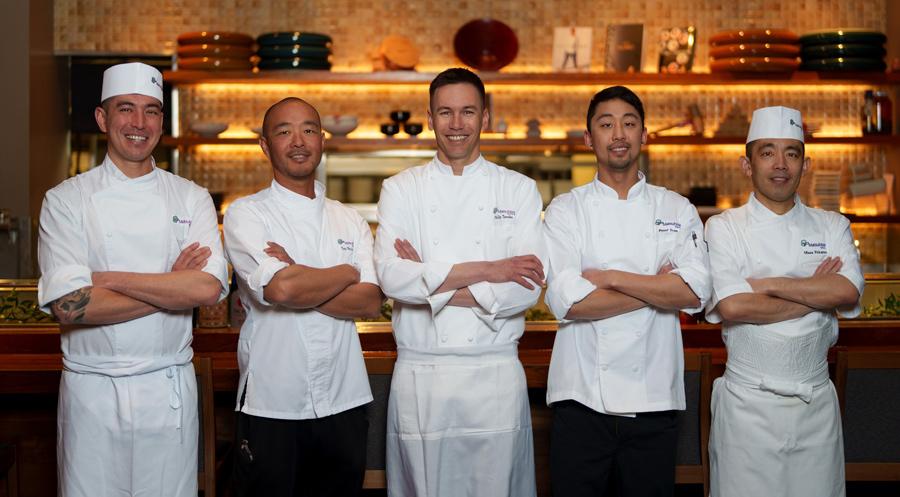
Information about Nobu’s food style and techniques continually circulates within his networks through Nobu and his staff. All of the employees of his first three establishments—Matsuhisa, Nobu New York, and Nobu London—were individually trained by Nobu, and they gradually picked up his philosophy and ways of customer service through working and interacting with him.
Taking as a whole the influences of flavour and ingredients imported from all over the world, along with his constantly moving lifestyle, we can see how Nobu’s networks were constructed and maintained. This involves the flow of ingredients, his staff and Nobu himself. This construction of networks has been a determining factor in Nobu’s worldwide success.
Nobu’s Take on Ethnic Food Authenticity

Nobu’s cooking style has been developed by his experiences outside of Japan in reaction to the culinary and dietary traditions and influences of North and South America. His food is founded on his native knowledge of Japanese cuisine as well. His familiarity with other ethnic foods, such as Italian, French and Chinese, encountered through his work and travels are seamlessly integrated into his dishes.
He works with local ingredients in the way local cooks do, helping diners in each city feel a sense of place even within the Nobu format. As a result, Nobu’s food is prepared in different ways according to the location.
What makes the food recognisably Nobu is that they cannot be identified as originating from a certain place; rather, it is unclear if the origins of authenticity are floating within his worldwide food network. The distinguishing characteristics that confirm his genuineness are his constant movement throughout the network of his branch restaurants and the development of a hybridised Japanese dish in the Nobu-style.
The celebrity chef has built a recognisable form of authenticity around his food, and that consistency has contributed to the global popularity of Japanese cuisine.
Wherever a Nobu opens in the world, the food carries an unmistakable signature that diners recognise instantly as Nobu.