Yukio Mishima (1925 to 1970) wrote 34 novels, and 15 of them are in English, from Confessions of a Mask (1949) to The Decay of the Angel (1971), the last book of his Sea of Fertility tetralogy. Most readers start with The Sound of Waves, a short love story on a fishing island, or The Temple of the Golden Pavilion, his most celebrated novel, and none of the books apart from the tetralogy needs to be read in order.
Below is every novel in English with its Japanese year, English year and translator, a guide to which to read first, the stories and plays, what happened on 25 November 1970, Mishima on film, and the places in Japan connected to his books.
Yukio Mishima: key facts
- Real name: Kimitake Hiraoka (平岡公威)
- Born: 14 January 1925, Yotsuya, Tokyo
- Died: 25 November 1970, Tokyo, aged 45
- Output: 34 novels, about 50 plays, 25 books of short stories and at least 35 books of essays
- Nobel Prize: considered in 1963, 1964, 1965, 1967 and 1968
- Newest English translations: The Frolic of the Beasts (2018), Life for Sale (2019), Star (2019) and Beautiful Star (2022)
Every Yukio Mishima Novel in English, in Order
No headings found.
Yukio Mishima’s Novels in Order, With Translators
| Japan | English title | Japanese title | English | Translator |
|---|---|---|---|---|
| 1949 | Confessions of a Mask | 仮面の告白 (Kamen no kokuhaku) | 1958 | Meredith Weatherby |
| 1950 | Thirst for Love | 愛の渇き (Ai no kawaki) | 1969 | Alfred H. Marks |
| 1951 to 1953 | Forbidden Colors | 禁色 (Kinjiki) | 1968 | Alfred H. Marks |
| 1954 | The Sound of Waves | 潮騒 (Shiosai) | 1956 | Meredith Weatherby |
| 1956 | The Temple of the Golden Pavilion | 金閣寺 (Kinkaku-ji) | 1959 | Ivan Morris |
| 1960 | After the Banquet | 宴のあと (Utage no ato) | 1963 | Donald Keene |
| 1961 | The Frolic of the Beasts | 獣の戯れ (Kemono no tawamure) | 2018 | Andrew Clare |
| 1962 | Beautiful Star | 美しい星 (Utsukushii hoshi) | 2022 | Stephen Dodd |
| 1963 | The Sailor Who Fell from Grace with the Sea | 午後の曳航 (Gogo no eikō) | 1965 | John Nathan |
| 1964 | Silk and Insight | 絹と明察 (Kinu to meisatsu) | 1998 | Hiroaki Sato |
| 1968 | Life for Sale | 命売ります (Inochi urimasu) | 2019 | Stephen Dodd |
| 1969 | Spring Snow (Sea of Fertility 1) | 春の雪 (Haru no yuki) | 1972 | Michael Gallagher |
| 1969 | Runaway Horses (Sea of Fertility 2) | 奔馬 (Honba) | 1973 | Michael Gallagher |
| 1970 | The Temple of Dawn (Sea of Fertility 3) | 暁の寺 (Akatsuki no tera) | 1973 | E. Dale Saunders and Cecilia Segawa Seigle |
| 1971 | The Decay of the Angel (Sea of Fertility 4) | 天人五衰 (Tennin gosui) | 1974 | Edward G. Seidensticker |
Forbidden Colors appeared in two parts in Japan between 1951 and 1953, and English editions in Britain usually spell it Forbidden Colours. The four newest translations, The Frolic of the Beasts, Star, Life for Sale and Beautiful Star, are published in the UK by Penguin. Kyoko’s House (1959), a long novel that critics rejected on publication, has never been translated into English.


Where to Start Reading Yukio Mishima
- For a gentle first read: The Sound of Waves (1954). Shinji, a young fisherman, falls for Hatsue, a pearl diver and the daughter of the island’s richest man. It is short, warm and won the Shinchōsha Prize, and it has been filmed five times in Japan.
- For his masterpiece: The Temple of the Golden Pavilion (1956). A stuttering young acolyte becomes obsessed with the beauty of Kyoto’s Golden Pavilion and burns it down, based on the real arson of 1950.
- For the autobiographical Mishima: Confessions of a Mask (1949). A boy grows up hiding his desire for men behind a public “mask”. Mishima published it at 24.
- For something short and dark: The Sailor Who Fell from Grace with the Sea (1963). A gang of schoolboys in Yokohama turn on the sailor who falls for one boy’s widowed mother.
- For fun: Life for Sale (1968). A man survives a suicide attempt and advertises his life for sale in a newspaper. Written as a pulp serial for Weekly Playboy, it became a surprise bestseller in Japan decades later.
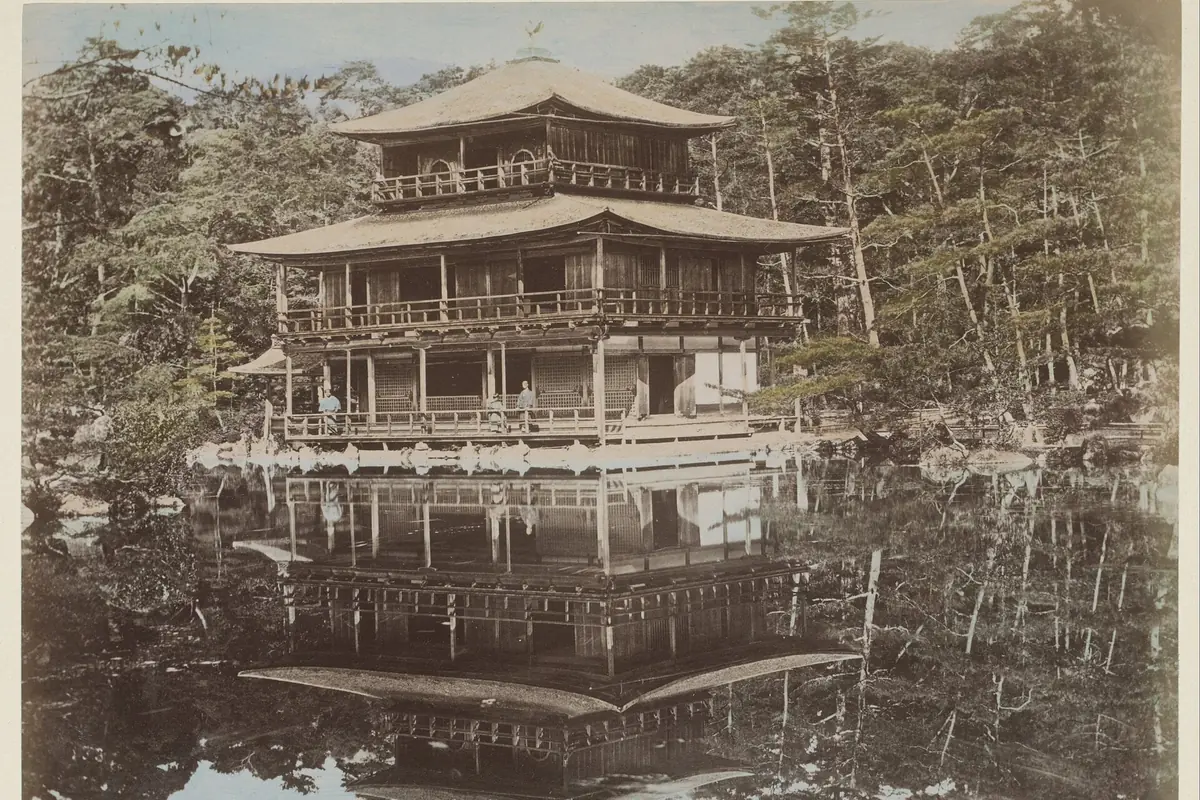
The pavilion Mishima wrote about was the original, burned down by a trainee monk in 1950. The building visitors see today is a close copy completed in 1955; our guide to Kinkaku-ji and other spiritual places in Japan has the visiting details.
The Sea of Fertility: Mishima’s Four Final Novels, in Order
The Sea of Fertility (豊饒の海, Hōjō no umi) is the one part of Mishima’s work that must be read in order. Its title is the name of a lunar sea, the Mare Fecunditatis. All four books follow Shigekuni Honda, a law student in the first novel and a wealthy retired judge in the last, across the years 1912 to 1975. Honda comes to believe that his school friend Kiyoaki Matsugae is reborn in each book, and tries to save each incarnation from an early death.
| Order | Novel | Published in Japan | Who Honda believes is reborn |
|---|---|---|---|
| 1 | Spring Snow | 1969 | Kiyoaki Matsugae, an aristocrat in love with Satoko Ayakura |
| 2 | Runaway Horses | 1969 | Isao Iinuma, a young nationalist inspired by the Shinpūren rebellion |
| 3 | The Temple of Dawn | 1970 | Ying Chan, a Thai princess |
| 4 | The Decay of the Angel | 1971 | Tōru Yasunaga, a manipulative orphan |
Spring Snow, set in the Taishō era, is the most loved of the four and works as a standalone novel. It was filmed in 2005 by Isao Yukisada. Paul Theroux called the tetralogy “the most complete vision we have of Japan in the twentieth century”. The last book was published after Mishima’s death.
Patriotism, Sun and Steel and Mishima’s Plays
| Work | Type | Japan | English and translator |
|---|---|---|---|
| Death in Midsummer | Short story | 1952 | 1956, Edward G. Seidensticker |
| Star | Novella about a young film star | 1960 | 2019, Sam Bett (New Directions; Penguin in the UK) |
| Patriotism | Short story | 1961 | 1966, Geoffrey W. Sargent (New Directions) |
| Madame de Sade | Play | 1965 | 1967, Donald Keene |
| Sun and Steel | Autobiographical essay | 1968 | 1970, John Bester |
| My Friend Hitler and Other Plays | Plays | 1956 to 1969 | 2002, Hiroaki Sato |
Mishima also wrote modern versions of noh and kabuki plays, and Donald Keene’s Five Modern Noh Plays sets them in hospitals and ballrooms. In 1966 he directed and starred in a film of Patriotism, about a young officer and his wife who choose death after a failed army coup in 1936.
His influence reached far beyond the page. Tatsumi Hijikata’s 1959 piece Kinjiki, named after Forbidden Colors, is usually counted as the first butoh performance; our review of Kentaro Kujirai’s butoh show at the Coronet tells how that debut caused a scandal. And in 1963 Mishima posed for the photographer Eikoh Hosoe in Barakei, one of the books in our guide to essential avant-garde Japanese art books.








25 November 1970: The Mishima Incident at Camp Ichigaya
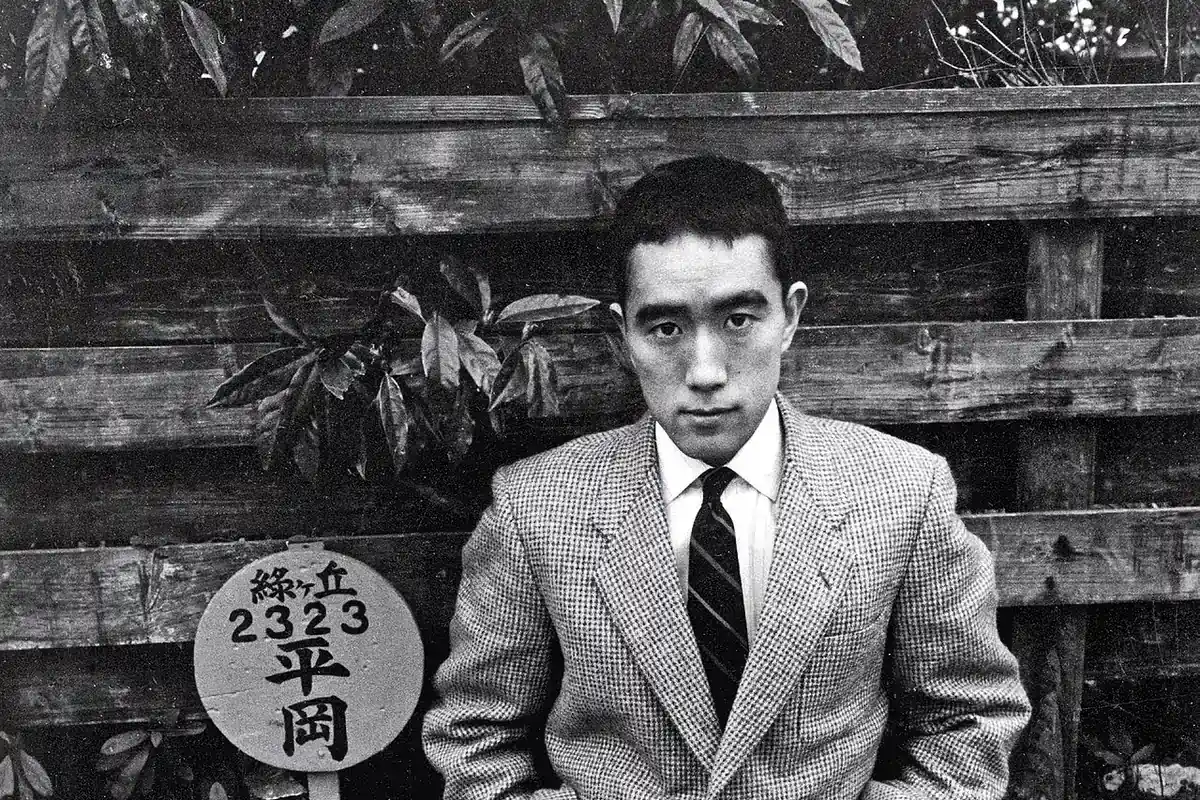
From his mid-thirties Mishima’s politics moved to the far right. In 1968 he founded the Tatenokai, the Shield Society, a small private militia of mostly right-wing students. On 25 November 1970 he and four of its members visited the commandant of Camp Ichigaya, the Tokyo headquarters of the Eastern Command of the Japan Self-Defense Forces, and tied him to his chair. Mishima then went out onto a balcony and called on the soldiers below to rise up and restore the emperor’s power. They heckled him.
He went back inside and died by seppuku, ritual suicide, and the Tatenokai member Masakatsu Morita died with him. He was 45. Mishima had planned the day for at least a year. The final novel of The Sea of Fertility, The Decay of the Angel, was published the following year, and he was buried in the Hiraoka family grave at Tama Cemetery on 14 January 1971, what would have been his 46th birthday.
Mishima remains a controversial figure in Japan, admired as a stylist and still claimed by parts of the far right. On 14 January 2025, events in Tokyo marked the centenary of his birth.
Mishima on Film: From Conflagration to Paul Schrader’s Mishima (1985)
The best-known film is Paul Schrader’s Mishima: A Life in Four Chapters (1985), with Ken Ogata as Mishima, a score by Philip Glass, production design by Eiko Ishioka, and Francis Ford Coppola and George Lucas as executive producers. It weaves the last day of Mishima’s life together with staged scenes from three novels, The Temple of the Golden Pavilion, Kyoko’s House and Runaway Horses, in four chapters titled Beauty, Art, Action and Harmony of Pen and Sword. It won the award for Best Artistic Contribution at Cannes in 1985. A planned Tokyo premiere that year was cancelled after bomb threats, and the film was not officially screened in Japan until 2025.
| Film | Year | Director | Based on |
|---|---|---|---|
| Conflagration (Enjō) | 1958 | Kon Ichikawa | The Temple of the Golden Pavilion, with Raizō Ichikawa and Tatsuya Nakadai |
| Afraid to Die | 1960 | Yasuzō Masumura | Original film starring Mishima as a yakuza |
| Patriotism (Yūkoku) | 1966 | Yukio Mishima and Masaki Dōmoto | Patriotism, starring Mishima |
| The Sound of Waves (Shiosai) | 1975 | Katsumi Nishikawa | The Sound of Waves, starring the idol Momoe Yamaguchi, one of five film versions |
| The Sailor Who Fell from Grace with the Sea | 1976 | Lewis John Carlino | The novel, with Sarah Miles and Kris Kristofferson |
| Spring Snow (Haru no yuki) | 2005 | Isao Yukisada | Spring Snow |
| Beautiful Star (Utsukushii hoshi) | 2017 | Daihachi Yoshida | Beautiful Star, with Lily Franky |
For an unscripted view of the man himself, the French broadcaster INA’s archive has a 1966 interview in which Mishima speaks in French.
Mishima’s Japan: Kamishima, Kyoto and Lake Yamanaka
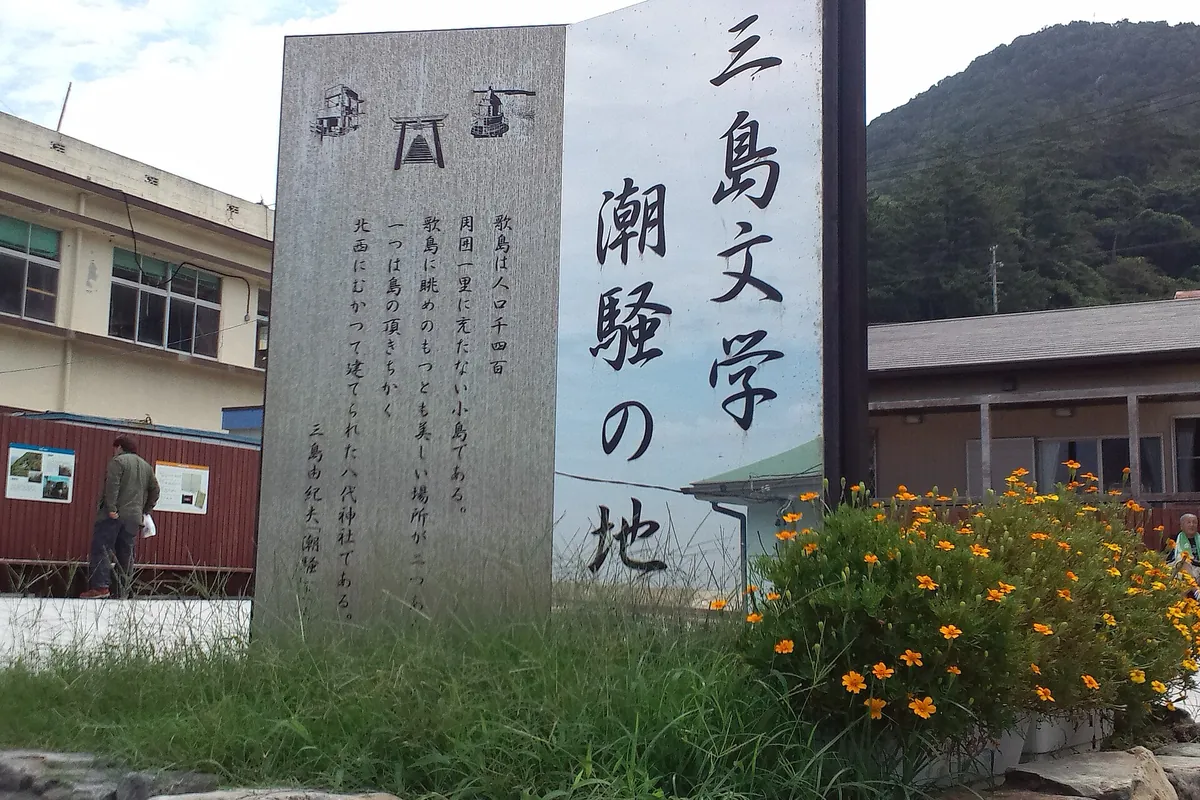
- Kamishima, Mie Prefecture: the small island at the mouth of Ise Bay that became the setting of The Sound of Waves. A monument on the island marks it as “the land of Shiosai”.
- Kinkaku-ji, Kyoto: the Golden Pavilion of the 1956 novel, rebuilt in 1955 after the 1950 fire.
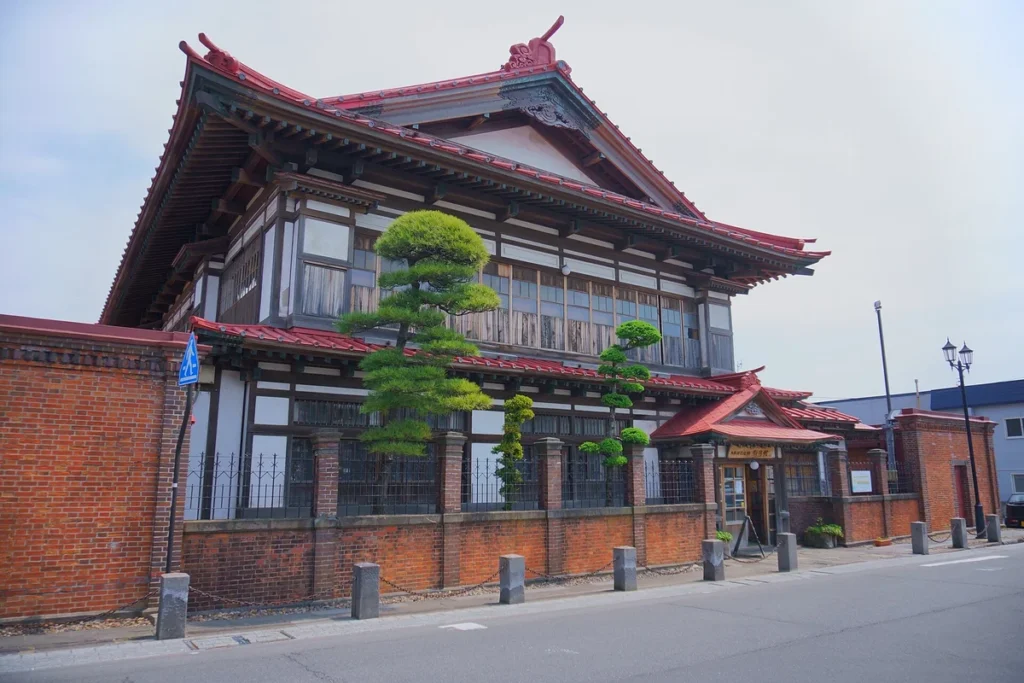
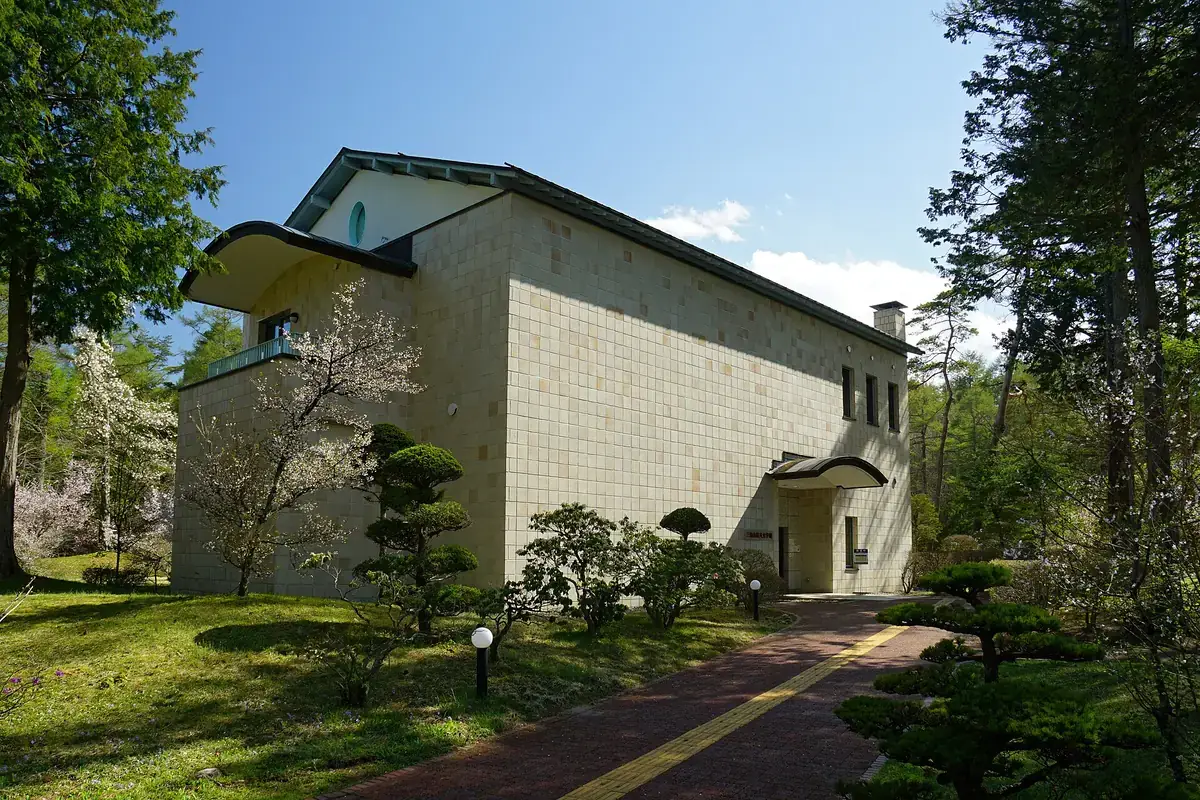
- Mishima Yukio Literary Museum, Lake Yamanaka: opened on 3 July 1999 in the Forest Park of Literature at Yamanakako, Yamanashi, at the foot of Mount Fuji. Its website (mishimayukio.jp) was closed for maintenance from 22 October 2026, so check opening before you travel.
Mishima is one of the authors in our guide to the best Japanese authors to read, and for the writer he most despised, see our guide to Osamu Dazai’s books.
Yukio Mishima Books: Questions
Which Yukio Mishima book should I read first?
The Sound of Waves is the easiest way in: a short, warm love story between a young fisherman and a pearl diver on a small island. If you want his most admired novel, start with The Temple of the Golden Pavilion, about the acolyte who burned Kyoto’s Golden Pavilion in 1950. For a quick, darker read, try The Sailor Who Fell from Grace with the Sea.
In what order should I read the Sea of Fertility?
Read the four novels in publication order: Spring Snow (1969), Runaway Horses (1969), The Temple of Dawn (1970) and The Decay of the Angel (1971). The same character, Shigekuni Honda, ages through all four from 1912 to 1975, and each book depends on the one before. Spring Snow, translated by Michael Gallagher, can also be read on its own.
How many books did Yukio Mishima write?
Mishima wrote 34 novels, about 50 plays, 25 books of short stories and at least 35 books of essays between the 1940s and his death in 1970. Fifteen of the novels have been translated into English, most recently The Frolic of the Beasts (2018), Life for Sale (2019) and Beautiful Star (2022), along with the novella Star (2019).
Why did Yukio Mishima die?
On 25 November 1970 Mishima and four members of his private militia, the Tatenokai, took the commandant of Camp Ichigaya in Tokyo hostage. Mishima called on the soldiers to rise up against the post-war constitution and restore the emperor’s power, was heckled, and then died by ritual suicide, seppuku. He had planned the day for at least a year.
Did Yukio Mishima win the Nobel Prize?
No. Mishima was considered for the Nobel Prize in Literature in 1963, 1964, 1965, 1967 and 1968, and was one of six finalists in 1963. In 1968 the prize went to his mentor Yasunari Kawabata, who had helped him publish his first story after the war.