As life has grown more complex, and the stresses beyond our basic needs for food and shelter have multiplied, more and more of us have sought answers to the question of how one can live a fulfilled life. Myriad books have cropped up to aid this endeavour, encouraging people to learn to say no, optimise their lives, or make incremental changes that compound over time. Japanese culture, with its population tending to live long, healthy lives, has proven fertile ground for extracting ways of living for English-language readers. The stand-out example is Ikigai. First published in 2016, it remains one of Penguin UK’s best-selling titles, and it’s clear why: its lessons on staying active, positive and embedded in a community provide workable, realistic examples for those looking to maximise their happiness.
Another Japanese lifestyle book?
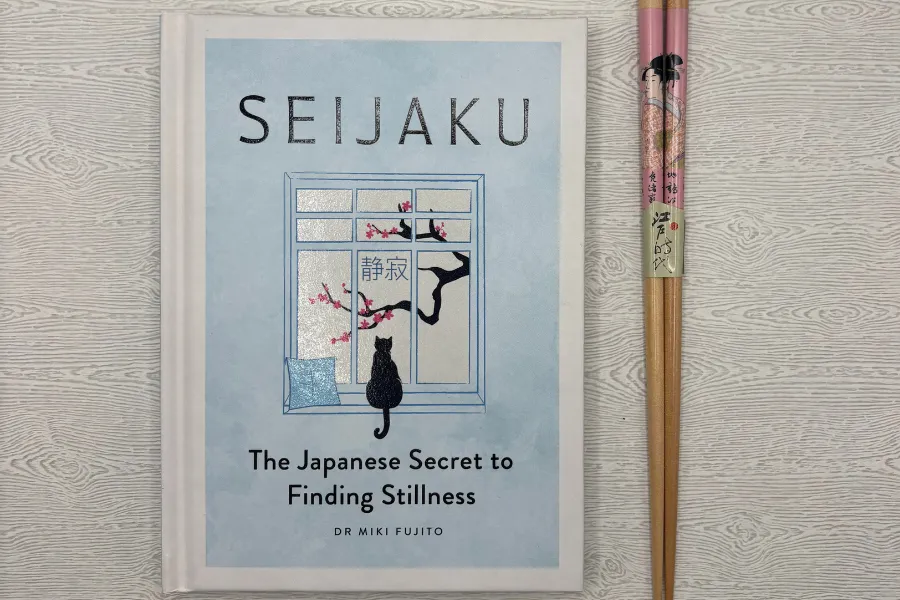
Some, myself included, see this drive to optimise, to prescribe ways of living for your life, as tiring at best and, counterintuitively, as another stressor at worst. Dr Miki Fujito, a Japanese medical doctor, wellness advocate and author of Japan Wellness Lab on Substack, shares this view in her new book, Seijaku: The Japanese Secret to Finding Stillness. Explaining that she became overwhelmed by the need to handle the uncertainty and isolation of the COVID-19 pandemic through mindfulness and productivity, she has distilled an antidote to the noise in this beautifully illustrated book.
What Seijaku means
Defining seijaku as a middle ground between silence, stillness and peace, Fujito offers a flexible approach to finding seijaku in a way that feels immediately refreshing. Not all definitions and prescriptions resonate with everyone, she reminds her readers, in what feels like a stark contrast to other rigorous books in the self-help genre. Further, despite being based on a Japanese word and concept, Seijaku is surprisingly accessible for anyone regardless of their exposure to Japanese culture, making the book feel more relevant in a market that can often Orientalise or romanticise Japanese peoples’ lives. That being said, three Japanese concepts are crucial to the book:
- Ma: the space between ourselves and things
- Shikata ga nai: knowing when something can’t be helped, and when to let go
- Yutori: creating room, both mental and physical, for the spaciousness needed for seijaku
Fujito’s goal is neither esoterically difficult to achieve nor seemingly impenetrable. She does not require perfection from her readers, day in, day out. Instead she provides them with ways to adapt their lives to create small moments of seijaku. Her aim is to help people hone techniques for living with more space and inner peace in the lives they already lead, rather than to escape those lives.


Four doors to stillness
Fujito pinpoints four ‘doors’ to seijaku: environmental stillness; physical stillness; emotional stillness; and immersive stillness. Quiet woods, taking a bath, pouring a cup of tea or engaging in deeply immersive activities such as reading or calligraphy all offer paths to seijaku. However, Fujito reminds us that seijaku should not feel like a revelation, nor be ‘a destination or a goal to achieve’. Rather, it is ‘a companion that emerges when we create space for quiet in our lives’.
What makes this book especially effective is the author’s own personal relationship with seijaku. She describes the time she really lost her inner peace: during Covid, studying abroad in Hungary and confined to a small dorm room, filled with uncertainty. She recalls her body being constantly tense, and her inner world being noisy despite the eerie silence outside. Through tiny acts of self-care, such as cleaning a corner of her room, taking baths more frequently, or being mindful when chopping vegetables and preparing food, Fujito was able to reconnect with the seijaku that she had grown up with in Japan.
A book you experience rather than apply
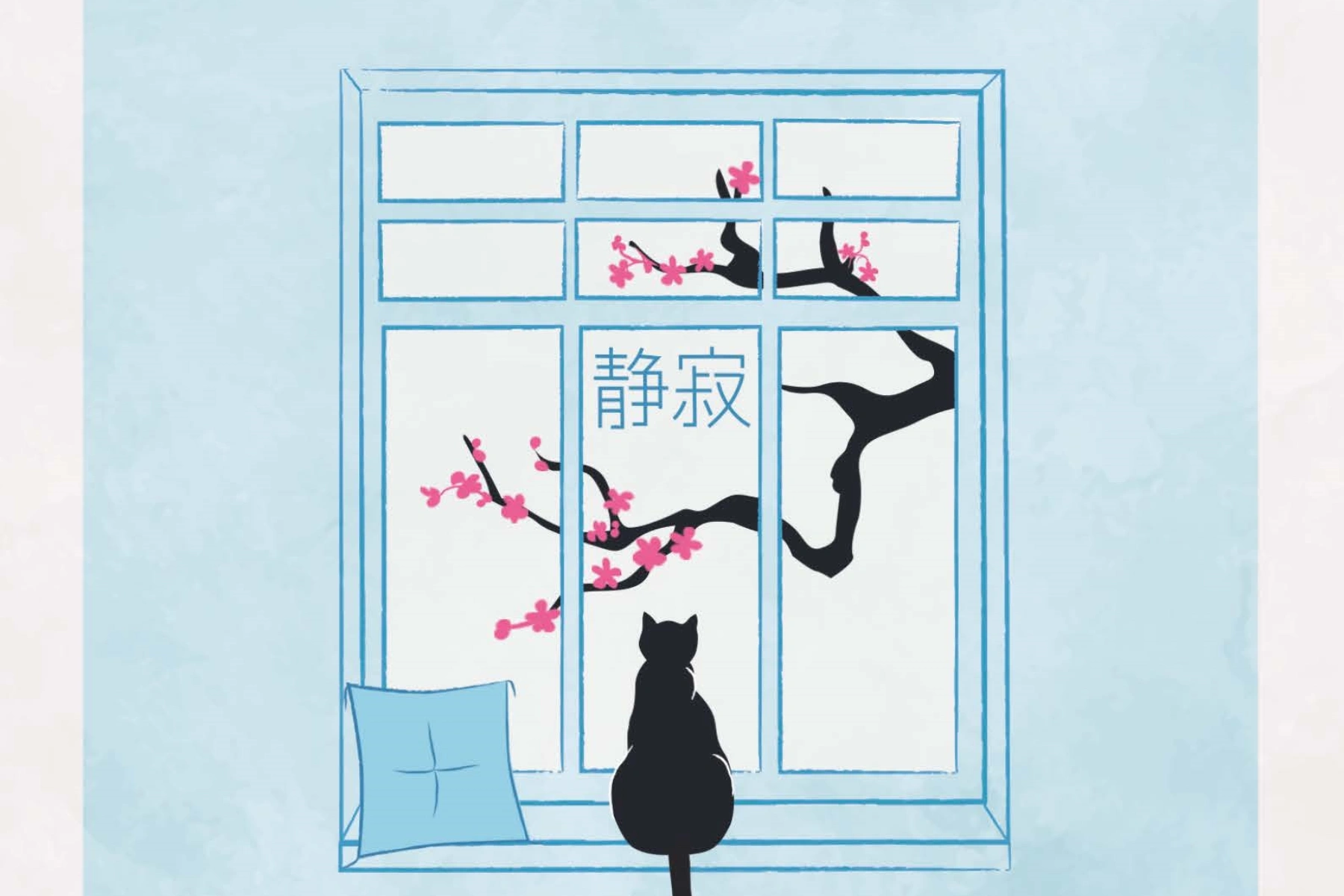
The words in Seijaku are gentle and calming to read, and the accompanying watercolour artworks and fully designed pages relax the reader too. After reading it, I found myself flicking through over and over again at still moments in my day, experiencing it rather than trying desperately to apply a lesson to my life here, or completely uproot my habits there.
In a saturated market and a world busier than ever, where silence feels like a luxury and using your free time to think and view the world around you feels like a difficult, conscious choice, Seijaku is itself a trigger for a moment of mindfulness. Through this book, designed to be picked up time and again and read to help find this space, Fujito reminds us that change doesn’t have to look like a life overhaul. It can also be about creating an occasional moment away from the noise, to sit with yourself in seijaku.
Where to buy Seijaku
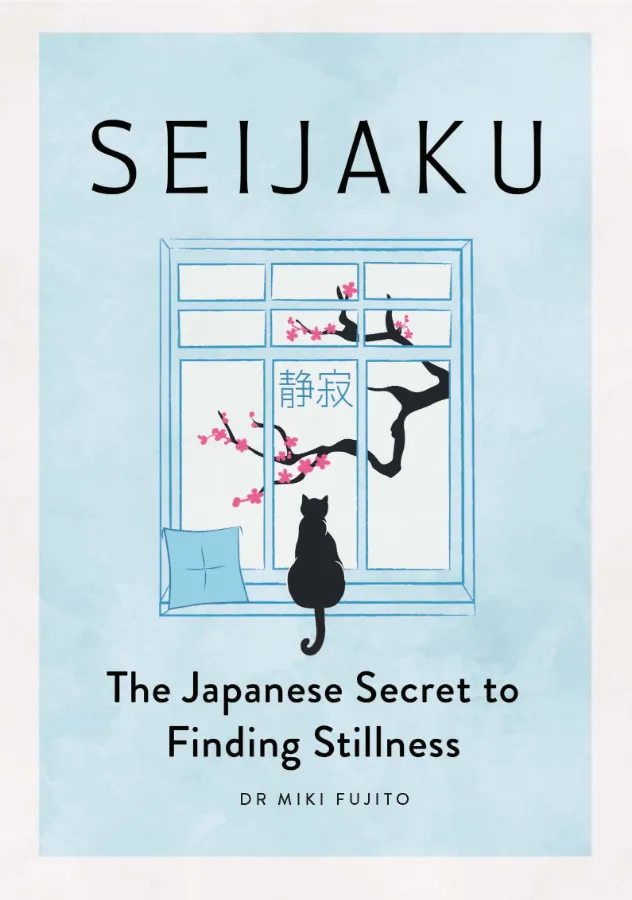
Seijaku: The Japanese Secret to Finding Stillness by Dr Miki Fujito is published by Michael O’Mara Books on 10 September 2026 in hardback (160 pages). RRP: £14.99. You can pre-order it from Waterstones.