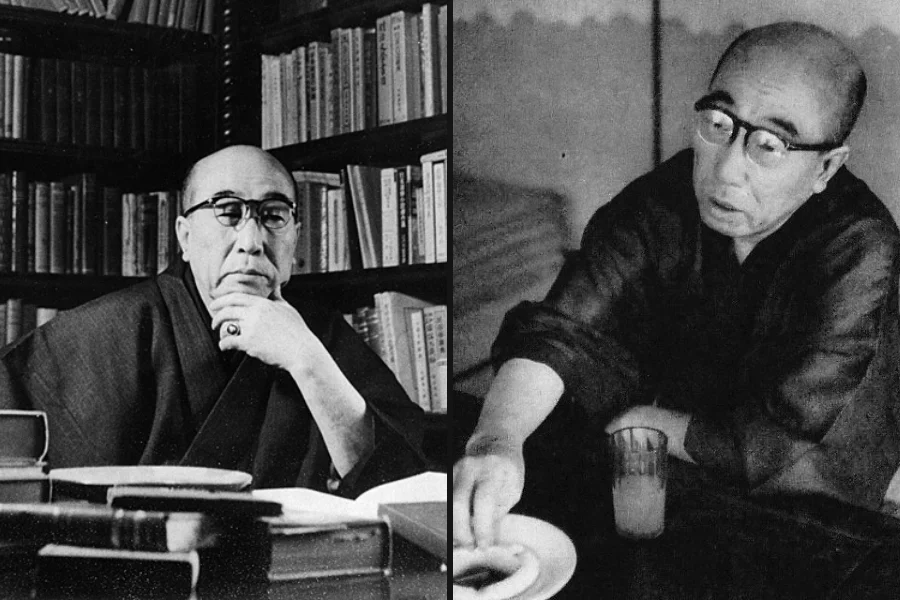
Edogawa Ranpo (also spelled Rampo) is the pen name of Tarō Hirai (1894 to 1965), widely regarded as the father of Japanese mystery writing, and the best place to start in English is “The Human Chair”, the opening story of Tuttle’s collection Japanese Tales of Mystery and Imagination. For a full novel, Penguin’s Gold Mask sends his detective Akechi Kogorō after a masked thief across Japan.
Below are his books in English with their translators, which to read first, how one story in the magazine Shinseinen launched his career in 1923, the films and anime that carry his name, and the house in Ikebukuro where you can still see his library.
Edogawa Ranpo: key facts
- Real name: Tarō Hirai (平井太郎)
- Born: 21 October 1894, Nabari, Mie Prefecture
- Died: 28 July 1965, Ikebukuro, Tokyo, aged 70
- Pen name: 江戸川乱歩, a Japanese rendering of Edgar Allan Poe
- Famous detective: Akechi Kogorō, first seen in “The Case of the Murder on D Hill” (1925)
- Best-known stories in English: “The Human Chair” (1925) and “The Caterpillar” (1929)
- Main English publishers: Penguin Modern Classics, Tuttle and Kurodahan Press
From The Human Chair to Akechi Kogorō: Reading Edogawa Ranpo
No headings found.
Edogawa Ranpo Books in English, With Translators
| English title | What is in it | Translator | Publisher and English year |
|---|---|---|---|
| Japanese Tales of Mystery and Imagination | Nine stories, including “The Human Chair”, “The Psychological Test”, “The Caterpillar”, “The Hell of Mirrors” and “The Red Chamber” | James B. Harris | Tuttle, 1956; new edition with a foreword by Patricia Welch, 2012 |
| The Early Cases of Akechi Kogorō | Akechi’s first cases from 1925 and 1926, including “The Case of the Murder on D Hill” and the novel The Dwarf | William Varteresian | Kurodahan Press, 2014 |
| Beast in the Shadows (陰獣, Injū) | Novel, 1928 | Ian Hughes | Penguin Modern Classics, 2023 |
| The Black Lizard (黒蜥蜴, Kuro tokage) | Novel, 1934: Akechi against a woman master thief | Ian Hughes | Penguin Modern Classics, 5 October 2023 |
| Gold Mask (黄金仮面, Ōgon kamen) | Novel: Akechi against a masked thief | William Varteresian | Kurodahan Press, 2019; Penguin Modern Classics, 6 June 2024 |
| The Edogawa Rampo Reader | Eight stories and ten essays written between 1926 and 1956 | Seth Jacobowitz | Kurodahan Press, 2008; new edition, 2025 |
The three Penguin paperbacks use the spelling Rampo and are the easiest to find in UK bookshops. The Fiend with Twenty Faces, the first of his Boy Detectives Club novels for young readers, is also in English from Kurodahan Press.




Where to Start Reading Edogawa Ranpo
- Start with “The Human Chair” (1925). A craftsman hides himself inside an armchair he has built, so that he can feel the people who sit on it. It opens Japanese Tales of Mystery and Imagination, and Penguin names it, with “The Caterpillar”, as his best-known story outside Japan.
- For a detective novel, read Gold Mask. Akechi Kogorō chases a thief in a gold mask through a series of disguises and escapes, and Penguin pitches it as Ranpo at his most playful.
- For the dark side, read Beast in the Shadows. Its translator, Ian Hughes, calls its atmosphere bizarre and macabre.
- For pace, read The Black Lizard. Hughes describes it as the faster detective story of his two Ranpo translations.
- For classic puzzles, read The Early Cases of Akechi Kogorō. These are the stories in which the detective first appeared.
- For Ranpo in his own words, read The Edogawa Rampo Reader. Its essays were the first of his nonfiction to be translated into English.
A note before you start: several of Ranpo’s best-known stories are violent and sexual, and “The Caterpillar” in particular is a hard read.
Tarō Hirai, a Bookshop Near Dangozaka and a Pen Name Taken From Poe
Tarō Hirai was born on 21 October 1894 in Nabari, in Mie Prefecture, and grew up in Nagoya, where he read Kuroiwa Ruikō’s Japanese adaptations of Western detective stories. He moved to Tokyo in 1912 to study political science and economics at Waseda University, and read Edgar Allan Poe and Arthur Conan Doyle in English.
After university he moved through more than a dozen jobs, including a spell at a shipyard in Toba. In February 1919 he opened a second-hand bookshop, Sannin Shobō, with his two younger brothers in Komagome, by the Dangozaka slope in Tokyo, and Bunkyo City notes that his Dangozaka years gave him the idea for “The Case of the Murder on D Hill”. He was a restless tenant all his life: by his own count he lived in 46 homes.
His pen name is written 江戸川乱歩 and read Edogawa Ranpo, a Japanese rendering of the name Edgar Allan Poe.

The Two-Sen Copper Coin and the April 1923 Issue of Shinseinen
Ranpo’s break came through Shinseinen, a monthly magazine for young men that the publisher Hakubunkan launched in January 1920 and kept going until 1950. Its first editor, Morishita Uson, made it popular with translated detective stories, then went looking for Japanese writers who could match them.
Ranpo posted him the manuscript of “The Two-Sen Copper Coin” (二銭銅貨, Nisen dōka), a story about cracking a code. Morishita later wrote that it was so good he wondered whether it was a disguised adaptation of a foreign story. He asked his friend Kosakai Fuboku, a medical researcher who wrote about detective fiction, for a second opinion, and the story appeared in the April 1923 issue with Kosakai’s recommendation.
Shinseinen became the home of a new generation of Japanese mystery writers. Seishi Yokomizo, the creator of Kosuke Kindaichi, won its competition for new detective stories in 1921 and later edited the magazine. Ranpo himself wanted to write honkaku, the fair play puzzle story that later defined Japanese locked room mysteries, but Rikkyo University’s Ishikawa Takumi points out that only a few early stories, such as this one and “The Psychological Test” (1925), really fit the form.

Akechi Kogorō, From a Scruffy Lodger on D Hill to the Boy Detectives Club
Akechi Kogorō first appears in “The Case of the Murder on D Hill”, published in Shinseinen in January 1925. He is far from a polished hero: a young man with untidy hair and a worn cotton kimono, who walks with an odd swing of the shoulders, has no real job and lives in a four and a half mat room buried in books.
Over stories such as “The Psychological Test” and “The Stalker in the Attic”, and novels including The Spider-Man and Gold Mask, he grows into a well dressed and famous detective. In January 1936 Ranpo took him to children in Kodansha’s magazine Shōnen Kurabu with The Fiend with Twenty Faces, setting him against a master of disguise and giving him a teenage assistant, Kobayashi Yoshio. Boys who idolise Kobayashi form the Boy Detectives Club, and the series returned after the war with The Bronze Devil in 1949 and ran until 1962.
The Human Chair, The Caterpillar and Ranpo’s Erotic Grotesque
Alongside the puzzles, Ranpo wrote the stories that made him notorious. “The Human Chair” and “The Stalker in the Attic” both date from 1925, Beast in the Shadows followed in 1928 and “The Caterpillar” in 1929. They are often filed under eroguro, the erotic grotesque, and Ishikawa Takumi observes in an interview with Nippon.com that the fear in them always comes from human beings.
The Black Lizard (1934) pits Akechi against a woman master thief known as the Dark Angel. Yukio Mishima turned it into a stage play that is still performed in Japan.
Black Lizard, Blind Beast and Ranpo on Film
Kinji Fukasaku filmed Black Lizard in 1968 from Mishima’s stage version, with Akihiro Miwa, then credited as Akihiro Maruyama, as the thief. A year later Yasuzō Masumura made Blind Beast (1969) from Ranpo’s Mōjū, about a blind sculptor who kidnaps an artist’s model. Arrow Video released Blind Beast on Blu-ray in the UK in August 2021, rated 18.
Teruo Ishii’s Horrors of Malformed Men, another Ranpo adaptation, came out the same year. For more of the genre, see our list of the best Japanese horror films.
Edogawa Ranpo in Detective Conan and Bungo Stray Dogs
Many readers meet Ranpo’s name before his books. In the first chapter of Gosho Aoyama’s Detective Conan (1994), the shrunken teenage detective Shinichi Kudo is asked his name, glances at a bookshelf and combines Arthur Conan Doyle with Edogawa Ranpo. The children who help him are the Shōnen Tantei-dan, the same Japanese name as Ranpo’s Boy Detectives Club, and a two part episode broadcast in November 2024 is set in Ranpo’s real house at Rikkyo University.
Bungo Stray Dogs, the manga by Kafka Asagiri and Sango Harukawa, has its own Ranpo Edogawa: the star detective of the Armed Detective Agency, whose “Super Deduction”, which he believes is a supernatural power, is in fact his own reasoning. Hiroshi Kamiya voices him in Japanese, and he shares the real writer’s birthday, 21 October. Our guide to Osamu Dazai’s books covers the series’ other famous author.
The Edogawa Ranpo Prize and the Writers He Championed
After the war Ranpo turned to helping other writers. Authors and fans had begun gathering at his Ikebukuro house, which survived the wartime firebombing, and on 21 June 1947 he founded the Detective Writers Club (探偵作家クラブ, Tantei Sakka Kurabu), now the Mystery Writers of Japan, as its first president.
At the party for his 60th birthday in 1954, he gave the club one million yen to set up a prize in his name. The Edogawa Ranpo Prize was first awarded in 1955, became an open competition for new mystery novels in 1957, and has launched writers including Kyōtarō Nishimura in 1965 and Keigo Higashino in 1985. From 1957 he also edited the magazine Hōseki, and he praised Seichō Matsumoto’s Points and Lines (1958) as the kind of book that could raise the standing of the whole genre. Our guide to Japanese crime fiction in translation picks up the story after him.
Visiting Edogawa Ranpo’s House and Storehouse in Ikebukuro
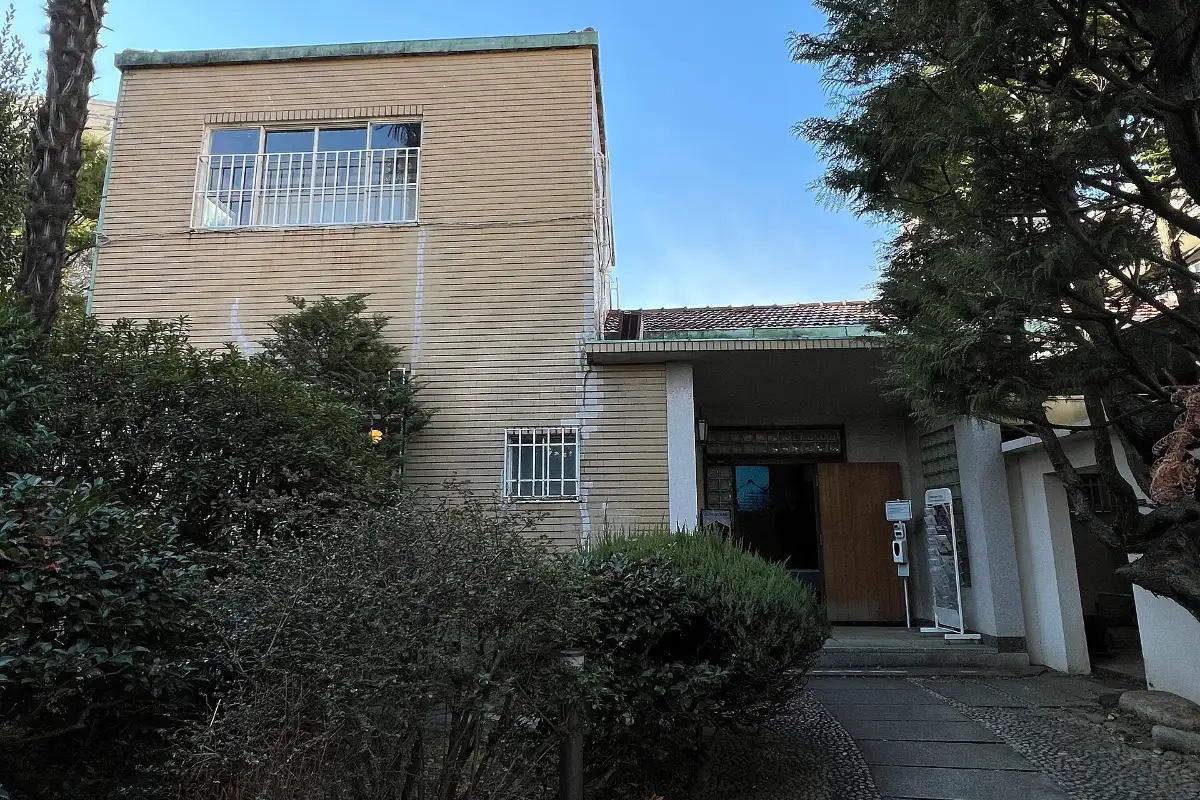
Ranpo moved to a house in Ikebukuro, next to Rikkyo University, in 1934 and stayed for the rest of his life, about 30 years. Rikkyo took over the house, the storehouse and his books in 2002, and opened the Edogawa Rampo Memorial Center for Popular Culture Studies there in 2006.
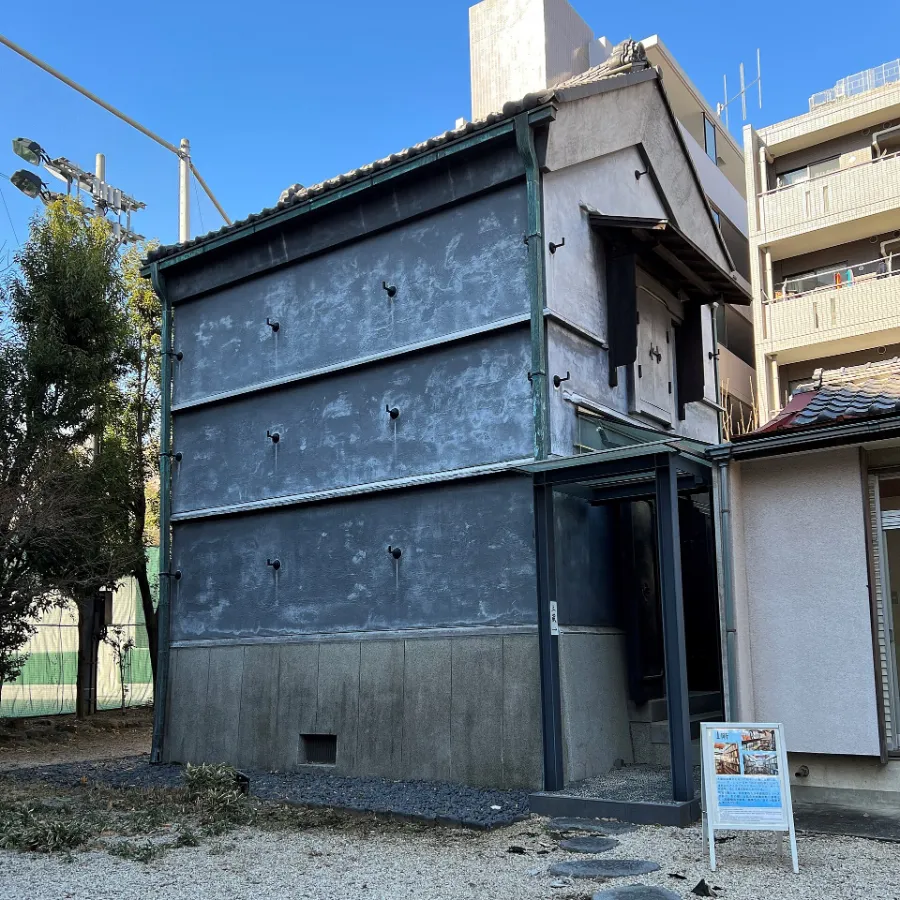
The two storey earthen storehouse, where Ranpo kept his library and worked, is known as Genei-jō, the Castle of Illusion, a title he also gave to a book of his criticism. It is a designated cultural property of Toshima City, and the centre now holds around 40,000 items, from his own collection to material Rikkyo has added since.
After a renovation for Rikkyo’s 150th anniversary, the house reopened on 19 May 2025 with a new exhibition room. It is open to the public on Mondays, Wednesdays and Fridays from 10.30am to 4pm, except on public holidays. Entry is free and you do not need to book. The address is 3-34-1 Nishi-Ikebukuro, Toshima, a short walk from Ikebukuro Station, and opening days can change, so check the centre’s page before you go.

Edogawa Ranpo: Questions
Start with “The Human Chair”, the first story in Japanese Tales of Mystery and Imagination, translated by James B. Harris for Tuttle. It is short and shows his strange, unsettling side. For a full detective novel, read Gold Mask from Penguin Modern Classics, in which Akechi Kogorō chases a masked thief across Japan.
Both spellings are correct. His pen name is written 江戸川乱歩 in Japanese. Penguin and Tuttle print it as Rampo on their English editions, while the National Diet Library of Japan and many scholars write Ranpo. It is a play on the name Edgar Allan Poe.
Yes. He read Poe and Arthur Conan Doyle in English as a student at Waseda University, and his pen name is a Japanese rendering of the name Edgar Allan Poe. Tuttle still sells his first English collection under the title Japanese Tales of Mystery and Imagination, an echo of Poe’s Tales of Mystery and Imagination.
Outside Japan, Penguin names “The Human Chair” and “The Caterpillar” as his best-known stories. In Japan, his Boy Detectives Club series for young readers, which began with The Fiend with Twenty Faces in 1936 and ran until 1962, has been adapted for radio, television and film many times.
The character is named after the real writer Edogawa Ranpo (1894 to 1965). In Bungo Stray Dogs he is the star detective of the Armed Detective Agency and shares the real author’s birthday, 21 October. The real Ranpo created the detective Akechi Kogorō and is widely regarded as the father of Japanese mystery writing.
Yes. His former home and storehouse in Ikebukuro, Tokyo, are run by Rikkyo University as the Edogawa Rampo Memorial Center for Popular Culture Studies. They reopened after renovation on 19 May 2025 and are open on Mondays, Wednesdays and Fridays from 10.30am to 4pm, except public holidays. Entry is free and no booking is needed.
Sources and further reading
National Diet Library, history of Japanese detective fiction, part two and part three (in Japanese).
Ishikawa Takumi, interviewed in “Edogawa Ranpo’s World of Mystery and Terror”, Nippon.com, 28 October 2021.
Rikkyo University, Edogawa Rampo Memorial Center for Popular Culture Studies.
Bunkyo City, Edogawa Ranpo (in Japanese).
Roman Rosenbaum, “Towards a Graphical Representation of Japanese Society in the Taishō Period: Jiji Manga in Shinseinen”, Japan Review 23 (2011), International Research Center for Japanese Studies.