What is a kamon?
A kamon (家紋) is a Japanese family crest: a simple emblem, usually drawn inside a circle, that identifies a family in much the way a coat of arms does in Europe. Kamon first appeared among noble families in the mid-Heian period, around the 10th century, when they were painted on ox-drawn carriages, and by the 12th century samurai were carrying them on flags, tents and equipment to tell friend from foe in battle.
In the Edo period (1603 to 1867), ordinary people were allowed to choose crests of their own, with a few exceptions such as the imperial chrysanthemum and the Tokugawa shogunate’s hollyhock. Designs are drawn from plants, animals, everyday objects and geometric shapes, and counting all the variants there are thought to be 20,000 or more. You still see kamon on the most formal kimono, which carry five: one in the middle of the back, one on the back of each sleeve and one on each side of the chest.
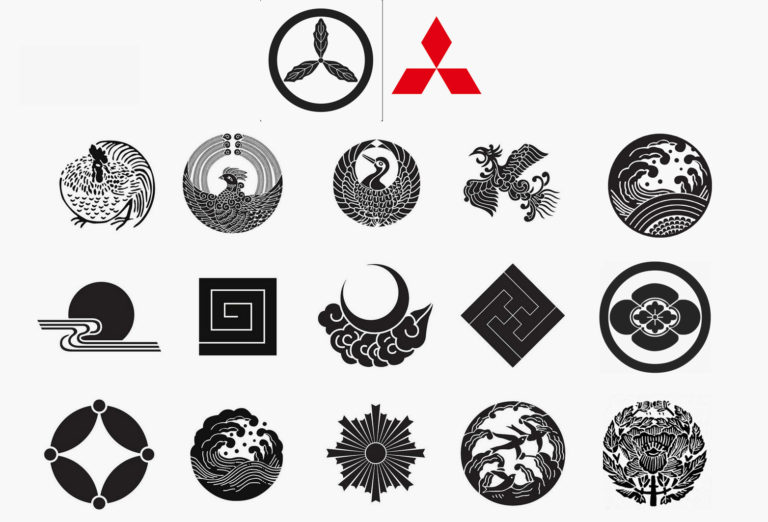
Kamon are everywhere in Japan, and many companies use them as logos. Mitsubishi, a zaibatsu founded in 1870 in the years after the Meiji Restoration, built its three-diamond mark from two family crests: the three-layered water chestnut of founder Iwasaki Yatarō’s family, and the three-leaved oak of the Yamanouchi family, lords of the Tosa domain. Kamon designs also appear on the packaging of sake, beer and food products to lend an air of refinement and tradition.
The Japan Nakama kamon
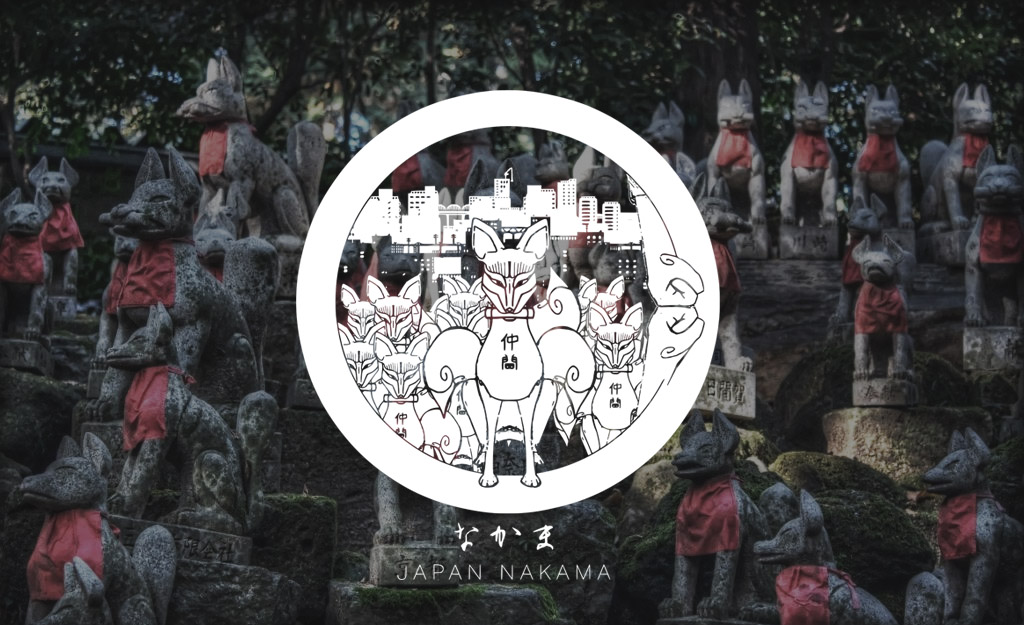
Japan Nakama are pleased to announce the launch of their Kamon. The design is inspired by the Inari-Taisha Kitsune Fox. This shrine can be found in Fushimi Ward in Kyoto and is famous for its Torii gates. The custom to donate a torii existed since the Edo period to make a wish become true, or give thanks for a wish that had come true.
Fushimi Inari Taisha is the head shrine of more than 30,000 Inari shrines across Japan.
The kitsune fox is the messenger of Inari, the deity of rice and of prosperity, who has been worshipped since the Edo period for success in business, which is why so many of the torii carry company names. Our founder found a lot of inspiration when visiting the Inari Taisha Shrine, which eventually led to the founding of Japan Nakama.
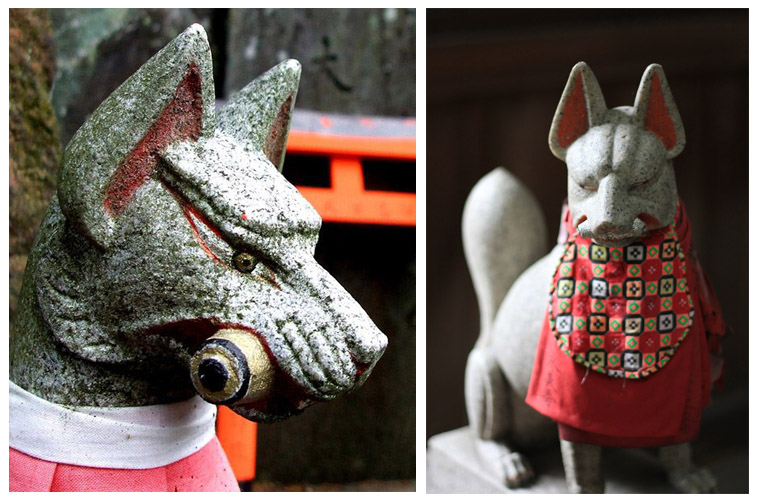
Inari-Taisha Kitsune Fox:
The Japan Nakama Kamon carries multiple meanings within its design. The Fox, typically white, carry the message of knowledge with them and we illustrated that with a scroll held in the mouths of the foxes.
The idea of Nakama is to bring people together into a community of like-minded people and this is embodied by our representation of the group of Kitsune Foxes. We hope as Nakama, it’ll bring you much prosperity.
Nakama Kanji:
The Kanji for Nakama is boldly printed on all of the Kitsune Fox’s chests to represent the pride of bringing a community together.
City:
Most Nakama are city dwellers and thrive in modern city environments, as is often the reason why we love Japan; for its modern city life. We wanted the City in the background to represent where we bring people together.
Nakama Greeting:
The Nakama greeting, a fist bump, is a form of greeting that acts to break down formality. A handshake, can often be too professional and keep us distant. A fist bump can be shared between anyone and represents Respect, Acceptance, and Friendship.