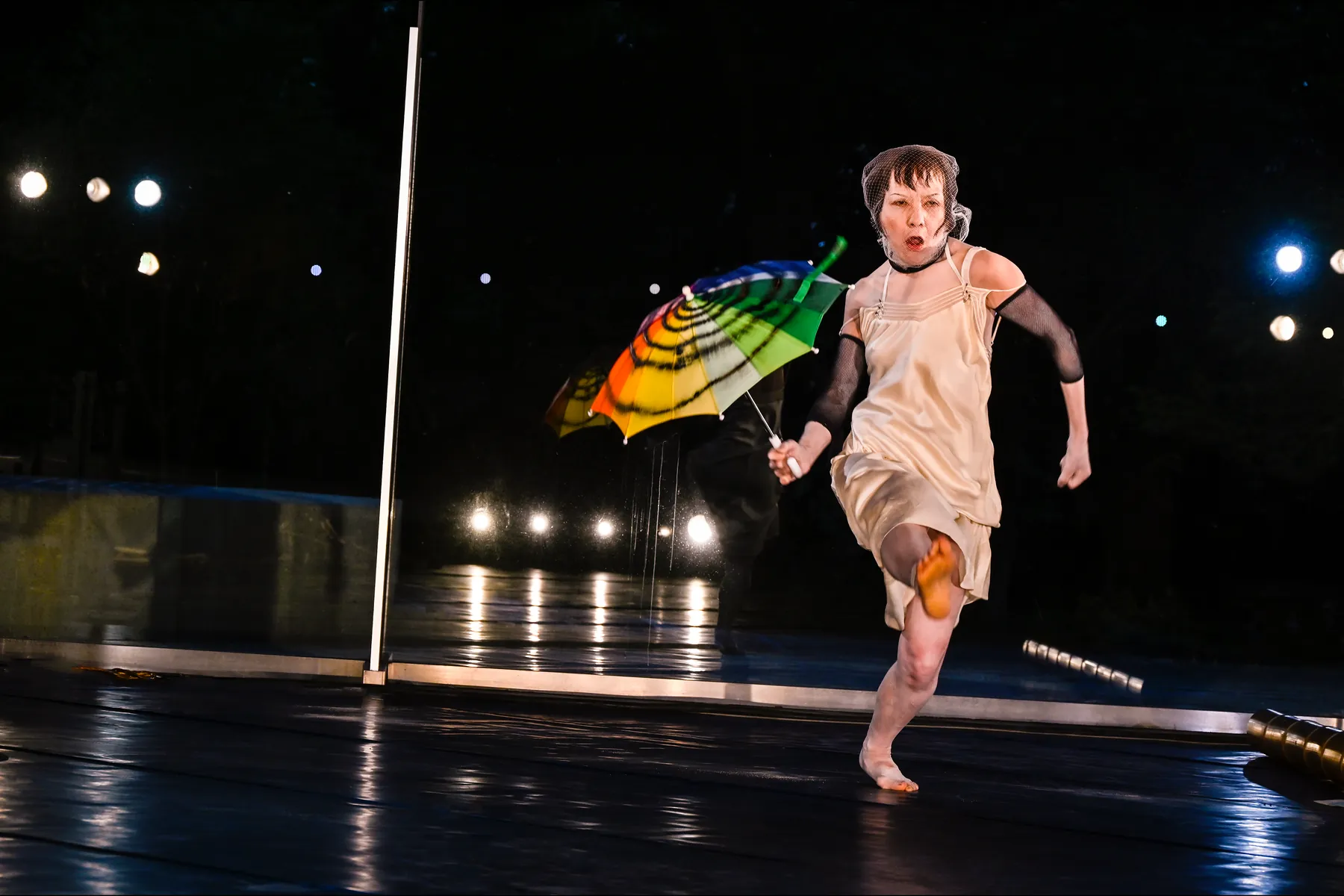
Born in 1950 in Fukuoka, Mitsuyo Uesugi pursued a dance career that brought her to Tokyo as it experienced an exploding radical arts scene, in the late 60s. There, she encountered butoh, an emerging avant-garde dance form. Following work alongside her sensei, butoh pioneer Kazuo Ohno, she embarked upon a celebrated, half-century-long career as a solo performer, while nurturing the talent of those who shared her philosophy. Here, she shares a portion of her incredible story, and shares what butoh means to her.
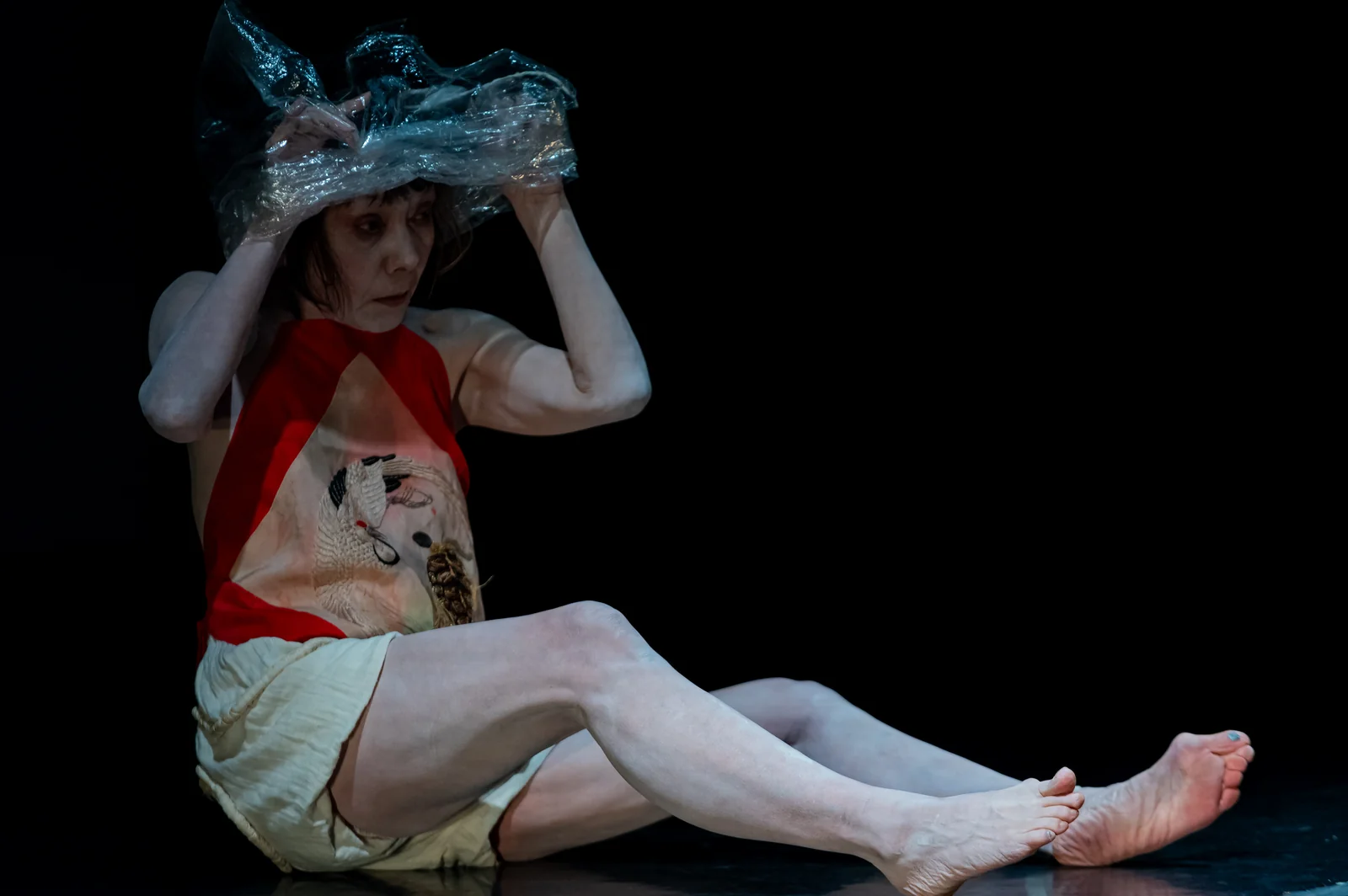
Revolutionary Tokyo
“I moved from Fukuoka to Tokyo”, in part, “because I wanted to escape the history of my home. The Momoko Tani Ballet Company provided a route for that. But it was not my place at all. It seemed like a gathering of rich girls, who never worked. Momoko Tani had a rule against being employed elsewhere whilst being a member, but I couldn’t live without earning.” These circumstances set Uesugi apart, supporting herself became an act of subversion. She found performance related work, including in musicals and as a go-go girl. “I was searching hard for anywhere where I could monetise my dancing. And, at the same time, there was my curiosity.”
Uesugi had arrived in Tokyo during a time of great social upheaval. Tokyo was experiencing massive student protests, and a draconian police response. Left-wing student groups had coalesced around a multiplicity of issues. These ranged from negligent and corrupt institutions, to a powerful anti-war sentiment, as the U.S. invasion of Vietnam reached a catastrophic zenith. The protests were the razor’s edge of a broader radicalism which, as it always is, was deeply embedded in the arts. As Uesugi explored Tokyo’s performing arts, she was drawn into its left-wing underground.
Butoh Alone
“I was going to see underground plays, watching and performing contemporary dance pieces. All kinds of theatre were flourishing. In that world I made all kinds of friends that I only could have met in Tokyo. One of them told me about Tatsumi Hijikata.” Hijikata was butoh’s main founder. He had exploded into the avant-garde scene a decade prior, with butoh’s first performance, Kinjiki. His piece, which featured Kazuo Ohno’s son, Yoshito, scandalised its audience, instantly mythologising the form. Upon seeing Hijikata’s work, Uesugi was enthralled. Hijikata, noticing Uesugi’s belief in the form, “came to see me when I was working as a go-go girl. He was putting on shows and invited me to join him.” But Uesugi was repelled at the thought of joining a group of artists. “I saw many things, but everything was some form of organisation. Hijikata’s works were group pieces. The underground were groups. The spaces where I worked were groups. Whether you wanted to join theatre or dance, you had to join a group. It just didn’t suit me. I liked being alone.”
“Through word of mouth, I heard that Ohno was going to make a very rare onstage appearance in Hibiya. After seeing him perform, I chose him.”
“Then at some point I heard of someone called Kazuo Ohno. He wasn’t teaching anybody, and he was rarely performing live. This was around the time he was making films,” the first parts of the Mr O trilogy which, notably, feature introspective performances in and around Ohno’s private space. “Portrait of Mr. O is wonderful. Everyone says it’s difficult, or that they don’t understand it, but I think it’s superb. It holds Kazuo Ohno’s most fundamental thinking. Just look at his beginnings.”
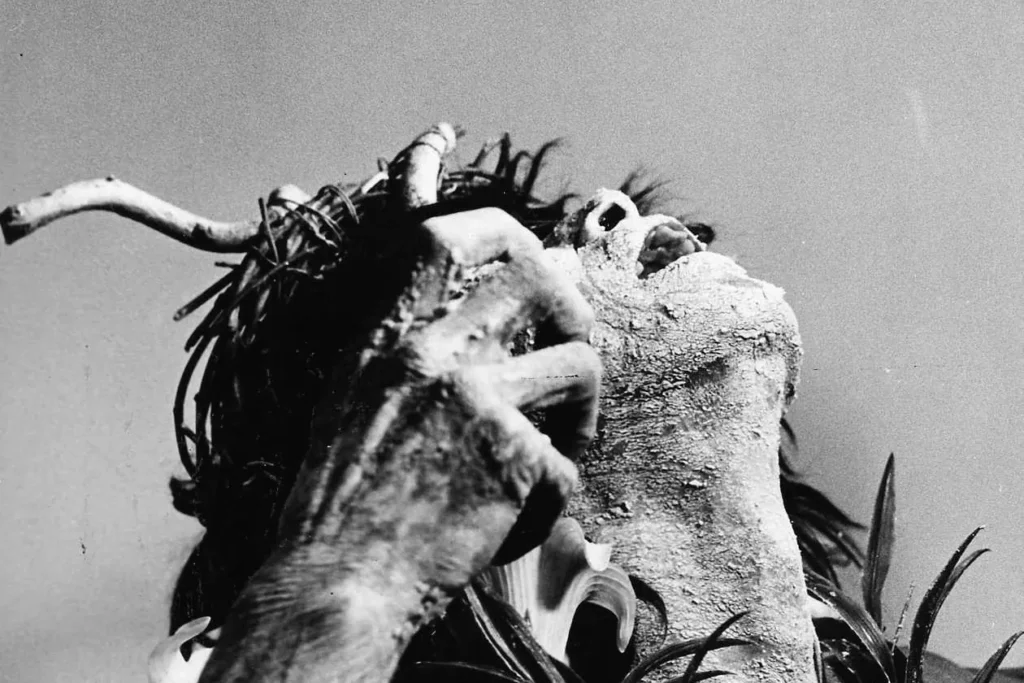
As Uesugi recounts, Kazuo Ohno’s journey in dance was a halting one. He had reached an impasse with contemporary dance and expressionism before meeting Hijikata in the early 1950s. In 1961, his butoh was recontextualised by photographer William Klein’s famed series, shot at the Tsuda Nobutoshi Dance Studio (later renamed Asbestos-kan) and on the streets of Shimbashi and Ginza. “This broadened Ohno’s work. Ohno had thought dance was something made in a theatre, on a stage. From this moment, little by little, Ohno began to ask the question ‘What is my dance?’” Ohno’s second impasse was at that studio. Uesugi describes him pulling away from Hijikata’s dogmatism; a strict insistence on precise choreography and form. By the time Uesugi first heard of him, Ohno had secluded himself to contemplate his work. He was in his early 60s when Chiaki Nagano encouraged him to make the experimental Portrait of Mr. O. “And in that film, Ohno seems set free.” Ohno’s insular, individualistic butoh was mastered just as Uesugi was searching for an insular, individualistic form. “Through word of mouth, I heard that Ohno was going to make a very rare onstage appearance in Hibiya. After seeing him perform, I chose him.”


Individualist Collaboration
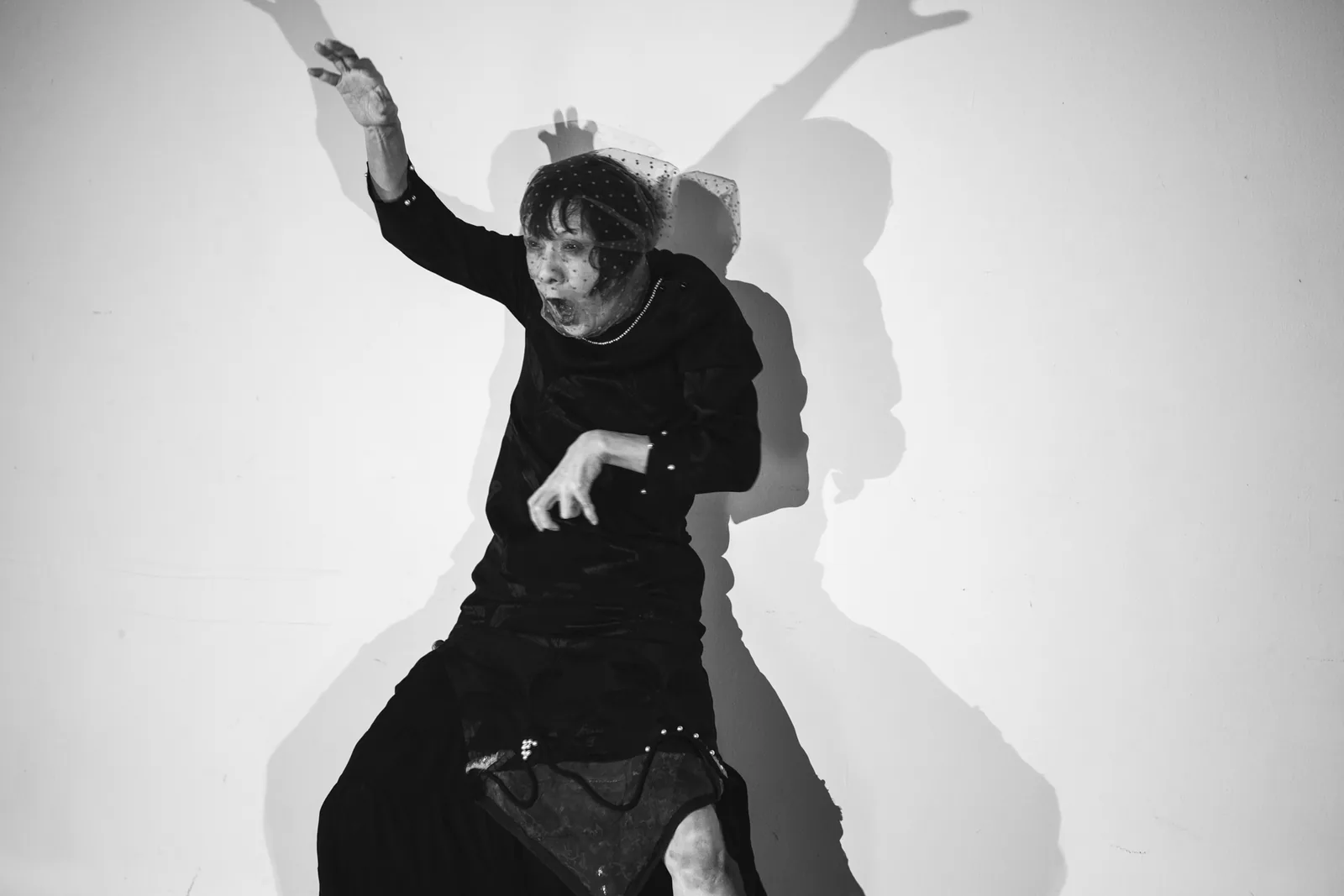
Uesugi left ballet to pursue butoh under Ohno’s guidance. Collaborating with another person to better realise an individualistic practice has a certain dissonance, and Uesugi’s work reflected this. Unlike a choreographed junior member of a dance troupe, her role was fluid. The improvisational form demanded creative input from the off. Uesugi was a student of Ohno, contributed production to Ohno’s performances, and was a solo performer in the same instance. She was cast in Ohno’s third film, Mr O’s Book of the Dead, and danced alongside Ohno in The Forbidden Hotpot (1974) before performing her first butoh solo, Guren-yakyoku, in 1975. This made her one of butoh’s earliest female soloists. Though she continued to perform alongside Ohno, or contribute production to his work, this marked the start of over 50 years of solo performances. Each one is a mirror, an exploration of a distinct and unique self.
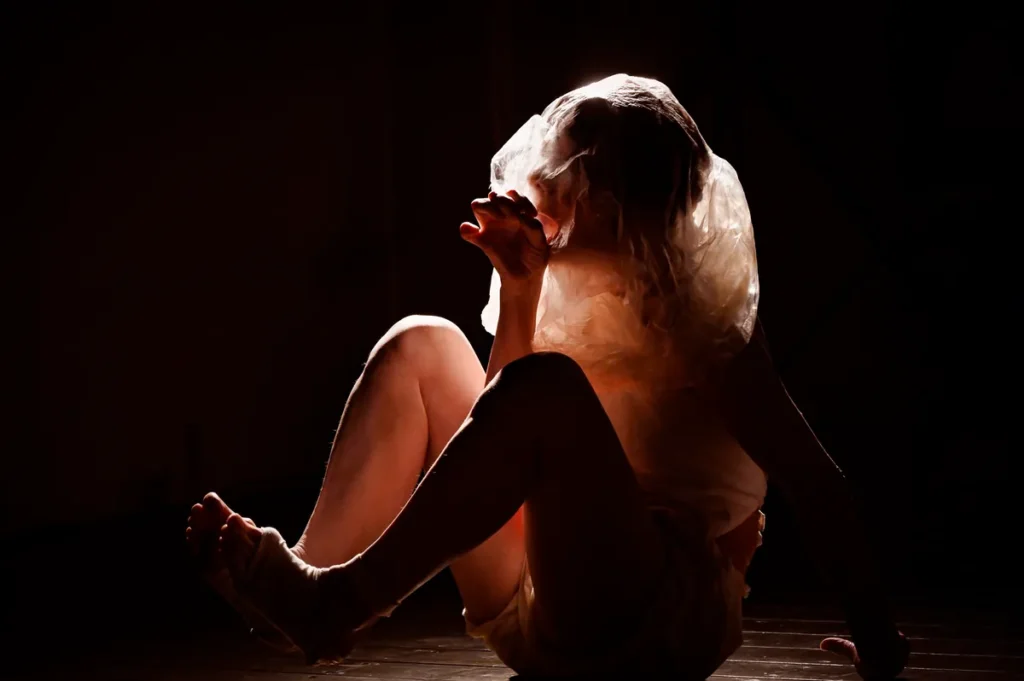
“From the beginning, starting with Guren-yakyoku, my work has always been on kanojo: ‘she’, or ‘her’. I did a series of performances called Kanojo for a long time. After that came Madame Melancholia, then Mademoiselle Melancholia, and then Baby Melancholia. In the end, this turns me, the person called Mitsuyo Uesugi, into an ‘other’. The last solo was A Portrait of M. The “M” stands for what is within me. Mitsuyo Uesugi is no longer there. With each performance, she goes from madame, to mademoiselle, to infant, to nothingness. At that point I, Mitsuyo Uesugi, come screaming into the world again as a newborn. Since I turned 70, I feel I’ve finally arrived at a place where I’m being born again, fresh and unguarded, with trust in myself. I danced a little solo recently, A Requiem for Her. It’s a dance that says ‘it’s fine just to be as you are’. For me, that is real growth.”
Butoh’s Globalisation
Over that time, Uesugi co-founded Mugen Company and founded Ahiru Studio, and witnessed butoh evolve into something global. “Sankai Juku was a great success in Paris, one of many sprouts of international butoh. Ohno’s own success grew after the Nancy Theatre Festival”, where he performed his first international performance, Admiring La Argentina, in 1980. On this tour, Uesugi performed in Ozen at The Place Theatre, London, a venue she is returning to in 2026.
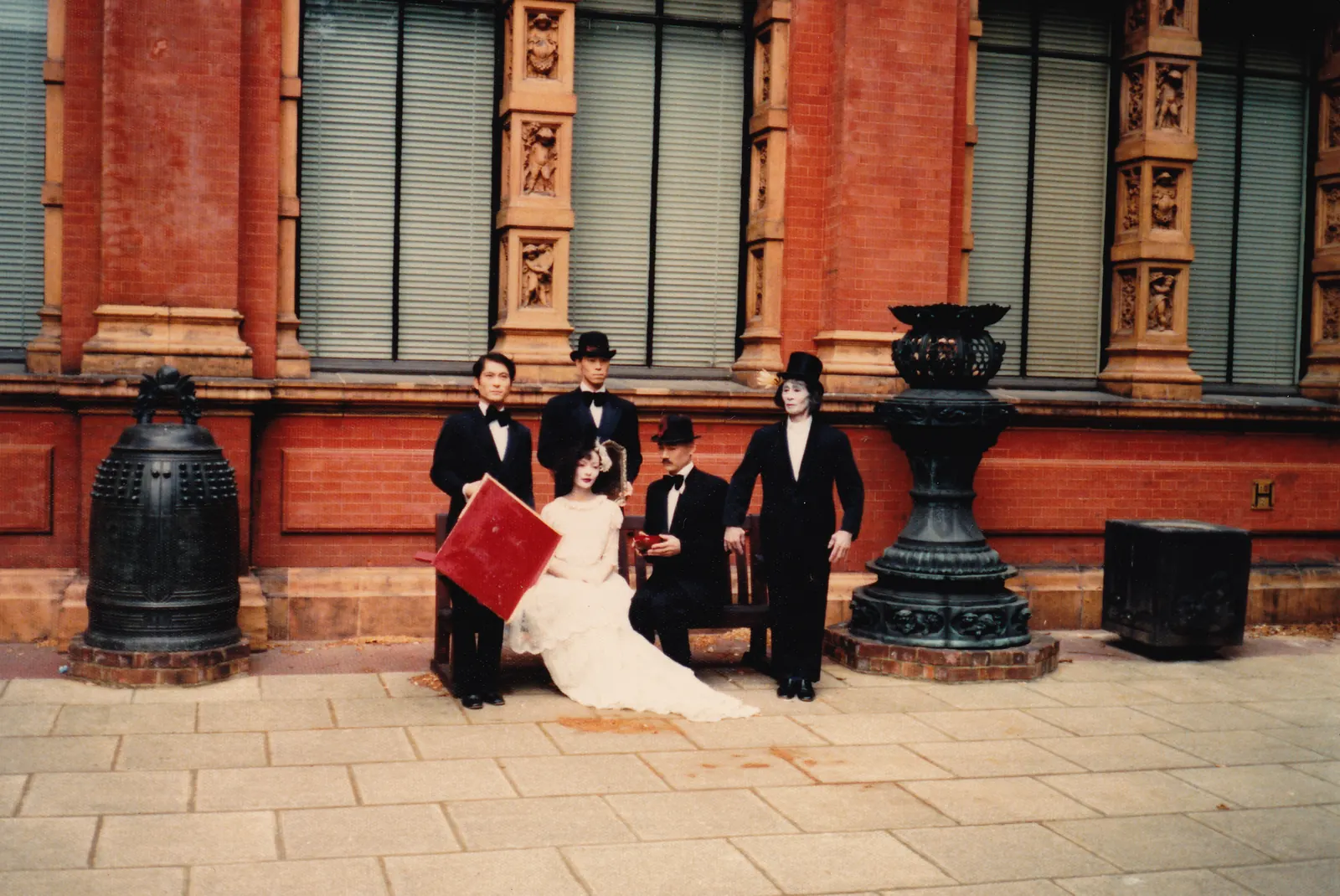
“From there, there were tours, one after another, every year. Until then, I had held that butoh is individual. It isn’t something born from rehearsing in a studio with ballet barres. It’s born from an individual behind closed doors. Since ideas alone don’t make a dance, you have to acquire technique independently, rather than be handed it through choreography. For example, in 1988 I spent three years retraining my body with students of Béjart; Catherine Diverrès and Bernardo Montet. The reason I’ve been able to keep dancing until now is because of that time practising contemporary dance in France. But the key issue is the idea, and how that idea is generated within yourself.”
From that time until now, a still-relentless communications revolution globalised butoh, as it did with every art form. This enabled new interpretations and definitions of butoh. “I believe butoh always has something that is born from the country it is in. It comes from the society and state in which people live. As I witnessed, people are tossed about by state power, and the treasures of the arts come out of that. I saw it in Mexico when I was young. Out of the struggle and resistance of people, new body methods and new forms of bodily expression were born. Butoh exists within what is anti-social, within the raised fist.” Yet modern communications does not just globalise, it also homogenises. Ohno’s butoh depends on a dancer with independently learned technique, who happens to believe Ohno’s individualistic ethos. It is not prescribed or imitative. But that degree of nuance doesn’t translate or travel easily.
“Butoh is individual. It isn’t something born from rehearsing in a studio with ballet barres. It’s born from an individual behind closed doors.”
This is something Uesugi witnessed during Ohno’s international tours. “For me, it was a whirl.” Uesugi felt compelled to continue touring, “I had always been by Ohno’s side so continued helping backstage. I was able to travel to many countries. But I do doubt if it was a good thing, as strange as that may sound. It publicised butoh.” The popular perspective of butoh deprioritises the ‘idea’, which Uesugi centres, in favour of imitative technique. “We had lived in an era when we never thought butoh would become, to this extent, a category, a frame. Now there are butoh practitioners everywhere, butoh this, butoh that, butoh festivals around the world. It wasn’t supposed to become this.”
“I believe butoh always has something that is born from the country it is in. It comes from the society and state in which people live.”
Butoh is, for Uesugi, something that exists outside of dance yet can’t survive without dance. It is a thing of lone individuals, never “going in one way, as a group.” Yet it is also theatre, in a broad sense of the word. And theatre is, at a bare minimum, shared. As Uesugi observes, even before Ohno’s films were screened there was an audience of one, Chiaki Nagano, behind his camera. “To speak about butoh is truly difficult”, in any language. Its contradictions only melt away when it is performed.
Mother Forest
This interview was conducted by Mai Burns, who performs butoh and is the director of Rebellious Bodies Festival, in which Uesugi is the lead performer. Listening to Uesugi discuss the pitfalls of globalised butoh prompted the questions, ‘In that case, is it right for me to hold a festival like this? Is it right that I asked you, Uesugi-san, to teach workshops?’
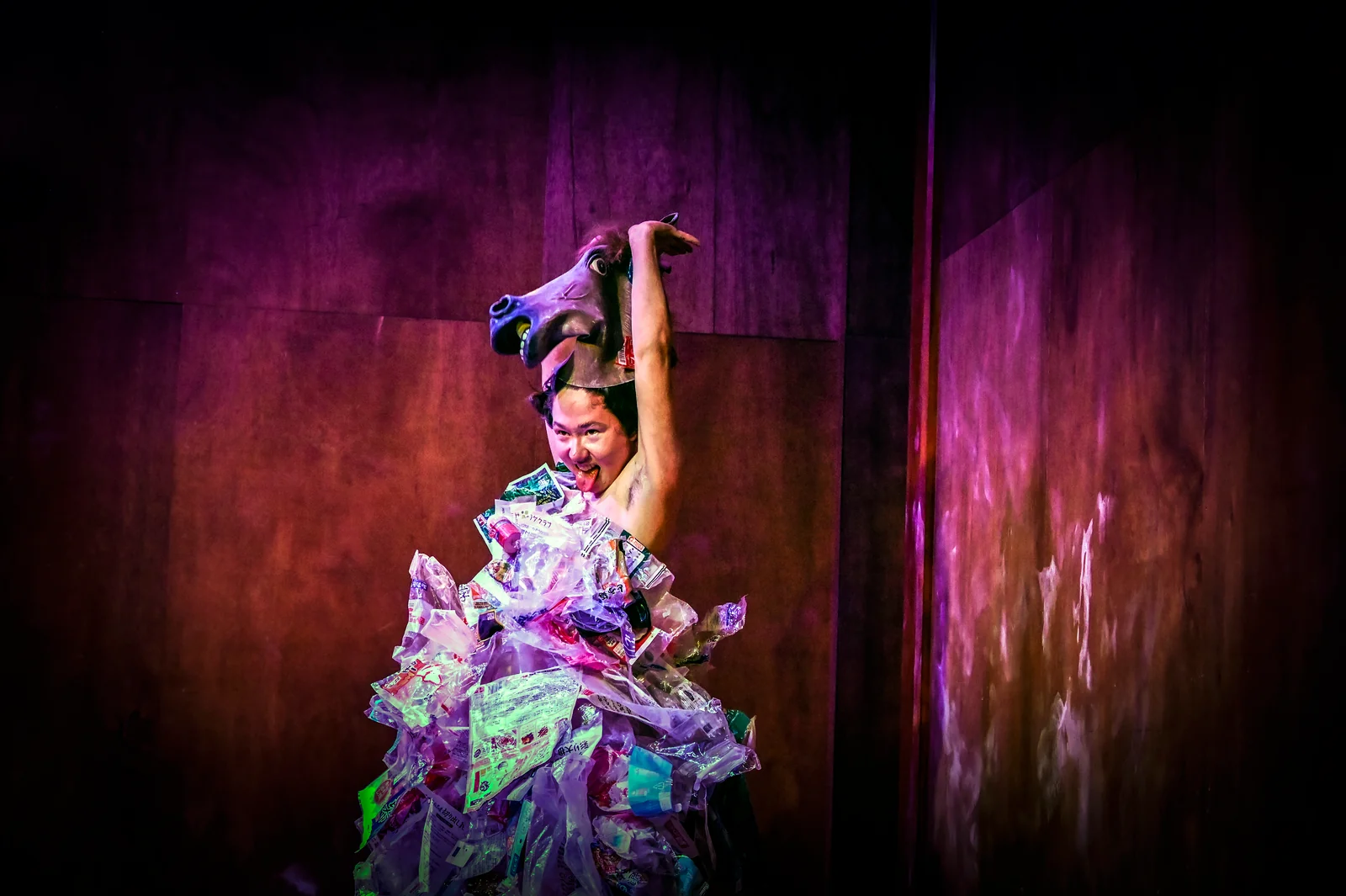
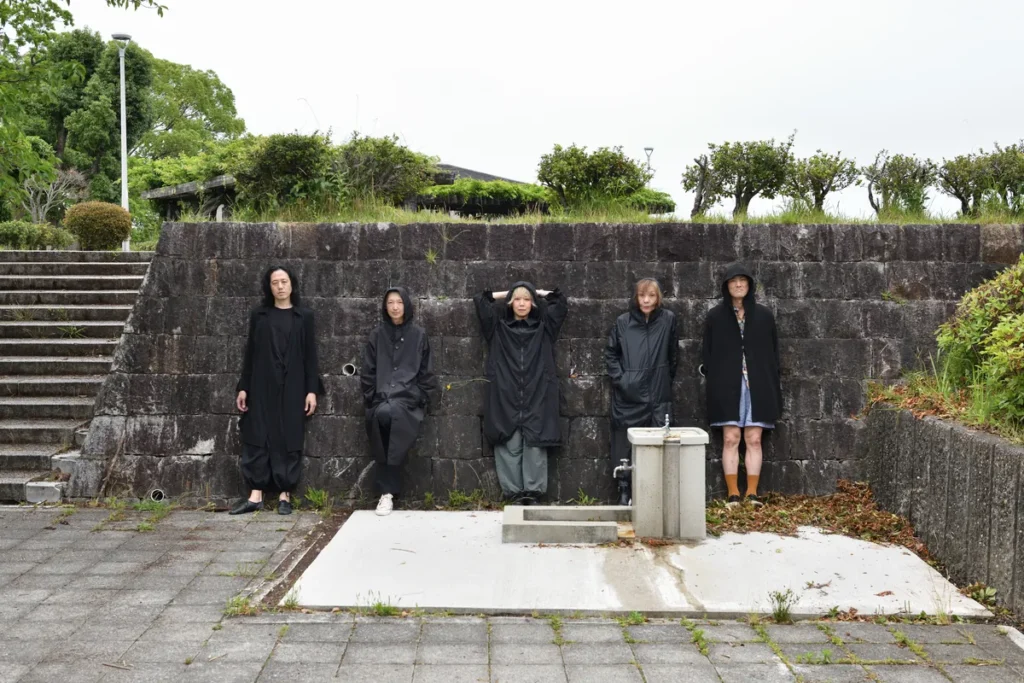
“In workshops I can emphasise these points and discuss them properly. That’s why you, Mai, and Makiko, all of you have grown. Seiji, Mutsumi and Neiro too.” Makiko Takamatsu, Seiji Tanaka and the duet Mutsumi and Neiro are all dancers with strong working relationships with Uesugi. They are very much inheritors of the Ohno school, “each of them now thinks about their own technique and the creativity built on top of it, they dance independently. You are doing solos too, Mai. The time may be short and this may all be new, but I think now is the chance to dig deeper into Ohno’s thinking, as individuals.”
“It’s so different from the world of Hijikata-style butoh. It’s not a singular Ohno faction, but instead individuals who each chose Kazuo Ohno, in all sorts of ways. I love Tatsumi Hijikata’s work. And his books are wonderful, their bodily sensibility toward dance is really amazing. In many ways he’s the artist I was most drawn to… so cool. But Ohno is my teacher, a man who remained an individual until the end. I chose Kazuo Ohno because of these questions,” the questions of self that Uesugi is still investigating, that she has asked ever since she first encountered butoh: “What is it to live? What is butoh? And what is it to live butoh?”
Article by Jonathan Firbank.
Interview conducted in Japanese and translated into English by Mai Burns. Questions and prose by Jonathan Firbank.