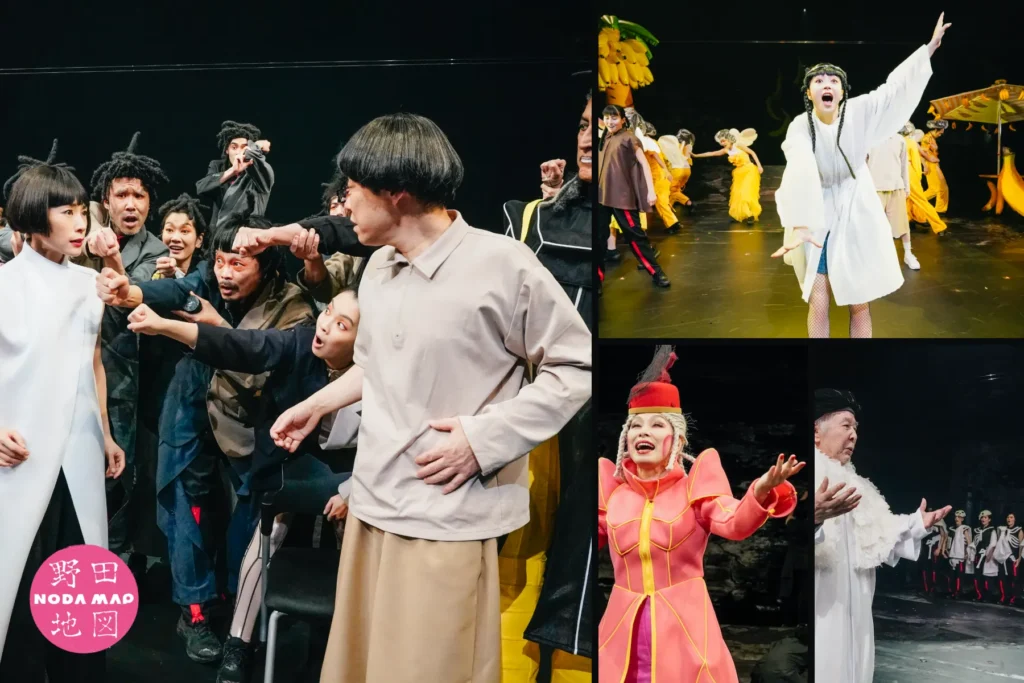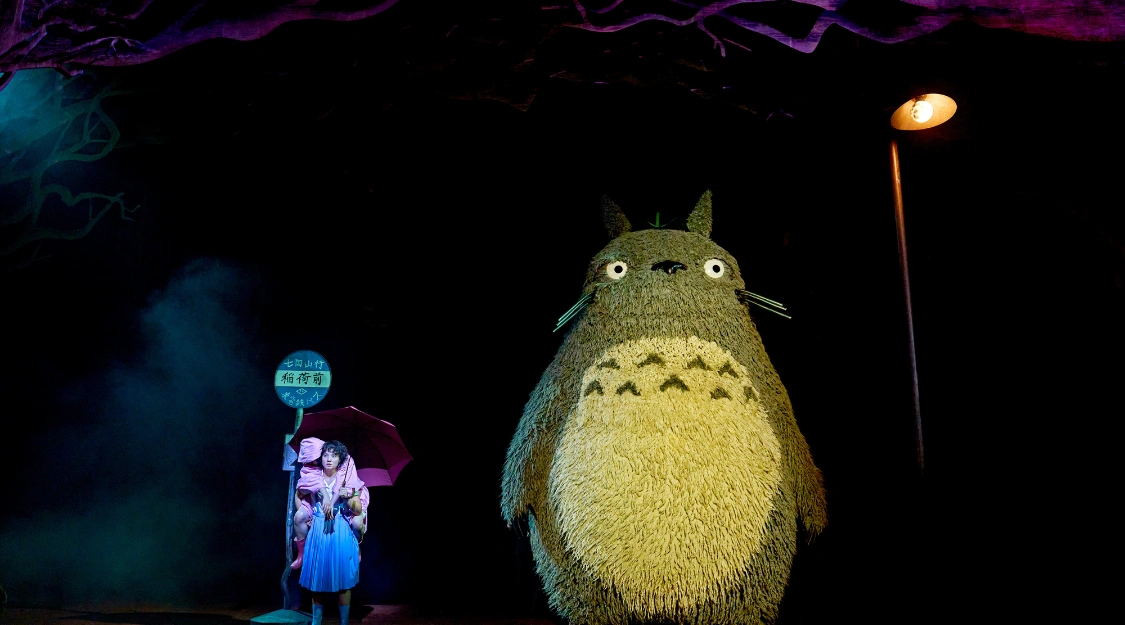
My Neighbour Totoro has been running on a London stage since October 2022, first at the Barbican and now at the Gillian Lynne Theatre, where it closes on 3 January 2027. In that time it has won six Olivier Awards and five WhatsOnStage Awards, broken box office records, and convinced a generation of sceptical Ghibli fans that their favourite film could survive the journey into a theatre. This is the story of how it was made: the puppets, the costumes, the music, and the people who built them, including details the production has shared with us that have never been published before.
How Joe Hisaishi brought Totoro to the stage
The stage show exists because the film’s composer wanted it to. Joe Hisaishi had spent decades writing the music that defines Studio Ghibli, and it was he who took the idea of a theatrical Totoro to the studio. As Hisaishi tells it, he said he wanted to see such a show, and Studio Ghibli agreed on a single condition: only if Hisaishi took responsibility for it himself. He is credited as the production’s executive producer, and every note of his score is played live at each performance.
Hisaishi, Studio Ghibli and Nippon TV, which has produced his concerts for years, took the idea to the Royal Shakespeare Company. At the same time, and without knowing about the Japanese interest, the RSC’s literary department had asked playwright Tom Morton-Smith for a family show idea and he had pitched Totoro. The two conversations met in the middle. The RSC brought in director Phelim McDermott and the theatre company Improbable, with Nippon TV producing from the Japanese side.
Basil Twist, the production’s puppetry designer and director, has described notes coming back through the Japanese side on details as fine as the placement of Totoro’s ears and the spacing of his eyes, with the aim of protecting the natural world and quiet humanity that run through all of Miyazaki’s films.
Five Totoros, built by Jim Henson’s Creature Shop
The creatures came from the workshop with the best claim in the world to the job. Jim Henson’s Creature Shop, founded in London in 1979 and the builder of everything from The Dark Crystal to Labyrinth, constructed the Totoro puppets and the Catbus from Twist’s designs, with Twist relocating to Los Angeles to supervise the build. The secondary puppets, among them the chickens, the goat and the soot sprites, were made by the British company Significant Object with War Horse’s Mervyn Millar.
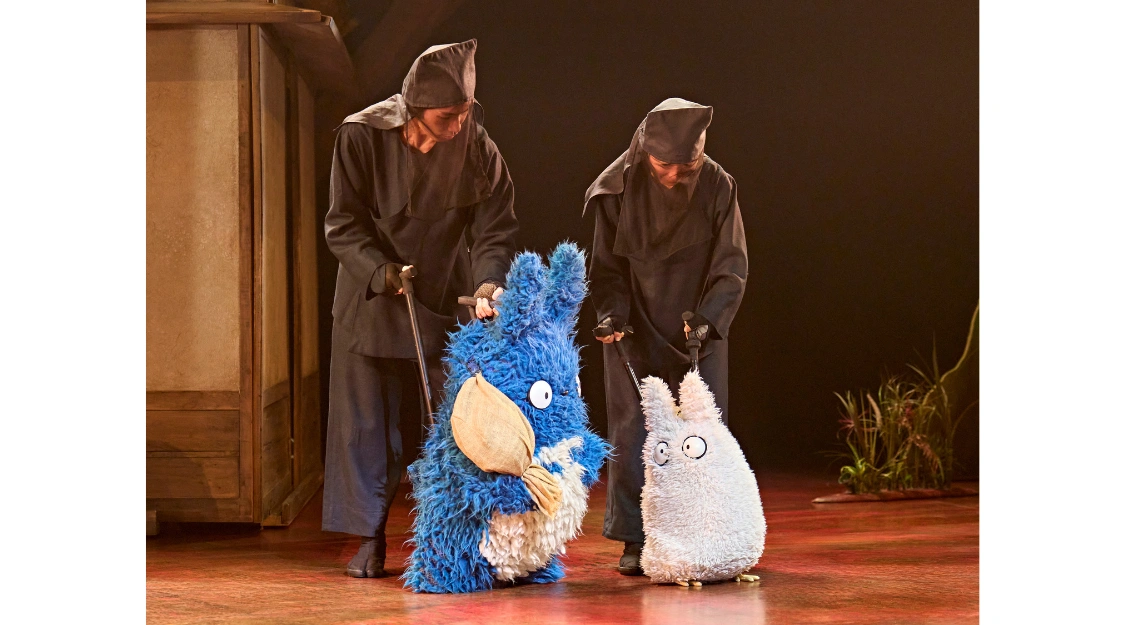
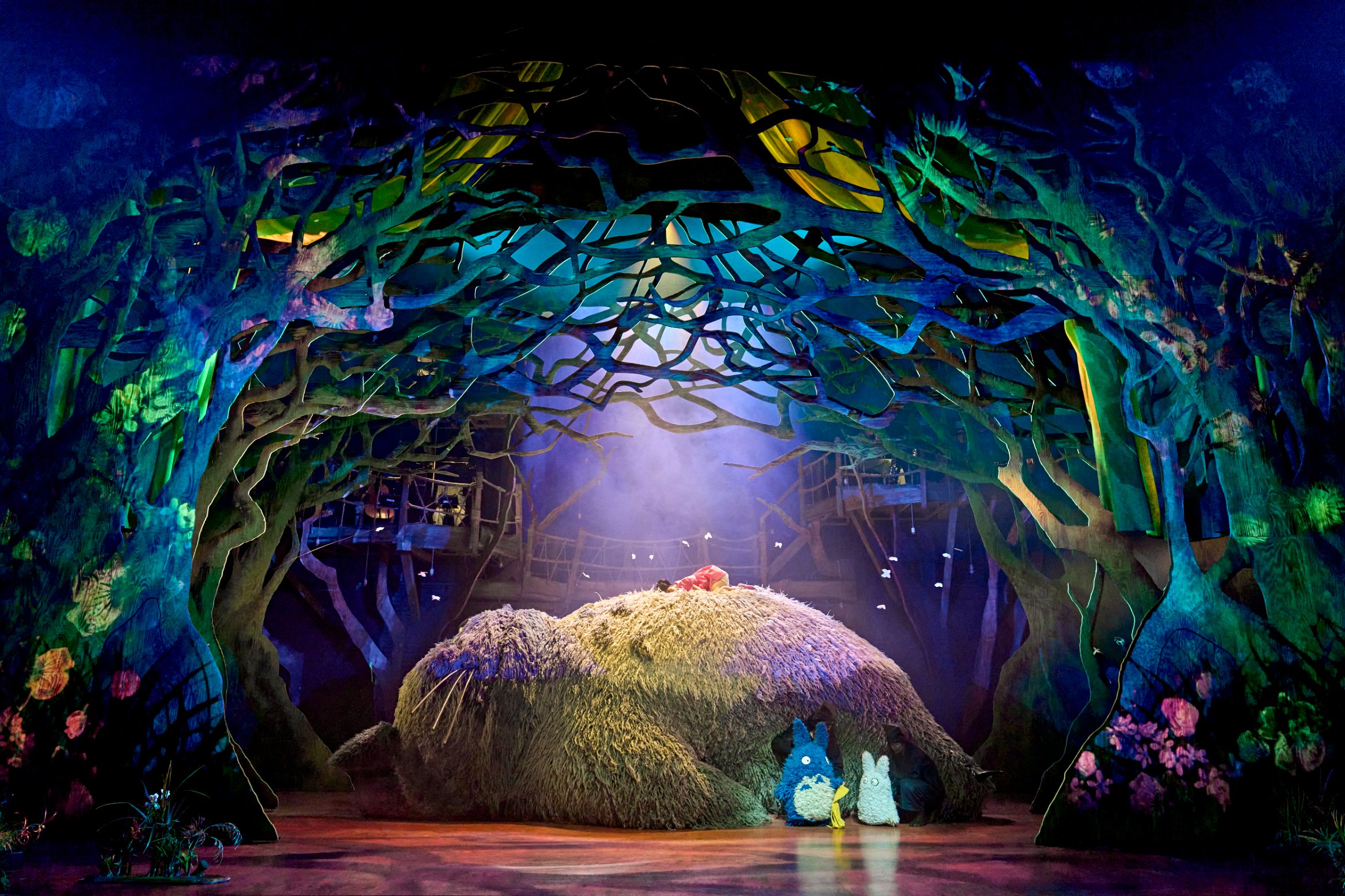
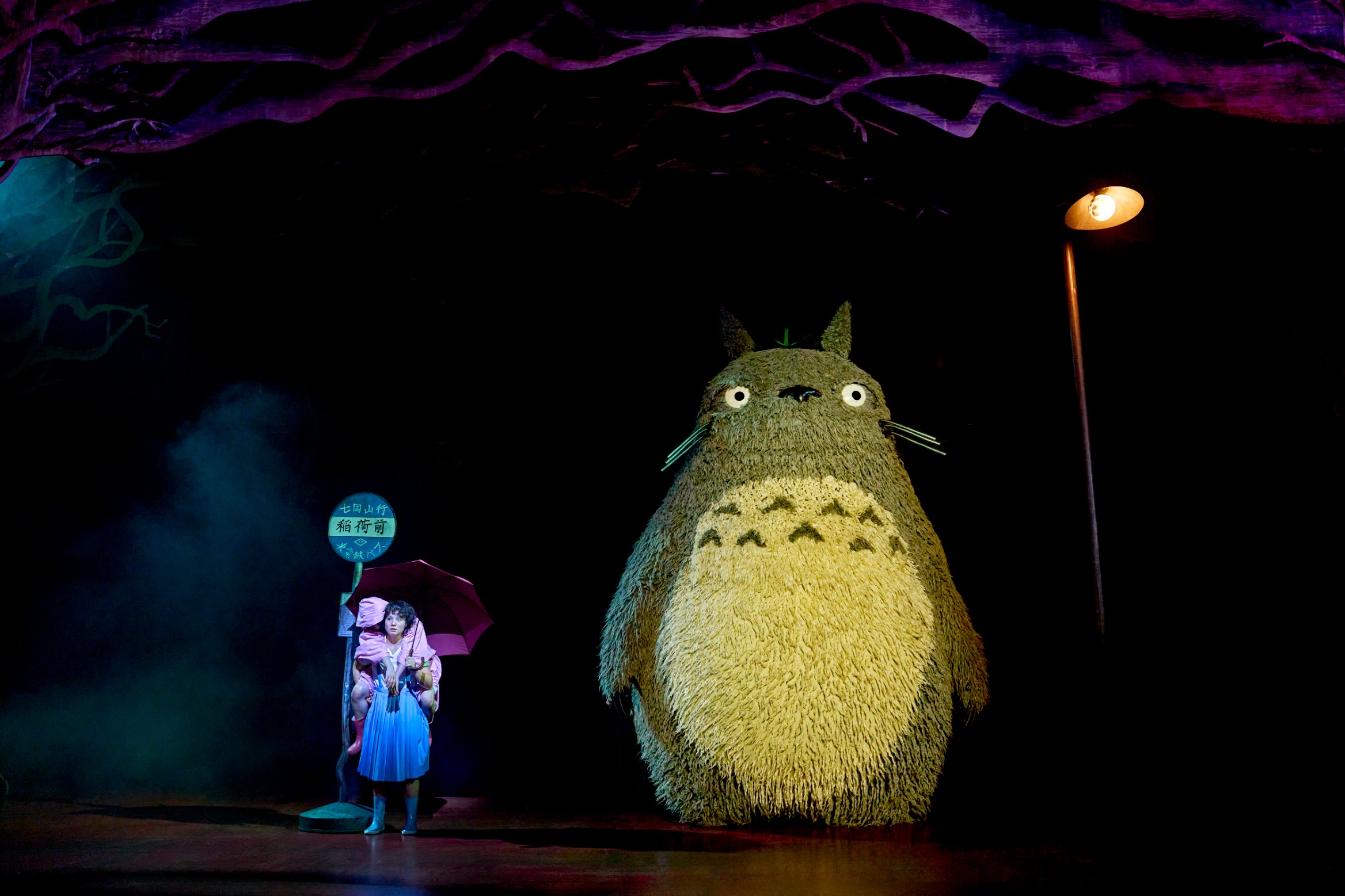
Twist has said there are five Totoro puppets in the production and seven small Sho Totoros, with the largest Totoro being the reclining one Mei climbs on. His first prototype was an inflatable Totoro he built in his own back garden in San Francisco during lockdown, and inflation stayed at the heart of the design, because Totoro had to feel soft, huge and squashable rather than rigid.

The puppets do not run themselves. Almost every actor in the company except the two playing Satsuki and Mei also works as a puppeteer, performing as Kazego, wind spirits who operate the creatures and move the world in full view of the audience. The production told us there are 11 kinds of animal in the show that are not spirits at all: ladybird, spider, bat, cat, caterpillar, firefly, butterfly, dog, goat, frog and chicken.
The Catbus has a 1.9 metre smile
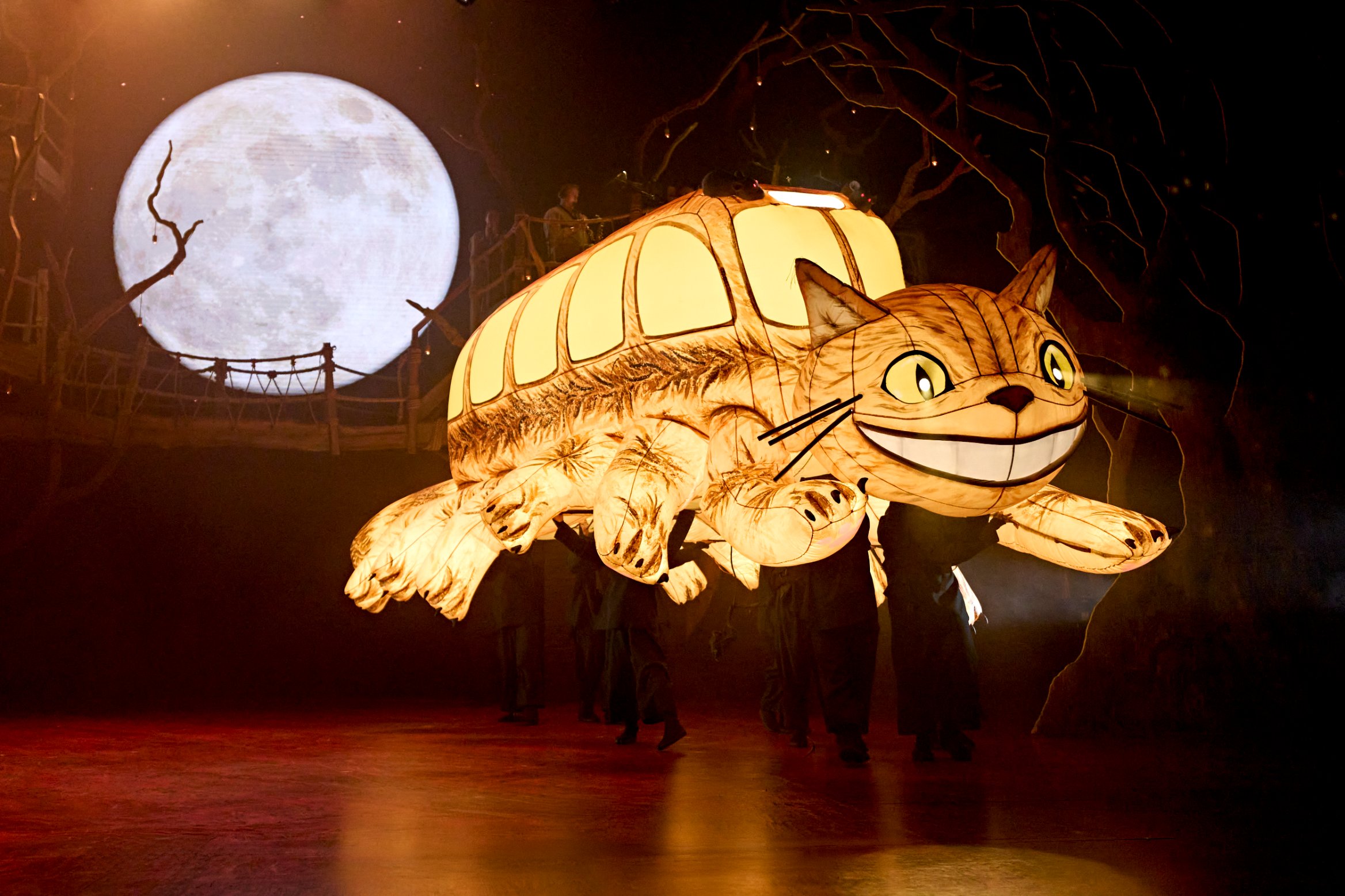
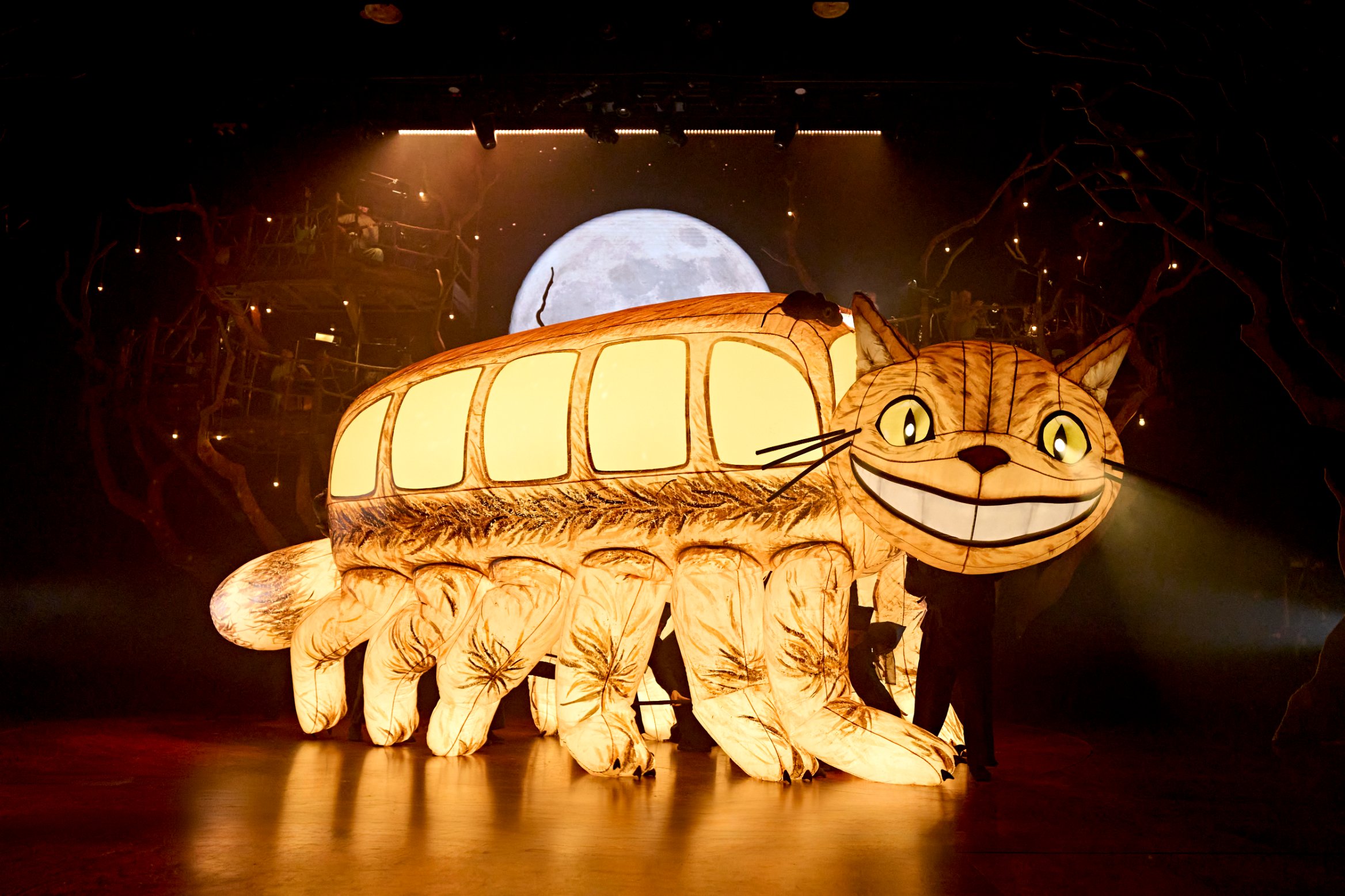
The Catbus is the moment every fan waits for, and on stage it arrives as a glowing, grinning vehicle the size of the real thing, lit from within like a paper lantern. Building it took some trial and error. Morton-Smith has recalled the workshops making a different Catbus every day for five days before the approach settled, and Twist has said around ten operators bring it to life. The only other place on earth you can stand next to a life size Catbus is Ghibli Park in Japan, which gives you a sense of how rare a thing London has had on its doorstep.

The production confirmed some numbers to us that put its scale on record for the first time. The Catbus’s smile measures 1.9 metres across. Totoro, for all his bulk, can jump 1.5 metres. And since arriving at the Gillian Lynne Theatre, Totoro has eaten 600 toffees. The chickens, for the record, weigh 250 grams each, which as the production points out is much less bang for your buck than the supermarket.

Soot sprites made of ostrich feathers
Long before they scattered across this stage, soot sprites belonged to Japanese folklore. The susuwatari, roughly the wandering soot, are the small black house spirits Miyazaki put into both My Neighbour Totoro and Spirited Away, part of a wider tradition in which spirits inhabit houses, trees and everyday things. They are not real, though anyone who has opened a long-sealed shed understands why people wanted them to be.
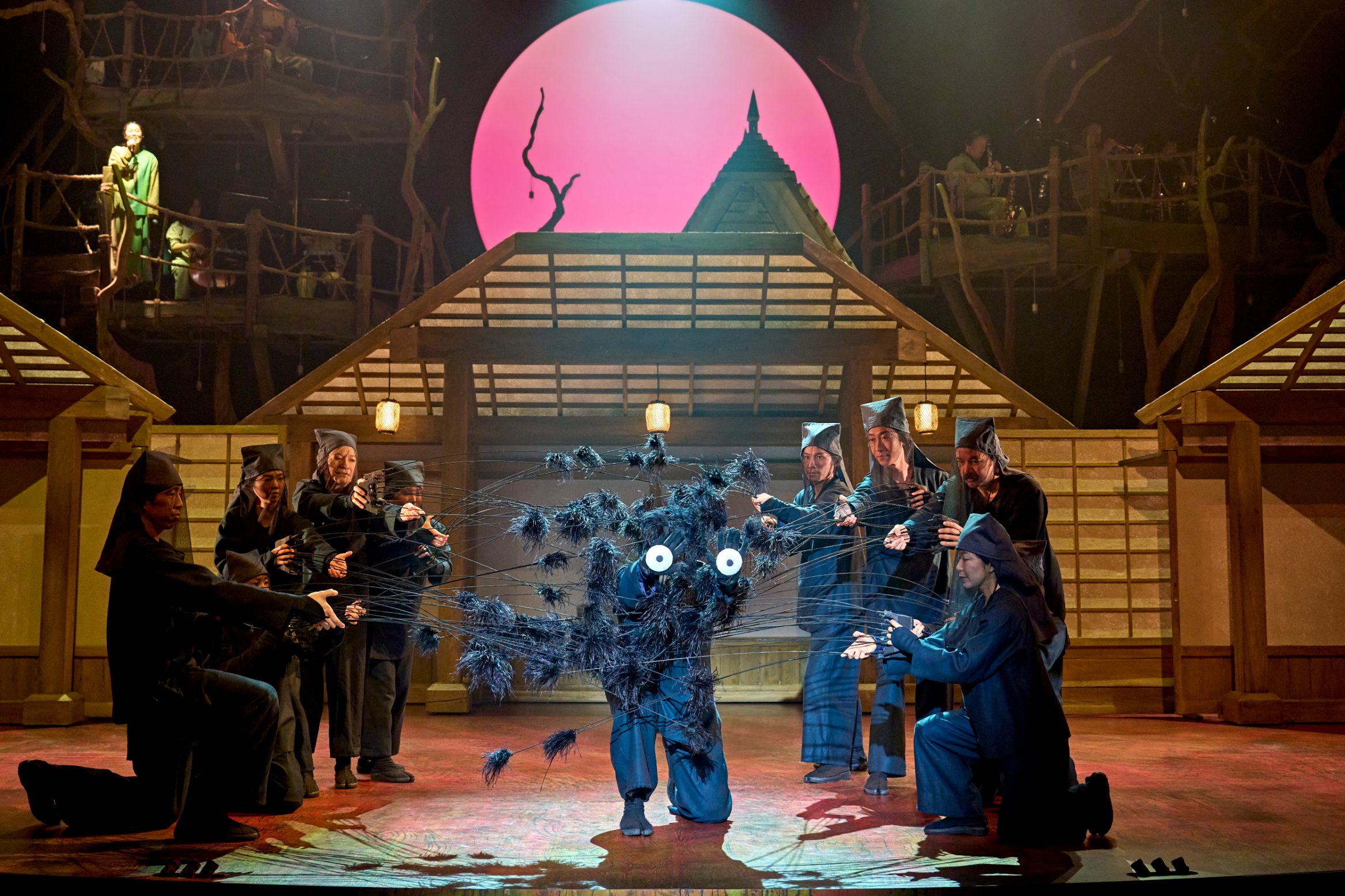
On stage they are real enough to touch. Twist has said the sprites are made from ostrich feathers, an idea sparked by a fridge magnet at the Jim Henson Company, and they swarm through the old house on rods carried by the dark-robed ensemble.

Kimie Nakano’s costumes: indigo spirits and flowers that bloom in May
If one person carries the production’s Japanese eye, it is costume designer Kimie Nakano. London trained at Wimbledon College of Arts, she has spent her career moving between opera, dance and theatre, including long collaborations with the choreographer Akram Khan, and her work on this show won the 2023 Olivier Award for Best Costume Design. Her research began with Miyazaki’s original 1988 drawings and photographs of 1950s Japan, and her role reached well beyond clothing: the team leaned on her for cultural details as small as how Mei’s backpack should sit and how a Japanese household hangs its laundry.
Her thinking starts with the wind spirits. She explained their design to us:
“The presence of Kazego, or wind spirit, is very important in our My Neighbour Totoro production. A Kazego is a puppeteer, they can also transform into a human, and they are friends of Totoro. The Kazego’s costume is a deep indigo colour that appears dark and hidden in the shadows, but changes to a vivid blue in the light.”
The sisters’ clothes carry a hidden meaning that runs all the way back to their names. Satsuki is the old Japanese word for the fifth month, and Mei is May spelled the English way, so Nakano dressed the family in the colours of the season they are named for:
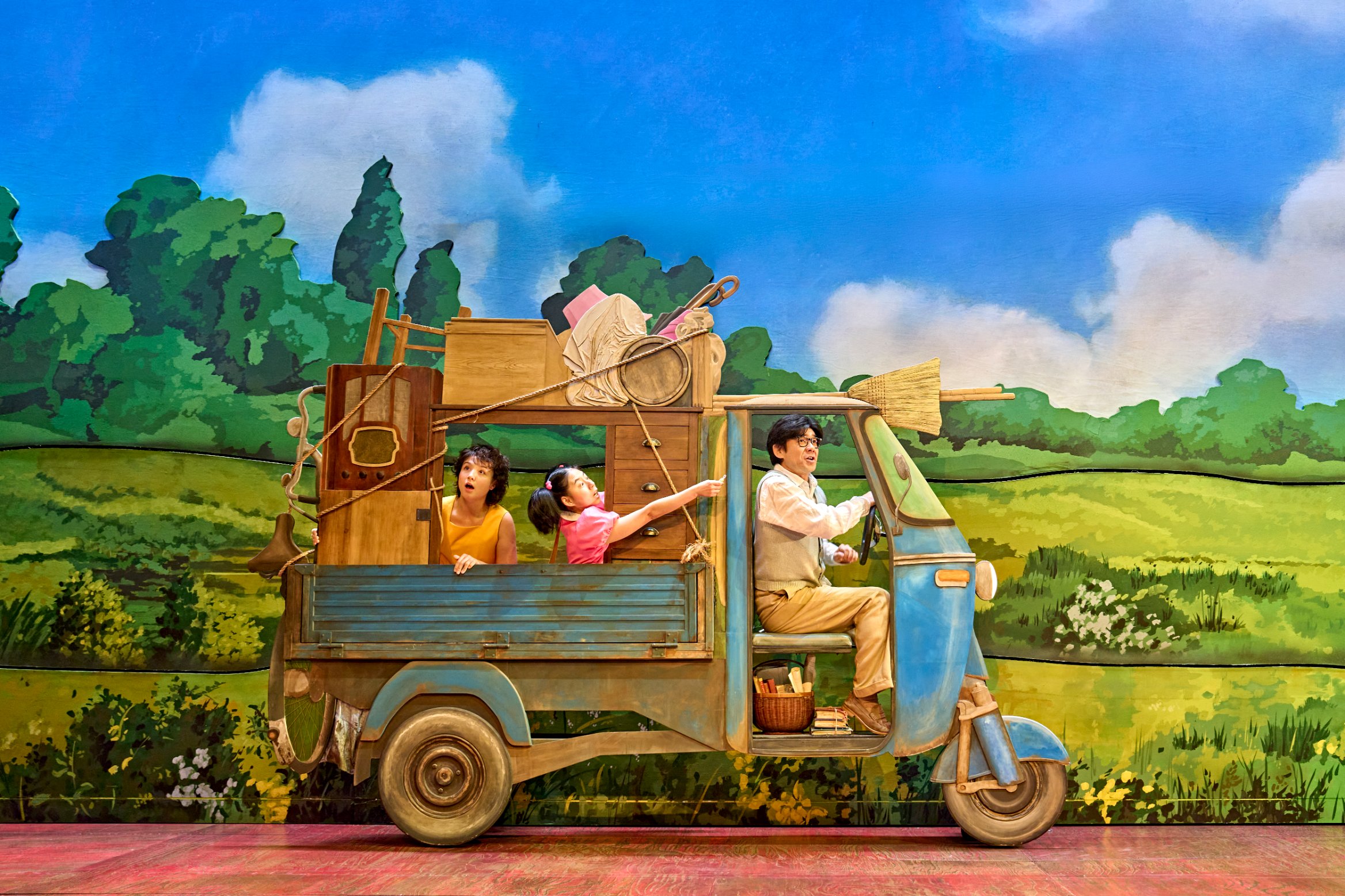
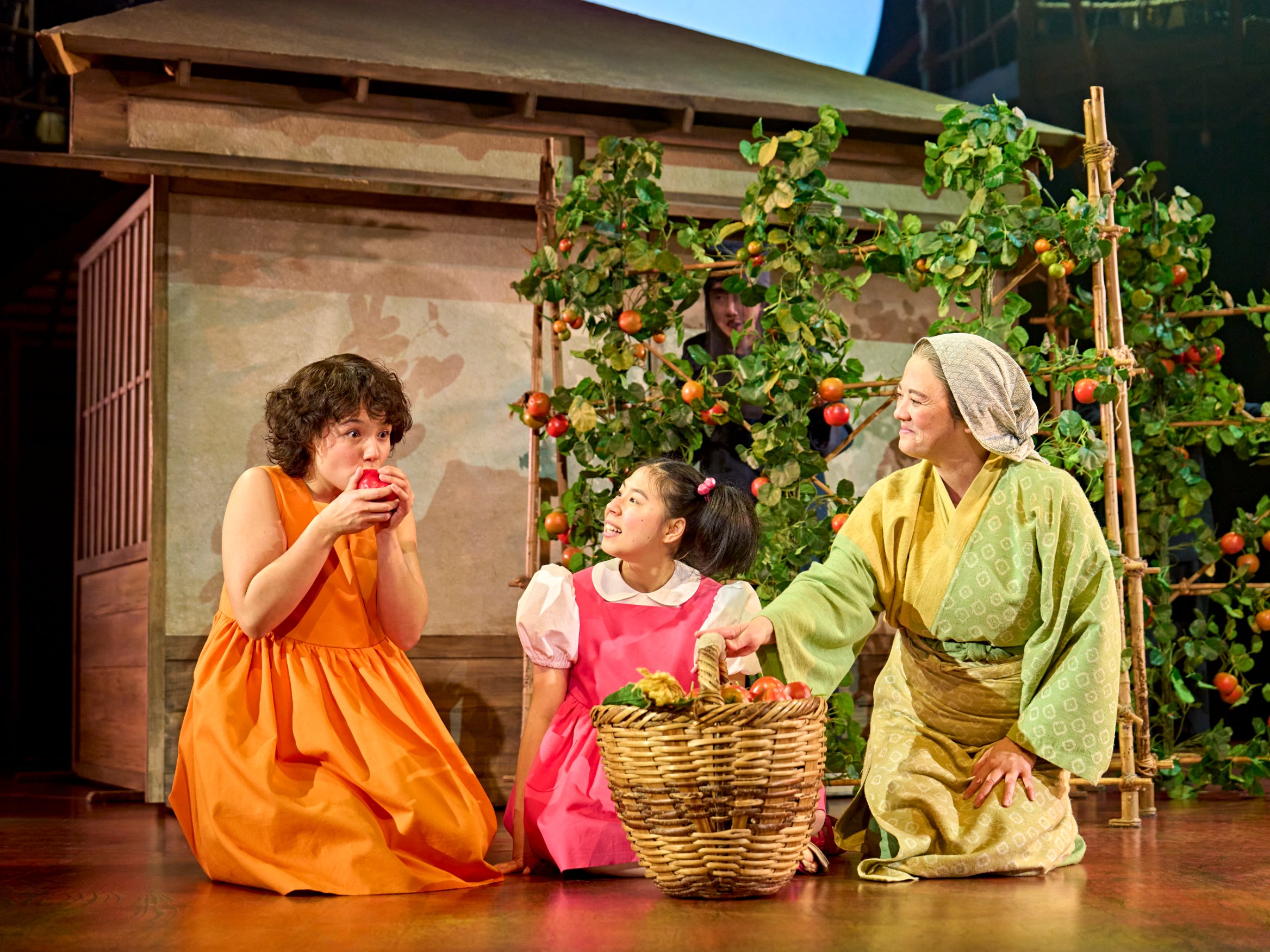
“Because of the meanings of the names Satsuki and Mei, their costumes and their mother’s costume use the colours of flowers that bloom in May. All the characters’ costume colours are fresh, like green leaves and earth. Since Satsuki and Mei have come from Tokyo, they wear Western style clothing. Kanta’s family are farmers living in the countryside, so they wear traditional Japanese clothing. During this period, both Japanese and Western styles of clothing could be seen in everyday life.”

That countryside is a real place, incidentally: the film’s landscape was drawn from the Sayama Hills outside Tokyo, which you can still walk today. Nakano’s hardest job was making two adult actors read as a ten year old and a four year old, and she told us it comes down to proportion: skirt lengths, waistline positions, hairstyles and makeup, all tuned to bring their silhouettes as close as possible to children’s body shapes.
A live score played from the treehouses
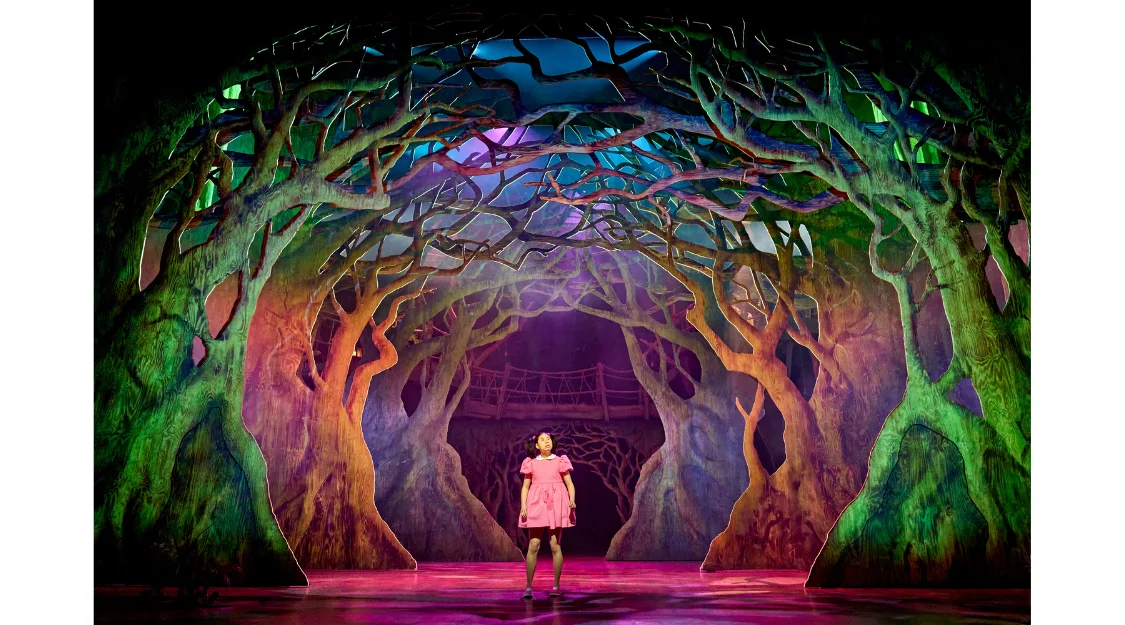
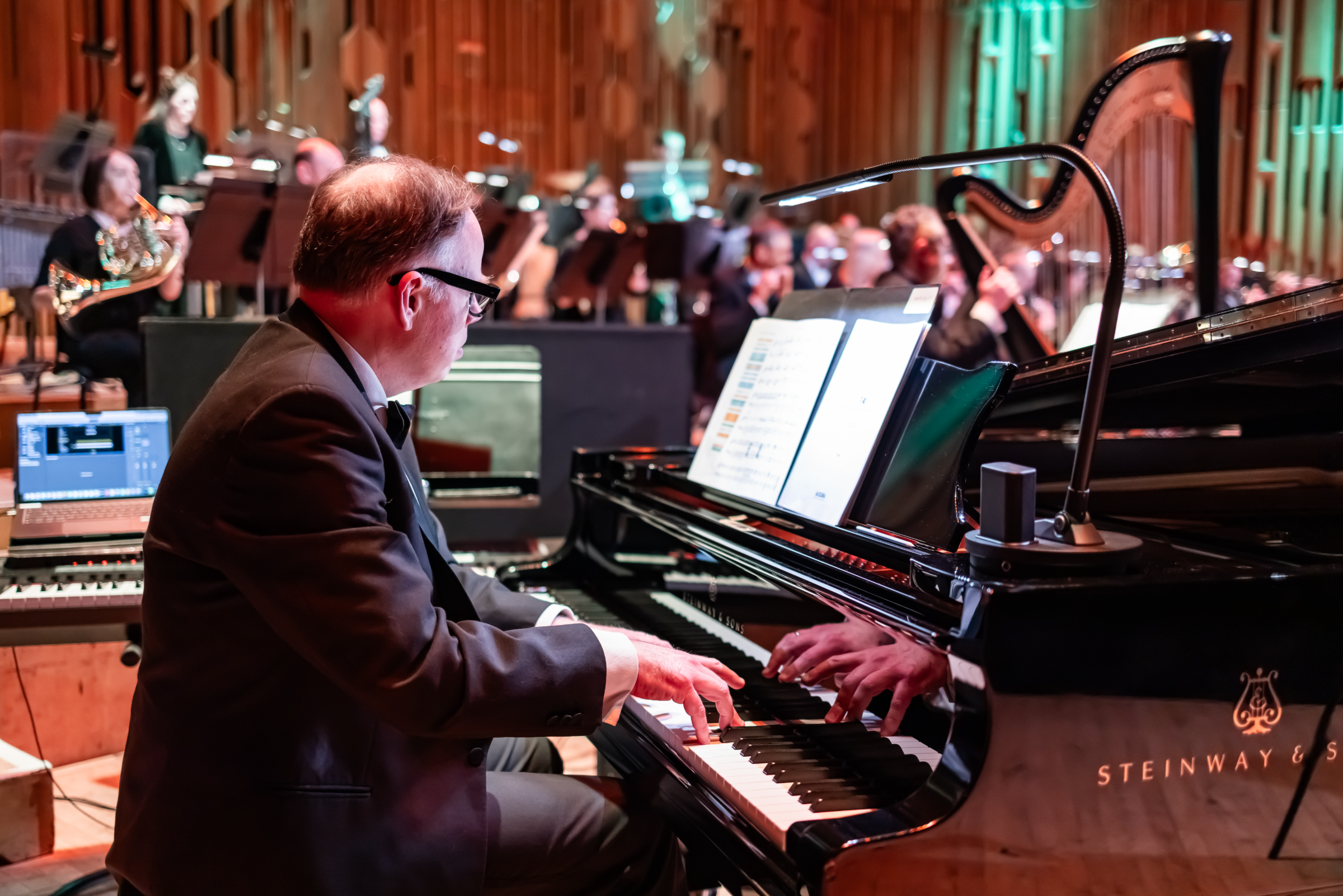
There is no hidden orchestra pit. The musicians perform from treehouse platforms built into the set, lashed together from rope and bamboo above the stage, so the band inhabits the same forest as the story. Hisaishi’s score was orchestrated for the theatre by Will Stuart.

When rehearsals started, the company was given a line from Hisaishi that the cast still quote: this show is about honouring the presence of the absence of loved ones.
Fun facts from the production
Figures confirmed to us by the production, as of 19 August 2026:
- 859 performances so far across the Barbican and the West End
- Six Olivier Awards in 2023, more than any other production that year, plus five WhatsOnStage Awards
- Five Totoro puppets and seven small Sho Totoros
- A 1.9 metre Catbus smile, and a 1.5 metre vertical jump from Totoro
- 600 toffees eaten by Totoro since the show arrived at the Gillian Lynne Theatre
- 11 kinds of non-spirit animal on stage, and a chicken that weighs 250 grams
Is My Neighbour Totoro going to Broadway?
Nothing is confirmed. When the West End transfer was announced, executive producer Griselda Yorke said there was a great deal of international interest but that the team’s focus was on getting the London run right, and producers have previously acknowledged approaches from all over the world. As of now, no Broadway run, tour or Japanese production has been announced, and the only certainty is the closing date: the final London performance is on 3 January 2027.
Until then, the show plays eight times a week at the Gillian Lynne Theatre. Our event guide to seeing My Neighbour Totoro in London covers tickets, running times and access performances, and all remaining dates are on the official booking page.