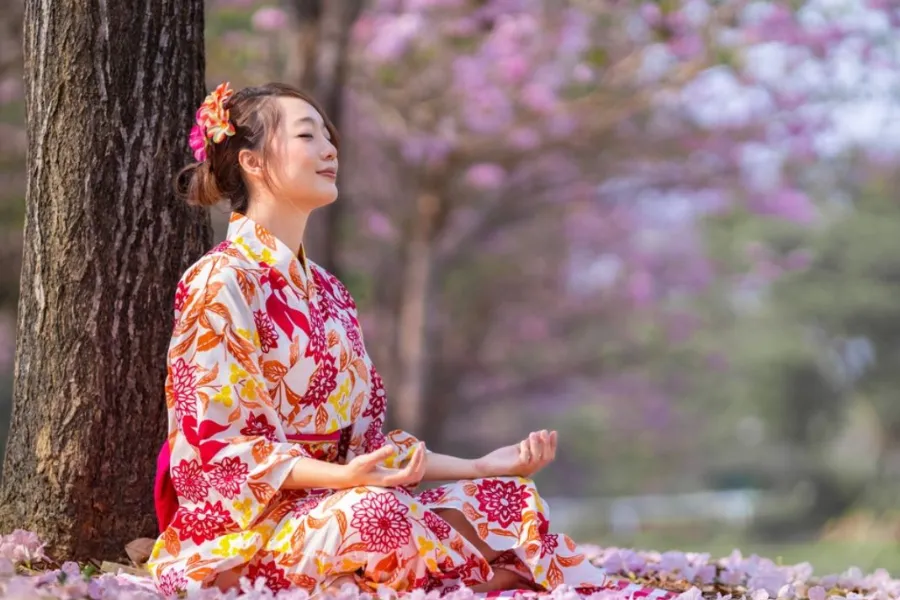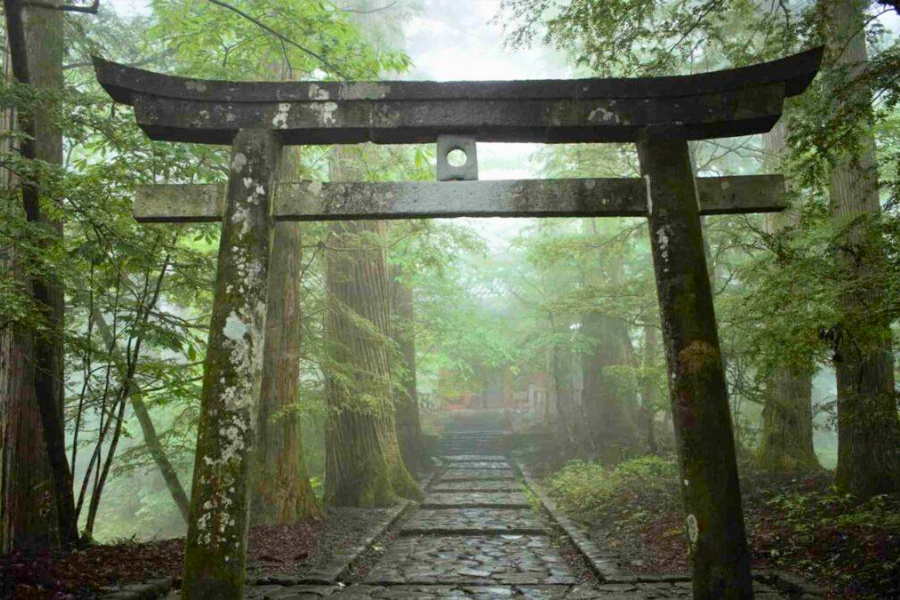
Shintoism, Japan’s indigenous spirituality, is more than just a religion; it is a way of life that permeates every aspect of Japanese culture. Unlike many other belief systems, Shintoism is not centered around a specific doctrine or set of teachings. Instead, it is a collection of rituals, customs, and beliefs that celebrate the connection between humans, nature, and the divine. This deep-rooted spirituality has profoundly influenced Japanese traditions, festivals, and daily life, shaping the unique cultural identity of Japan.
Japanese Shintoism on Daily Life
The Core Beliefs of Shintoism
At the heart of Shintoism is the belief in kami, which are spirits or deities that inhabit all things, both living and non-living. People find kami in natural elements like mountains, rivers, trees, and significant human endeavors. They express reverence for these spirits through various rituals and practices that honor the divine presence in everyday life.
Shintoism also emphasizes purity and the idea of maintaining harmony between humans and nature. People place great importance on cleanliness, both physical and spiritual, and frequently use purification rituals known as misogi. These rituals cleanse individuals of impurities and restore balance and harmony.
Shinto has two main kinds of purification. Misogi is cleansing with water, a practice traced back to the myth of the god Izanagi bathing in the sea after his visit to the land of the dead. Its everyday form is the rinse of hands and mouth at a shrine’s water basin (temizu), and some devotees still take misogi under waterfalls or in the cold sea. Harai is purification carried out for you, most often by a priest waving a wand of white paper streamers (haraegushi) over your head. Salt belongs to the same idea: as W. G. Aston recorded in Shinto: The Ancient Religion of Japan (1907), it was used to avert evil influences, which is why small cones of salt still sit by the door of some restaurants and shops.


Shintoism in Japanese Festivals and Celebrations
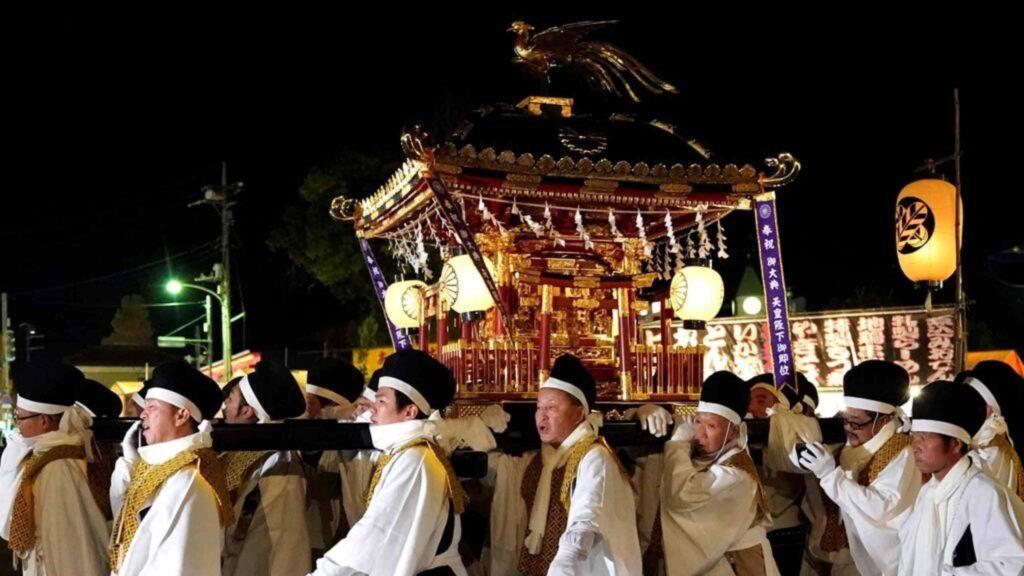
Shintoism’s influence is most visible during the numerous festivals, or matsuri, celebrated throughout Japan. People often organize festivals around agricultural cycles, seasonal changes, and historical events, all of which they see as deeply connected to the kami.
One of the most well-known Shinto festivals is the New Year’s celebration, known as Oshogatsu. During this time, families clean their homes and visit shrines to pray for good fortune in the coming year. It is also common to see people wearing traditional garments and participating in ceremonies that honor the spirits of their ancestors. This reflects the Shinto belief in the importance of maintaining a connection with the past and seeking blessings for the future.
Shimenawa and kadomatsu: Shinto at the front door at New Year
Shinto also shapes what hangs on the front door at New Year. A shimenawa, a rope of twisted rice straw hung with white paper streamers, marks a boundary that keeps misfortune out, and is the same kind of rope that rings sacred trees and rocks at shrines. Helen Gunsaulus, in The Japanese New Year’s Festival, Games and Pastimes (1923), linked it to the myth of the sun goddess Amaterasu, who was stopped from slipping back into her cave by a straw rope stretched across its mouth. Pairs of kadomatsu, arrangements of pine and cut bamboo, stand either side of the entrance to welcome the toshigami, the god of the new year, with the evergreen pine standing for long life.
Other festivals, like the Gion Matsuri in Kyoto or the Awa Odori in Tokushima, involve elaborate processions, music, and dance, all performed in honor of local deities. These events not only showcase the rich cultural heritage of Japan but also serve as a way for communities to come together and strengthen their bonds.
Oharae: the Great Purification every June and December
Twice a year, shrines hold the Oharae, or Great Purification, to clear away the impurities built up over the previous six months. Aston described it as one of the great ceremonies of the ancient state religion, held on the last day of the sixth and twelfth months. Today it takes place on 30 June, when it is called nagoshi no harae, and again at the end of December. In June many shrines set up a large ring of woven reeds, the chinowa, for worshippers to walk through, and visitors write their name and age on a small paper figure (hitogata), pass it over their body and hand it in so that it can carry their impurities away.
Shintoism in Everyday Life
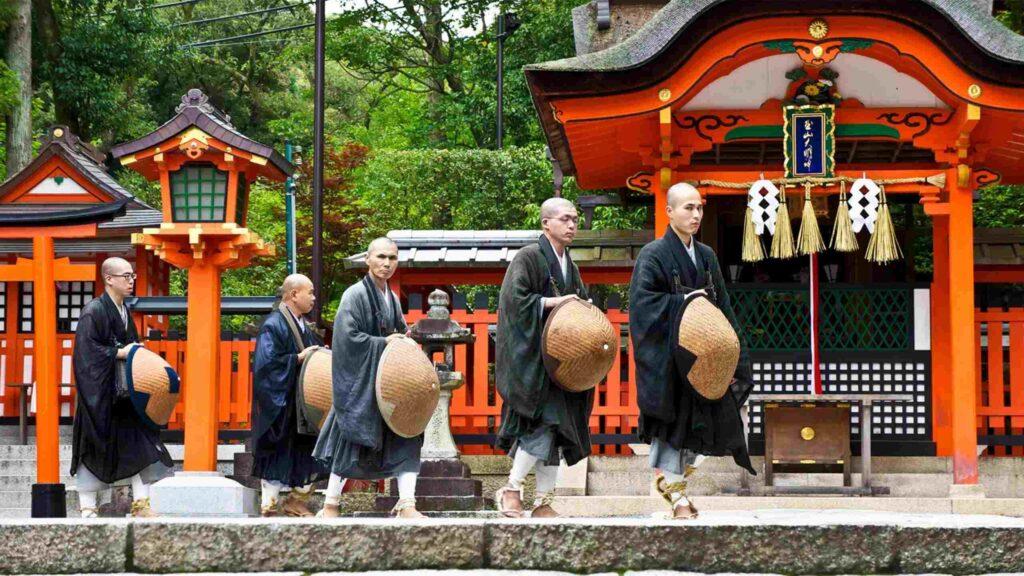
Beyond festivals, Shintoism is present in the daily lives of many Japanese people. People have built shrines dedicated to various kami throughout Japan. Ranging from grand structures like the Ise Grand Shrine to small roadside altars. People visit these shrines to offer prayers, make wishes, and seek protection. It’s common to see individuals stopping at a shrine on their way to work or school, a simple yet profound reminder of the spiritual presence that pervades their lives.
The kamidana: a household shrine on a high shelf
Many homes and businesses keep a kamidana, literally a “god shelf”. It is a small wooden shrine fixed above head height, holding ofuda, paper or wooden talismans from the local shrine and often from Ise Grand Shrine as well, with small offerings such as rice, water and sake set out in front. Lafcadio Hearn, describing homes in Izumo in Glimpses of Unfamiliar Japan (1894), noted that the shelf should face south or east and never north, that it was kept out of the kitchen and the guest room, and that Matsue shopkeepers put theirs up in the shop where customers could see which gods they trusted. Guidance today still asks for the kamidana to sit above eye level, ideally facing south or east.
People integrate Shinto rituals and customs into key life events. For example, during Shichi-Go-San, parents take their three, five, and seven-year-old children to a shrine to pray for a healthy future. Similarly, weddings often incorporate Shinto rituals, with the couple exchanging vows in front of a shrine, witnessed by the kami.
Miya mairi and the shrine wedding: Shinto at life’s milestones
The first of these shrine visits comes about a month after birth. For miya mairi, a baby is carried to the local shrine to be presented to its guardian kami and blessed. Many families go around the 31st or 32nd day for a boy and the 32nd or 33rd for a girl, although the timing varies by region. Alice Mabel Bacon, in Japanese Girls and Women (1902), described babies dressed in their finest silk for the visit and placed under the protection of the shrine’s deity.
The shrine wedding is much younger than it looks. Its modern form was set by the wedding of Crown Prince Yoshihito, later Emperor Taishō, in 1900, and a model ceremony staged at what is now Tokyo Daijingu in 1901 helped spread it to the public. Before then, most couples married at home.
In modern times, the influence of Shintoism is still felt, even as Japan becomes more technologically advanced. Many Japanese continue to observe these ancient traditions, balancing the demands of contemporary life with the spiritual practices passed down through generations. This coexistence of the old and the new is a testament to the enduring relevance of Shintoism in Japanese culture.
Conclusion
Shintoism’s influence on Japanese traditions and daily life is undeniable. From the grand festivals that draw thousands of participants to the quiet moments of prayer at a neighbourhood shrine. Shintoism shapes the cultural landscape of Japan. It offers a sense of continuity and connection with nature. Inclusing the divine, and the past, all of which are integral to the Japanese way of life.
In a rapidly changing world, the influence of Shintoism reminds us of the enduring importance of spirituality, tradition, and the deep connection between humans and the natural world.








Sources and further reading
- W. G. Aston, Shinto: The Ancient Religion of Japan (1907)
- Alice Mabel Bacon, Japanese Girls and Women (1902)
- Helen Cowen Gunsaulus, The Japanese New Year’s Festival, Games and Pastimes (1923)
- Lafcadio Hearn, Glimpses of Unfamiliar Japan, Second Series (1894)