Would you agree that navigating a new country is far more convenient when you have uninterrupted mobile connectivity? From using Google Maps in Tokyo’s dense rail network to translating menus in rural areas, internet access has become essential. Recognising this, providers such as Mobal offer foreign visitors a cost-effective and practical mobile solution through eSIM technology.
An eSIM lets travellers activate mobile service digitally, often before they even arrive in Japan, with no physical card to collect and no airport counter to queue at. This article explains what eSIM technology is, why it is particularly relevant in Japan, and how travellers can use it effectively.
What Is eSIM Technology?

A comparison of SIM card form factors, showing the evolution from physical cards (2FF, 3FF, 4FF) to the integrated eSIM (MFF2) technology. Source: Wikipedia
eSIM Japan technology enables mobile voice services, SMS, and data connectivity through a digital SIM profile instead of a removable physical card. The SIM is either embedded directly into the phone’s hardware or provisioned through software and activated via a QR code or mobile application.
This technology has been supported by major smartphone manufacturers for several years, including Apple, Samsung, and Google. As a result, physical SIM slots are gradually becoming less central to device design. For users, this translates into fewer physical dependencies, faster setup, and the ability to manage multiple mobile plans on a single device.
For travellers, the most significant advantage is convenience: no need to purchase a physical SIM, no risk of losing your home SIM card, and no waiting in line at the airport.
The Rise of eSIM Adoption in Japan

A conceptual visualisation of eSIM (Embedded SIM) technology, illustrating how digital cellular profiles are integrated directly into a device’s hardware.
Japan is known for its advanced telecommunications infrastructure and early adoption of mobile innovation. eSIM technology is now supported by more than 100 smartphone models available in the Japanese market, with millions of active users nationwide.
This maturity in infrastructure means that eSIM services for tourists are stable, widely compatible, and designed for ease of use. Providers catering to foreign visitors focus on simplicity, English-language support, and compliance with Japanese telecom regulations, making eSIMs a practical choice for short-term and long-term stays alike.


Why eSIMs Make Sense for Travellers to Japan
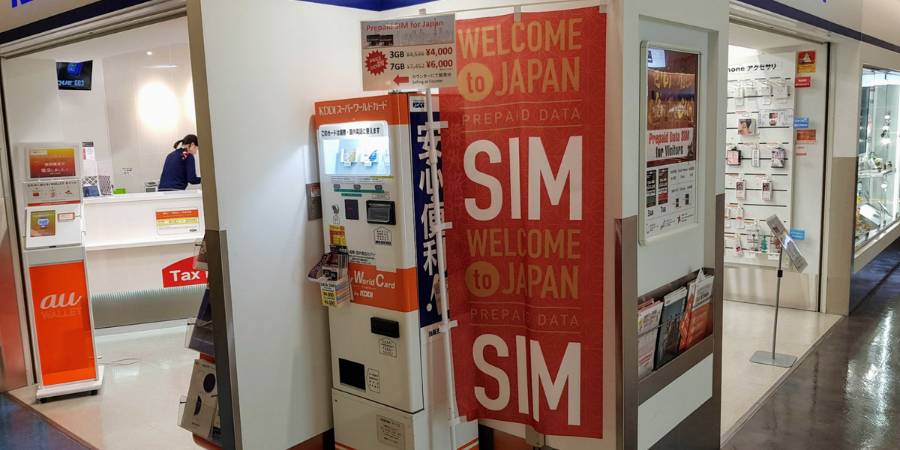
A typical kiosk for purchasing a prepaid Japanese eSIM card at an airport or major transit hub, offering various data plans for short-term visitors. Source: Tokyo Cheapo
Japan’s travel environment makes eSIMs particularly attractive. Many services, hotel bookings, restaurant reservations, delivery apps, ride services, and even some tourist attractions, require a local phone number. Public Wi-Fi, while available, is inconsistent and often limited in speed or duration. An eSIM with a genuine Japanese number ensures uninterrupted access to these services.
Unlike virtual numbers, a real local number is not restricted or blacklisted, allowing seamless interaction with local businesses and platforms.
Key Benefits of eSIM for Travellers
Some of the practical advantages of eSIM plans offered to foreigners in Japan include:
- Low upfront cost: Mobal charges a one-time activation fee of ¥4,950, discounted at the time of writing.
- Flexible pricing: Voice-only plans from ¥1,430 a month, or from ¥1,650 a month with data included.
- Generous data allowances: Plans running up to 200 GB a month, often at lower prices than comparable plans in Europe or the US. Prices move, so check the provider’s own page before you buy.
- Voice-only options: Plans without data for travellers who primarily need calls and SMS.
- Local functionality: A real Japanese phone number that works reliably for bookings, deliveries, and customer support calls.
For many travellers, this combination of affordability and functionality removes the need to rely on international roaming or portable Wi-Fi devices.
Instant Activation and Setup Process

Travellers can now simplify their arrival in Japan by using a QR code to instantly activate an eSIM, eliminating the need for physical card swaps in crowded urban centres.
Activating an eSIM in Japan is a straightforward digital process:
- Select a suitable plan based on your stay duration and data needs.
- Complete payment for activation and the first month online.
- Verify your identity using a passport or valid ID. This applies to any plan carrying a real Japanese phone number, because Japanese law requires identity checks on voice services. Data-only travel eSIMs generally skip this step.
- Receive your eSIM activation code via email.
- Scan the QR code or use the app to install and activate the eSIM on your phone.
Once activated, your phone is ready for immediate use, with nothing to install physically.
Seamless Network Switching Across Japan
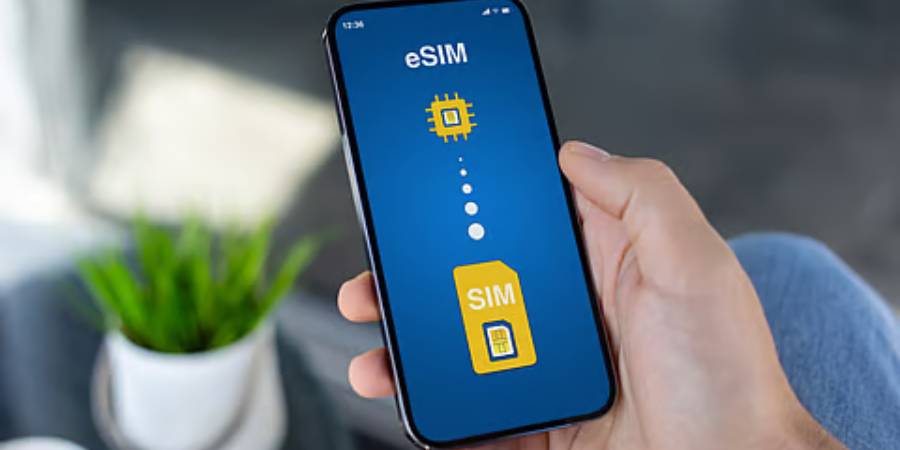
A conceptual graphic illustrating the transition from traditional physical SIM cards to the streamlined, hardware-integrated eSIM technology.
It is worth knowing which carrier your eSIM actually runs on, because this is where the options differ. A Japanese-number eSIM such as Mobal’s sits on a single host network, in that case Docomo, which has the widest rural and mountain coverage of the three Japanese carriers. Travel eSIMs sold by international providers work differently: they roam across more than one Japanese network, so the phone can fall back to another carrier where the first has no signal.
Neither approach needs manual configuration. Leave automatic network selection switched on and the phone handles it. The trade-off is that a roaming travel eSIM gives you more network options but no Japanese phone number, while a single-network Japanese eSIM gives you the number.
Device Compatibility Requirements
Before choosing an eSIM, travellers should confirm two key requirements:
- eSIM support: Your smartphone must natively support eSIM technology. Third-party SIM emulation apps are not compatible with Japanese telecom offerings.
- Unlocked device: Your phone must be carrier-unlocked, allowing it to connect to networks other than the one it was originally sold with.
Most modern flagship smartphones meet these criteria, but it is advisable to verify compatibility before purchase.
When and How to Activate Your eSIM
It is generally recommended to activate your eSIM shortly before arriving in Japan. Since billing cycles begin immediately upon activation, delaying activation ensures you maximise the value of your plan during your actual stay.

A lifestyle visualisation of the modern traveller’s toolkit, featuring an eSIM-enabled smartphone for seamless global connectivity without physical SIM cards.
For short-term visitors, this timing is particularly important, as even a few unused days can impact cost efficiency. Assistance is available at airports, city offices, or through English-speaking customer support channels if needed.








Conclusion
eSIM technology represents a significant shift in how travellers stay connected. By eliminating physical SIM cards and simplifying activation, it offers a modern, efficient solution tailored to today’s mobile-first travel experience.
In Japan, where digital connectivity underpins navigation, payments, reservations, and communication, eSIMs provide a reliable and cost-effective way to stay online from arrival to departure. With the right device and a suitable plan, travellers can focus less on connectivity logistics and more on experiencing the country itself.