London welcomed a distinctive evening of Japanese ambient music when Kankyō London: Yumiko Morioka, Nick Luscombe, and James Greer arrived at the Royal Albert Hall’s Elgar Room on Tuesday 14 July 2026. The event was presented by the Royal Albert Hall as part of its Beyond the Main Stage series.
At the centre of the evening was the European live premiere of Resonance, Yumiko Morioka’s landmark 1987 album. The event also introduced a new collaboration, Music for Rest Rooms, adding a fresh layer to a programme that connected classic kankyō music with contemporary sound design.
Yumiko Morioka's Resonance, live
Kankyō London with Nick Luscombe and James Greer, in the Royal Albert Hall’s Elgar Room- Address
- Elgar Room, Royal Albert Hall
- Admission
- From £18
- Starts
- July 14, 2026, 8:00 PM
More about the event
- Presented by
- Royal Albert Hall
- Event type
- Ambient music and environmental sound
- Doors open
- 7:30 PM
- Entry
- Via Door 12
Kankyō London: ambient music and environmental sound
Kankyō London was billed as an evening of ambient music and environmental sound, drawing on the Japanese concept of kankyō ongaku. Rather than merely focusing on volume or spectacle, the event emphasised texture, space, and listening as an immersive experience.
That approach made the show especially well suited to Morioka’s work, which has long been associated with reflective, soft-focus soundscapes. For audiences familiar with Japanese ambient music, the event offered a rare live presentation of a genre that is often experienced through recordings.

Kankyō ongaku and the Wave Notation series

The term the event borrows has a specific history. Kankyō ongaku, environmental music, was coined for a body of Japanese work that took shape in Tokyo through the 1970s, as Brian Eno’s ambient records and Erik Satie’s furniture music reached composers looking for sound that could hold a room without commanding it.
Its founding release is the Wave Notation series, launched in 1982 on Sound Process, the label Satoshi Ashikawa set up with Munetaka Tanaka. Three albums came out under it: Hiroshi Yoshimura’s Music For Nine Post Cards, Ashikawa’s own Still Way, and Satsuki Shibano’s readings of Erik Satie. Ashikawa described his record as music that should drift like smoke and become part of the environment. Midori Takada, later known for Through the Looking Glass, played percussion on it.
Most of this music was commissioned rather than sold. Galleries, showrooms, department stores and public buildings paid for pieces made to sit inside a particular space, and many recordings circulated as promotional objects that never reached a shop. That is why so little of it left Japan for thirty years, and why the genre reached Western listeners through file sharing and collector pricing before the reissues caught up. Spencer Doran’s 2019 compilation for Light In The Attic, Kankyō Ongaku: Japanese Ambient, Environmental and New Age Music 1980 to 1990, gave the movement its name abroad.
Yumiko Morioka with Nick Luscombe and James Greer of MSCTY Studio
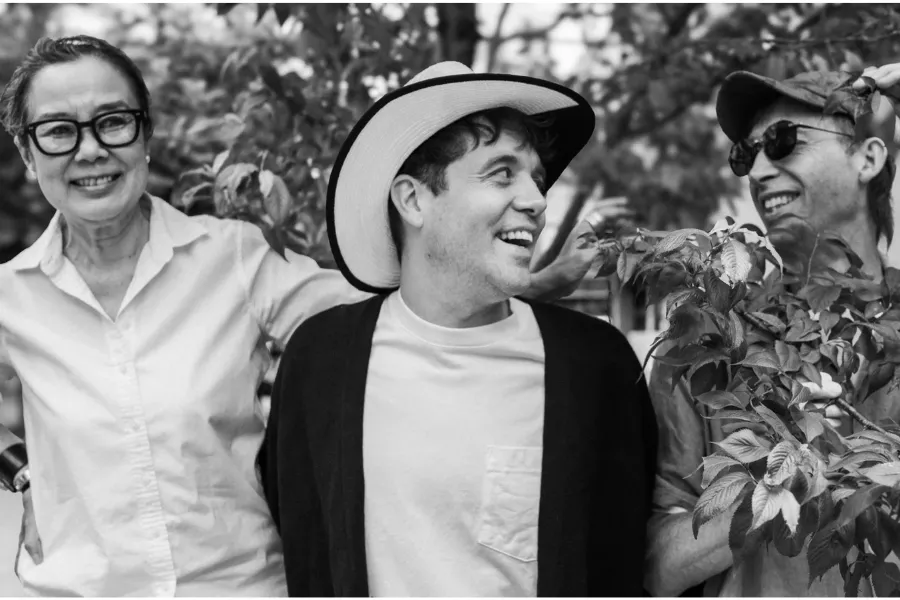
Yumiko Morioka appeared alongside Nick Luscombe and James Greer of MSCTY Studio, the sound-focused project known for shaping music around place and atmosphere. Yumiko Morioka performed on piano, while Nick Luscombe and James Greer handled field recordings and sample processing.
Together, the trio presented Morioka’s music and debuted Music for Rest Rooms, a new work that extends the event’s ambient and environmental theme.
Event Details
The performance took place in the Elgar Room at the Royal Albert Hall, Kensington Gore, London SW7 2AP. It began at 8pm on 14 July 2026, with doors at 7.30pm, tickets from £18 and entry via Door 12.

Royal Albert Hall
Resonance played live in Europe for the first time
It was a rare live event that connected Japanese ambient history with a new interpretation in one of the city’s most iconic venues. The fact that Morioka’s Resonance was presented live in Europe added extra appeal for listeners interested in Japanese music culture and experimental sound.
The combination of a cult album, a new collaborative work, and the intimate setting of the Elgar Room gave the event a strong identity. For those who enjoy Japanese pop culture, sound design, or niche music events in London, Kankyō London was a night made for them.