Two professors from Kyoto and Osaka are in London to talk about bon odori, the circle dance at the heart of Japanese summer festivals, and they share a bill with a Hiroshige opera and twenty years of Bleach music. Crossing Borders: Japanese Popular Music, Culture and Identity is a free afternoon forum at Goldsmiths, University of London on Friday 30 October 2026, running from 2pm to 8pm.
Crossing Borders at Goldsmiths
Free afternoon of talks on bon odori, Bleach and Japanese popular music in New Cross, London- Address
- Linton Kwesi Johnson Lecture Theatre, Professor Stuart Hall Building, Goldsmiths, University of London, 80 Lewisham Way, London SE14 6NW
- Admission
- Free, registration required
- Starts
- October 30, 2026, 2:00 PM
- Ends
- October 30, 2026 8:00 PM
More about the event
- Organisers
- Professor Barley Norton and Dr Naomi Matsumoto of the Goldsmiths Department of Music
- Break
- A 15 minute pause between the two sessions, from 4:15pm to 4:30pm
- Bus routes
- Routes 21, 36, 53, 136, 171, 172, 177, 225, 321, 343, 436 and 453 all stop close to Goldsmiths
- Access guide
- AccessAble publishes a detailed guide to step free routes, seating and facilities in the Professor Stuart Hall Building
- Kyoto Seika University
- Professor Yasuda’s home university opened Japan’s first Faculty of Manga in 2006 and the country’s first Graduate School of Manga in 2010
- Enquiries
- Dr Naomi Matsumoto at n.matsumoto@gold.ac.uk
The forum is run by the Goldsmiths Department of Music and funded by the Japan Foundation and the Great Britain Sasakawa Foundation. It is free and open to all, with places booked through Eventbrite. After the talks there is a mini concert, then a bon odori dance workshop that runs until the planned 8pm finish.
The talks are academic, but the subjects are ones Japan Nakama readers already know: J-Pop, anime soundtracks, ukiyo-e prints and the bon odori dancing that turns up at Japanese summer festivals.
From Japanese Folk Dance to Anime Musicals at Goldsmiths


Session one: Japan’s musical identity, Hiroshige on the opera stage and Bleach’s themes
The forum opens at 2pm, and the first session, Constructing Japan Through Music and Performance, runs from about 2:10pm to 4:15pm. It looks at how Japan has been presented through music, both at home and abroad.
Dr Naomi Matsumoto on the making of Japan’s musical identity
Dr Naomi Matsumoto, Reader in Music at Goldsmiths and the forum’s co-organiser, presents Hidden Eros, Forgotten Histories: the Making of Japan’s Musical Identity. Matsumoto is a historical musicologist whose research centres on opera.
Dr Moeko Hayashi on Nicola LeFanu’s Tokaido Road
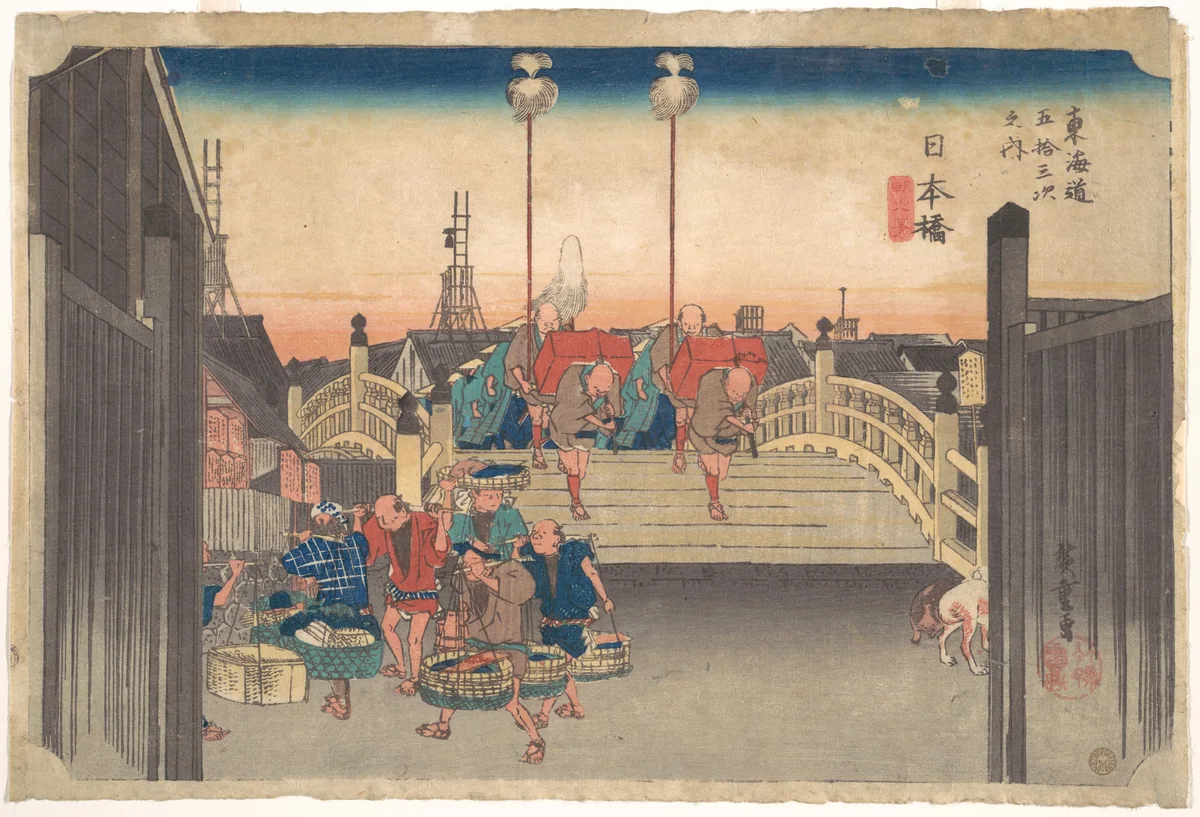
Independent scholar Dr Moeko Hayashi, who has written on Tōru Takemitsu’s November Steps for the collection From Modernism to Postmodernism: Between Universal and Local (2016), presents From Ukiyoe to Opera: Nicola LeFanu’s Tokaido Road. LeFanu’s 55 minute chamber opera, subtitled A Journey after Hiroshige, premiered at the Cheltenham Festival on 6 July 2014. Its libretto, by Nancy Gaffield, follows Hiroshige’s 1832 journey between Edo and Kyoto, the trip behind his famous series of ukiyo-e prints, The Fifty-three Stations of the Tōkaidō. The score sets the Japanese sho mouth organ and koto beside oboe, clarinet, viola and cello, and the prints themselves are projected during performances.
Dr Raymond Sookram and Elizabeth J. Parkes on Bleach
Anime fans should make sure they are in their seats for On the Precipice of Musical Adaption: Tracking Variations on Bleach’s Themes Over 20 Years. The Bleach anime first aired on TV Tokyo in October 2004, and Rock Musical Bleach opened at Space Zero in Shinjuku less than a year later, on 17 August 2005. The stage series has run on and off ever since, including Arrancar the Final in Tokyo and Osaka in early 2025, while the anime returned in 2022 with Thousand-Year Blood War.
The talk is shared by Dr Raymond Sookram, a composer and researcher of video game music who has taught at Goldsmiths, and Elizabeth J. Parkes, a University of Bristol PhD researcher who studies how anime staff create background music, known in Japan as gekiban. Parkes was named a Daiwa Anglo-Japanese Foundation Scholar in 2026.
Session two: bon odori, from folk ritual to festival pop
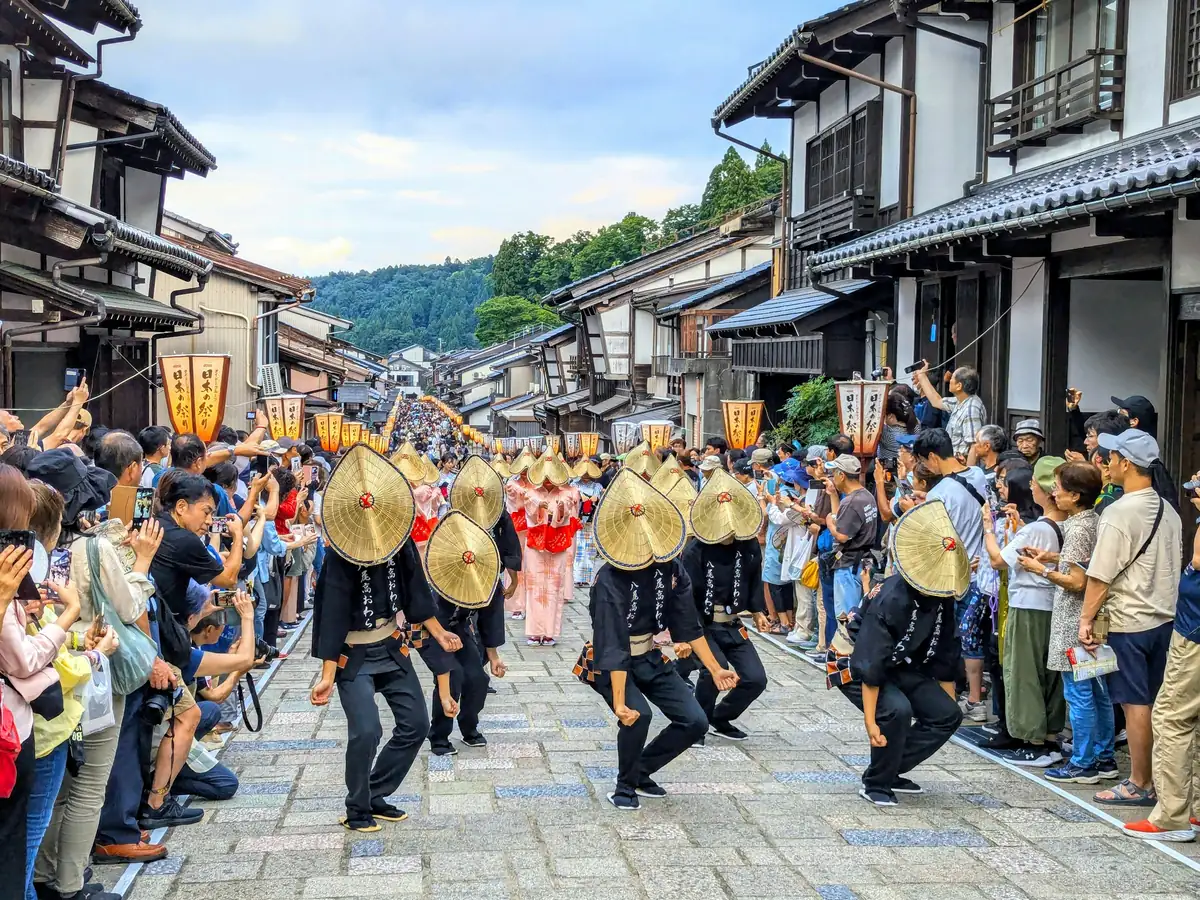
The second session, Bon Odori in Motion: Fusing Folk Tradition and Contemporary Culture, runs from 4:30pm to about 6pm. It brings both visiting speakers from Japan to the stage, and it is the rarer half of the afternoon. Bon odori is the dance of Obon, the Buddhist summer festival honouring ancestors, held in mid August in most of Japan and in July in some regions. It was first danced to welcome the spirits of the dead and send them off again, and today it fills shrine grounds, car parks and town squares with circles of dancers moving to festival songs.
Professor Masahiro Yasuda on folk dance and community
Professor Masahiro Yasuda of Kyoto Seika University, a popular music scholar, presents Resonating Folk Dance: Mobility, Communality and Spirituality.
Professor Yusuke Wajima on bon odori as a meeting point
Professor Yusuke Wajima of the University of Osaka closes the talks with Bon Odori as Nexus: Folk Meets Popular through Song and Dance. Wajima researches modern Japanese popular music, especially enka. His book on enka, whose Japanese title calls the idea of enka as the “heart of Japan” a manufactured myth, won the 2011 Suntory Prize for Social Sciences and Humanities and is published in English as Creating Enka: The “Soul of Japan” in the Postwar Era. A chance to hear him speak in London is uncommon, and anyone who has joined a bon odori circle at a Japanese festival will get the most from this session.
A 6pm mini concert, then a bon odori dance workshop
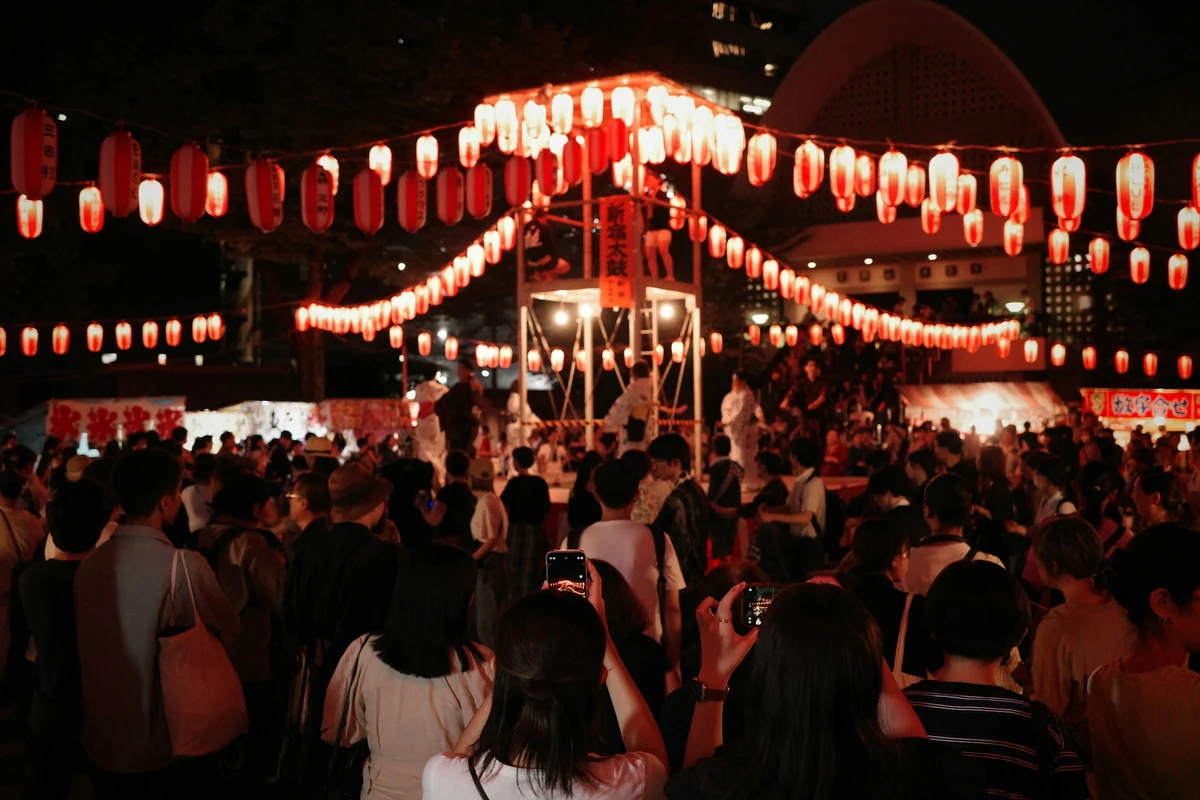
The talks hand over to live music at 6pm, with a mini concert running to about 6:40pm. The performers have not yet been announced. At 6:45pm the forum moves on to a bon odori dance workshop, which runs until the planned 8pm finish.
It makes a fitting end to an afternoon spent on bon odori. After hearing Professor Yasuda and Professor Wajima explain how the dance connects folk tradition and popular culture, everyone in the room gets the chance to join the circle themselves.








Planning your visit to Goldsmiths in New Cross
Where: The Linton Kwesi Johnson Lecture Theatre (formerly LG02) in the Professor Stuart Hall Building, Goldsmiths, University of London, New Cross, London SE14 6NW. Goldsmiths dedicated the theatre to the dub poet in January 2026.
When: Friday 30 October 2026, opening at 2pm, with a planned 8pm finish.
Getting there: New Cross and New Cross Gate stations are both under five minutes’ walk from the campus, with London Overground services to both, Southeastern trains to New Cross from London Bridge and Southern trains to New Cross Gate.
Professor Stuart Hall Building, Goldsmiths
Tickets: Free. Register for a place on Eventbrite before you go.