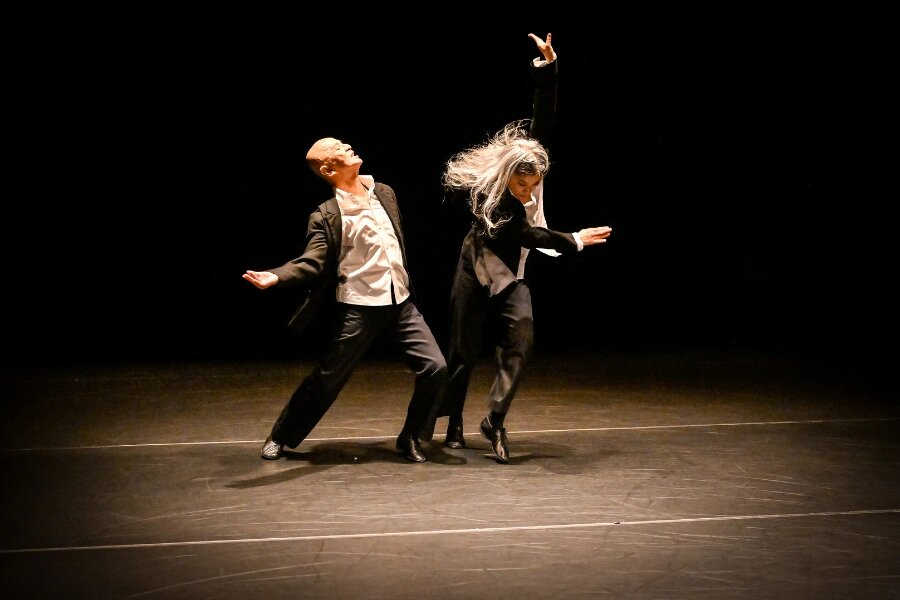
What happens when movement transcends the limits of the body, morphing into something ethereal, poetic, and deeply introspective? This is the question posed by Saburo Teshigawara and Rihoko Sato, two visionary artists whose avant-garde approach to dance has reshaped the boundaries of contemporary performance.
Steeped in a fusion of Japanese tradition, sculptural aesthetics, and raw improvisation, their work challenges the very notion of what dance can be. Their latest production, Waltz, is an evocative duet that explores memory, time, and the fragility of human existence. Waltz ran at The Coronet Theatre in London from 19–22 March 2025, with Saburo Teshigawara and Rihoko Sato performing the duet across four evenings.
But who are the creative minds behind this mesmerising performance? Saburo Teshigawara, a choreographer renowned for his gravity-defying movements, and Rihoko Sato, his long-time muse and collaborator, have spent decades refining a style that is both minimalist and deeply emotional. This article delves into their artistry, the evolution of contemporary Japanese dance, and why Waltz is one of the most profound performances of 2025.
The artistry of the dance master Saburo Teshigawara
The inspiration of the muse Rihoko Sato
The Evolution of Contemporary Japanese Dance
Waltz: An Unmissable Performance At The Coronet
Early Life and Education
Saburo Teshigawara was born in Tokyo in 1953 and initially pursued visual arts and sculpture before turning to dance. He began studying classical ballet in his early twenties, bringing an artistic eye and sculptor’s sensibility to his dance training.
This dual background in fine arts and ballet laid the foundation for Teshigawara’s distinctive approach to movement, combining disciplined technique with a keen visual imagination.
By 1981 he had embarked on creating his own choreographic works in Tokyo, signalling the start of an innovative creative career.
Founding KARAS and Contemporary Dance Impact
In 1985, Teshigawara co-founded the dance company KARAS (meaning “crow” in Japanese) with his collaborator Kei Miyata. With KARAS, he set out to push the boundaries of contemporary dance, crafting experimental group choreographies that quickly gained international attention. The company’s performances – often described as visually striking and avant-garde – have toured major cities and festivals around the world.
Teshigawara soon earned acclaim as a leading change-maker in Japanese dance, moving away from traditional conventions and giving dancers new freedom of expression. An early milestone was his stunning success at the 1986 Bagnolet International Choreography Competition in France, where his piece Kaze no Sentan (“The Tip of the Wind”) won praise for its innovative physical language beyond conventional technique.
This breakthrough solidified Teshigawara’s reputation and influence, inspiring a new wave in Japan’s contemporary dance scene. After that, the troupe spent time in Japan and Europe, gaining popularity and receiving commissions from prestigious companies. These commissions came from companies including Nederlands Dans Theater, Paris Opera Ballet and the then-Ballett Frankfurt under William Forsythe, among others.
Even with these accolades, Teshigawara kept pushing past the dancer-choreographer label, extending his practice into stage, costume, set and lighting design.
This led him to work in opera at the 1999 Edinburgh Festival and produce a wide range of art installations and books. He’s also been a professor of expression studies at the College of Contemporary Psychology Rikkyo University since 2006.


The artistry of the dance master Saburo Teshigawara

Photo credit: Akihito Abe
Renowned for his groundbreaking choreographic style, Teshigawara fuses elements from Japanese aesthetic traditions with cutting-edge avant-garde movement. He develops dance as a “dialogue” with the body, favouring organic, unconventional motion over classical ballet’s formalism. In performance, he often transforms the stage into a multi-sensory installation – “rooms of light and sound, objects and bodies” – blurring the line between dance and visual art.
Teshigawara’s keen sense of composition and space, honed by his arts training, imbues his works with sculptural clarity and imaginative depth. At the same time, his choreography abandons strict tradition, embracing experimentation and spontaneity. This avant-garde approach, which one writer calls a search for “a new form of beauty,” has made Teshigawara’s creative voice entirely his own.
Teaching and Philosophy
 Alongside his creative work, Teshigawara has made significant contributions to dance education. He regularly leads intensive workshops at the KARAS studio in Tokyo, training dancers in his distinctive movement philosophy.
In 1995 he launched the S.T.E.P. (Saburo Teshigawara Education Project) initiative in the UK, a long-term workshop program cultivating young talent and culminating in public performances. He also developed Dance of Air, a year-long youth dance workshop in collaboration with the New National Theatre Tokyo, which integrates students into professional-level productions. Teshigawara has brought his ideas into academia as well, teaching movement and choreography at Japanese universities.
From 2006 to 2013 he was a lecturer at St. Paul’s (Rikkyo) University, and since 2014 he has served as a professor in the Department of Scenography, Drama, and Dance at Tama Art University in Tokyo. Through these roles he emphasises creativity and individual expression, often telling students that art should never be bound by conservatism – a credo he famously articulated as “Art must never be inhibited by conservatism.”.
In 2013, Teshigawara established a private creative space in Tokyo called Karas Apparatus, where he stages an ongoing performance series titled Update Dance, continually experimenting and mentoring emerging dancers. His educational efforts and open workshops have inspired a new generation, reflecting his belief in dance as an ever-evolving art form accessible to all.
The inspiration of the muse Rihoko Sato

Photo credit: Akihito Abe
A choreographer is only as good as the creative minds he surrounds himself with and Rihoko Sato certainly pushes Teshigawara to be at his best with every performance. As Teshigawara’s collaborator of nearly thirty years, Sato has drawn from his vocabulary while developing her own poetic voice through solo avant-garde dance performances.
Sato spent her childhood living in the UK and US and studied Spanish and linguistics at university. Those cross-cultural experiences helped her join a dance troupe with international ambitions like KARAS.
Talking to Alexandre Magazine, Sato reflected fondly on her childhood.
“As a child, I didn’t have much difficulty getting used to life in the UK. When I returned to Japan, I was not good at speaking Japanese then, and there were more things to do in Japanese elementary schools. I have been moving a lot in my life so I no longer have a sense of home, it is not clear where I should return and I have a feeling that this travelling life will continue till the end. But I have a very strong impression of life in the UK.
“Maybe because it was my childhood which had much sensitivity. The people in England were very good at finding one’s strengths, and they encouraged children to try their talents. I started gymnastics there because I was told I was good in the school gymnastic class. It was a very good environment for me. It was not so difficult to return to Japan after living in the UK, but then I had to move to the US, which was not a place for me.”
After studying gymnastics, Sato attended one of Teshigawara’s dance workshops in Tokyo in 1996. Here, she caught his attention and the two went on to collaborate in several memorable productions.
For example, Teshigawara and Sato were recently invited to Cuba by The Japan Foundation to commemorate the 120th anniversary of immigration from Japan to Cuba. This was an eye-opening experience for the duo, especially Sato, who was drawn to Cuban dancing.
Speaking to Alexandre Magazine, she described what struck her about the Cuban dancers: “They have amazing physicality, classically trained with strong bodies, but once they begin to understand Teshigawara’s method, they can let their bodies loose while keeping their original virtuosity.”
Sato has often called her relationship with Teshigawara special and unreplicable with anyone else on stage. In an interview with The Migros Group she said “My entire dance vocabulary is based on what Saburo has taught me and what I have found out about myself. In a way, I trust him more than I trust myself.”
In the same interview, Teshigawara was just as complimentary. “I can dance any dance with anyone. It will be a different dance, depending on the partner. With her, I can create something special. She is special.”








The Evolution of Contemporary Japanese Dance
Both Teshigawara and Sato are leading figures in avant-garde Japanese dance traditions. Teshigawara in particular is an innovator because he distanced himself from the elaborate costumes found in styles like kabuki and Noh and the grimness of butoh.
His style is best captured by the idea of an ’empty body’ — using the body to move through the air with bird-like movements. When Teshigawara is on stage, he glides and dips, as if gravity is of no consequence. He moves with spasms and waves and critics have described a device called ‘fall and recovery’ where Teshigawara and his dancers will collapse in mechanical repetition.
According to Teshigawara, he wants “to create accidents on stage, in my body. It’s a constant fight against myself, between control and accident. It’s not a peaceful internal process. That peaceful state is not necessarily a good or healthy thing. Sometimes it’s a scream from the body, or silence, that is needed to create a new form. Freedom is more important than structured thinking.”
In some ways, Teshigawara’s style reads as an evolution of butoh — the Japanese ‘dance of darkness’ that is primordial, earthy and unflinching. Butoh’s influence can be seen in his melancholic movements, though he brings it an airborne and ethereal quality. He’s taken butoh away from its primitive roots and made it soar with light and grace.
Teshigawara’s sensory dance experiences and minimalist aesthetics have won him acclaim all over the world. One of his most striking early works was a 1985 performance in which he buried himself in earth up to the neck for several hours, exploring the relationship between body and air. He did this because he wanted to investigate the relationship between air and the body.
Another memorable production was Teshigawara’s interpretation of Dostoevsky’s The Idiot. He and Sato worked in tandem to put on a haunting experience of two doomed lovers who moved across the stage worlds apart yet were still connected by the promise of hope.
Waltz: An Unmissable Performance At The Coronet
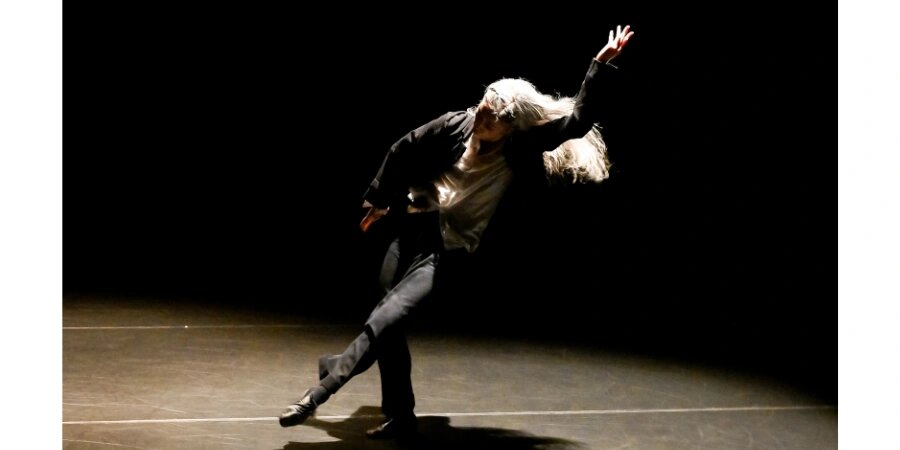
Photo credit: Akihito Abe
Dance as a medium of expression is truly powerful and it’s epitomised in Teshigawara’s Waltz performance. An analysis of Teshigawara’s life in dance form, Waltz comes from the choreographer’s view of ‘my life through both ends of a telescope — with memory, experience and an imagined future sometimes magnified, and sometimes distant.
With Sato by his side, Teshigawara will tap into the three-beat tempo of waltzes from countless eras and countries to portray his inner world. The idea is to connect the audience with their own memories and think about what their own lives might look like in dance form.
Saburo Teshigawara: Waltz
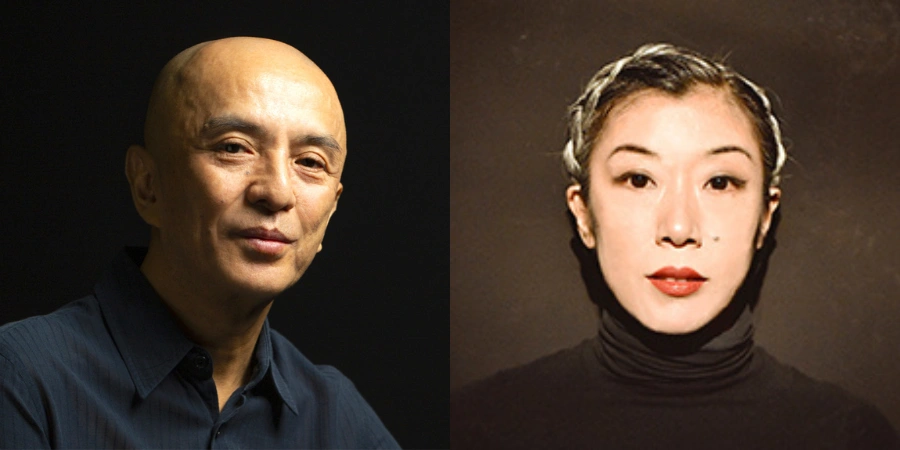 From March 19th – March 22nd, an electric Japanese performance is happening at the Coronet Theatre in London called Waltz. This moving duet comes from the likes of celebrated choreographer Saburo Teshigawara and long-time collaborator Rihoko Sato.