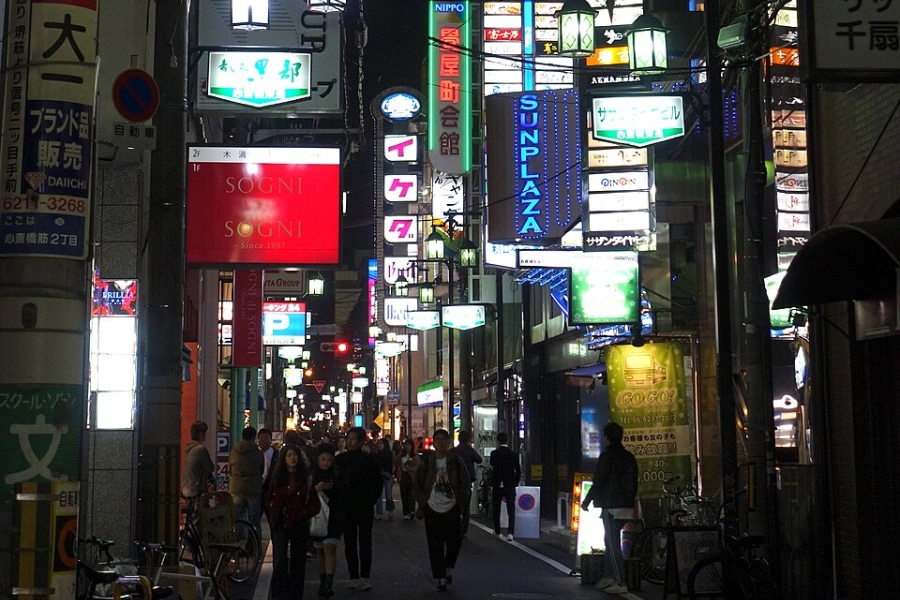
Tenjinbashisuji Shopping Street (天神橋筋商店街) is a living slice of everyday Osaka. Stretching through Kita Ward, this covered arcade claims the title of Japan’s longest shopping street. What makes it worth your time, most of all, is its rhythm. Family-run sweet shops open late, bargain stores buzz by afternoon, and by evening the energy spills into nearby Ura-Tenma’s lantern-lit bars. If you want to see how locals actually shop, snack and socialise, this is where to start.
Tenjinbashisuji Shopping Street at a Glance
Exploring Tenjinbashisuji


What to Expect in Tenjinbashisuji Shopping Street
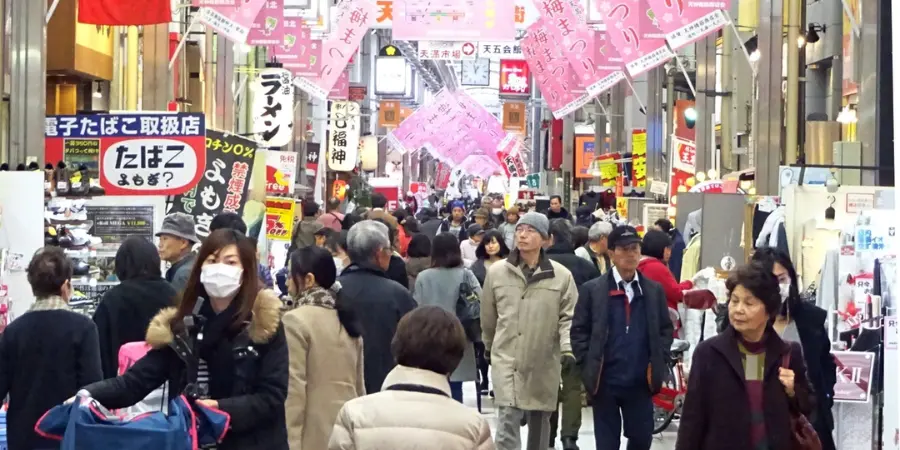
At 2.6 kilometres long, with approximately 800 shops, Tenjinbashisuji Shopping Street holds the title of Japan’s longest covered shopping arcade, formally certified by the Japanese Records Certification Association. While this impressive statistic appears in every guidebook, what travellers actually encounter is a complex, living commercial artery. Unlike the polished department stores of Umeda or the entertainment-focused Dotonbori, this shotengai operates primarily for locals, not tourists.
This creates a fascinating paradox for visitors. The street offers an authentic glimpse into everyday Osakan life. Yet, this very authenticity means it doesn’t conform to typical tourist expectations on operating hours, payment methods, language assistance, or customer service styles. Most businesses here are small, family-run operations that have evolved to serve neighbourhood residents.
For travellers seeking to experience the “real Osaka,” Tenjinbashisuji delivers precisely that, but it comes with real-world quirks.
Best for
- Cultural explorers seeking authentic local shopping experiences
- Food enthusiasts looking for non-tourist-oriented Osakan cuisine
- Shoppers interested in everyday Japanese goods at local prices
- Photographers wanting to capture everyday Osaka life
Not ideal for
- Visitors on tight schedules with limited time in Osaka
- Shoppers focused exclusively on luxury brands or electronics
- Those who prefer organised tourist experiences with consistent English support
- Travellers uncomfortable navigating busy local spaces
Be prepared for
- Most shops opening around 11:00 AM
- Cash-only transactions in many smaller shops
- Limited English spoken by most store owners
- Bicycles moving through the pedestrian arcade
- A full 2.6km walk if exploring end-to-end
Timing Your Visit: The 11 AM Rule and Crowd Patterns
The most common mistake visitors make is arriving too early. Despite official hours, most shops start at 11:00 AM. Arrive before this, and you’ll find yourself walking through a tunnel of closed metal shutters.
This is particularly true for the southern sections (1-chome through 3-chome), where smaller, family-owned businesses follow traditional hours. The timeline follows a distinct pattern:
- 9:00 AM to 10:30 AM: Mostly closed, with only convenience stores and select chains open
- 11:00 AM to 3:00 PM: Prime shopping hours before school children appear
- 3:30 PM to 6:00 PM: Increased crowds as students and office workers begin passing through
- 6:00 PM to 8:00 PM: The “after-work rush” when the arcade is at its busiest
- After 8:00 PM: Shops begin closing, though restaurants remain open
For the most pleasant experience, aim to start your visit around 11:30 AM. This timing allows you to experience the street before afternoon crowds.
Weekdays offer a more relaxed browsing experience, while weekends bring significantly larger crowds. During July, the Tenjin Matsuri centres on Osaka Temmangu Shrine on 24 and 25 July, creating exceptional crowds at the southern end. The two days are not the same: 24 July is Yoimiya, the quieter eve, while 25 July is Honmiya, when the land procession is followed by the funatogyo boat procession along the Okawa river and the fireworks that close the festival. If you want the arcade rather than the festival, avoid the 25th.
Exploring Tenjinbashisuji by Section: 1-chome to 7-chome

What most travel guides fail to articulate is that Tenjinbashisuji isn’t a homogeneous experience, there’s a distinct atmosphere gradient as you move from south to north.
Southern Sections (1-chome and 2-chome)
These sections feature a quieter, more traditional atmosphere. This area houses older establishments like Sanshido at 2-chome, hand-carving personal seals since 1901, with a National Skills Grand Prix win and a Naniwa Master Artisan award on the wall. A minute further north, at the southern tip of 3-chome, Kunkundo sells seasonal fruit daifuku, strawberry for most of the year and peach from late June until the Tenjin Matsuri, open 10:00am to 7:00pm and closed Tuesdays. The architecture here includes more pre-war elements and wooden structures, with narrower arcade sections. This area attracts fewer tourists and maintains a distinctly local feel.
Middle Sections (3-chome and 4-chome)
3-chome and 4-chome represent a transition zone where you’ll find a mix of traditional shops alongside modern additions. This area hosts practical everyday shops alongside variety stores and mid-range fashion outlets. At 3-chome you will find Tengyu Shoten, a secondhand bookshop that has been trading in Osaka since the Meiji era and stocks everything from Japanese classics to foreign-language titles. It opens 11:00am to 8:00pm and closes only over New Year.
Northern Sections (5-chome and 6-chome)
The north features the most energetic, chaotic atmosphere with discount shops, food stalls, and higher foot traffic. This is where you’ll find popular spots like Le Croissant (a beloved bakery) and Daiso, offering everything at ¥100. The arcade in this section is wider, brighter, and significantly more crowded. Directly above Tenjimbashisuji 6-chome Station sits the Osaka Museum of Housing and Living, an indoor recreation of an Edo period Osaka townscape on the building’s 8th floor (usually 10:00am to 5:00pm with last admission at 4:30pm, ¥600 for adults, closed Tuesdays), though note it is shut for renovation works until 5 January 2027.
For photography enthusiasts, the contrast between sections makes for fascinating visual storytelling; the worn wooden storefronts of 2-chome versus the neon-lit chaos of 6-chome capture two different Osakas existing along the same street.


Food and Dining Options Along the Arcade
Tenjinbashisuji excels as a place to experience everyday Osakan food culture at reasonable prices. Unlike tourist-focused areas, most establishments here cater to regular local customers, resulting in authentic quality at lower prices.
Traditional establishments predominate in the southern sections. Isseniya Honke at 2-chome serves takoyaki (octopus balls) alongside the dish it is actually known for: issen-yaki at ¥120 a piece, the thin griddled pancake Osaka ate before okonomiyaki existed. It opens at 10:30am daily and runs to 10:30pm on weekdays.
Mid-arcade, casual standing eateries offer quick meal options. Kushikatsu Asahi at 3-chome presents Osaka’s famous deep-fried skewered meat and vegetables in an unpretentious setting, from ¥100 a skewer with the first draft beer at the same price, thirty seats and closed on Sundays. The communal sauce pot on the counter is the point, and as a strictly observed rule across every kushikatsu counter in the city, remember not to double-dip.
At the northern end, COCOYA specialises in okonomiyaki and negiyaki from a first-floor room above 5-chome, with pork negiyaki at ¥970 and the modan-yaki that folds noodles into the savoury pancake. It opens at 5:00pm on weekdays and from 11:00am at weekends.
For coffee breaks, bypass the chains in favour of Nishinaka Coffee at 4-chome, a Showa-era kissaten that has roasted its own beans on site since 1971 and still has the chandeliers and sofa seating to prove it. It opens at 7:30am, earlier than almost anything else on the arcade. Order the chocolate toast with unsweetened cream, or the coffee jelly.
Shopping Strategies and Local Etiquette

Shopping at Tenjinbashisuji requires adjustment from the department store experience most travellers associate with Japan.
Most smaller shops operate on cash-only systems, particularly in the southern and middle sections. While larger stores and chains accept credit cards and electronic payments like Suica or PayPay, carrying ¥5,000 to 10,000 in cash ensures flexibility. Resona Bank ATM near 4-chome and Japan Post Bank near 6-chome reliably accept foreign cards.
Language barriers are more pronounced here than in tourist centres. Shop owners typically speak limited English but respond well to basic Japanese phrases and phone translation apps.
Despite being a covered pedestrian arcade, Tenjinbashisuji permits bicycle traffic throughout the day. Local cyclists move quickly through crowds, expecting pedestrians to maintain predictable paths. Stay to the sides of the arcade, particularly during rush hours.
Bargaining is generally not practised, with the exception of fresh produce stands in 6-chome near Tenjinbashisuji Market, where vendors may offer late-day discounts.
What to Do Near Tenjinbashisuji at Night
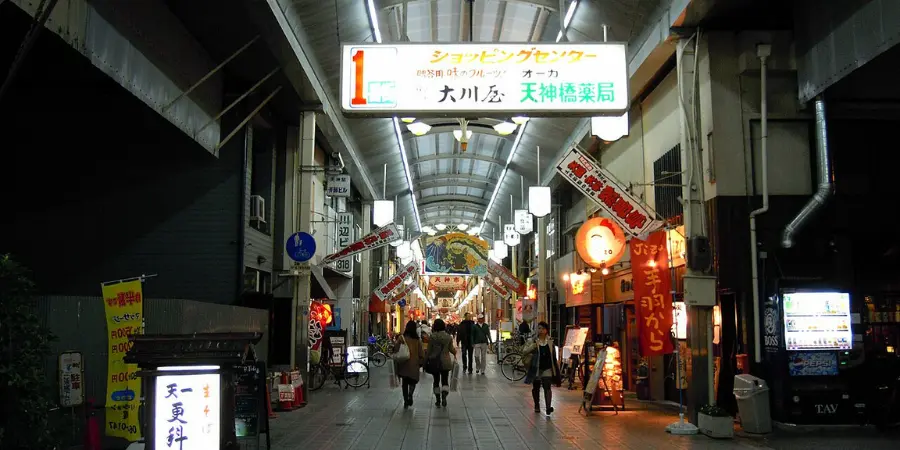
Tenjinbashisuji can also be a gateway to evening experiences. Rather than treating the shopping street as a daytime-only destination, travellers can pivot to the adjacent Ura-Tenma district.
While shops begin closing around 8:00 PM, the area transforms rather than shuts down. Just east of the arcade, in the Ikedacho block a few minutes from JR Tenma Station, lies Ura-Tenma, a network of narrow streets illuminated by lanterns and filled with small izakayas and bars. It sits alongside the 4-chome and 5-chome stretch rather than the southern end.
Start your evening transition at Dengeki Horumon Tsugie on the 5-chome stretch at the Ura-Tenma end, a standing-only counter yakiniku where the horumon is grilled in front of you. Seared heart, marucho and white tripe are the cuts to ask for. It opens at 5:00pm on weekdays and midday at weekends.
Moving deeper into Ura-Tenma, Beer Belly Tenma sits inside the old Tenma Market at Ikedacho 7-4, a twelve-metre counter with fifteen Minoh Beer taps running at all times. Half pints are ¥520 to ¥620 and pints ¥830 to ¥930, with tapas from ¥350. It opens at 5:00pm on weekdays and 3:00pm at weekends.
For the local institution rather than the hidden find, Tenma Sakagura has stood at 5-chome for around fifty years. It seats fifty-eight, twenty-two of them at the counter, and trades on being cheap, quick and good: doteyaki, seafood, homemade potato salad, and a house Sakagura Highball that cuts whisky with lemon chuhai. Open from 11:30am, last orders 9:00pm.
Getting There: Transport Access Points and First Encounters

Tenjinbashisuji’s 2.6km length means it’s serviced by multiple stations, creating several possible entry points, each delivering you to a distinctly different section of the shopping street.
- For the southern end (1-chome and 2-chome): Osaka-Temmangu Station on the JR Tozai Line and Temma Station on the JR Osaka Loop Line both sit moments from the arcade. Osaka Temmangu Shrine, the home of the Tenjin Matsuri, stands beside the 2-chome section, and the street first flourished in the Edo period as the town serving the shrine.
- For the middle sections (3-chome and 4-chome): Minamimorimachi Station on both the Sakaisuji and Tanimachi subway lines offers convenient access. Use Exit 1 to emerge directly into the shopping street.
- For the northern end (6-chome and 7-chome): Tenjinbashisuji 6-chome Station on the Sakaisuji subway line places you right in the heart of the street’s most vibrant section. Use Exit 3 for immediate access.
- From Osaka Castle: You’re looking at approximately 20 to 25 minutes of travel time. Take the JR Loop Line from Osakajokoen Station to Kyobashi Station, then transfer to the Osaka Metro Nagahori Tsurumi-ryokuchi Line to Minamimorimachi.
The challenge most travellers encounter upon arrival is orientation. The arcade’s length and similar appearance throughout can make it difficult to track your position. The Tenjinbashi Shotengai Information Center near 4-chome provides free area maps, though English assistance is limited.
Tenjinbashisuji Frequently Asked Questions
How long is Tenjinbashisuji Shopping Street?
The arcade runs for 2.6 kilometres with around 800 shops, and walking it end to end takes roughly 40 minutes before any stops. It carries a formal certification as Japan’s longest shopping street from the Japanese Records Certification Association.
What time do the shops open?
Most shops open around 11:00am, with the smaller family-run businesses in the southern sections the last to lift their shutters. Shops wind down from 8:00pm, while restaurants and the neighbouring Ura-Tenma bars carry on into the night.
Which station should you start from?
For the southern end, use Osaka-Temmangu Station (JR Tozai Line) or Temma Station (JR Osaka Loop Line). For the middle, Minamimorimachi or Ogimachi on the Sakaisuji subway line. For the northern end, Tenjimbashisuji 6-chome Station, where Exit 3 brings you straight into the arcade.
Is Tenjinbashisuji worth visiting?
Yes, if you want the everyday Osaka that tourist districts polish away. It rewards a half day of unhurried browsing and eating, and pairs naturally with Osaka Temmangu Shrine at the southern end and an evening in Ura-Tenma.
Final Thoughts
Tenjinbashisuji Shopping Street rewards travellers willing to adjust their expectations and experience authentic Osaka. Unlike the curated tourist experiences of Shinsaibashi, this shotengai functions primarily for locals, which creates both its challenges and its charm for visitors.
The key to navigating Tenjinbashisuji is understanding its sectional differences and planning around actual operational patterns. By respecting the 11:00 AM start time, preparing for cash transactions, and maintaining awareness of bicycle traffic, visitors avoid friction.
What makes Tenjinbashisuji special is precisely what makes it occasionally confusing: it exists primarily for Osakans rather than tourists. By approaching it as a living cultural space rather than a tourist attraction, and extending your experience into the evening hours in adjacent Ura-Tenma, you discover a version of Osaka that exists beyond the guidebooks, one shopping arcade at a time.
If you’re planning an Osaka visit, consider connecting your Tenjinbashisuji exploration with nearby attractions like the Osaka Tenmangu Shrine or Umeda for a full day of northern Osaka experiences.