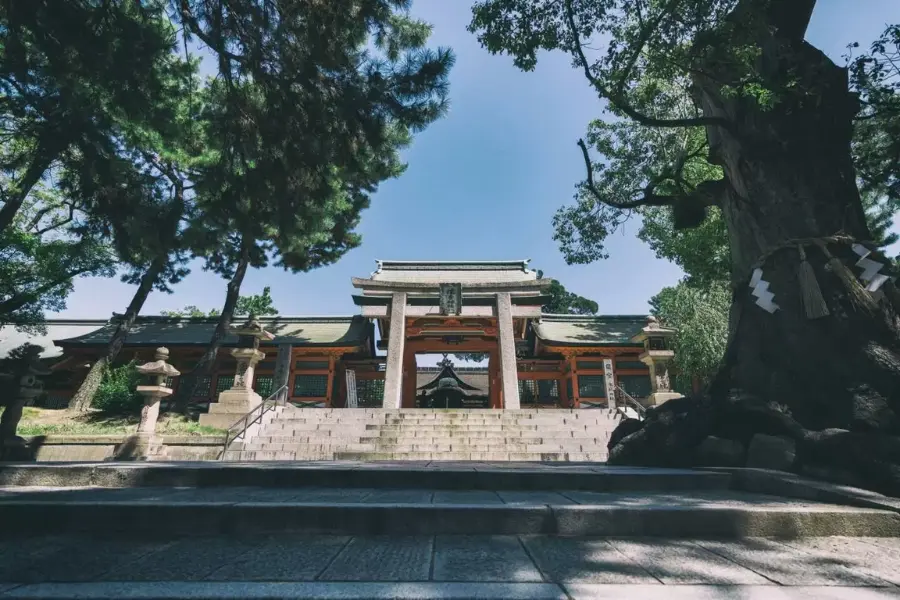
Sumiyoshi Taisha Shrine (住吉大社) in Osaka is one of Japan’s oldest Shinto shrines and the spiritual heart of Sumiyoshi Ward. Known for its dramatic Taiko Bashi bridge and rare Sumiyoshi-zukuri architecture, it offers a markedly different experience from central Osaka’s modern attractions.
While the shrine is well-organised with clear pathways and signage, first-time visitors often hesitate at crucial moments: unsure about purification rituals, whether to climb the famously steep Sorihashi Bridge, or how to approach the multiple shrine buildings.
This guide walks you through the experience of visiting this historic shrine, helping you navigate its sacred spaces with confidence and cultural understanding.
Sumiyoshi Taisha Shrine at a Glance
Sumiyoshi Taisha Shrine


What to Expect at Sumiyoshi Taisha Shrine
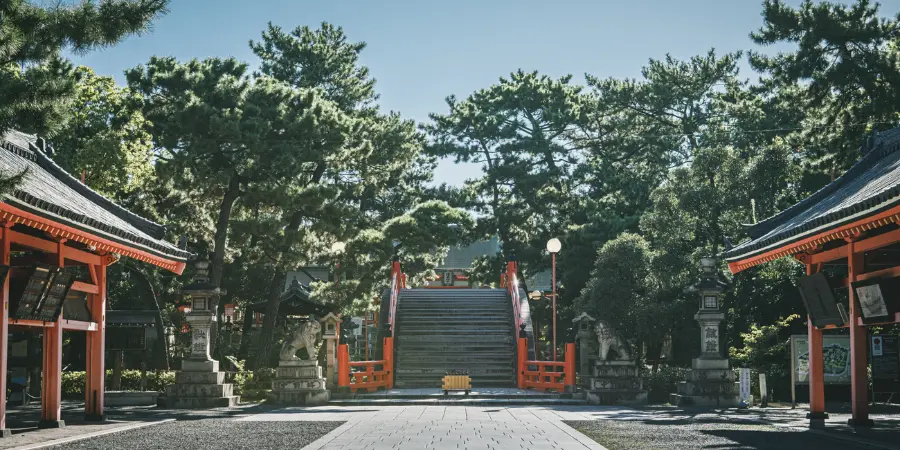
Sumiyoshi Taisha Shrine offers a glimpse of Japan before Buddhist influence reshaped its sacred architecture. Expect bold vermilion halls, a dramatic arched bridge, and a layout that feels markedly different from most shrines you’ll visit.
Reasons To Visit Sumiyoshi Taisha Shrine
Sumiyoshi Taisha appeals to cultural travellers seeking authentic Shinto architecture largely untouched by Buddhist influence. Its rare Sumiyoshi-zukuri (住吉造) style, defined by straight rooflines and forked finials, feels markedly different from later shrine designs, prioritising structural clarity over ornament.
Photography enthusiasts will appreciate the symmetry of the four main halls and the dramatic curve of the Taiko Bashi (太鼓橋), particularly in soft morning light. History-minded visitors value the shrine’s traditional founding date of 211 AD and its long association with maritime worship.
For travellers staying in central Osaka, it offers a calm counterpoint to the commercial pace of Namba and Umeda.
Reasons to skip
Sumiyoshi Taisha may be less suitable for visitors with mobility limitations, as the Sorihashi (反橋) bridge has a steep incline and several shrine buildings require steps to access. Travellers on tight itineraries might also find the visit rushed; the grounds deserve at least 45 to 60 minutes to appreciate properly, and longer if including rituals or the museum. Those expecting a highly commercialised attraction with themed shops and constant entertainment may be disappointed.
Be prepared for
During the New Year period and major festival days, crowds can be substantial, with queues forming near the main halls. The dramatic bridge crossing, while photogenic, can feel steep, though alternative ground-level paths are available. The shrine complex includes multiple halls and secondary shrines, so exploring requires moving beyond the central courtyard. In summer, open gravel areas offer limited shade, so sunscreen and water are advisable, particularly during midday heat.
Sumiyoshi Taisha Shrine Layout: Main Halls and Hidden Shrines
Sumiyoshi Taisha’s expansive grounds host multiple shrine buildings that often leave first-time visitors uncertain about which direction to explore first. Though unlike Fushimi Inari Taisha in Kyoto, Sumiyoshi Taisha’s layout is compact and flat (aside from the bridge), making it easier to explore in under an hour.
Main Shrine Compound
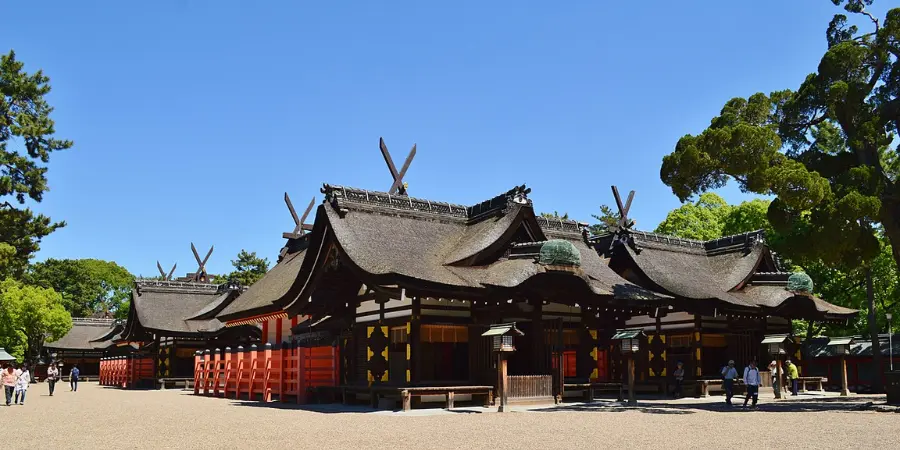
The heart of Sumiyoshi Taisha consists of four main halls (本殿, Honden) arranged in a unique parallel formation. These distinct buildings honour separate deities, which explains why locals pray at each one individually.
The four main halls are designated National Treasures and exemplify the rare Sumiyoshi-zukuri architectural style.
This straight-lined Sumiyoshi-zukuri (住吉造) style is characterised by forked finials on the gables and a lack of Chinese-influenced curves seen in later shrine architecture. The design reflects the shrine’s ancient origins, predating significant Buddhist influence in Japan.
Secondary Shrines and Spaces
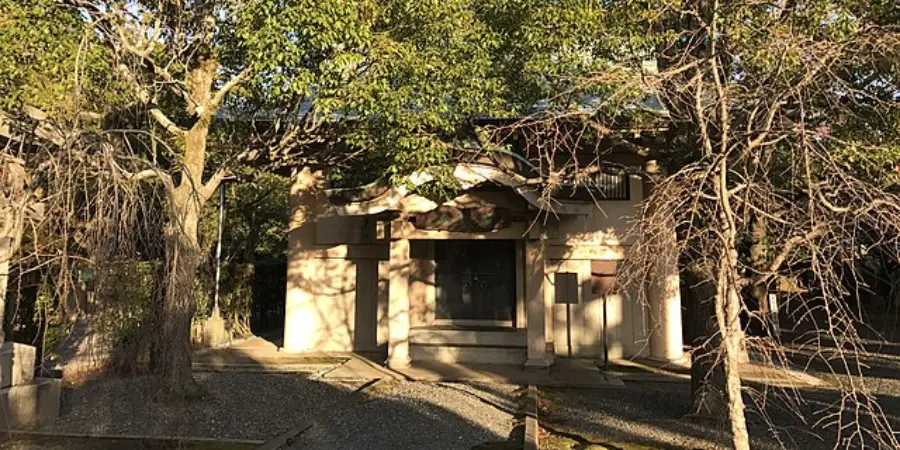
Beyond the main compound lies the often-overlooked Goshogozen Shrine (五社権現社), dedicated to matchmaking and relationships.
International visitors sometimes bypass this area entirely, unaware that it hosts a unique “pebble hunt” ritual where visitors search for a special stone believed to grant relationship wishes.
The shrine’s small museum, the Sumiyoshi Bunkakan (住吉文華館), sits behind the main grounds and displays historical artefacts including ancient festival implements and scale models illustrating how the shrine has evolved throughout history. It opens on very limited days and for only a few hours at a time, so treat it as a bonus if it happens to be open rather than something to build the visit around.
Hattatsu Mairi “Lucky Cat” Shrine (楠珺社, Nankun-sha)
Within the grounds of Sumiyoshi Taisha, Nankun-sha (楠珺社) is the focal point of the monthly Hattatsu Mairi (初辰参り) pilgrimage for steady prosperity. Here, worshippers receive a maneki-neko (招き猫, lucky cat), with odd months offering a left paw raised to beckon people and even months a right paw raised to invite wealth.
By continuing the ritual over several years, pilgrims exchange small cats for larger ones, symbolising long-term growth. A camphor tree said to be over 1,000 years old stands within the shrine grounds, while rows of offered lucky cats give this quiet corner of Sumiyoshi Taisha a character distinct from the main halls.
How to Pray at Sumiyoshi Taisha: Rituals and Customs
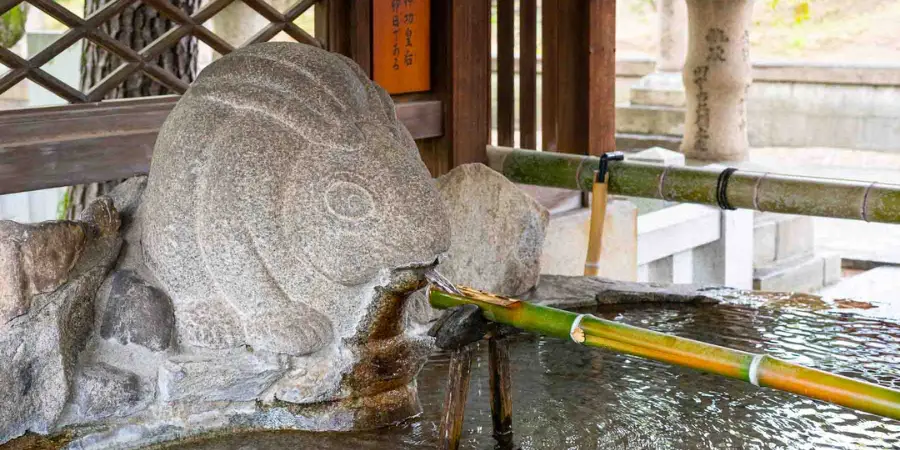
Sumiyoshi Taisha offers several interactive ritual experiences that visitors could join.
The Omokaru-ishi Stone Test
Near the main shrine buildings sits the Omokaru-ishi (軽重石), or “light-heavy stone.”
The ritual involves:
- Forming a wish in your mind
- Making a small offering
- Lifting the stone twice
- Noting whether it feels lighter the second time
If it does, tradition suggests your wish may come true.
The Goshogozen Pebble Hunt
At the Goshogozen Shrine, visitors can purchase a small paper amulet, write their name and wish on it, search for a stone that “calls” to them, purify it, and place it alongside their written wish.
This ritual is especially popular among younger Japanese visitors.



Good Luck Charms: Selection and Protocol
The amulet office (お守り売り場) near the main hall complex offers distinctive charms, including the Kakitsukehimo, which symbolises the shrine’s sea-deity connection and is said to “bind good fortune.”
When receiving charms, accept them with both hands. Avoid opening the amulet packaging while still on shrine grounds.
Rest Areas and Facilities
The primary rest area, Shōkōtei (しょうこうてい), provides bench seating in a garden setting.
A secondary covered seating area is located near the entrance torii.
Public restrooms are available at three locations across the grounds.
For refreshments, Sumiyoshi Taisha Chaya (住吉大社茶屋) on the eastern side serves matcha (抹茶) and seasonal Japanese sweets.
Photography and Cultural Sensitivity
Sumiyoshi Taisha offers excellent photographic opportunities but also has behavioural expectations.
Photography Guidelines
Photography is permitted across most of the grounds, including exterior shrine buildings.
However:
- Photography inside the main halls is prohibited
- Ongoing private ceremonies should not be photographed
- Flash should be avoided near ritual areas
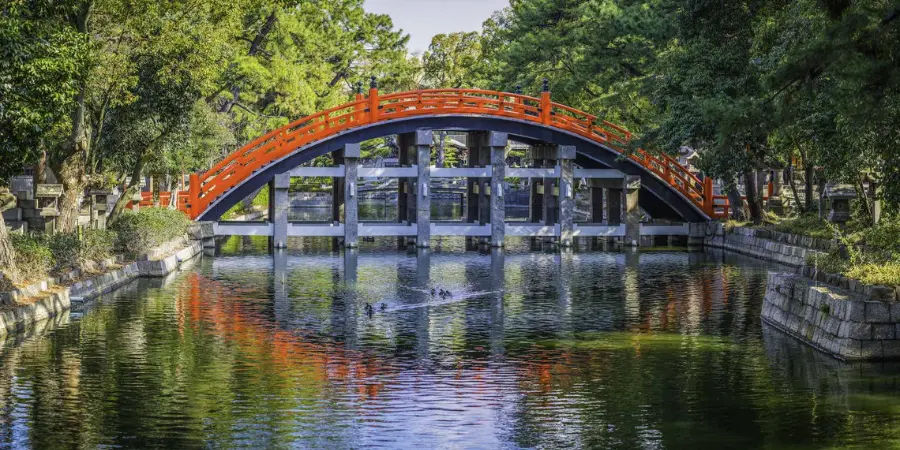
For unobstructed photos of the Taiko Bashi (太鼓橋, drum bridge), arrive before 9:30 AM.
Worship Spaces vs. Visitor Areas
At the main prayer halls, priority belongs to worshippers rather than sightseers.
Rope-demarcated areas indicate zones where voices should be kept low and photography limited. In general, courtyard areas are acceptable for normal conversation and photography.
Best Times of the Year to Visit Sumiyoshi Taisha Shrine
Visitor experience varies dramatically depending on timing.
Dragon Days and Business Crowds
Hattatsu Mairi (初辰まいり), the monthly prosperity pilgrimage centred on Nankun-sha, falls on the first Dragon Day of each month in the traditional calendar.
These days attract business owners seeking prosperity blessings, creating concentrated congestion around the main halls.
New Year Period
The first three days of January (初詣, hatsumōde) bring the shrine’s largest crowds, with visitor numbers regularly estimated at around two million.
A typical 30-minute visit can stretch to two hours or more due to entry queues.
By contrast, January 4 to 7 offers a valuable window to see New Year decorations without the extreme crowds. The shrine’s special shimenawa (注連縄, sacred straw ropes) remain in place until January 15th.
Festival Days
Two dates anchor the shrine’s festival year. On 14 June the Otaue rice planting festival fills the shrine’s sacred paddy with costumed planters and dancers, a rite so old it is designated an Important Intangible Folk Cultural Property. Then from 30 July to 1 August the shrine holds the Sumiyoshi Matsuri, three days of purification rites and processions that rank among Osaka’s great summer festivals. Both bring heavy crowds and a completely different atmosphere from an ordinary visit.
How to Get to Sumiyoshi Taisha
The journey to Sumiyoshi Taisha can be confusing for some travellers. Unlike many Japanese attractions near central stations, this shrine requires transport planning.
Directions From Central Osaka
From Namba Station (難波駅):
- Take the Nankai Main Line to Sumiyoshitaisha Station (住吉大社駅), around ten minutes, then walk three minutes to the entrance torii. The Nankai Koya Line stop Sumiyoshihigashi (住吉東駅) also works, about five minutes on foot from the east side.
- The Hankai Tramway also has a stop called Sumiyoshi, at the junction just before Sumiyoshitoriimae, so check the stop name before you step off.
- From Osaka/Umeda Station (大阪駅/梅田駅), take the JR Loop Line to Tennoji (天王寺).
- Transfer to the Hankai Tramway to the Sumiyoshitoriimae stop (住吉鳥居前), right outside the shrine. The tram offers an atmospheric journey through residential Osaka but runs less frequently than trains.
On Arrival
Most visitors enter Sumiyoshi Taisha through the Third Torii Gate (三の鳥居), where they encounter the distinctive arched Sorihashi Bridge (反橋). Its steep 48-degree incline can be challenging to climb, particularly in wet weather when the wooden surface becomes slippery.
The bridge crossing is ceremonial rather than required. Visitors can bypass it entirely using the ground-level paths on either side, a practical alternative for those with mobility concerns or visiting during rain.
How long to spend at Sumiyoshi Taisha?
Most visitors spend around 45 to 60 minutes exploring Sumiyoshi Taisha’s main grounds, which allows enough time to walk between the four principal halls, cross the Sorihashi Bridge, and enjoy the quieter garden spaces. Travellers wishing to participate in shrine rituals should allow closer to 1.5 to 2 hours for a more complete and unhurried experience.
Admission Fees & Open Hours
Cost: Free
Open Hours: Gates open at 6:00am from April to September and 6:30am from October to March, closing at 5:00pm year round.
Nearby Attractions
A short walk from Sumiyoshi Taisha brings you to Sumiyoshi Park, a local green space ideal during cherry blossom season. Nearby, the nostalgic Hankai Tramway rattles through residential streets, offering an atmospheric ride towards Tennoji. If you continue south, Sumiyoshi Taisha Station shopping arcade, beneath the Nankai tracks, has small cafés and sweet shops popular with worshippers after their visit.
Sumiyoshi Taisha Frequently Asked Questions
Is Sumiyoshi Taisha free to visit?
Yes. Entry to the grounds costs nothing, with the gates open from 6:00am (6:30am between October and March) until 5:00pm. Only the small museum and optional rituals carry their own charges.
What makes the architecture special?
The four main halls, rebuilt in 1810 and designated National Treasures, are among the last examples of Sumiyoshi-zukuri, one of Japan’s oldest shrine styles, with straight rooflines that predate Buddhist influence on shrine design.
When is Hattatsu Mairi?
On the first Dragon Day of each month in the traditional calendar, when worshippers collect a maneki-neko at Nankun-sha. The shrine publishes the year’s dates on its official site, and those mornings are noticeably busier than usual.
What is the easiest way to get there?
The Nankai Main Line from Namba to Sumiyoshitaisha Station takes around ten minutes, with a three minute walk to the torii. The slower, more atmospheric option is the Hankai tram from Tennoji to the Sumiyoshitoriimae stop, which sets you down at the shrine’s doorstep.
Final Thoughts: Is Sumiyoshi Taisha worth visiting?
Sumiyoshi Taisha rewards thoughtful visitors. If you have half a day in Osaka and want something older, quieter, and architecturally distinct, Sumiyoshi Taisha is one of the city’s most rewarding stops.
Its straight-lined architecture, layered ritual traditions, and expansive grounds create a more contemplative atmosphere than many of Osaka’s more commercial attractions.
By understanding transportation logistics, ritual etiquette, and seasonal timing, travellers can move beyond surface-level sightseeing and experience one of Japan’s oldest continuous religious spaces with greater meaning.
Once oriented, the shrine’s layout becomes intuitive, allowing space to absorb its historical depth and its living relevance within contemporary Osaka.