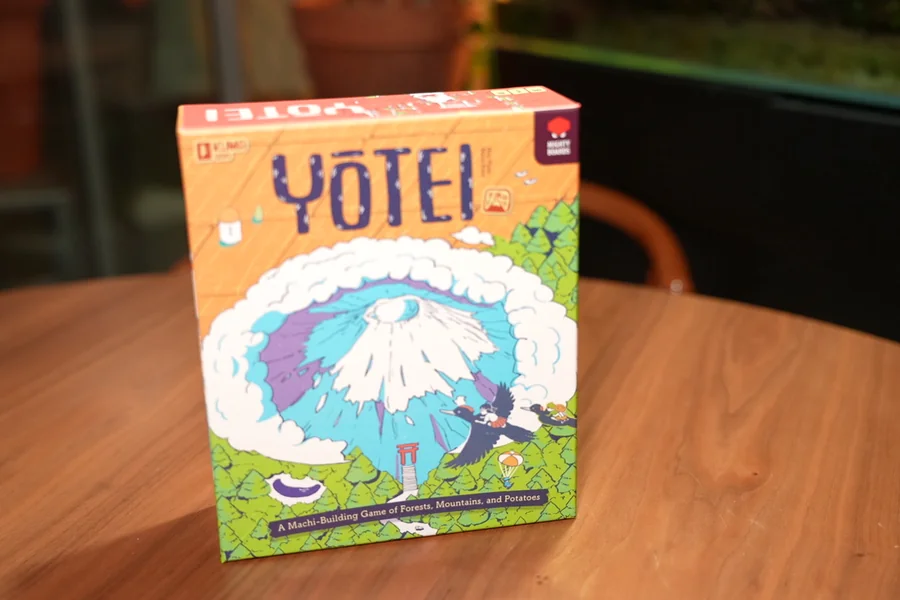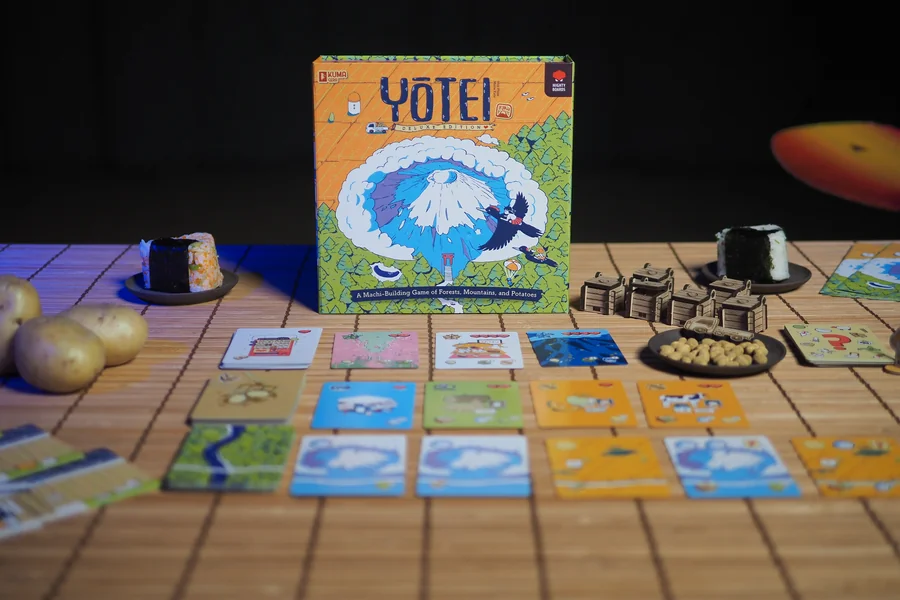
Yotei is a town building board game for 2 to 4 players from Mighty Boards, a games publisher based in Malta. Mighty Boards gave the game a limited release at SPIEL Essen in Germany from 22 to 25 October, and it reached UK shops on 20 November.
The game was made at the foot of the mountain it is named after. It comes from Kumagera, a small woodworking company in the town of Niseko run by Jin and Maria Kato, and it was designed by their friend Huy Pham.
A game takes about 45 minutes and is recommended for ages 10 and up. Each player builds a machi (Japanese for town) and pays for everything in potatoes.
Mount Yotei's Ainu Names and the Board Game Made Beneath It
Mount Yotei, the 1,898 metre “Ezo Fuji” above Niseko and Kutchan
Mount Yotei is a real volcano in southwest Hokkaido, Japan’s northernmost main island. It stands 1,898 metres high, and the Japan Meteorological Agency dates its last eruption to about 2,500 years ago.
Its almost perfect cone looks so much like Mount Fuji that it is called Ezo Fuji, although it is half the size: Mount Fuji reaches 3,776 metres. Ezo was the old Japanese name for Hokkaido, which was renamed in 1869.
Western travellers noticed it early. Riding along Volcano Bay in September 1878, the British traveller Isabella Bird saw “a great dome-like mountain, Shiribetsan” rising inland, using the name the mountain carried at the time. Five years later the naturalist Thomas Blakiston described the same peak from the same coast: “a fine mountain something the shape of Fuji but with steeper slopes”.
The mountain stands over the ski slopes of Niseko and the farming town of Kutchan. Hokkaido grows 81% of Japan’s potatoes. Kutchan’s farms at the foot of the mountain are known for Danshaku potatoes, the variety called Irish Cobbler in English, grown in well drained soil and watered by the mountain’s groundwater.
Kutchan’s biggest summer event is the Kutchan Jaga Matsuri (jaga is short for jagaimo, the Japanese word for potato). The town has now held it more than 60 times.
Snow that falls on the mountain soaks into the rock and comes back up decades later as spring water. At Fukidashi Park in neighbouring Kyogoku, 80,000 tonnes a day rise from the ground. In 1985 the spring was named one of Japan’s 100 best waters.

Matneshiri and Pinneshiri: the Ainu husband and wife mountains
The Ainu, the Indigenous people of Hokkaido, named the mountain long before it appeared on Japanese maps. For the Ainu, the beings and forces that matter most in daily life are kamuy (spirit deities). Upopoy, the national Ainu museum, lists mountains and rivers among them, alongside animals, plants, fire, water and wind.
In Ainu the mountain is Matneshiri, which means the female mountain. It was also called Makkarinupuri, after the Makkari River that runs behind it. Ainu is unrelated to Japanese or any other known language, and UNESCO lists it as critically endangered.
The female mountain had a partner. The Ainu called Mount Shiribetsu, the smaller 1,107 metre peak to the southeast, Pinneshiri, the male mountain. Japan’s Geological Survey says they appear to have seen the two mountains as husband and wife.
The explorer Matsuura Takeshiro wrote down these Ainu names in his survey diary of 1857. Isabella Bird, who stayed in Ainu villages in 1878, recorded the Ainu “attaching of a vague sacredness to trees, rivers, rocks, and mountains”. Her book carries the attitudes of its time, but that observation matches how Upopoy describes kamuy today.
None of the Ainu stories in the books we drew on names Mount Yotei itself. Mountains do appear in the tales Basil Hall Chamberlain collected in 1886. In “The Wicked Wizard punished”, told by Ishanashte, a god of the mountain catches a good man who leaps from a peak onto the clouds, and carries him round the world.
The Japanese name came later and changed more than once. Japan’s oldest official history, the Nihon Shoki, records a place called Shiribeshi in the year 659, although historians are not sure it is this spot.
Maps called the mountain Shiribeshiyama until a government survey map of November 1969 changed it to Yoteizan. That was a new reading of two of the old written characters, which mean “sheep’s hoof”.
Ainu culture was a major theme when we attended the Hokkaido Tourism Organization’s presentation at Japan House London on 6 October. In Hokkaido the place to see it is Upopoy, the National Ainu Museum and Park in Shiraoi, which opened on 12 July 2020 as a national centre for the revival of Ainu culture.
Upopoy means “singing together in a large group” in Ainu. Visitors can watch traditional dance and mukkuri (mouth harp) performances, try woodcarving and embroidery, and eat Ainu food.
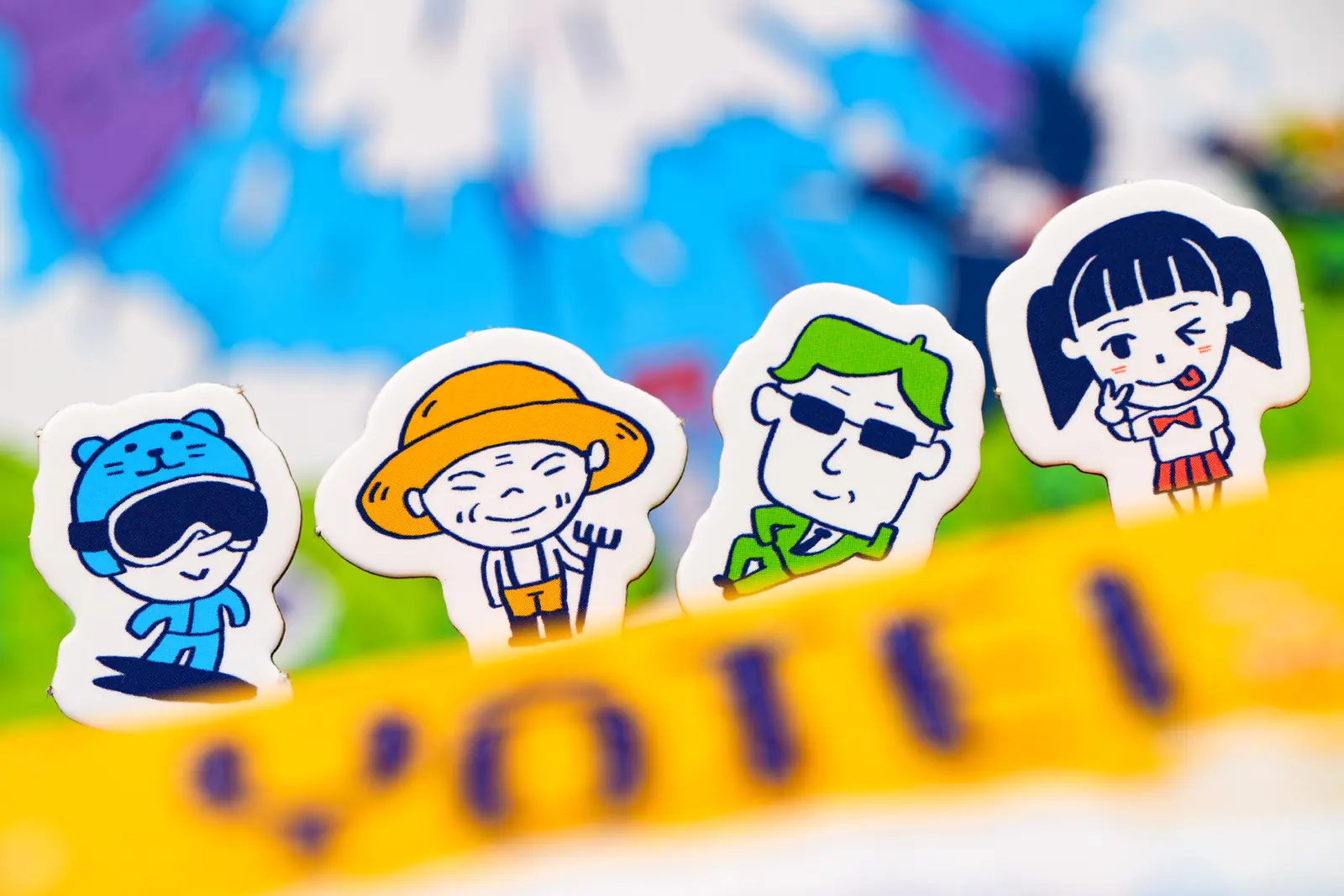
Local life runs through the game as well. The Katos first sold Yotei only at the Niseko roadside service station. Copies also went to schools near the mountain, and many of the cards carry the faces of people from the Niseko community.
Five potatoes, secret bids and a race to two stars
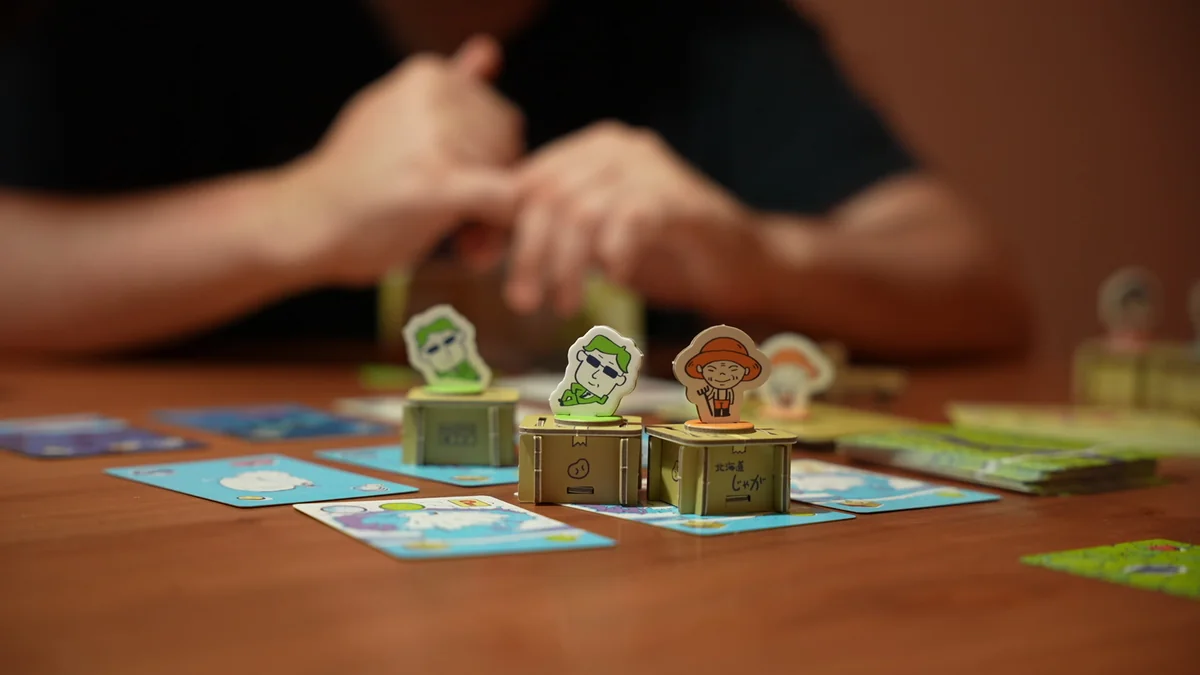
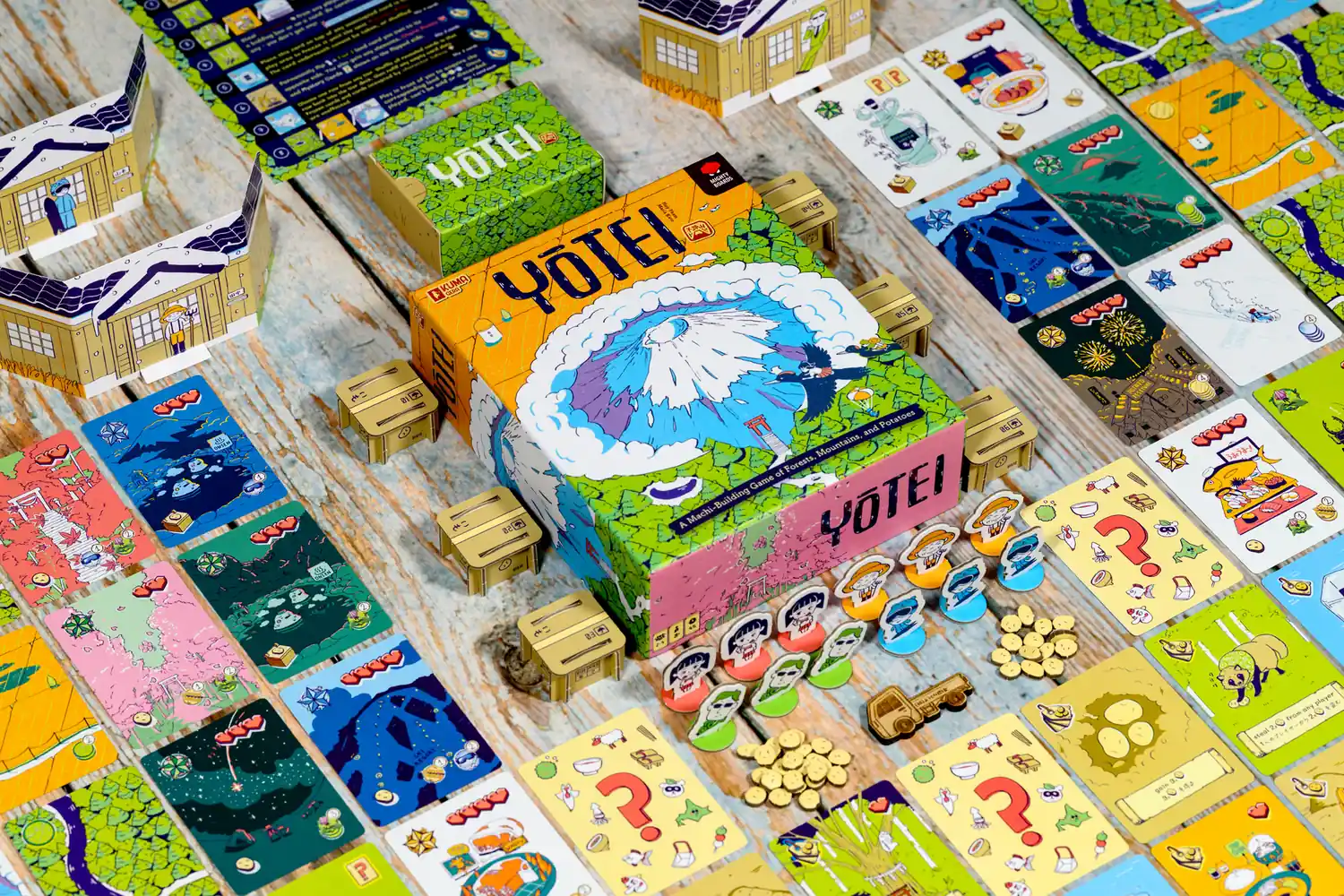
Each player starts with five potatoes hidden behind a player screen, and two or three character tokens. Cards are laid out in three rows:
- Land: farmland, forest and mountain.
- Small developments: such as local produce and tourism.
- Big attractions: a ski resort, food culture or wilderness. These cost the most and earn the most Charm Points.
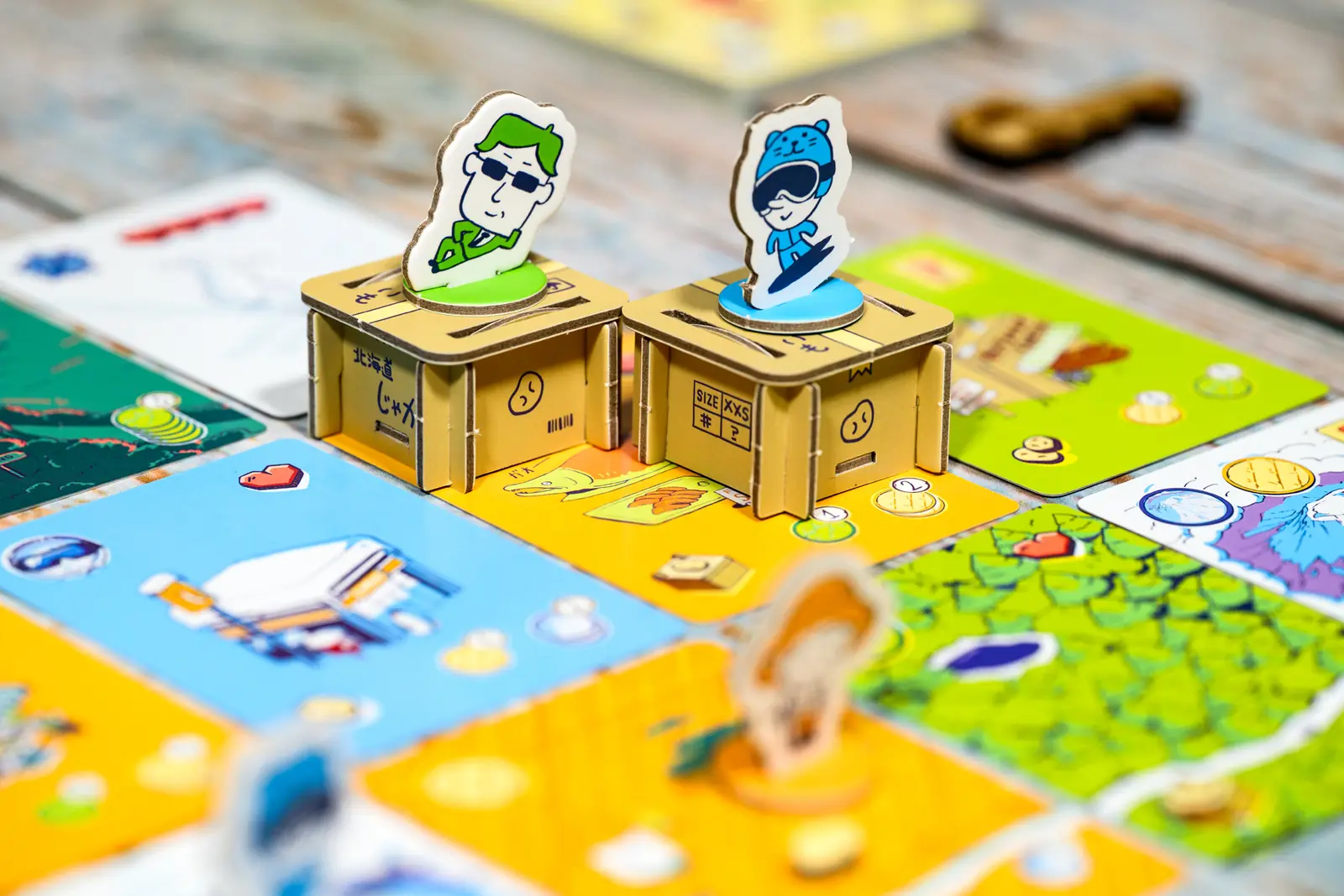
In the first half of each round, players take turns placing one character at a time. They can claim a card by paying its potato cost onto it. Or they can make a secret bid by slipping any number of potatoes into a bidding box, even none, and setting it down with their character.
There is room for mischief too. Turning a card face down earns a small fixed reward, such as a free forest or two potatoes, and the rulebook points out that this stops anyone else taking the card.
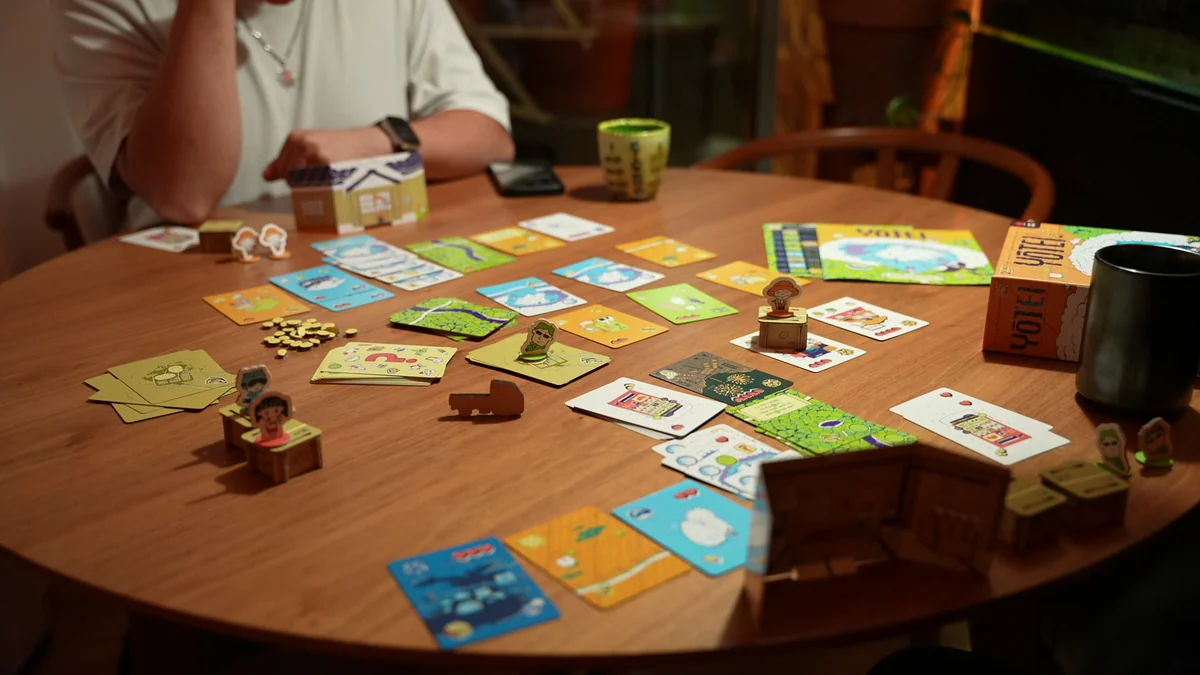
In the harvest, everyone takes their characters back one at a time. A card is kept only if the player already holds the land and developments it asks for. Several players can bid on the same card. The highest bid wins, and the losers get their potatoes back.
Mystery cards can be played at any moment. One example lets a player steal two potatoes from an opponent.
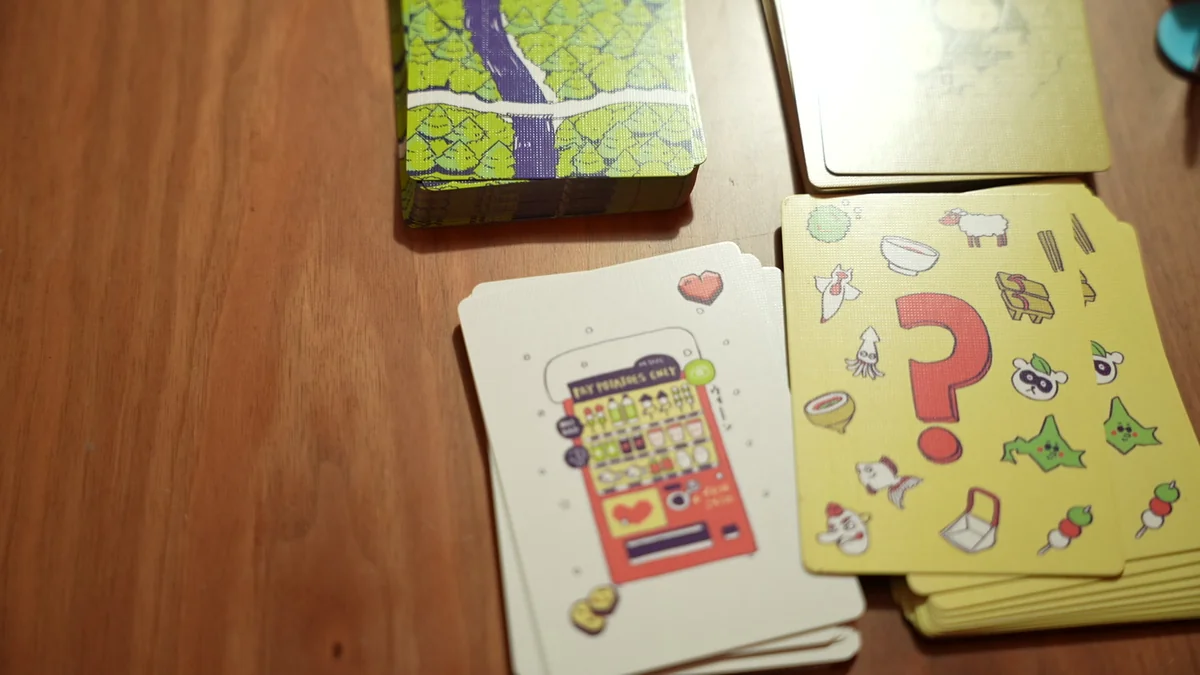
The game ends when someone collects two big attractions. Leftover potatoes count too, at one Charm Point for every three.
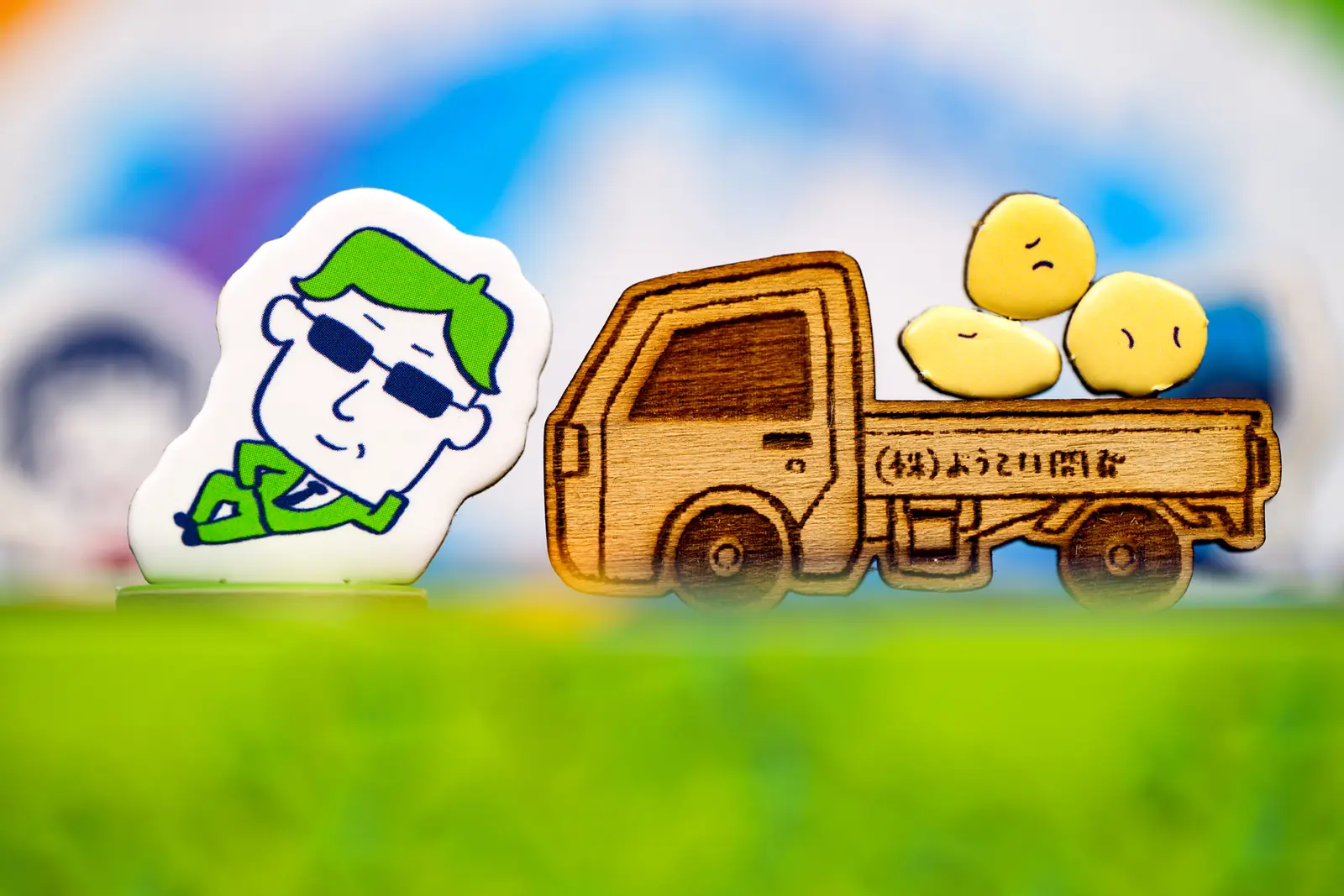
One rule sets the tone before anything happens: the player who went hiking most recently goes first. They take the wooden kei truck token. Kei trucks are the tiny pickup trucks found on farms all over Japan.
Jamal from AnimeEveryday played our copy against Ray in a two player game that took about 45 minutes. They were still learning the rules, and Jamal reckons a second game would take nearer 30.
Jamal “went for the mountain and ski route”, working the middle row, while Ray took “the potato chip and wood route” along the bottom. About three quarters of the way through, Jamal spotted a big attraction in the top row that would have won Ray the game. He was going first that round, so he turned it face down.
The block had a cost. It left the top of the potatoes deck free for Ray, and Jamal started the next round with no potatoes at all.
The biggest reaction came from a Mystery card. Most of theirs stood in for a missing material, but Ray played one that changed every card in a column, just as Jamal needed one of them.
By the end both players were one star away from winning, and neither could afford anything in the top row. When the cards Jamal had turned over were replaced, a new big attraction came up that Ray could pay for with the potato chips he had been saving, and it won him the game.
The Retail Edition’s cardboard bidding boxes are punched out and folded together before the first game. Once they were built, Jamal found them simple to use.
Hokkaido wood bidding boxes and wheat straw potatoes in the Deluxe Edition
The Deluxe Edition is the one with the unusual pieces:
- Bidding boxes made of locally sourced Hokkaido wood with etched details.
- Potatoes made from a mix of wheat straw and plastic.
- A board that folds out into six sections.
- A box with a magnetic lid, and a numbered copy with a certificate.
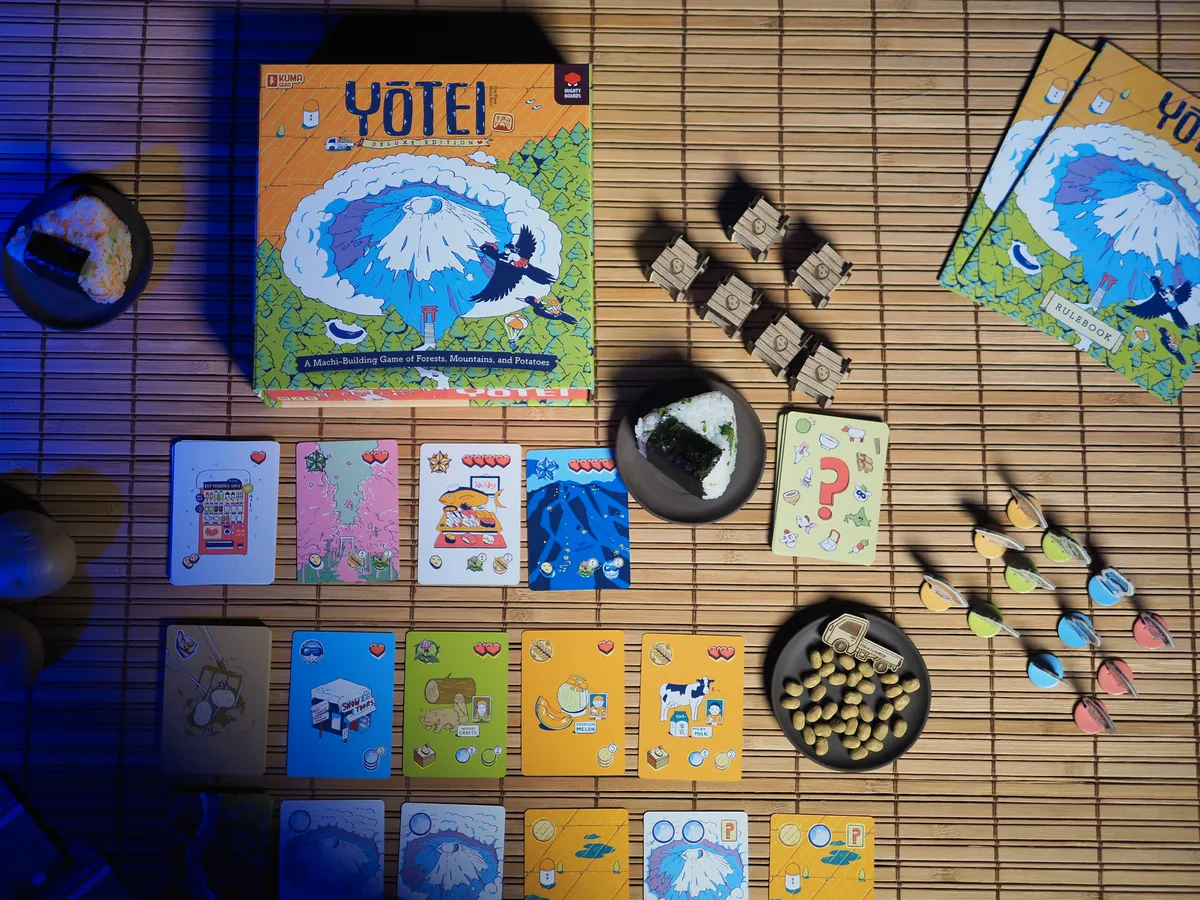
Mighty Boards says the wooden components in both editions are made in Niseko. Kumagera makes its wooden goods from thinned and waste wood grown in Hokkaido. Because that wood is in short supply, Mighty Boards makes Deluxe copies in batches of 2,500.
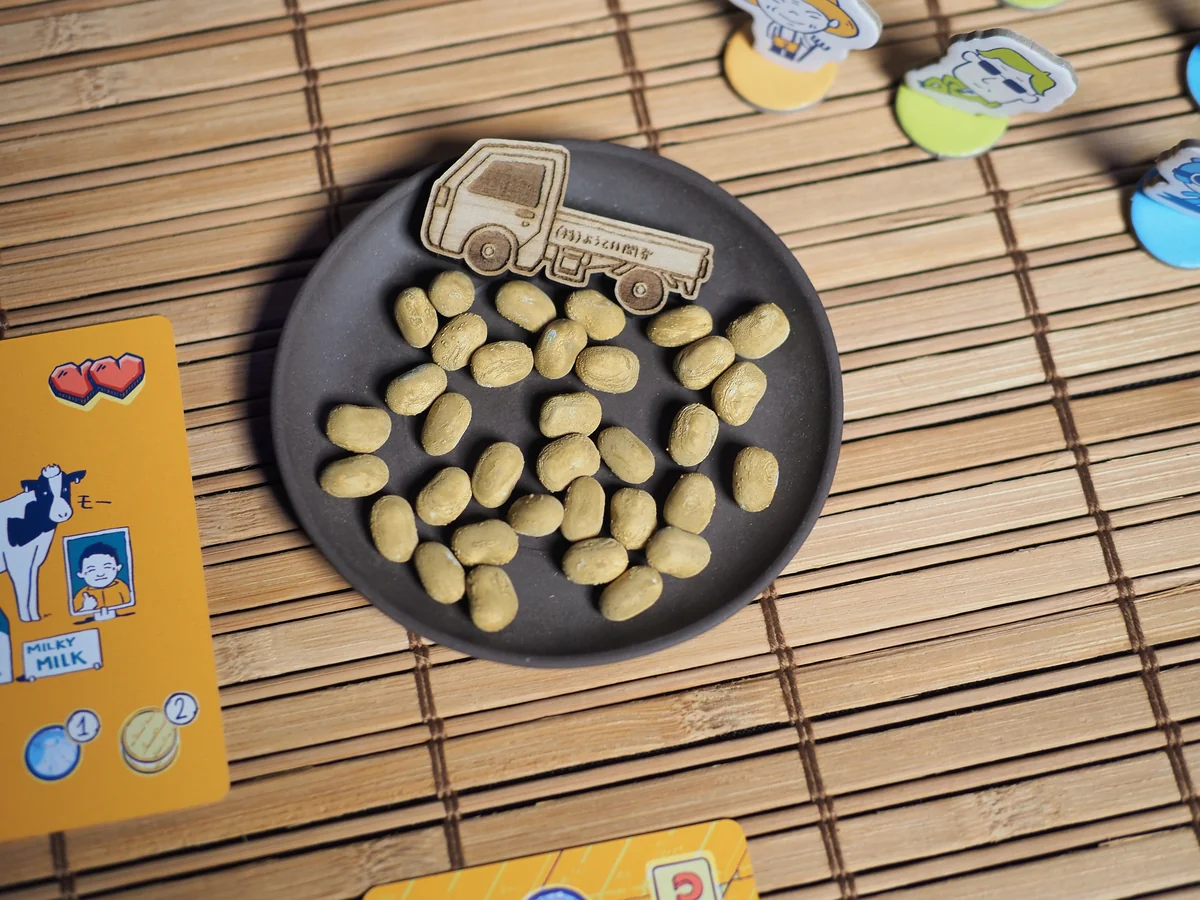
The Retail Edition, the version in UK shops from 20 November, has bidding boxes and potatoes made of cardboard. It has no board and comes in a smaller box.

Maria Kato’s bears, owls and Niseko farmers
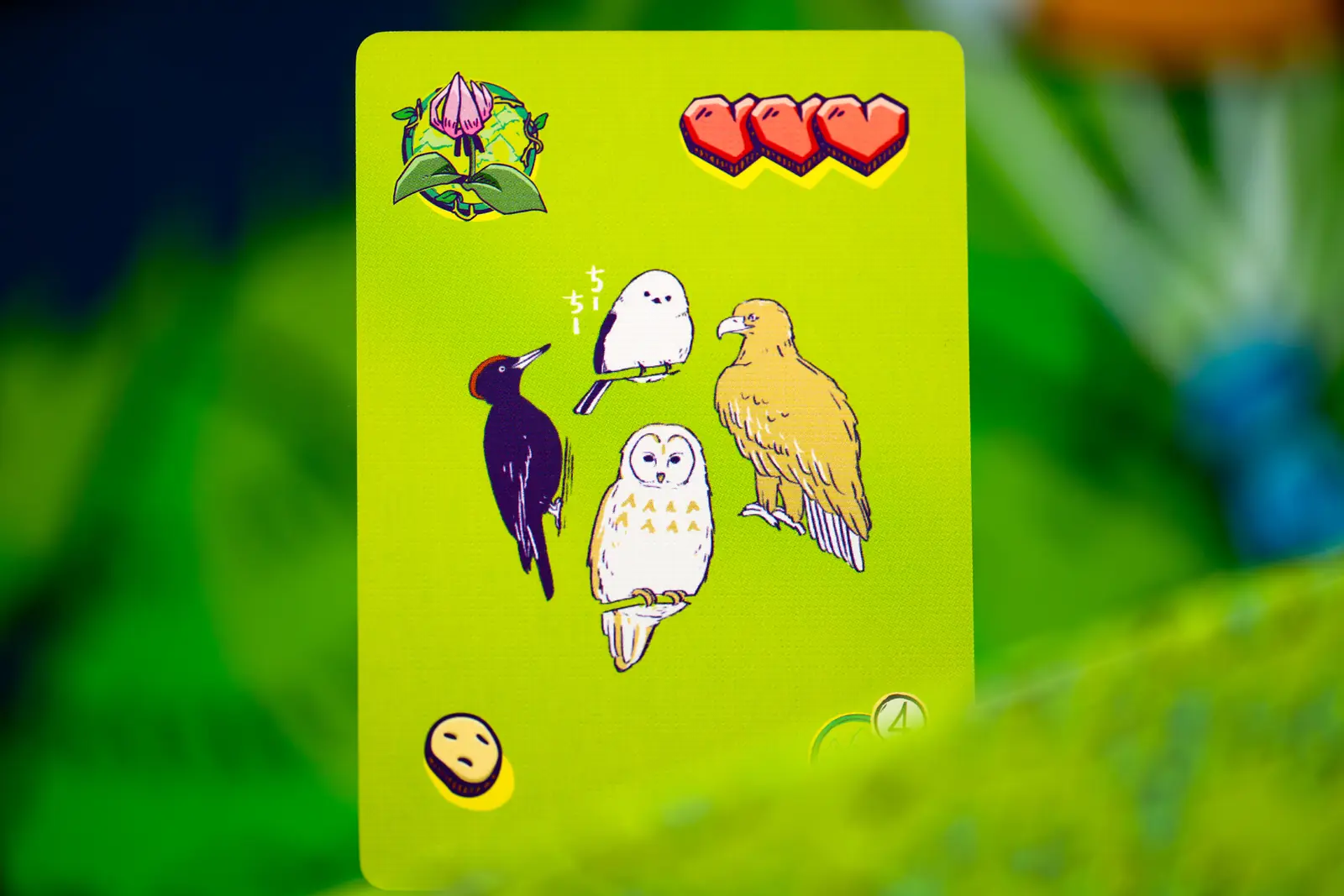
Maria Kato illustrated the game and directed its art. Many of the cards show Hokkaido wildlife:
- A brown bear, an Ezo sika deer, a fox and a flying squirrel.
- Owls and a black woodpecker.
- River fish, stag beetles and wild mushrooms.
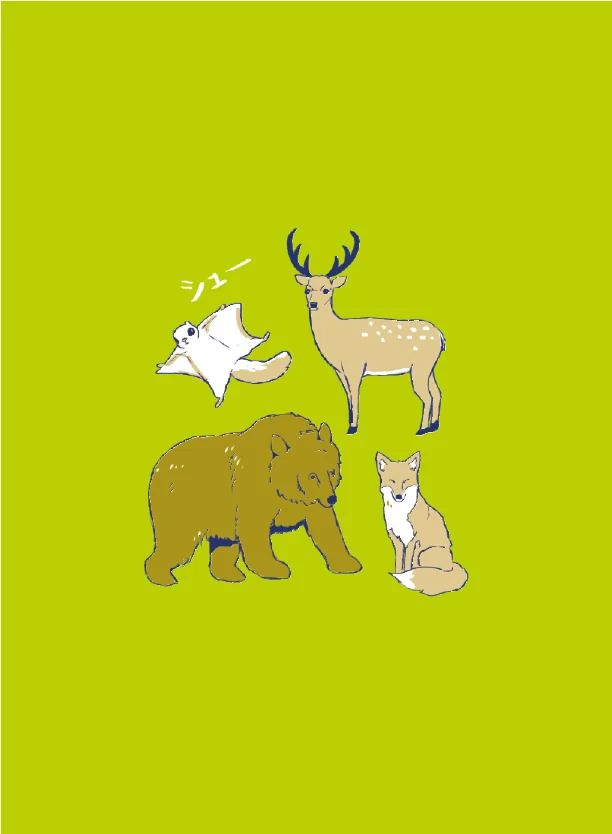
These are local animals. Within Japan the brown bear lives only in Hokkaido, and the Ezo sika deer is a subspecies of sika deer found nowhere else.
The owls carry the most meaning. The Ainu call Blakiston’s fish owl kotan kor kamuy, the god who protects the village, and Isabella Bird heard the owl called “the bird of the gods” in 1878. In Chamberlain’s tale “The Owl and the Tortoise”, told by Penri in 1886, the owl god on land and the tortoise god in the sea marry their children to each other.
Other cards show the town taking shape. There’s an outdoor centre stacked with canoes, a timber yard with a carved bear, and market stalls. Each local produce card shows its food next to a framed portrait of the person who grows it: prize rice beside a rice ball, a melon, milk from a black and white cow, and sheep meat.

That produce is real Hokkaido produce. Hokkaido supplies 58% of Japan’s milk, and Kutchan grows melons as well as potatoes. The sheep meat points to jingisukan, Hokkaido’s lamb or mutton grilled on a domed hot plate, which was chosen as Hokkaido Heritage in 2004.
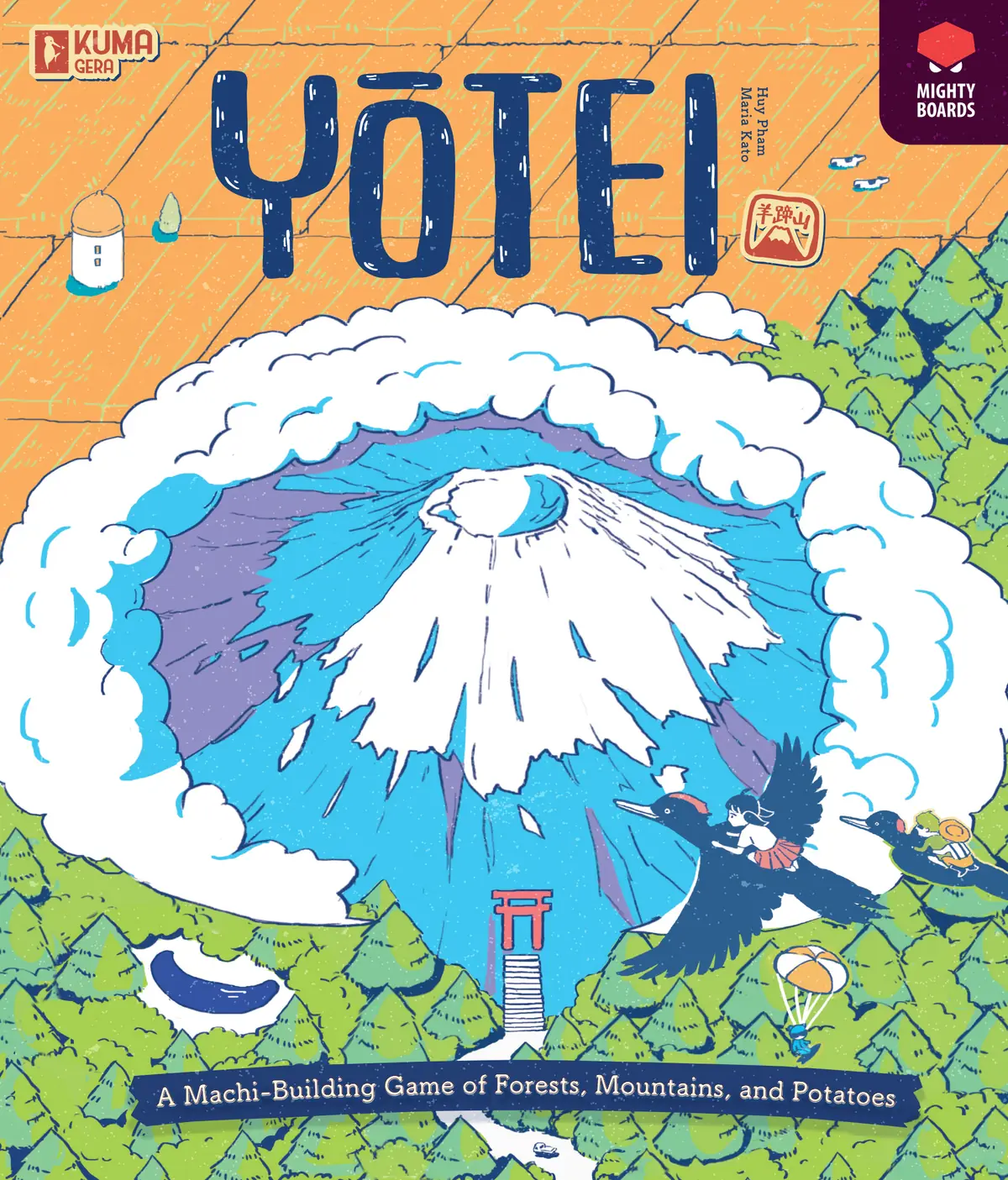
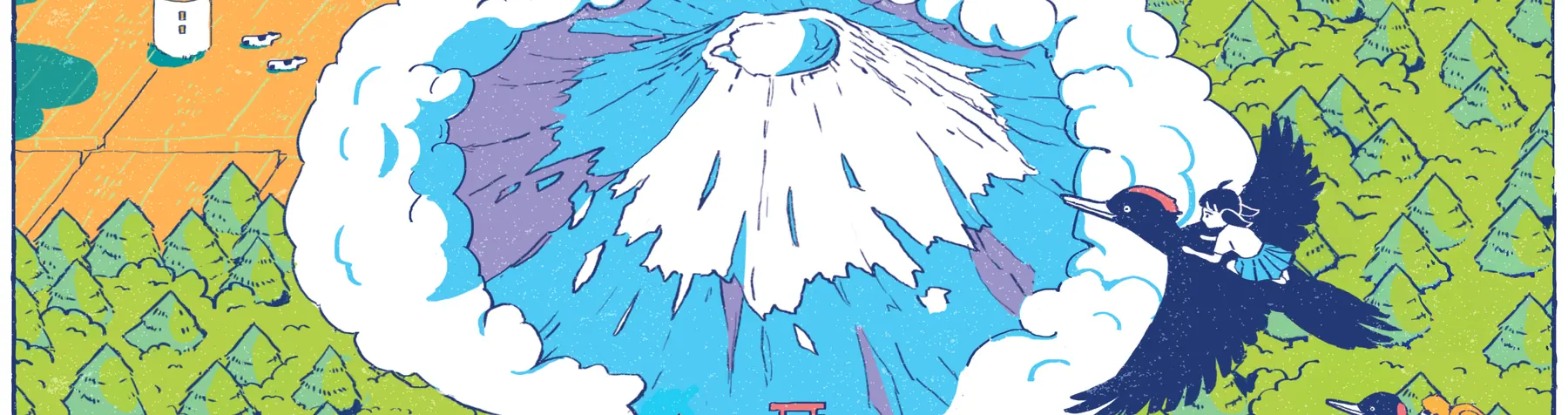
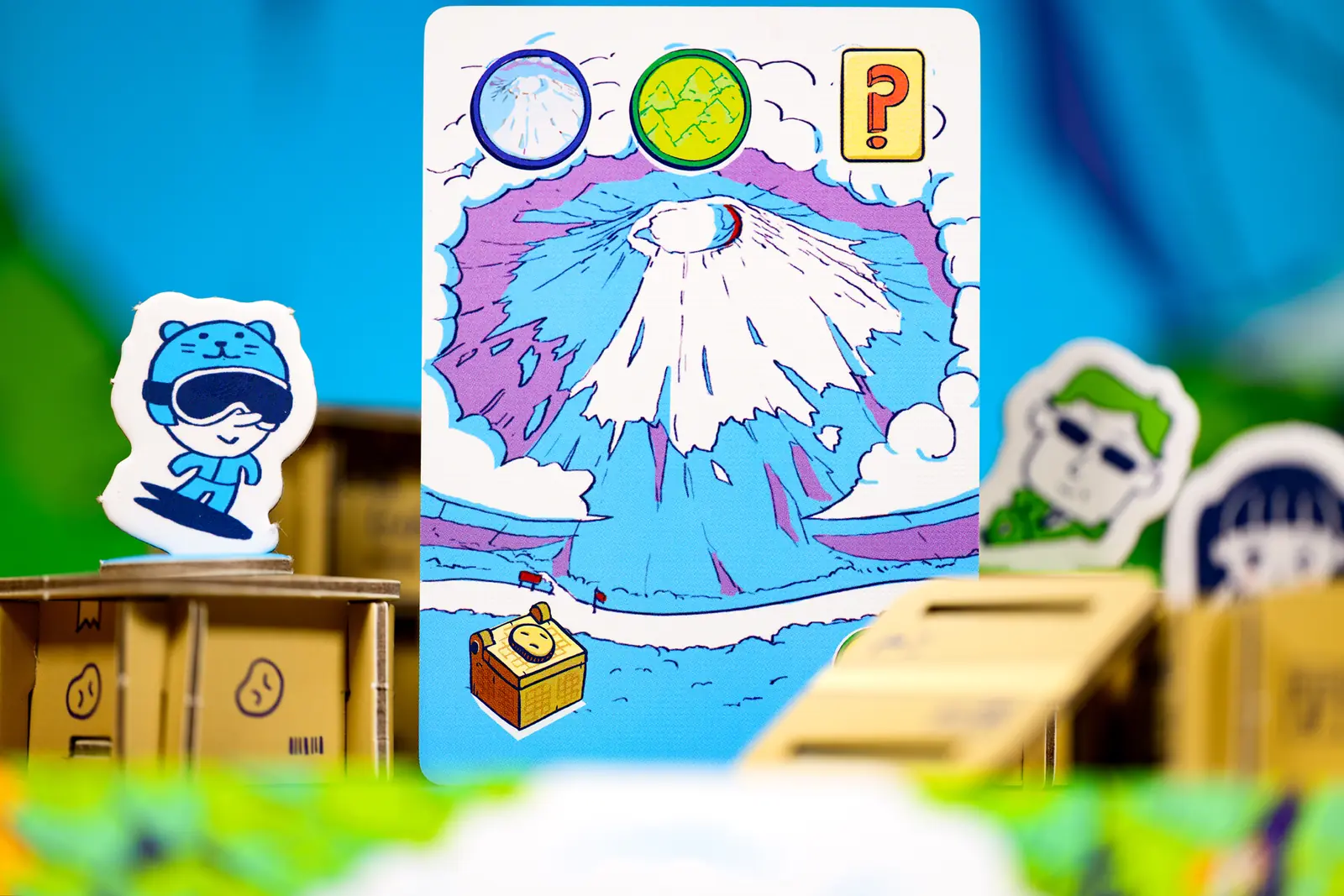
The player screens show the Katos’ own living room, with a bear added as the one guest who does not normally live there. The rulebook cover puts Mount Yotei in a ring of cloud, with a torii (the gateway to a Shinto shrine), a kei truck and a black woodpecker.
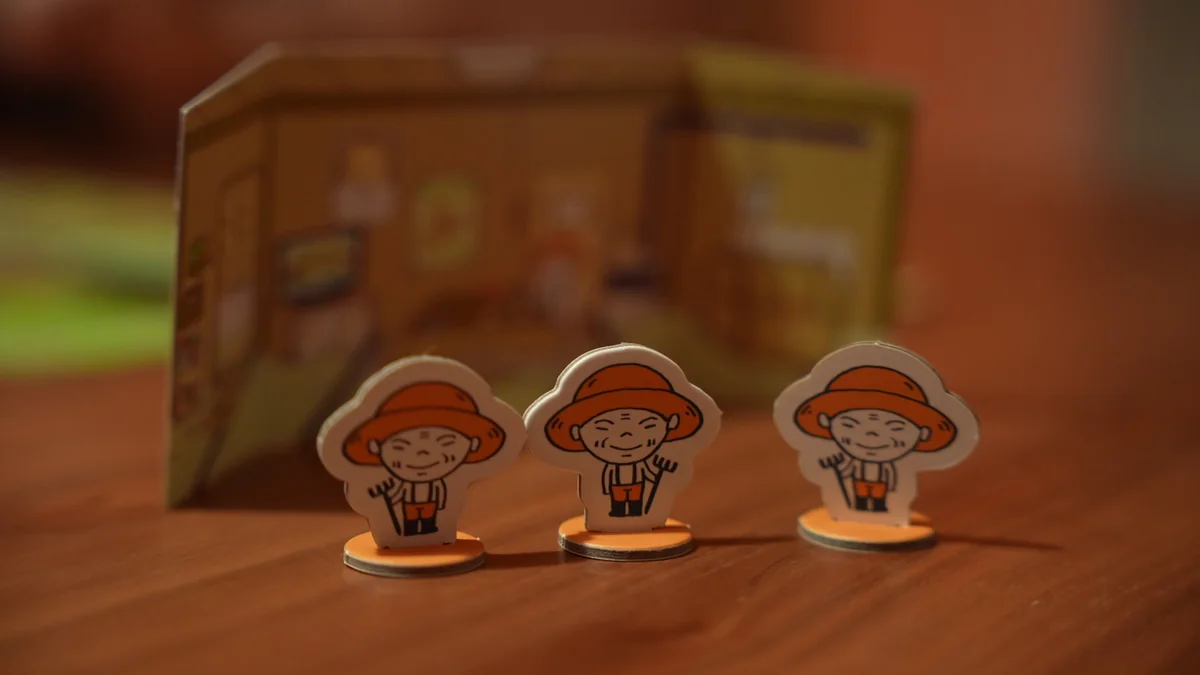
Kumagera is the Japanese name for the black woodpecker, which is where the company got its name.
Yotei is in UK shops from 20 November, and our launch guide compares the two editions and explains where to buy each one.
Sources and further reading
- Isabella Bird, Unbeaten Tracks in Japan (1880), Letters XXXVII and XL. Project Gutenberg
- Basil Hall Chamberlain, Aino Folk-Tales (1888), tales viii and xxv. Project Gutenberg
- Thomas W. Blakiston, Japan in Yezo (1883), chapter 20. Internet Archive