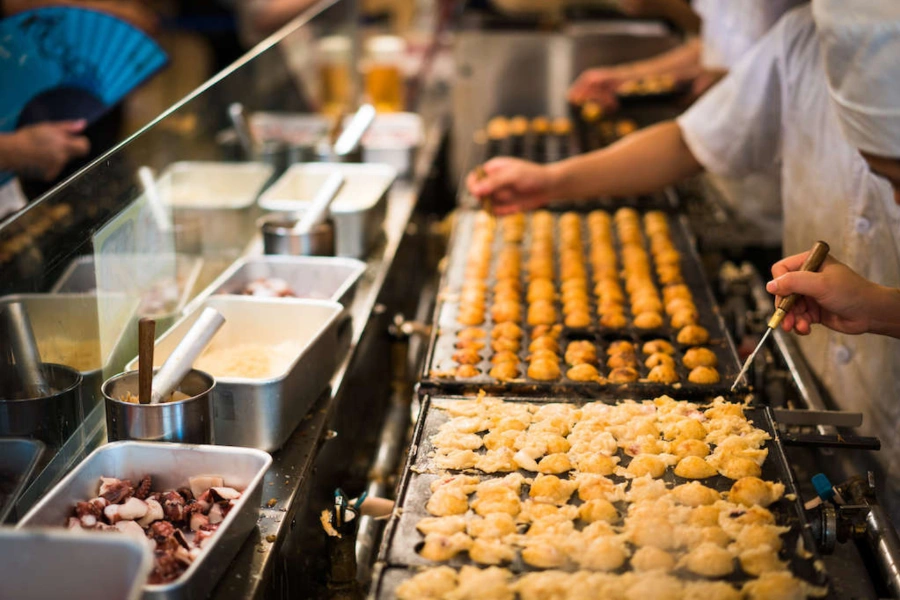
Japanese cuisine’s appeal is easy to feel and surprisingly hard to define. Behind the flavour, the precision and the presentation sits a deep tradition built on specific ingredients, careful preparation and refined technique — much of which rarely makes it into the cookbooks travelling on the back of Japan’s food boom.
So, when there’s what sometimes feels like an avalanche of information on Japanese cooking online, if you’re a true Japanese food fan, how do you dig into the knowledge of Japanese cooking to soak up a more authentic perspective?
The Culinary Encyclopedia
Unveiling the Rich Tapestry of Japanese Food

The Culinary Encyclopaedia of Japan by Keita Wojciechowski provides you with the opportunity to spend some time away from screens and is a much more comprehensive approach to learning more about Japanese food. In order to master something, you need to know more than just the fundamentals. Within the pages of this book, you’ll find all the information to approach Japanese cooking. With a well-rounded knowledge that’ll give you the tools needed to really understand the cuisine.
Most of us aren’t professional chefs, and the Culinary Encyclopaedia of Japan doesn’t try to turn its readers into them. It’s an overview of the ingredients and techniques that underpin Japanese cooking, rather than a recipe book. There are so many cookbooks and recipe books out there, and let’s be clear: this is not that. The book does not contain any recipes or pictures. However, what it lacks in terms of actionable guidance, it makes up for in-depth context about the history. It covers linguistics, regional areas, and how religion, changing seasons, famines, war and more have influenced the cuisine.


A Culinary Journey Through Japan

The award-winning book is significant due to its unique appeal. The popularity, high demand, and frequent rehashing of this cuisine. It may cause some elements to be misrepresented. In the section in which the author explores ‘What is Japanese Culture?’, the way the cuisine has already evolved is touched upon. Here, Wojciechowski mentions how, over time, techniques have been invented, imported, adapted, and refined, for example,
Rice culture was introduced during the Yayoi period, replacing the hunter-gatherer culture of the Jōmon Japanese, who were slowly but surely forced further north, leading eventually to becoming part of the Ainu people in Hokkaidō.’
Books like this bridge the gap between trendy depictions of Japanese food and a more nuanced look at one of the world’s most popular cuisines.
A Deep Dive Beyond Recipes
The Japanese culinary encyclopaedia goes on to list 700 plants, 130 algae, 110 fungi, 1300 fish & seafoods, 30 insects, 50 birds and 60 mammals and other foods, drinks & seasonings over 550 pages. The book kicks off with a ‘How to use this book’ section, which goes through the ordering, marking and formatting layouts. People who popularise, seek out and rework this cuisine may misrepresent some elements. The period of history it was introduced and production techniques. The clearly defined different sections and indexes (in Ainu, Chinese and Latin!) mean you can easily find information about different foods quickly.
Among the most rewarding sections is the book’s account of how tea took root in Japan. The book states that it was introduced in two waves – the first encounter was known in 805 when a Buddhist monk, Saichō, founder of the esoteric Tendai school, returned from studies in Tang China and brought tea tree seeds with him. The second – when Monk Eisai (also known as Yōsai), founder of the first Zen temple in Japan, is said to be responsible for the reintroduction of tea.

Thus, the Shōgun and the warrior social class groups embraced tea as a luxury product which involved blind tastings. The section goes on to say, ‘Zen influenced tea drinking started in the 15th century…This changed the focus of Chinese influence on tea to new Japanese aesthetics, which then strongly influenced other parts of Japanese culinary life’.
About the Author

It took Wojciechowski three years of research to complete the book, and his commitment to the level of in-depth ingredient coverage makes for an impressive read. Despite this, the book is easy to read and has clear writing mixed with some academic language. His background is unusually broad: a half-Japanese chef trained across London, France and Germany, with more than 20 years’ experience spanning small family-run Japanese restaurants and the sushi bars of international hotels. It means he is more than qualified to write accurately on the subject. He ties it all together with a simple book design, elevated with an eye-catching and beautiful illustration of a basket containing different foods centred on the cover. You can check out other Japanese authors here.








Buy a Copy of Culinary Encyclopaedia of Japan Vol. 1

Go beyond the plate and discover the fascinating stories behind rare famine foods, local specialities, and even unique Ainu and Ryūkyū ingredients. Learn traditional cooking methods and gain a deeper understanding of Japanese cuisine’s building blocks.
While recipes and pictures are not included, this comprehensive encyclopaedia serves as an invaluable resource for food enthusiasts, culinary professionals, and anyone with a passion for Japanese culture.
For anyone serious about understanding Japanese cuisine beyond the recipe level, Culinary Encyclopaedia of Japan Vol. 1 is available on Amazon.
Available in hardcover and paperback editions. Current pricing and availability are listed on Amazon.
Final Words

The Culinary Encyclopaedia of Japan rewards slow reading. It’s less a kitchen tool than a reference shelf — and it makes a strong case for understanding a cuisine before cooking it.