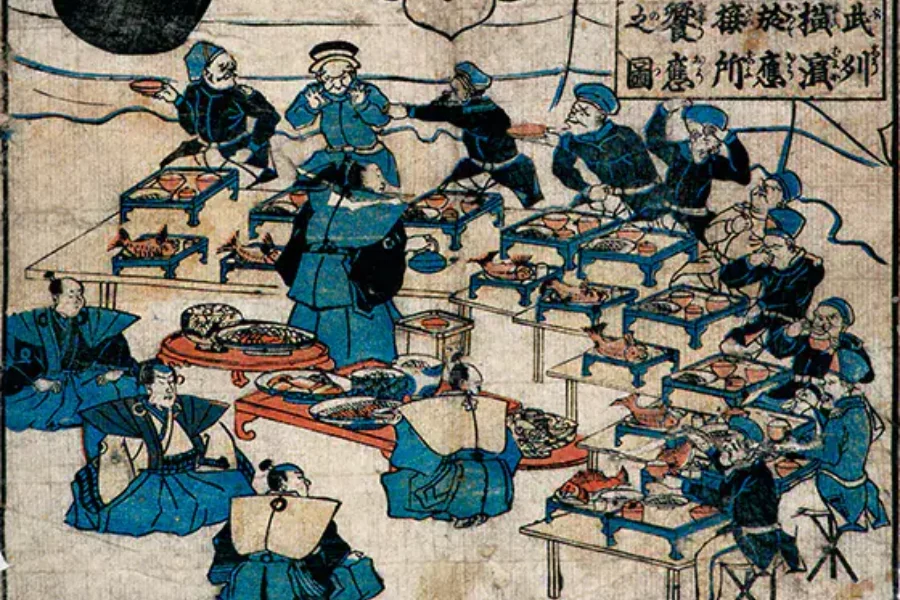
Japan began to enter a time of rest from numerous military conflicts and social changes when the Tokugawa dynasty took over to rule for about 250 years. This new government began the Edo period, where the country experienced the start of industrialisation and modernisation through transformative projects such as land reclamation, canal systems and organised water supply sources. This was the beginning of Japanese food culture during the Edo period.
The economy also showed signs of growth in transportation and commerce because of nationally unified markets. Apart from this, agricultural development flourished since no more army combats hindered farmers from producing food to feed themselves and their families. As a result, people could experience relative freedom regarding meal preparation and preference.
In this article, we’ll look into how the food culture of the period came about and how political and social factors affected how it developed through the years.
The Edo Japanese Food Culture
The Ups and Downs of the Edo Period Japanese Food Culture
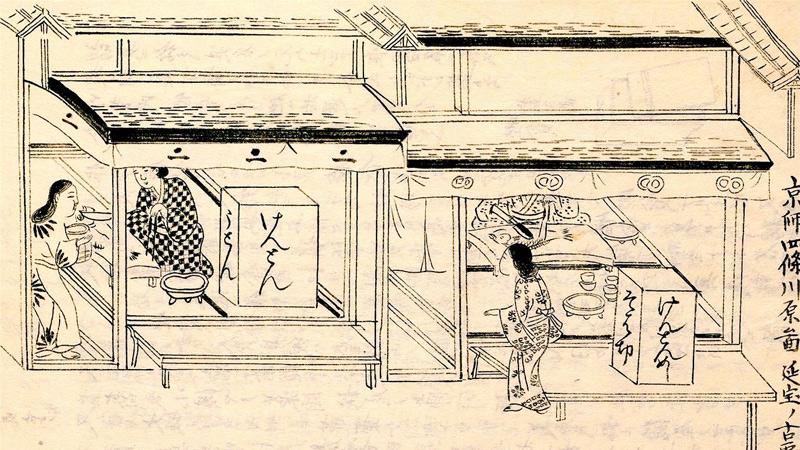
In cultural history, the Edo-era cuisine went through multiple peaks between 1624 and 1830, with improvements in diet practices and culinary culture. Between 1624 and 1644, regional lords, or daimyo, nobles, and wealthy merchants were the first to advance during the early Edo era. Since then, towns have seen an increase in restaurants, particularly exclusive ones that provide stylish floor plans with individual rooms, second-story accommodations, or interior gardens. In addition to these restaurants, several food carts and merchants lined the streets would serve anyone for a reasonable price.
This environment gave rise to customs like spending money to eat the first bonito of the season and eating as a source of enjoyment for the average person. The social atmosphere, which considers spending a virtue, made the enjoyment of food more desirable than it was before. Despite this, policies imposed by the shogunate moved this progression back and forth. The strategy of Tanuma Okitsugu (1719 to 1788), a top advisor to the tenth shogun Tokugawa Ieharu, which encouraged trade and commerce as fresh revenue streams that were superior to traditional land taxes, served as a catalyst for this movement. However, Okitsugu and his son were overthrown; between 1787 and 1793, several conservative policies supported by the Japanese statesman Matsudaira Sadanobu were implemented to improve the Edo shogunate’s moral and financial standing.
The reforms were progressively undone, and the culinary tradition was resurrected after Matsudaira’s removal. Spending was once more welcomed, and the culture of the ordinary people blossomed, bringing the food culture to its peak. The Edo culinary scene appeared to be at its pinnacle under the reign of the eleventh shogun, Tokugawa Ienari (1773 to 1841). This was because of the various ingredients, methods, presentation and layout styles.
Unfortunately, the culinary culture was once more stifled with the introduction of new reforms (1841 to 1843) by Mizuno Tadakuni (1794 to 1851). The richest cultural activities were suppressed in the guise of political change, like a barren flower growing between political seasons. The turbulence of the end of the Tokugawa shogunate caused the culinary culture, which peaked between 1804 and 1830, to vanish into obscurity and never resurface in mainstream life. However, the notable advancements in Japanese cuisine and the broader dietary advancements made during the Edo period need historical acknowledgement.
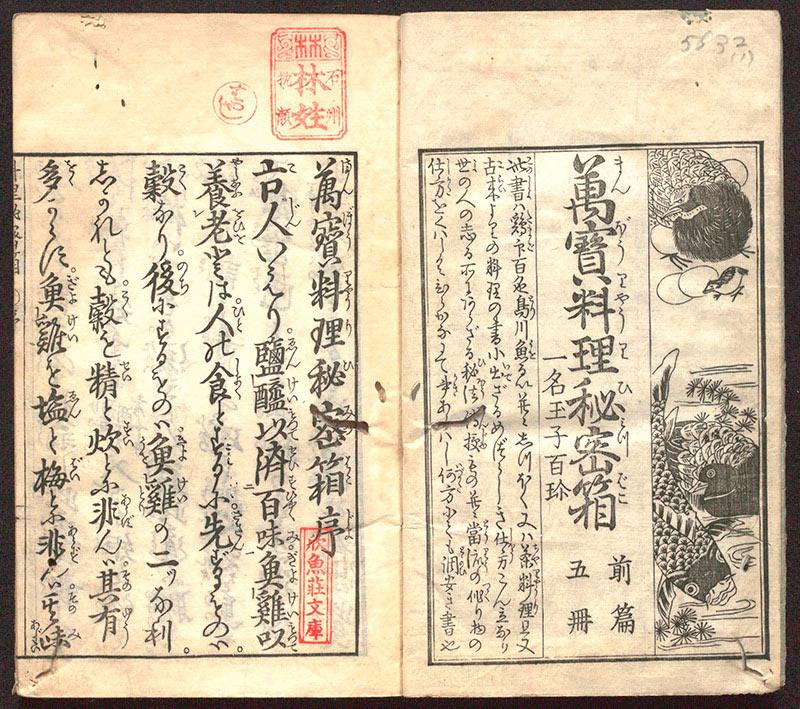
Edo culinary traditions grew throughout the intervals between these reforms through cookbooks and restaurants. The early Edo period cookbooks brought sophisticated information and techniques for culinary arts and served as technical instructions for professional cooks. However, throughout the late Edo period, many cookbooks were created in which the authors shared their expertise on meals and ingredients and provided discourse that even the average reader enjoyed.


People and the Rising Demand for Food in the City
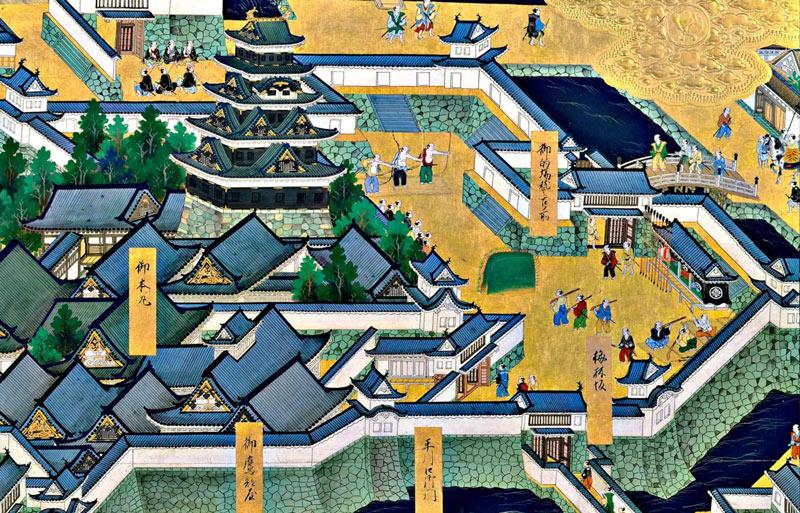
Edo City (modern-day Tokyo) was constructed under the order of the first shogun, Tokugawa Ieyasu (1542 to 1616). The Edo castle compound covered a large area, including a samurai district forcing local farmers to relocate to nearby villages. To build an urban community, the city had to recover wetlands and cut channels for boat trade, forcing merchants and artisans to move from farther-flung areas to lower parts.
Following the Great Fire of 1657, the urban area kept growing as more and more people from across the nation came to Edo. Edo first started to develop into a true metropolis with a sizable population during the beginning of the late Edo era. Young bachelors working at large companies were considered live-in employees in the eyes of Edo town residents. Most people in the samurai district were also there to fulfil the shogunate’s alternate-year attendance requirement, which kept them in Edo.
During their time in Edo, many of these left their families behind. Edo, the samurai, and live-in workers saw a massive influx of day labourers from nearby rural villages. It is believed that a sizeable portion of Edo’s population consisted of artisans, people working odd jobs or small-time trades, day labourers, and others living in poverty.
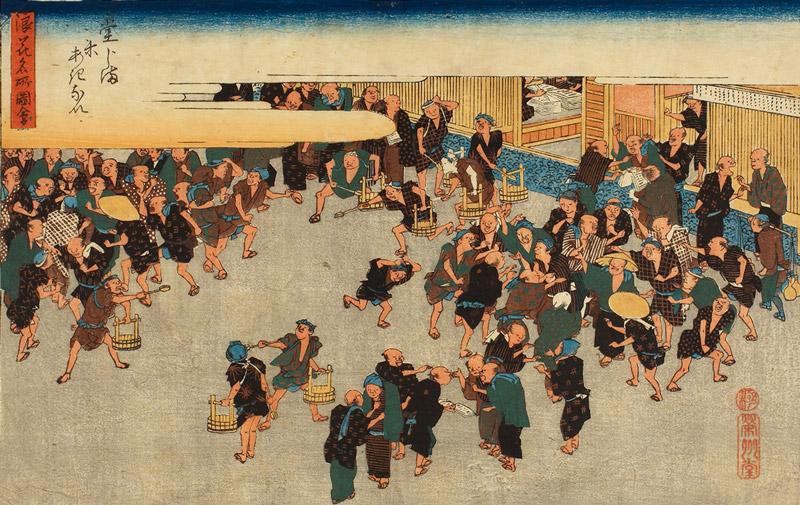
Naturally, regular meals must be provided for such a huge populace. Even if some permanent employees may have received meals from their employers, they also went out to eat. Samurai and townfolk districts made up the initial layout of Edo, which was built as a castle town. Yet, the samurai, especially the shogun, were a class that existed solely for consumption, necessitating a massive and intricate system to supply them with food. The samurai relied on traders and craftspeople to serve them with their daily needs and to maintain their monopoly on knowledge and resources.
With the population’s rapid growth came an increase in the scale and complexity of the food supply chain, which led to a significant number of individuals working in the food service sector. By the late Edo period, the conditions for such an industry had been fully formed, and restaurants, food stalls, and other eating places were seeing remarkable success.
Edo Meals Served to Different Classes
Villagers and artisans start their day early, before sunrise, and get going with their activities as gates around the Edo castle are opened. Vendors selling natto (fermented soybeans), clams, and vegetables could be heard as the morning in Edo went. The typical breakfast served during the Edo period for these common folks was rice, soup, pickles, one or two dishes of dried fish, boiled dry daikon radish strips, deep-fried tofu with kelp, fried burdock roots, cooked beans, and other meals of this nature. Tofu clear soup was especially well-liked. These entrees and sides may have been prepared at home or bought from a store.
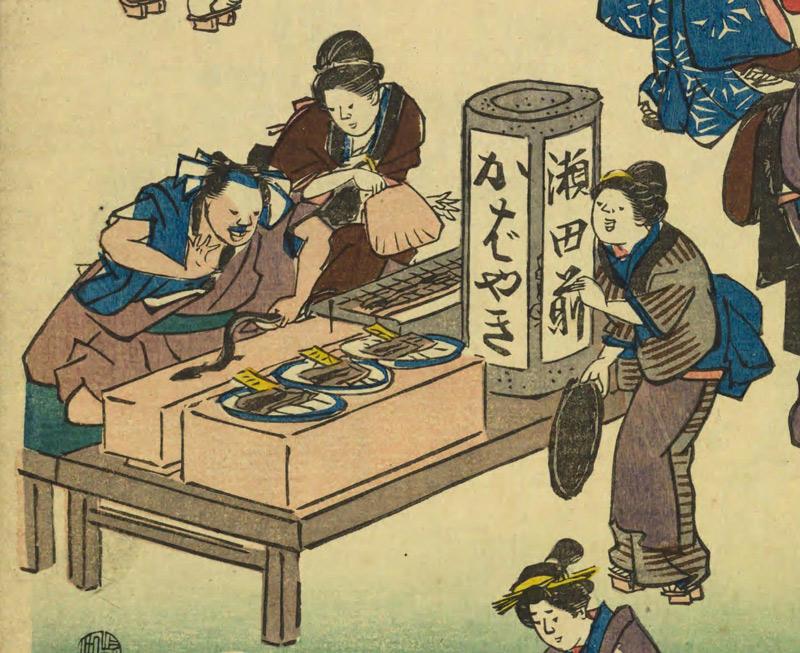
Craftsmen frequently ate buckwheat soba noodles, sushi, tempura, or unagi (charcoal-broiled eel) for lunch, while their wives and kids ate cold rice from breakfast and a ready-made side dish. Supper typically included pickled veggies, cold leftover rice, and hot green tea. The commoners’ diet was very minimal.
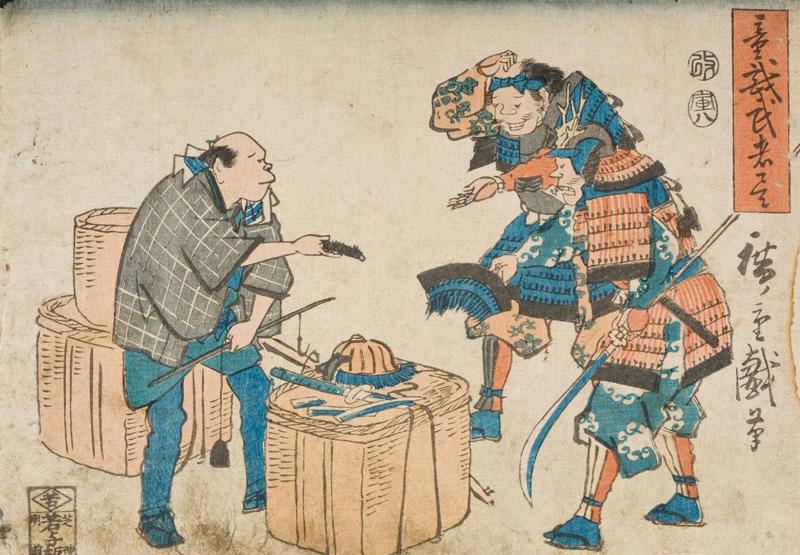
The street vendors and peddlers in Edo were the most fundamental traders. They circulated the streets of Edo while hawking various commodities for daily life. Common meal ingredients are deep-fried tofu, fresh fish, icefish, veggies, soy sauce, salt, and miso. Candy, kid-friendly crafts made of rice flour or wheat gluten, seasonal ingredients like the first bonito of the season, green soybeans, matsutake, and hatsutake mushrooms are also highlighted.
What samurai and shoguns ate
In Edo-era cuisine, lower-class samurai typically ate more than commoners. Meals for their families were usually cheap and consisted of rice with green tea poured over it. Egg or fish meals were regarded as an indulgence; however, tofu or boiled vegetables occasionally appeared. This family’s only holiday meal was cooked mochi served in vegetable soup on New Year’s Day.
On the other hand, the samurai nobility present and serving in Edo castle had a totally different diet. This can be attested by the food boxes brought to them while they were on duty at the court. These meals frequently included pickled plums, tofu, konnyaku (devil’s tongue), yams, boiled burdock root, marinated freshwater clams, grilled striped mullet, and dried strips of daikon radish. Miso soup was also provided, along with dried daikon radish and sake.
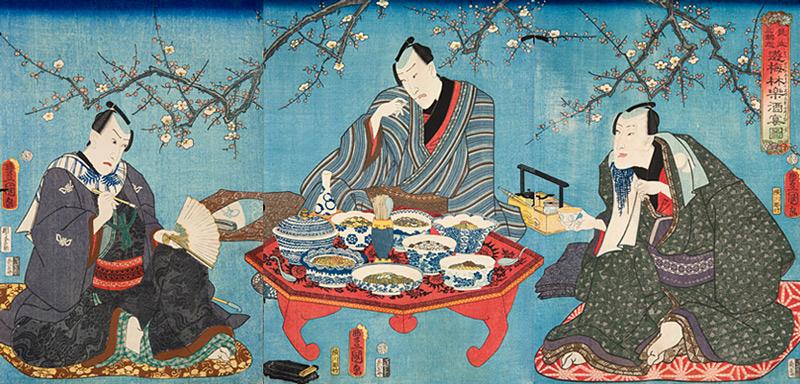
Meanwhile, daily meals prepared for the shoguns were prepared and cooked very well. Food was brought to their dining room only after the food taster had determined it was not poisoned. Breakfast was provided on a single tray that included steaming rice, miso soup with an egg, tofu, a dish of cooked fish paste and walnuts, a dish of kelp, and a dish of sea bream slices. The broiled fish, fried egg wrapped in dried seaweed, stir-fried tofu with veggies, pickled squash, and miso-pickled daikon radish were all displayed on a separate tray.
The shogun usually never finished the food provided to him, but there were instances when other shoguns had an opposite lifestyle. For example, the fifteenth shogun, Tokugawa Yoshinobu, asked for seven different dishes and two types of soup to be served each day during the first three days of the New Year. Even on regular days, breakfast and lunch consisted of one soup and four dishes, respectively, and dinner consisted of five plates without soup.
The difference between the diets of the rich and the poor in Edo was striking. In contrast to the higher class’ lavish consumption of fish, vegetables, and alcoholic beverages, the lower classes struggled to survive in the bitter winter weather.
Soba, sushi, tempura and eel: Edo’s street food
Four dishes are often called the kings of Edo food: soba, eel, tempura and sushi. All four were cheap, quick and sold to a city full of working people who ate out. Nigiri sushi, the hand-pressed style now eaten all over the world, replaced the older pressed sushi in Edo in the early nineteenth century. Hanaya Yohei, usually credited with inventing it, sold kohada (gizzard shad) sushi from a street stall before opening a shop in Ryōgoku in 1824. By night, stalls selling sushi and tempura crowded the streets. Eel was grilled kabayaki style: butterflied, grilled, steamed and grilled again.
Edo’s food culture still shapes how Japan eats. Nigiri sushi, soba, tempura and kabayaki eel all took their modern form in the city’s stalls and shops, along with habits like paying a premium for the first bonito of the season. Walk into any sushi-ya, soba shop or tempura counter today and you are eating food that Edo’s working people made popular.